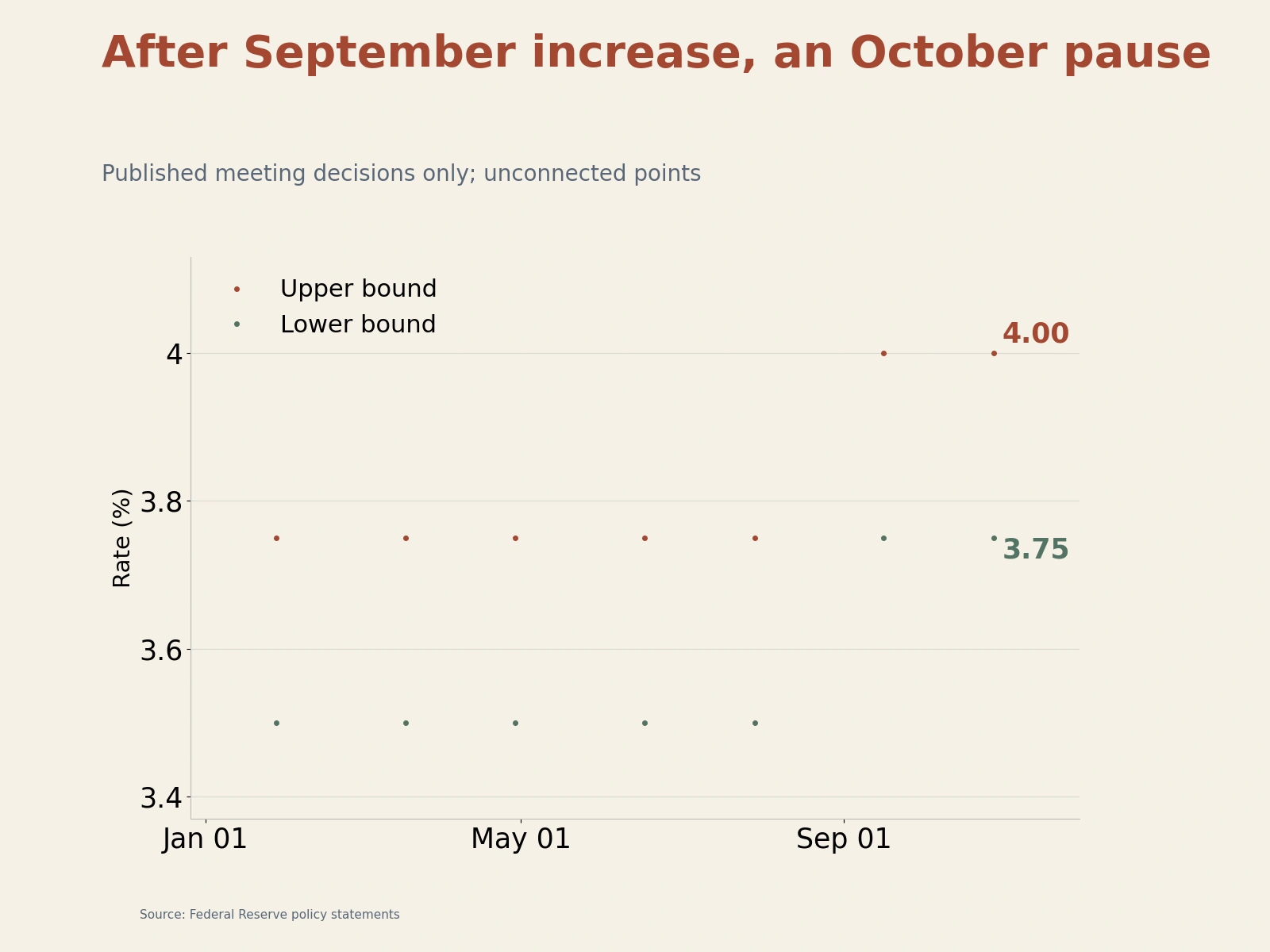
The Fed held the funds target at 3.50%–3.75% for a fifth consecutive meeting on July 28–29. This hold differed sharply: three voters dissented for a 25-basis-point hike, and Chair Kevin Warsh rejected traditional forward guidance, urging investors to watch the game rather than the referee. Markets suffered, with the Dow falling more than 1,100 points and long Treasuries selling off sharply.
Futures pricing shifted markedly hawkish. CME FedWatch showed September hike probability quickly reaching 62%.
Economic data
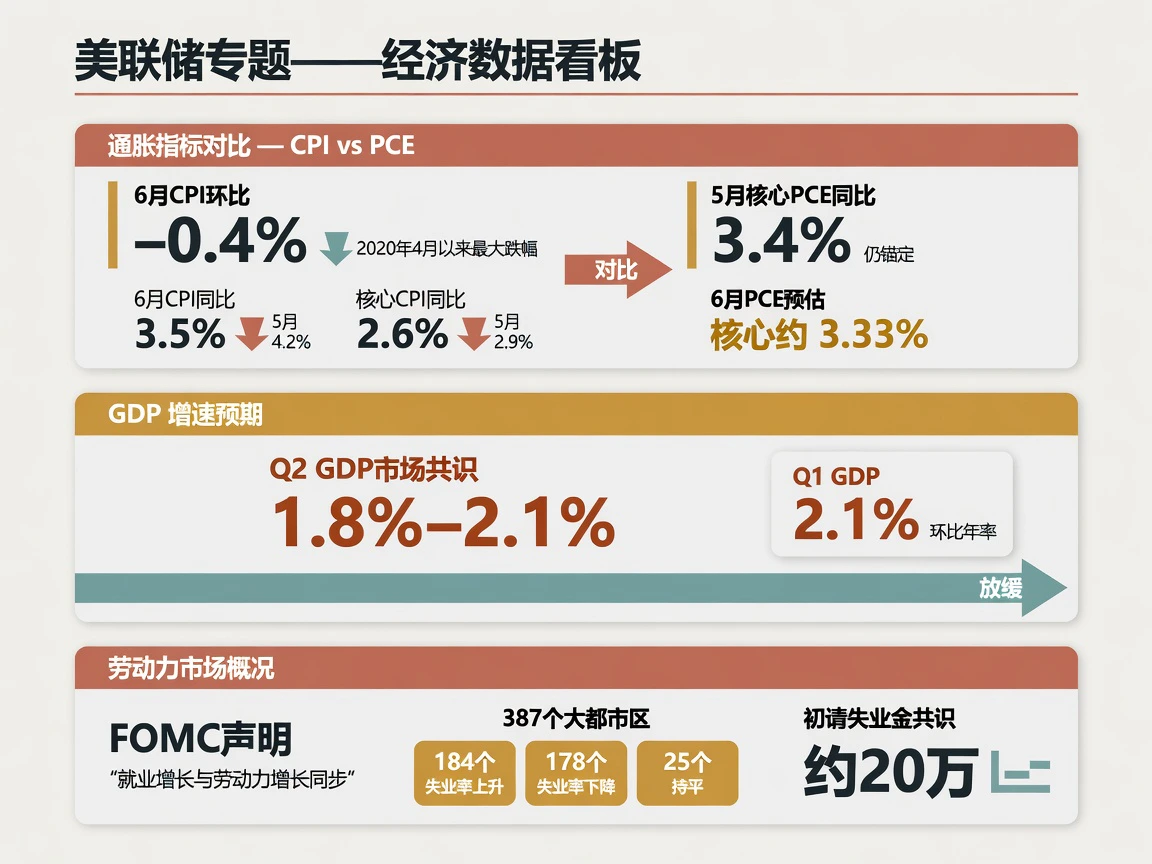
June CPI initially looked mild: headline -0.4% monthly, the largest fall since April 2020, and annual inflation down from May's 4.2% to 3.5%. Core was flat monthly and eased annually from 2.9% to 2.6%. Gasoline's 9.7% drop drove the decline; shelter slowed to +0.1%, its smallest since January 2021.
PCE, the Fed's central policy anchor, had not yet confirmed broad disinflation.
May core PCE remained 3.4% annually, unchanged from April, and headline PCE 4.1%. June PCE and preliminary Q2 GDP were due July 30 at 20:30 Beijing time. Cleveland's nowcast forecast core PCE around 3.33% annually and +0.19% monthly. Even a first 2026 decline into the 3.2%–3.3% range would remain well above the long-term 2% target. Q2 annualized quarterly GDP consensus was 1.8%–2.1%, mildly below Q1's 2.1%.
Labor remained broadly steady. The statement said employment and labor-force growth were aligned and unemployment little changed. June metropolitan figures released July 29 showed annual unemployment up in 184 of 387 areas, down in 178 and unchanged in 25: regional differences without systemic deterioration. Claims for the week ending July 25 were due July 30, with consensus around 200,000.
Marginal cooling had not removed persistent inflation. Whether PCE confirms CPI's decline directly determines September's policy room.
Policy meeting
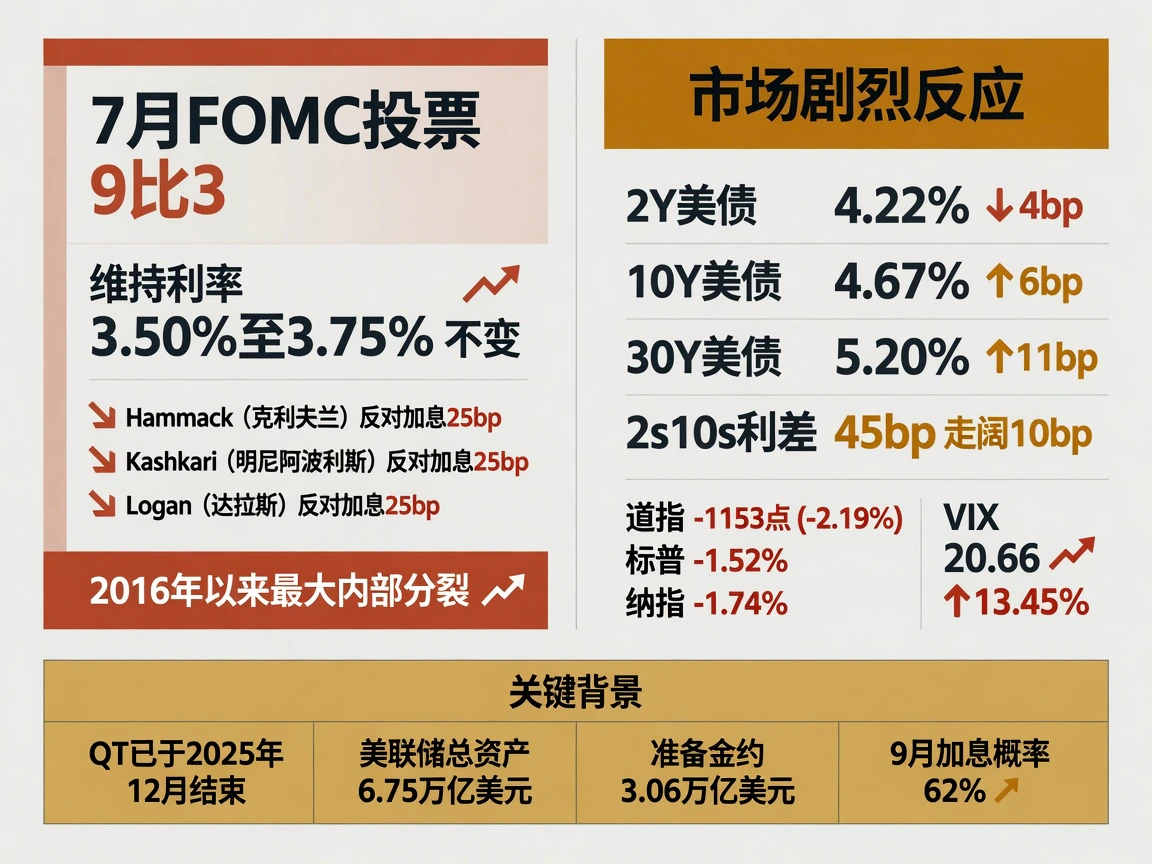
The final July vote was 9–3 to hold. Cleveland's Hammack, Minneapolis's Kashkari and Dallas's Logan all preferred an immediate 25-basis-point hike. This was the first instance since 2025 of at least three hawkish dissents and the most public split since September 2016.
The short statement removed conventional guidance. It said activity expanded solidly despite Middle Eastern uncertainty, inflation remained notably above 2% because of energy and other supply shocks, and firmly committed that the committee would achieve price stability.
June's dots had already raised the end-2026 median rate to 3.8% from March's 3.4%, implying room for a 25-basis-point hike. Markets generally expected September's SEP could lift it above 4.0%.
QT formally ended in December 2025. Assets were around $6.75 trillion and reserves $3.06 trillion, approximately 9.5% of nominal GDP, comfortably within the ample-reserves framework. The statement reaffirmed maintaining ample reserves.
Warsh refused to call the hold a pause, instead describing rigorous scrutiny of conditions. He stressed the only target was 2%, without a soft alternative, warned inflation above target for more than five years could not be cured quickly, and said the Fed would act without hesitation when necessary and appropriate.
Markets reacted sharply in a bear steepening: 2-year yields fell 4 bp to 4.22%, 10-year rose 6 to 4.67%, and 30-year rose 11 to 5.20%. The 2s10s spread widened 10 bp to 45. S&P 500 fell 1.52%, Nasdaq 1.74%, and Dow 1,153 points or 2.19%. VIX jumped 13.45% to 20.66.
The deeper tension was that long-end selling produced spontaneous market tightening, consistent with Warsh's preference for self-tightening conditions. Yet after five years above target, tough words alongside unchanged policy weakened perceived credibility; the long-bond selloff reflected that gap in pricing.
Official remarks
The July 29 statement and press conference were the only official communication in this window; no additional Board or district speeches were scheduled.
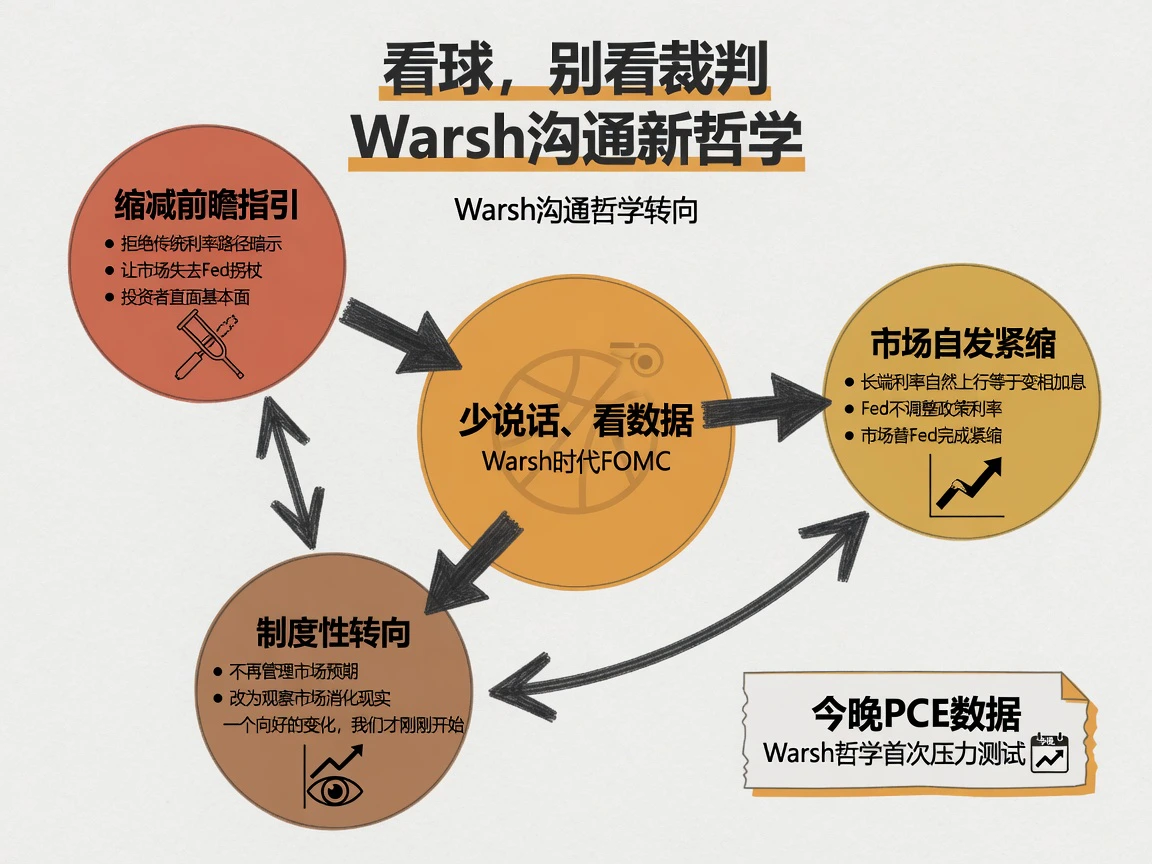
Warsh's style differed from his predecessor. He emphasized that nominal and real yields had risen sharply since June, among the larger comparable moves in decades, despite no policy-rate change. He attributed it to autonomous pricing as investors looked beyond dot-plot minutiae to inflation, growth and geopolitics.
He said market participants were learning to watch the game rather than the referee, that prices would continue moving as they judged appropriate, and that this was a welcome change only just beginning.
This implied three shifts: less guidance reduces dependence on a central-bank backstop and forces fundamental pricing; rising long rates tighten conditions and perform some restraint for the Fed; and the institution moves from managing expectations toward observing reality, testing how prices absorb conditions rather than smoothing volatility.
On disagreement, Warsh said he had wanted a healthy family debate and got one. The 9–3 tally may therefore understate hawkish sentiment; investors should examine how many others await data to justify hikes. Earlier, on July 14, he promised advance notice for balance-sheet changes; Logan's July 16 inflation concerns aligned with her dissent.
That evening's June PCE was the first key test of the watch-the-game approach. Core at or above 3.4% would support September hike trading; a decline near 3.3% could provide temporary relief. Under Warsh the Fed was accelerating toward less guidance and greater data emphasis, leaving markets to bear more pricing volatility.