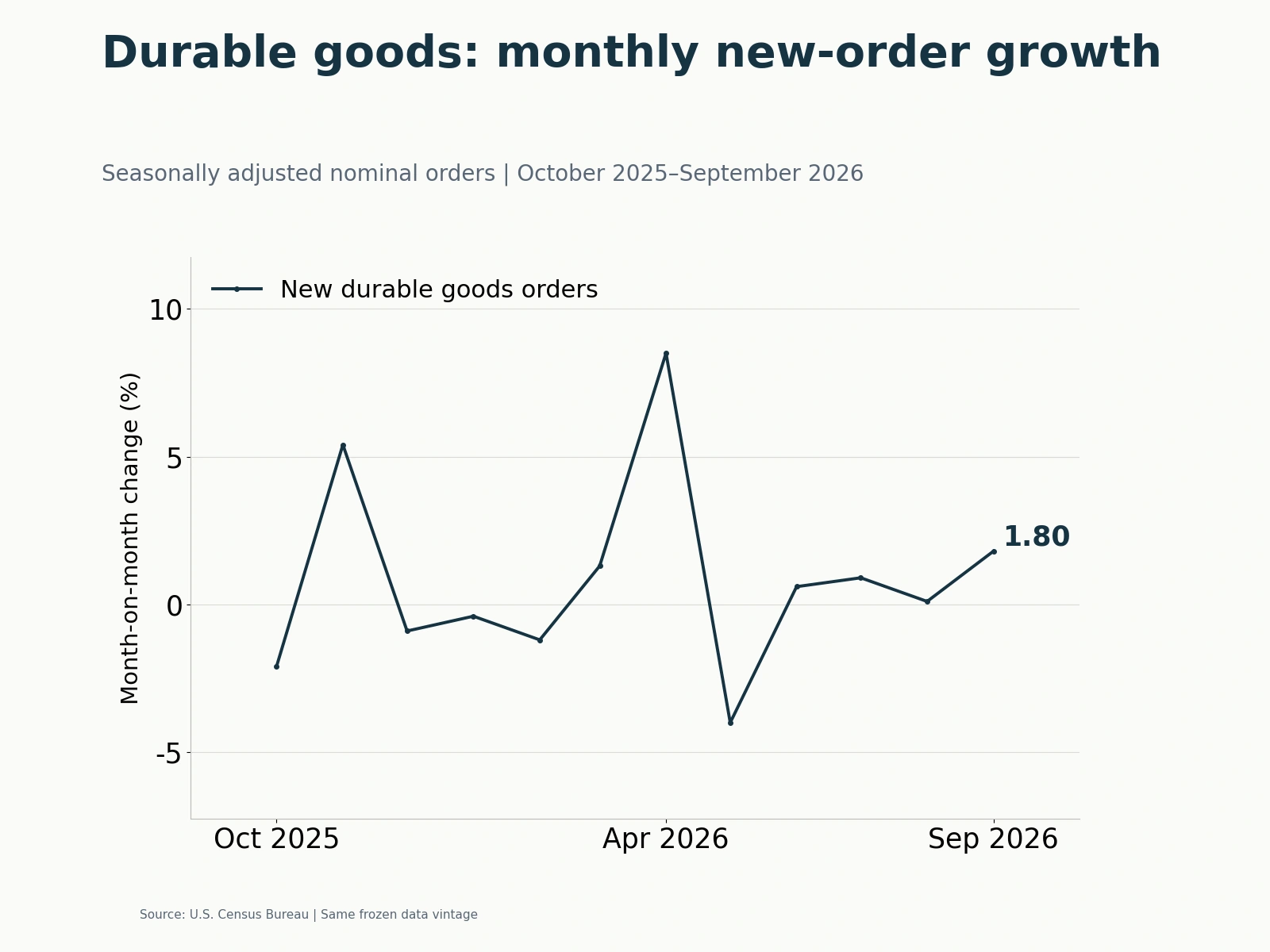
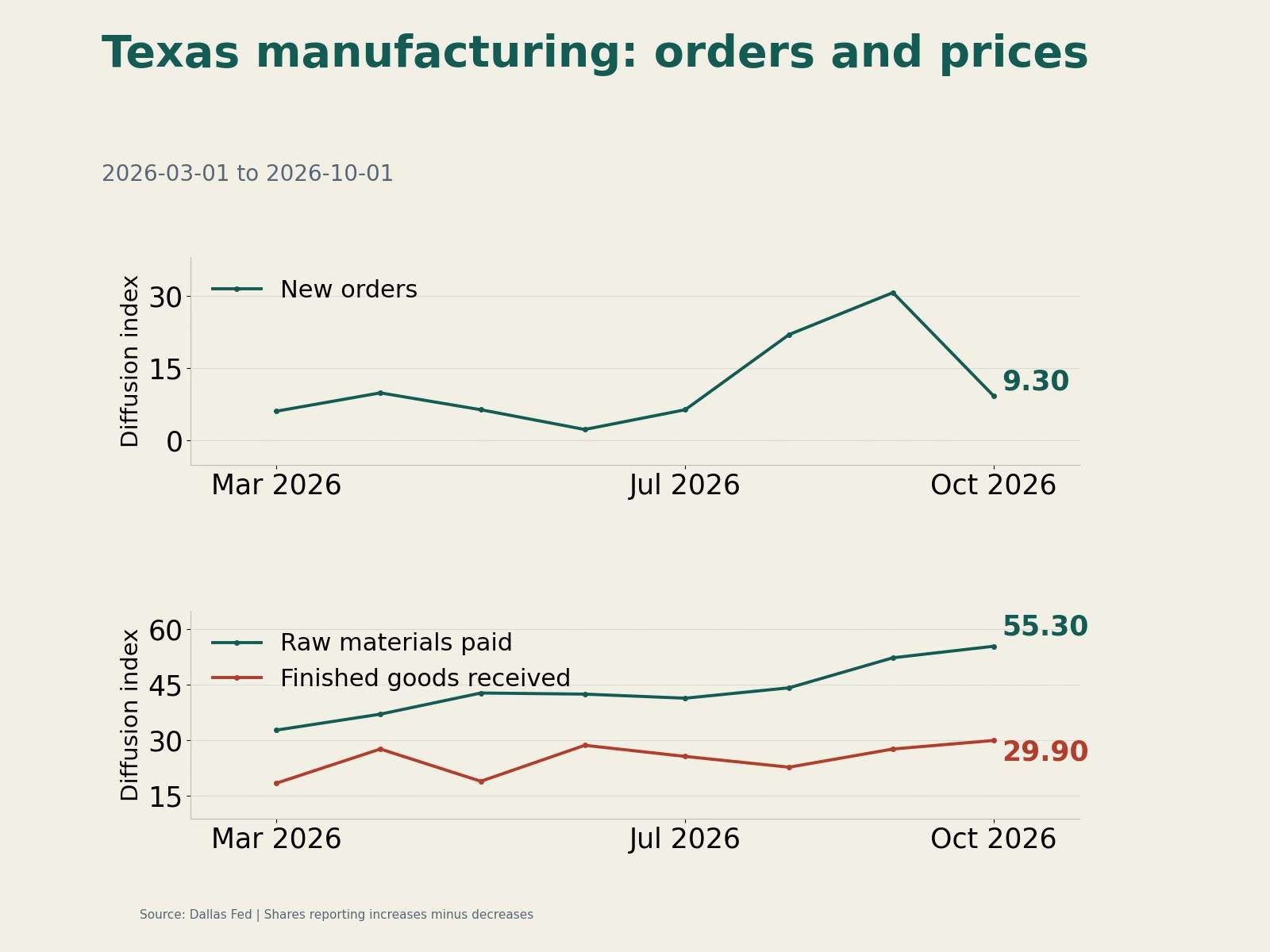
On July 28–29, the Fed held rates for the fifth time this year, but three dissents favoring an immediate hike made the decision tense. Within 24 hours, preliminary second-quarter GDP and June PCE showed slower growth and marginally cooler inflation. Markets were caught between strong internal hawkish disagreement and apparently dovish data.
Economic data: resilient domestic demand beneath headline slowing
Two major releases on July 30, immediately after the FOMC, initially appeared dovish.
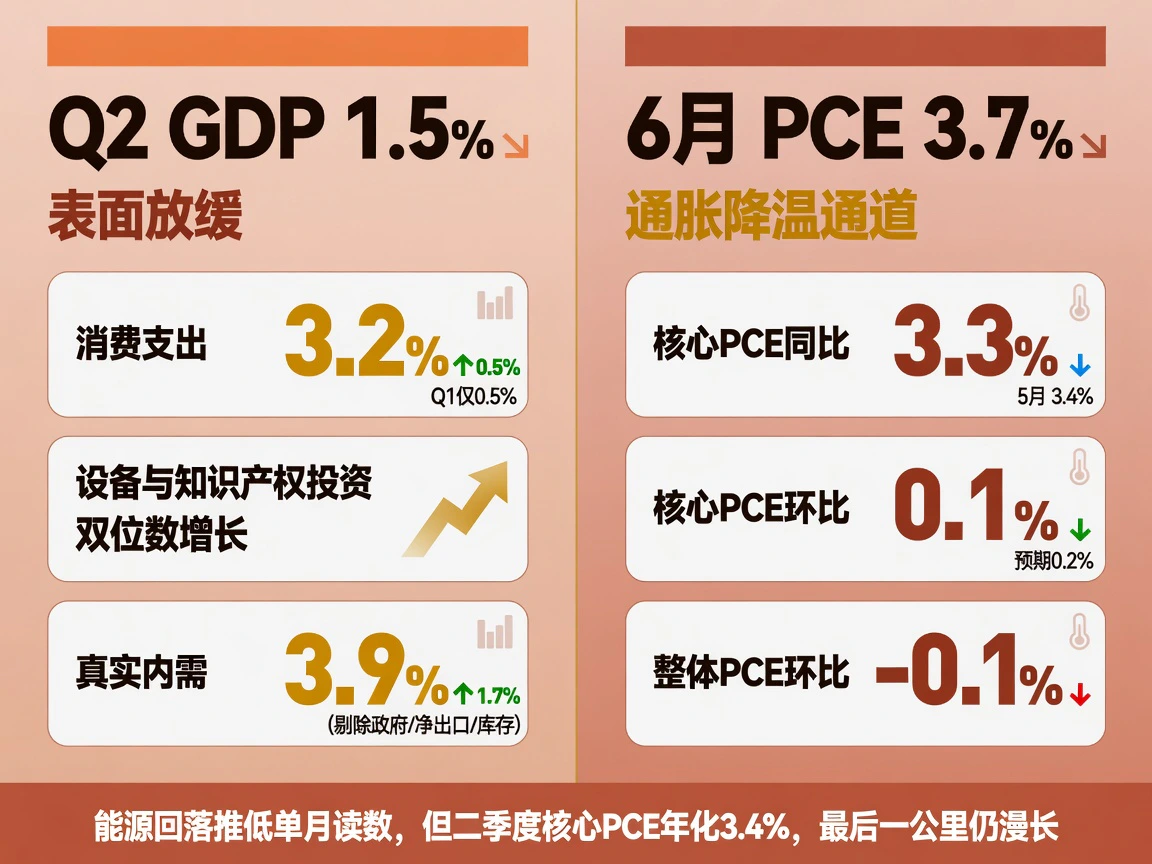
Advance second-quarter GDP grew at a 1.5% annualized rate, well below consensus near 2.0% and slower than the first quarter's 2.1%. The composition showed fundamentals were far from weak.
Consumption growth rebounded from 0.5% annualized to 3.2%, while equipment and intellectual-property investment maintained double-digit growth. The main drags were declining government spending—federal nondefense particularly affected by Strategic Petroleum Reserve releases—and net exports plus inventory reductions subtracting about 1.7 percentage points. Excluding these volatile items, real final sales to private domestic purchasers rose 3.9% annualized, more than twice the first quarter's 1.7% and the strongest in several quarters. BEA data showed AI-related capital-expenditure growth approaching 20% over the preceding four quarters, providing structural support.
June PCE continued cooling. Headline annual inflation fell from May's 4.1% to 3.7%, with prices down 0.1% monthly. Core inflation edged from 3.4% to 3.3%; its 0.1% monthly increase was below the expected 0.2%.
Lower energy was the key monthly driver, helped by a brief mid-June US–Iran ceasefire. With that agreement broken, July might not repeat the oil benefit. More importantly, core PCE at 3.3% remained, in the article's characterization, nearly twice the 2% target, and second-quarter annualized core inflation was still 3.4%. The final stretch of disinflation remained long.
Policy meeting: the most hawkish hold in nearly a decade
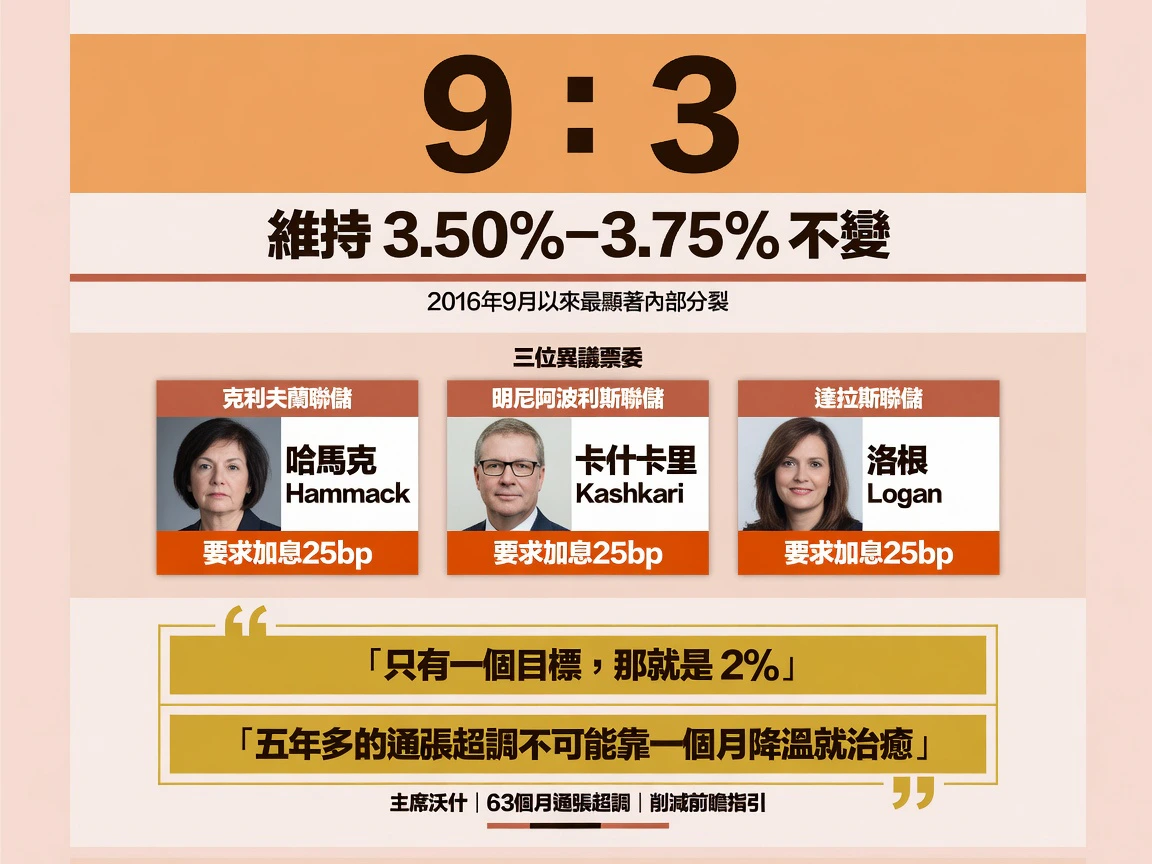
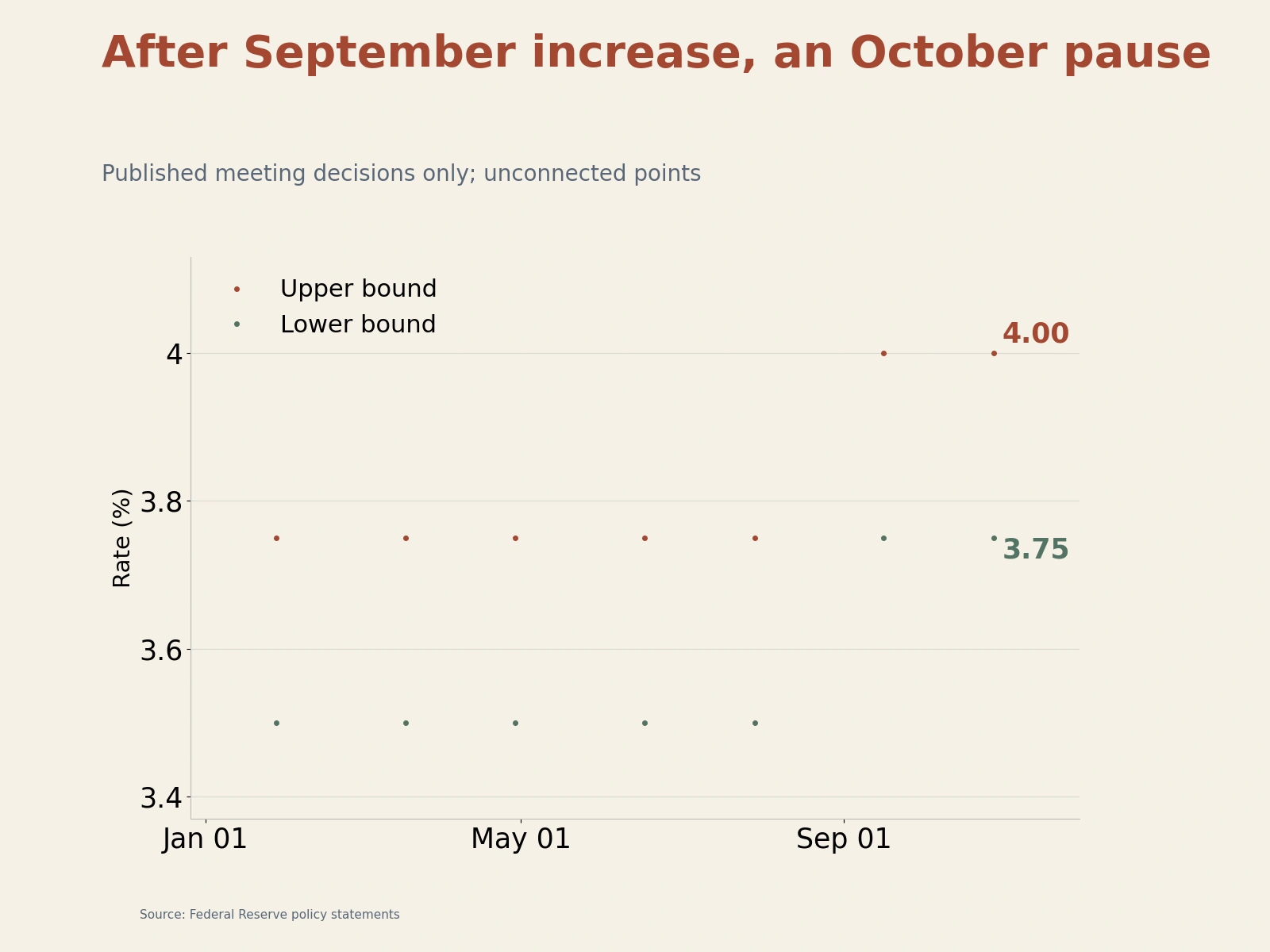
The July 28–29 FOMC voted 9–3 to maintain 3.50%–3.75%. Unchanged rates nevertheless came with the sharpest internal disagreement since September 2016.
Three voting regional presidents—Beth Hammack of Cleveland, Neel Kashkari of Minneapolis and Lorie Logan of Dallas—unusually agreed on an immediate 25-basis-point hike.
The hawkish emergence had clear precedents. Logan said July 16 that moderately higher rates would better balance the outlook and risks and one softer month did not establish a sustained return to 2%. Kashkari had joined the hiking camp at June's Aspen forum; Hammack had repeatedly signaled tightening at April's meeting.
New Chair Kevin Warsh was equally firm after the meeting. He rejected a soft inflation target, reaffirmed 2% alone and calculated roughly 63 months of overshooting. More than five years above target, he said, could not be cured in nine weeks or by one moderate monthly price reading.
Asked by the Financial Times about dissents, he joked that he asked for a healthy family debate and got one. He treated conflict as a design feature and said discussion concerned the underlying path logic: persistent high inflation, AI investment, tariffs and energy supply shocks and their transmission, plus the combination of balance-sheet runoff and rates.
Warsh was also reducing traditional guidance to make prices respond more directly to macro realities. He promised press conferences at every remaining 2026 meeting. There was no new SEP or dot plot at this meeting; minutes would follow in three weeks.
Official communication: silence briefly continues, with hawkish groundwork in place

No public remarks were scheduled July 30–31. Although the blackout ended after the July 30 close, no official had yet explained votes or changed positions. The calendar showed Governor Lisa Cook next, on August 5.
The busy July 13–16 premeeting commentary had foreshadowed division:
Logan's July 16 argument for moderately higher rates directly foreshadowed her dissent.
That day Vice Chair Philip Jefferson spoke at Stanford on navigating economic shocks, emphasizing supply factors and uncertainty.
Governor Christopher Waller's July 13 speech, Monetary Policy at a Crossroads, conveyed a cautious wait-and-see approach.
These remarks mapped a spectrum: firm hikers Logan, Kashkari and Hammack; the supply-uncertainty center represented by Jefferson; and Waller's cautious assessment awaiting data. Cook's August 5 appearance after the blackout would be the first window into evolving alignments.
Market pricing: 64% September hike odds, far from settled
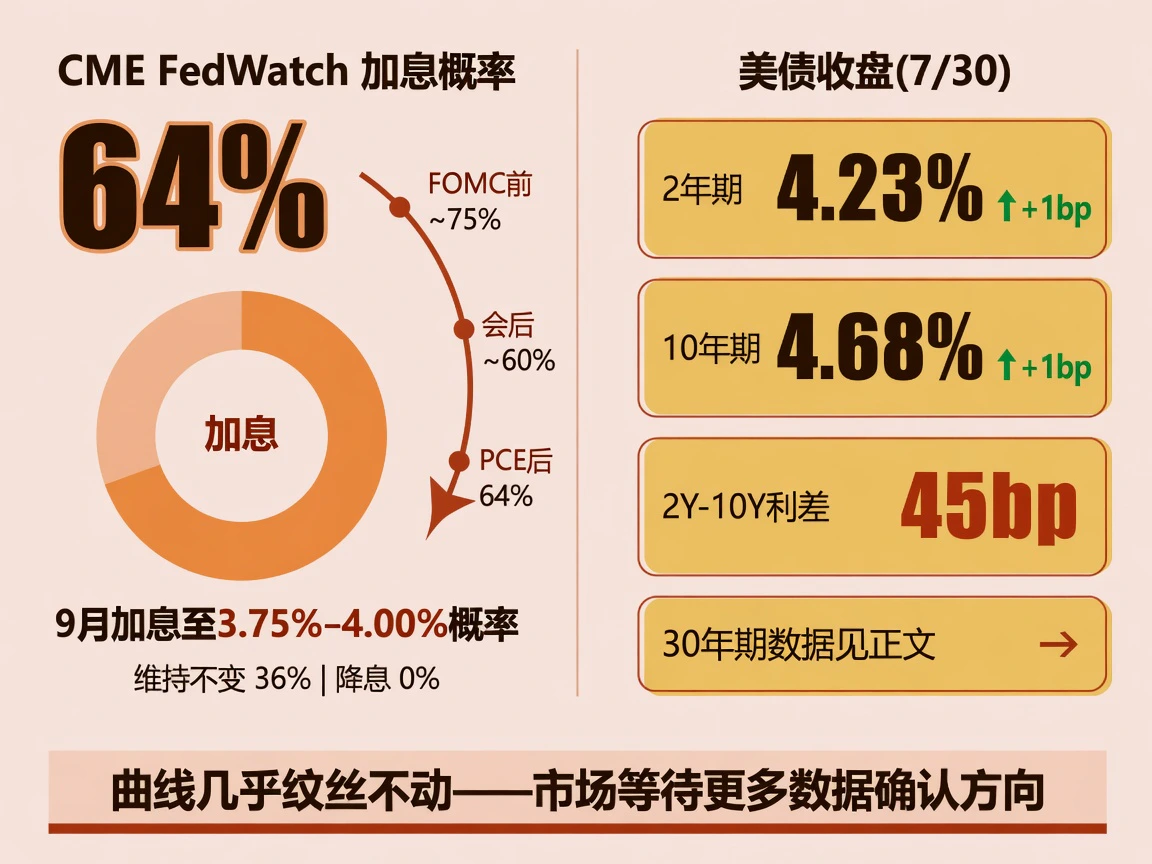
Around 8:25 p.m. US Eastern on July 30, CME FedWatch pricing from 30-day fed funds futures put a September 16 hike of 25 basis points to 3.75%–4.00% at about 64%, a hold at 36% and cuts at 0%.
The 64% level remained contested. Before the meeting, geopolitics and oil had lifted hike bets toward 75%–80%; they fell to about 60% after Warsh's press conference and stabilized near 64% after July 30 inflation data. Markets jointly absorbed his hawkish tone and moderate prices: the balance tilted toward September tightening, but the outcome remained open.
Treasuries also showed caution. Treasury's daily par curve put the two-year at 4.23%, up 1 basis point, and the 10-year at 4.68%, also +1 basis point. Their 45-basis-point spread was unchanged. A nearly static curve suggested demand for more evidence: investors would neither blindly assume another hike nor ignore growing hawkish strength.