The July Fed meeting continued reverberating on July 31. Treasury yields rose broadly, with the 30-year reaching 5.27%, its highest since 2007. Markets were absorbing a clear reality: rates were held, but internal disagreement was much greater than expected.
Economic data: apparent slowing with still-hot domestic demand
Three macro releases over 48 hours painted a complex picture.
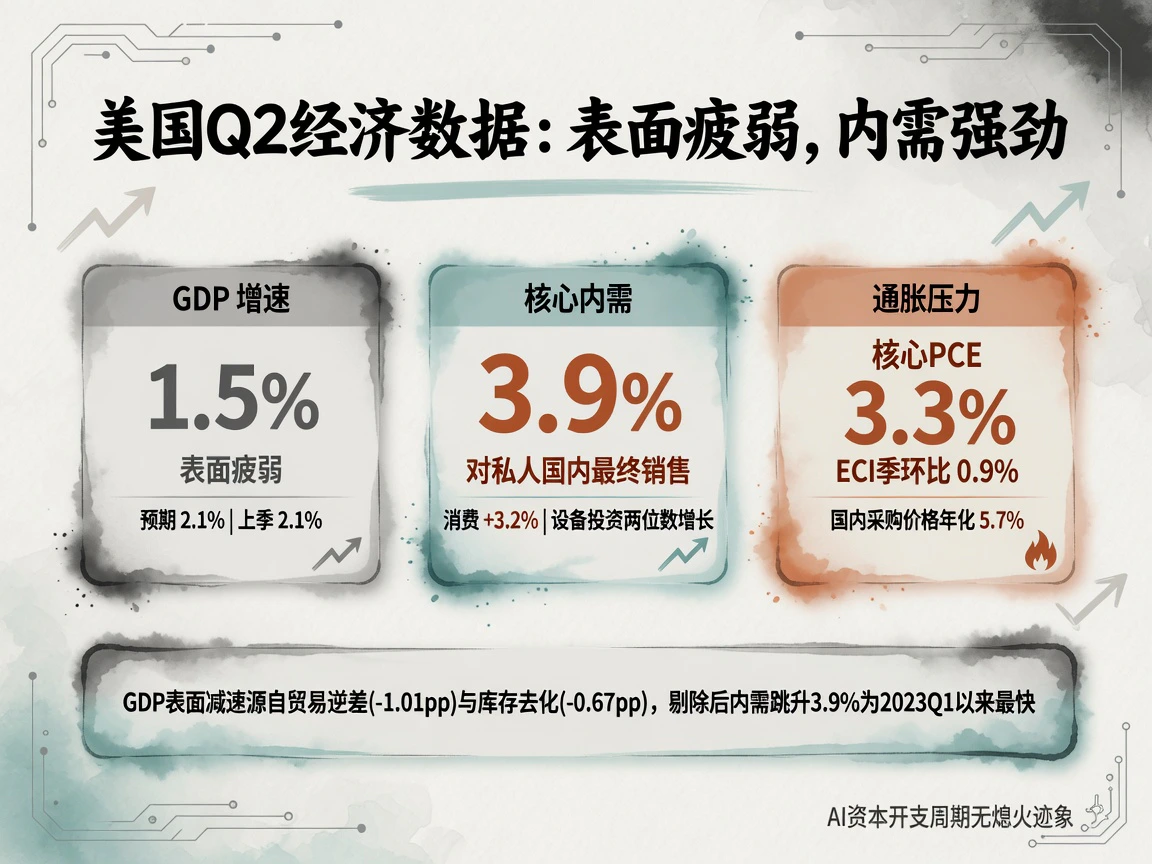
Preliminary second-quarter real GDP grew only 1.5% annualized, below 2.1% expected and the first quarter's 2.1%. Trade subtracted 1.01 percentage points and inventories 0.67, reflecting AI hardware import demand and strong consumption of channel stocks. Real private domestic final sales excluding trade, inventories and government jumped 3.9%, the fastest since first-quarter 2023. Consumption grew 3.2% versus 0.5%, equipment expanded at double-digit rates for a second quarter and AI capital spending showed no exhaustion.
June PCE prices rose 3.7% annually versus 4.1%, with core 3.3% versus 3.4%. Monthly headline fell 0.11% and core rose 0.13%, aided by gasoline's June pullback. Yet second-quarter domestic-purchase prices rose 5.7% annualized, a four-year high, and core PCE 3.4%. Inflation was far from gone; June improvement relied heavily on a fragile geopolitical ceasefire window.
Second-quarter ECI rose 0.9% quarterly, above 0.8% expected and unchanged from the first quarter. Annual growth was 3.4%, comprising wages 3.2% and benefits 3.8%. The Fed's labor-cost gauge showed no quarter-on-quarter slowdown, leaving service-sector pressure high. Real private wages fell 0.4% annually, showing nominal pay struggling with prices and explaining household purchasing-power strain.
Together, the data pitted a single month's reported moderation against deeper quarterly persistence.
The meeting: a surprising 9–3 split
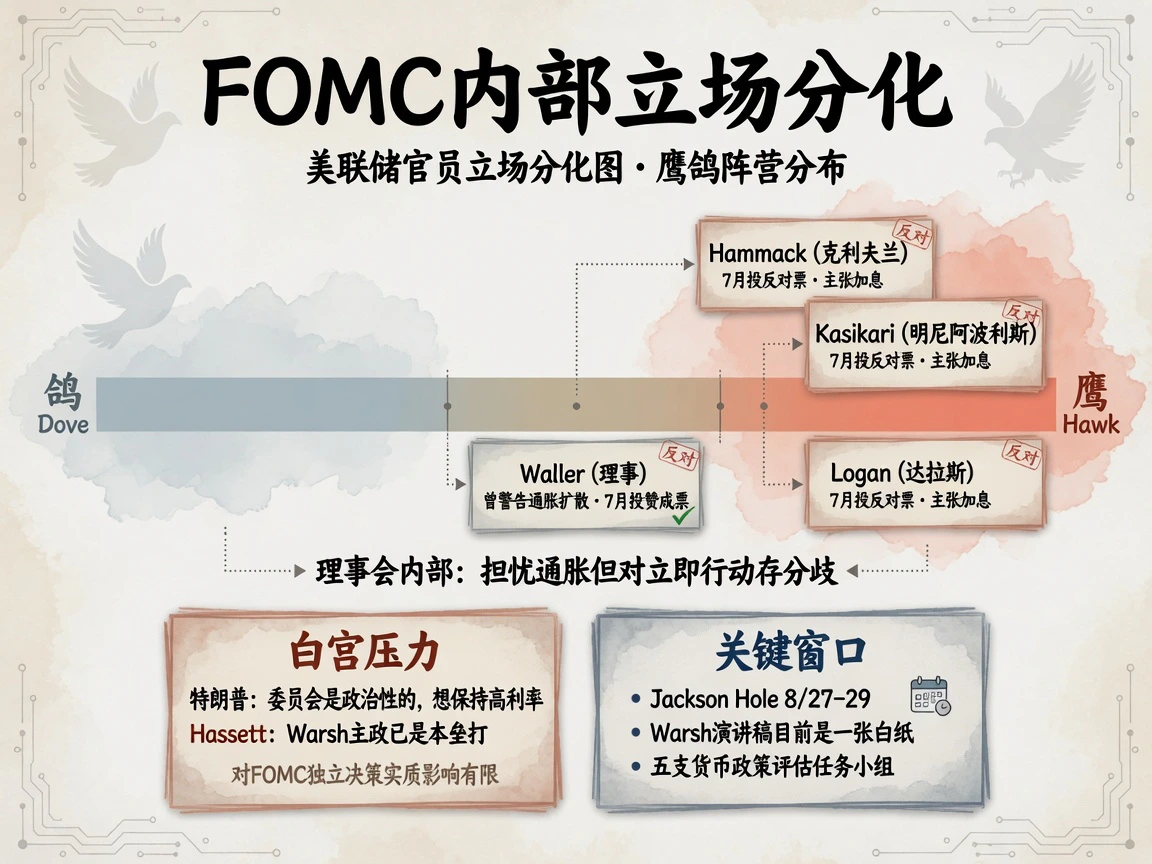
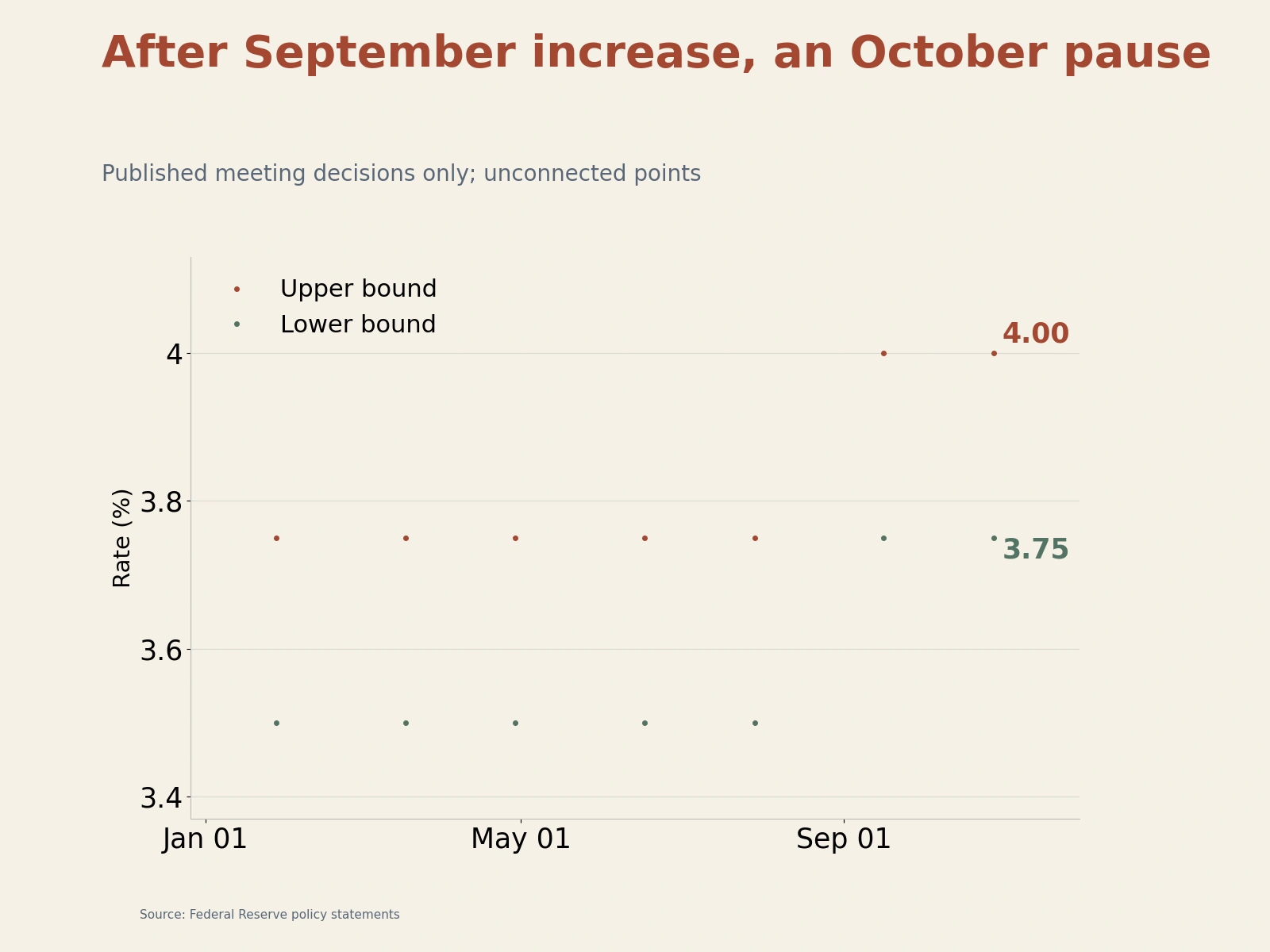
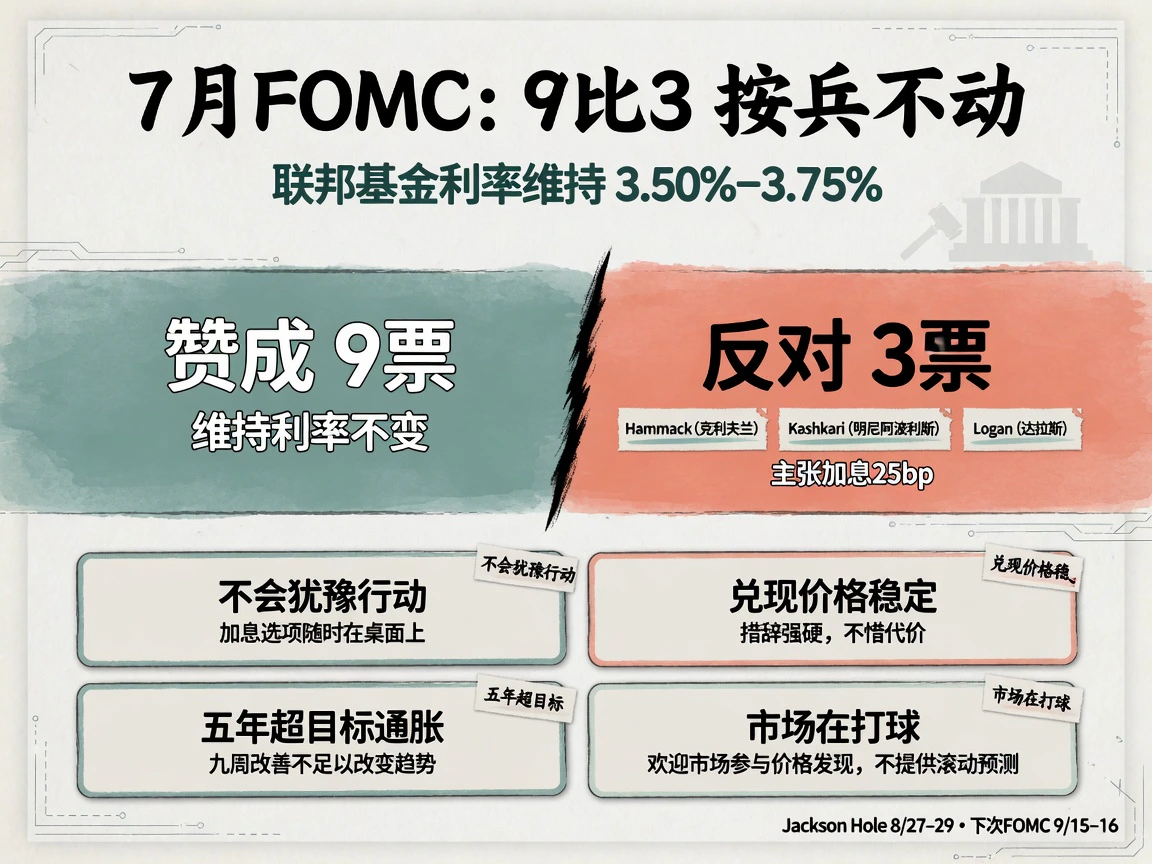
July 28–29 FOMC held 3.50%–3.75%, but the 9–3 vote surprised. Cleveland's Hammack, Minneapolis's Kashkari and Dallas's Logan dissented for a 25-basis-point hike. It was the first three-member challenge for further tightening since September 2016.
The short statement largely repeated June and gave no guidance. Warsh refused to call it a pause, describing a rigorous assessment of conditions.
He said action would not be delayed when necessary and appropriate, keeping hikes on the table. He pledged price stability and argued that more than five years above target could not be cured by nine weeks or one month's mild price relief. He encouraged real-rate-based price discovery, saying markets should play the game rather than watch the referee, and rejected routine rolling forecasts and commentary.
Ahead of Jackson Hole on August 27–29, Warsh called his speech a blank page; interim work from five policy-review groups could supply its core. For strategy, communications and balance-sheet reform, it was the key window before September 15–16 FOMC.
Officials: dissenters' positions and a divided Board
The three regional dissenters added no postmeeting comments, but Logan had advocated modestly higher rates, Kashkari repeatedly warned about persistence and Hammack consistently leaned hawkish. Their votes matched prior views.
Waller's choice was more revealing. On July 13 he warned against fighting the last war, said inflation had spread beyond energy and tariffs and raised the possibility of hikes. Yet he voted with the majority. The difference between Board members and regional presidents showed substantive disagreement over timing despite shared inflation concern.
White House noise rose too. Trump called Warsh excellent but constrained by a political committee that wanted high rates, claiming he favored lower rates. Hassett said Warsh had hit home runs and June CPI proved inflation control was possible. Pressure was familiar, but three public hawkish dissents limited its actual constraint on independent FOMC decisions.
Market pricing: long yields reach nineteen-year highs
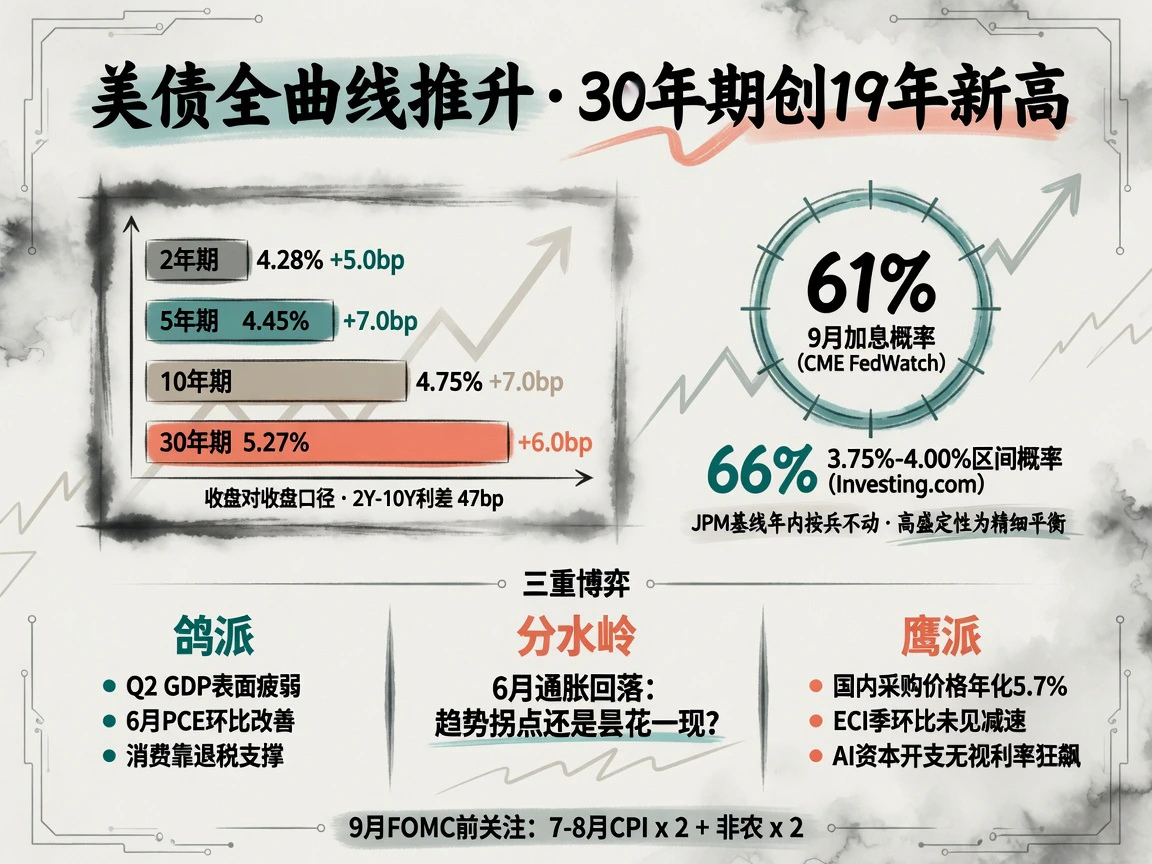
Treasury par yields on July 31 rose close to close: 2-year 4.28%, +5.0 basis points; 5-year 4.45%, +7.0; 10-year 4.75%, +7.0; 30-year 5.27%, +6.0 and highest since 2007. The 2-year/10-year spread widened to 47 basis points, a slight steepening.
CME FedWatch put September 25-basis-point hike odds around 61%; Investing.com put the 3.75%–4.00% outcome near 66%. JPMorgan Wealth Management retained a full-year hold baseline but acknowledged greater upside tail risk. Goldman Sachs Asset Management called September a delicate balance.
The long-end move mattered especially. The 30-year increase matched or exceeded the short end and reached a nineteen-year high, showing both hike pricing and forceful term-premium reassessment. Warsh's refusal of guidance, continued Middle Eastern tension and unexpectedly high domestic-purchase inflation increased compensation for long-term inflation uncertainty.
Doves emphasized headline GDP slowing, mild June monthly PCE and CPI, and unsustainable tax-refund-supported consumption. Hawks emphasized 5.7% annualized domestic-purchase prices, unslowed ECI and AI spending impervious to rates and valuations. The dividing question was whether June was an inflation turning point or a brief geopolitical lull.
Before September 15–16, July and August would supply two CPI and two payroll reports. Continued core moderation from June could support Warsh's cautious assessment. Renewed oil transmission, especially to rents and core services, could turn a delicate balance rapidly into a hike baseline.