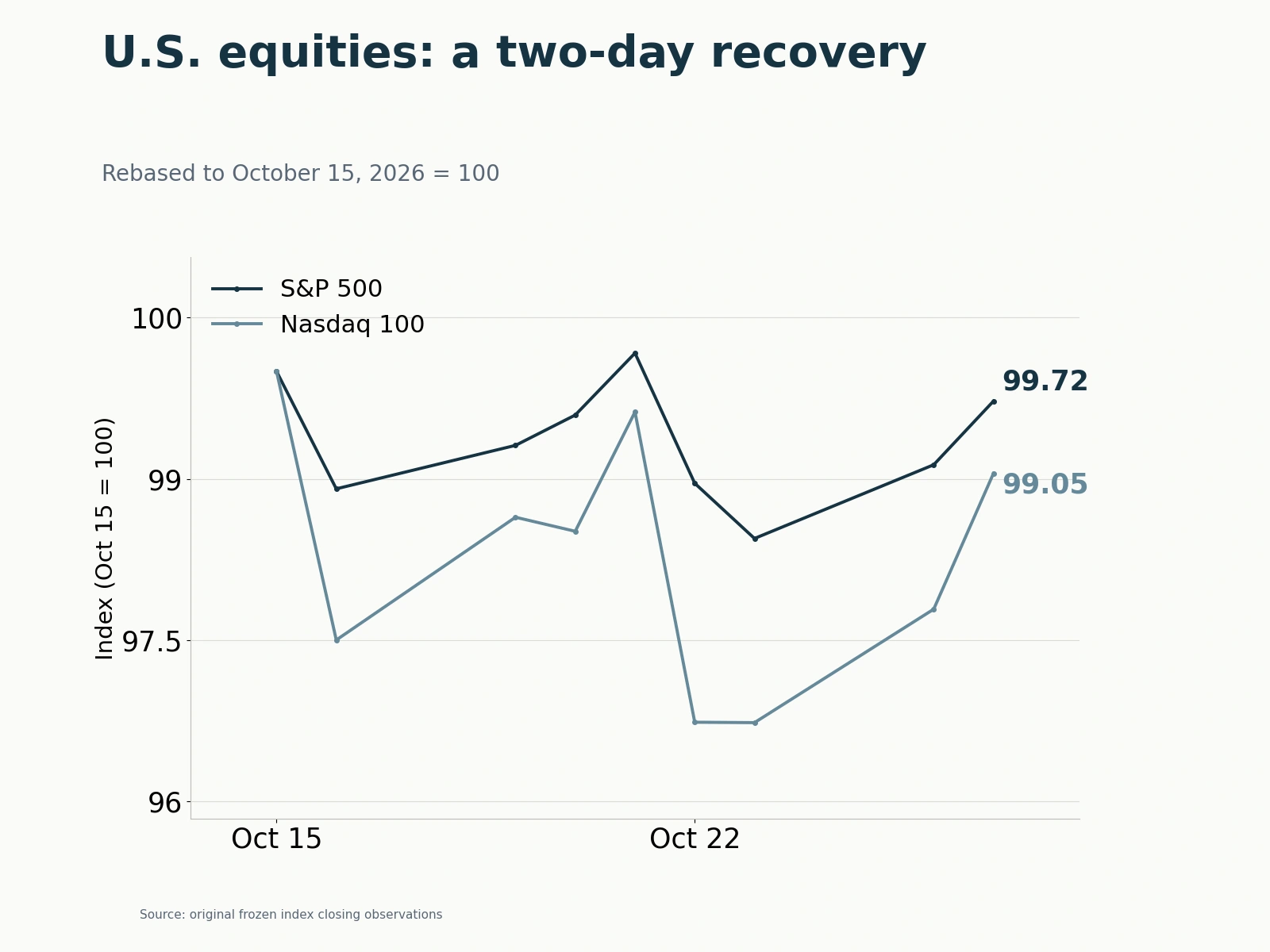
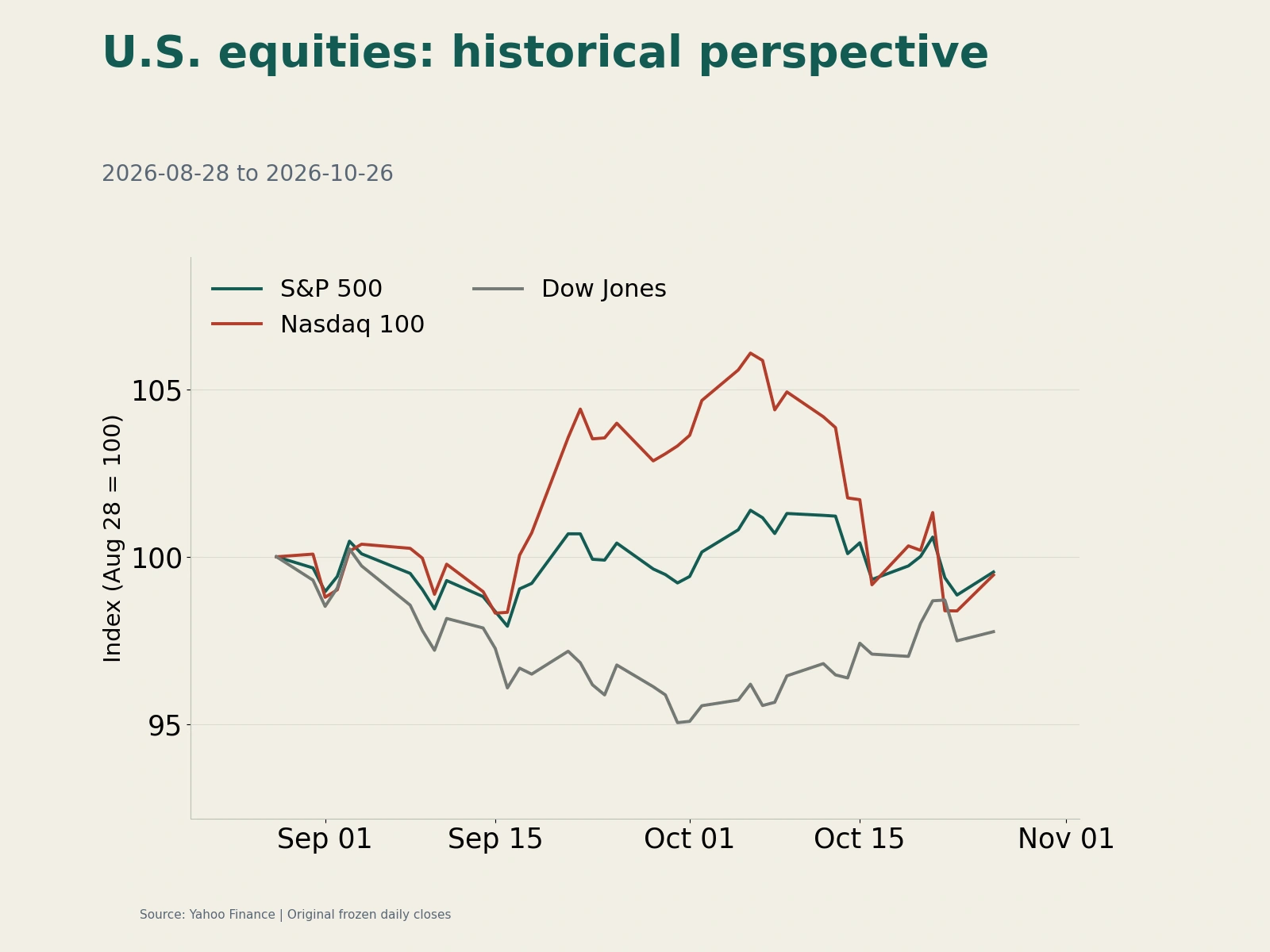
Global cross-asset performance diverged sharply on July 31, 2026. Treasuries extended a broad selloff, with key yields rising 5–7 basis points as repeated comments from three FOMC dissenters increased expectations of a September hike. The main U.S. equity indexes rose, but the market was deeply divided. Amazon surged about 15% as strong AWS growth eased anxiety over AI capital expenditure; Apple fell more than 7% as supply-chain constraints and weak guidance overshadowed an earnings beat. In Asia, South Korea's KOSPI jumped nearly 18%, its largest daily gain on record, in a fierce rebound fueled by U.S. cloud earnings and extreme short covering. Oil rose more than 1% on Hormuz-related geopolitical support, while gold fell more than 1% under pressure from nominal yields and tightening expectations.
Fixed income: A continuing curve-wide selloff as dissenters reinforce tightening expectations
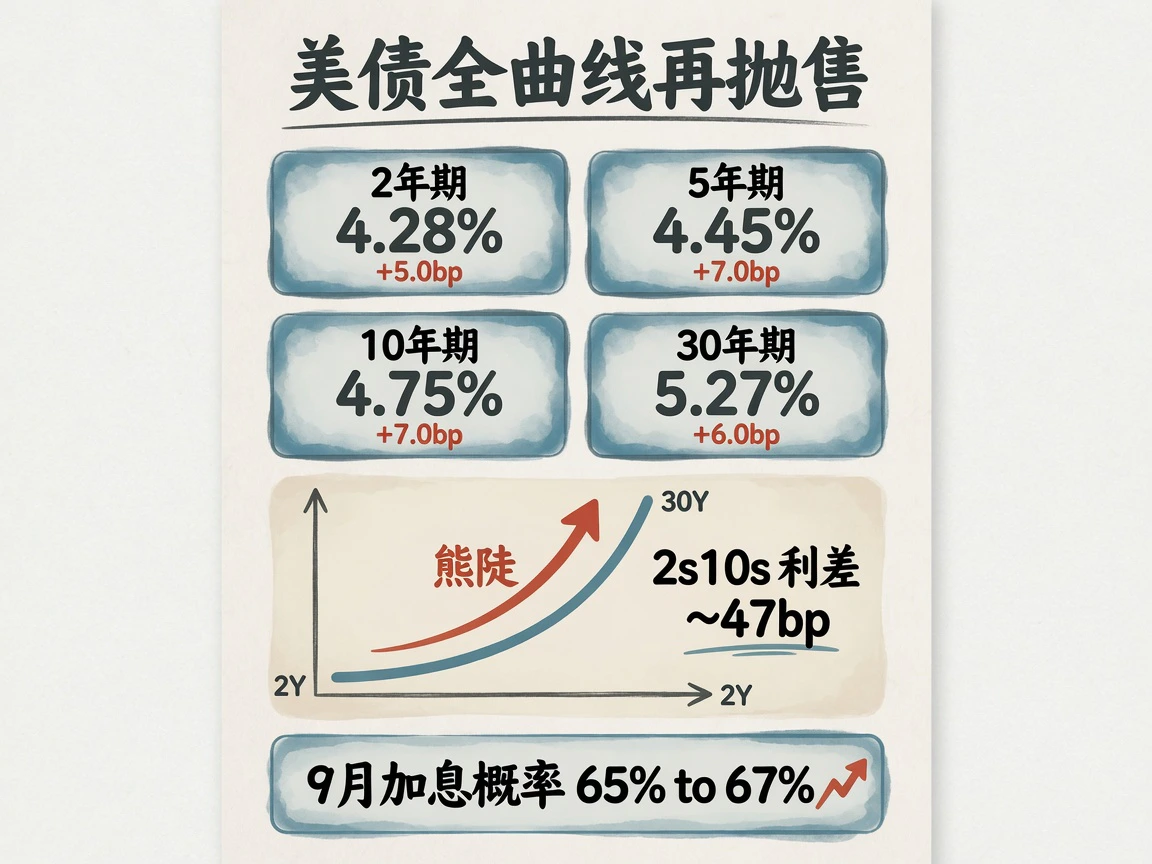
On July 31, Treasuries sold off for a third consecutive session following the FOMC's hold. Official Treasury end-of-day par yields rose at all four key maturities: 2-year 4.28%, up 5.0 basis points; 5-year 4.45%, up 7.0; 10-year 4.75%, up 7.0; and 30-year 5.27%, up 6.0. The 2s10s spread widened to about 47 basis points, a mild bear steepening.
Unlike the previous two sessions' pattern of falling short yields and rising long yields, the 5-basis-point rise in the 2-year yield was a clear signal. Markets were retreating from their earlier near-dismissal of a near-term hike and moving toward the possibility of action in September.
The shift directly echoed Friday's public comments by the three dissenters. Cleveland Fed President Hammack said policy was insufficiently restrictive and inflation was unlikely to return to 2% on its own. St. Louis Fed President Musalem emphasized rebuilding inflation credibility through a hike. Dallas Fed President Logan argued that modest near-term tightening would reduce the risk of more aggressive forced tightening later. All three had favored a 25-basis-point hike at the July FOMC meeting, the first three dissenting votes in a single policy direction since September 2016. Federal funds futures raised the implied probability of a September 25-basis-point hike from about 53% on decision day to 65%–67%.
Several forces reinforced pressure on bonds. First, Warsh's Fed had reduced forward guidance, and dissent amplified uncertainty over the rate path, prompting demands for a higher long-term term premium. Second, oil rose more than 1% alongside nominal yields, intensifying concern about second-round energy inflation. Third, institutional month-end rebalancing reinforced the steepening established during the week.
Macro: Resilient cost and activity data support the tightening argument
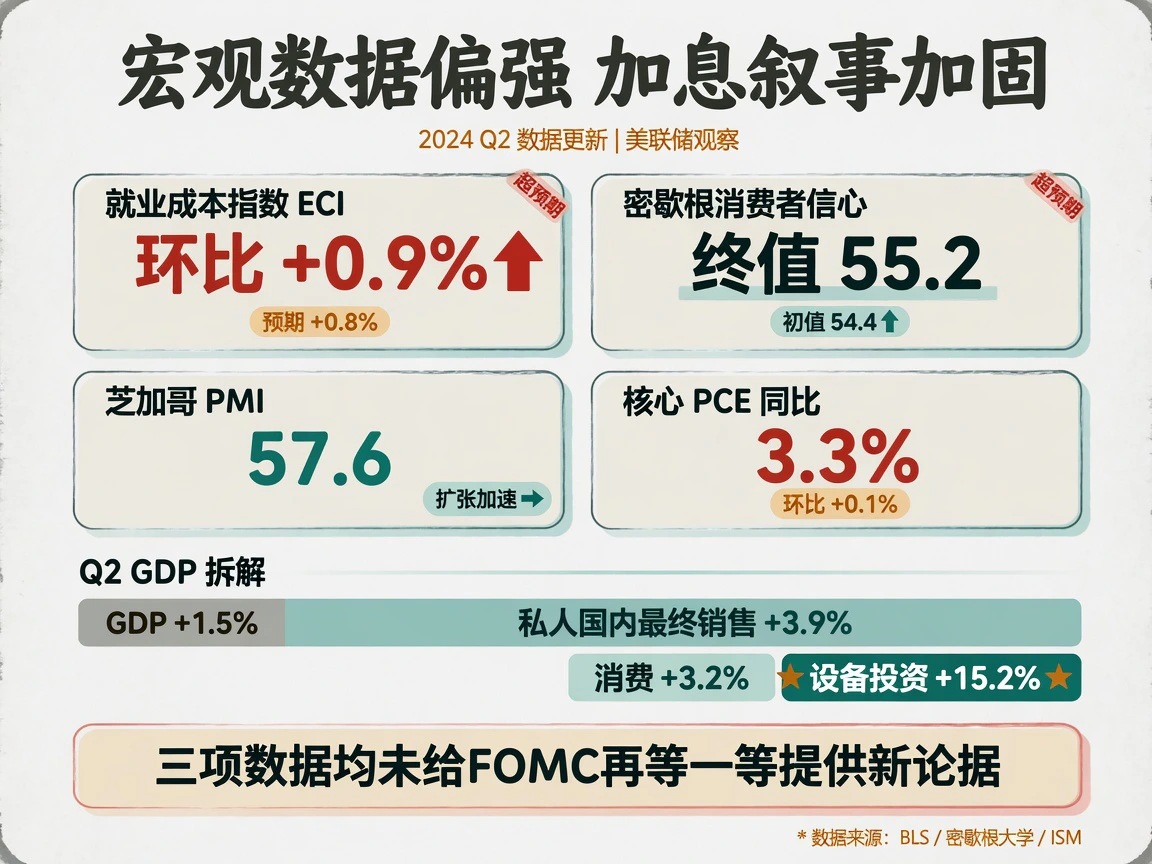
July 31 macroeconomic releases were broadly strong. The second-quarter U.S. employment cost index (ECI) rose 0.9% quarter on quarter, above the 0.8% forecast. Private-sector wages accelerated from 0.7% in the first quarter to 0.9%. The final University of Michigan consumer sentiment index was revised up to 55.2 from 54.4, improving from the previous month despite gasoline returning above $4 nationwide and renewed Middle East tensions. Chicago PMI rose to 57.6, indicating faster expansion. None of these releases gave the FOMC majority additional support for waiting.
Thursday's advance second-quarter real GDP estimate showed annualized quarterly growth of 1.5%, below the Bloomberg consensus. Its components nevertheless showed strong domestic demand: private domestic final sales rose 3.9%, the fastest since the first quarter of 2023; personal consumption increased 3.2%; and equipment investment surged 15.2%. Imports and inventory drawdowns depressed the headline. That accounting gap reflected domestic demand outpacing domestic production, rather than recession. June core PCE inflation was 3.3% year on year, in line with expectations, and 0.1% month on month. But much of that month's cooling benefited from a temporary ceasefire's effect on oil. With conflict resuming in July, the earlier disinflation path could not simply be extrapolated.
Equities: Amazon's surge supports the AI thesis as Apple's slump weakens breadth
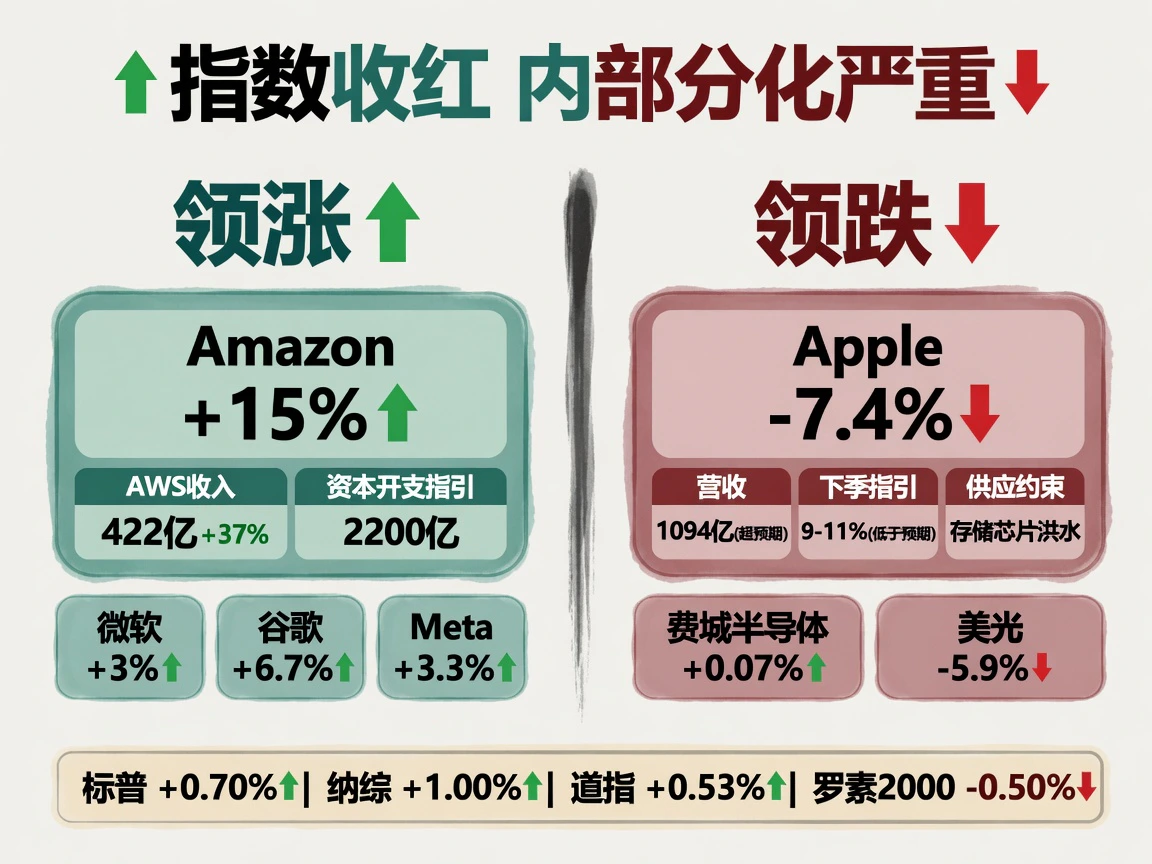
All three major U.S. indexes rose on July 31: the S&P 500 closed at 7,489.72, up 0.70%; the Nasdaq Composite at 25,373.85, up 1.00%; and the Dow at 52,485.03, up 0.53%. These gains concealed deep internal divergence. The Russell 2000 fell 0.50%, while S&P 500 decliners outnumbered advancers by roughly 1.3 to 1. A few heavily weighted leaders drove the index higher, leaving breadth constrained.
Amazon's roughly 15% surge was the day's most important equity story. Results released after the previous close showed second-quarter AWS revenue of about $42.2 billion, up 37%, its fastest growth in 18 quarters; a backlog near $500 billion; and full-year capital spending guidance raised to about $220 billion. CEO Andy Jassy's statement that AI demand still far exceeded supply effectively eased investors' concerns. AWS operating profit was about $16.6 billion, a 39% margin, accounting for roughly 60% of Amazon's overall operating profit. Markets widely viewed the results as temporarily settling doubts about returns on enormous AI spending.
Apple fell about 7.4%, the opposite extreme. In its fiscal third quarter ended June 27, revenue of $109.4 billion and EPS of $2.02 both beat expectations. iPhone revenue set a June-quarter record, and Mac revenue rose 29%. But guidance for next-quarter revenue growth of 9%–11% fell short of analysts' roughly 12%. Components were the main constraint. On the call, the CFO described memory-chip price increases as a once-in-a-century flood: AI data centers were absorbing DRAM and NAND capacity, while advanced-process SoCs also faced production bottlenecks. This was Cook's last earnings report as CEO before hardware engineering chief Ternus was due to take over in September.
Among other technology giants, Microsoft added about 3% after Thursday's roughly 15% jump; Google rose about 6.7% and Meta about 3.3%. Semiconductors lagged. The Philadelphia Semiconductor Index edged up only about 0.07%, while Micron reversed an early gain of roughly 6% to close down about 5.9%. Hardware chips and cloud software platforms again diverged.
Asia: Korean stocks surge nearly 18% in a record short-covering rally
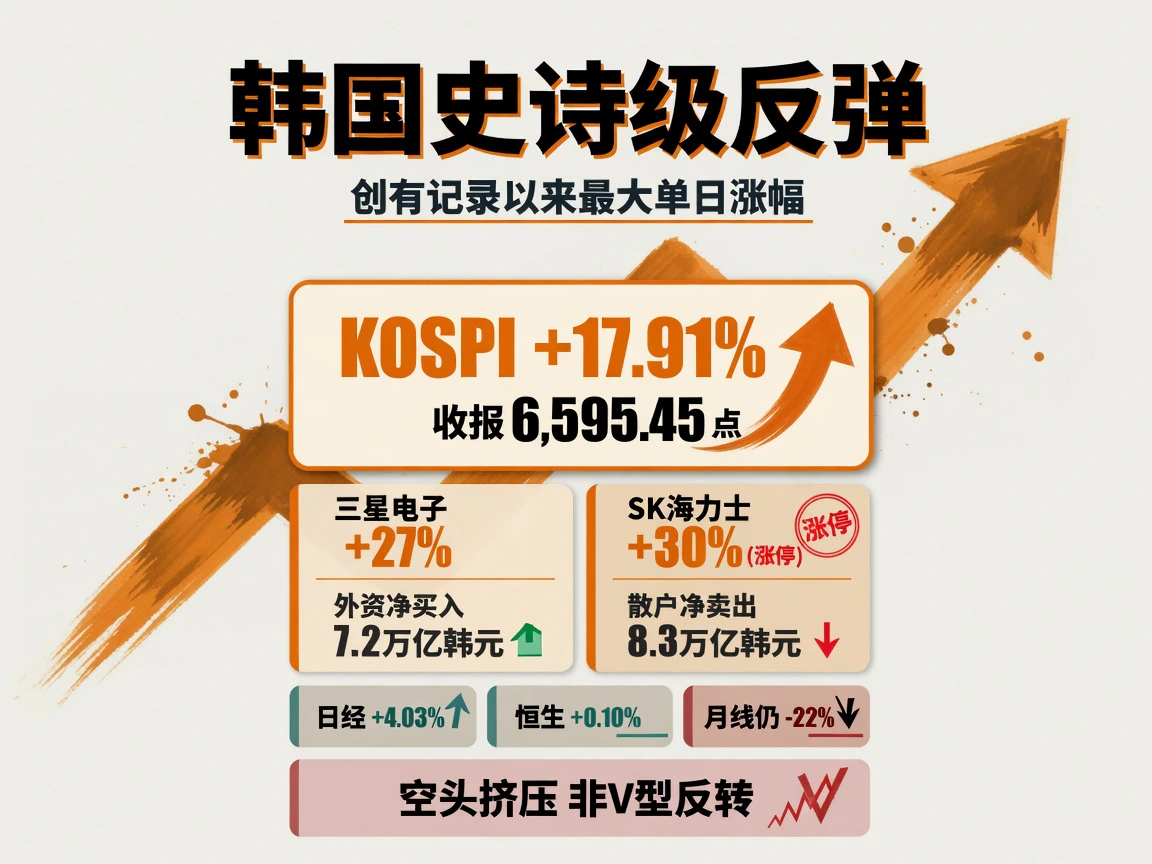
Asia-Pacific markets experienced a historic session. The KOSPI jumped 17.91% to 6,595.45, its largest recorded one-day gain, far surpassing the 12% record from the 2008 financial crisis. Samsung Electronics surged about 27%, while SK Hynix reached its 30% daily upper limit for the first time since listing.
Three forces combined: U.S. cloud earnings boosted the memory supply chain; shorts faced an extreme squeeze after three consecutive days of heavy losses; and foreign investors made record net purchases of about 7.2 trillion won. SK Group Chairman Chey Tae-won also bought about 4.8 billion won of SK Hynix shares in the open market, sending a strong confidence signal.
The KOSPI nevertheless remained down about 22% for the month and almost 30% below its June high. Retail investors sold a record net 8.3 trillion won that day, suggesting a technical convulsion driven by a short squeeze rather than a V-shaped reversal in Korean macroeconomic fundamentals. Retail investors had built excessive exposure through 2x and 3x leveraged ETFs on Samsung and SK Hynix and suffered widespread liquidation in the recent slump. Korean regulators apologized and introduced new cash-margin requirements for leveraged ETFs.
Elsewhere in Asia-Pacific, the Nikkei 225 rose 4.03% to 64,362, led by memory and semiconductor equipment, with the Bank of Japan's hold providing a stable backdrop. The Hang Seng gained only 0.10%, clearly detached from the Japanese and Korean chip rally.
Commodities: Geopolitical premiums support oil, while higher rates weigh on gold
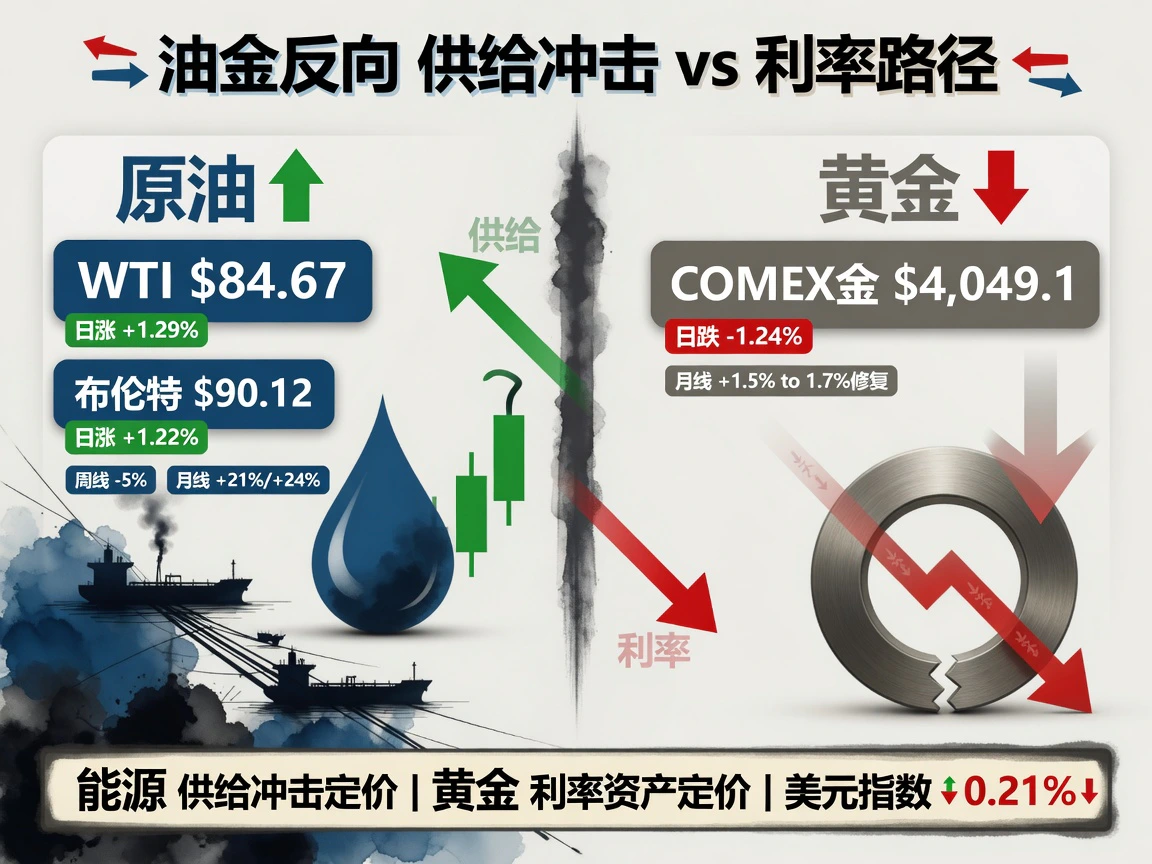
Oil edged higher. Nearby WTI settled at $84.67 a barrel, up 1.29%, and Brent at $90.12, up 1.22%. Oil still lost more than 5% for the week, but recorded its strongest month since March, with gains of about 21% and 24%, respectively. The combination of a daily rise, weekly decline and large monthly advance showed sharp fluctuations in near-term geopolitical premiums and supply-demand trading.
Oil recovered after testing lows in Asian trading, primarily because Middle East shipping conditions deteriorated. Iran's Revolutionary Guard claimed to have struck two tankers attempting to pass Hormuz under U.S. escort, with about four others forced to turn back. U.S. and British maritime agencies had not independently confirmed the claim. The Houthis maintained their Red Sea blockade stance; London's war-risk insurance market widened its high-risk waters; and a Saudi-led defense alliance of 13–14 countries was announced. A drone attack at Egypt's Damietta port that week also set two liquefied gas carriers on fire, while Russian energy shipping faced pressure in the Black Sea. Simultaneous disruption to several energy routes supported a firm near-term geopolitical premium.
Gold followed interest-rate pricing. The active COMEX contract settled at $4,049.1 an ounce, down about 1.24%, surrendering all of Thursday's gain. Rising Treasury yields, greater odds of a Fed hike and profit-taking after earlier gains weighed on prices. Gold fell despite a 0.21% decline in the dollar index, showing that the dominant driver was the interest-rate opportunity cost of holding gold, rather than a simple negative dollar beta. Buying around $4,000 and Middle East tail risk provided support, leaving gold up about 1.5%–1.7% for the month.
Oil and gold's opposite moves clearly illustrated the cross-asset divide. Markets priced oil as an inflation shock caused by disrupted supply, while repricing non-yielding gold through real interest rates. They did not treat the two as safe havens moving together in this episode.