From the July 31 Friday close to early August 3, the Fed's policy debate became clearer. After the July 28–29 FOMC held rates by 9 to 3, the three regional presidents dissenting in favor of hikes unusually issued written statements on the same July 31, publicly explaining their tightening demands. Q2 Employment Cost Index (ECI) and other data released that day provided no strong evidence of cooling inflation. Official pressure and sticky data together kept September hike pricing near 66%.
Macro Data: Wage Costs Remain Persistent and Activity Resilient
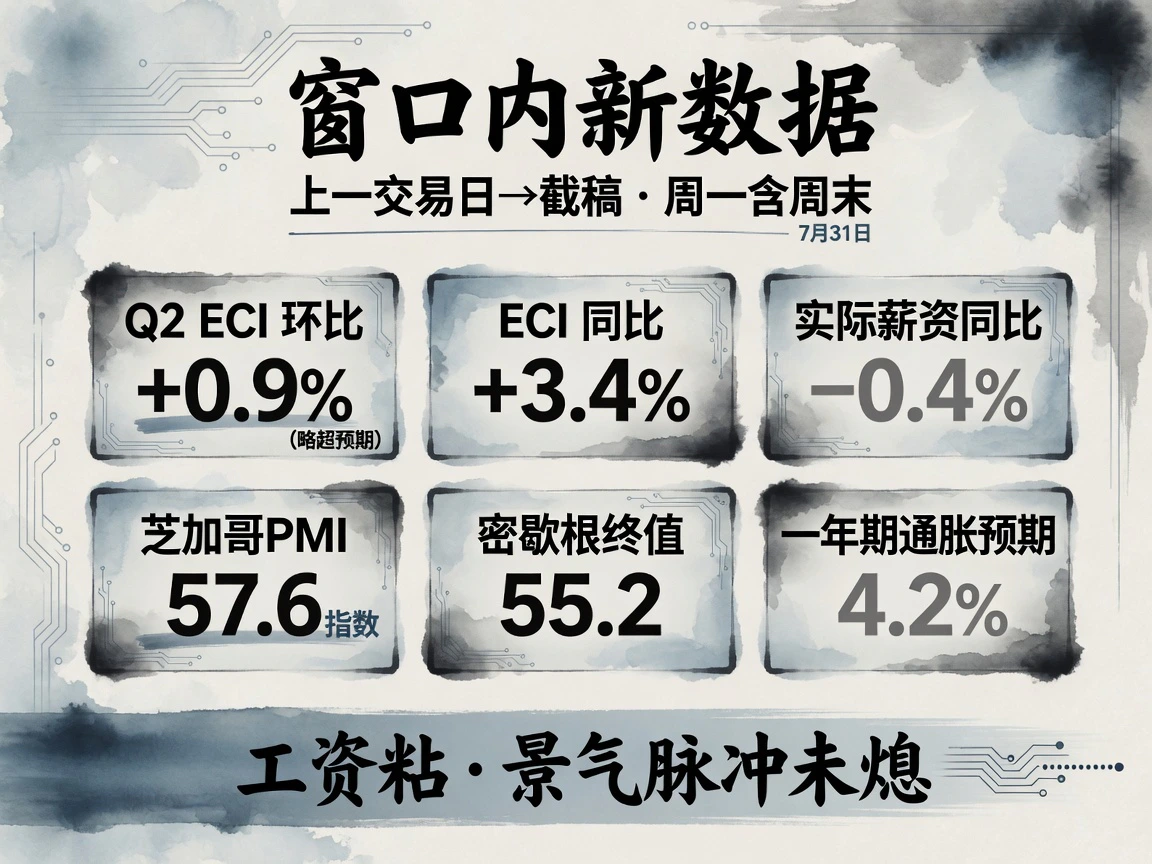
July 31 releases supplied three key clues on labor markets and activity:
- Q2 Employment Cost Index: total compensation rose 0.9% quarter on quarter, unchanged from Q1 and slightly above expectations, and 3.4% year on year. Real wages fell approximately 0.4% annually. This key Fed measure of labor costs showed no easing, with clear wage rigidity.
- July Chicago PMI: recovered to 57.6, with new orders at their highest since early 2022, while employment contracted for a fifth month. Strong production demand coexisted with cautious hiring.
- Final July Michigan sentiment: 55.2, with one-year inflation expectations easing slightly to 4.2% and five-year expectations unchanged at 3.3%, leaving medium- and long-term expectations elevated.
Persistent labor costs and continuing pockets of activity momentum obstruct disinflation and strengthen the dissenters' case.
Officials: Three Dissenting Presidents Speak Together, Publicly Pressing the Hawkish Case

On July 31, the three regional presidents who had just dissented for hikes each released formal statements:
- Cleveland's Hammack: inflation had remained high too long and the time for action had arrived.
- Minneapolis's Kashkari: repeated supply shocks were combining with strong AI data-center investment. Drawing on the 1970s stagflation lesson, he favored gradual small-step tightening to avoid falling behind.
- Dallas's Logan: expectations appeared to be converging around 2.5% rather than 2%, upside risks were prominent and current policy did not meaningfully restrain activity.
St. Louis President Musalem, a nonvoter this year, echoed tightening in a Financial Times interview that day. He called long-Treasury selling a clear signal from Mr. Market and preferred earlier gradual adjustments to larger delayed hikes. No new official comments appeared over August 1–2. Warsh's July 29 press-conference position remained the anchor: hold steady, reduce guidance and leave validation to incoming data.
Markets: Long Treasury Yields Reach Multiyear Highs; September Hike Pricing Exceeds 60%
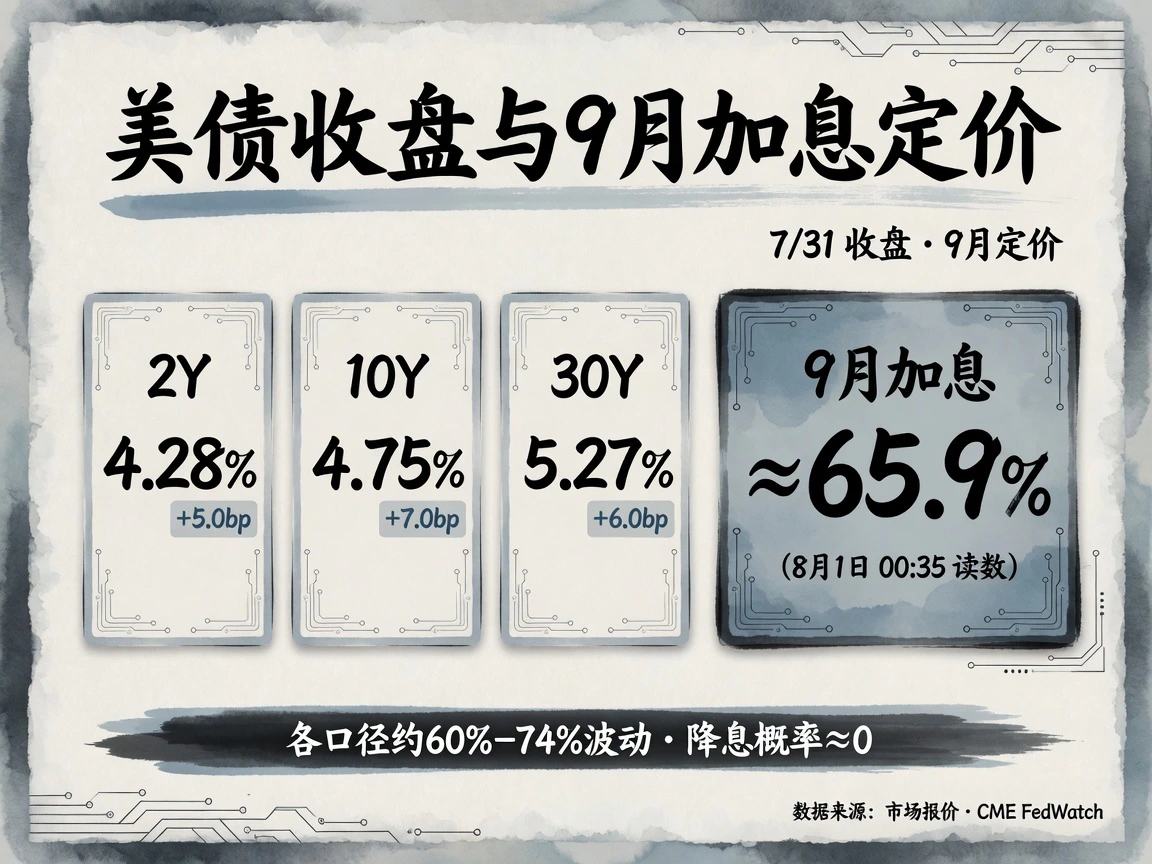
The Treasury's official daily par curve, on a close-to-close basis, showed broad July 31 increases:
- July 31 closes: two-year 4.28%, +5.0 bp; five-year 4.45%, +7.0 bp; 10-year 4.75%, +7.0 bp; 30-year 5.27%, +6.0 bp. The 30-year closed at its highest since June 2007. The two-year/10-year spread widened to approximately +47 bp in a typical bear steepening.
- Immediate premarket reference: CNBC around 09:08 Beijing time on August 3 showed two-year 4.25%, five-year 4.41%, 10-year 4.70% and 30-year 5.24%, slightly below Friday. Thin weekend and early-Monday liquidity makes these opening references rather than official closes.
- September hike pricing: Investing.com's rate monitor, based on 30-day CME fed funds futures, showed 65.9% odds of a 25-basis-point hike around 00:35 US Eastern on August 1, above 60.4% the previous session. MacroMicro showed about 67.0% that day. Readings generally ranged 60%–74%, with cut odds near zero.
Next Tests: Three Major Releases Determine the Direction

The first August week brings July ISM manufacturing at 10:00 US Eastern on August 3, prior 53.3 and forecast 54.0; July payrolls on August 7, after June's gain of only 57,000; and July CPI on August 12, after June's -0.4% monthly reading. If July–August inflation keeps weakening monthly and wages slow, September hike pricing near 66% would cool materially. If Brent near $90 again feeds into core and service prices, a September hike would move from a probability contest into the baseline.