Over the past 24 hours, the tense Middle Eastern confrontation shifted abruptly from imminent strikes to diplomacy. Aboard Air Force One, Trump announced that U.S.–Iran talks would formally resume Monday afternoon, August 3, and first detailed the cancellation of planned large-scale air strikes. He insisted Saudi Arabia, the UAE, Qatar and even Iran had asked Washington to stop. Tehran categorically denied this and retorted: its Foreign Ministry said route arrangements with Oman were unrelated to lifting the Hormuz closure, while state media mocked Trump for retreating after repeated threats.
Markets reacted sharply. At Monday's 06:00 Beijing-time futures opening, Brent and WTI both plunged more than 5.5%. OPEC+ also approved continued September increases that evening, its sixth expansion since the war began. Washington's abrupt tactical reversal reflected critically depleted air-defense interceptors and Gulf allies' concerns about being drawn into fighting. On the Gaza flank, the White House was simultaneously increasing pressure on Israel for a ceasefire.
Trump previews resumed talks: allied mediation intensifies and a two-step plan emerges

Speaking to reporters aboard Air Force One Sunday evening Eastern time, Trump said contacts with Iran would resume Monday afternoon, August 3. He said Iran knew the scale of the strike it had watched building and that Washington would now talk through negotiations beginning the following afternoon.
He attributed cancellation to repeated mediation by allies and Iran: the United States had been ready, but decided to wait when allies asked because they believed a deal was possible. He reiterated two stages—first a Hormuz navigation agreement, then nuclear negotiations to achieve complete Iranian denuclearization.
The timetable contrasted sharply with Washington's prior week of threats. CNN had cited two officials saying new U.S. strikes could begin that weekend. Trump promised a severe blow at Friday's cabinet meeting and posted Saturday that the military was locked and loaded. Asked now whether energy facilities had been targeted in the plan, he declined to answer.
A transatlantic call by Saudi Crown Prince Mohammed bin Salman was central to de-escalation. Saudi Press Agency said he urged prioritizing political dialogue and creating calm for a diplomatic solution. Insiders said he expressed deep concern about planned large-scale U.S. strikes.
Mediation expanded to Qatar and Pakistan. Three informed sources said coordination was working intensively to break the escalation chain, maintaining close Tehran contacts and connecting with U.S. officials including envoy Witkoff. A key task was an interim Iranian–Omani mechanism for merchant passage. The State Department's advice to Americans in the region to consider leaving remained in effect.
Tehran rejects the account: no request for peace, and reopening remains a separate issue

Foreign Ministry spokesman Esmaeil Baghaei told IRNA that technical route understandings with Oman had no necessary link to whether Hormuz reopened or stayed closed. They were at most a necessary, not sufficient, condition. He blamed the closure on unilateral U.S. broken commitments and an illegal blockade, stressing that full reopening was a separate question.
Iranian mainstream state media unanimously rejected claims that Tehran had asked Trump to stop. Fars said Trump had exhausted his options. Kayhan, guided by the supreme leader's office, said he had retreated again after a week of threats. Mehr said he had swallowed empty military threats and dressed strategic retreat as a favor to the world, while stressing that the Guard remained fully ready whether the enemy continued aggression or backed down.
CNN judged that despite Trump's claim that a broad framework was settled, Iranian officials showed no concessions and instead reinforced absolute control over navigation. Whether Washington's unilateral timetable produced actual Iranian engagement depended on substantive official confirmation over the next 24 hours.
Markets and shipping: oil opens more than 5% lower; OPEC+ approves a sixth increase
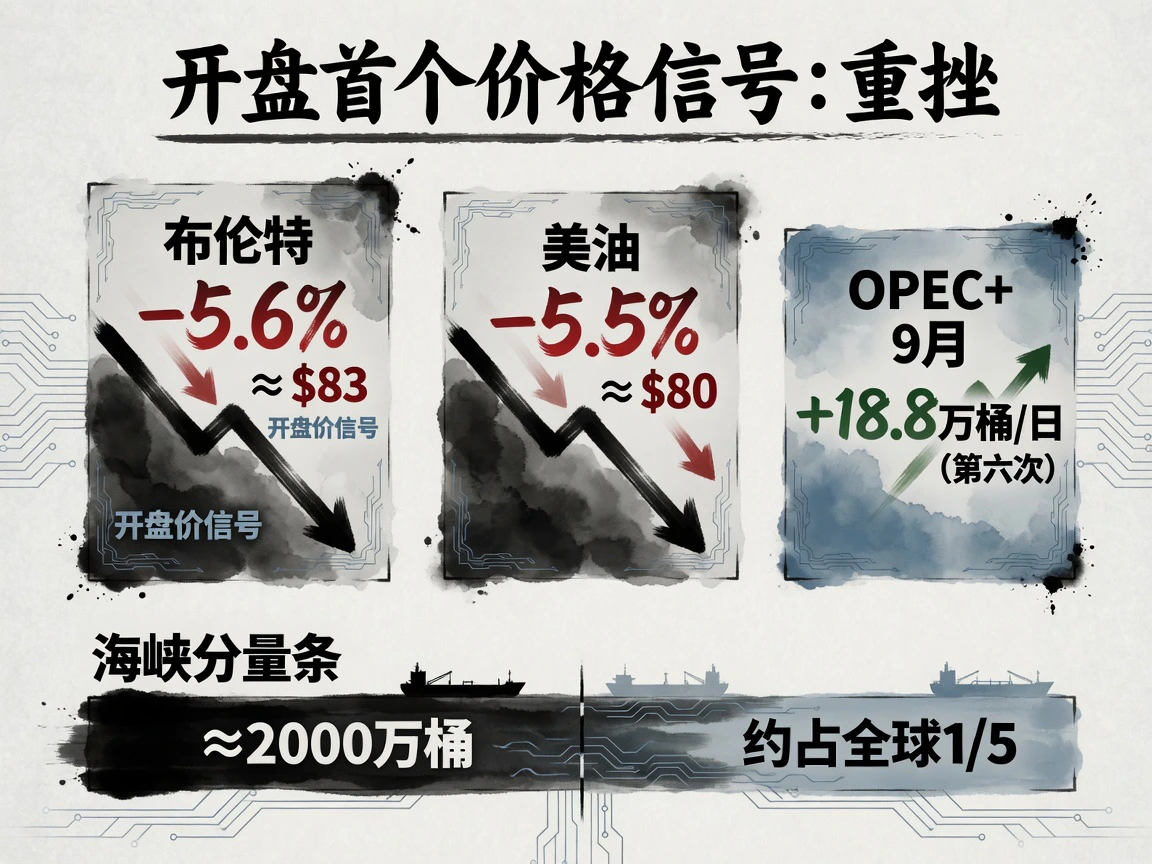
Futures opened Sunday at 18:00 Eastern, Monday 06:00 Beijing time, offering the first global pricing response to the paused strikes. Brent fell about 5.6% toward $83 a barrel and WTI about 5.5% toward $80. Faced with an uncertain framework, investors first sold geopolitical premium and reduced exposure.
Hormuz had effectively been paralyzed since renewed conflict on July 8. June's fragile ceasefire collapsed over strait friction, the U.S. blockade resumed and exchanges of fire returned. Prewar flows were 20 million barrels of crude a day, one-fifth of global petroleum-liquids consumption according to the EIA; roughly 200 million barrels passed during the brief earlier truce. Tehran remained firm despite Trump's deal vision. It prohibited unauthorized entry into non-designated waters, and the Guard had fired warnings at vessels attempting passage. Foreign cargo ships trying to hug Oman's coast also received Iranian military warnings.
OPEC+ formally approved a planned 188,000-barrel-a-day September increase Sunday evening, completing reversal of the voluntary cuts of 1.65 million barrels a day announced April 2023. It was the alliance's sixth consecutive scheduled expansion since the war. Without directly naming Iran, the JMMC communiqué expressed deep concern about repeated attacks on energy infrastructure, warning that repairs were costly and slow and blocked maritime trade amplified volatility.
Average U.S. retail gasoline was $4.09 a gallon Sunday, down two cents from a week earlier but roughly 34% above the prior year. Another supply-chain warning was emerging: Saudi Arabia was routing more crude through Bab el-Mandeb, exposed to Houthi fire at the Red Sea's southern end.
Military readiness and allied backing: interceptors depleted, Gulf states unwilling to absorb the blow
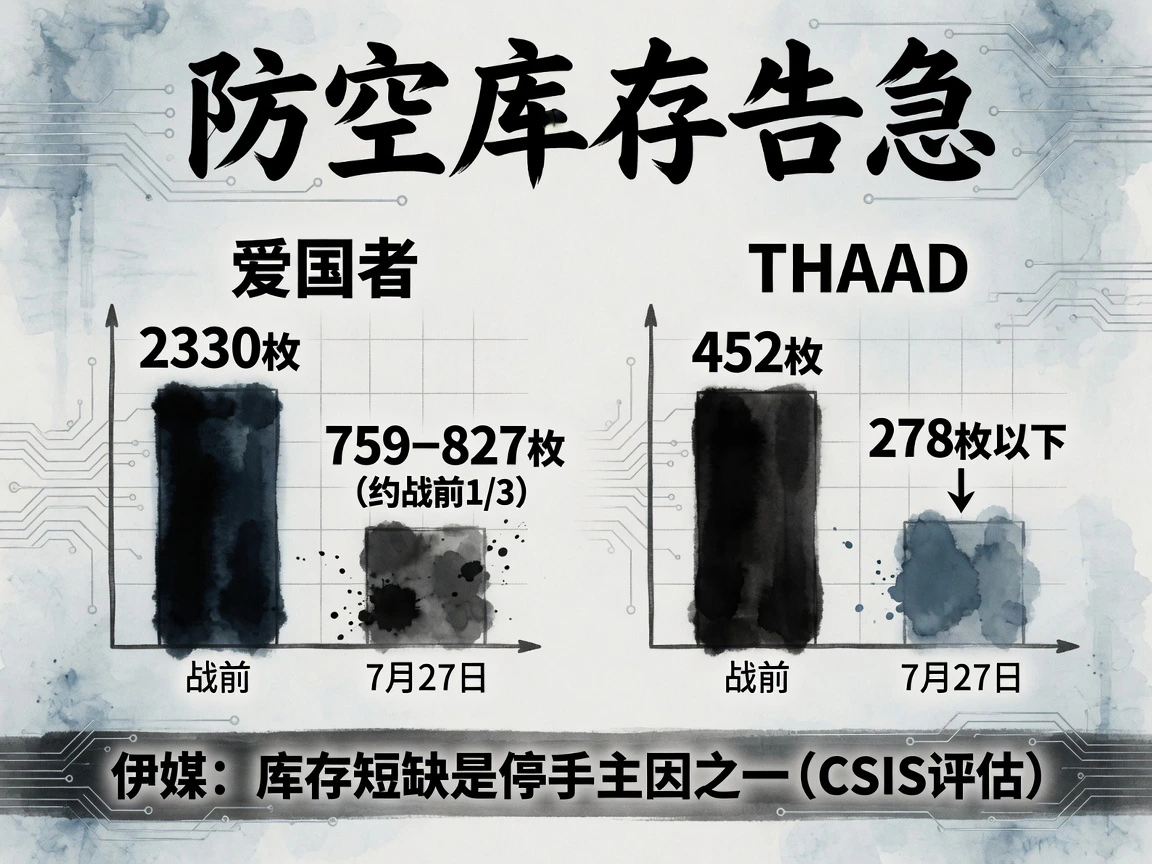
Depleted U.S. equipment and reluctant allies also underlay the halt. Iranian media amplified Western reporting of critical frontline air-defense shortages, with Tasnim calling this a key reason Trump pulled back. A CSIS assessment supported the concern: Patriot stocks fell from 2,330 prewar to 759–827 by July 27, roughly one-third remaining; THAAD stocks fell below 278. Losses also included fighters, warning aircraft, helicopters and drones, while carrier deployments repeatedly lengthened. Overstretched hardware provided both a military explanation and material for Tehran's narrative response.
CNN military analyst and retired U.S. Air Force Colonel Cedric Leighton said Saudi Arabia and Iran both urgently needed tactical de-escalation. Reopening was vital to Riyadh's oil economy, and Washington's reliance on Saudi diplomacy decisively influenced the paused strikes. Quincy Institute executive vice president Trita Parsi was sharper: Gulf states had lost faith in a winning U.S. strategy. More fighting offered unilateral pain without changing outcomes—a high-risk gamble with no gain. GCC states would be first to suffer if Tehran escalated asymmetric retaliation.
No new large-scale direct U.S.–Iran air exchanges occurred in the latest 24 hours. Kuwait said it intercepted an Iranian-direction suicide drone Saturday and strongly condemned Tehran's provocation. The preceding Thursday, shelling hit a Chinese engineering company's building in northern Kuwait, killing one employee.
Gaza flank: White House pushes hard for a ceasefire as Netanyahu faces two dilemmas
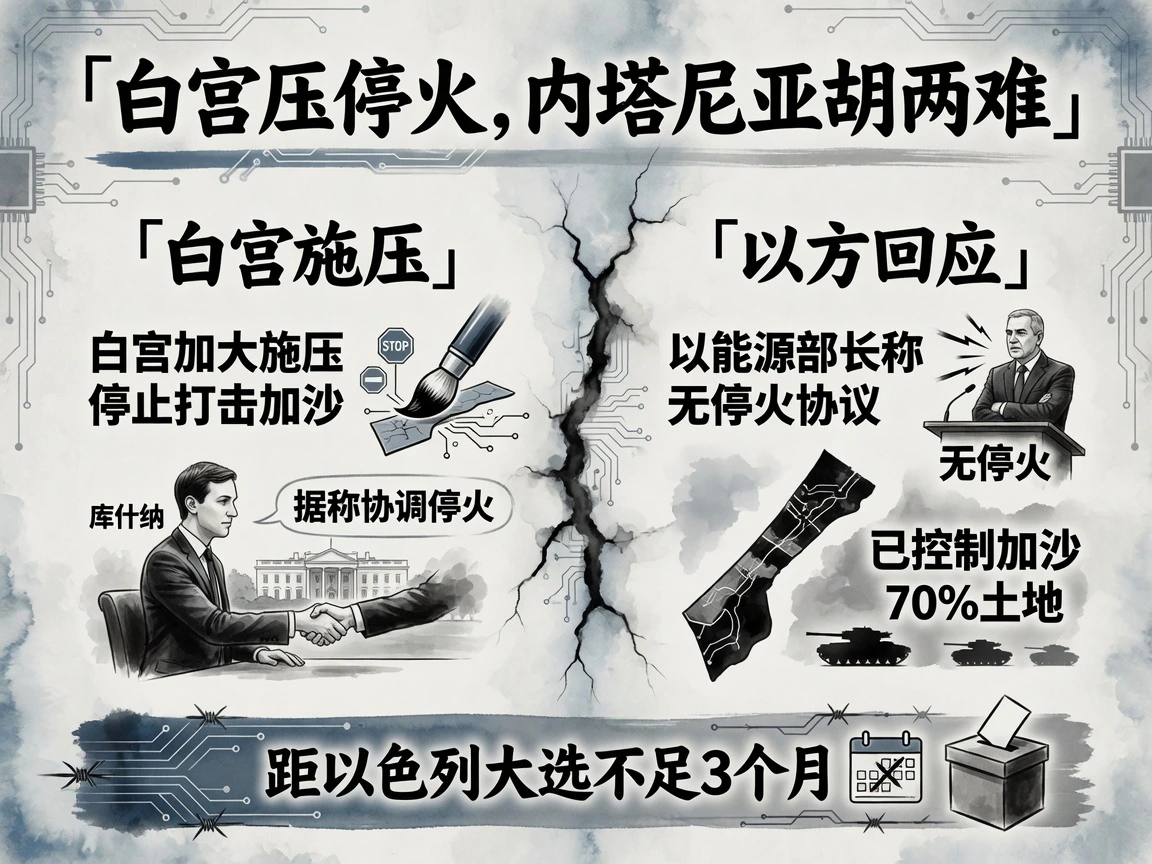
With the main front briefly quieter, Gaza's deadlock tightened. CNN cited senior Palestinian sources saying the White House used every lever to demand an immediate halt to air strikes across Gaza, after a late-night attack near Gaza City killed a civilian family of three including women and children. A senior Hamas official said Saturday evening that coming moments tested actual sincerity rather than words, and that senior White House figures had taken substantive steps in recent hours to revive a ten-month-old ceasefire draft. Former Palestinian Authority Gaza security chief Mohammed Dahlan confirmed Kushner's direct involvement with senior Israelis to secure implementation.
Israel's cabinet showed no concession. Energy Minister Eli Cohen denied any agreement to end Gaza operations, saying the army controlled 70% of the territory and aimed for complete control. Trump's sharp softening on Iran was a political hazard for Netanyahu. Trump said Israel agreed to pause in step with him, but Netanyahu's office remained silent. CNN noted that with Israeli elections less than three months away, he wanted Washington to remove Iran's nuclear and military capacity while resisting pressure over Gaza ceasefire and withdrawal, leaving him exposed to setbacks on both fronts.
Tehran's domestic position also faced severe risks. President Pezeshkian said the war was not merely a cold missile contest and that protecting livelihoods was the hardest battlefield. Official June annualized inflation reached 88%, the rial kept hitting lows and the IMF forecast a 6.1% full-year real GDP contraction. Oil earnings from March to late July totaled $7.5 billion, up year on year, yet southern producing regions and ports were widely described domestically as the crisis's front line.
Live highlights

| Key developments |
|---|
| 08-03 06:47 Beijing timeOil opens sharply lower: Brent about -5.6% near $83, WTI -5.5% near $80. OPEC+'s monitoring committee warns that damaged facilities and shipping blockages amplify volatility. |
| 08-03 06:21 Beijing timeTrump announces Monday afternoon talks aboard Air Force One, says Saudi Arabia, the UAE, Qatar and Iran asked for a halt, and declines to say whether energy targets were in the strike plan. |
| 08-03 04:14 Beijing timeCNN review: markets await the first futures-opening signal; Tehran shows no surrender or retreat from control of Hormuz. |
| 08-03 02:39 Beijing timeBaghaei says Omani route understandings are unrelated to reopening, at most a necessary rather than sufficient condition. |
| 08-03 01:31 Beijing timeOPEC+ approves 188,000 barrels/day of September increases, its sixth consecutive wartime expansion, fully reversing the 2023 voluntary cuts. |
| 08-03 00:21 Beijing timeU.S. average gasoline is $4.09/gallon, two cents below the prior week but about 34% above a year earlier. |
| 08-02 21:50 Beijing timeBackground review: June's ceasefire understanding collapsed over strait friction and the U.S. maritime blockade resumed. |
| 08-02 21:09 Beijing timeBackground: Tehran will under no circumstances surrender control of Hormuz; CNN examines innocent-passage limits under UNCLOS. |
| 08-02 20:43 Beijing timePalestinian sources say the White House is pressing Israel to halt Gaza air strikes. A nighttime Gaza City attack kills a family of three. Hamas stresses actions over words; Kushner joins mediation. |
| 08-02 19:39 Beijing timeEnergy background: before the war, Hormuz carried about one-fifth of global seaborne crude and LNG movements. |
| 08-02 19:15 Beijing timeIranian state media jointly deny seeking a halt or offering surrender to Trump. |
| 08-02 18:46 Beijing timeAnalysis: the White House reversal leaves Netanyahu in a dilemma less than three months before Israel's parliamentary election. |
| 08-02 18:38 Beijing timeIran's economic crisis: June inflation 88%, IMF cuts its full-year GDP growth forecast to -6.1%; March–late July oil earnings $7.5 billion. |
| 08-02 17:37 Beijing timeSaudi readout says the crown prince urged dialogue first in his Trump call; sources say he expressed serious concern about the air-strike plan. |
| 08-02 17:03 Beijing timeIranian commentary mocks Trump's retreat. Tasnim says depleted U.S. air-defense missile stocks were a major factor in stopping action. |
| 08-02 17:02 Beijing timeNo new frontline U.S.–Iran air-strike reports. Kuwait reports Saturday drone interception; Thursday's attack on a Chinese engineering site killed one employee. |
| 08-02 15:57 Beijing timeDefense assessment: Iranian regional proxy forces in the arc of resistance again show coordinated support across fronts. |
| 08-02 14:57 Beijing timeParsi says Gulf states see enormous costs without benefits from escalation and lack confidence in a U.S. victory strategy. |
| 08-02 14:08 Beijing timeU.S. war-consumption assessment: Patriot inventory falls to about one-third of prewar levels, 759–827; THAAD below 278. |
| 08-02 13:09 Beijing timeLeighton says Saudi Arabia and Iran have strong incentives to avoid war and Washington relies deeply on Saudi Gulf diplomacy. |
| 08-02 13:08 Beijing timeTrump announces an urgent halt to planned Iran strikes, insisting a broad understanding on the deal's core framework exists; background context. |
| 08-02 13:08 Beijing timeSources confirm a key Trump–Saudi crown prince call; Qatar and Pakistan mediate Iranian–Omani transit arrangements. |
| 08-02 13:08 Beijing timeAraghchi warns Washington that any military adventurism will meet reciprocal countermeasures. |
| 08-02 13:07 Beijing timeThe State Department issues a region-wide security notice urging Americans to consider leaving promptly or prepare for emergency evacuation. |
| 08-02 13:07 Beijing timeAir strikes damage a Gaza medical warehouse, destroying vital dialysis supplies. Israel says its assessment relied on intelligence but it has no direct physical evidence. |
| 08-02 13:03 Beijing timeBackground overview maps the core military-control areas created by Israeli advances in Gaza. |