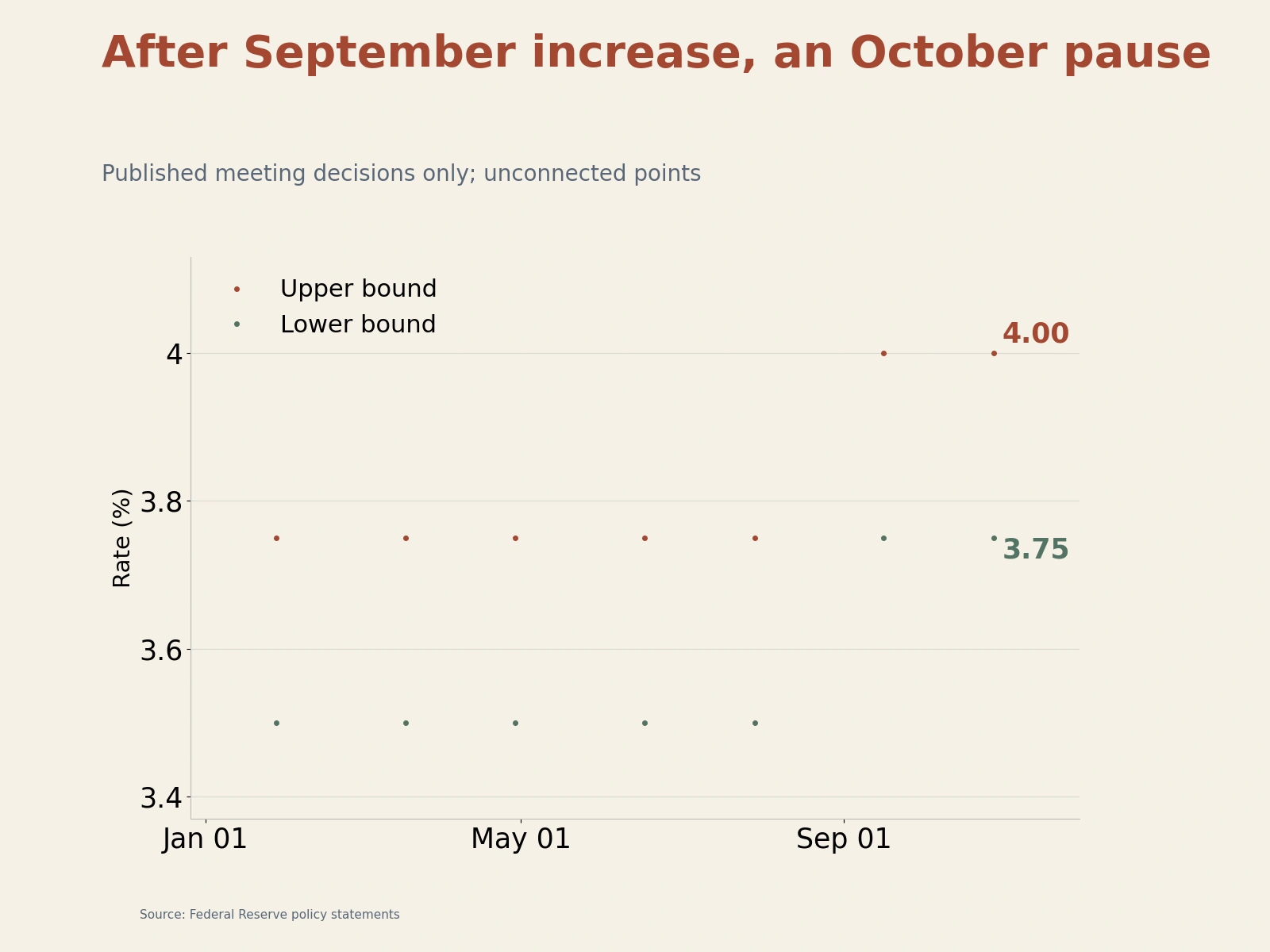
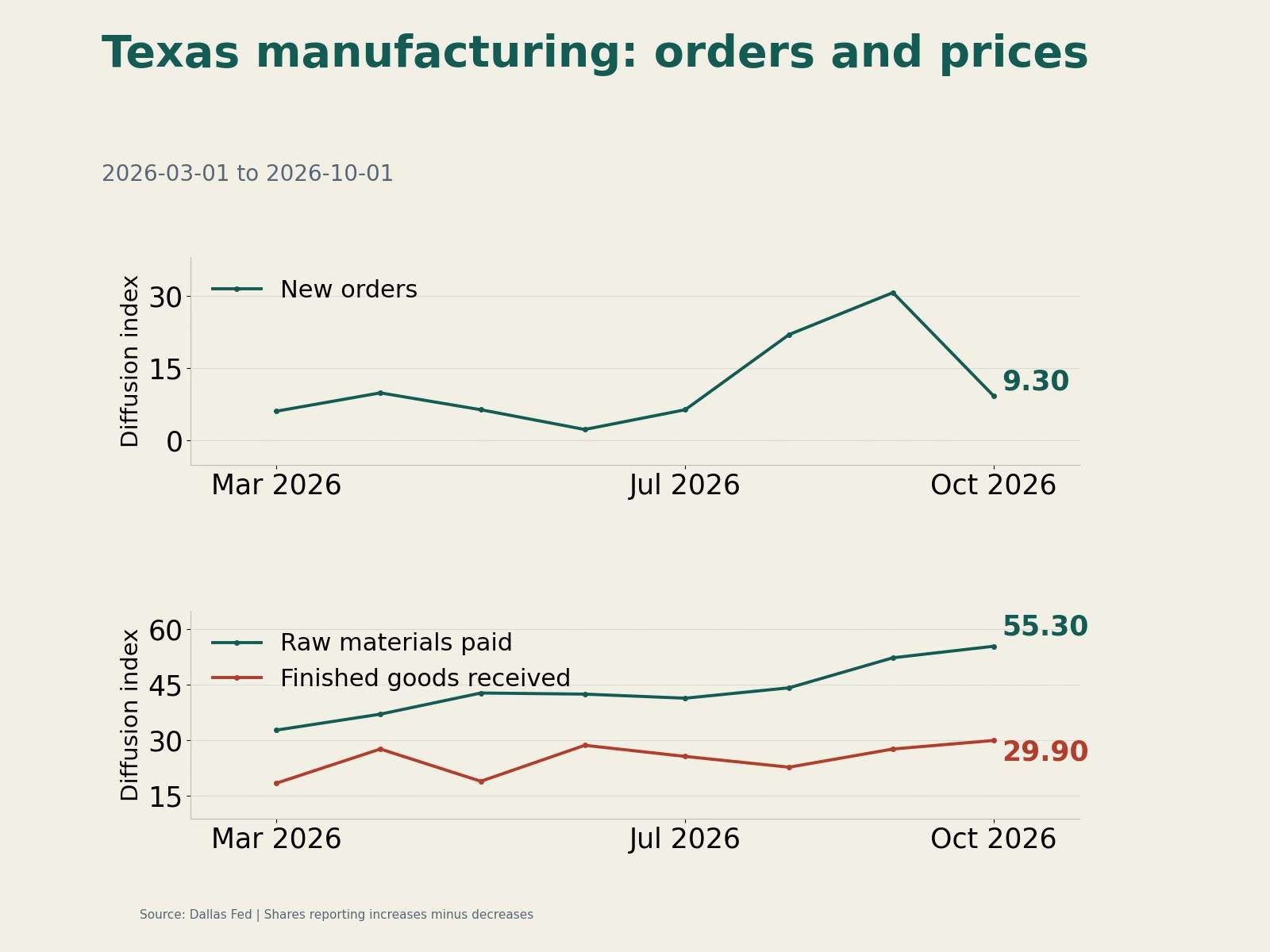
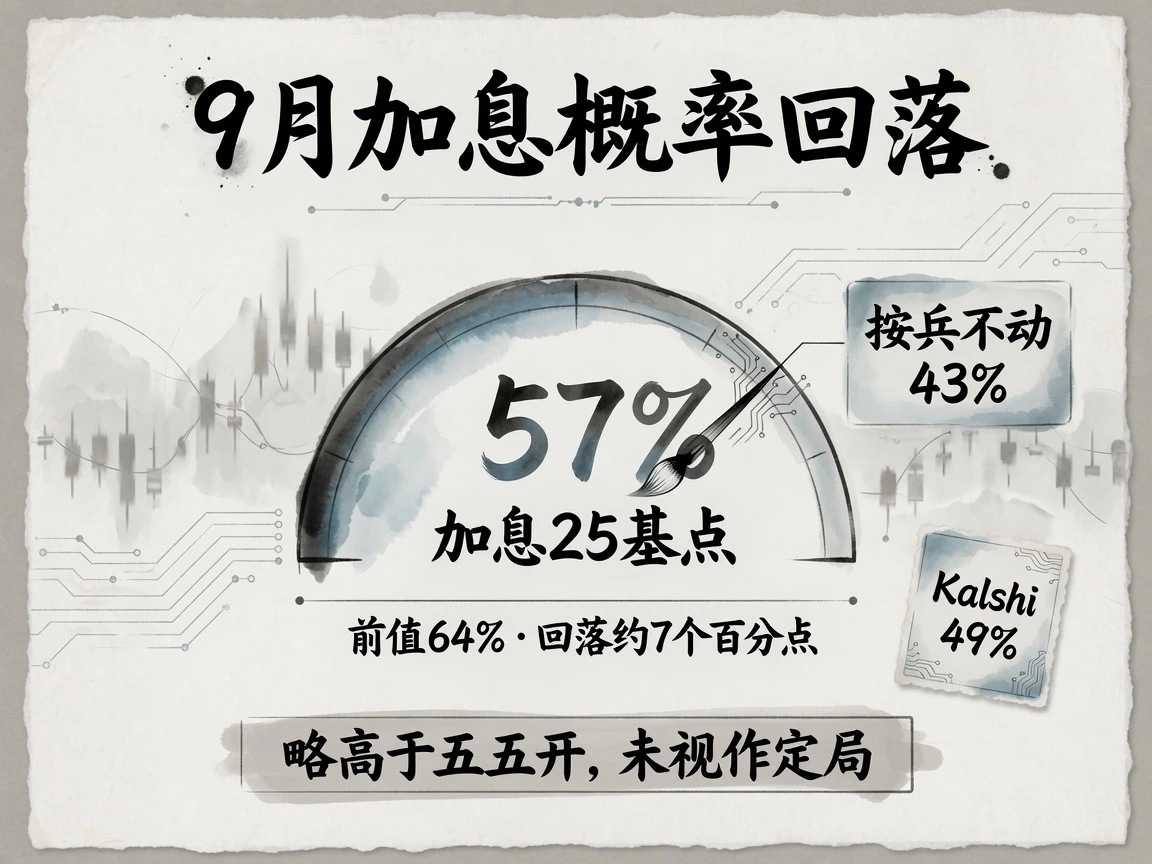
On August 4, with six weeks until September's FOMC, tightening pricing eased. Softer labor demand and manufacturing orders, combined with lower oil on Middle East easing, reduced implied September 25-basis-point hike odds from 64% to about 57%. Philadelphia Fed President Paulson's first public remarks after July described moderately restrictive policy and an open mind on the path, adding a key voice to data-dependent decision-making.
Economic data
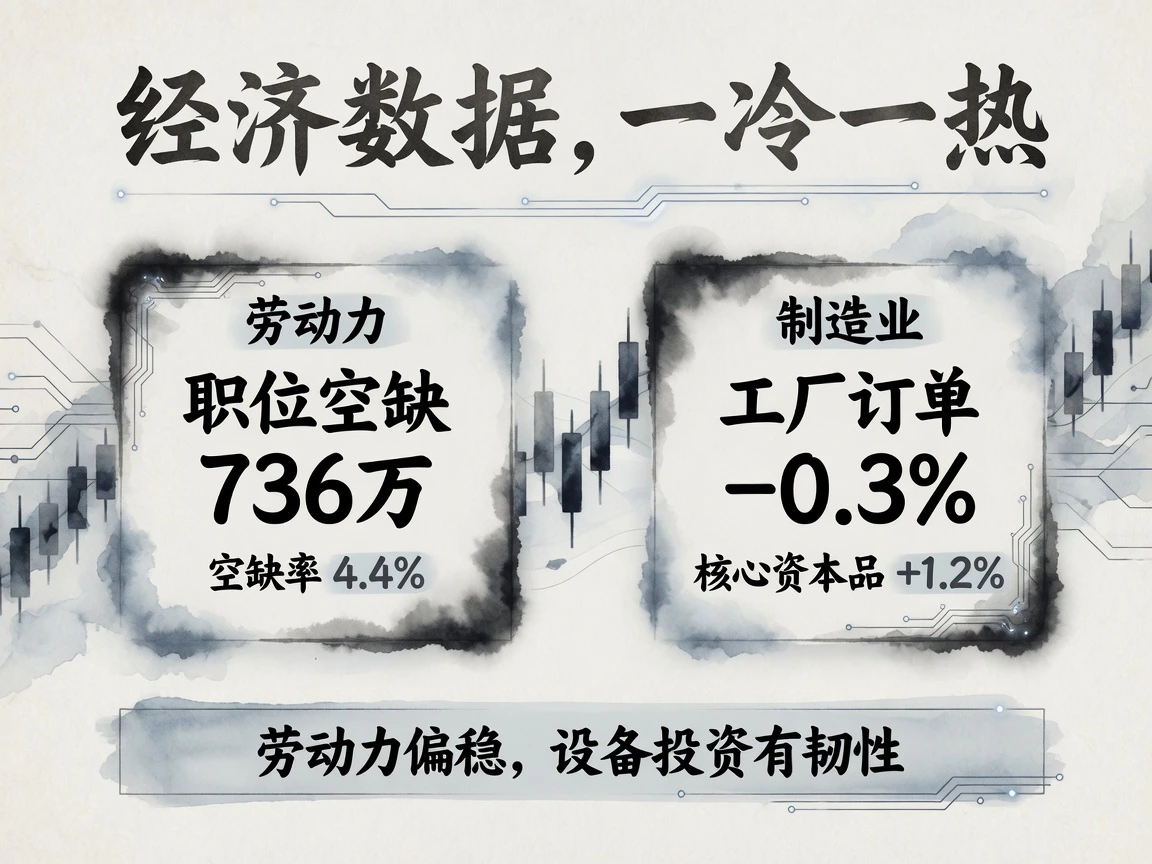
June JOLTS released August 4 showed openings down 178,000 to 7.36 million from May's upward-revised 7.54 million, slightly below expectations, with the vacancy rate 4.4%. Quits were 3.2 million, a 2.0% rate, and layoffs/discharges 1.8 million, 1.1%, broadly steady. Labor supply and demand looked relatively stable and better balanced rather than rapidly weakening; the effect on September's hike case was broadly neutral.
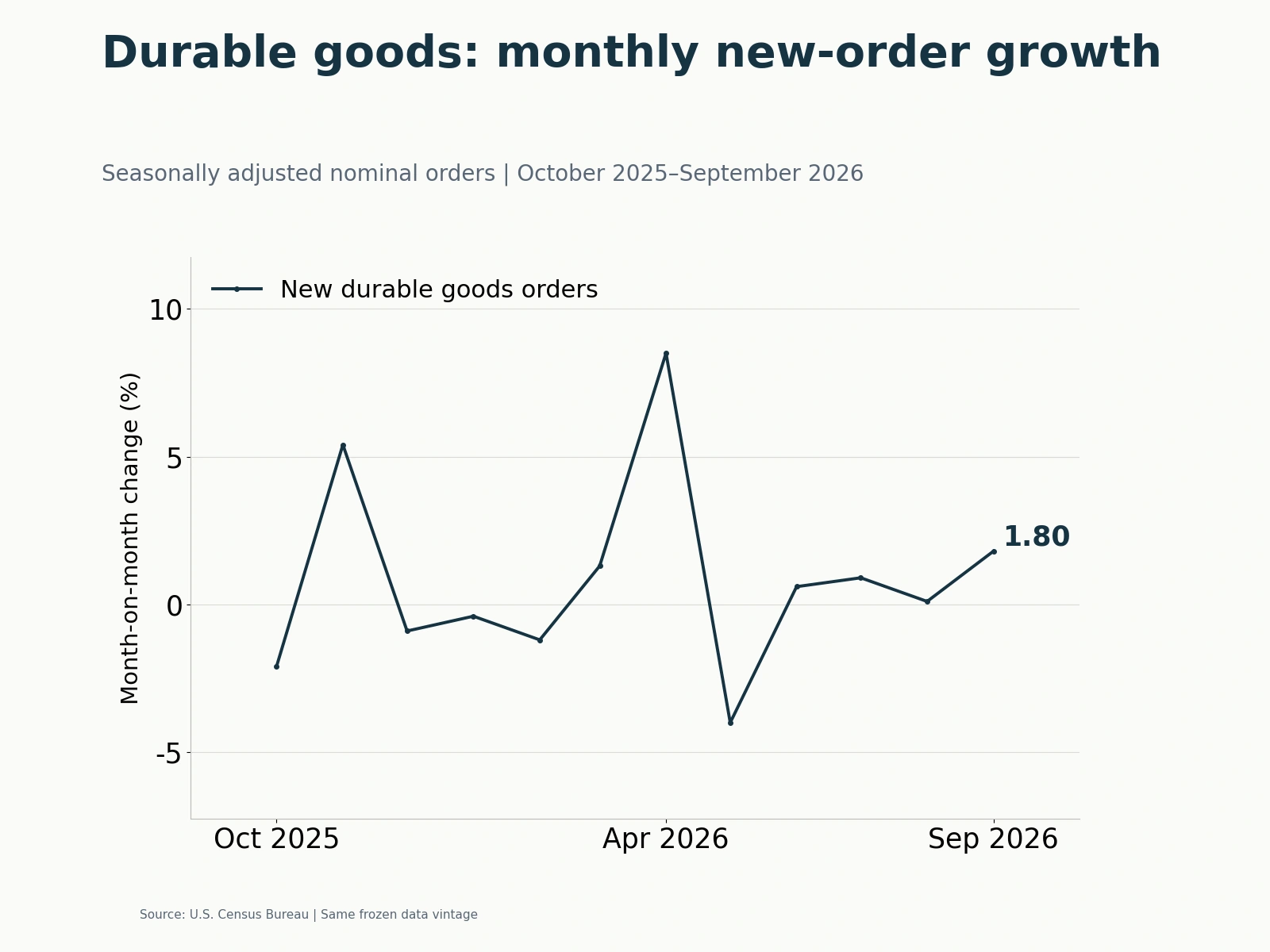
June factory orders fell 0.3% monthly versus roughly +0.2% expected, and 0.4% excluding transport. Core capital-goods orders—nondefense durables excluding aircraft—were revised up to +1.2%, led by computers and electronics. Aggregate demand was soft but equipment investment, including AI computing infrastructure, remained resilient, consistent with ISM's strong-production/weak-total pattern.
Official remarks
Paulson spoke to CNBC August 4 and published Monetary Policy Perspective: Keeping an Open Mind on the Fed website, her first public statement since July.
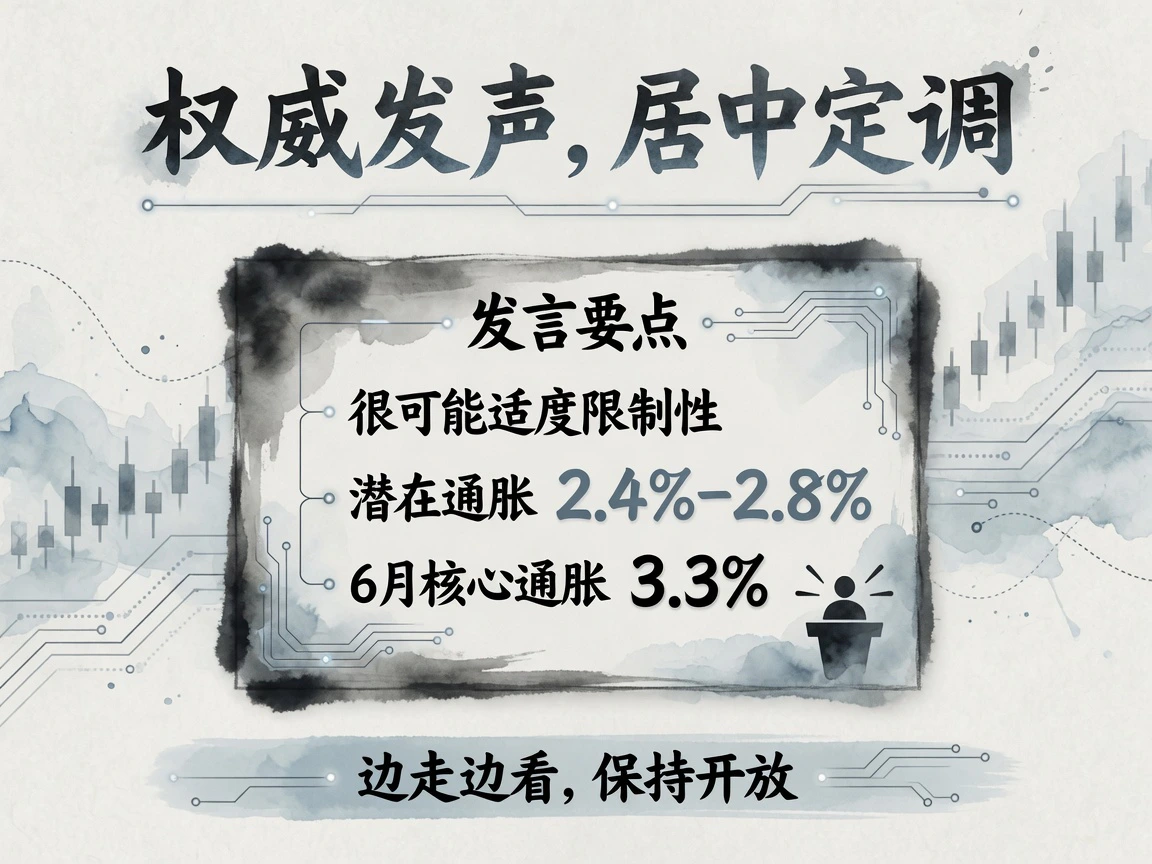
Supporting unchanged July rates was not difficult for her. She considered the benchmark probably moderately restrictive and sufficient to return inflation to 2% if disinflation continued. Excluding tariffs and temporary energy shocks, she estimated underlying inflation at 2.4%–2.8%, versus official June core inflation of 3.3%, requiring further progress. Persistent underlying inflation would leave her open to recalibration through higher rates or a longer hold. She favored looking through temporary Middle East oil shocks and called discussion of Chair Warsh's proposal for fewer FOMC meetings healthy.
Paulson was the second core voter to speak clearly after July, following New York's Williams, whose Reuters interview appeared August 3. Her tone aligned with waiting for July and August data. Treasury Secretary Bessent defended Warsh that day, calling the market's July press-conference reaction a detox from excessive guidance and questioning more hikes. This was external administration commentary, not a Fed stance, but showed political-policy disagreement over September.
Policy expectations
CME futures and Investing.com's monitor at 21:45 Eastern August 4 put September 15–16 odds of a 25-basis-point hike near 57%, hold near 43% and cuts near zero. The same measure at 19:45 August 3 was about 64%, a roughly 7-percentage-point decline. Prediction contracts moved similarly but more cautiously: Kalshi's September hike probability was about 49% in August 4–5 readings.
Softer JOLTS and orders, plus oil's fall easing upside inflation risk, offset the earlier hawkish ISM manufacturing shock. A September hike remained slightly more likely than even, but was no longer regarded as inevitable.
What comes next
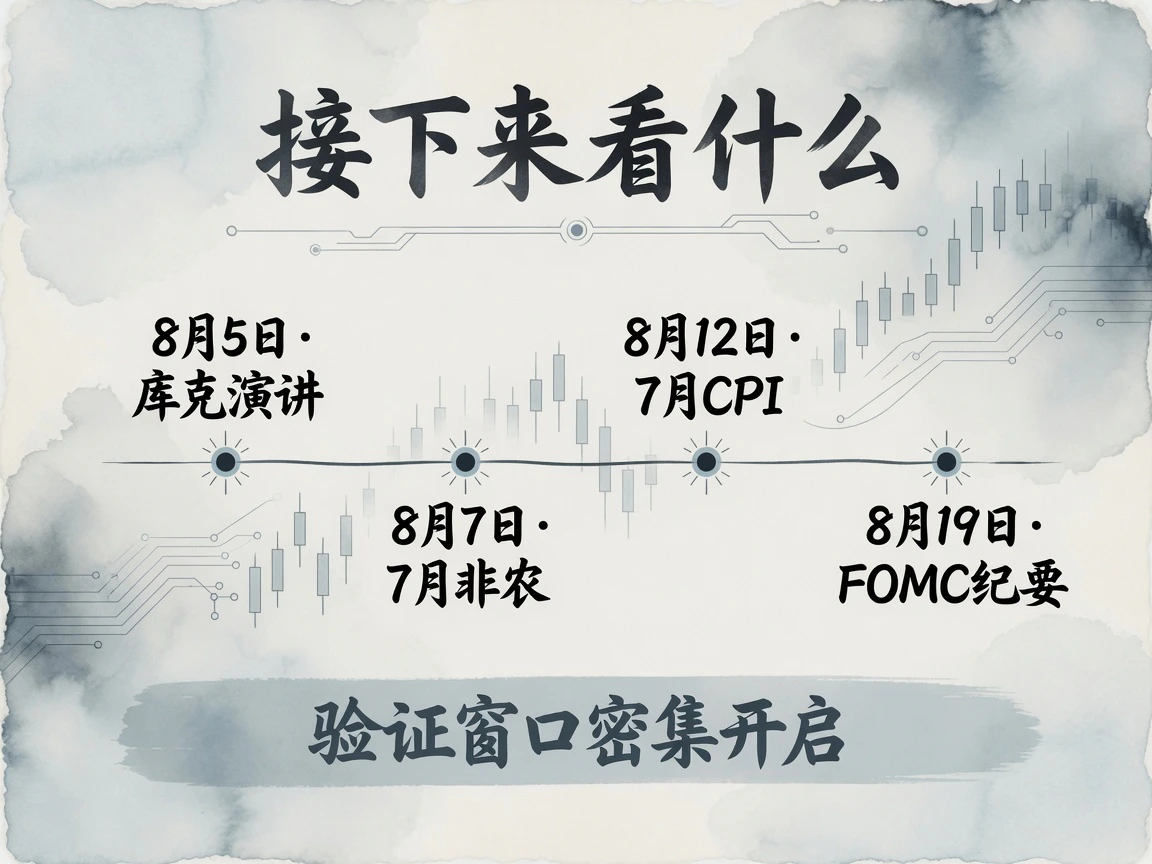
As the Fed observes data, August checkpoints arrive in succession:
- August 5: Governor Cook's Economic Outlook speech in Anchorage, the third post-meeting voter to state a position;
- August 7: July payrolls test whether June's weak 57,000 gain rebounds;
- August 12: July CPI tests continuation of June's -0.4% monthly price improvement;
- August 19: July FOMC minutes reveal debate behind the 9–3 vote.