Oil suffered heavy selling on August 4, with WTI and Brent both losing more than 5% to nearly three-week lows. The immediate trigger was Treasury Secretary Bessent's optimistic signal on Hormuz reopening talks, suggesting a deal might be finalized today or tomorrow.
Despite the price cut of more than 5%, the forward curve remained backwardated, and shipping rates and war-risk insurance stayed high. Investors had removed the most speculative geopolitical premium, while real passage bottlenecks and tight physical balances remained far from resolved.
A daily plunge above 5% sends Brent below $80 for the first time this month
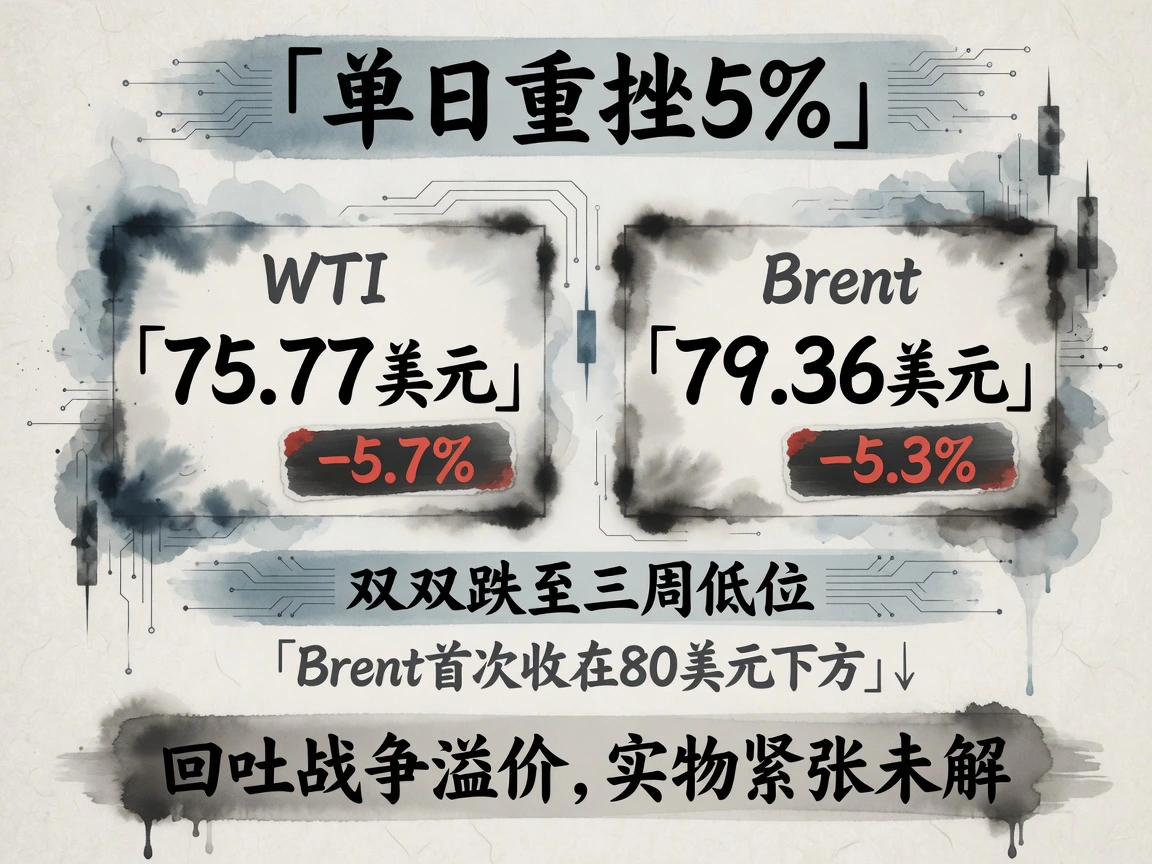
Official August 4 close-to-close settlements put September WTI at $75.77/barrel, down $4.57 or 5.7%, and October Brent at $79.36, down $4.41 or 5.3%. Brent closed below $80 for the first time since mid-July. Including the prior session, both had fallen sharply on increased volume for two consecutive days.
Terminals differed slightly: Yahoo continuous contracts showed CL at $74.81 and BZ at $78.68, around $0.7–1.0/barrel below official settlements. The direction agreed; analysis uses the official basis.
At the August 5 10:31 Beijing-time Asian electronic snapshot, WTI stayed near $74.80 and Brent $78.68, broadly flat overnight. A narrow 0.2%–0.3% intraday bounce looked like post-collapse consolidation, with neither a further break lower nor meaningful short covering.
The curve stays steep and insurance remains expensive
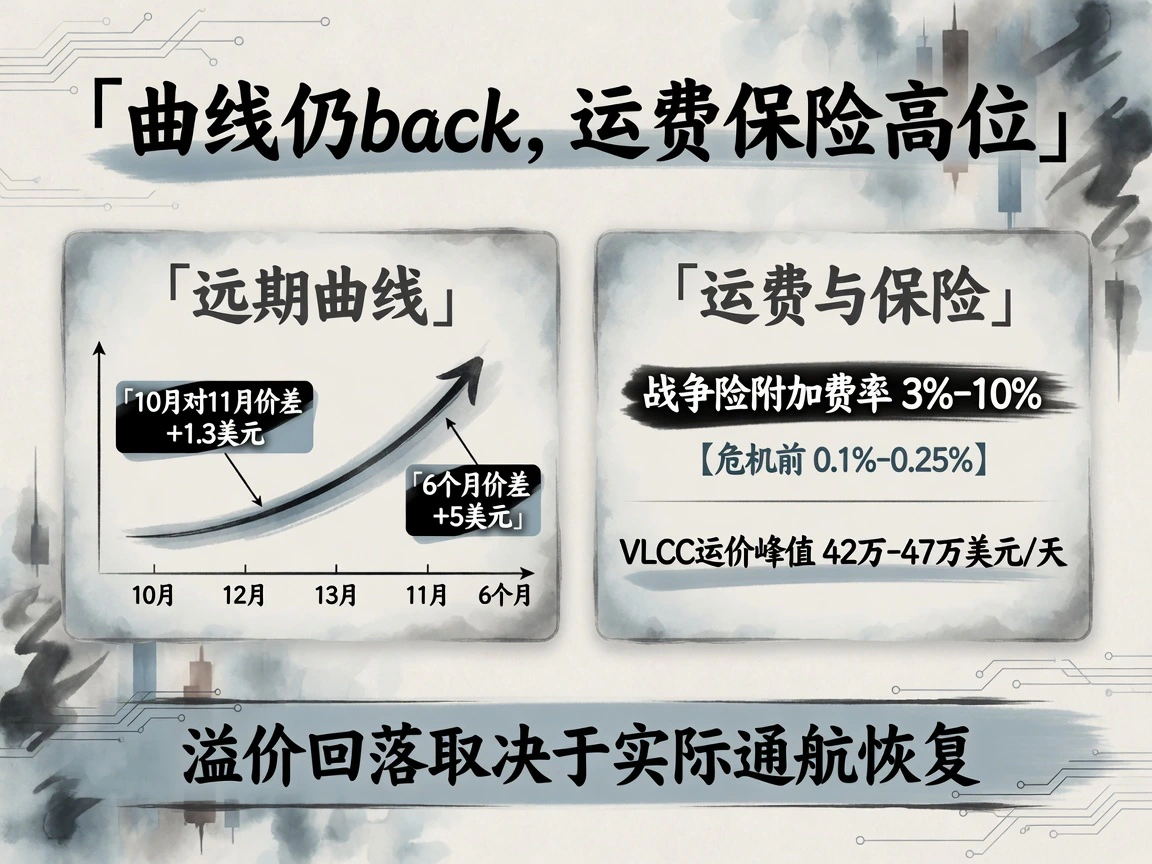
The key micro signal was that the collapse did not flatten the curve. August 4–5 data showed October Brent around $1.3 above November and a six-month spread as high as $5. Early July nearby spreads had approached flat or slight contango before restoring deep backwardation midmonth. The daily plunge had not eliminated the prompt physical premium.
Marsh put Hormuz war-risk surcharges at 3%–10% of hull value, versus 0.1%–0.25% before the crisis. Spot TD3C VLCC freight from the Gulf to China had fallen from crisis peaks of $420,000–$470,000/day, but remained extremely high.
Actual passage improvement would offer substantial scope to compress these costs. Insurance and shipping repricing, however, lag verbal news. Until mines are cleared and initial tankers pass safely, logistical constraints continue to support physical oil.
Fundamentals add headwinds: Surprise API builds and rapid supply repair
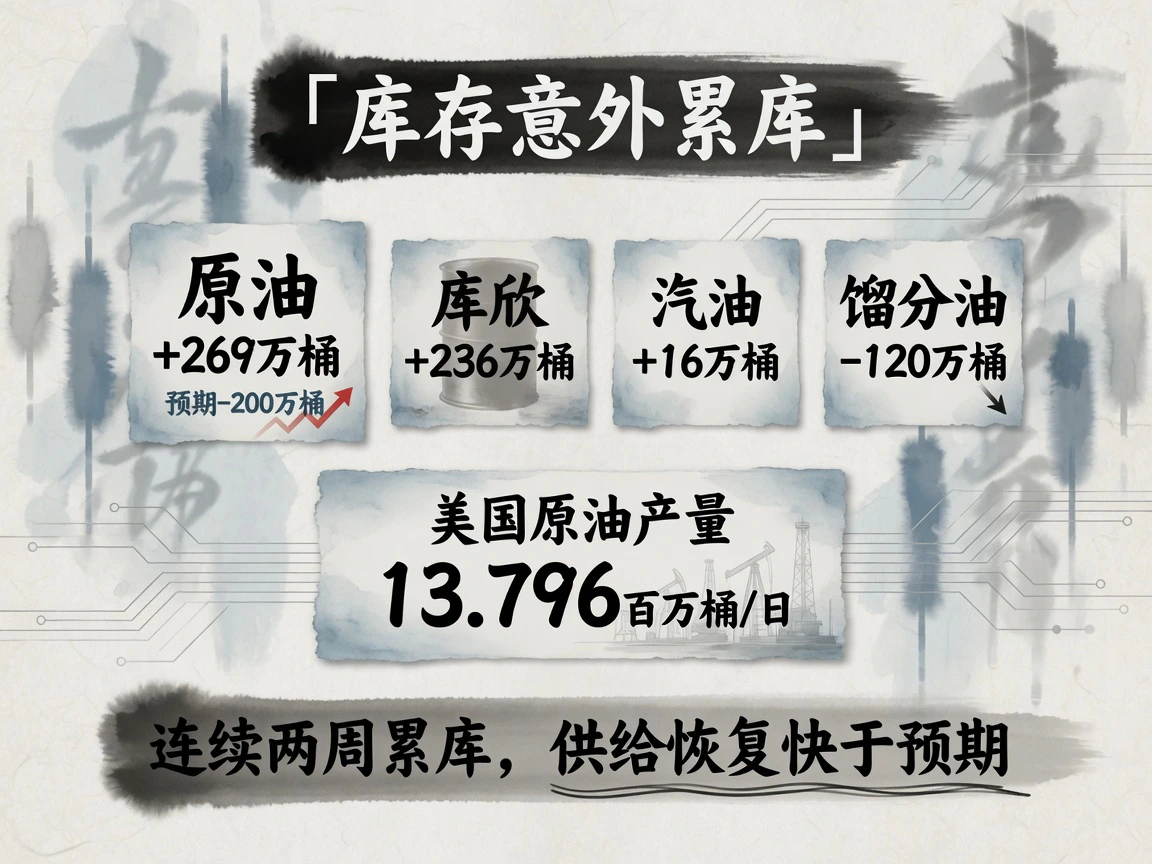
API's week-ended-July-31 report, released early August 5 Beijing time, showed commercial crude unexpectedly rising 2.69 million barrels versus an expected 2 million draw. Cushing rose 2.36 million, gasoline 160,000, while distillates fell 1.2 million. This was a second consecutive API build after the previous 3.3 million. API-basis US crude production was 13.796 million barrels/day, slightly lower sequentially but still historically high.
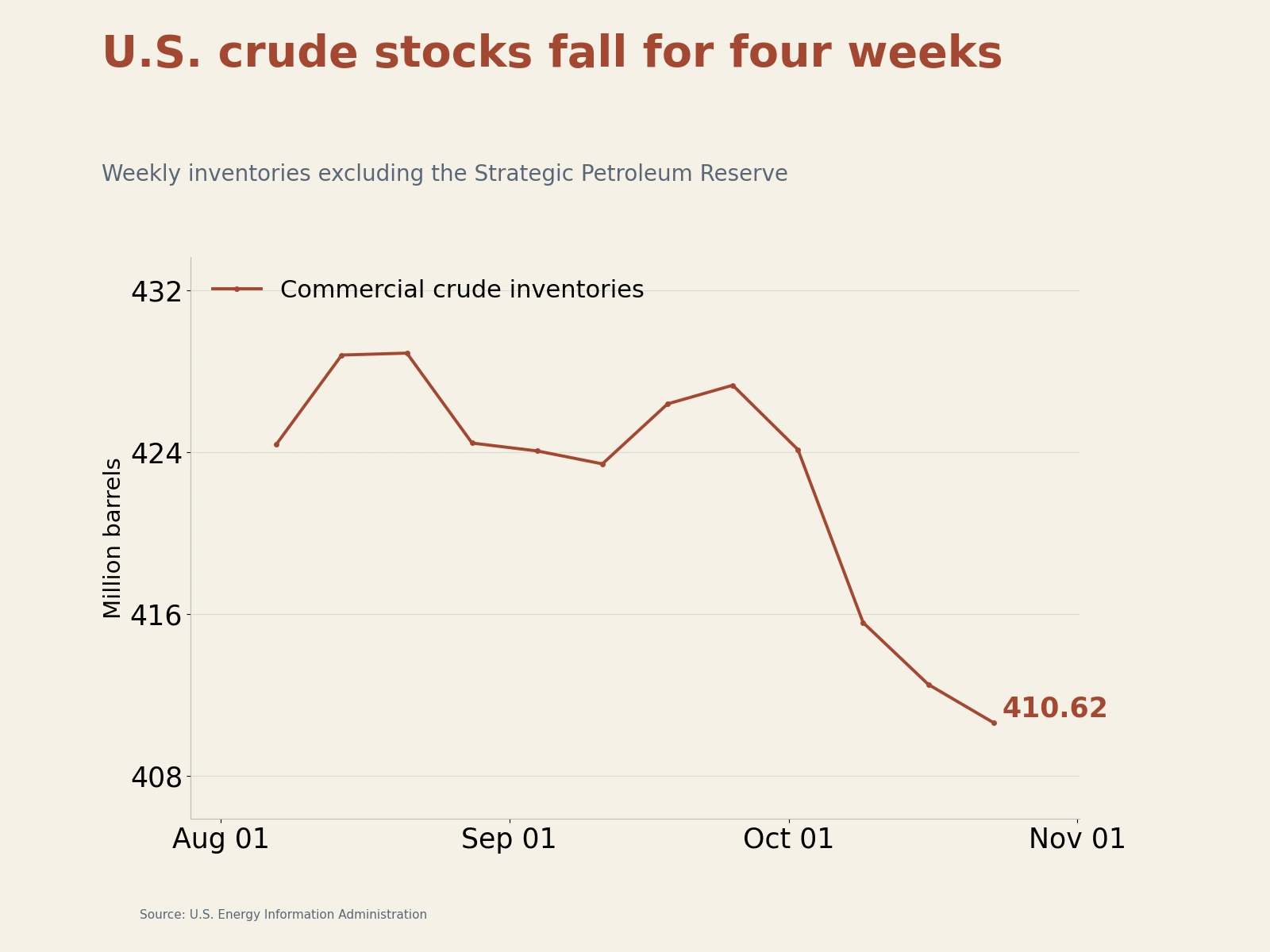
Over sixteen weeks US commercial crude had nevertheless fallen more than 58 million barrels, with a year-to-date draw near 7.2 million, indicating earlier tightness. Two unexpected builds alongside collapsing prices suggested war-damaged supply was recovering faster than expected rather than justifying a sudden-demand-collapse verdict. SPR and refinery details awaited that evening's official EIA report.
OPEC+ proceeds with increases; Chinese buying is the demand focus
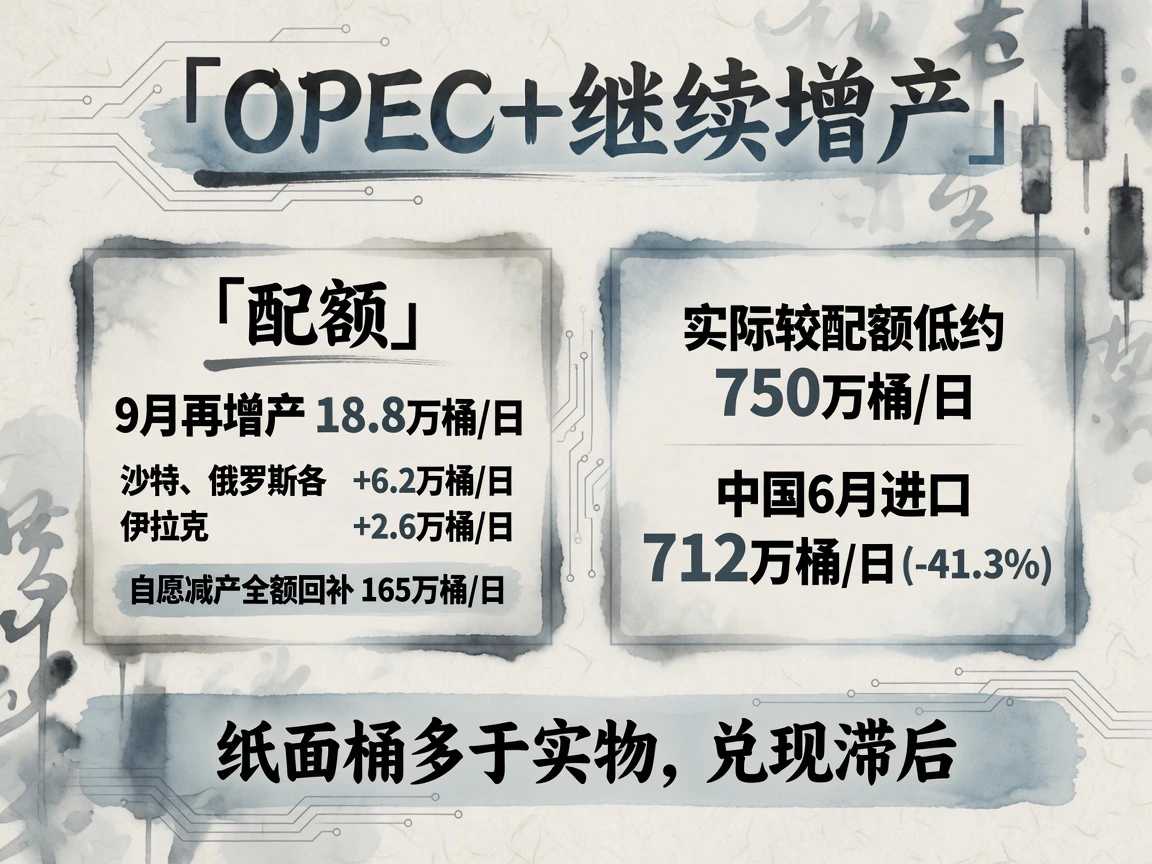
The August 2 OPEC+ meeting agreed another 188,000 barrels/day increase for September, matching August and fully unwinding April 2023's 1.65 million voluntary cuts. Seven core countries shared it: Saudi Arabia and Russia each 62,000 and Iraq 26,000. Rumors of a September 6 discussion about pausing Q4 increases remained, but announced supply backing was evident.
Quotas did not equal physical exports. IEA June data put the seven core countries' actual output around 7.5 million barrels/day below quotas, including Saudi Arabia about 2.95 million below. Until Hormuz fully opened, higher quotas largely remained paper capacity, a psychological headwind with a lengthy path to physical realization.
China remained the decisive current demand variable. Customs showed June imports near 7.12 million barrels/day, down 41.3% year on year and the lowest since October 2016. Q2 averaged around 8.1 million, down 32% sequentially. Estimated July seaborne imports recovered to 7.8 million, up 26%, but remained well below normal levels above 11 million.
With Brent below $80, Chinese refiners' potential August–September replenishment was the most important demand support. Historically, countercyclical Chinese stockbuilding at low absolute prices repeatedly supported global oil floors.
Bessent's one-or-two-day window: Negotiating expectations and uncertainties
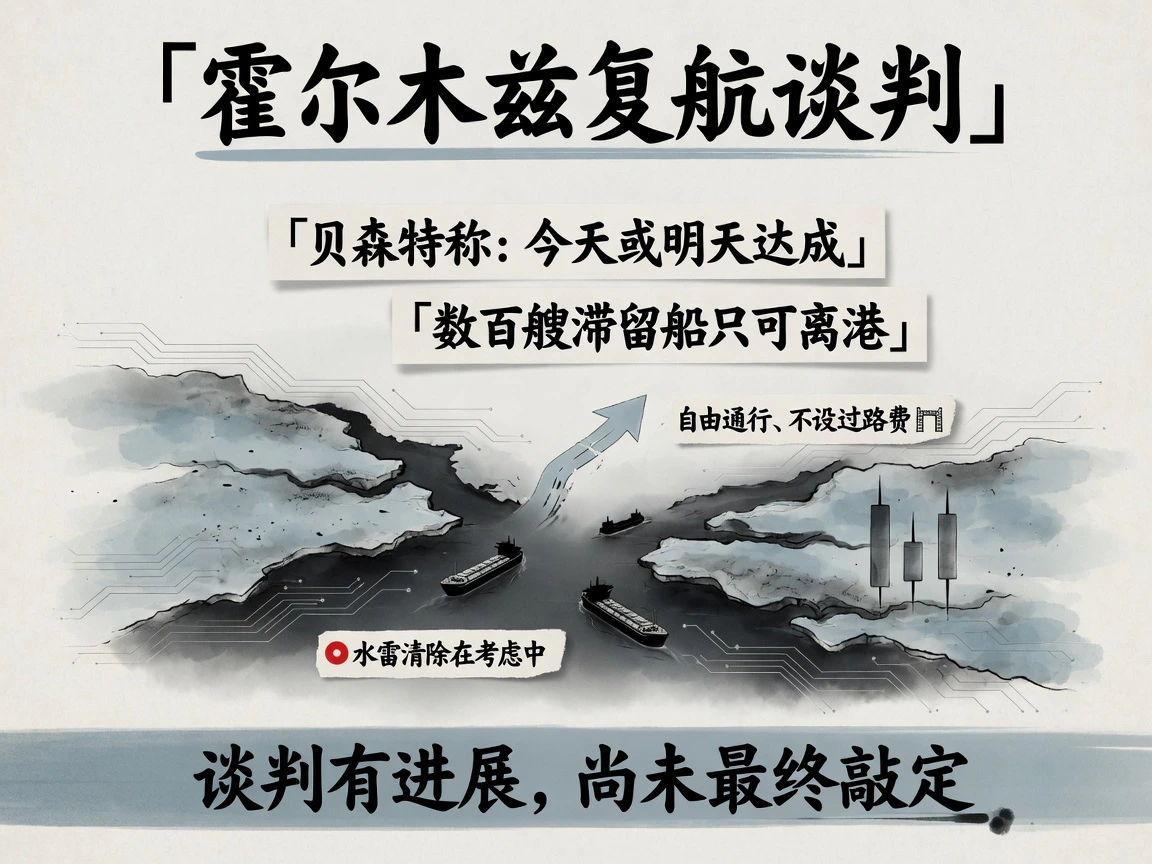
Bessent's CNBC optimism triggered the sell-off. He said the US and Iran were in close contact over reopening Hormuz and might agree today or tomorrow. A deal would assure free passage without tolls, release hundreds of stranded Gulf vessels and resolve supply interruptions in crude, products, fertilizer and industrial gases.
Bloomberg also reported Tehran considering European participation in mine clearance, a crucial shipping threat. Alongside Trump's weekend cancellation of planned strikes, Washington sought to portray this as Iran's last negotiating window.
Reality remained distant. The parties were not talking directly but relaying messages through Qatar/Doha, Pakistan and Oman. Doha described an advanced draft, while Iran denied direct US talks and said it only had technical safe-route discussions with Oman. Rubio acknowledged progress but said nothing was finalized. Markets remembered June 17, when a preliminary reopening understanding quickly broke over escort rights and safe-channel details.
Risks persisted. UKMTO reported an August 3 projectile strike on a cargo vessel around 20 nautical miles northeast of Khasab, Oman. Iranian moderates seeking economic relief and hardliners protecting security leverage were visibly divided. TD Securities argued Iran would not sign away strait control; fragile verbal consensus could fail. Even with a deal, current producer restart speeds limited immediate transport-flow recovery.
What markets price: Cross-asset signals and oil's anchor
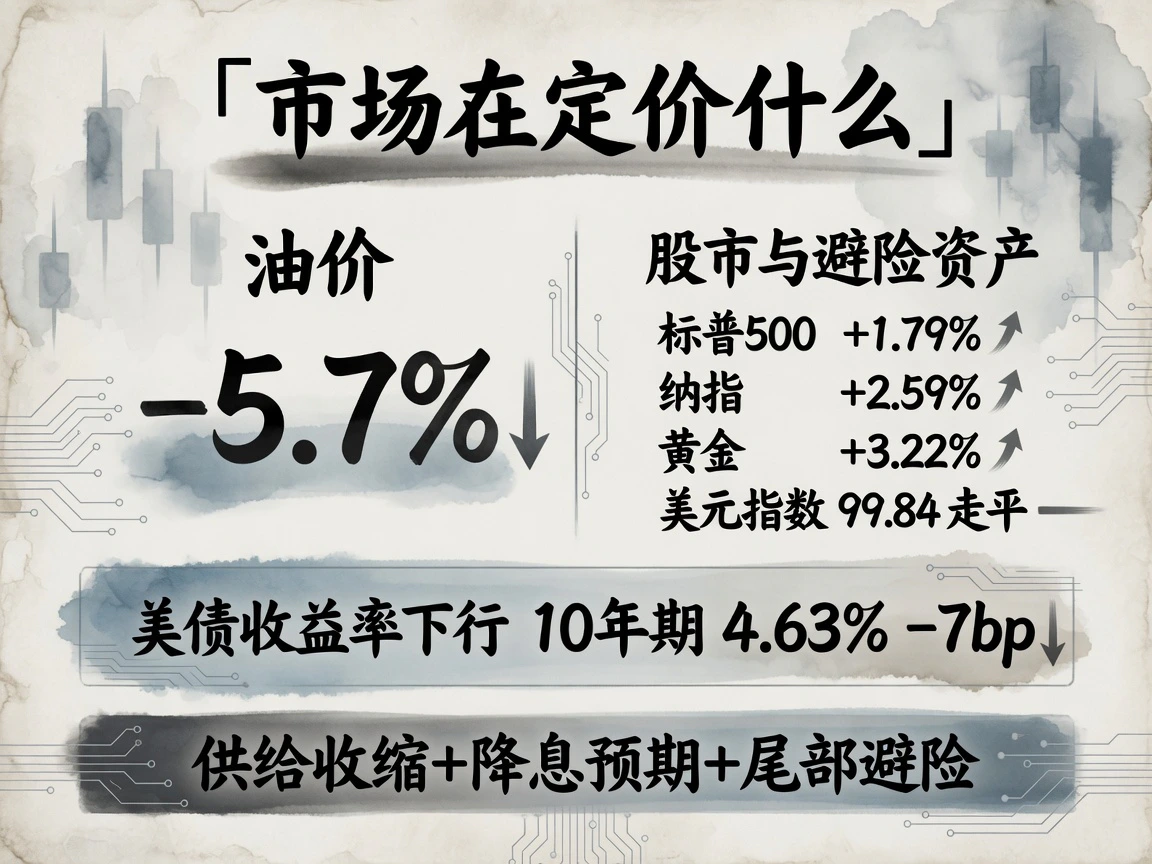
Combining that day's global assets clarifies the trade:
US stocks rebounded broadly, S&P 500 +1.79% and Nasdaq +2.59%; the dollar index traded narrowly near 99.84; COMEX gold rose 3.22%; Treasury yields fell, with 2-year -5 bp to 4.20%, 10-year -7 to 4.63% and 30-year -5 to 5.18%.
Oil down, stocks up and a flat dollar confirmed geopolitical-premium compression and improved risk appetite as inflation threats eased. Lower yields with surging gold suggested macro investors were anticipating an opening for Fed cuts this year while retaining haven exposure to geopolitical tails.
Brent below $80 moved quickly toward the EIA July outlook's baseline: Q3 $74, Q4 around $70 and 2027 around $65, leaving only about $5 of premium. That forecast already assumed eventual Hormuz reopening. Capital was front-running a scenario of reopening and full convergence toward the baseline.
Far-deferred 2027–2028 contracts remained anchored around $60–70. Markets had never doubted eventual medium-term looseness, with spare production capacity and China's energy transition limiting the long end.
The daily plunge of more than 5% mainly removed surface-level geopolitical sentiment. Tight physical balances, transport friction and lagging insurance remained a barrier. A deal implemented within 24–48 hours could accelerate convergence to $70–75 fair value. If the one-or-two-day promise proved another feint, high freight and unresolved hazards could restore the premium. Bessent's forty-eight hours were a decisive pricing crossroads.