Over the past 24 hours, Hormuz reopening approached a reckoning between diplomacy and live fire. With Omani mediation, Tehran and Muscat reached broad agreement on a transit framework whose proposed route partly enters Iranian waters, challenging decades of merchant passage through Oman's territorial sea. Tehran nevertheless rejected direct Washington contact: its deputy foreign minister called Trump's claims of successful talks fabricated and made an end to blockade and sanctions indispensable to reopening.
Maritime fighting intensified during the fragile window. An Indian cargo vessel was sunk by an explosive boat near Bab el-Mandeb and the southern Red Sea; Houthis claimed a direct ballistic hit on a Saudi tanker, reviving oil's geopolitical premium. Lebanon-Israel talks in Rome ended early amid ground developments and leak accusations, followed by Israeli strikes. A deeper U.S. risk emerged as THAAD and Patriot interceptors were reportedly depleted by over half to nearly 80%, creating a dangerous ammunition constraint on maximum pressure.
Hormuz framework nears completion; U.S. and Iran dispute whether talks exist

Iranian Deputy Foreign Minister Kazem Gharibabadi told state media that over three weeks of intensive Muscat discussions produced broad Iran-Oman agreement on dedicated entry/exit routes, technical supervision, sovereign and security jurisdiction and a joint coordination center.
The central change is geography. Wartime routes near Larak Island and alternatives through Omani waters would be abolished for a new corridor partly inside Iranian territorial waters. This breaks the longstanding innocent-passage arrangement in Oman and institutionalizes wartime Iranian control. Gharibabadi said the interim route could operate for 2–4 months, subject to the Supreme National Security Council and top leadership.
He cautioned that this understanding did not automatically reopen Hormuz. Tehran tied passage to Washington's mid-July renewed port blockade, hostilities and financial sanctions. Even returning to June's memorandum would be a necessary, rather than sufficient, condition.
Trump told Fox News discussions with Tehran were going very well and the strait would reopen soon or Iran would be hit hard. He threatened devastating strikes if Iran reneged, saying he had no choice. Gharibabadi countered on state television that there were no negotiations and U.S. claims were false. He acknowledged mediated messages of willingness to restore earlier commitments, but said Tehran had not agreed to start the second phase of June's memorandum.
A senior Gulf diplomat familiar with the process told CNN that an Iran-Oman agreement by Friday, August 7, was only a fifty-fifty chance. The delegation lacked any Revolutionary Guards voice, although the force controlling coastal missiles, mines and attack boats effectively held a veto over passage arrangements.
IRIB sources said bilateral technical arrangements had no connection to immediate reopening and that continued U.S. breaches prevented it. Parliamentary security and foreign-policy spokesperson Hassan Ghashghavi said Hormuz would never return to prewar Western-dominated disorder, rejected a U.S.-imposed southern corridor and stressed Oman talks were sovereign bilateral discussions unrelated to America.
MarineTraffic recorded only 10 Hormuz merchant passages in 24 hours, 7 entering the Gulf and 3 leaving, and about 19 at Bab el-Mandeb, 10 entering the Red Sea and 9 the Gulf of Aden. Both were near multweek lows amid extensive military-grade GPS spoofing and electronic interference. Against EIA's prewar benchmark of roughly 20 million barrels of daily crude transit, about 20% of global crude trade, and over 20% of seaborne LNG, physical passage remained a fraction of normal.
Qatar, Oman and Pakistan continued mediation to contain spillover. Qatari Prime Minister Tamim urged a return to June's framework and navigation security; Qatar's emir also called Trump, seeking to maintain at least an indirect diplomatic channel.
Red Sea and Bab el-Mandeb: Vessel sunk; Houthis claim Saudi tanker hit
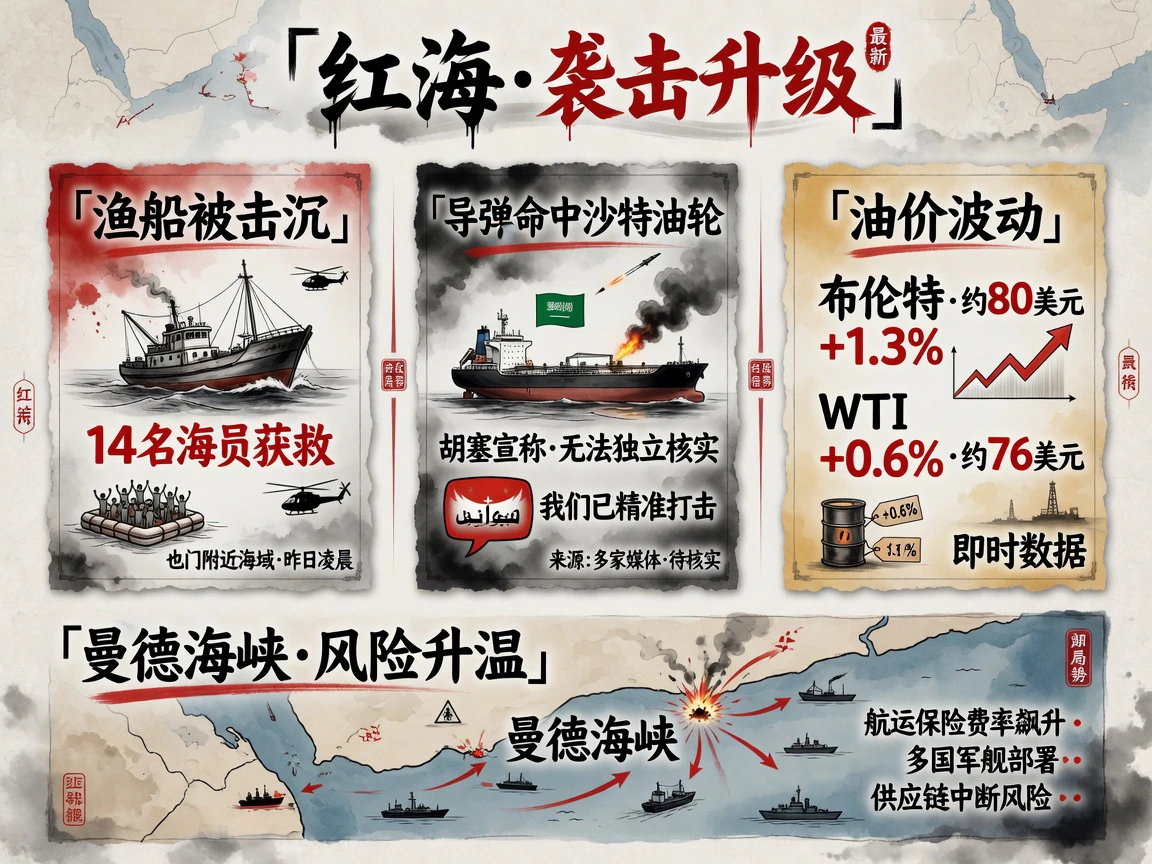
While Hormuz diplomacy remained unresolved, asymmetric maritime attacks in the southern Red Sea and Bab el-Mandeb intensified.
Indian officials confirmed Tuesday that the Indian-flagged mechanized dhow MSV Faize Noore Oliya sank after an unidentified projectile hit off Yemen. All 14 crew, including 13 Indians, were rescued by Yemen's coast guard and moved to Mocha. Yemen's transport ministry, cited by Reuters, blamed an explosive remote-controlled Houthi suicide boat.
UKMTO issued successive warnings that an unmanned surface vessel caused a major fire on a merchant ship in Bab el-Mandeb, confirmed sunk early Wednesday about 9 nautical miles from Mocha. All crew were rescued before it sank.
The Houthis claimed Wednesday morning that anti-ship ballistic missiles directly hit Saudi tanker Daisy in the Gulf of Aden and forced it to turn back; the results lacked independent imagery confirmation. Their blockade-against-blockade statement warned Saudi tankers would be denied southern Red Sea and nearby passage until Yemeni demands were met and the U.S.-Saudi blockade lifted.
UKMTO separately reported a large explosion close to a tanker about 95 nautical miles southeast of Aden Wednesday, with no hull breach, spill or injuries. Its origin remained under investigation; observers strongly suspected a link to the Houthi missile claim. Saudi officials remained silent on the attacks.
Oil quickly reacted. Brent rose 1.3% back above $80 a barrel and WTI 0.6% toward $76. Wood Mackenzie's Middle East upstream head Alam said collapsing Red Sea flows were cutting Saudi Arabia's few remaining Hormuz alternatives. Under missile and drone threats, some ships turned off AIS to avoid detection and attempted blind passage.
Lebanon-Israel flank: Rome talks halt early; southern Lebanon struck again
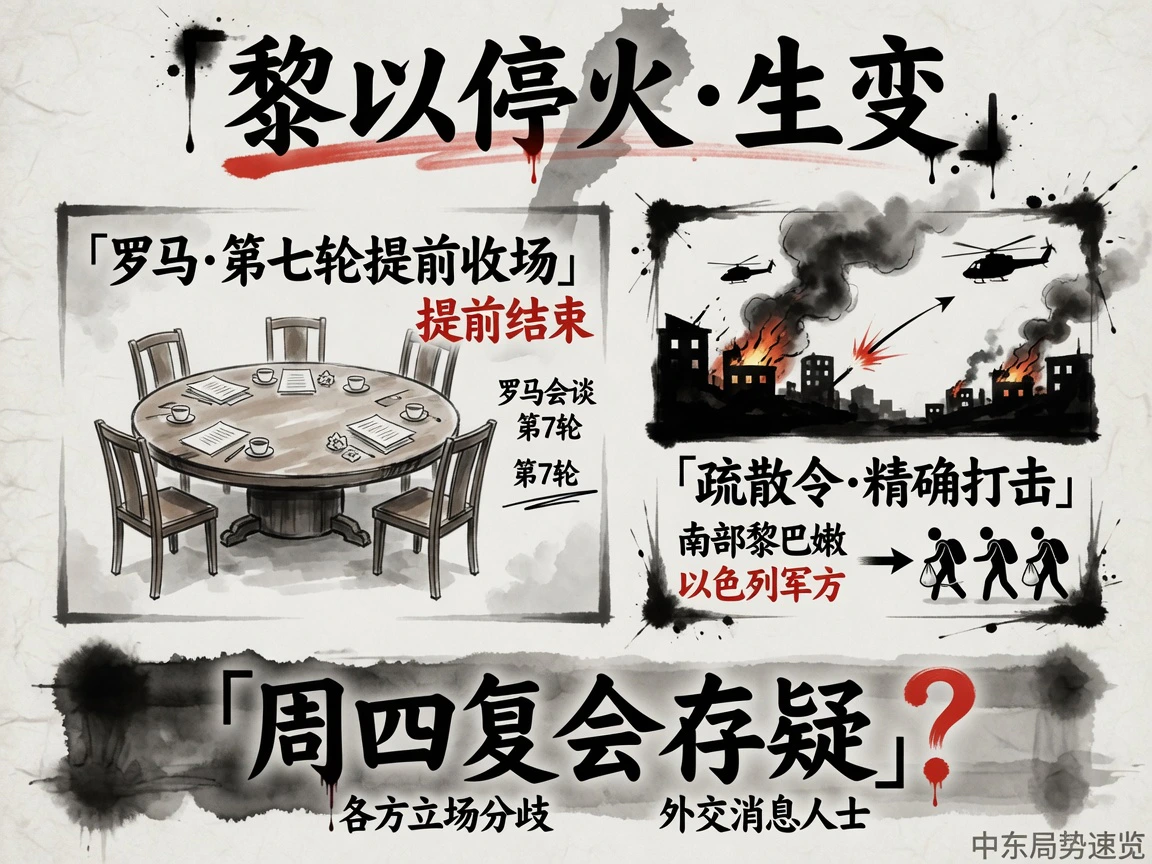
The seventh round of indirect Lebanon-Israel ceasefire talks unexpectedly ended early in Rome.
A State Department official said worsening ground developments ended talks at 15:30 local time but described constructive technical progress on a U.S.-French-Lebanese-Israeli monitoring framework. Regional diplomatic sources described a sharper breakdown: Israeli ambassador Michael Leiter accused Lebanon of deceptive malicious leaks three hours before scheduled closure and demanded U.S. suspension. Lebanese sources instead said the U.S. sought a pause to resolve internal Washington differences.
Representatives publicly confirmed Thursday-morning resumption, but senior Lebanese figures warned major fighting developing in the south could prevent it.
Israel issued its first compulsory evacuation orders for southern Lebanese border villages since June 10, particularly Mansouri, then announced precise strikes on Hezbollah positions, alleging wholesale ceasefire violations. Lebanon's national agency reported two rounds of Israeli carpet bombing around waters and hills near Mansouri south of Tyre, plus heavy artillery near Majdal Zoun. The health ministry confirmed at least one dead and 12 injured in a Tebnine-area strike.
Renewed fighting threatened June 27's ceasefire understanding, under which Israel should gradually leave two southern areas and hand security to Lebanon's army. Hezbollah never endorsed these talks. Rome's collapse and border fighting cast doubt over the de-escalation package expected Thursday.
Military stocks and domestic politics: Interceptors run low; Tehran calls conditions its hardest
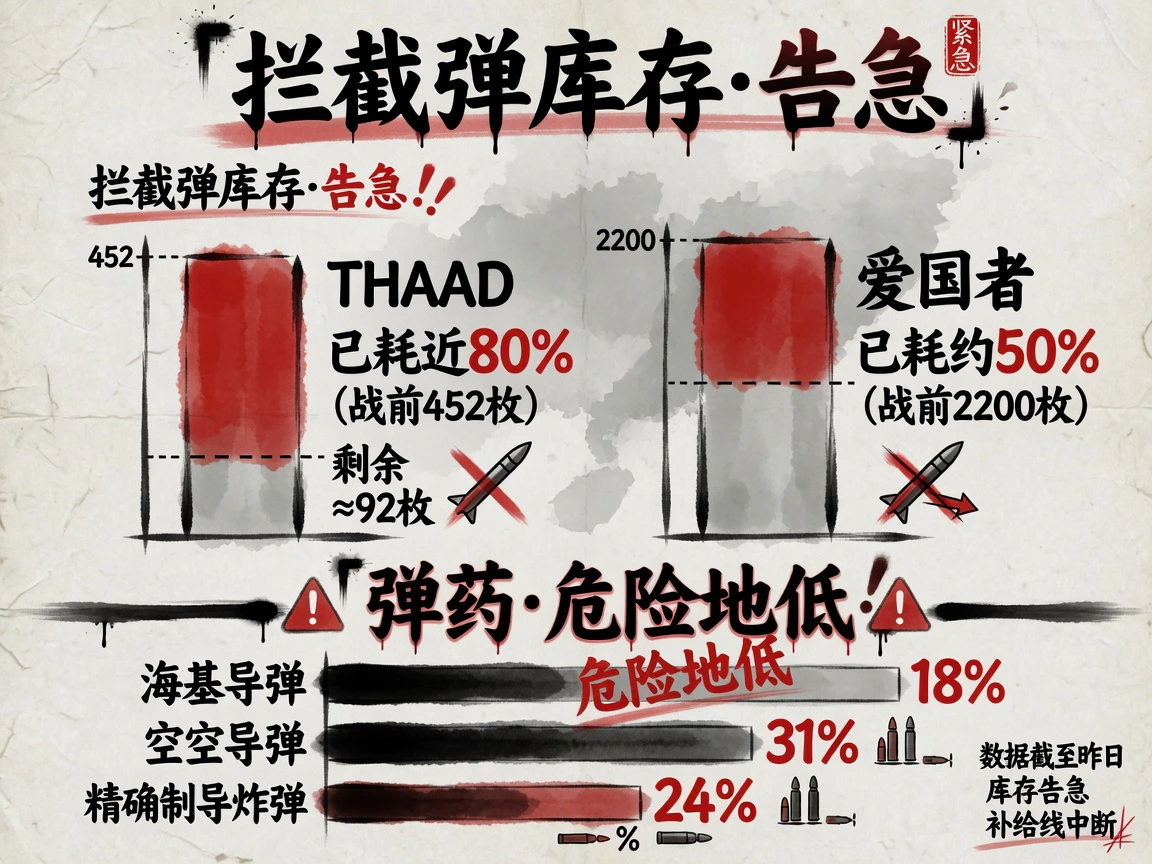
As conflict became prolonged attrition, foreign reporting over the past 24 hours exposed severe U.S. theater air-defense ammunition pressure.
Washington defense sources said repeated Iranian and allied missile and drone saturation since late February had consumed nearly 80% of active THAAD interceptors and more than half of PAC-3 stocks. Senior U.S. commanders stationed in the Middle East formally warned Pentagon leaders that theater reserves were at an extremely dangerous threshold.
CSIS models estimated prewar global stocks at only about 2,200 Patriot interceptors and 452 THAAD rounds. Limited annual production prevented rapid replenishment. Gulf allies feared that further U.S. strikes would invite Iranian retaliation while depleted defenses exposed refineries, desalination and ports.
On the second anniversary of taking office, President Pezeshkian told IRIB Iran faced its hardest and most dangerous circumstances since the 1979 revolution, acknowledging a deep systemic crisis.
He described escalating sanctions, severed bank and cross-border channels, war and a naval/air blockade cornering the country. He accused opponents of using economic suffocation to inflame social divisions and hostility to the government, thanking Iranians' exceptional resilience.
He also told Hamas political leader al-Hayya Iran supported any tactical choices in Gaza ceasefire and hostage-exchange talks. Netanyahu remained guarded over Trump's disarmament peace draft, saying Israel had received it but accepted no provision.
UN rights chief Volker Türk said in Geneva that Iran had executed at least 56 national-security prisoners since March 19, including 27 cases directly tied to early-year protests. Imprisoned reformist Mostafa Tajzadeh urged an immediate halt to executions of young protesters, warning that killing amid acute internal tension risked self-destruction.
Live highlights
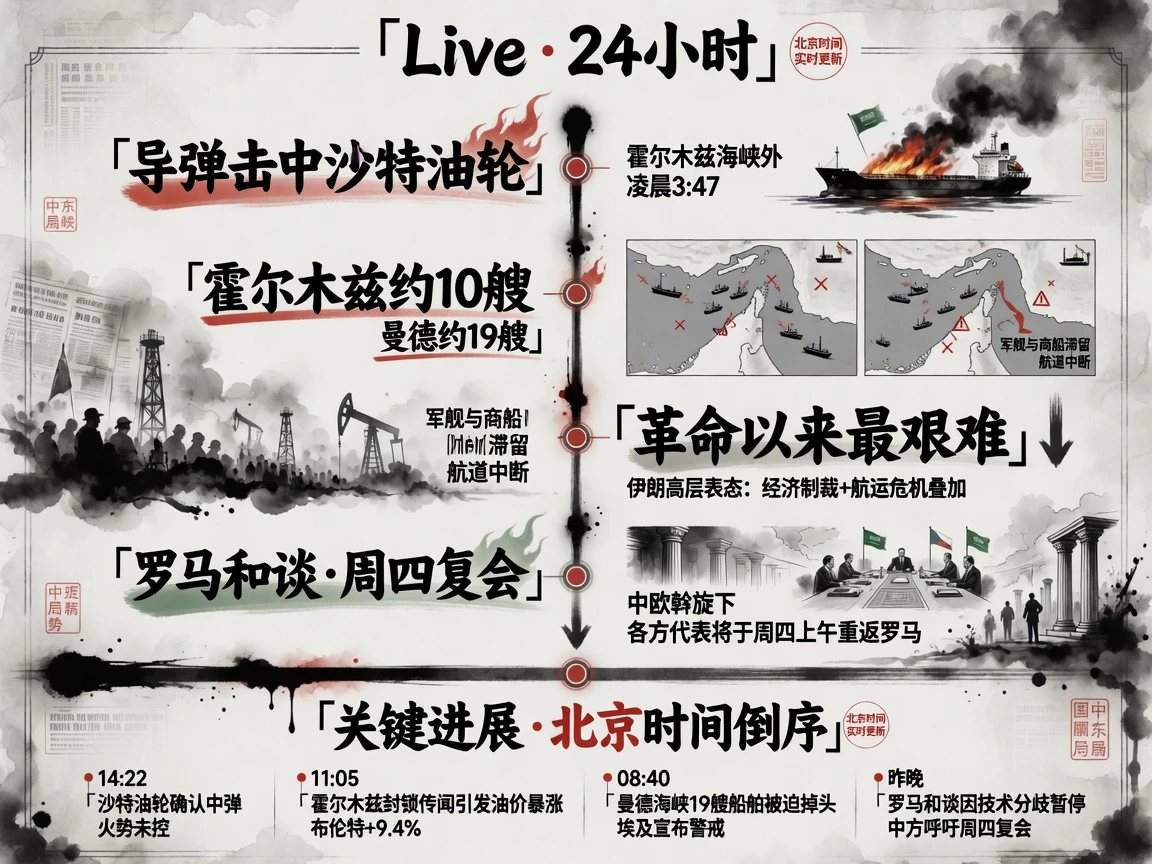
Key developments over the past 24 hours, in reverse Beijing-time order:
| Key developments |
|---|
| August 6, 06:10 Beijing timeHouthis claimed a ballistic strike badly damaged Daisy and forced it back; UKMTO separately reported a nearby explosion 95 nautical miles southeast of Aden, with crew safe. |
| August 6, 05:19 Beijing timeMarineTraffic: 10 Hormuz passages in 24 hours, 7 in and 3 out; Bab el-Mandeb about 19, 10 toward the Red Sea and 9 toward Aden; GPS spoofing and interference persisted. |
| August 6, 04:37 Beijing timeOn his second anniversary in office, Pezeshkian called conditions the hardest existential crisis since the 1979 revolution. |
| August 6, 02:05 Beijing timeGharibabadi described a new Iran-Oman corridor partly in Iranian waters, trial operation for 2–4 months and final approval required. |
| August 6, 01:40 Beijing timeGharibabadi denied any negotiations, after Trump said Tehran discussions were going very well. |
| August 6, 01:32 Beijing timeSeventh-round Lebanon-Israel Rome talks ended early amid fighting and accusations; Thursday resumption remained uncertain. |
| August 5, 23:58 Beijing timeIranian spokesperson Baghaei said safe-route coordinates were agreed with Oman and a joint draft entered final technical approval. |
| August 5, 23:19 Beijing timeIsrael issued its first southern Mansouri evacuation order since June and launched targeted strikes; Tebnine casualties were one dead and 12 injured. |
| August 5, 22:11 Beijing timeUKMTO reported a merchant ship attacked by an explosive unmanned boat in Bab el-Mandeb, burning and later sinking off Mocha. |
| August 5, 21:34 Beijing timeMaritime-security agencies assessed risks in three Hormuz routes: Iran's proposal, the traditional Oman-IMO route and prewar deepwater route. |
| August 5, 20:59 Beijing timeA Gulf diplomat put an August 7 Friday Iran-Oman deal at fifty-fifty and said the delegation lacked Revolutionary Guards representation. |
| August 5, 20:42 Beijing timeUKMTO confirmed a vessel sunk by unmanned boat 9 nautical miles southwest of Mocha, all crew rescued; Yemeni officials blamed the Houthis. |
| August 5, 19:39 Beijing timeBrent rose 1.3% above $80 and WTI 0.6% toward $76 as Red Sea disruption hurt Saudi alternatives. |
| August 5, 19:31 Beijing timePezeshkian backed Hamas's tactical peace-talk choices; Netanyahu said no term of Trump's disarmament draft had been accepted. |
| August 5, 18:47 Beijing timeUN rights chief said Iran executed at least 56 since March 19; Tajzadeh warned authorities against self-destructive escalation. |
| August 5, 17:42 Beijing timeIranian state media rejected immediate reopening expectations; Ghashghavi said the strait would not return to its prewar arrangement. |
| August 5, 13:13 Beijing timeIndia confirmed Faize Noore Oliya sank after attack and all 14 rescued crew were taken to Mocha. |
| August 5, 12:36 Beijing timeTrump told Fox Hormuz would reopen soon or face devastating strikes and said talks went well; Tehran denied this. |
| August 5, 12:30 Beijing timeReporting described nearly 80% THAAD depletion and more than half of Patriot stocks used, with severe theater ammunition warnings. |
| August 5, 12:30 Beijing timeIran maintained bilateral Oman contact; mediators shuttled U.S.-Iran messages and Qatar's emir called Trump. |