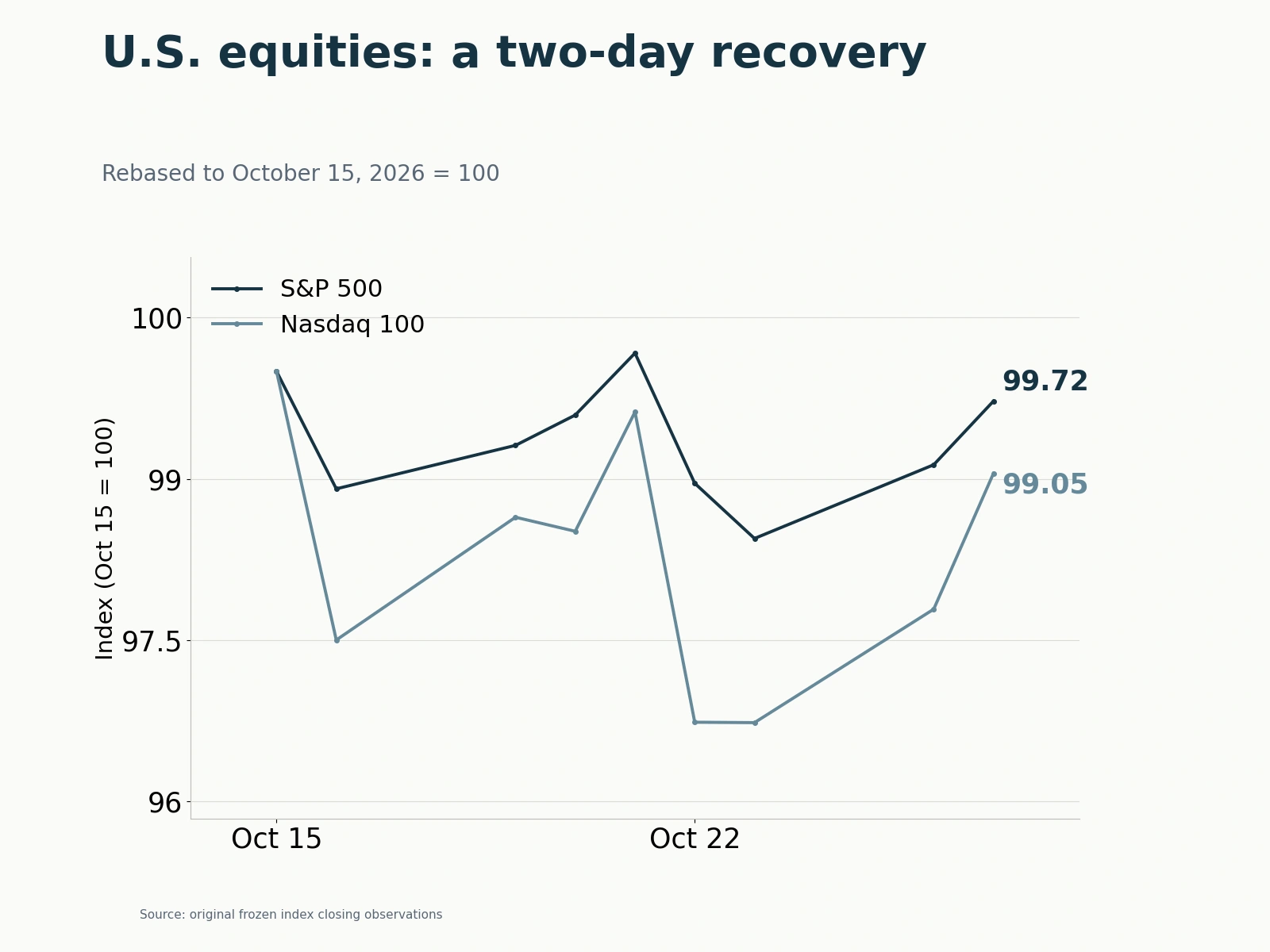
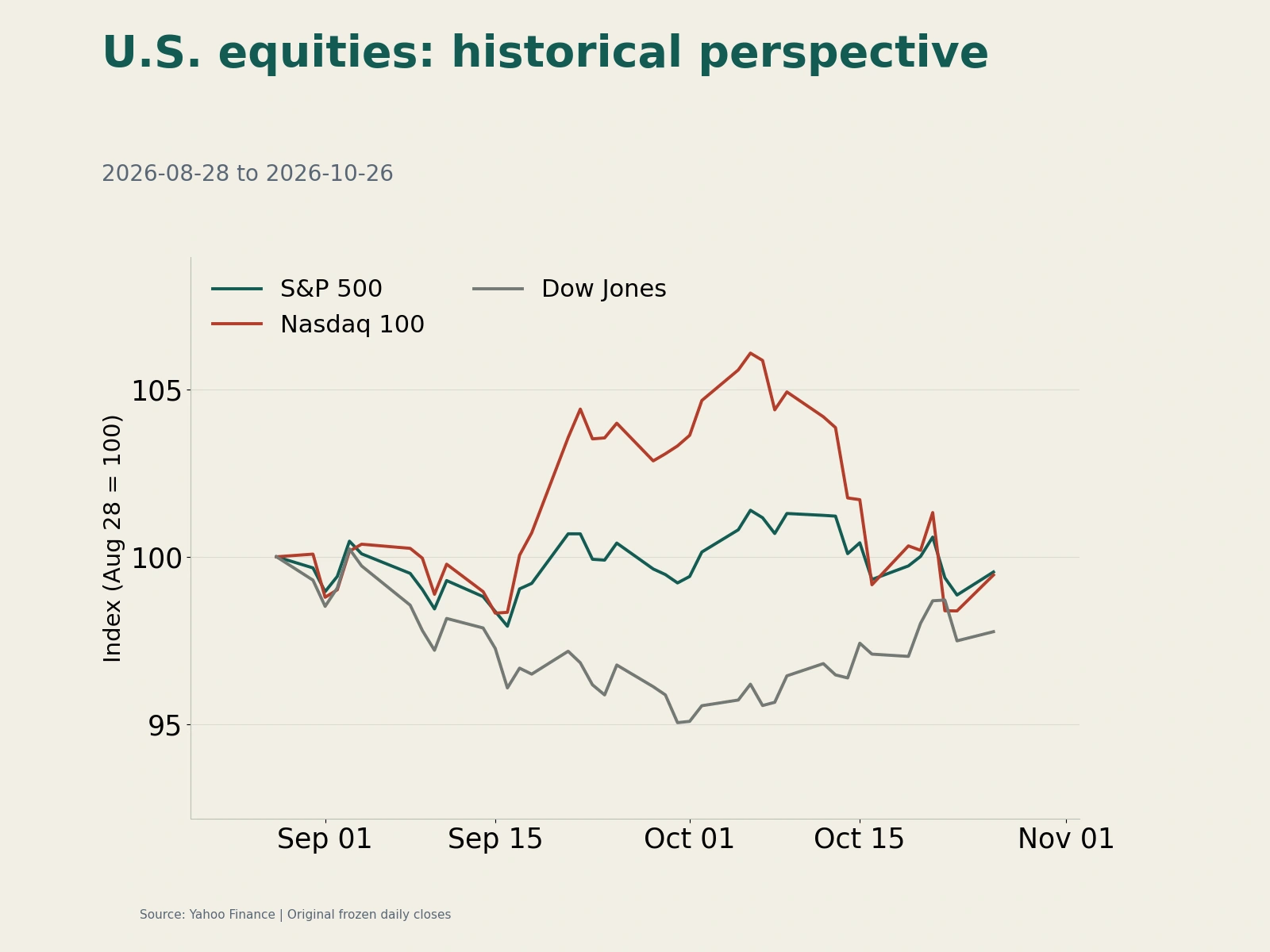
On August 5, 2026, global cross-asset trading shifted from aggressive repricing into consolidation while awaiting a Hormuz agreement. The Iran–Oman navigation draft had reached final text review, with route coordinates largely settled and only the supreme leader's approval outstanding. Bulls and bears reached a temporary balance, stabilizing the previously compressed geopolitical premium. After two steep falls, oil traded narrowly, WTI near $75 and Brent near $79, without Tuesday's collapse. Treasury yields barely moved: two-year down two basis points to 4.18%, 10-year at 4.63%. Traditional value shares pushed the Dow to another record close while large-tech earnings ended Nasdaq's four-day winning run. Data pulled three ways: cooler labor, resilient services and firm prices. July ADP private jobs rose only 44,000, the weakest in nearly six months; ISM services employment returned to contraction while prices rebounded to 70.3. September hike pricing eased from about 57% to 54%, leaving a tight overall path. Lisa Cook delivered a conditionally hawkish speech after the close. By the US close and Asian morning, the combination of leader approval, a joint statement and actual lifting of the US coastal blockade remained unresolved.
Fixed Income: A Sideways Day as the Front End Removes Premiums and the Long End Refuses to Follow
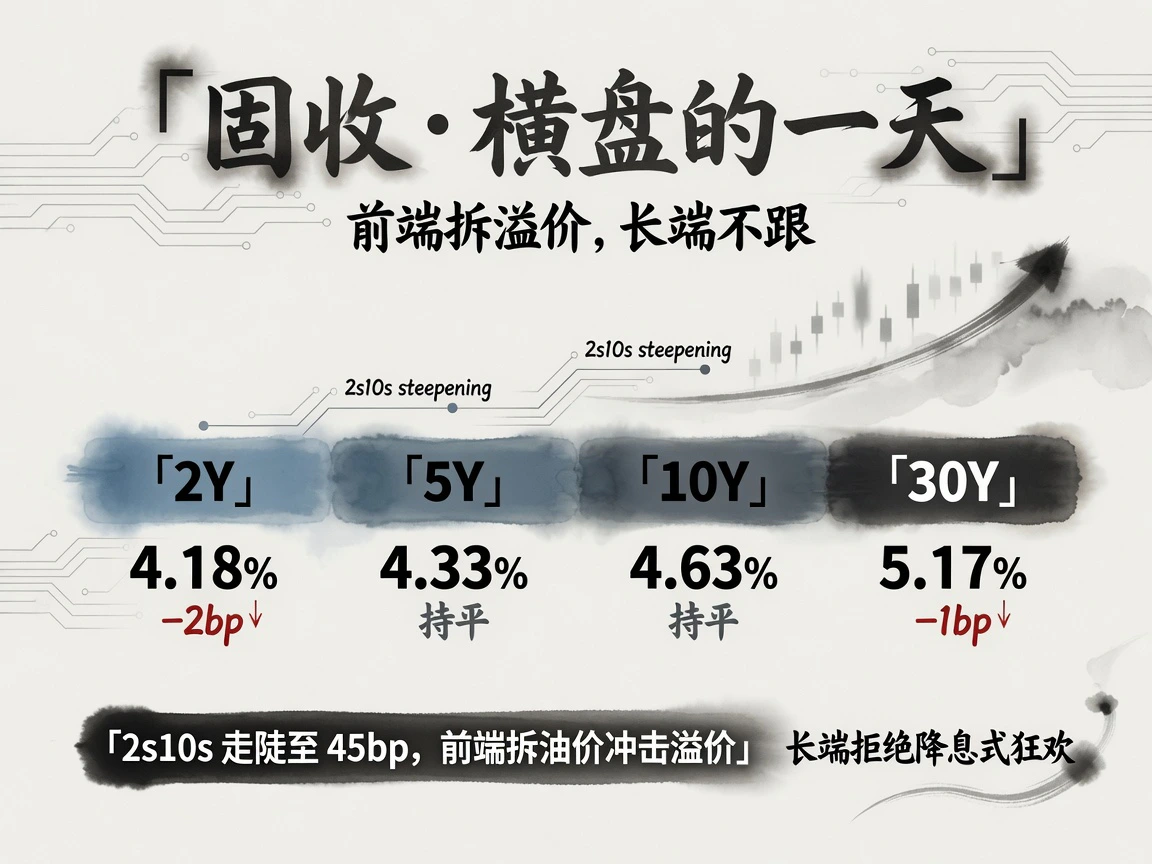
After two sessions of falling yields, Treasuries consolidated August 5. The official Treasury end-of-day par curve, close to close, was two-year 4.18%, -2.0 bp; five-year 4.33%, unchanged; 10-year 4.63%, unchanged; 30-year 5.17%, -1.0 bp. Mild bull steepening and a small twist widened the two-year/10-year spread about two basis points to near 45 bp. The front end continued removing extreme oil-driven hike fears, while inflation persistence and supply kept the long end from pricing an easing celebration. Across three sessions, two-year yields fell around seven basis points from 4.25% to 4.18%, but the 10-year stayed near the 4.60% platform and the 30-year at 5.17%, leaving reflation and fiscal-supply premiums intact.
Inflation-linked markets confirmed this: 10-year breakevens were 2.22%, down 1.0 bp, five-year 2.18%, down 1.0 bp, and five-year/five-year forward inflation near 2.26%, still firmly above the Fed's 2% target. Bonds were compressing only the short-term inflation impulse from surging crude, without fundamentally changing the long-run inflation center or credibility.
Sideways yields reflected offsetting forces. Soft ADP gave short-end buyers breathing room, but Neel Kashkari told CNBC that rates should begin rising gradually as data warranted and that policy was not especially restrictive, quickly restraining easing hopes. Stabilizing oil also prevented a one-way collapse in inflation compensation. Latest available August 4 high-yield and investment-grade spreads remained 2.73% and 0.78%, historically very narrow. At high benchmark rates and compressed spreads, dollar-credit returns relied almost entirely on carry, with little cushion against another yield spike.
Post-close liquidity tracking, excluded from formal daily changes: CNBC around 20:55 US Eastern on August 5 showed two-year 4.185%, 10-year 4.607% and 30-year 5.157%, slightly below official Treasury end-of-day levels and reflecting mild off-exchange continuation. Asian-morning Treasury futures edged up, with buyers slightly ahead.
Macro: Jobs Are Weakest in Six Months, but Demand and Inflation Remain
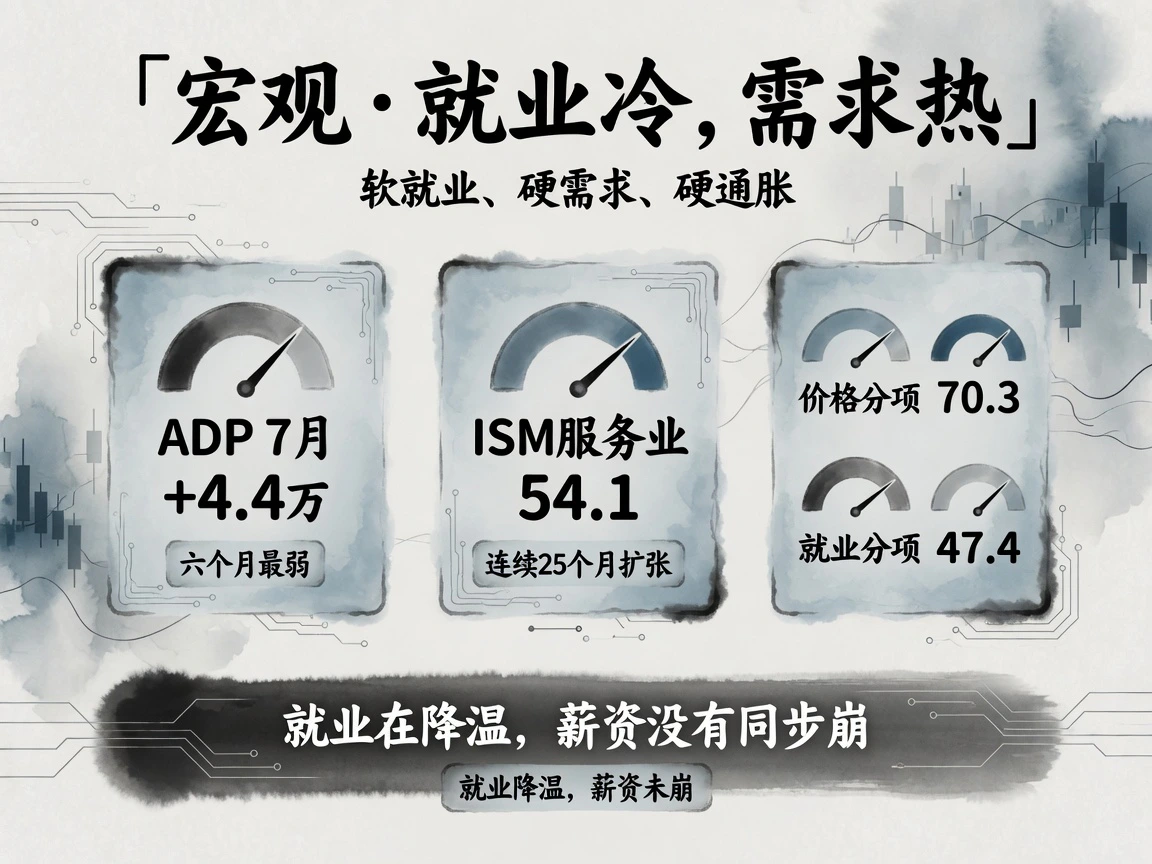
The day's dense data shared one tension: employment slowed while final demand and sticky prices remained stubborn.
July ADP private employment rose only 44,000, the weakest in six months and below consensus near 70,000; June was revised up to approximately 95,000. Services provided all growth, about 47,000, while goods producers lost 3,000. Annual pay growth for stayers held at 4.4%, while switchers rebounded toward 7%, relatively high for the past year. Hiring absorption slowed cyclically, but pay rigidity in key jobs and core services remained intact.
Final activity stayed resilient. S&P Global services PMI was revised to 54.6 and composite output to 54.5, above flash readings and forecasts. July ISM services was 54.1, a 25th consecutive expansion, with accelerating activity and orders. Employment slipped back to 47.4 after one month of expansion, corroborating ADP, while prices paid rose to 70.3. Together with Monday's manufacturing PMI of 55.6, goods and services both expanded. The central tension was cautious hiring alongside final prices and operating costs that remained easier to raise than lower.
Policy: September Hike Odds Ease toward 54%; Hawks Attach Conditions
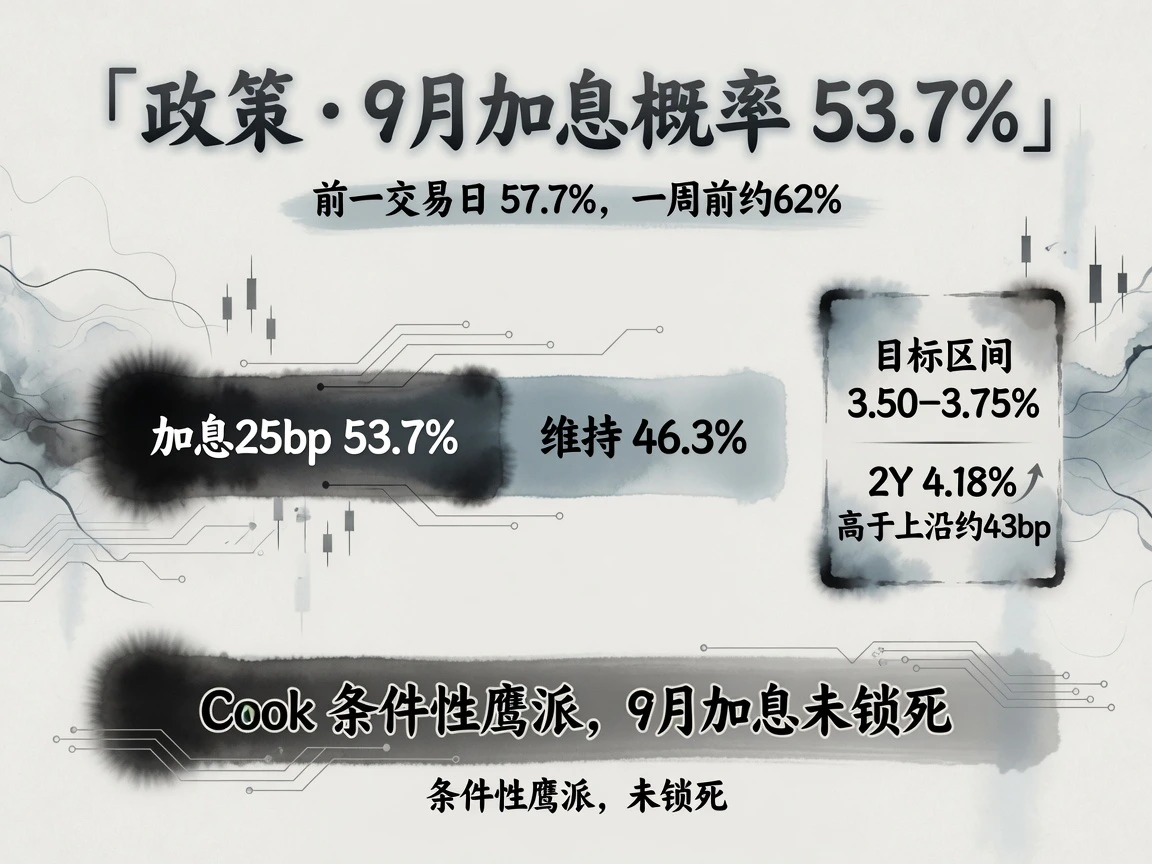
At 20:25 US Eastern on August 5, fed funds futures implied a 53.7% chance of a 25-basis-point hike at the September 16 FOMC and 46.3% of a hold, down from roughly 57.7% the previous session and 62% a week earlier. The current target remained 3.50%–3.75%, with no August meeting. Late-August Jackson Hole was the key expectations-management window before September 16. Two-year yields at 4.18% were still approximately 43 basis points above the ceiling, showing that softer hike bets had not become rate-cut pricing.
Two concrete policy developments matter. First, the complete quarterly refunding package arrived at 08:30 US Eastern: issuance statement, TBAC report and financing tables. TBAC's background noted that yields near 4.6% at 10 years and 4.2% at two years reflected a medium-term shift from considering cuts to evaluating possible hikes. Intermediate and long yields nevertheless barely reacted, suggesting supply temporarily took a back seat to geopolitics and data.
Second, Cook spoke formally in Anchorage after the US equity close. With annual PCE near 3.7% and core near 3.3%, she said inflation was too high and she was ready to resume hikes if needed. She also listed three possible disinflation forces without a hike: fading tariff base effects, expected second-half energy declines and AI-driven supply efficiency. Holding steady to assess them was reasonable, she said. This was conditional hawkishness: markets removed extreme geopolitical hike premiums, but officials had not closed September's window.
The next tests were imminent: August 6 at 08:30 US Eastern, initial claims, previously 197,000, and Q2 productivity and unit labor costs; then August 7 at 08:30, July payrolls, with consensus near +80,000 and unemployment 4.2%. None had been released by cutoff.
Commodities: Oil Awaits Final Review; Gold Rises in the Opposite Direction
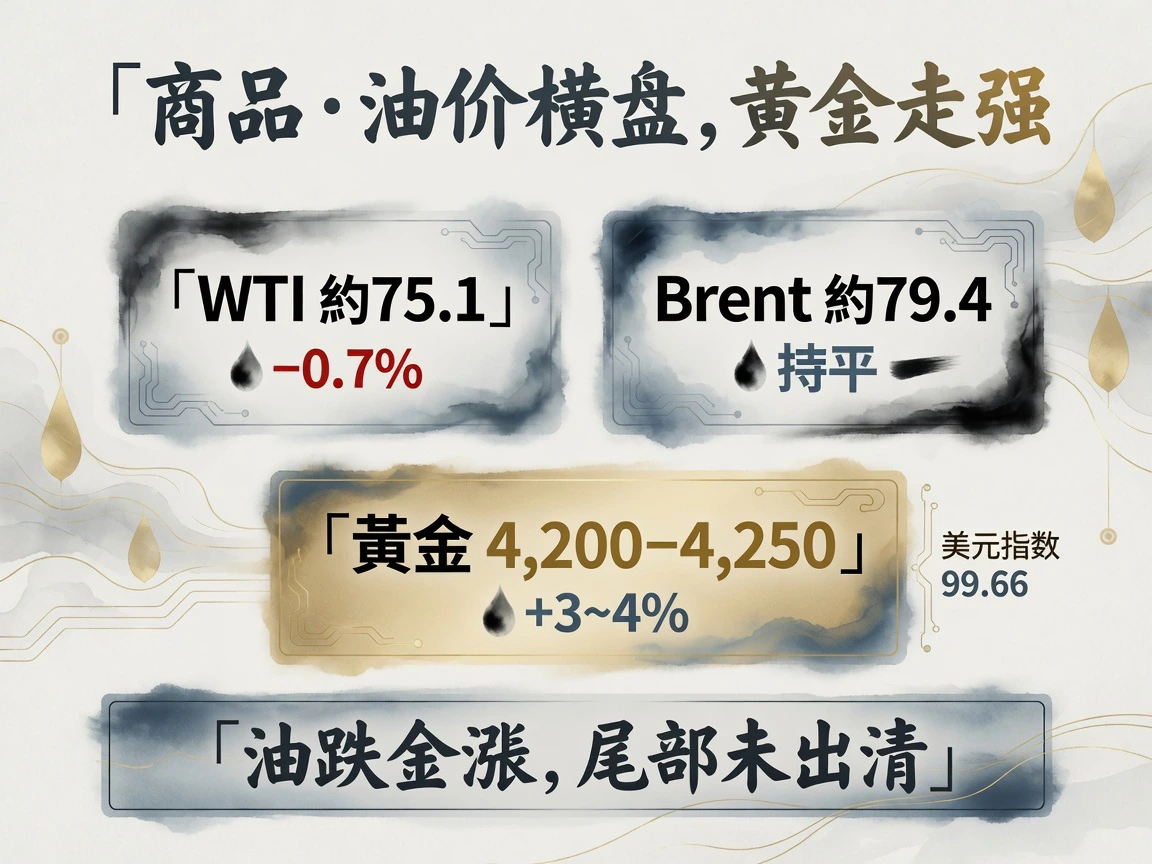
Oil entered its third session digesting reopening expectations. August 5 front settlements put WTI at $75.1–$75.2, down about 0.7%, and Brent at $79.3–$79.5, flat to slightly higher, versus prior $75.77 and $79.36. The tone remained weak, but the two-day expectations-driven plunge gave way to checking text review and physical lags. Iran and Oman had agreed safe-route coordinates and were reviewing the joint statement, lacking Khamenei's formal approval. US officials pushed announcement timing to today or tomorrow. Clearing routes and mines, rewriting insurance, scheduling fleets and actually lifting the US blockade lagged derivatives pricing. Satellite monitoring still showed cargo passages far below prewar normal: promises were not delivery. The day's unexpected EIA crude build was secondary to geopolitics.
Front-line uncertainty persisted. CENTCOM said 48 merchant ships had been intercepted and diverted since the blockade resumed, three newly that day, with two boardings and two cargo ships disabled. Houthis claimed another Saudi-tanker attack in the Red Sea, while UKMTO received nearby explosion reports. Rome ceasefire talks between Israel and Lebanon stalled. China–US technical disputes over drone export controls and transaction lists continued, but mattered less to oil than Middle East developments. Treasury also partially lifted operating sanctions on Fly Baghdad while retaining sanctions on its individual owner.
Precious metals rose independently of oil: front COMEX gold and spot broadly gained 3%–4% into $4,200–$4,250 per ounce. Continuous contracts at $4,347–$4,351 reflected rolling and cannot be mixed with front-month daily returns. Support was broader than passive wartime haven buying: falling oil cooled inflation and hike expectations, the dollar softened around 99.66 versus 99.89 previously, and residual agreement risks remained. Lower nominal carrying costs and demand for geopolitical tail protection jointly supported gold.
Equities: Dow Records, Nasdaq Retreats and AI Reprices Internally
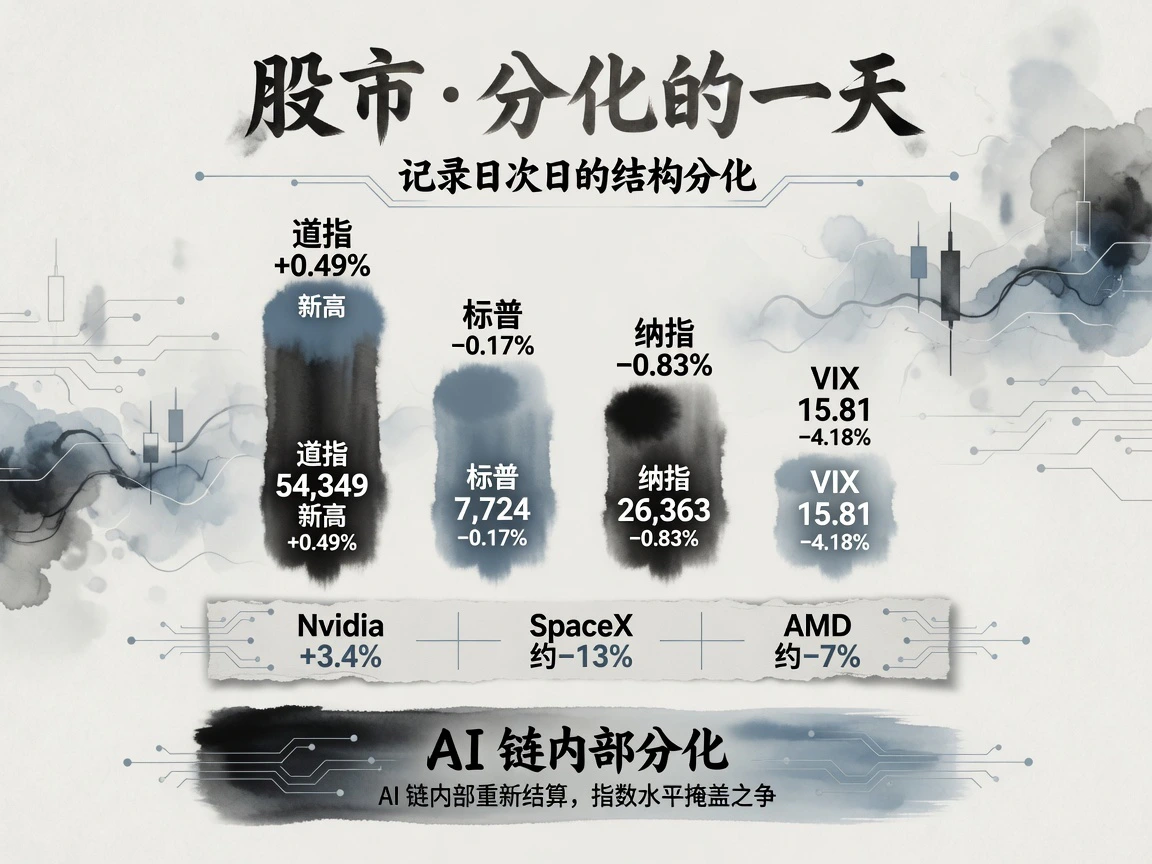
August 5 was a structural rebalancing after records. Dow rose 0.49% to a record 54,349.12; S&P 500 eased 0.17% to 7,723.55; Nasdaq Composite fell 0.83% to 26,363.44, ending four winning days; Russell 2000 lost 0.59%. VIX fell another 4.18% to 15.81 despite technology weakness. Suppressed implied volatility showed no systemic haven selling; earnings-driven sector rotation and stock-specific valuation changes dominated.
The AI chain underwent a harsh reassessment. SpaceX's first post-IPO quarterly report after June's large offering beat revenue and profit expectations, but AI and compute-related quarterly capex near $18.4 billion was multiples of prior plans. With about 20% of shares facing a lockup expiry this week, the stock fell 13%–14%. AMD's sound results and guidance were deemed insufficiently exceptional despite Q3 revenue guidance near $13 billion, sending shares down about 7%. Nvidia instead rose 3.4% as capital concentrated in an upstream leader with technical barriers and earnings certainty. Alphabet fell around 4% on DeepMind management changes. Eli Lilly raised 2026 sales guidance and gained 4.9%; Disney beat adjusted EPS expectations at $2.06 and rose 3.6%. These defensive and consumer blue chips masked technology losses and lifted the Dow to a record.
Asia-Pacific's earlier session had reflected overnight risk appetite: Nikkei 225 rose about 3.7% toward 66,300, KOSPI 3.76% to 6,598.26, and Hang Seng only 0.24% to 25,915.82. Semiconductor export chains outperformed Hong Kong. At 08:35–08:45 Beijing time on August 6, markets retraced after US tech divergence: Nikkei about -1.2% at 65,506 and KOSPI opened roughly -3% near 6,381, both timestamped intraday estimates. Hong Kong had not opened before 09:30. S&P futures ES were 7,760.75, Nasdaq NQ 29,560, and USD/JPY 157.71.
Consolidation Is Not a Policy Turn
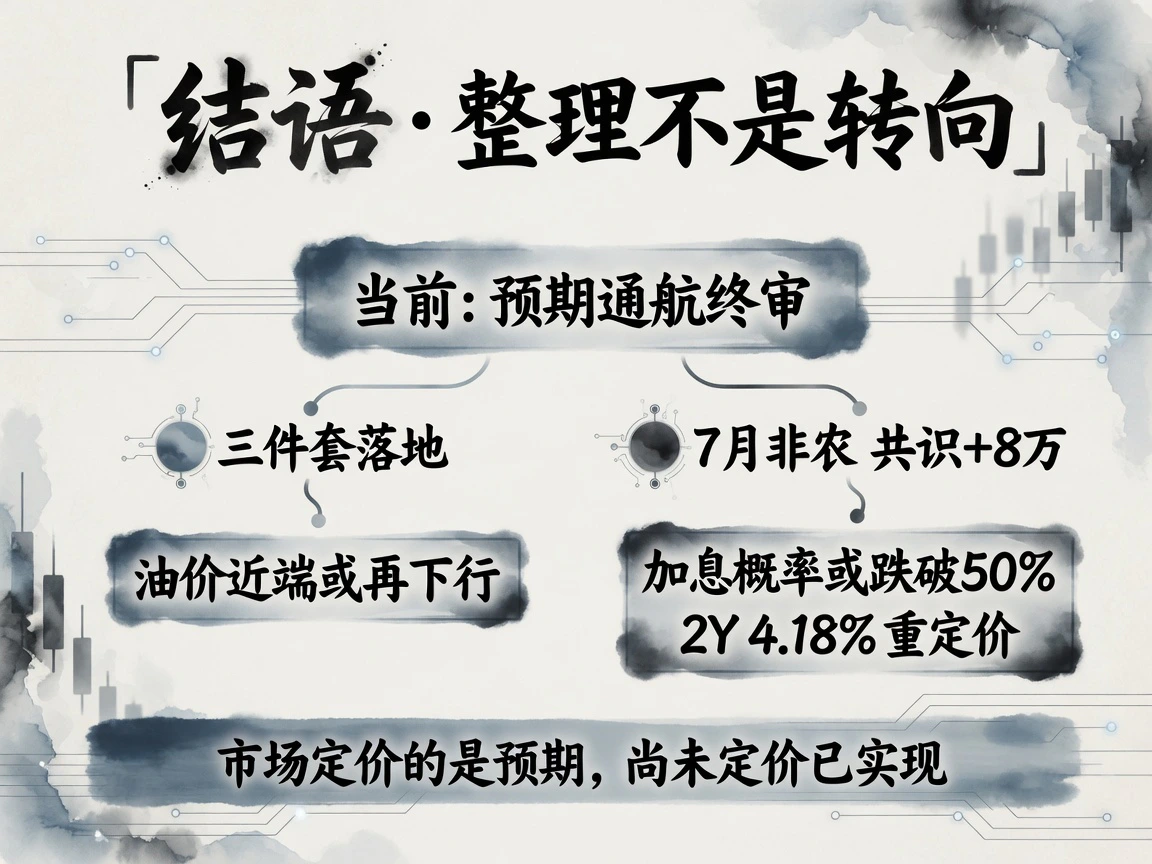
August 5 brought earlier hopes of reopening in 48 hours back to the slower reality of approvals and physical verification. Oil consolidated, Treasuries stood still and stocks reshuffled as capital awaited confirmed text. Two decisive questions will shape the next sessions:
First, when will leader approval, a joint statement and lifting the US blockade arrive? Signatures and official notices during Beijing's day could trigger another prompt oil-premium unwind. Further delay, or an Iranian prerequisite of reciprocal US blockade removal, could produce a sharp technical rebound near $75/$79.
Second, July seasonally adjusted payrolls at 08:30 US Eastern on August 7. Consensus is +80,000 and unemployment 4.2%. Unexpectedly deep weakness would likely push September hike odds below the 50% threshold, fully repricing the tightening premium embedded in two-year yields at 4.18%.
With high-level equity rotation, falling volatility and steady oil, markets still price only expected final review on paper, far from physical reopening. Whether AI capex and valuation reassessment stabilizes, and Asian-morning losses narrow by the close, are key near-term equity tests.