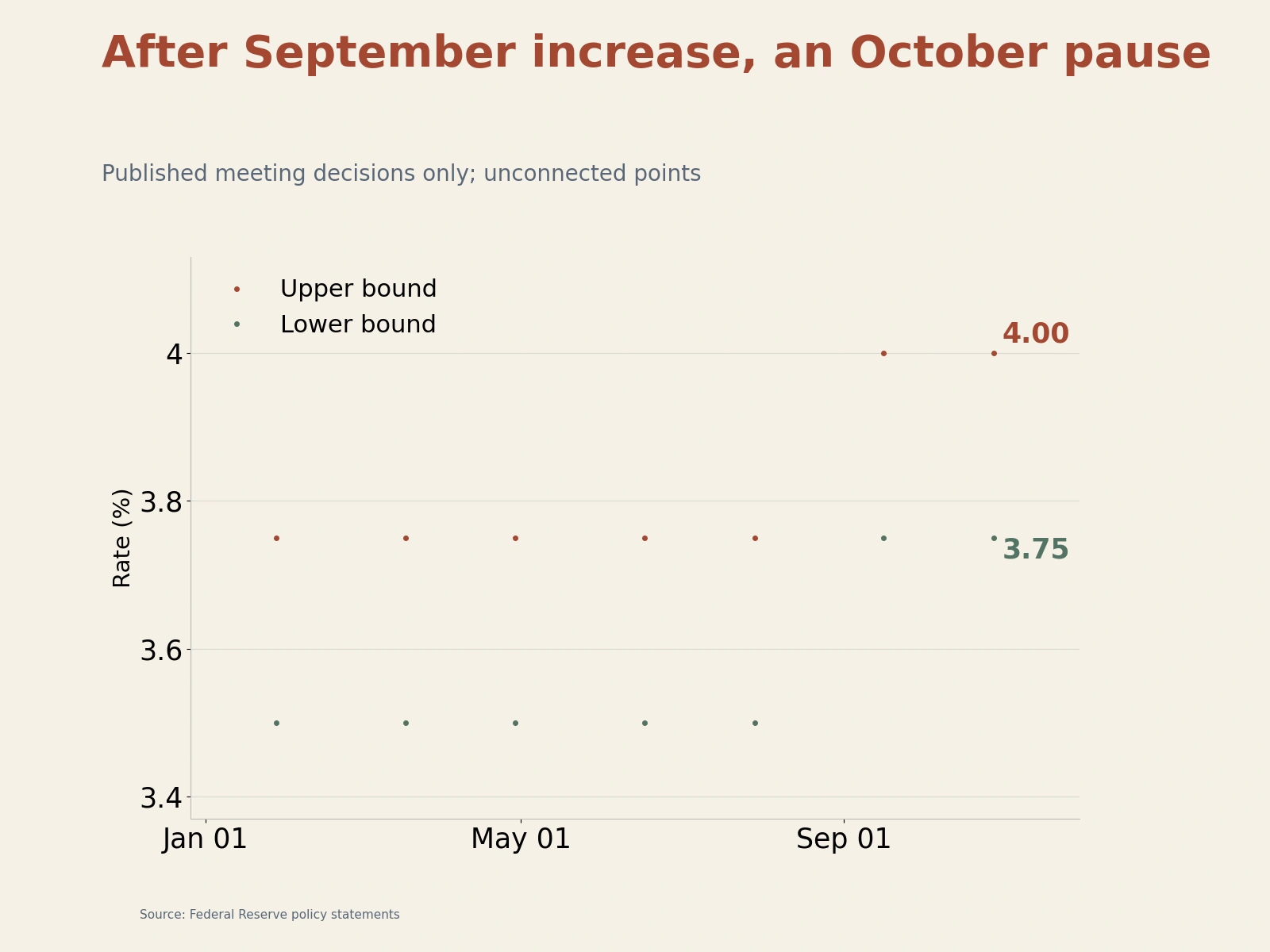
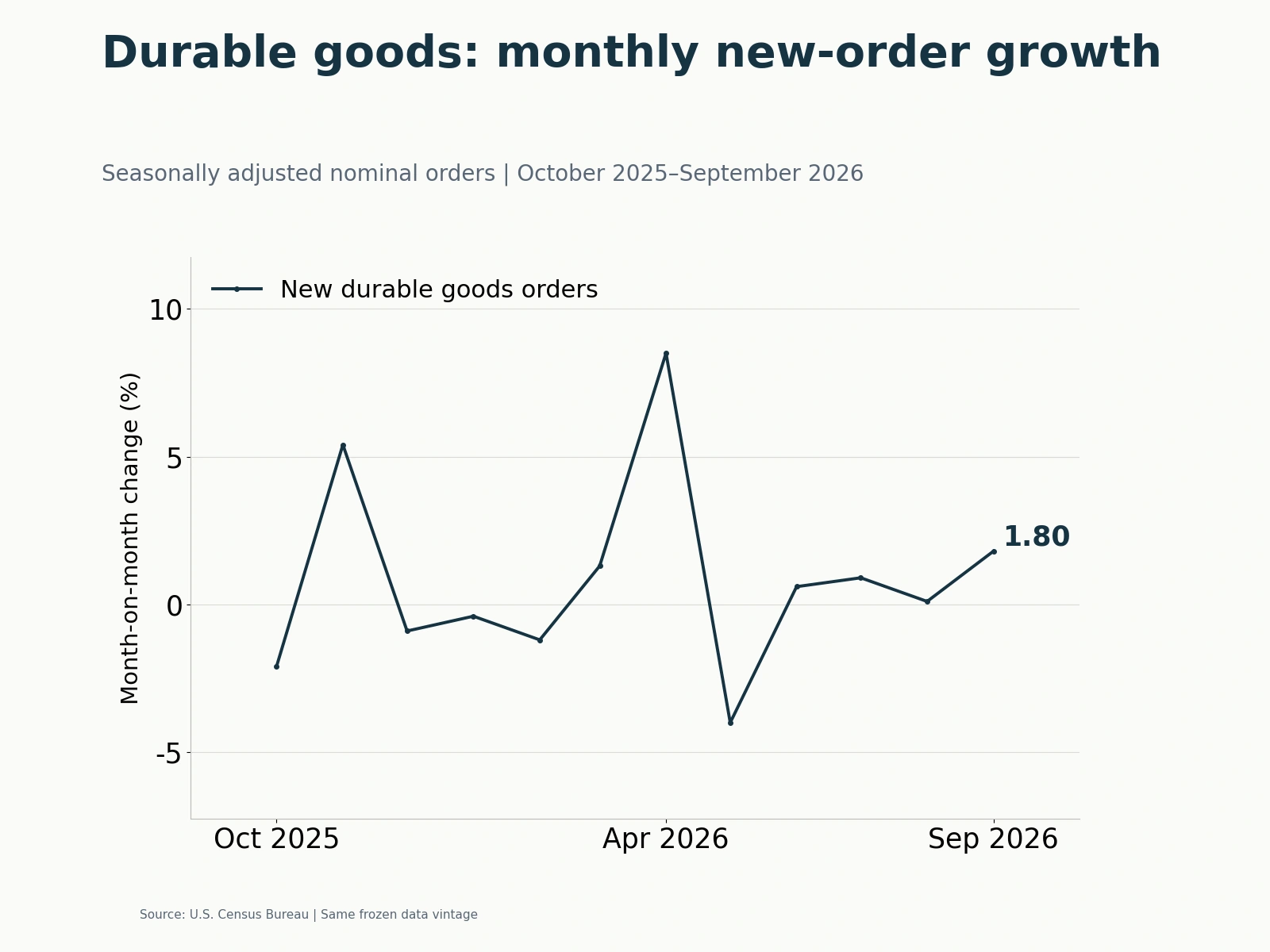
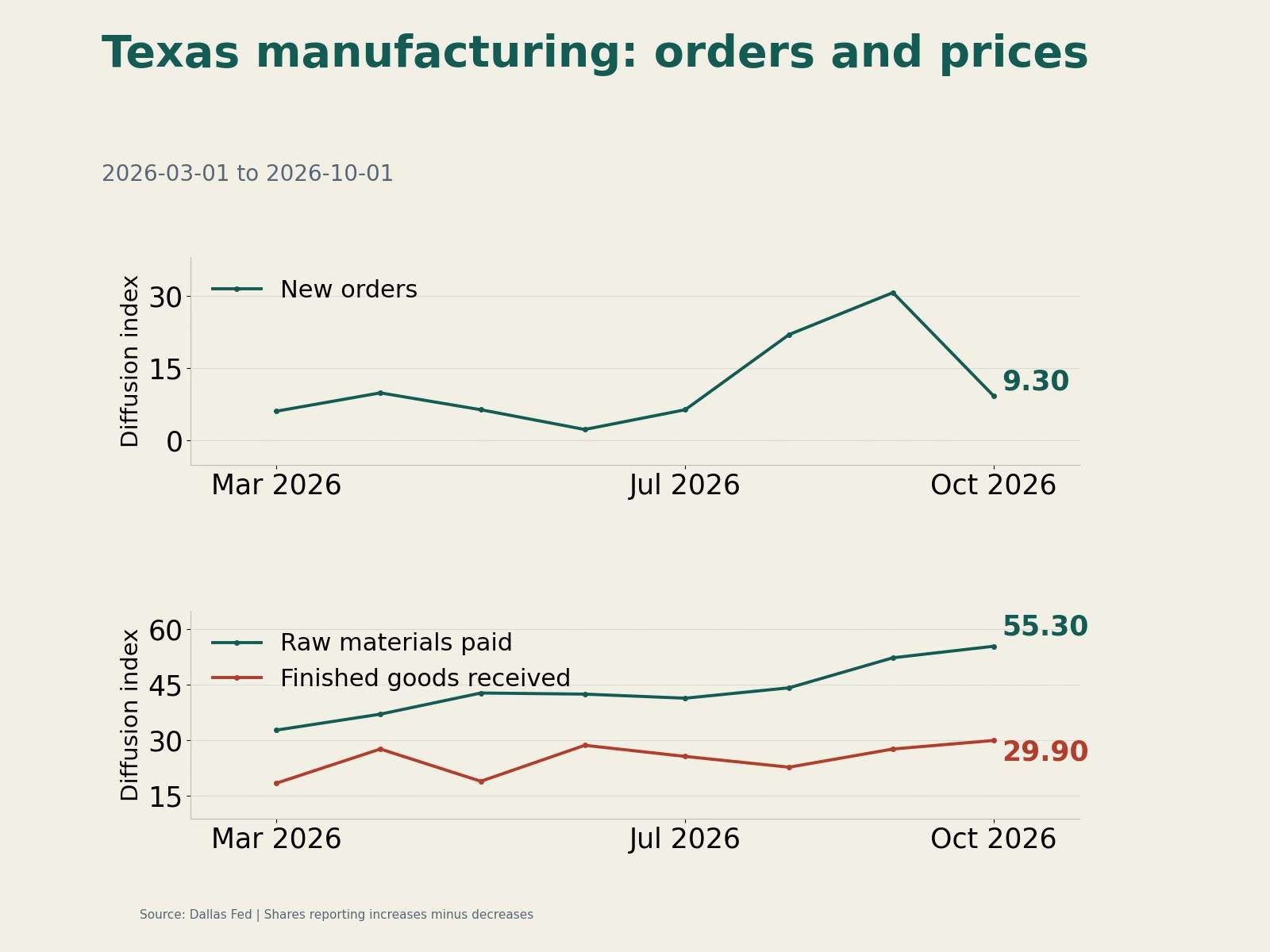
Although the Fed's official calendar contained no public speeches or new decision documents over the preceding two days, an August 6 Financial Times (FT) report citing people familiar with the matter quickly shifted market attention. Chair Warsh had made clear that he was prepared to support a rate hike at the September FOMC meeting if inflation rose significantly over the coming weeks. Moderate U.S. second-quarter unit labor costs released that day, however, left market odds for a September hike only slightly above 50%. For both sides of the trade, the real dividing line remained the forthcoming July payrolls report and the following week's inflation releases.
Economic data
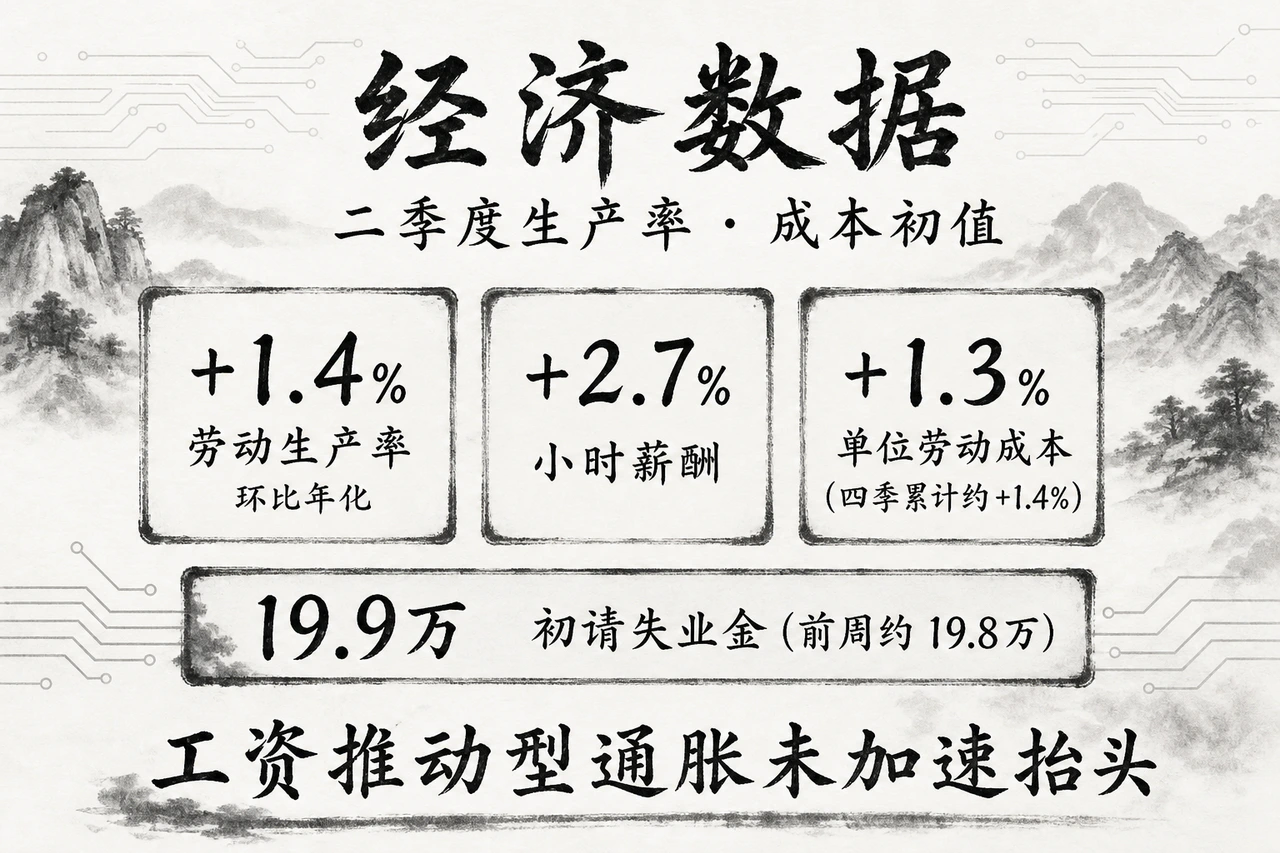
At 8:30 a.m. Eastern time on August 6, the Bureau of Labor Statistics (BLS) released preliminary second-quarter 2026 nonfarm business productivity and unit labor cost figures:
- Nonfarm business labor productivity rose at an annualized quarterly rate of 1.4%;
- Hourly compensation increased at an annualized quarterly rate of 2.7%;
- The resulting unit labor cost (ULC) increase was just 1.3%, with cumulative growth over the past four quarters of about 1.4%.
The figures showed no sign of wage-driven cost inflation accelerating out of control in the second quarter, easing some of policymakers' concern that immediate additional tightening was needed to prevent an inflation spiral. A single preliminary quarterly release cannot determine the rate path for the second half, but it weakens the hawks' argument that spreading cost pressures require a hike.
Weekly labor data released that day showed initial unemployment claims of 199,000 in the week ended August 1, little changed from the previous week's revised 198,000 and still at a healthy low level. The labor market showed neither a recessionary slide nor an overheated imbalance. This combination of resilience and limited overheating allows the Fed to focus on prices, without being forced into defensive easing by a sudden deterioration in employment.
Key policy voices
The FT report had two central messages:
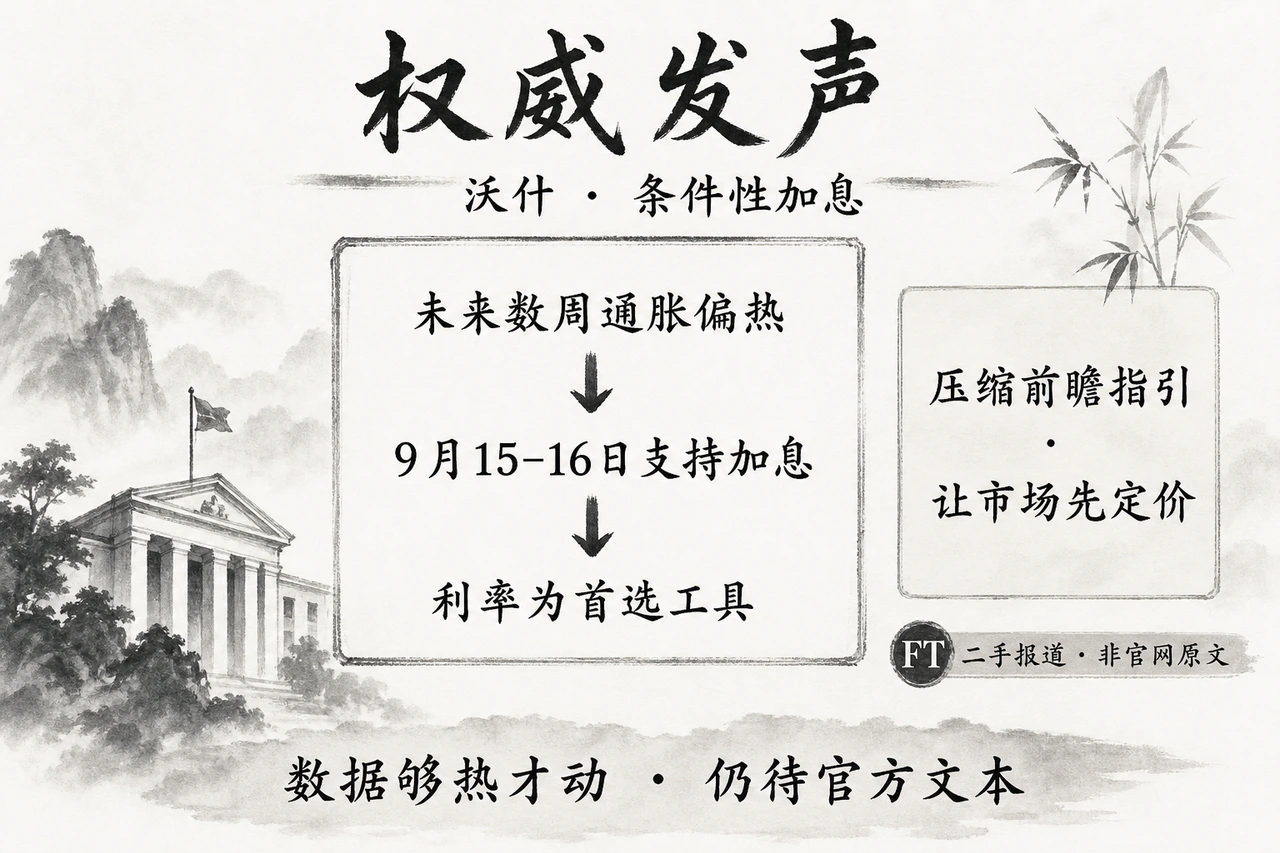
First, a conditional trigger for a hike. According to the report, Warsh would push for a hike at the September 15–16 FOMC meeting only if inflation surprised on the upside over the coming weeks and markets absorbed the data by raising their own expectations of tightening. The benchmark rate remained the primary policy instrument. Quantitative tightening (QT) was open to discussion, but was not the central issue at this stage.
Second, a shift in the communication mechanism. Warsh acknowledged some shortcomings in communication during his roughly ten weeks in office, but continued to advocate a substantial reduction in traditional forward guidance. He preferred to move away from the practice of the Fed setting a path for markets to follow, allowing asset prices to respond independently to macroeconomic data first and then using market expectations to help identify appropriate policy boundaries.
The report relays information from people familiar with the matter; it is not an official Fed document or a public speech by the chair. Its practical force still needs to be checked against subsequent public statements. Within the official Fed discussion, San Francisco Fed President Daly's remarks in Tokyo on Wednesday showed another consideration. She fully supported July's cautious hold, saying policy could remain unchanged if supply shocks faded naturally, while faster adjustment would be appropriate if inflation spread broadly into services. The Fed therefore still had room to observe before judging the urgency of a hike.
Policy expectations
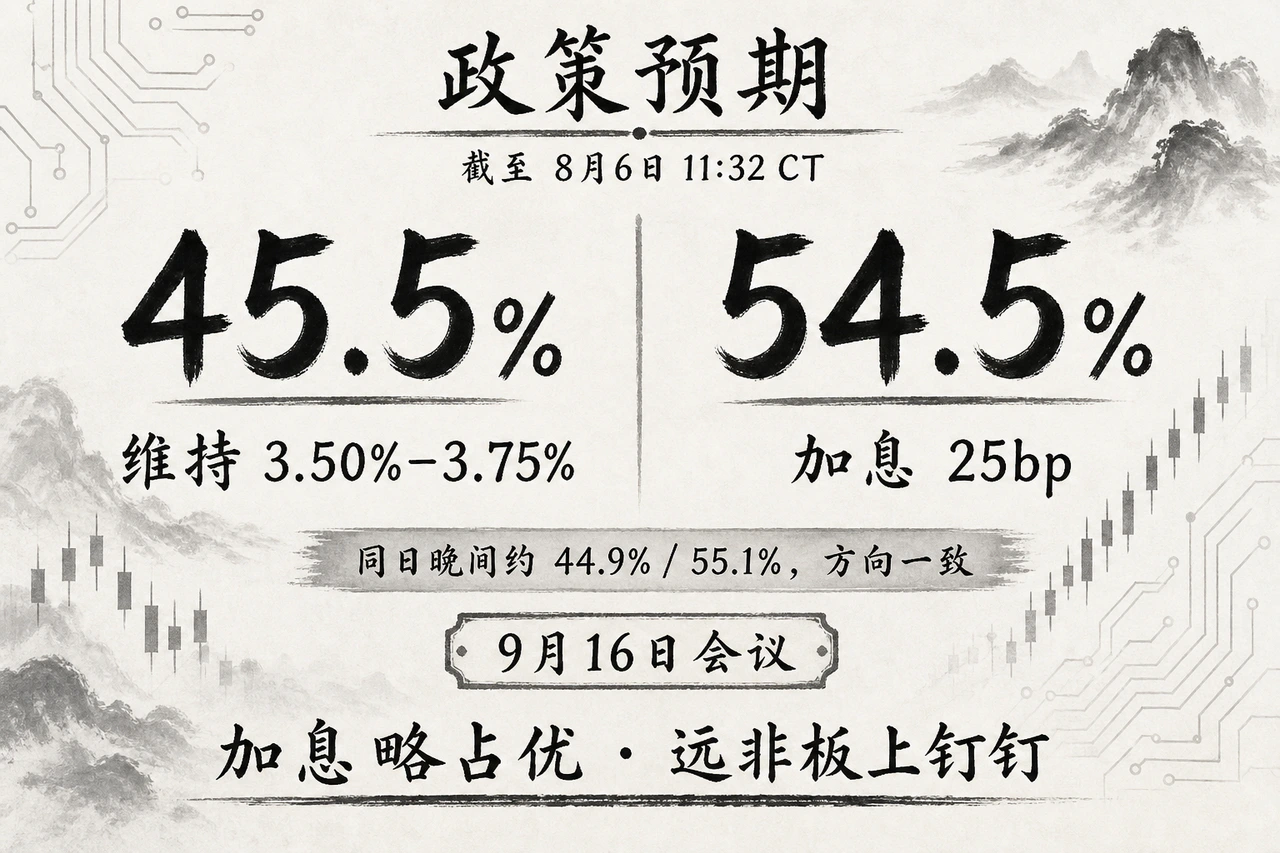
Interest-rate futures reacted relatively cautiously to the report. At 11:32 Central time on August 6, the CME FedWatch probabilities for the September 16 decision were:
- About 45.5% for keeping the benchmark range at 3.50%–3.75%;
- A slightly higher 54.5% for resuming hikes with a 25-basis-point increase;
- Another observation later that evening, using a different monitoring basis, was around 44.9% versus 55.1%.
The report turned private speculation about the chair's willingness to hike into a traceable analytical framework, but it did not create overwhelming one-way consensus, which would typically require odds above 70%. The pricing suggests that rate traders saw a conditional policy signal testing the market's tolerance. Firm positioning still awaited confirmation from the next important inflation data.
The next tests
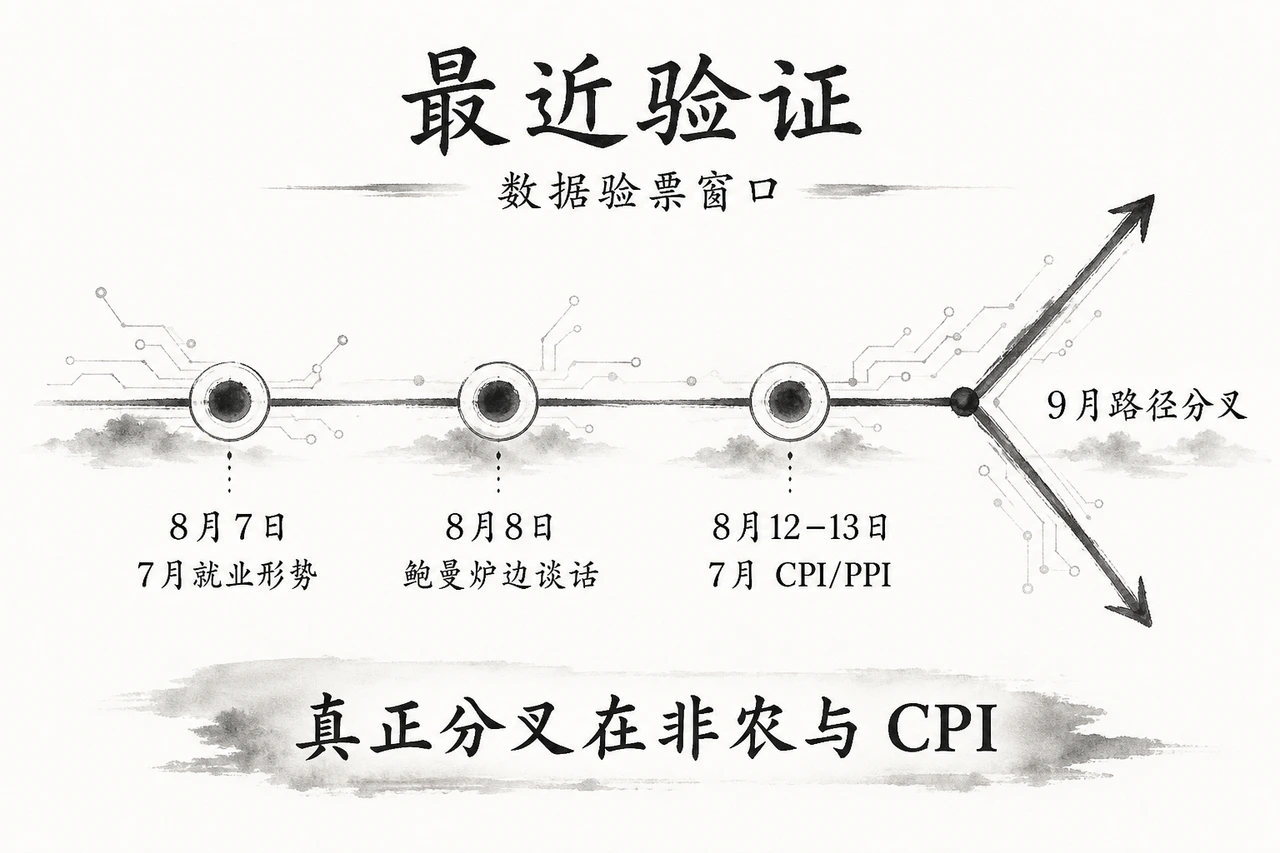
Before the mid-September decision, markets face three successive tests:
- The July employment report, due August 7 at 8:30 a.m. Eastern time: whether low unemployment claims and moderate labor costs are consistent with healthy employment that does not fuel inflation.
- Vice Chair for Supervision Michelle Bowman's online fireside conversation on August 8: the next public interaction by a Board member after the research window, offering a chance to see whether she echoes the monetary-policy and rate-hike discussion.
- July CPI and PPI, due August 12–13: the direct test of whether inflation is still running hot under Warsh's stated condition, and the most important gauge for the September outcome.