On August 6, 2026, cross-asset pricing swung back toward geopolitical inflation. Asian and European early trading had extended hopes of imminent full Hormuz reopening, but Iran's parliamentary national-security committee reviewed a restrictive draft banning U.S. and Israeli ships and fining violations up to 20% of cargo value. The agreement discount priced earlier reversed: nearby WTI and Brent settlements jumped 2.75% and 3.83%. Renewed inflation compensation lifted ten-year breakevens 4 basis points and the whole Treasury curve, led by the front end in a bear flattening. Claims and second-quarter productivity suggested soft landing and improved supply, but could not restrain nominal yields against oil and tightening expectations. The central chain was oil to inflation compensation, closing off near-term easing.
Fixed income: the front end leads, with inflation compensation the main driver
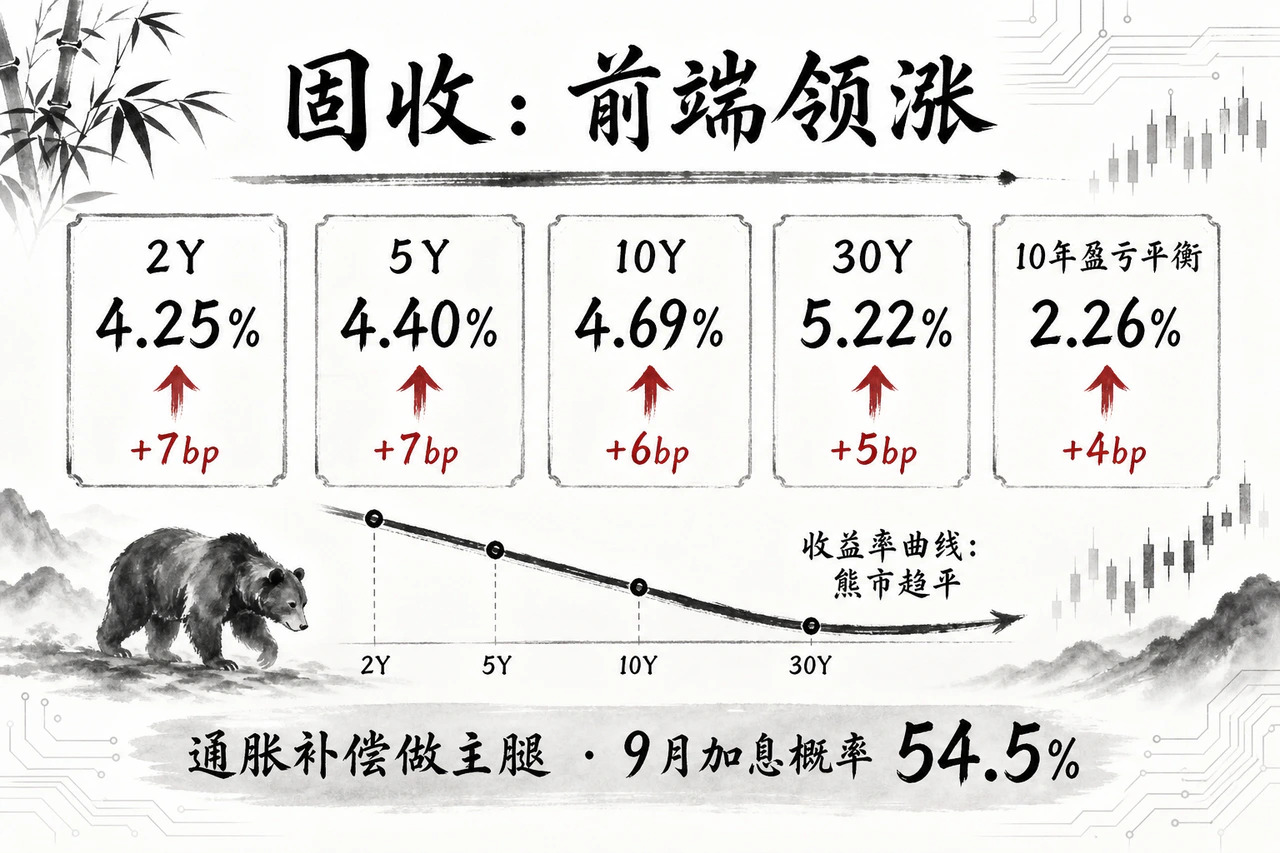
Treasury end-of-day par yields rose across maturities: 2-year +7.0 basis points to 4.25%, 5-year +7.0 to 4.40%, 10-year +6.0 to 4.69%, 30-year +5.0 to 5.22%. The 2s10s spread was about +44 basis points; FRED T10Y2Y was 0.44, down 1.0 basis point. Mild bear flattening and greater short-end selling pointed to renewed inflation constraints on near-term Fed policy, rather than long-end liquidity exhaustion or a systemic duration run.
Breakevens dominated: ten-year 2.26%, +4.0 basis points, and five-year 2.23%, +5.0. Inflation compensation supplied most of the ten-year nominal 6-basis-point rise. Policy derivatives remained restrictive but moved modestly. CME FedWatch at 11:32 Central time August 6 put a September 16 hike of 25 basis points to 3.75%–4.00% at 54.5%, and a 3.50%–3.75% hold at 45.5%, broadly unchanged daily but below approximately 63% a week earlier. The 2-year's 7-basis-point jump aligned with slightly better-than-even odds of one hike, not a series. Third-party estimates differed: Reuters about 59%, Investing.com about 55.1% at 22:25 Eastern time August 6. Official CME capture is the common reference.
Exact daily HY and IG OAS closes were unavailable; the latest verifiable August 5 readings were 2.75% and 0.78%. Cbonds' Hong Kong corporate dollar T-spread was about 53.7 basis points and YTM near 5.19% on August 6. Thin credit cushions left benchmark-rate beta the main fixed-income exposure. T-bill auction demand was healthy; quarterly refunding's longer auctions were scheduled for the following week and had limited daily effects.
Cutoff liquidity tracking around 12:33 Beijing time, an unofficial continuation excluded from daily changes, put Treasury futures ZN (10-year), ZB (30-year) and ZF (5-year) near 108.44, 109.09 and 106.23, slightly below August 6 daily settlements. The cash curve remained at official Treasury closes.
Macro and policy: softer data cannot outweigh oil
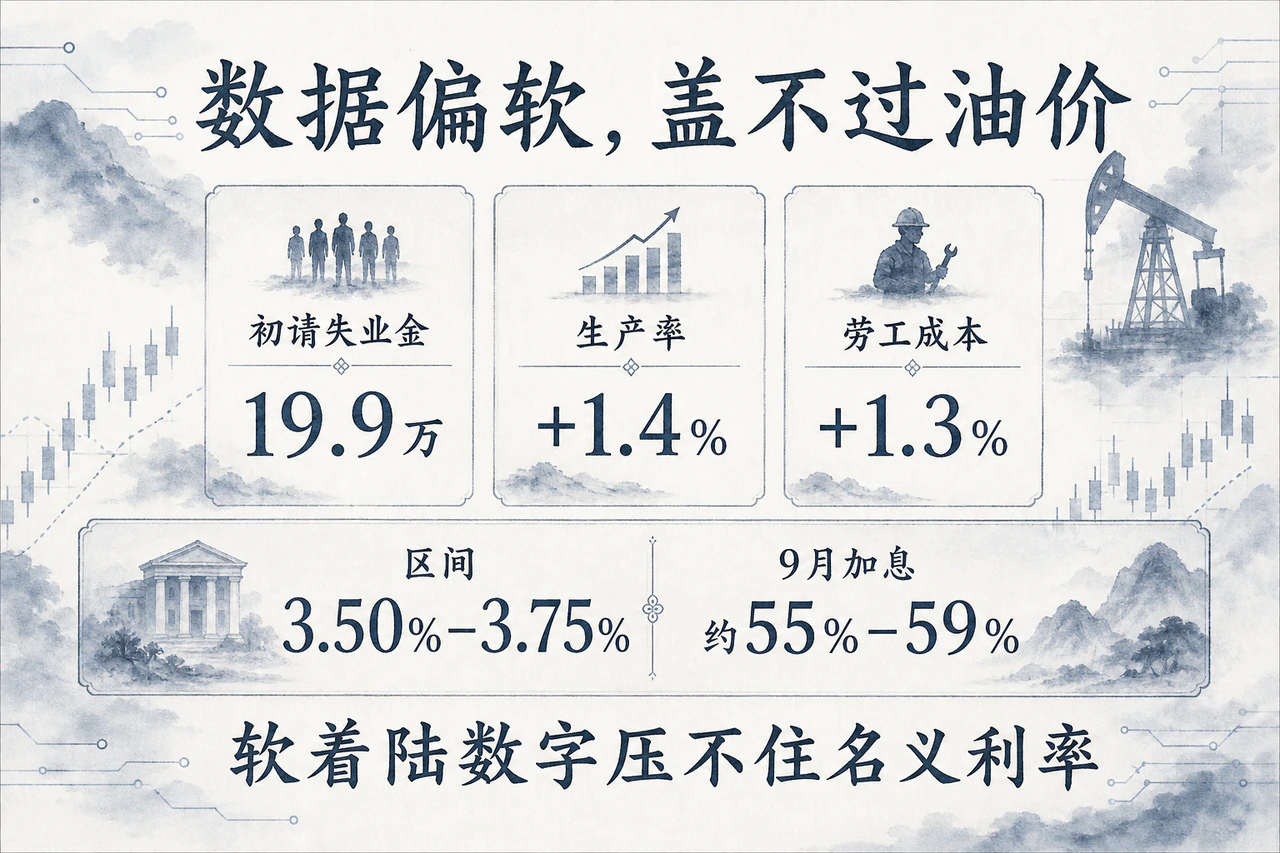
The day's releases showed supply repair and soft-landing characteristics but were overwhelmed by surging oil and hawkish sentiment.
Initial claims for the week ending August 1 were 199,000 versus Reuters' roughly 202,000 consensus; continuing claims were 1.801 million. Challenger's July announced layoffs fell to 33,429, nearly a two-year low, with AI-related substitution and restructuring the leading reason for a fifth month. Preliminary second-quarter nonfarm productivity rose 1.4% annualized versus 0.6% expected; unit labor costs rose only 1.3% versus 2.1%. June wholesale inventories were finally +0.2%. Freddie Mac's 30-year mortgage rate edged from 6.66% to 6.69%. This supported supply-driven wage disinflation and orderly slowing but was sidelined by imported energy pressure and hawkish officials.
The policy anchor remained 3.50%–3.75%, held July 29 with three dissents for hikes. A widely relayed report said Warsh was prepared to resume increases in September if inflation remained overheated in coming weeks, alongside more restrained communication. This was a conditional report, not a formal Fed position. Cook said she was ready to raise if necessary; Daly favored holding but acknowledged stronger action if inflation rose again. Hike odds moderated from early-week extremes but remained around 55%–59%. Emergency premiums eased without removing the tightening option.
Important post-close update: China's July exports rose 23.9% and imports 27.5% year on year, with a $112.5 billion surplus, released around 11:00 Beijing time. The New York Fed household expectations survey, Barkin's remarks and July U.S. payrolls were all scheduled after the cutoff.
Commodities: oil leads, gold does not follow
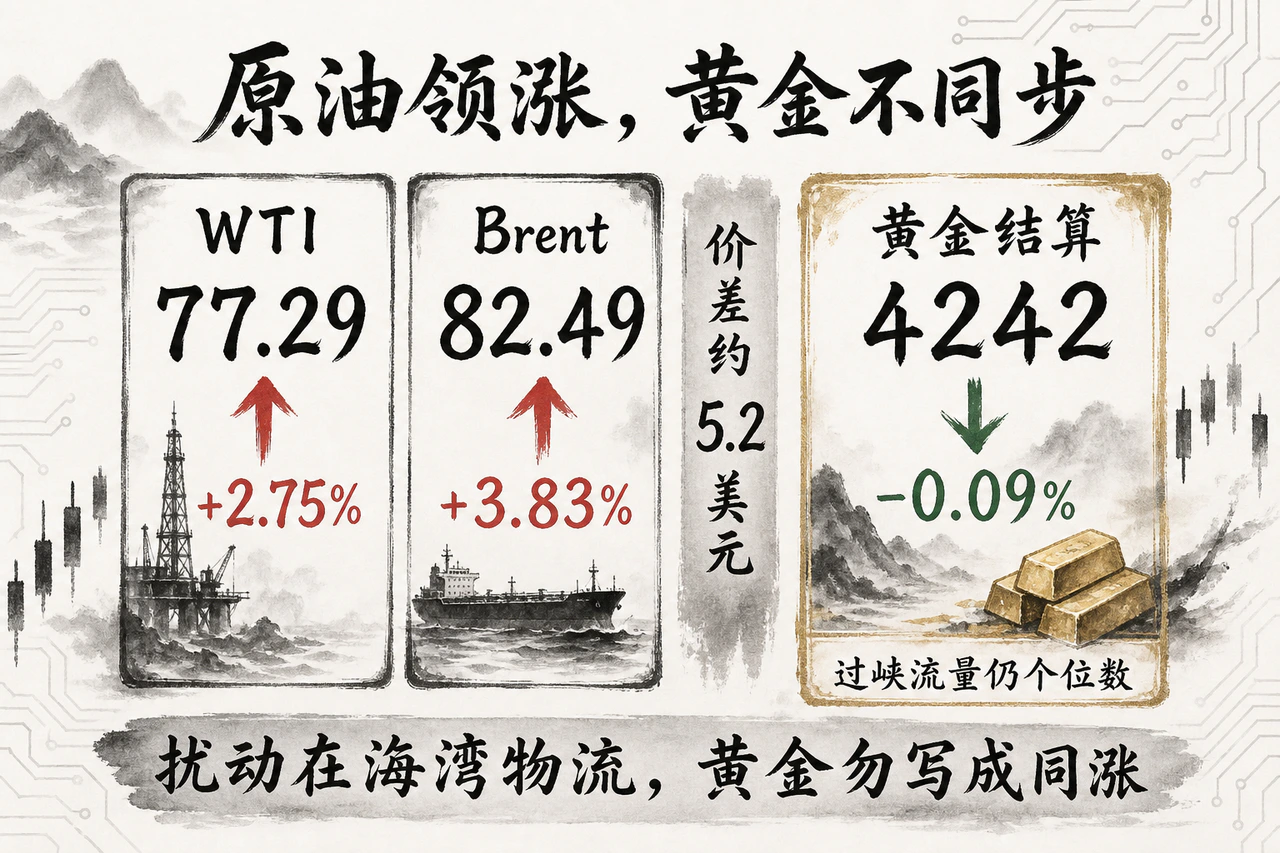
September WTI settled at $77.29 a barrel, up $2.07 or 2.75%; October Brent at $82.49, up $3.04 or 3.83%. Brent–WTI widened from about $4.2 to $5.2, locating the shock in Gulf logistics rather than U.S. crude imbalance. Iran's restrictive draft reversed earlier free-passage discounts. Even after the rebound, prices remained about 8% below early-week geopolitical highs. EIA's August 5 report for July 31 showed both U.S. commercial and Cushing builds, confirming no domestic physical squeeze. Maritime tracking still showed single-digit Hormuz ships, with recent tanker passage about five a day, sharply at odds with futures' reopening enthusiasm.
Gold diverged. Official August COMEX settlement was $4,242.00 an ounce, down $3.80 or 0.09%, ending consecutive gains. Spot was around $4,268, while more active deferred and continuous contracts stayed above $4,300. Higher nominal-rate opportunity costs and roll-related liquidity losses weighed on gold; the dollar index also rose 0.28% to 99.97.
Unofficial snapshots around 12:34 Beijing time put WTI at $78.30, Brent $83.74 and electronic gold $4,327. Oil extended gains in Asia, while electronic gold stood well above nearby settlement. Intraday quotes must be kept separate from Thursday's official closes.
Equities: oil pressures heavyweights while technology provides support
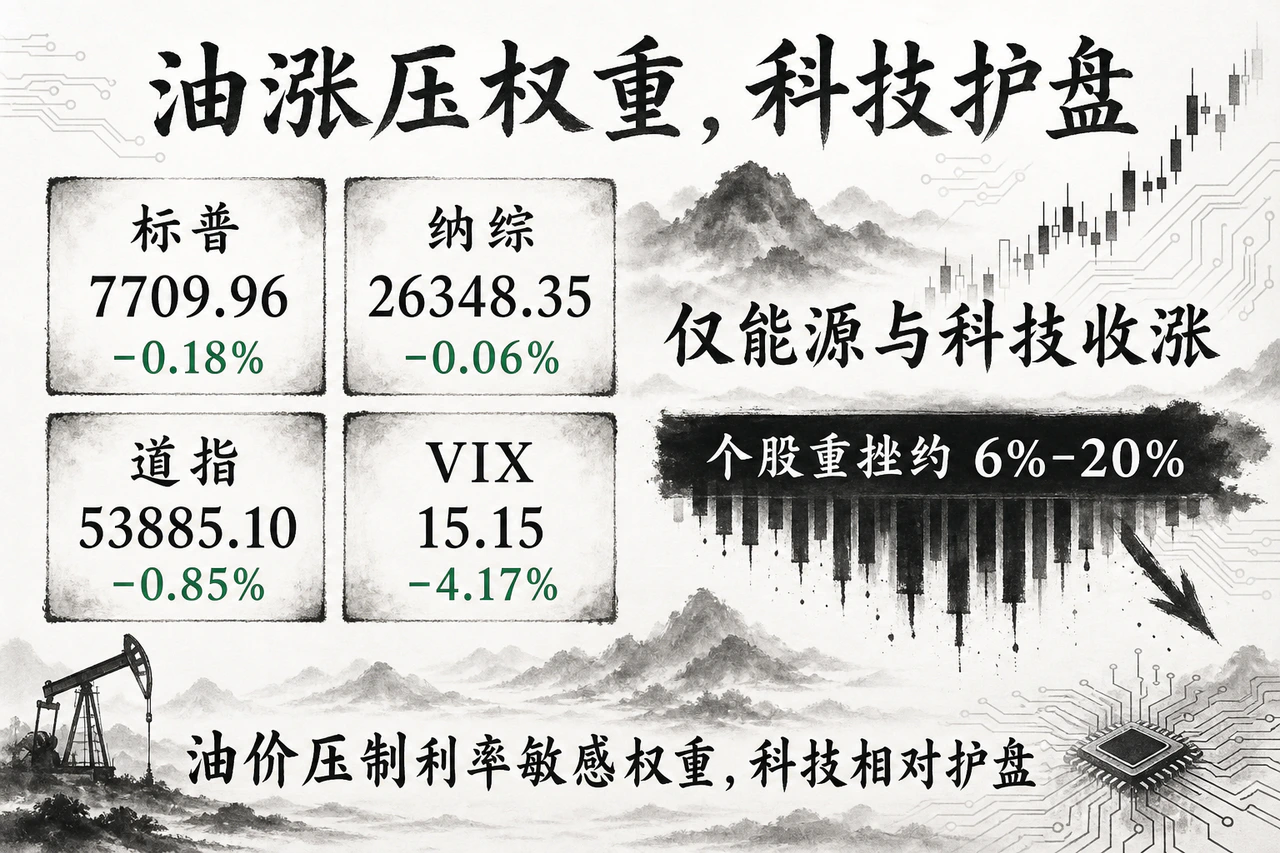
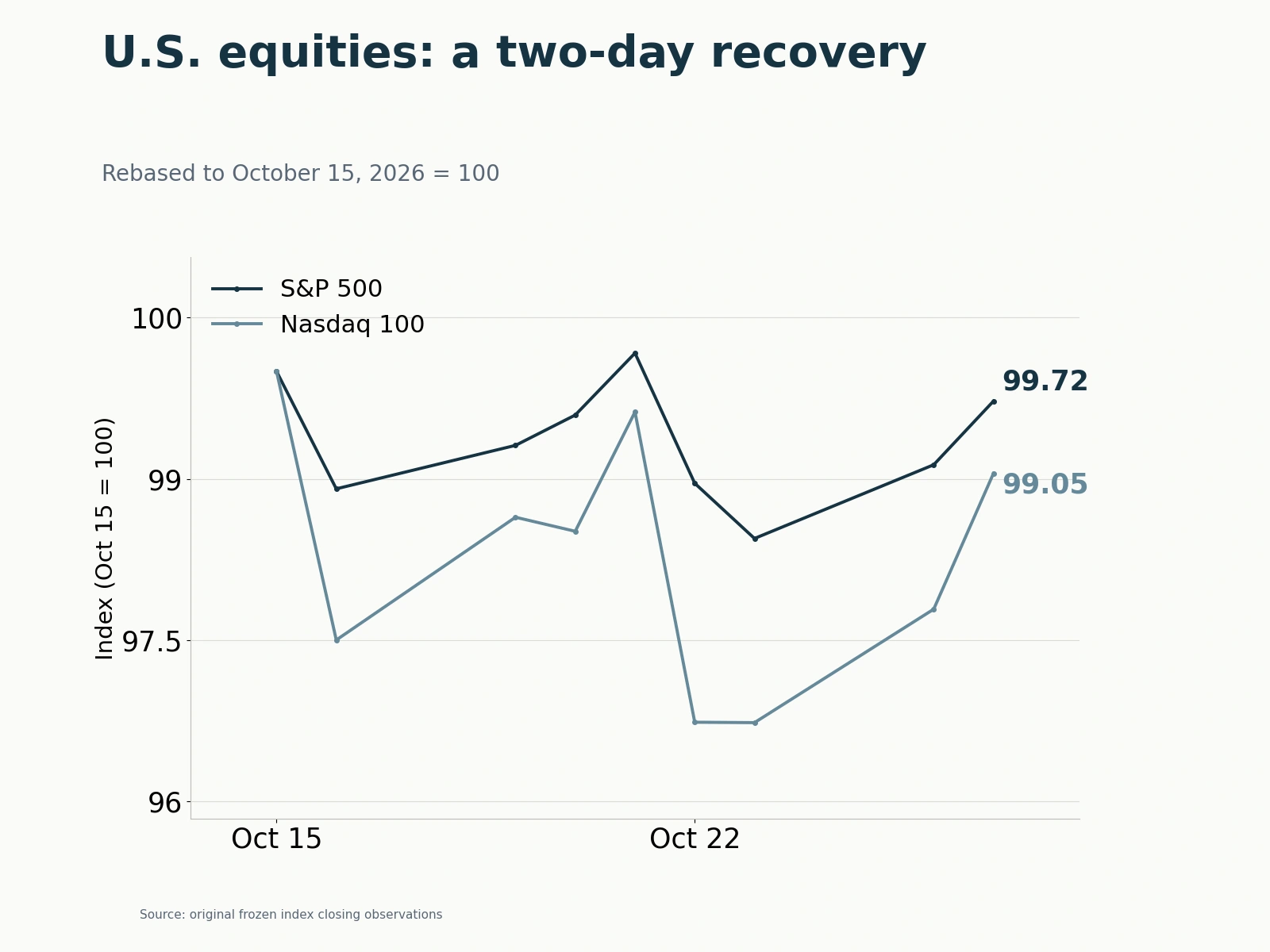
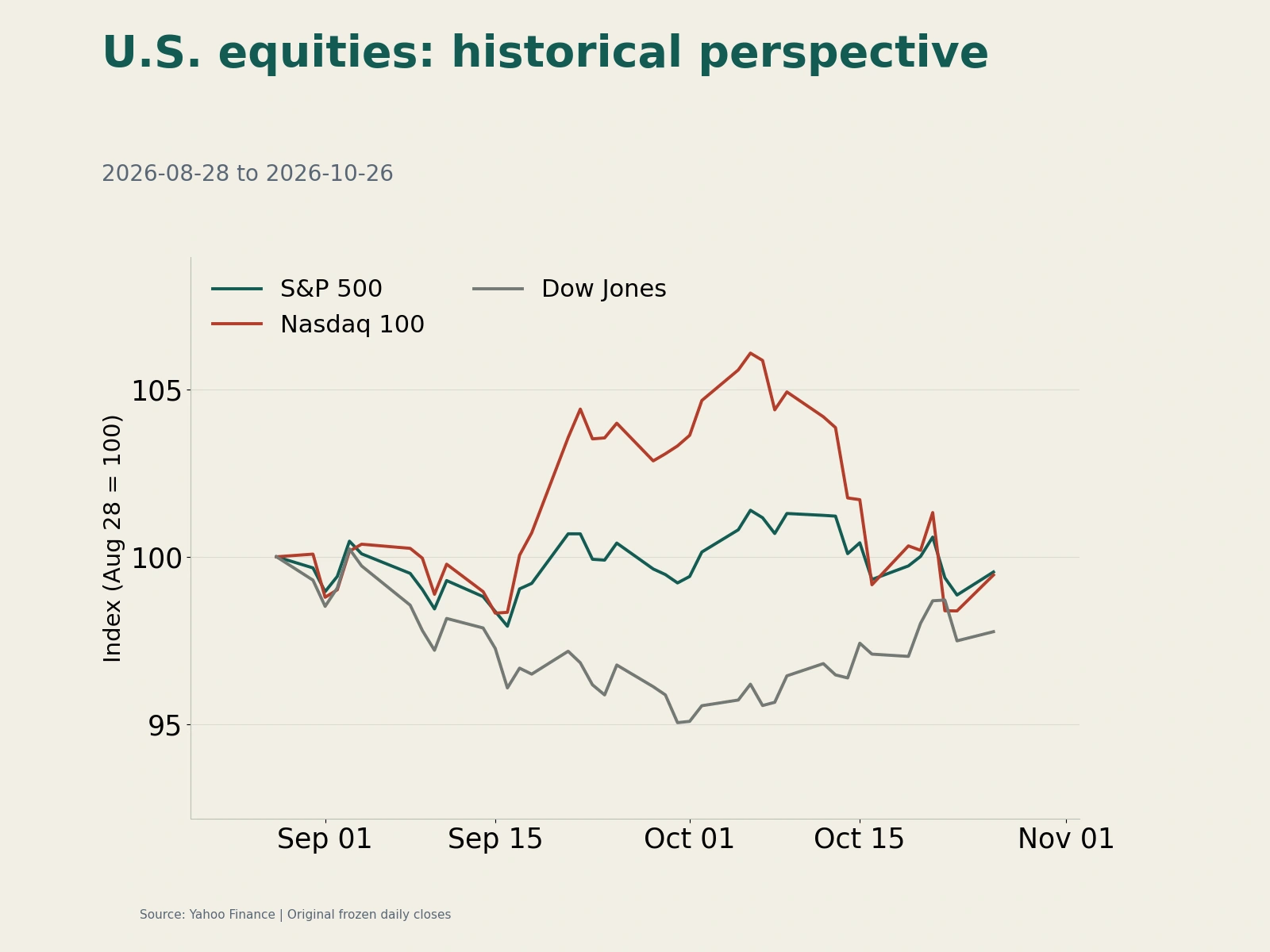
Equities showed rebalancing and guidance divergence. S&P 500 -0.18% to 7,709.96; Nasdaq Composite -0.06% to 26,348.35; Dow -0.85% to 53,885.10, ending five gains; Russell 2000 -0.58% to 3,001.55. VIX instead fell 4.17% to 15.15, indicating no panic. Only energy and IT rose among eleven S&P sectors; real estate, materials and industrials led losses. Salesforce fell about 3% on management changes, dragging the Dow. SanDisk, Western Digital, AppLovin, Datadog and Honeywell were among former favorites dropping 6%–20% on weak second-half guidance. SpaceX gained about 6.1% despite its first unlock of roughly 911.5 million shares. Higher oil-related rates hurt rate-sensitive and indebted sectors while late-season tolerance for adequate current results but weak outlooks disappeared.
Asia-Pacific closed earlier on the same calendar day and was weaker: Nikkei 225 -0.93% to 65,683; Kospi -4.58% to 6,296, led down by Samsung and SK Hynix; Hang Seng -1.49% to 25,530. Semiconductor chains caught down with overnight U.S. stock divergence, contrasting in timing with large U.S. technology companies' August 6 resilience.
After hours, stronger guidance lifted Airbnb, Cloudflare, Twilio and Akamai, while The Trade Desk weakened on bland guidance. At about 12:34 Beijing time, ES futures were 7,731.5 and Nasdaq 100 NQ futures 29,510. On August 7, Nikkei was around 65,340, -0.5%, at 12:29; Kospi around 6,256, -0.6%, at 12:24; Hong Kong's half-day close was +0.15% to 25,568 at 12:05. USD/JPY was near 158.40 at 12:43.
Geopolitical transmission: agreement discounts meet harder conditions
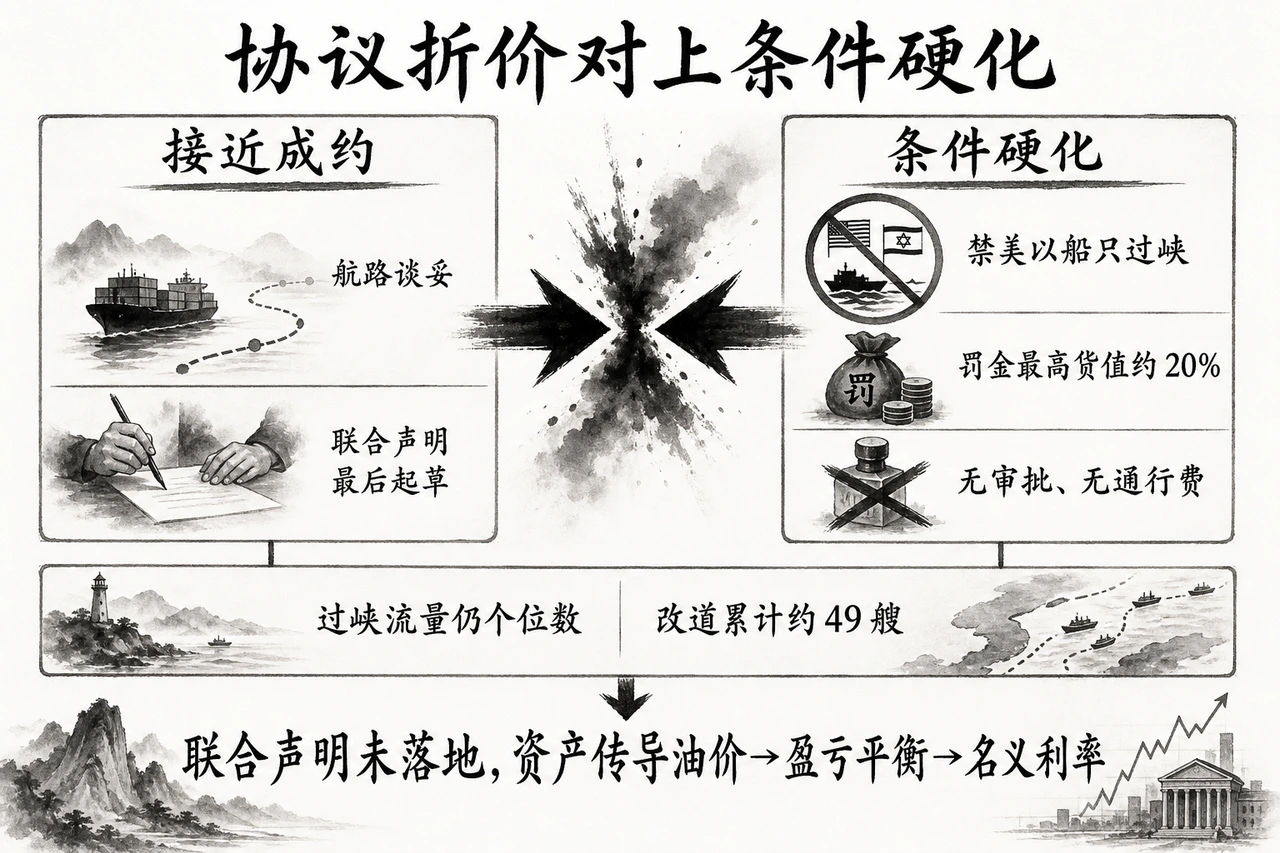
Near-agreement diplomacy collided with legislative hardening. Iran and Oman said safety coordinates were largely settled and a statement in final drafting, but Iran's deputy foreign minister said understanding did not mean immediate full reopening. Proposed U.S./Israeli exclusions and penalties conflicted with Washington's no-approval, no-toll corridor demand. Traffic remained single-digit, while CENTCOM had cumulatively rerouted about 49 unauthorized merchant ships. Hardening raised oil, then breakevens and nominal yields. Mild equity declines and lower VIX showed localized energy/geopolitical pricing rather than liquidity panic. No joint statement had actually materialized by cutoff; further Asian oil gains continued pricing the stalemate.
Two short-term tests remained: July payrolls at 08:30 Eastern time August 7, 20:30 Beijing, with consensus near 80,000 jobs and 4.2% unemployment; and verifiable Hormuz progress, including a final joint statement, actual compromises on fees and exclusions, and daily merchant passage meaningfully exceeding single digits.