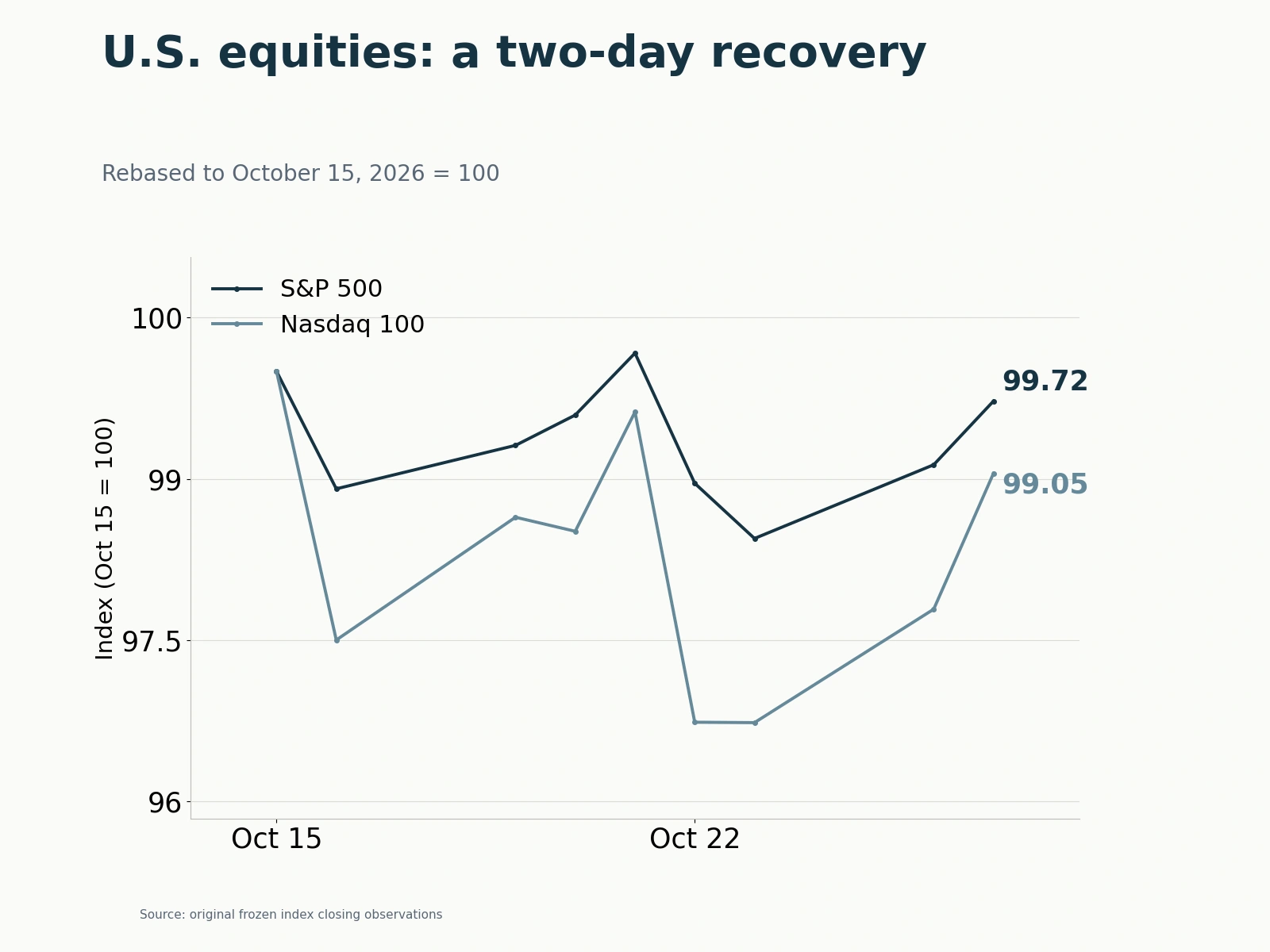
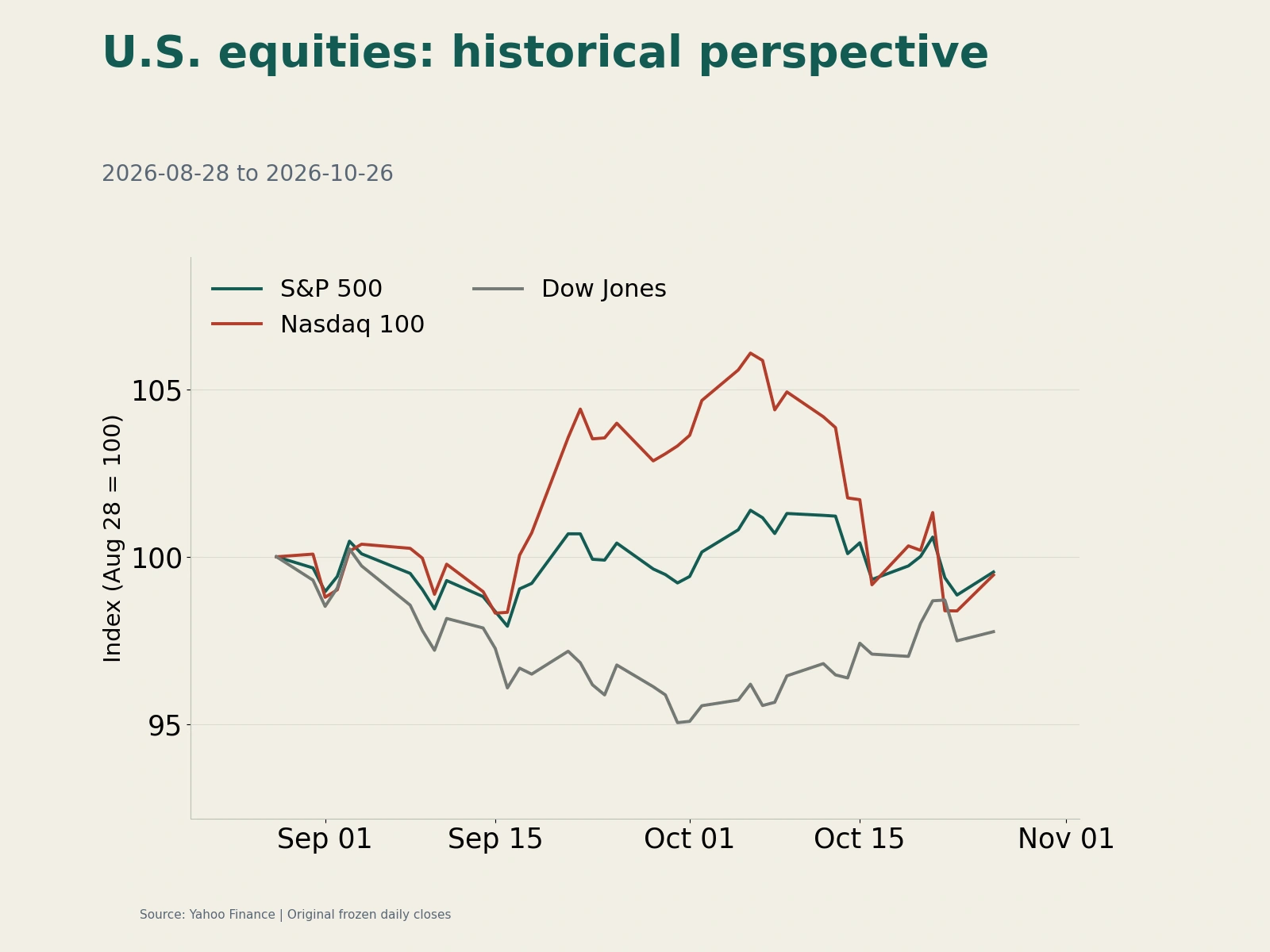
On August 7, 2026, an unexpected labor slowdown dominated global pricing. July payrolls fell 23,000 versus an expected 80,000 gain, with May–June revised down 103,000. Treasury yields fell across maturities, most at the front, forming a bull steepener. FedWatch hold odds for September rose to about 57.0% and hike odds fell to 43.0%, reversing the previous day's slight hiking bias. Less urgency to tighten lifted equities; lower expected discount rates and dollar supported gold. Nearby oil gained about 1.2% as a free-passage Hormuz agreement remained unrealized. Employment's constraint on Fed policy replaced geopolitics as the main cross-asset thread, leaving conflict a secondary tail disturbance.
Fixed income: front yields lead lower as the policy outlook flips
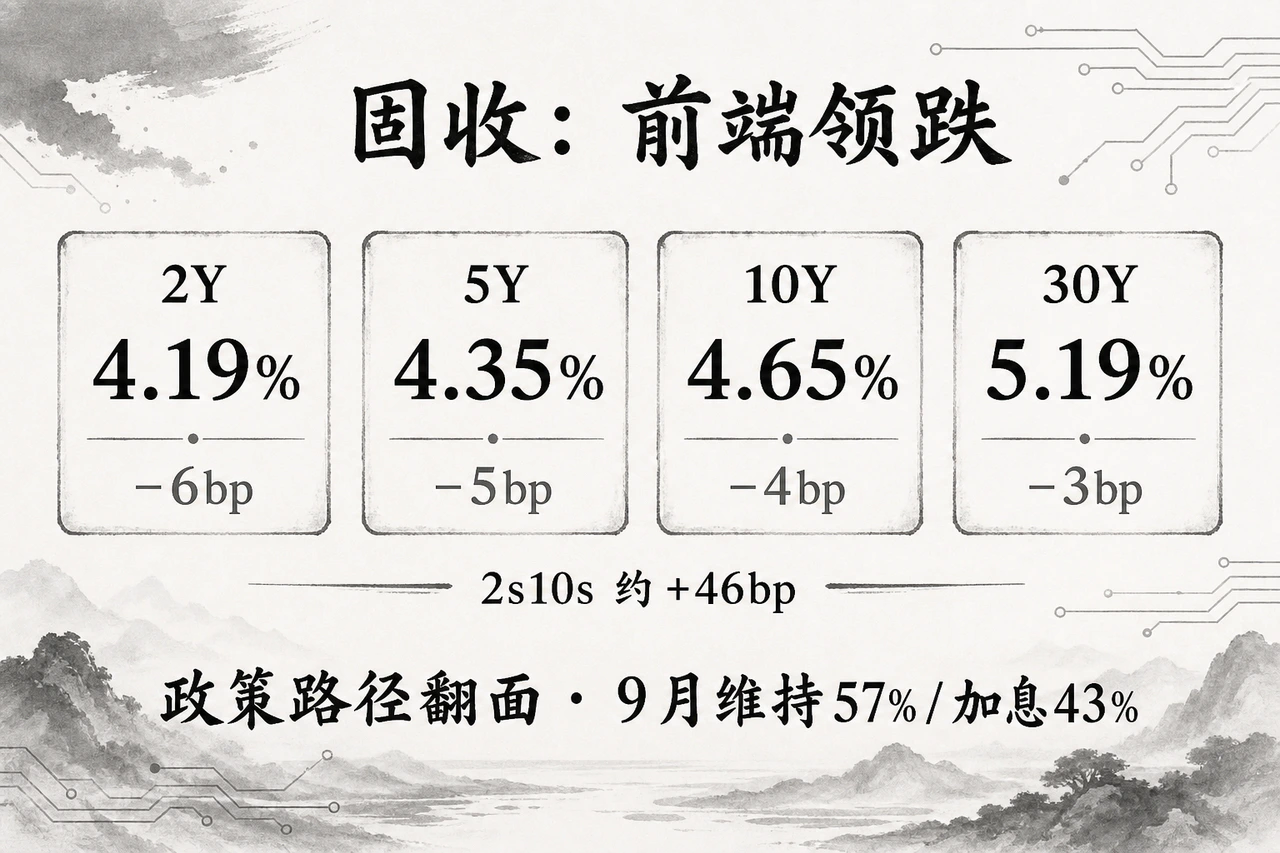
Treasury's official daily par closes:2-year 4.19%, -6.0 basis points;5-year 4.35%, -5.0;10-year 4.65%, -4.0;30-year 5.19%, -3.0.2s10s widened about 2.0 basis points to+46 basis points, with FRED T 10 Y 2 Y 0.46. Policy-sensitive front rates fell most, while rigid deficit issuance restrained long/ultralong declines, especially 30-year.
Cooling tightening expectations drove the rally. FedWatch as of August 7 06:18 US Central put September 16 hold at 3.50%–3.75% at 57.0%, hike to 3.75%–4.00% at 43.0%, versus 45%/55% previously. Two-year yields still 44 basis points above the policy ceiling show immediate-hike premiums removed without pricing cuts. CNBC cited cumulative hike odds around 55% by October and 75% by December. Ten-year breakeven fell 1.0 basis point to 2.25%; about 3 basis points of the 4-basis-point nominal decline came from real rates, matching weak labor and elevated oil.
Precise final HY/IG OAS readings were unavailable; latest August 6 references were 2.71%/0.78%. Cbonds Hong Kong corporate dollar T-spread was about 53.7 basis points and YTM 5.19%, also August 6. Lower benchmarks help total returns, but thin spread cushions mean hot next-week CPI reviving hikes could depress prices well before spreads widen.
Deadline liquidity snapshot near 04:59 Beijing, unofficial and excluded from daily changes: ZN 10-year futures 108.70, ZB ultralong 109.50, ZF 5-year 106.43, broadly near settlements. Yahoo TNX (10-year), FVX (5-year) and TYX (30-year) around 02:59 Eastern showed 4.660%/4.362%/5.211%. Cash benchmarks remain official 4.19% and 4.65%; weekend closure provides no new US cash fixing.
Macro and policy: negative payrolls reduce hike urgency
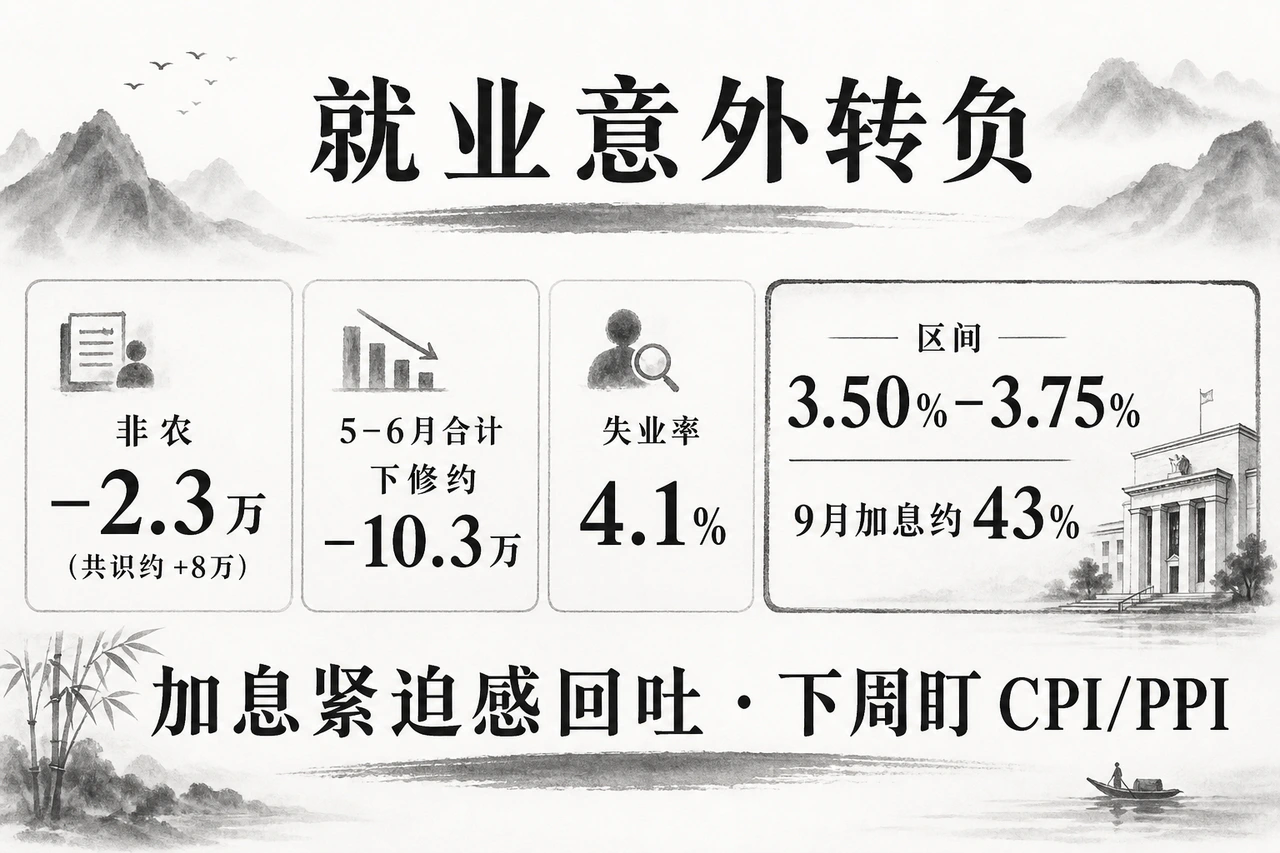
July's 23,000 loss versus 80,000 expected was the first negative month in nearly five months. May was cut 66,000 and June 37,000, total 103,000. Unemployment nevertheless fell 4.2%→4.1%, participation about 61.4%, employment/population 58.9%, closer to low hiring/layoffs with some workforce exit. Private payrolls still grew 30,000, indicating sharp slowing without systemic collapse. Government lost 53,000, mainly local education 50,000; leisure/hospitality 40,000; retail 19,000. Health added 22,000, below its past-year average. Hourly pay rose 0.1% monthly and 3.2% annually.
New York Fed SCE one-year expectations edged 3.7%→3.6%, three-/five-year held 3.3%/3.0%. Target remains 3.50%–3.75%, held July 29 with 3 pro-hike dissenters. Richmond's Barkin said payrolls fit the neither-loose-nor-tight assessment, firms neither hiring actively nor laying off widely. September hike bets fell to low 40 s: official CME about 43%, CNBC/CBS 56%–60%, Kalshi no-hike 65%, varying by capture times. Some banks including BofA still forecast 75 basis points this year beginning September; derivatives repriced ahead of those lagging sell-side paths. Next week's CPI/PPI directly test conditional renewed hikes if inflation stays stubborn.
Commodities: oil retains transit premiums while gold benefits from rates
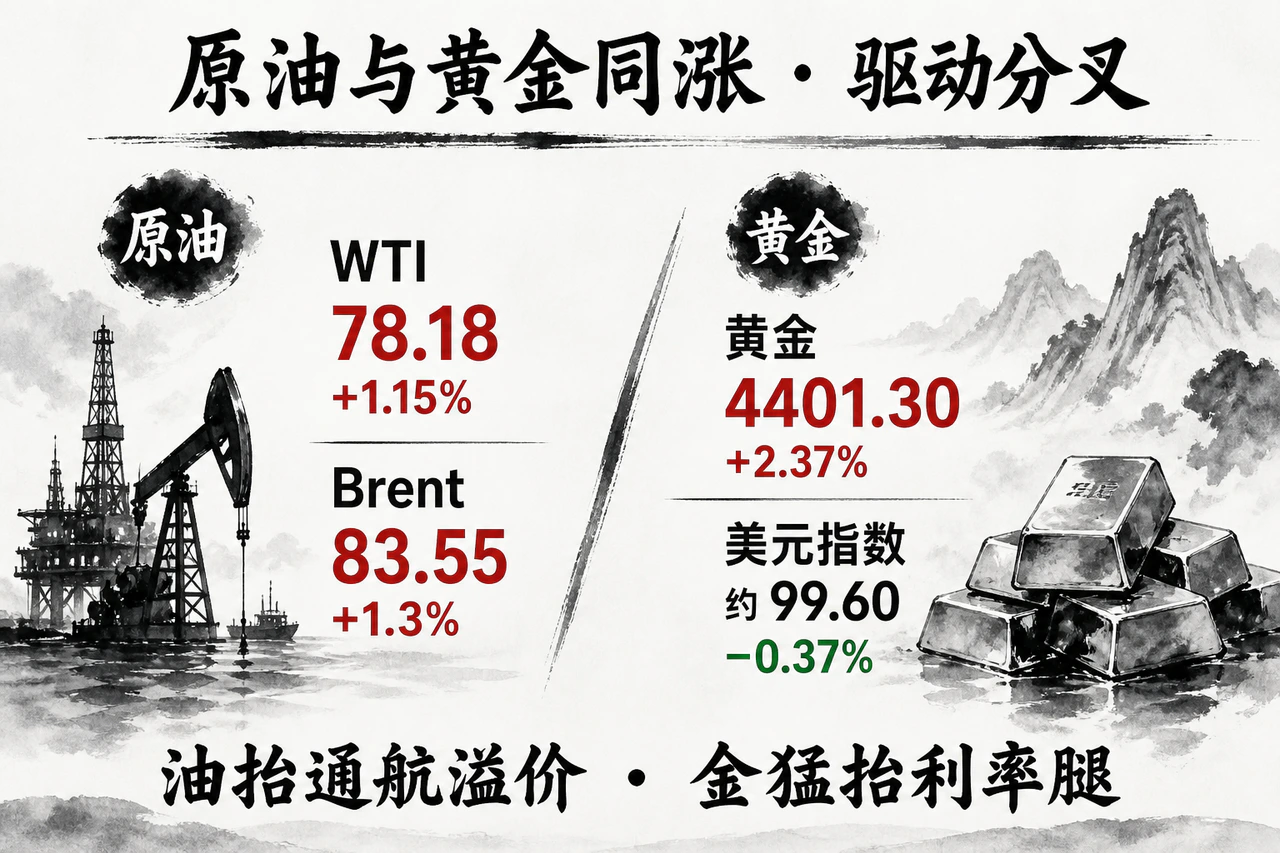
Both rose for different reasons. September WTI settled $78.18/barrel, +$0.89 or 1.15%; Brent $83.55, +$1.06 or 1.3%. Brent-WTI widened to $5.37 from Thursday's $5.20. Reopening agreements remained unannounced, with Thursday's restrictive draft pressuring supply. WTI still lost 7.7% weekly. Kpler confirmed only 8 August 7 passages, -33% daily; Monday–Thursday 33 versus about 50 the prior week. Paper rebounds contrast with near-stalled flows. Fees remain split: US zero, Iran 5%–7% of cargo, Oman about 3%; the companion oil article covers deeper balances.
Gold was classically rate-driven. After active contracts rolled to December, Yahoo/continuous settlement was about $4,401.30/ounce, +$101.70 or 2.37%. Weak payrolls hit September hike expectations while the dollar fell 0.37% to 99.60, easing non-yielding gold's valuation restraint. Comparing Thursday's completed August contract at $4,242 with Friday's active December would falsely suggest a $160 daily jump.
At about 04:59 Beijing, unofficial Yahoo continuous CL/BZ were $77.08/$82.27, roughly $1.1 below settlements because of different sources/definitions, not an abrupt after-hours plunge. GC $4,401.30 and DX 99.60 matched daily closes.
Equities: less hike urgency drives broad gains led by growth
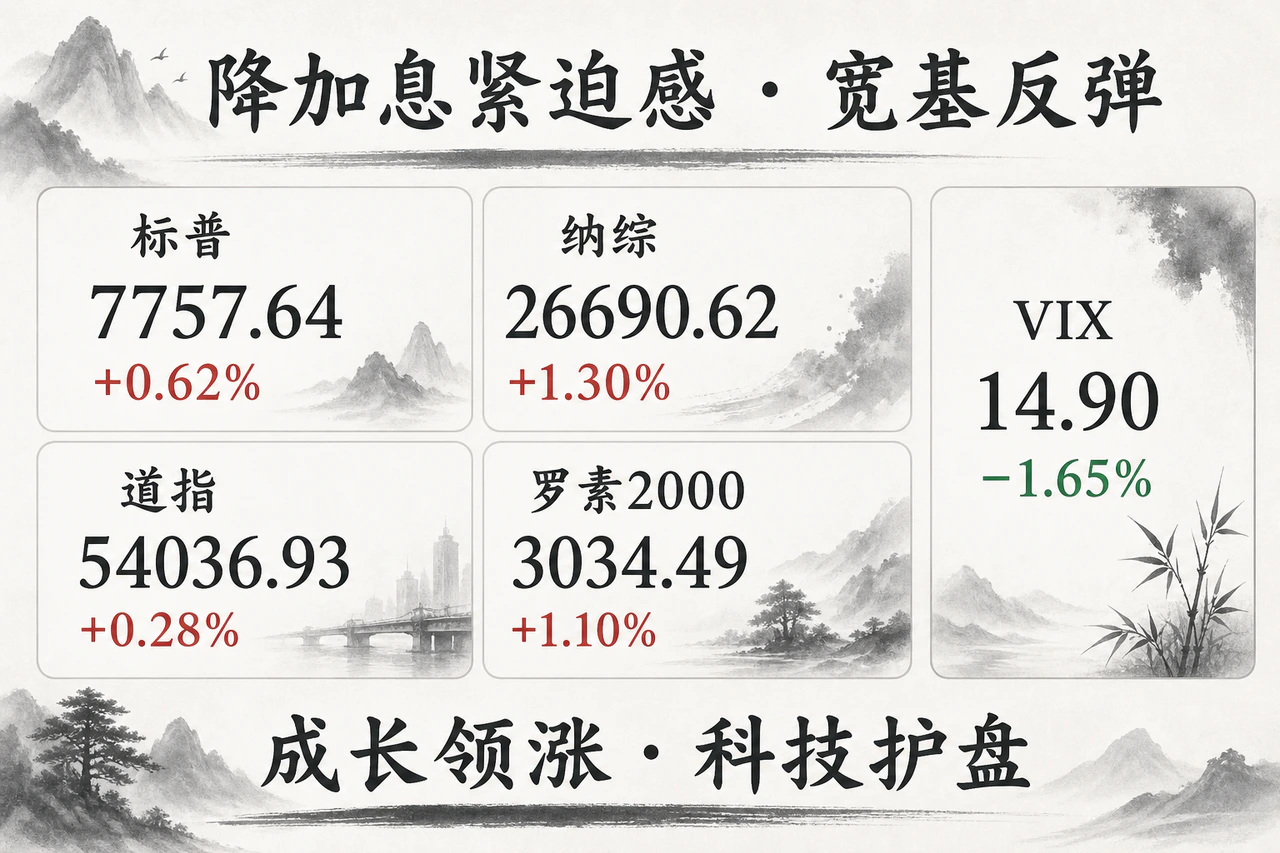
S&P 500 closed 7,757.64, +0.62%, near records; Nasdaq 26,690.62, +1.30%; Dow 54,036.93, +0.28%; Russell 2000 at 3,034.49, +1.10%; VIX 14.90, -1.65%. Dow lagged as expensive CAT/Visa shares fell under price weighting. Strong Thursday guidance drove high-volume Atlassian/Twilio gains. Seagate, Western Digital, SanDisk and SK Hynix ADRs fell around 4%, contrasting with Philadelphia chips+2.6%. SpaceX gained about 16% on its second post-lockup-expiry session, amplifying risk appetite.
Asia closed before US payrolls: Nikkei 225 at 65,606.71, -0.12%; KOSPI 6,258.77, -0.60%; Hang Seng 25,668.03, +0.54%; Shanghai+1.02%, chiefly better Chinese July trade. Employment-led US valuation recovery could reach Asia only next Monday.
After close near 04:59 Beijing: ES 7,777.25, NQ 29,839.5, about 0.25% above cash closes for reference, excluded from daily data. USD/JPY near 157.74 differed from official daily 158.41; definitions must remain separate.
Geopolitical channel: no final transit text, only a modest oil premium
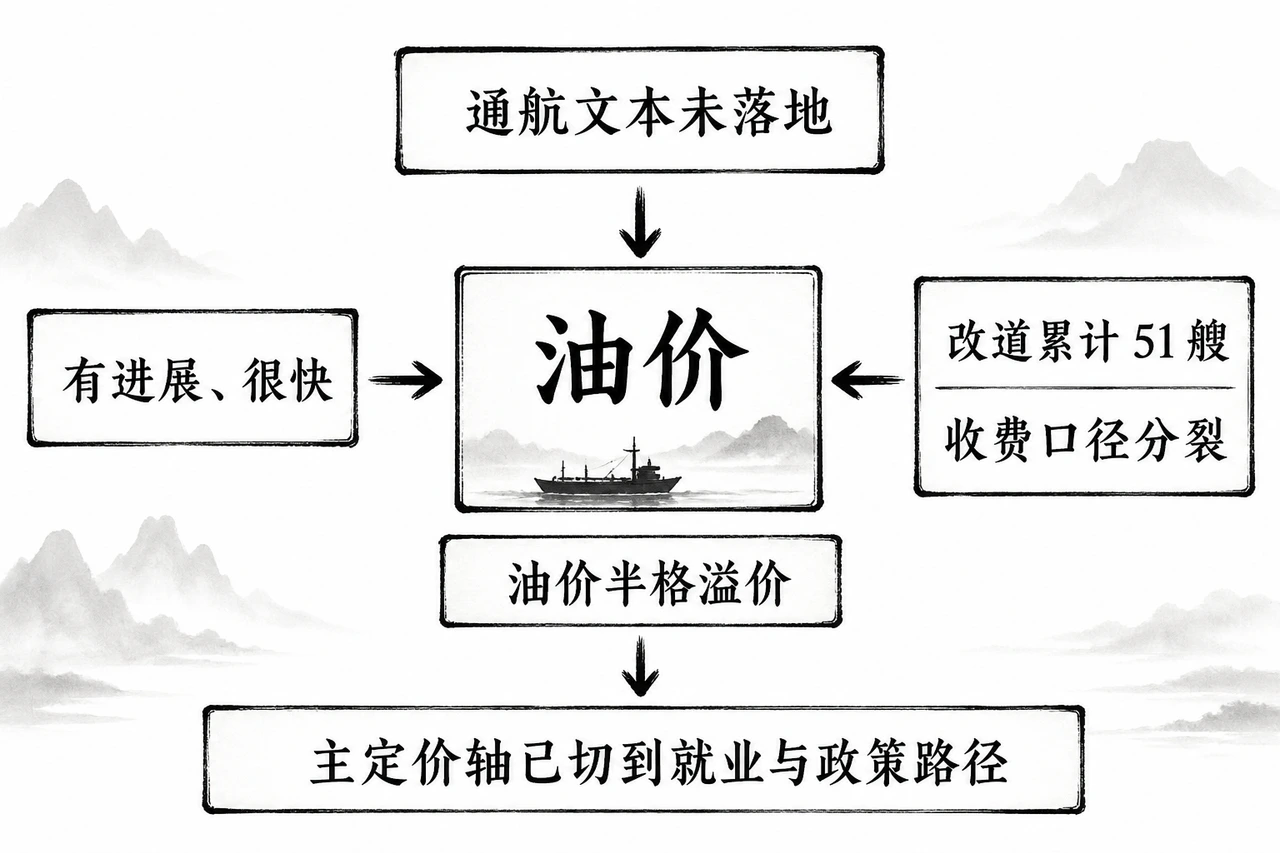
Mediators and unnamed senior US officials described positive progress and imminent Hormuz arrangements. Axios cited mediator diplomats saying a draft excluding toll demands went to Iran's security council. Reuters carried conditional US willingness to lift main-port blockade once Iran formally announced unobstructed commercial passage. Yet confrontation persisted: CENTCOM diverted 51 vessels, Treasury added shadow-finance sanctions and fees stayed split at zero,3% and 5%–7%. The companion Middle East article has the full timeline. Oil retained only a modest supply premium while lower yields, stronger stocks and lower VIX clearly shifted cross-asset focus back to jobs/rates. No formal joint Hormuz statement existed by deadline.
Near-term focus has two threads: whether next-week CPI/PPI contain stagflation fears from weak jobs and energy reflation, and concrete transit delivery—who announces the final agreement, fee rules and daily passages escaping single digits.