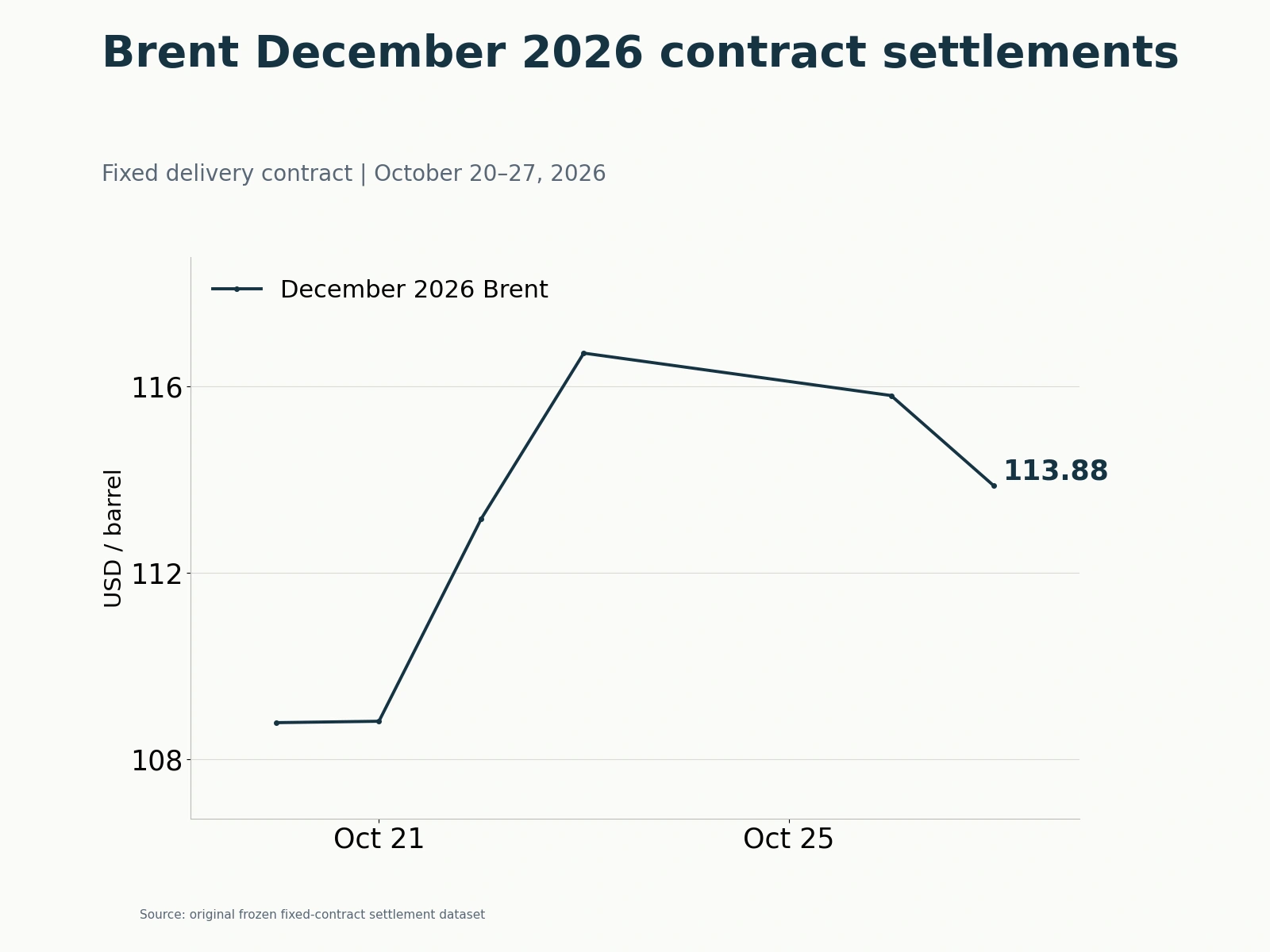
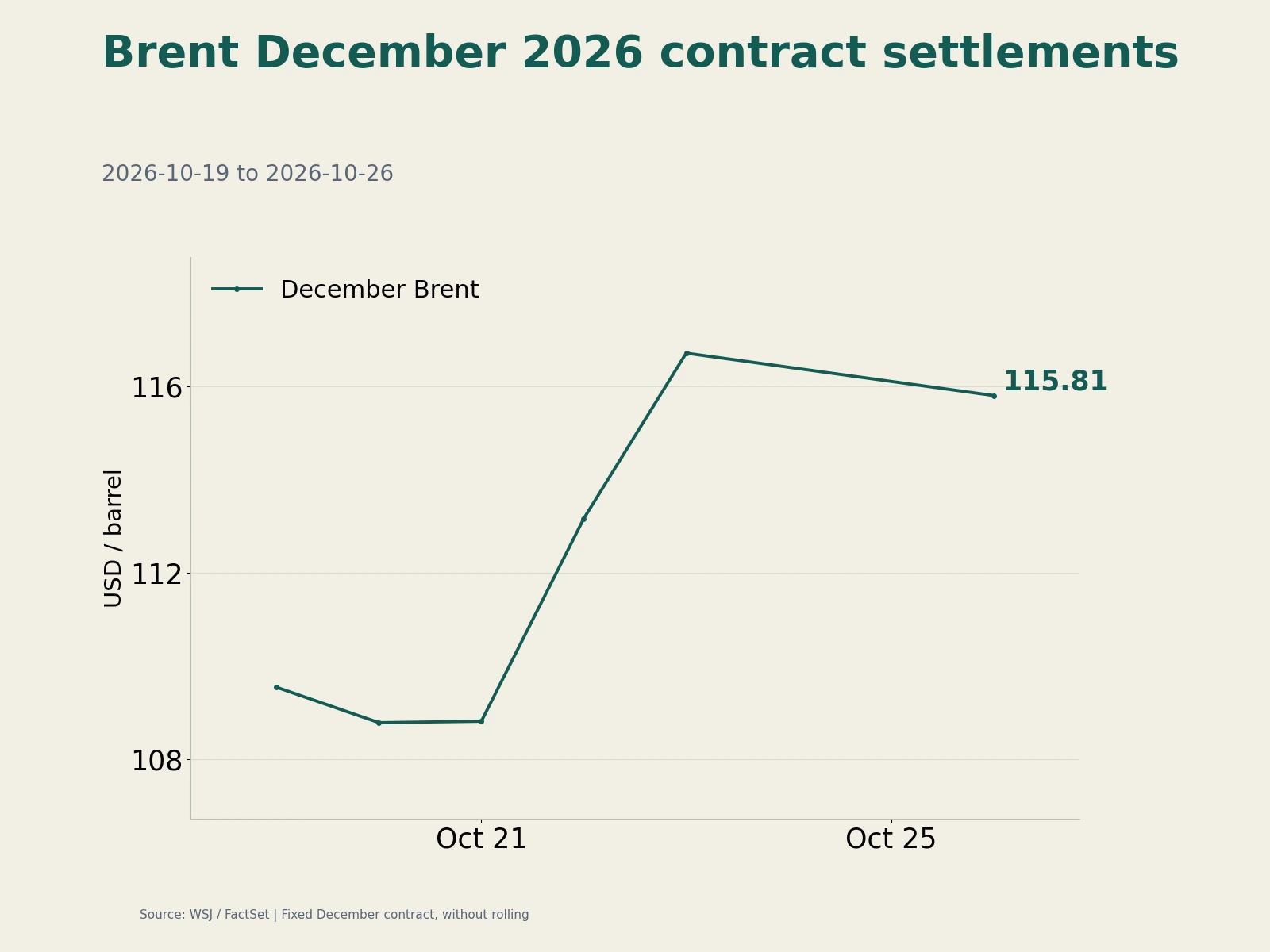
After a deep weekly decline, oil produced only a very weak technical bounce Friday. Nearby contracts continued debating conditional Hormuz terms and virtually absent ship flows, while extreme freight premiums rose further. Deferred prices faced OPEC+ paper supply and unexpectedly large U.S. crude builds. Diplomatic statements were not physical passage. Traders discounted eventual reopening farther out but would not price prompt surplus while Gulf access remained obstructed.
A mild settlement rebound leaves weekly losses intact
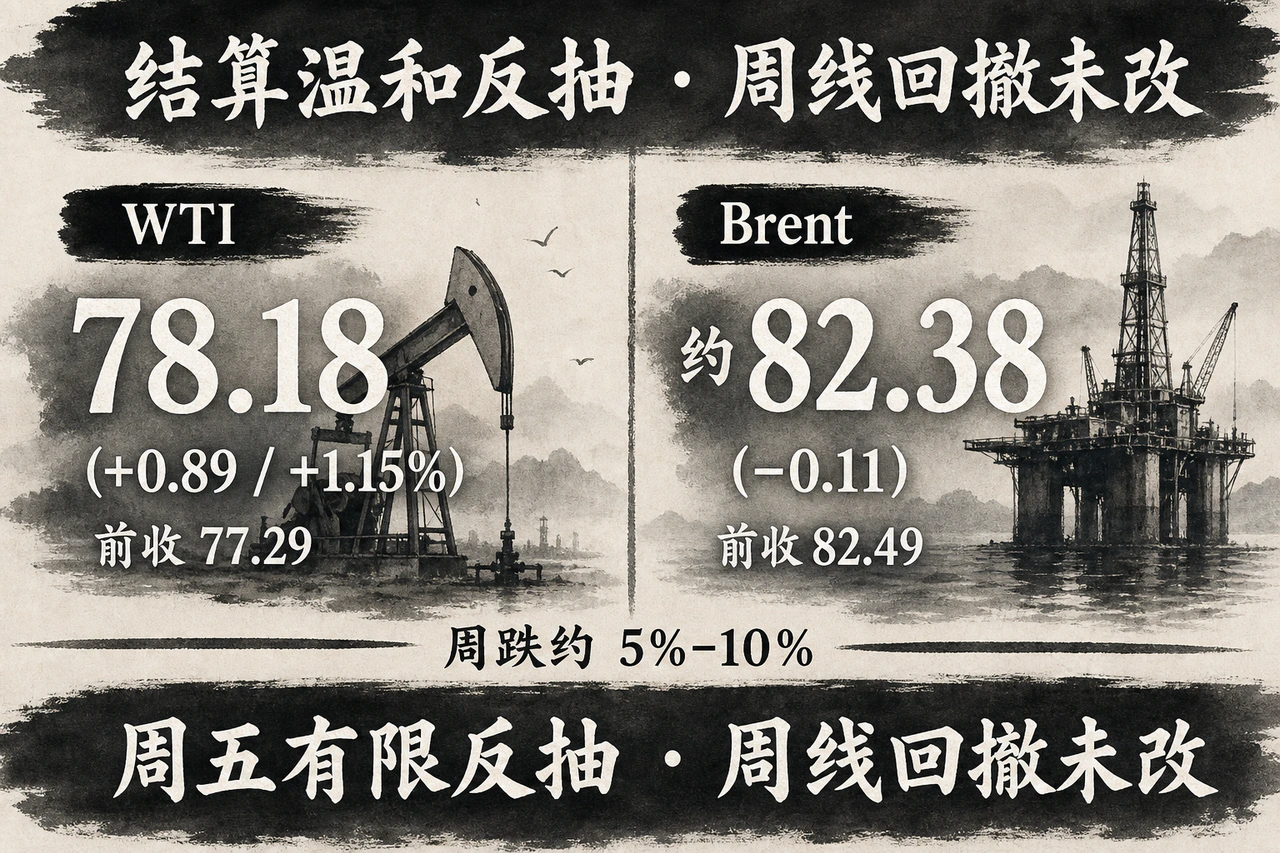
NYMEX's August 7 Friday settlement showed September WTI CLU26 at $78.18 a barrel, up $0.89 (+1.15%) from $77.29. September RBOB gasoline rose approximately 1.59%, moving products in the same direction. The FT historical Brent close was $82.38 versus Thursday's $82.49, about -$0.11; public daily benchmark BZ closed $82.27 versus $82.49, approximately -0.27%. Both agreed in direction and scale. Depending on the Brent settlement source, the cross-regional spread was roughly $4.2–$5.2 a barrel.
A quote-definition difference requires disclosure. Some continuous daily series put WTI at $77.08, down 0.27% from $77.29, unlike official CLU26 settlement of $78.18. Several intraday reports confirmed firmer Friday early trading. This analysis uses NYMEX official settlement, not the continuous-series decline. The cutoff snapshot around 04:59 Beijing time August 8 still displayed that continuous quote; it is recorded without equating it with official statistics.
Friday's modest rise did not disguise weekly damage. Public reporting put both benchmarks near 5%–10% weekly declines. Another institutional measure put nearby ICE Brent down about 5%, with weekly settlement near $83.55, using a different contract month and settlement definition that must not be mixed with Friday's close. There was no meaningful reversal. Although continuous monthly spread quotes were unavailable, the qualitative curve was clear: logistics and force-majeure gaps supported nearby premiums while de-escalation and OPEC+ recovery weighed farther out. Backwardation remained but was much flatter than at spring geopolitical highs.
U.S. crude continues building as OPEC+ adds September quotas
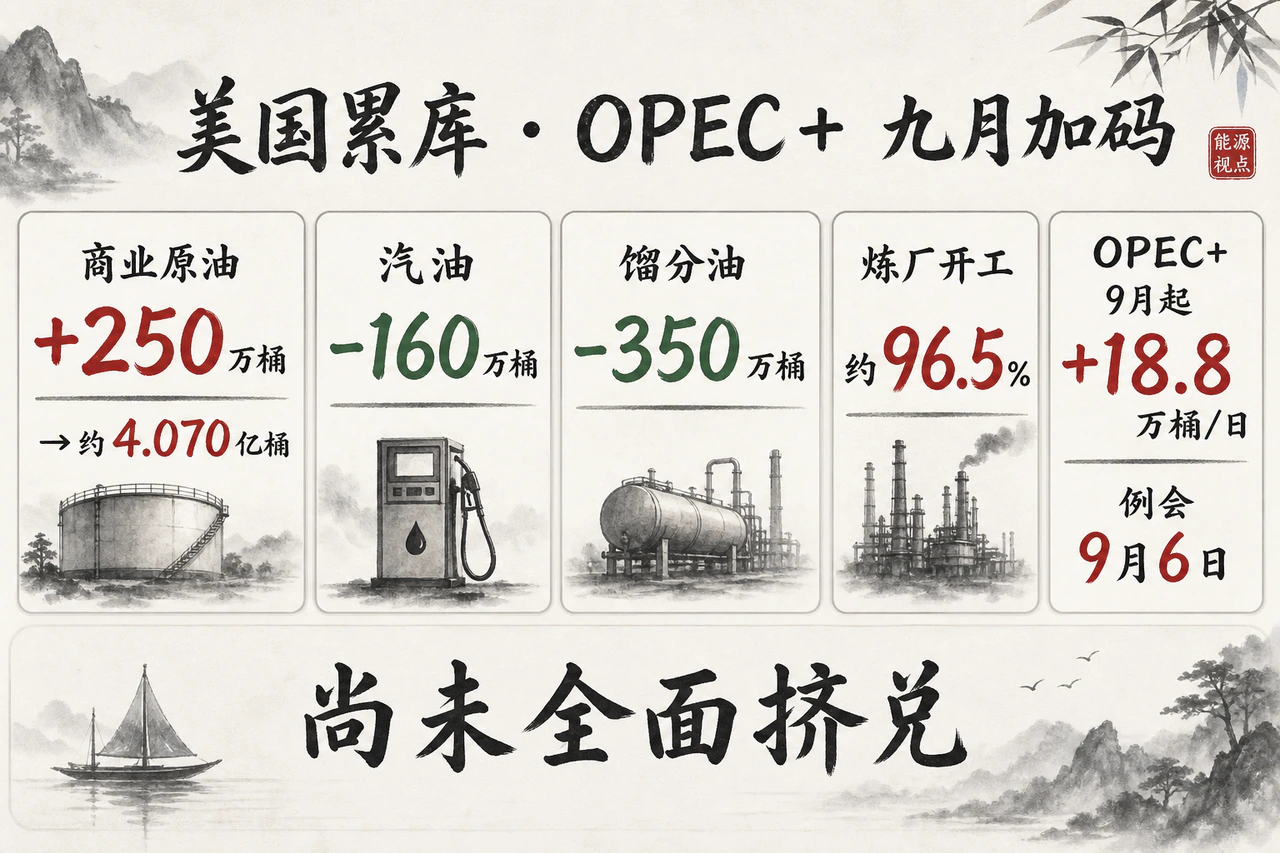
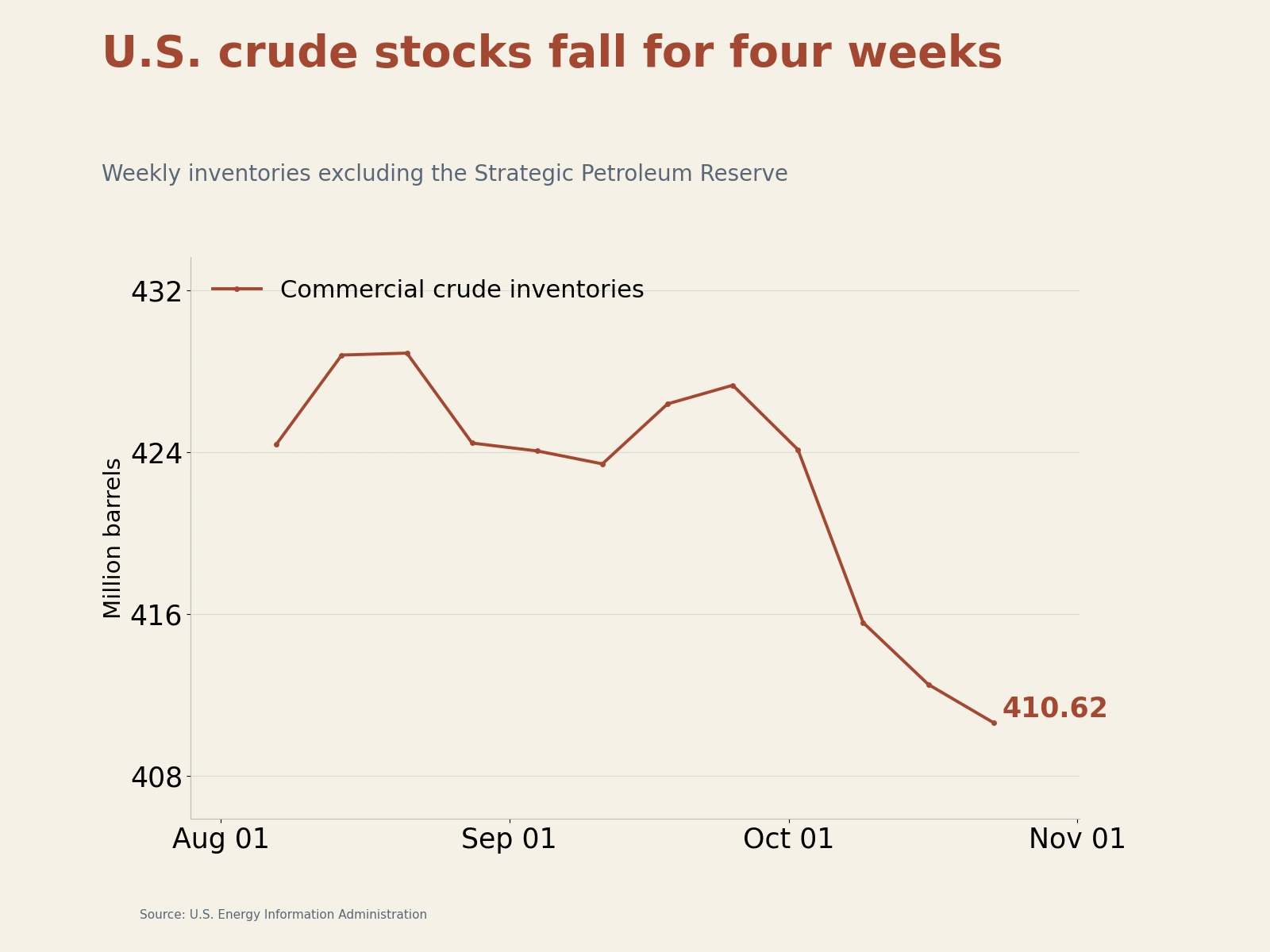
Domestic data did not support a universal physical-supply squeeze. The EIA August 5 report for the week ending July 31 showed commercial crude excluding SPR up 2.5 million barrels to about 407.0 million, still roughly 6% below the five-year norm but building. Gasoline fell 1.6 million and distillates 3.5 million barrels, the latter about 12% below normal. Refinery utilization stayed at 96.5%, imports rose about 515,000 to 6.2 million barrels daily, and production held around 13.804 million. While derivatives debated Gulf terms, U.S. fundamentals showed no global exhaustion. The next EIA report was due around August 12.
Baker Hughes reported active U.S. oil rigs up three to 454, a nearly fourteen-month high. This marginal supply response leaned toward easing but was too small to drive current nearby pricing.
Seven OPEC+ countries—Saudi Arabia, Russia, Iraq, Kuwait, Kazakhstan, Algeria and Oman—confirmed after their August 2 online meeting a combined 188,000-barrel-a-day quota increase from September 2026, completing the unwind of extra voluntary cuts set in 2023. The next meeting was September 6. Analysts expected a possible fourth-quarter pause, but the official statement did not lock in Q4 policy. With Hormuz constrained, higher quotas did not necessarily become departing cargoes, so the threat mainly affected the deferred curve.
Milder macro conditions do not displace Hormuz pricing
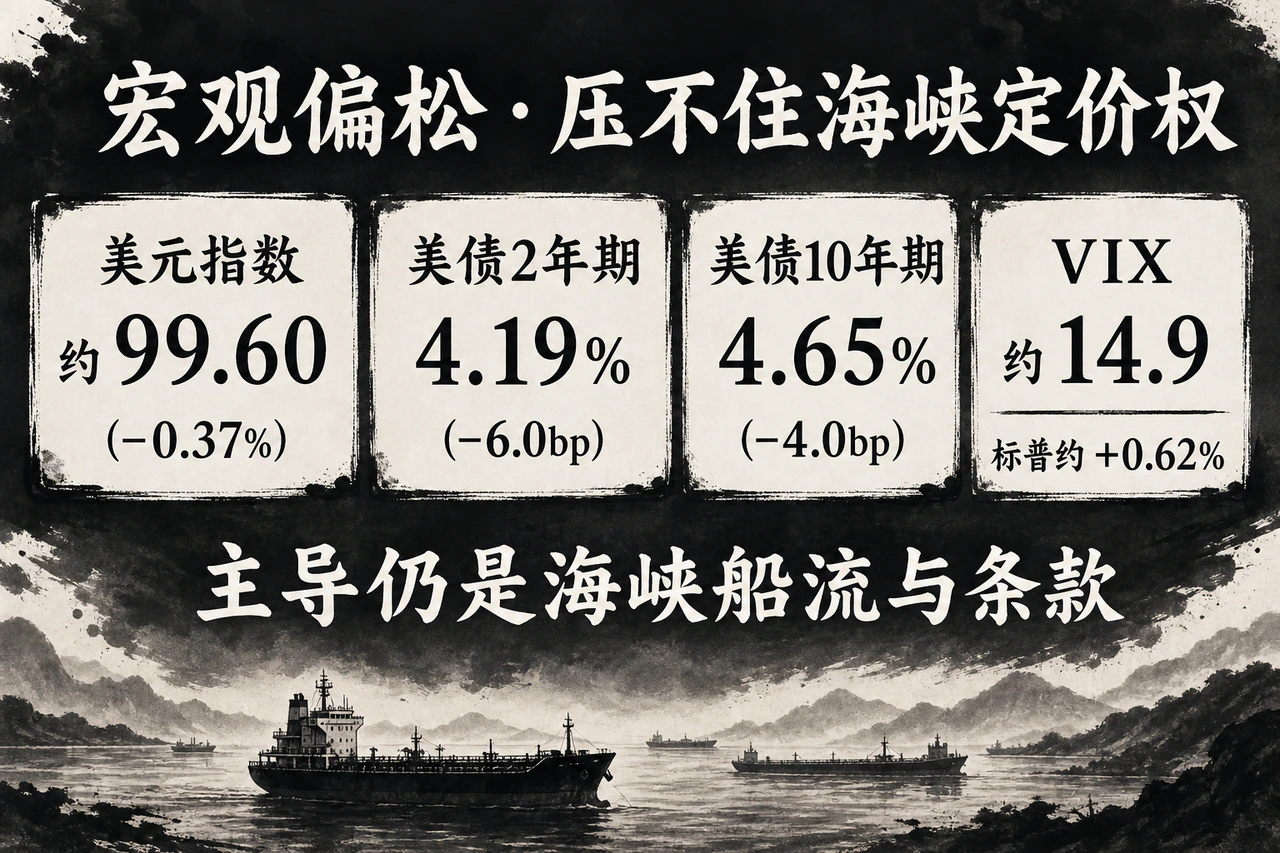
The external backdrop was modestly easier. The dollar index fell from 99.97 to about 99.60, -0.37%, briefly near seven-week lows, supporting dollar commodities. The 2-year Treasury yield fell 6.0 basis points to 4.19% and the 10-year 4.0 to 4.65%. Easier liquidity expectations, lower real rates and a weaker dollar would normally support risk assets, yet oil's rebound was restrained and weekly losses severe. Gulf flows and passage terms, rather than external macro beta, remained dominant.
The S&P 500 rose about 0.62% and VIX eased near 14.9, indicating no systemic oil-driven stagflation panic or deleveraging. COMEX gold surged about 3.8%, reflecting geopolitical haven and credit-hedging demand rather than oil's micro supply-demand contest, and offered no inverse oil signal.
Ship flows remain nearly halted as freight embeds risk in rents

Physical shipping was colder than diplomatic statements. Iran–Oman temporary-safe-passage talks focused on terms rather than mere reopening: nationality and shipowner exclusion screens; reported Iranian fees of 5%–7% of cargo value against Oman's approximately 3% and Washington's zero; and settlement feasibility under sanctions and insurance constraints. These obstacles showed that progress in statements was not restored traffic.
Tracking showed daily transits in single digits to the low teens versus 130–140 before conflict. Kpler counted only about 33 commercial ships Monday–Thursday, including approximately four Thursday, with very few crude tankers escaping the Gulf all week. Residual flows used Iranian-designated nearshore routes; the international TSS was effectively defunct. Unusually extensive AIS-dark traffic obscured transparency and raised risk premiums.
Freight was the more direct risk indicator. Middle East–China TD3C VLCC assessments reached about WS 475.6, approximately $480,000 daily TCE. Some proposed Hormuz fixtures were around $510,000 daily, still subject to unresolved conditions and uncertain performance. West Africa–China and offshore Oman–China alternatives were much cheaper in the same window. This priced scarce willingness to enter the Gulf, rather than a shortage of the global tanker fleet. The Houthis also claimed renewed Saudi-linked tanker attacks in the Red Sea. Local attacks were not total disruption but undermined blind optimism about safe western-pipeline bypasses.
Nearby contracts wager on terms; deferred contracts count builds

The curve reflected sharply divided logic. Nearby contracts priced the upside option in conditional reopening: strict blacklists, cargo-value tolls and uninsurable compliance barriers would preserve logistics premiums despite a political statement. WTI's bounce and broadly flat Brent after weekly overselling repriced such obstacles, rather than confirming reopening. Deferred contracts considered September OPEC+ quotas, U.S. crude builds, high-price demand destruction and alternative pipeline and cross-ocean logistics if the Gulf remained blocked.
Freight and futures diverged deeply: minimal traffic and soaring tanker rents alongside falling weekly crude prices. Capital willingly traded eventual reopening farther out but would not simply discount that surplus assumption into prompt prices. Hard tests were whether daily commercial transits escaped single digits; toll-sharing and access terms became legally effective texts; TD3C premiums over alternatives narrowed; and the next EIA report around August 12 and seven-country OPEC+ meeting on September 6. Until then, volatile prompt trading and premium disputes would dominate.