The July jobs report released August 7 Eastern time was the first key hard labor release after the Fed's July 29 meeting. Unexpected payroll contraction and large downward revisions to the prior two months quickly reversed tighter expectations, returning a September hold to the more likely outcome. The Board issued no new speeches over the weekend and made no formal stance adjustment. Cooling temporarily reduced the urgency to tighten immediately but could not alone rule out renewed inflation. The next central test was July CPI on August 12.
Economic data
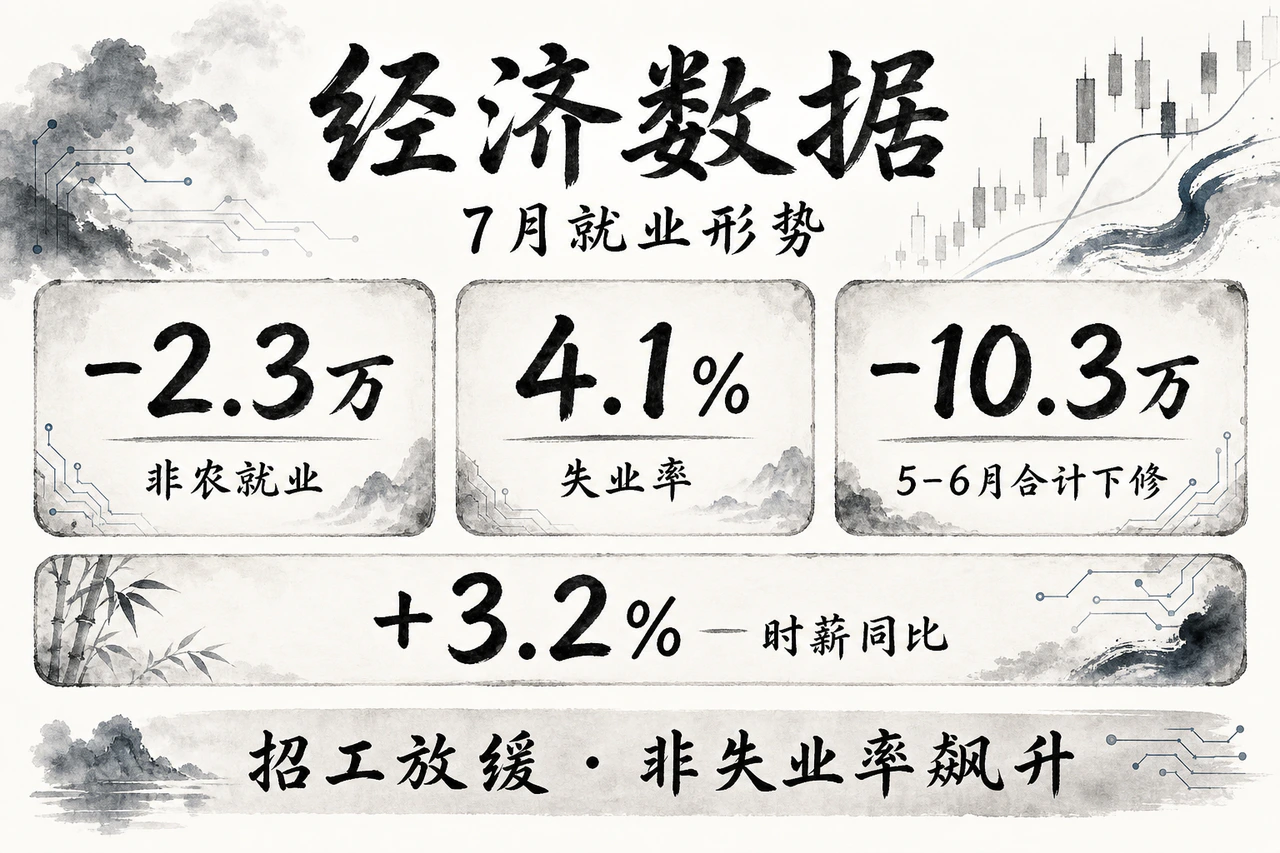
The BLS released July's Employment Situation, USDL-26-1291, at 08:30 Eastern on August 7. Core indicators broadly weakened at the margin:
- Payroll gains unexpectedly turn negative: in July, seasonally adjusted nonfarm employment fell 23,000 (-23 thousand), far below expectations;
- Unemployment holds at 4.1%: around 6.9 million people were unemployed, with the rate moving sideways at a low level;
- Sharp sectoral divergence: local-government education lost 50,000 jobs and retail trade 19,000. Noncyclical healthcare remained resilient, adding 22,000, although its growth pace also slowed;
- Wage growth remains moderate: average hourly earnings for all private employees reached $37.62, up two cents monthly and an unchanged 3.2% annually, without accelerating wage inflation;
- Large historical revisions: more important than the single-month reading, May gains were cut from +129,000 to +63,000, a 66,000 reduction, and June from +57,000 to +20,000, down 37,000. The combined revision removed 103,000 jobs from the initial figures;
- Supply measures gradually soften: July participation was 61.4% and the employment/population ratio 58.9%. Monthly changes were small, but participation had declined a cumulative 0.7 percentage point since January.
The weakness mainly reflected slower hiring and substantial downward revisions, rather than surging layoffs driving unemployment higher. July's committee debate had centered on whether preventive hikes were needed against inflation. Weak payrolls raised the weight on employment risk and reduced immediate urgency. Slower hiring alone could not erase concern about sticky services inflation, however, shifting attention quickly to Wednesday's price report.
Official commentary

The Board's speeches page showed no new formal text from August 7 through the reporting cutoff. Nor did the weekend bring an official signal strong enough to rewrite the rate path.
The only confirmed new statement in the window came from Richmond Fed President Thomas Barkin. At Friday's online NABE event, he said July jobs fit very well with the Fed's recent view of a labor market neither loose nor tight. Business contacts were not hiring aggressively, but the good news was they were not materially laying off staff either.
Barkin neither amplified the loss of 23,000 jobs into a labor-market collapse nor used it to signal tightening. He anchored the narrative in a weak balance of low hiring and low layoffs. This softly constrained aggressive hike expectations while preserving flexibility on both sides, without signaling easing or cuts.
Policy expectations
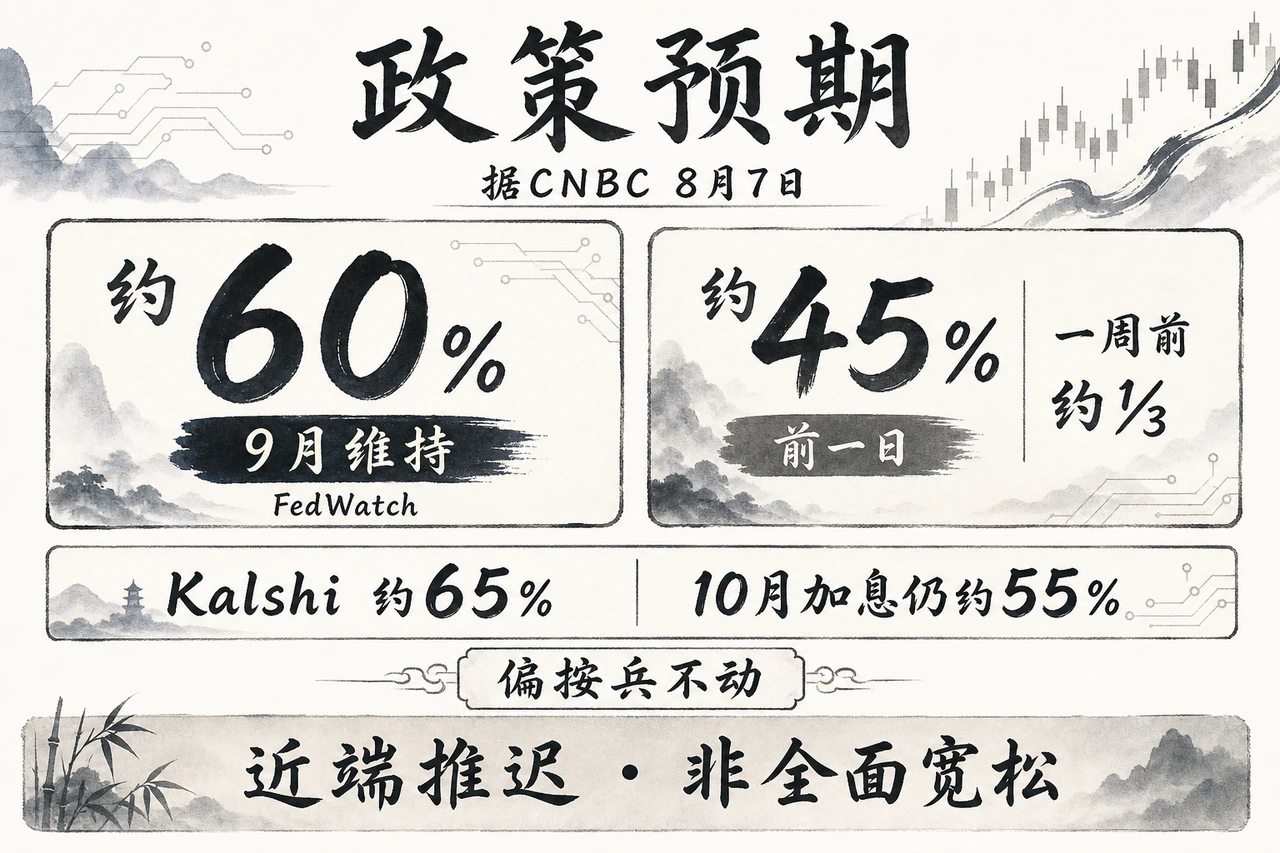
Derivatives loosened near-term hike pricing after weak payrolls. CNBC reported on August 7:
- September baseline reverses: CME FedWatch's implied chance of unchanged rates rose to about 60%, versus roughly 45% the day before and only about one-third a week earlier;
- Prediction markets follow: Kalshi's September hold pricing similarly rose to about 65%.
Bets converged from a hike bias toward a hold. The distant curve had not switched to broad easing: FedWatch still put cumulative October hike odds around 55% and December around 75%. The trade was postponing and reducing the need for near-term increases, rather than declaring the tightening cycle over.
Morgan Stanley Wealth Management chief economic strategist Ellen Zentner said weak jobs and wages eased immediate September pressure, but the following week's inflation remained decisive. With cash markets closed for the weekend, no new overseas repricing driver had changed the path by the cutoff. The narrative remained cooling employment favoring a September hold, with the eventual direction awaiting August 12 CPI.


