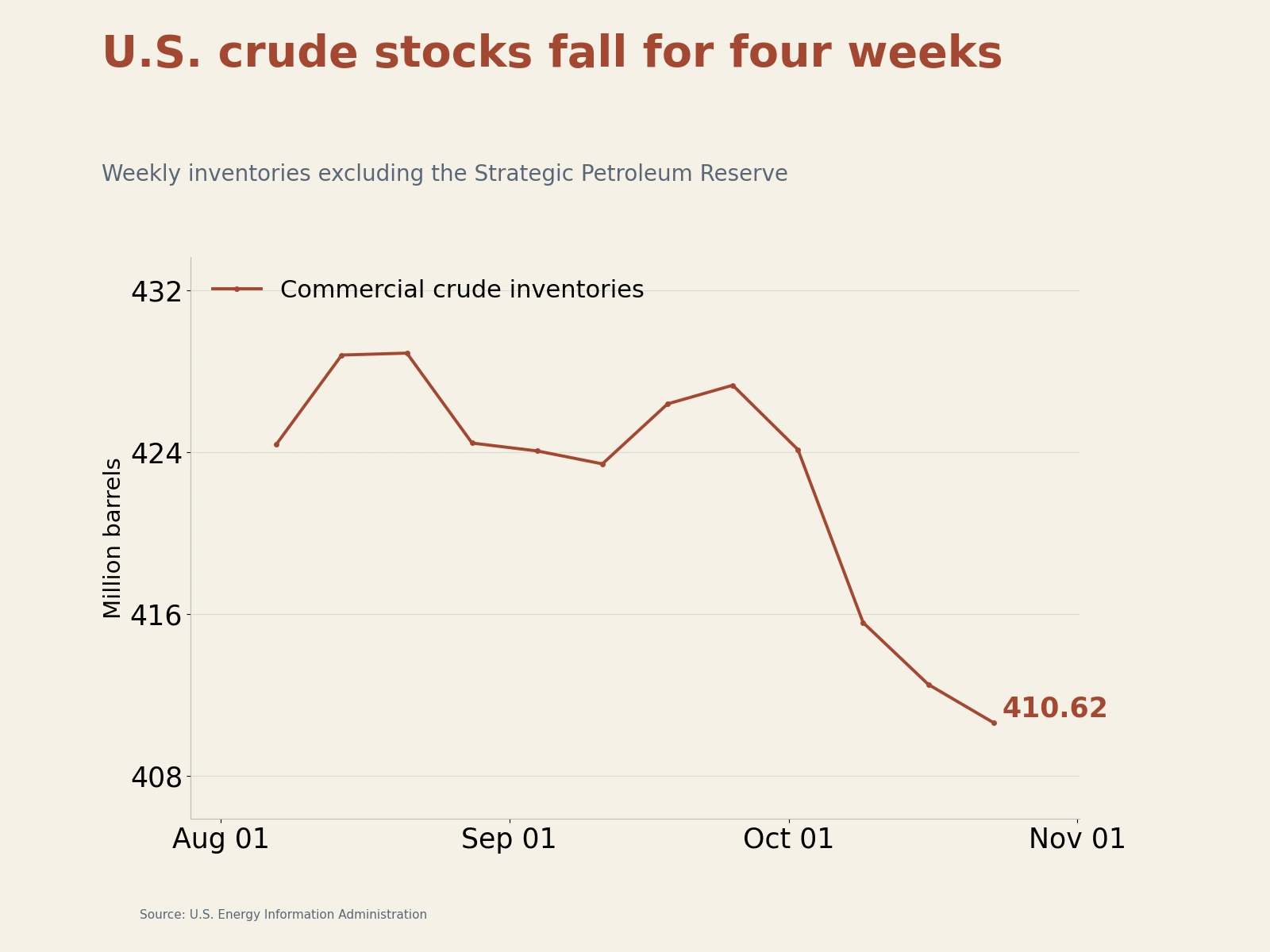
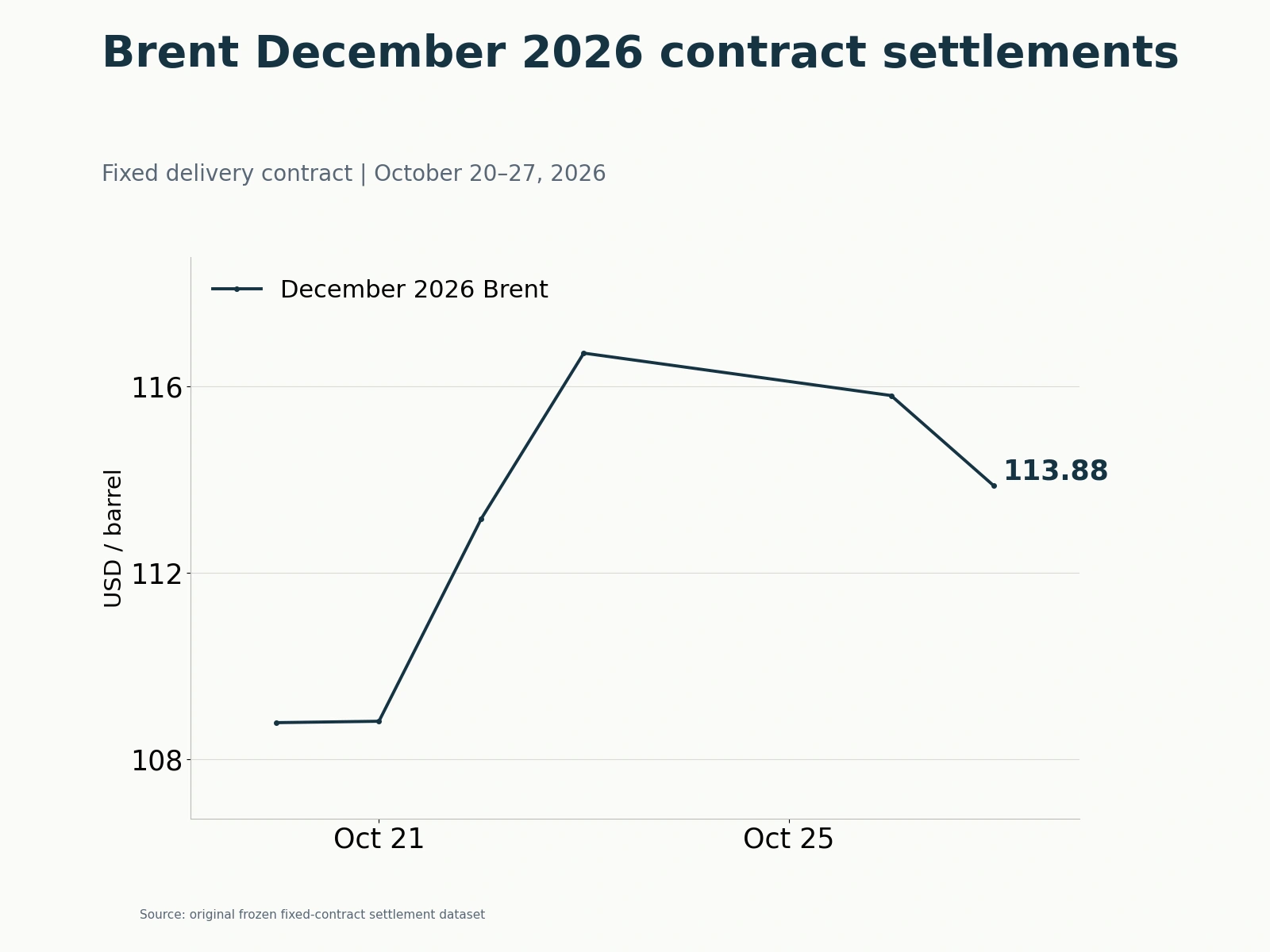
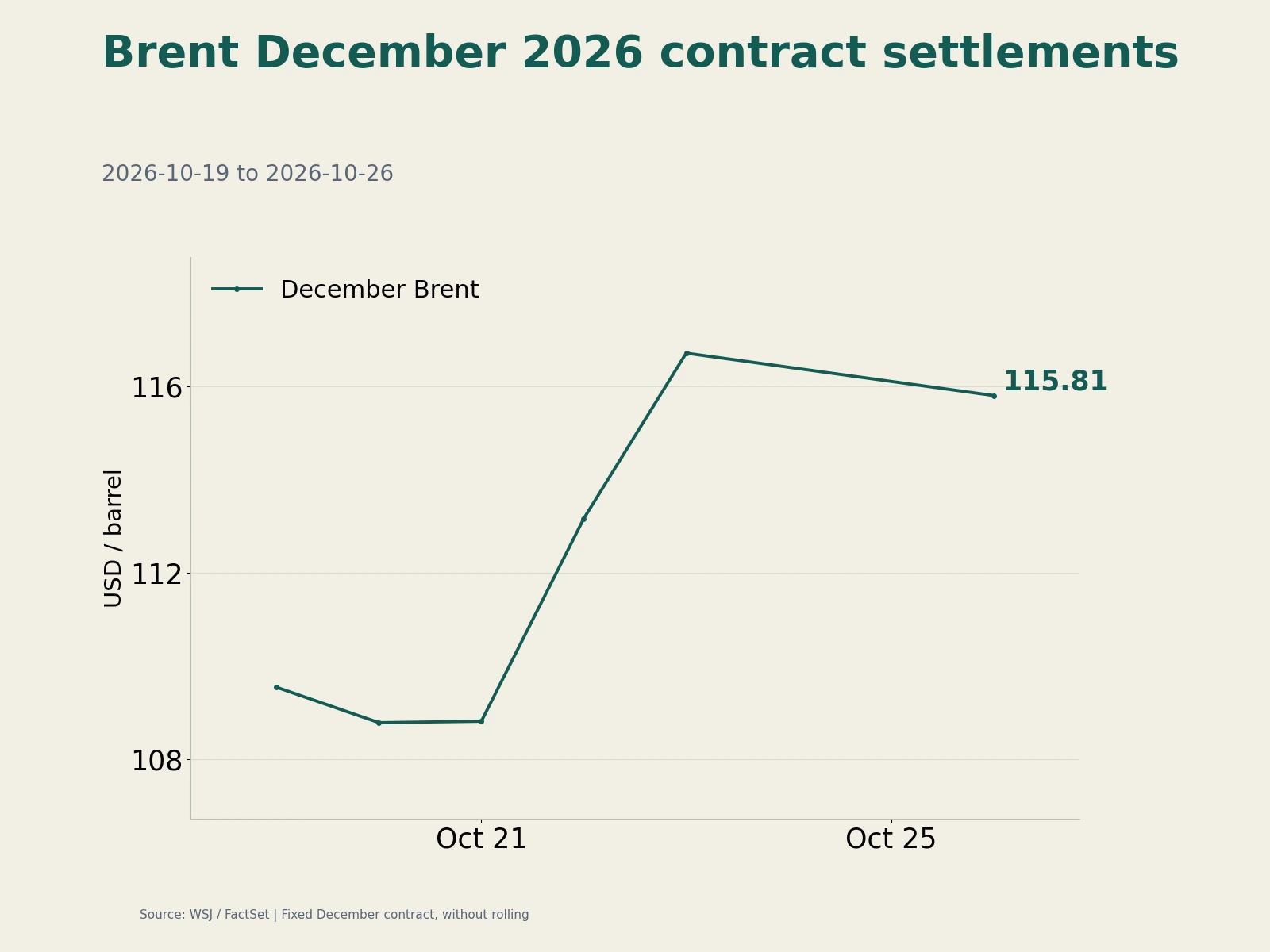
After a steep weekly selloff, crude finally rebounded modestly on Friday. Traders soon recognized that conditional reopening of Hormuz remained far from restoring actual vessels to global supply chains. Prompt prices stayed tied to restrictive passage terms and high scarcity rents for transport, while deferred pricing was restrained by OPEC+ paper output increases and continued US commercial crude builds. Diplomatic progress is not restored navigation. Paper markets readily anticipate eventual reopening but will not price prospective future surplus directly into today's physical structure.
A Limited Settlement Bounce Leaves the Weekly Decline Intact
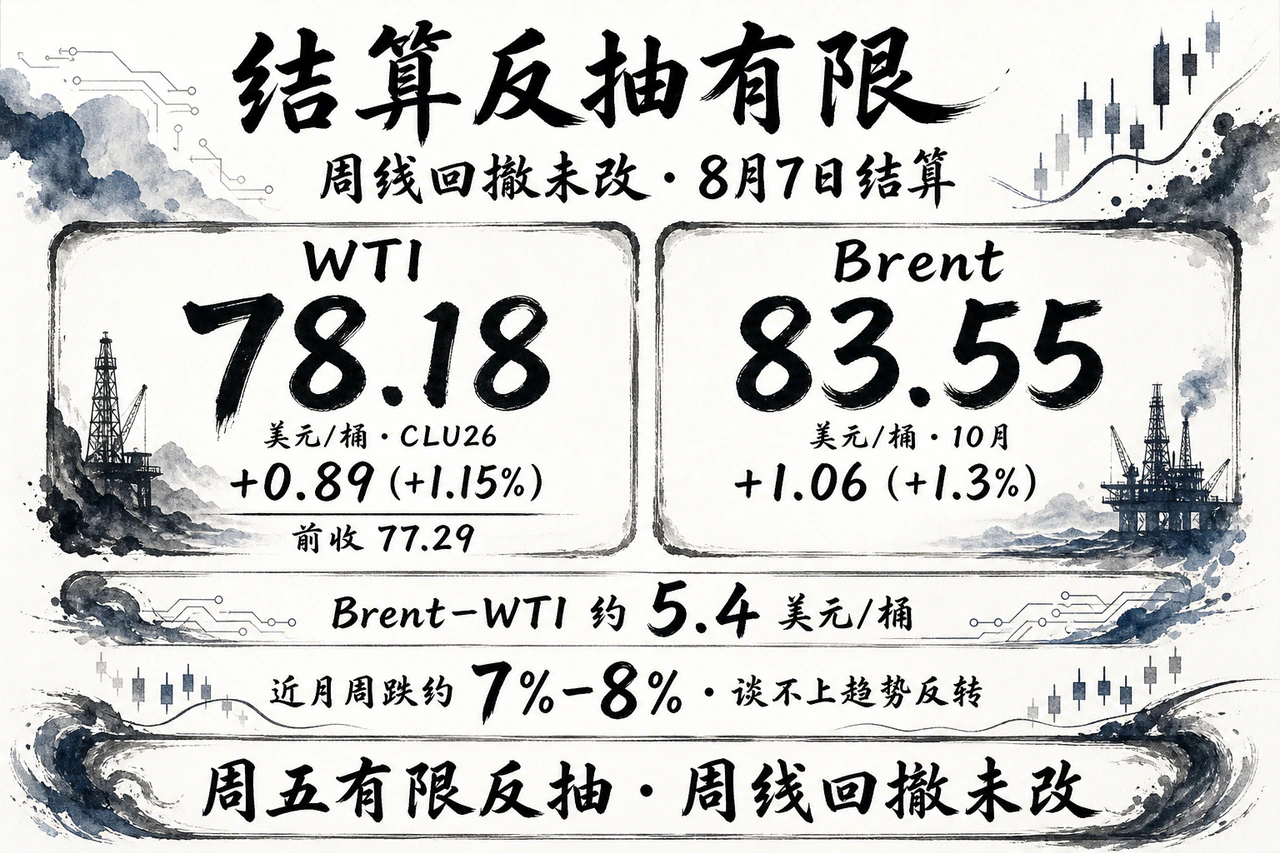
August 7 Friday settlements: September NYMEX WTI (CLU26) closed at $78.18 a barrel, up $0.89, or 1.15%, from the comparable previous settlement of $77.29. RBOB gasoline moved the same way, approximately +1.59%. October ICE Brent settled at $83.55, up $1.06, or 1.3%; the public BZ daily series also closed at $83.55 versus $82.49, about +1.28%. The benchmarks aligned in direction, with Brent–WTI near $5.4 per barrel. Daily changes are based on final settlements.
The pre-cutoff Asian electronic snapshot around 08:38 Beijing time on August 10 put CL near $78.78 and BZ around $84.39. These opening indications are not included in Friday's daily-change statistics.
The weekly position is more informative than a one-day bounce: front contracts lost approximately 7%–8%. A deep weekly decline with a modest Friday rebound is not a trend reversal. Early in the week, markets urgently priced imminent full reopening; later, restrictive details exposed operational obstacles. No authoritative month-by-month spread surface was available in this window, but the logic was clear: real logistics and passage friction support the front, while de-escalation optionality and September OPEC+ paper supply depress deferred prices. Media relayed Citi raising its Q3 Brent outlook to around $80 while remaining weaker further out. The central structure remained a strong prompt premium against prospective deferred surplus.
US Inventories Keep Building; OPEC+ Adds More in September
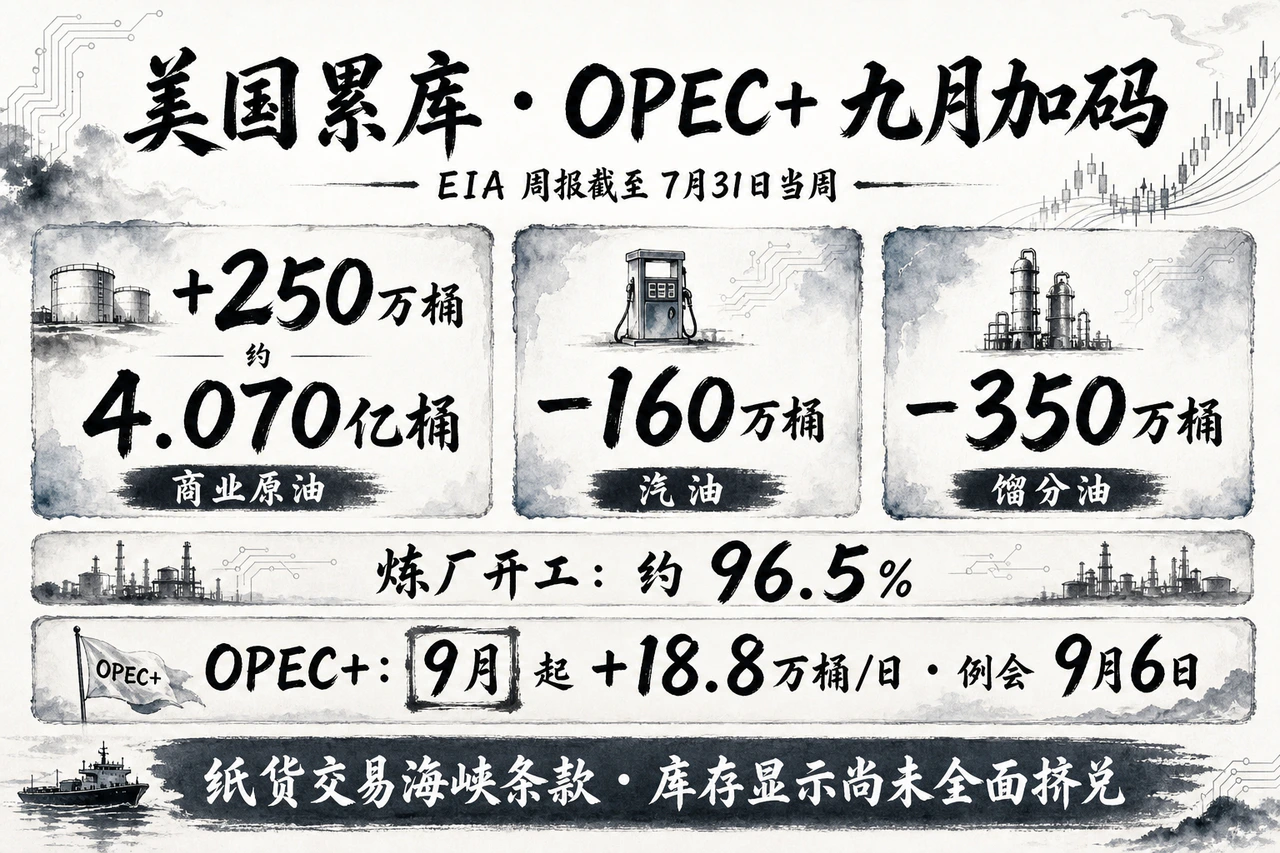
The price rebound did not mean US physical data supported a generalized spot squeeze. EIA's August 5 report for the week ended July 31 showed commercial crude stocks up 2.5 million barrels to approximately 407.0 million, about 6% below the five-year seasonal average. Gasoline fell 1.6 million and distillates 3.5 million, around 7% and 12% below their averages. Refinery utilization stayed high at 96.5%; imports reached 6.20 million bpd, up about 515,000 bpd. Paper markets kept contesting strait terms, but inventories clearly showed no US crude supply squeeze. The next official weekly report was due around August 12.
Baker Hughes' August 7 US rig count showed oil rigs up three to 454, gas rigs down three to 124, and total rigs unchanged at 588. The marginal supply response remained subdued and too small to drive prompt prices independently.
On August 2, seven core OPEC+ countries confirmed a combined quota increase of approximately 188,000 bpd from September, completing the reversal of additional 2023 voluntary cuts. Their next meeting was September 6. Markets and media often interpreted this as a possible fourth-quarter pause, but the communiqué did not commit to that path. With Hormuz still disrupted, how much extra quota becomes actual seaborne supply remains doubtful. Such paper increases chiefly cast a psychological shadow over deferred contracts.
Easier Macro Conditions Cannot Displace the Strait's Pricing Power
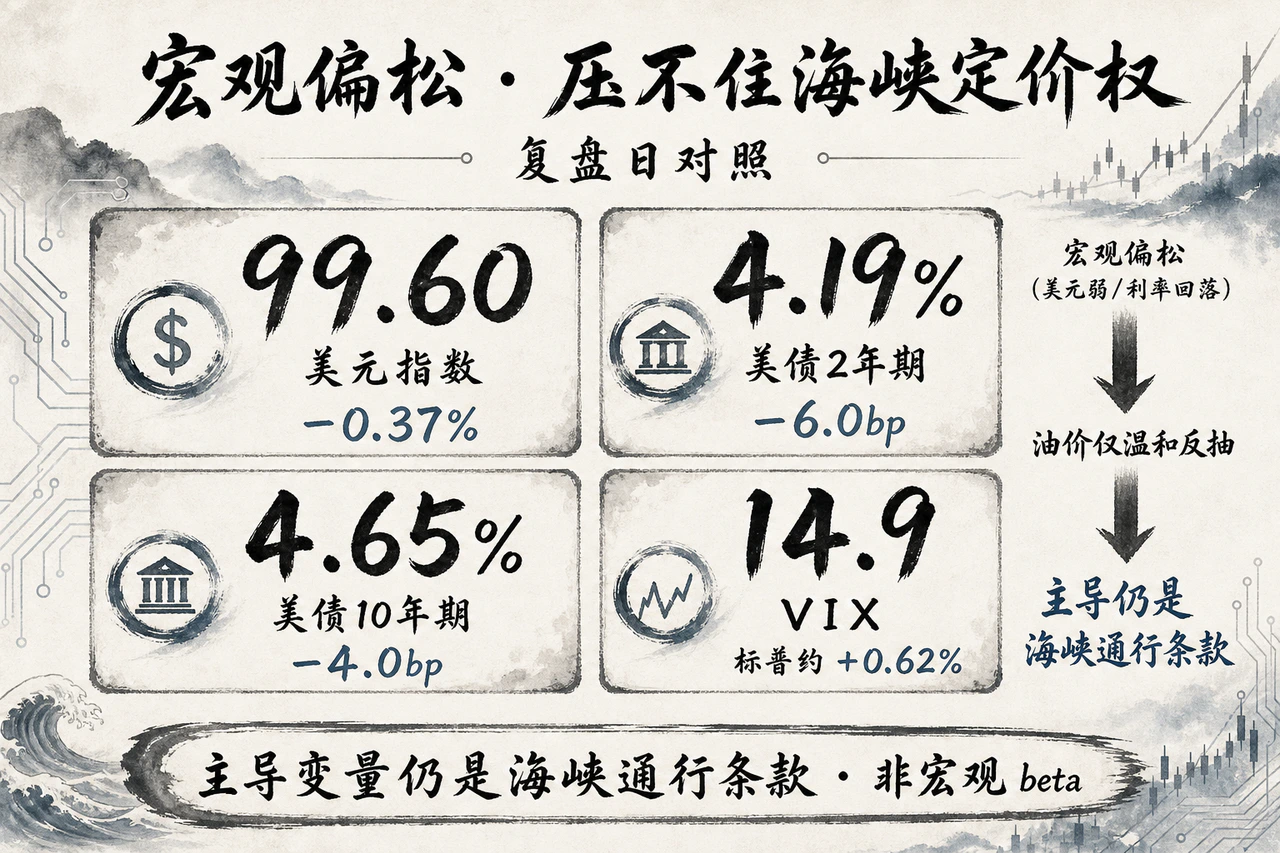
Friday's financial conditions generally eased. The dollar index fell to about 99.60 from 99.97, approximately -0.37%, supporting dollar commodities. Treasury closing yields fell broadly: two-year 4.19%, -6.0 bp, and 10-year 4.65%, -4.0 bp. Lower rates and a weaker dollar would normally support risk assets and commodities strongly, yet oil managed only a modest rebound and retained a severe weekly loss. Passage terms, rather than systematic macro beta, remained the dominant driver.
The S&P 500 rose approximately 0.62% and VIX eased to around 14.9, with no broad stagflation selloff contagion from oil. Gold's simultaneous strong gain mainly reflected geopolitical premiums and liquidity expectations, with only limited overlap with oil's drivers.
Vessel Flows Remain Near a Standstill; Freight Converts Risk into Rent
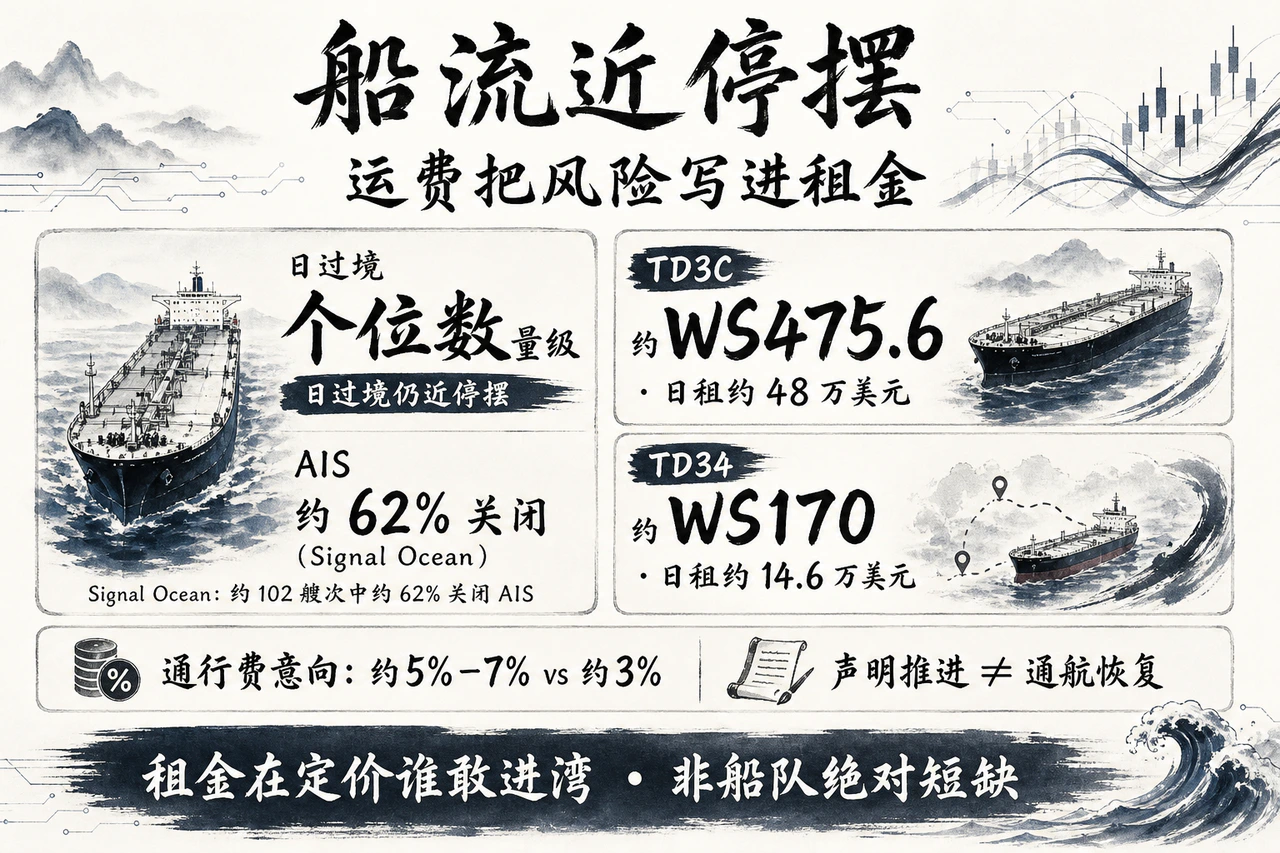
The connection between oil and freight is more unforgiving than diplomatic statements. Debate has shifted from whether the strait reopens to how it would operate: restrictive passage lists, wide disagreement on fees, and whether owners can pay lawfully under sanctions and war-risk insurance constraints. Reports put Iran's proposed charge at 5%–7% of cargo value, Oman's mediation proposal around 3%, and the US position at zero. Progress on a framework does not equal restored passage.
Real-time traffic confirmed near-paralysis, with daily passages still in single digits. Signal Ocean found that approximately 62% of around 102 transits since July 14 switched off AIS, including about 79% of crude-tanker passages. Lost transparency itself raises premiums across the logistics chain.
Shipping quotes were extreme. Middle East–China VLCC route TD3C stood at WS475.6, equivalent to a TCE near $480,000 per day, versus West Africa–China TD34 near WS170 and $146,000 per day. The gap directly measures the fear cost of finding ships willing to load in the Gulf. Some indicative Hormuz fixtures reached approximately $510,000 daily, still subject to stringent contractual conditions. The rates price scarcity rent from an irreplaceable blocked route, rather than an absolute shortage of the world's tanker fleet.
Prompt Contracts Bet on Terms; Deferred Contracts Count Inventory Builds
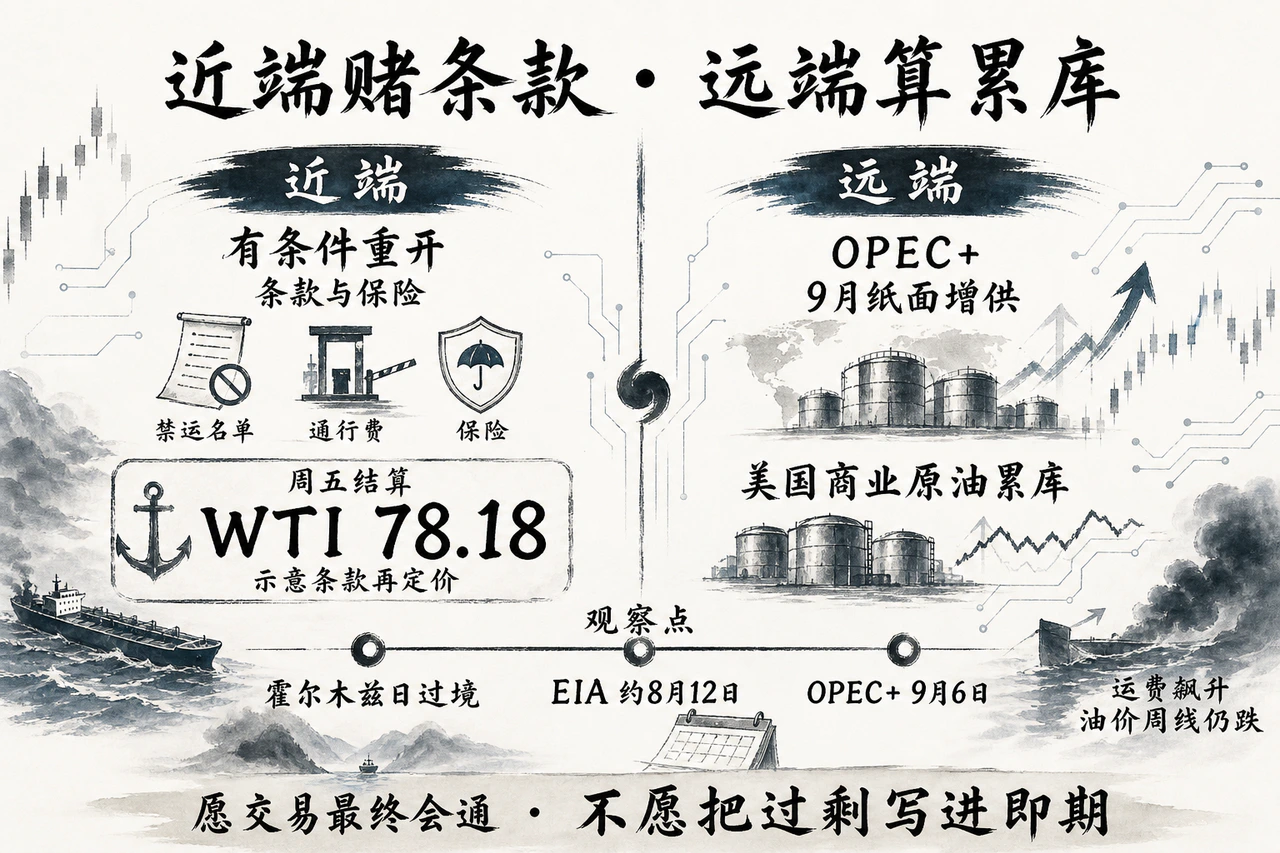
The curve is splitting between near and far logic. Prompt contracts contest the real option embedded in conditional reopening. If an agreement retains restrictive embargo lists and impractical fees, physical premiums cannot vanish with a diplomatic statement. Friday's rebound looked more like forced repricing of complex terms after an oversold week than confirmation of restored navigation. Deferred contracts were already weighing September's potential OPEC+ paper increment and US commercial builds.
Surging freight and near-stalled vessels diverged from sharply lower weekly oil prices. Paper markets willingly anticipate eventual reopening at the far end, but facing real delivery constraints refuse to insert prospective surplus into the immediate curve. Asian prices edged higher before cutoff, awaiting the next full session's settlement. Watch whether daily Hormuz crossings escape single digits, whether fees and restrictions become a written operating plan, whether TD3C–TD34 freight differences narrow materially, the EIA report around August 12, and the September 6 OPEC+ meeting. These will repeatedly recalibrate the curve.