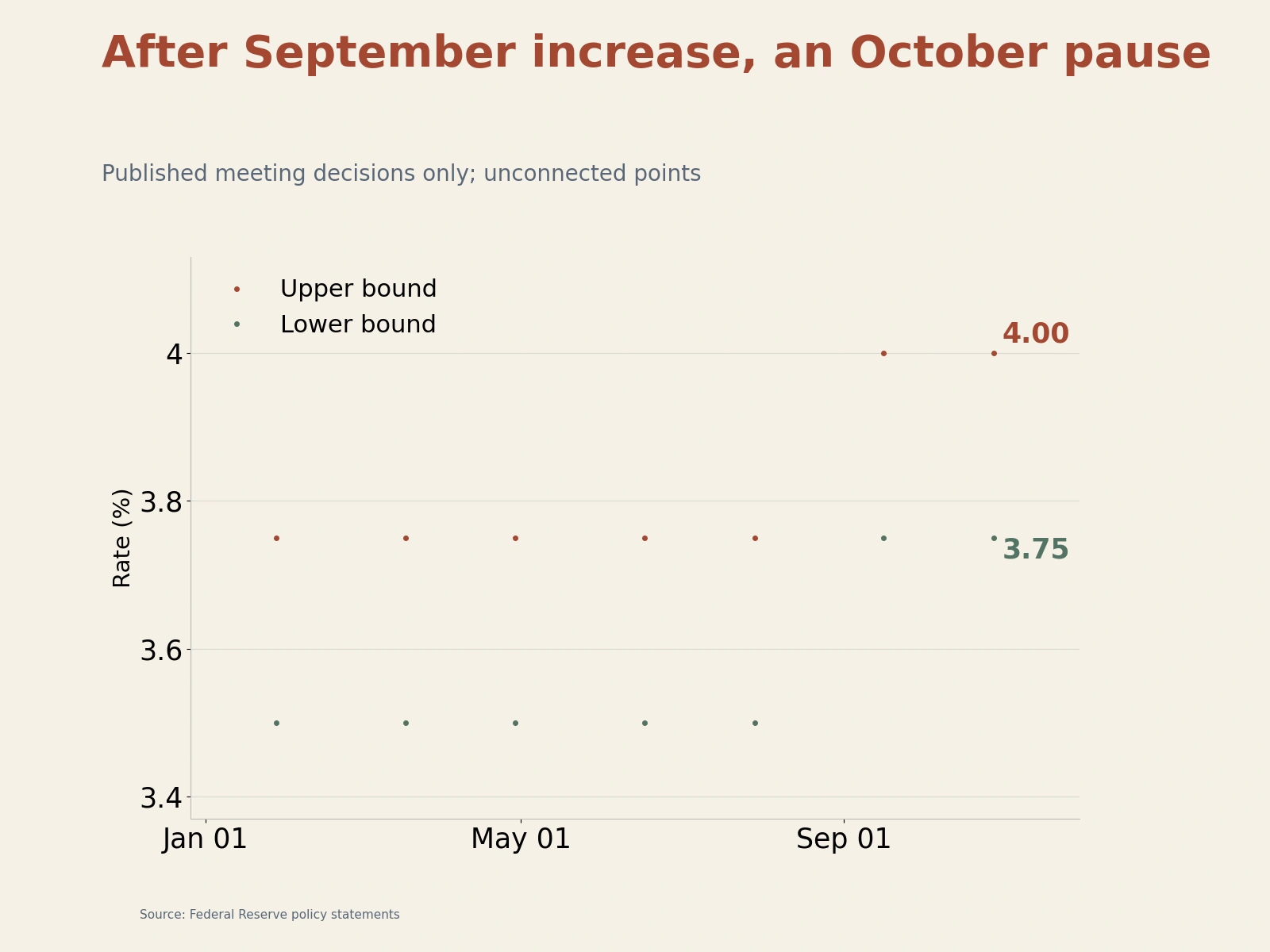
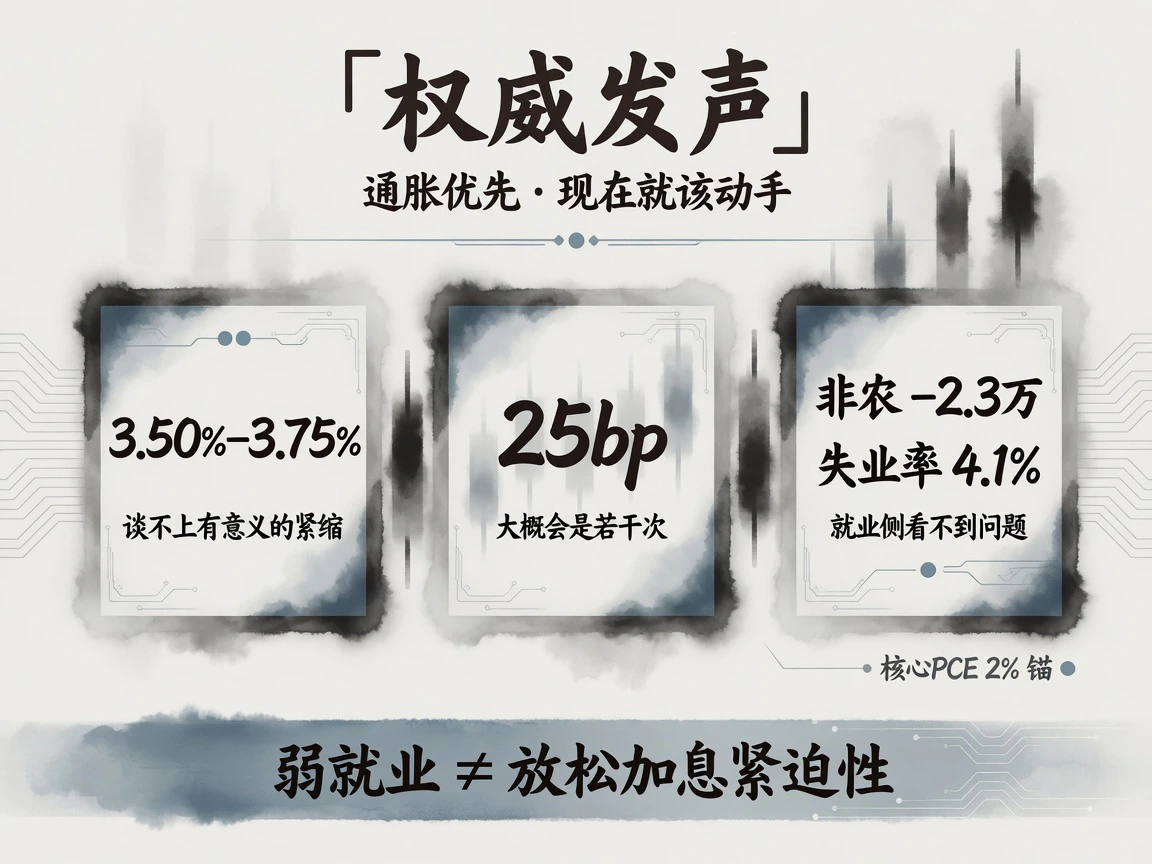
After July payrolls unexpectedly weakened, markets briefly treated a September hold as the path of least resistance. On August 10 Eastern time, Cleveland Fed President Beth Hammack renewed her hawkish position in a Yahoo Finance interview. She said the current 3.50%–3.75% range was not meaningfully restrictive, now was the time to act and more than one increase would likely be needed. As one of three July 29 FOMC dissenters favoring a 25-basis-point hike, she again exposed the tension between prioritizing inflation with early tightening and waiting near term for data.
Within the August 10 session-to-August 11 morning window, BLS released no new jobs or CPI data, and the Board speech page had no update after Cook's August 5 text. Almost all incremental policy information therefore came from Hammack's interview.
Official voice: employment slowing leaves inflation priority intact as a hawk reiterates multiple hikes
Her interview aligned closely with Bloomberg's same-day account across five dimensions:
- Path and magnitude: A single 25-basis-point move would probably have little real-economy effect, so several adjustments would likely be needed. She nevertheless avoided fixing the total number or exact terminal rate prematurely.
- Current stance: She rejected the view that 3.50%–3.75% was sufficiently restrictive. In discussions with business leaders, she had not heard of clear constraints on investment or growth from current rates, supporting additional restraint.
- Dual-mandate weights: July's roughly 23,000 payroll decline did not alter her inflation focus. Over about 12 months, average gains were still 20,000–25,000, and 4.1% unemployment was near her full-employment estimate. She saw no substantive employment-side problem.
- Doubts about spontaneous disinflation: She said it would be welcome if inflation returned to target without tightening and proved her wrong, but currently saw no sign it would turn lower by itself.
- Financial conditions and credibility: Responding to whether higher long Treasury yields had tightened on the Fed's behalf, she called market responses a useful complement but no substitute for necessary Fed action. Credibility requires a transparent reaction function anchored to the 2% inflation target, using core PCE as the benchmark in this account, rather than passive reliance on market swings.
Her implication was clear: weak July payrolls were a normal fluctuation around full employment, not a pass to postpone or reduce the urgency of hikes. Dissenters represented by Hammack strengthened their demand for restraint after the jobs report.
Near-term policy expectations split sharply between a hike and a hold
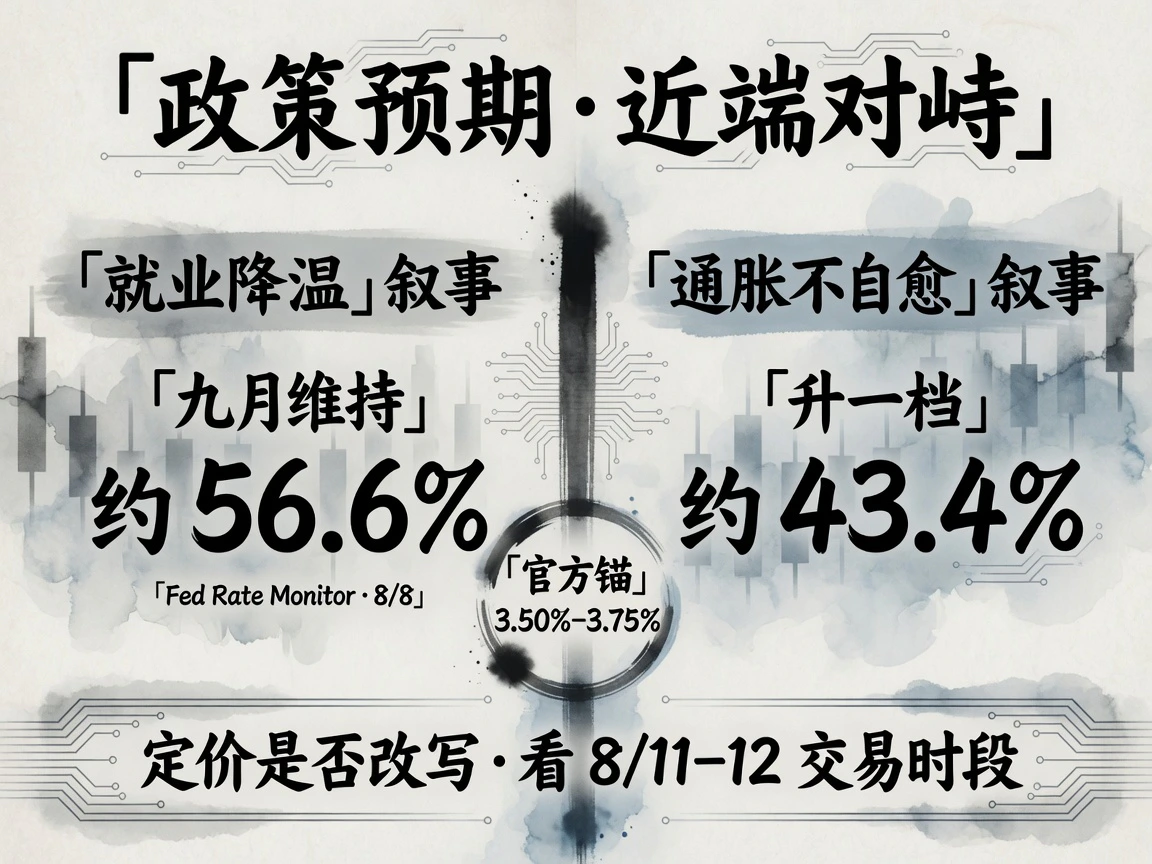
After July's meeting, the official anchor remained 3.50%–3.75%. Following payrolls, media and institutions cited CME FedWatch hold odds around 60%. A third-party monitor such as Investing.com, updated through the August 8 weekend, showed 56.6% September hold and 43.4% for a 25-basis-point increase. These were post-payroll, pre-interview weekend baselines, not live probabilities after her remarks.
Her comments quickly prompted discussion of rebounding September hike odds. The direction is plausible, but inconsistent observation times prevent a defensible single current probability. More cautiously, the short curve remains pulled between cooler jobs reducing urgency and hawkish dissenters insisting inflation will not cure itself. Whether the interview materially reverses pricing requires comparable major-futures monitor readings from August 11–12 trading.
Verification points: internal disagreement becomes major policy noise before inflation

Three tests deserve attention:
- July CPI on Wednesday, August 12: Continued gentle core annual disinflation as expected would strengthen a September hold. Unexpected core persistence or broader energy and price increases would more readily turn Hammack's act-now argument into repricing.
- Barkin's August 13 speech and PPI that day: Richmond's president was scheduled in Greenville, South Carolina. His earlier post-employment stance was neutral, neither easing nor tightening. Whether centrists or doves change tone after new information matters; PPI cross-checks prices from production.
- July FOMC minutes around August 19: Markets will examine how the three hike dissenters and majority substantively differ in balancing inflation and employment risks.
No new decision or minutes appeared in this window, but a prominent dissenter's renewed pressure despite weak jobs vividly showed division. September's outcome depends on imminent CPI and further communication. Until then, profound disagreement over priorities itself remains a major uncertainty and source of policy noise for macro assets.