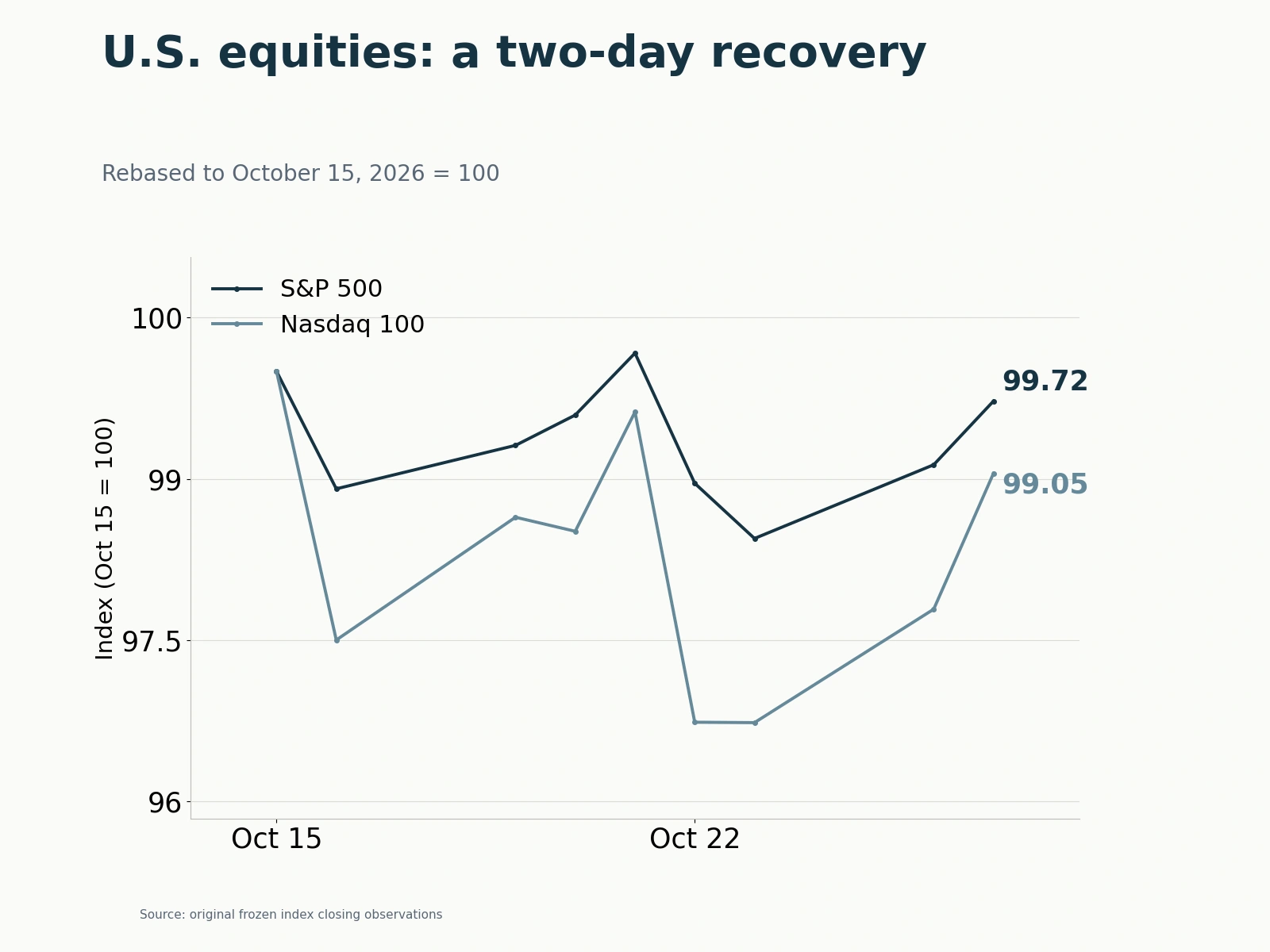
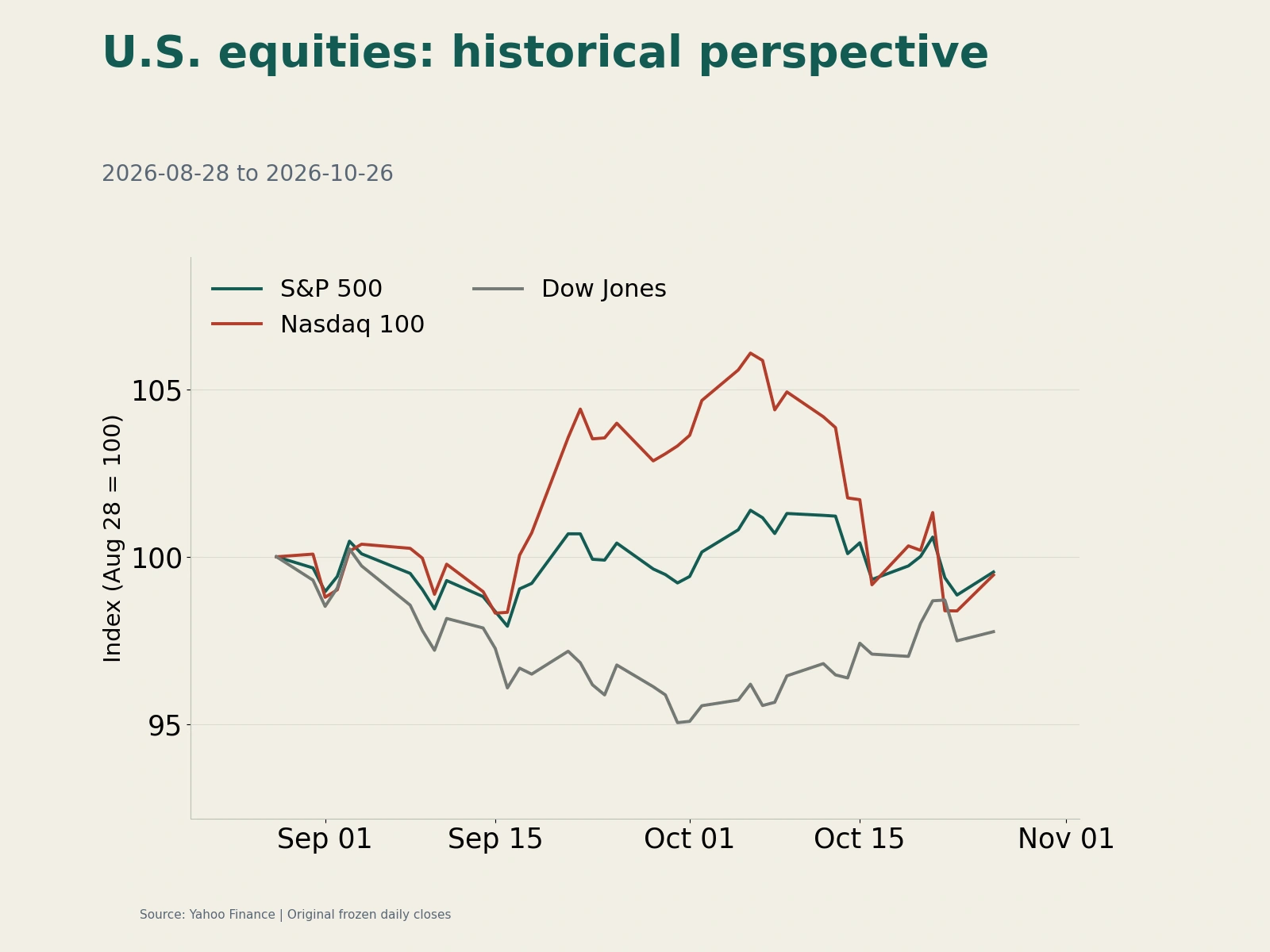
On August 10, 2026, weekend optimism over Hormuz navigation and US-Iran talks met substantial obstacles, reviving near-term energy inflation. WTI and Brent nearby settlements jumped about 5%, producing an almost symmetric Treasury bear shift: 2-year +6bp and 10-year +7bp to 4.72%, with 10-year breakevens about +4bp. US equities remained resilient near records: S&P 500 −0.06%, while rates weighed more on Nasdaq and Russell 2000 small caps and VIX edged up. Cleveland Fed president Beth Hammack said rates were not meaningfully restrictive and multiple hikes might be needed for 2%, challenging an automatic easing narrative after weak jobs. September hike odds remained near half. July CPI on August 12, plus large 3- and 10-year auctions, were the week's central tests.
Fixed income: Oil-driven reflation lifts the entire curve almost in parallel
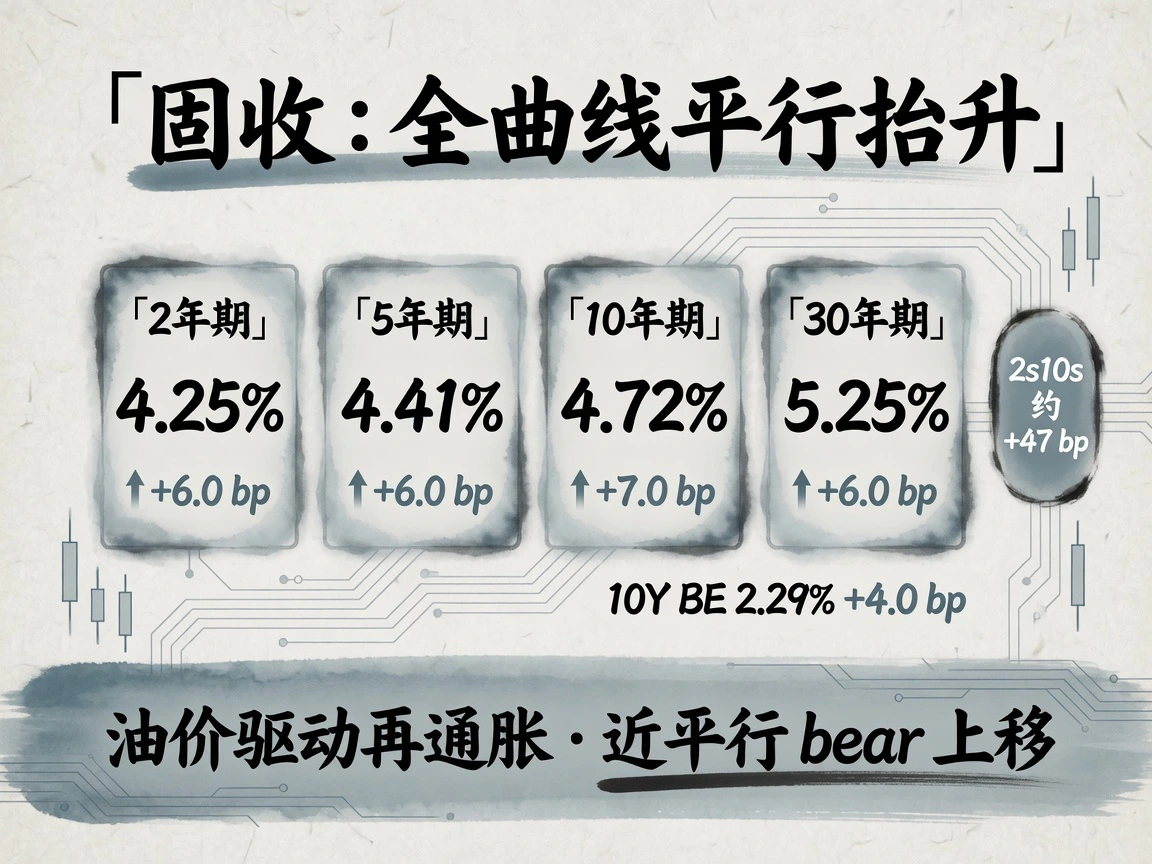
Official Treasury daily par yields, close to close versus August 7:
| Maturity | August 10 close | August 7 close | Daily change |
|---|---|---|---|
| 2-year | 4.25% | 4.19% | +6.0 bp |
| 5-year | 4.41% | 4.35% | +6.0 bp |
| 10-year | 4.72% | 4.65% | +7.0 bp |
| 30-year | 5.25% | 5.19% | +6.0 bp |
The symmetric bear shift left 2s10s near +47bp, about 1bp wider, with slope essentially unchanged. Reports of 3–5bp intraday gains used trading quotes versus late Friday; they agreed on direction but differed from official weekend-spanning daily figures by 1–3bp because of timing. All analysis uses official Treasury end-of-day data.
Inflation compensation widened alongside nominal yields. FRED showed the 10-year breakeven T10YIE at 2.29%, +4.0bp, and 5-year at 2.25%, +3.0bp. More than half the nominal 10-year's 7bp rise came from inflation compensation. Implied real rates rose slightly, but FRED's DFII had no exact August 10 official observation—the latest was August 7's 2.40%—so no precise daily-close real-rate attribution is made.
Energy-driven renewed inflation expectations dominated. WTI and Brent settled about 5% higher, and major institutions and reporting attributed higher yields to oil and poorer reopening prospects. Strong growth as the principal driver would usually make the short end lead and flatten 2s10s. Nearly simultaneous maturity gains showed weak payrolls still limited aggressive front-end hikes.
The target remained 3.50%–3.75%, with the next FOMC September 15–16. Cross-market tools clustered around even odds: CNBC citing FedWatch put hikes near 52%; Investing.com and others put holds at 55%–57%, implying hikes of 43%–44%. This was below 67% hike odds a week earlier but mildly above the very dovish post-payroll mood. No full hike repricing had occurred. Prediction markets typically favored no change more than futures; a few percentage points of difference represented normal arbitrage friction.
Other assets corroborated the pattern: 10-year Treasury futures ZN fell about 0.33%, long-bond ZB 0.69%, the dollar index rose 0.19% and VIX closed 15.46, up 3.8%. Slightly weaker stocks, weaker bonds and higher commodities reflected marginal stagflation repricing.
Supply pressure followed: a roughly $58 billion 3-year auction on August 11 and $42 billion 10-year on August 12, subject to final official announcements. With the 10-year back near 4.72%, tails and bid-to-cover would test actual primary absorption.
HY and IG OAS had no exact official August 10 readings; latest references were August 7 HY 2.70% and IG 0.78%. With Treasury benchmarks up 6–7bp, offshore Chinese and Hong Kong corporate dollar-bond total returns mainly faced duration valuation pressure rather than event-driven spread widening.
Cutoff snapshots around 10:15–10:26 Beijing time were not final daily changes: ZN and ZB consolidated near August 10 closes and the benchmark 10-year traded around 4.70%. Early Asian/European trading showed no gap repricing of the US close, with auctions and July CPI still central.
Macro and policy: Soft jobs anchor expectations while hawks challenge automatic easing
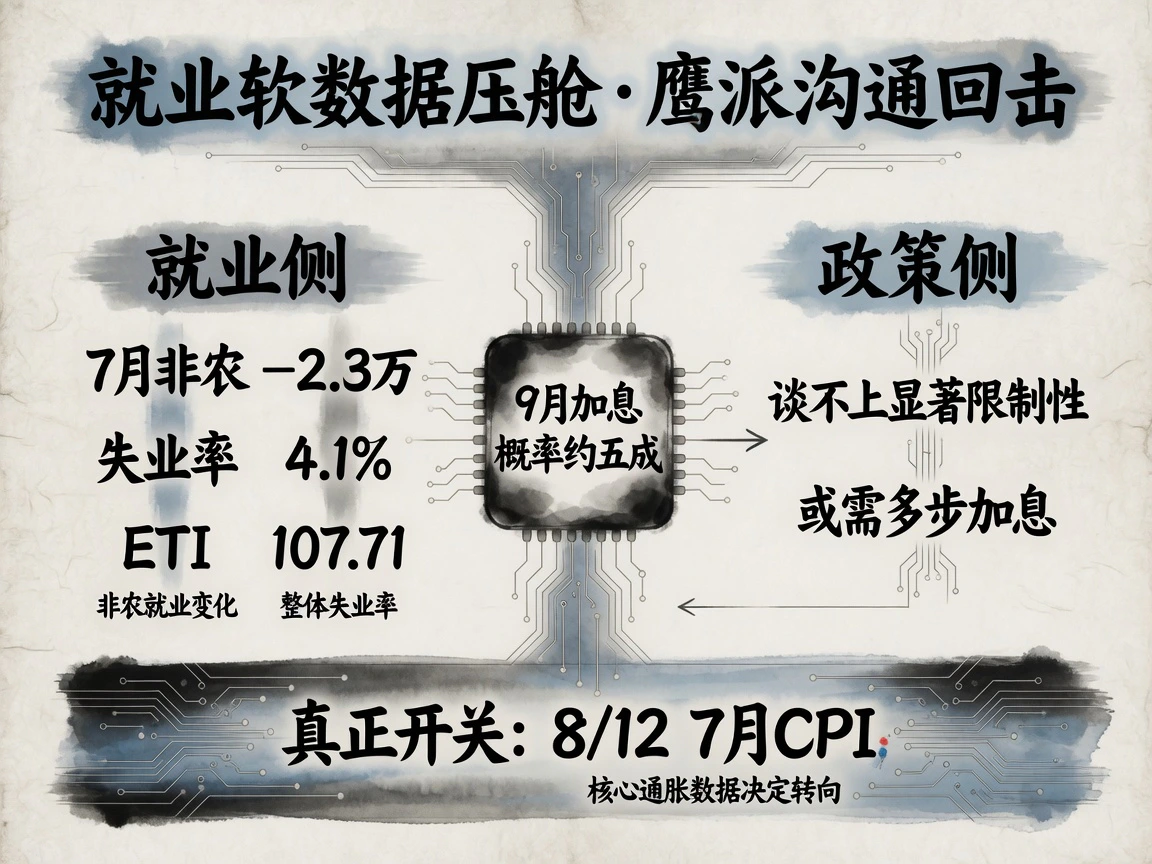
Monday's calendar was light. The Conference Board's July Employment Trends Index rebounded to 107.71 from revised June's 106.74, ending May–June declines. Its commentary stressed resilience in a low-hire, low-fire market, but annual growth of only about 0.6% suggested moderate hiring ahead. This blocked a collapse-forces-immediate-easing narrative without overturning payrolls' cooling signal.
Background, not newly disclosed Monday: July payrolls unexpectedly fell 23,000 versus around 80,000 expected, with May–June cut 103,000. Unemployment was 4.1%; private gains were barely positive and local-government education drove losses. Hourly earnings growth slowed to about 3.2% annually with weaker monthly momentum. July 29 held 3.50%–3.75%, but 3 dissenters favored +25bp. Weak jobs did not remove internal divisions.
Hammack, a 2026 voter, led the hawkish response Monday. She said rates were not meaningfully restrictive, a single 25bp hike barely affected the economy and several steps might be needed for 2%, without specifying a terminal rate. Seeking Alpha and other financial media highlighted the remarks as a direct response to post-payroll dovishness. Deutsche Bank and others still argued weak jobs reduced near-term tightening urgency. The competing views made July CPI decisive for September's stalemate.
Dow Jones survey consensus expected July headline CPI near 3.4% annually and core near 2.5%, continuing mild cooling. Cleveland's August 10 nowcast put them at 3.42% and 2.52%, while raising August monthly headline CPI for oil. The schedule was CPI August 12, PPI August 13, retail sales and preliminary Michigan sentiment August 14.
Weak labor changes the urgency of tightening, while oil's pulse and hawkish voters reshape distant inflation premiums, keeping September odds near half. If CPI or PPI stops cooling or energy passes into core and expectations, this year's hike scenario revives. A hold needs core near 2.5%, confirmed job cooling and oil shown to be a reversible geopolitical pulse.
Commodities: Crude settles about 5% higher while gold consolidates during the day
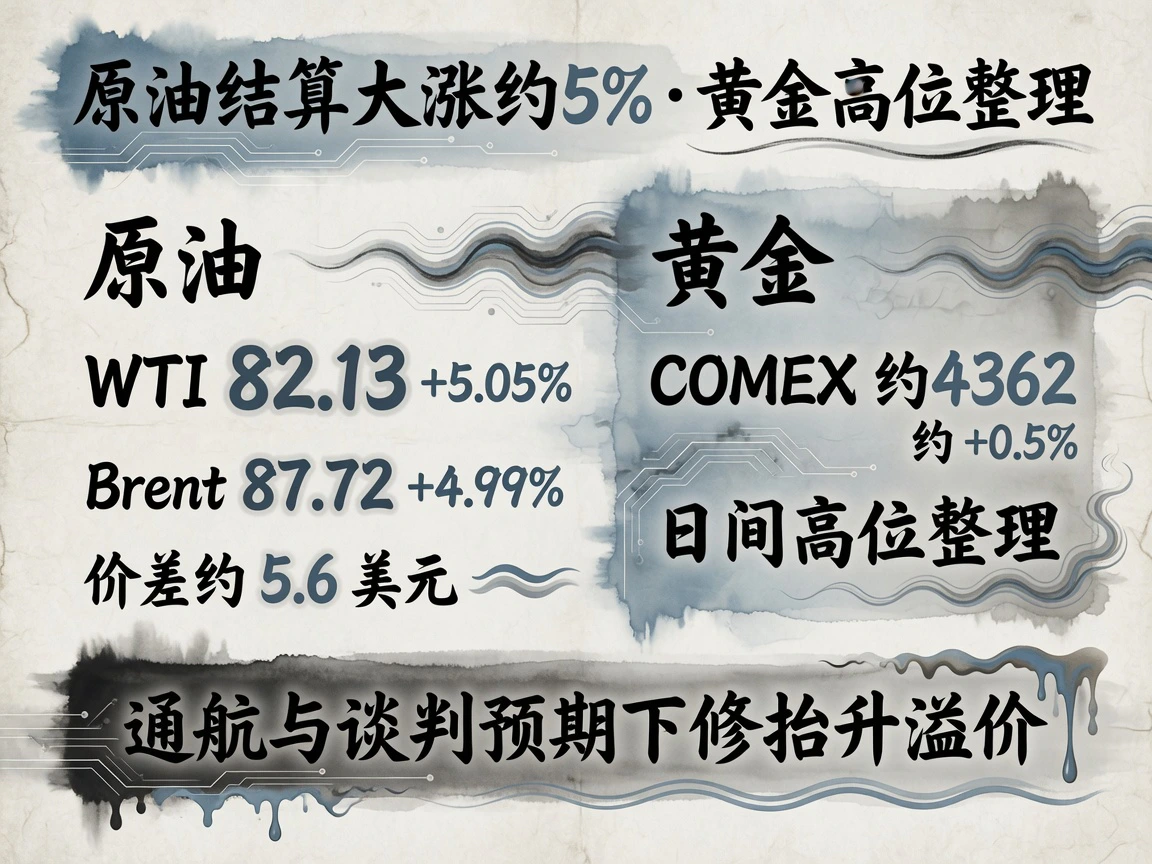
Official exchange settlements show broad crude gains:
| Contract | August 7 close | August 10 settlement | Daily change |
|---|---|---|---|
| Nearby WTI | 78.18 | 82.13 | +3.95 / +5.05% |
| Nearby Brent | 83.55 | 87.72 | +4.17 / +4.99% |
The Brent-WTI main-contract spread widened to about $5.6 a barrel. Some terminals' $82.39 and $87.94 were later electronic quotes, not official settlements.
The rally repriced navigation and talks. Washington shifted to semi-negotiations and low-key handling, relying more on blockade and economic leverage. Iran tied full reopening to lifting the naval blockade, compensation and sanctions relief, and explicitly separated near-agreement on Iran-Oman technical routes from full commercial reopening. SPR around 298.7 million barrels fell below 300 million, near its lowest since 1983, weakening assumptions of unlimited official price relief. Scattered weekend route-security and proxy-attack reports increased fears, although threats were not verified production losses. The latest EIA commercial report, for July 31, had shown a surprise build; Monday's jump was not new-inventory-driven, with the next report August 12.
Backwardation persisted. The roughly 5% jump raised prompt prices while medium-term forecasts such as EIA STEO remained looser. Neither $82 nor $88 should be treated as a new long-run center. The oil supplement provides full spreads and freight analysis.
COMEX main gold futures settled around $4,362 an ounce, up about 0.5% from Friday's $4,340.7. Unlike oil, daytime gold consolidated under higher real rates and a firmer dollar. Electronic trading after the close through the next Asian cutoff around 10:17 Beijing time briefly approached $4,492, about $130 above settlement. That was an after-hours/Asian pulse, not Monday's official daytime gain. Competing explanations included geopolitical catch-up, stagflation hedging and thin-liquidity momentum; no single cause was established.
At the 10:14–10:17 Beijing cutoff, WTI and Brent traded near $82.39 and $87.94, firm above settlement, indicating reflation premiums persisted in Asia.
Equities: Consolidation at highs as technology and small caps weaken
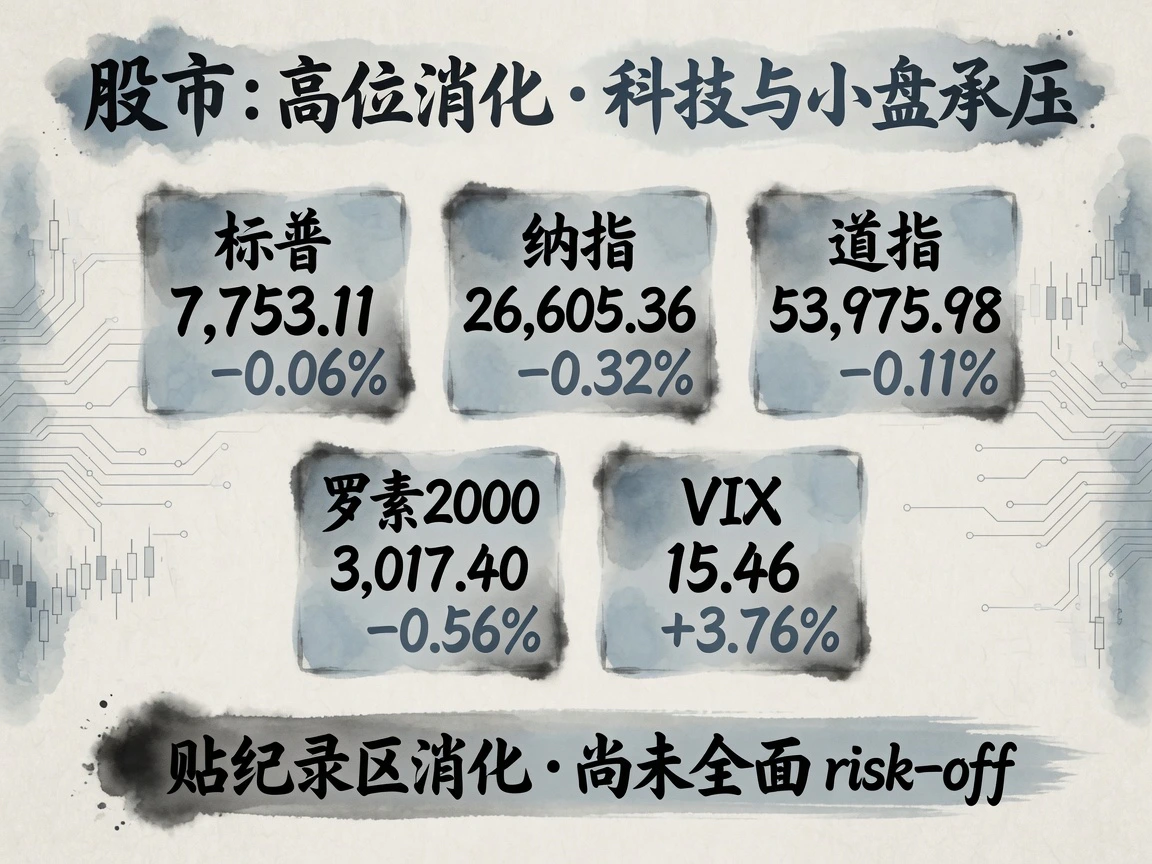
Major US August 10 index closes, using official daily prices:
| Index | Closing level | Daily change |
|---|---|---|
| S&P 500 | 7,753.11 | −0.06% |
| Nasdaq Composite | 26,605.36 | −0.32% |
| Dow Jones Industrial Average | 53,975.98 | −0.11% |
| Russell 2000 | 3,017.40 | −0.56% |
| VIX volatility index | 15.46 | +3.76% |
The S&P 500 fluctuated narrowly near Friday's record 7,757.64, beginning a week of consolidation at highs. Three factors interacted: oil's rebound restrained risk appetite, with energy relatively resilient; technology events weighed on Nasdaq, led by Intel's planned roughly $15 billion common-share issue, while Nvidia and Apple fell about 2.9% and 1.5% intraday. Rumors of large Nvidia/asset-manager AI infrastructure financing combined long-term capex benefits with short-term dilution and funding needs. Finally, 6–7bp higher Treasury yields amplified duration-sensitive selling, leaving Nasdaq and small caps behind the S&P. Flat indices masked high dispersion. Existing positioning and earnings momentum cushioned oil, without systemic risk flight.
Asia's August 10 closes preceded the US opening and reflected Friday's US rally and local catalysts: Nikkei 225 +2.08% to 66,970, Hang Seng +1.05%, KOSPI +0.65%. Their strength versus later flat-to-weaker US stocks reflected time zones, not a logical contradiction.
Around 10:26 Beijing time Tuesday, ES traded near 7,783.5 and NQ 29,817, broadly near cash-close ranges, without panic extrapolation of Monday oil. KOSPI was around 6,349.9, up about 0.8% from its previous close. USD/JPY rose near 159.3 versus the August 10 daily level around 157.9. Asian yen weakness should not be applied retroactively to Monday's Treasury close.
Geopolitical transmission: Harder passage conditions and SPR below 300 million lift premiums
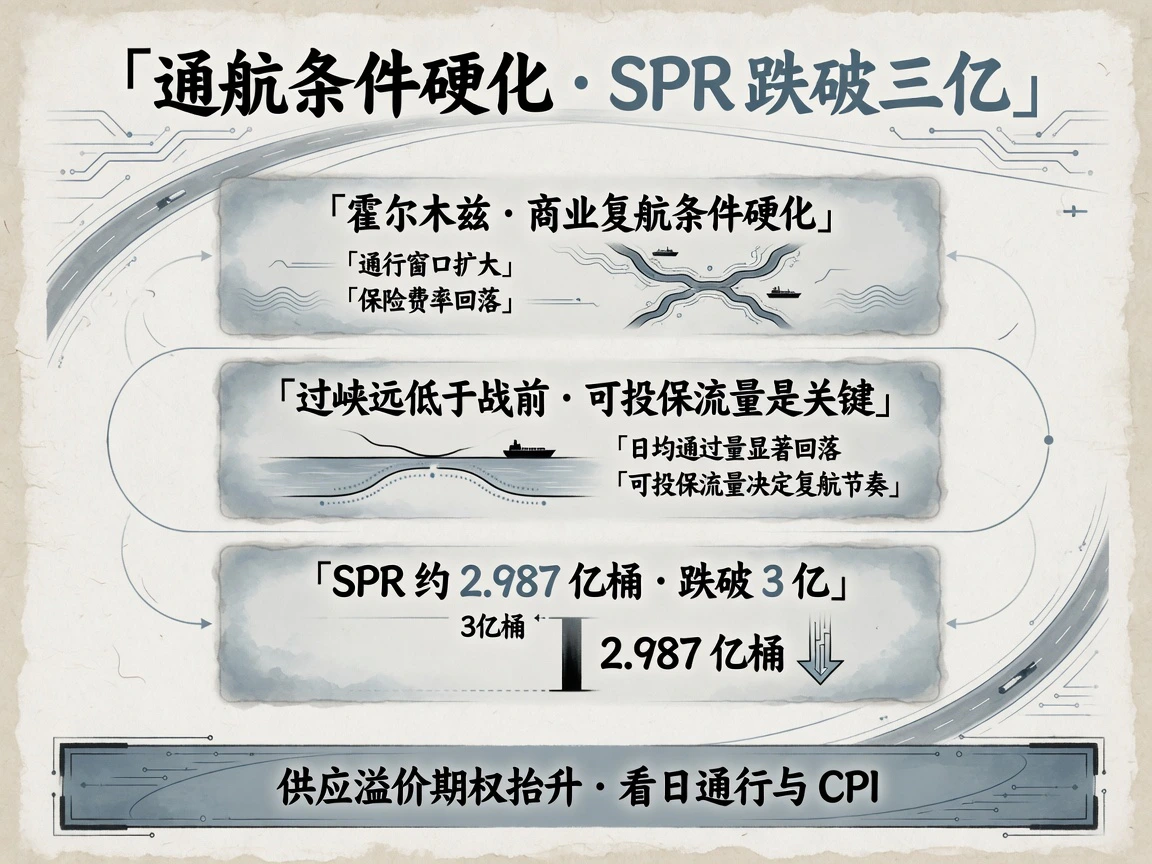
(For the complete 24-hour military and geopolitical sequence, see the Middle East supplement. This article focuses on shipping recovery and financial pricing.)
Three axes drove Monday: commercially insurable Hormuz reopening, whether Washington would alter blockade/sanctions for passage, and remaining official buffers such as SPR. Washington's semi-negotiations and low-profile pressure favored naval blockade and sanctions. Iran linked full reopening to blockade removal, compensation and other strict terms, distinguishing technical Iran-Oman progress from commercial recovery. Central Command enforcement continued, with 53 cumulative diversions publicly reported by August 8; transits remained well below normal. SPR below 300 million increased supply-interruption tail premiums.
The combination was not a classic global haven day: oil and gold rose, equities slipped narrowly and Treasury yields increased. It was a structural energy shock intertwined with rate repricing. Threats and conditional diplomatic statements remained far from binding treaties; war-risk exclusions and sanctions meant technical route deals alone would not readily restore commercial fleets.
Near-term cross-asset trading would watch CPI August 12 and PPI the following day for resolution of weak-jobs versus sticky-energy disagreement, and whether commercially insurable daily Hormuz transits could materially rise from single digits while passage disputes and US unblocking conditions were resolved together. Talk of nearly completed negotiations had lost force. Executable transit recovery and binding official documents were needed to reshape prompt oil and inflation expectations.