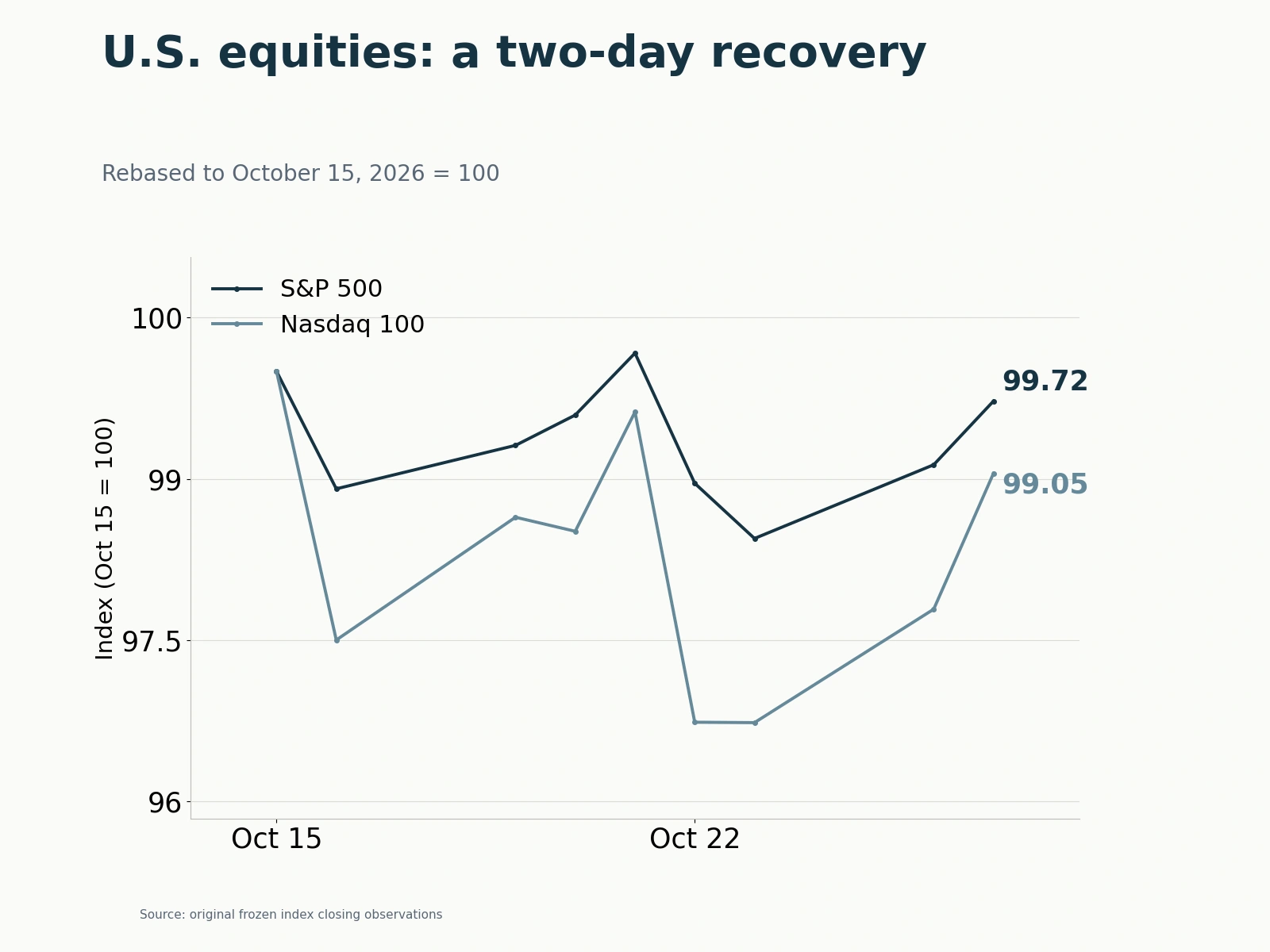
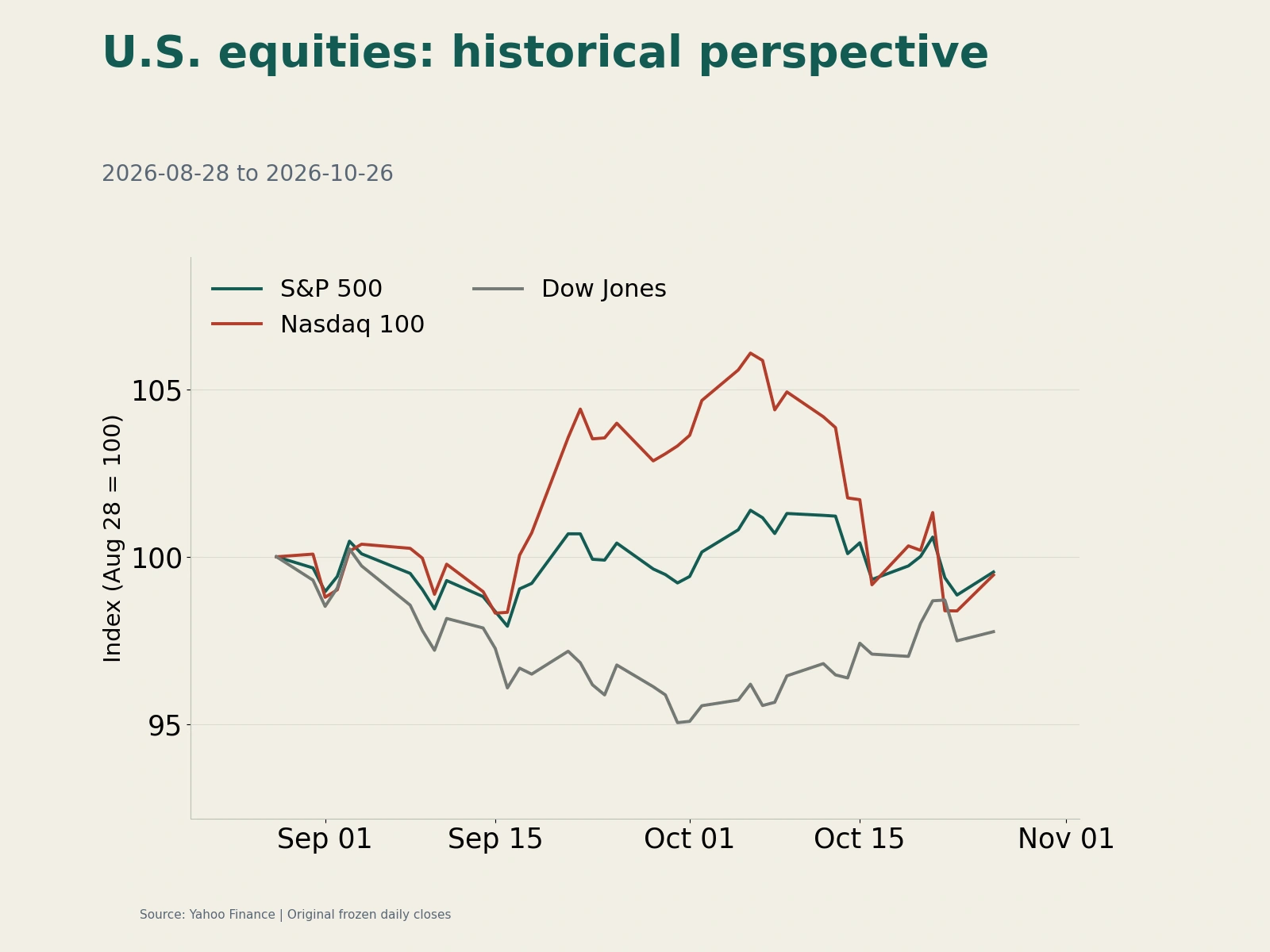
On August 11, 2026, markets mainly digested and reversed the previous session's oil shock. Monday's roughly 5% nearby settlement jump had lifted Treasury yields nearly in parallel; Tuesday brought front-led nominal declines and a roughly two-basis-point narrowing in ten-year breakeven inflation. Energy premium was being removed without opening rate-cut expectations. Two-year yields closed 4.22%, down three basis points, and ten-year 4.70%, down two, a mild bull steepener. September FOMC pricing remained near evenly divided, slightly favoring a hold: about 55% unchanged and 45% hike on August 11 evening data. Equities retreated modestly from highs for a second session, Nasdaq underperformed and small caps rose. Oil gained another 1.3%–1.4% amid disputed Hormuz terms, but its ascent slowed. July CPI due the morning of August 12 Eastern time was the key near-term dividing line and catalyst.
Fixed income: front end leads yield declines as reflation compensation partly unwinds
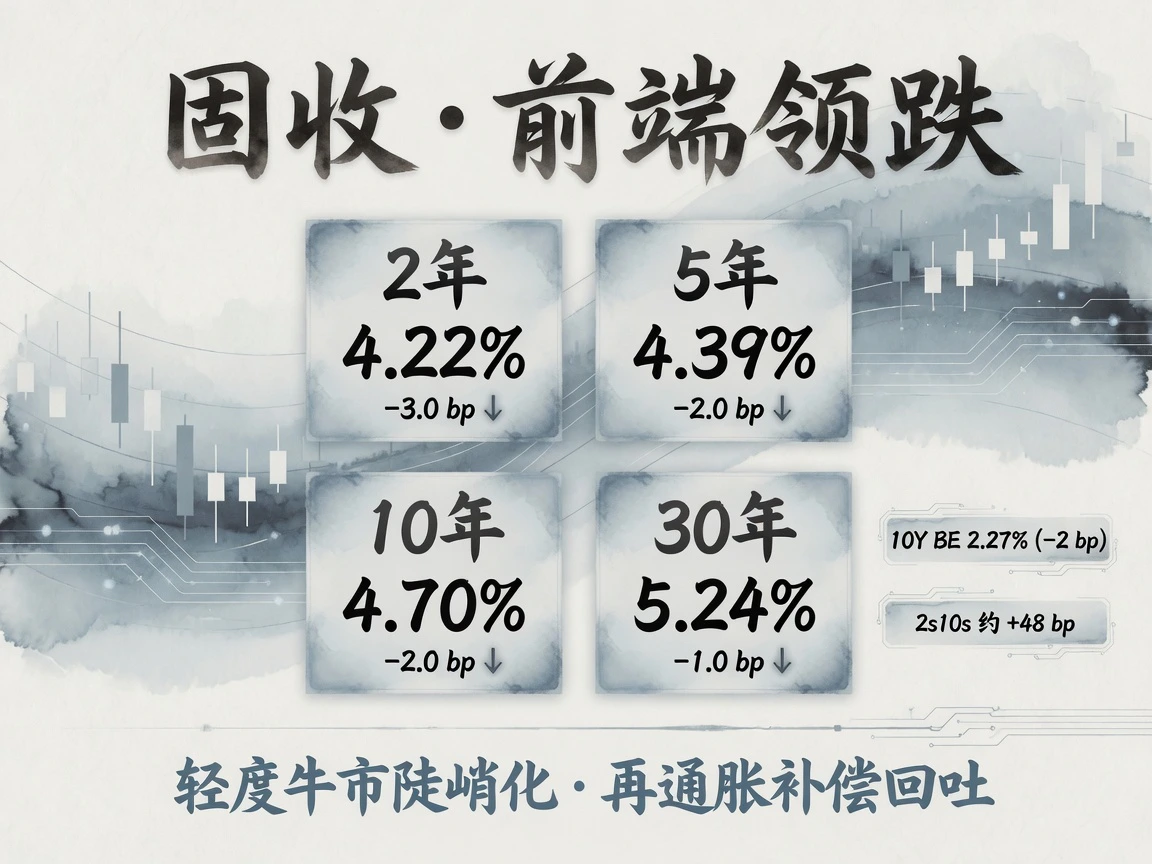
Treasury daily par curve, official close-to-close against August 10:
| Maturity | August 11 close | August 10 close | Daily change |
|---|---|---|---|
| 2-year | 4.22% | 4.25% | −3.0 bp |
| 5-year | 4.39% | 4.41% | −2.0 bp |
| 10-year | 4.70% | 4.72% | −2.0 bp |
| 30-year | 5.24% | 5.25% | −1.0 bp |
The two-to-ten-year (2s10s) spread was about +48 basis points. FRED T10Y2Y edged from roughly 0.47% to 0.48%, up one basis point, with front yields falling slightly more in a mild bull steepener. Terminal intraday and overnight transaction quotes commonly differ from Treasury official closes by 1–3 basis points because of platforms and definitions. Benchmarks and changes here use Treasury closes.
Inflation compensation narrowed too. FRED ten-year breakeven T10YIE fell to 2.27%, down two basis points, and five-year to 2.23%, also down two. The nominal ten-year decline matched, leaving implied real yields near 2.43%. Official TIPS series DFII10 had no separate August 11 update; August 10 was 2.43%. The main move was removal of Monday's front-run reflation premium, with medium- and long-term real funding costs and growth expectations broadly stable.
The decline better fits profit-taking on Monday's geopolitical-premium positions and a marginal reduction in September hike odds. The two-year fell one basis point more than long yields, reflecting near-policy repricing rather than long-bond supply premium. Narrower breakevens, higher hold odds and lower nominal yields moved consistently, indicating purposeful position adjustment rather than random mean reversion.
The funds target remained 3.50%–3.75%, with the next FOMC September 15–16. CME-based monitoring at 20:25 Eastern August 11 put hold odds at 54.6%, versus 50.9% the prior day, and a 25-basis-point increase to 3.75%–4.00% at 45.4%. Mainstream prediction markets assigned a slightly higher hold probability around 60%. Hike pricing that had surged after the payroll surprise had retreated from last week's highs; Monday oil did not restore a hike as the dominant case. Hold odds rose three to four percentage points Tuesday, showing a stalemate rather than easing. The two-year at 4.22% still priced prolonged restraint and protection against tail hike risk relative to the policy midpoint.
Treasury auctioned $58 billion of three-year notes at a 4.291% high yield and 2.71 bid-to-cover. Indirect bidders, mainly foreign central banks and sovereign institutions, received a healthy share. The stop was about 0.5 basis point through the when-issued yield, showing above-average demand. Smooth intermediate supply absorption reinforced falling cash yields, but cannot be extrapolated to the coming ten- and 30-year auctions.
Latest high-yield OAS was about 2.70% and investment grade 0.78%, both valid August 10 readings without an official August 11 update. Historically tight spreads leave little cushion, making returns highly dependent on benchmark-rate beta. Dollar-bond investors mainly faced the 1–3-basis-point benchmark reversal and continued policy debate. The dollar index closed nearly flat at 99.82, +0.01%, showing no one-way dollar-strength mechanism pressuring Treasuries.
Early Asia snapshots around 08:35–08:37 Beijing time: main ten-year futures ZN near 108.45 and long-bond ZB 109.03, both slightly above prior closes; Cboe ten-year yield index TNX around 4.684%. Modestly firmer futures showed defensive waiting before inflation rather than overnight panic selling. WTI and Brent stayed high near $83.8 and $89.4, so geopolitical energy-reflation tail risks remained.
Macro and policy: mixed hard and soft data leave two constraints intact
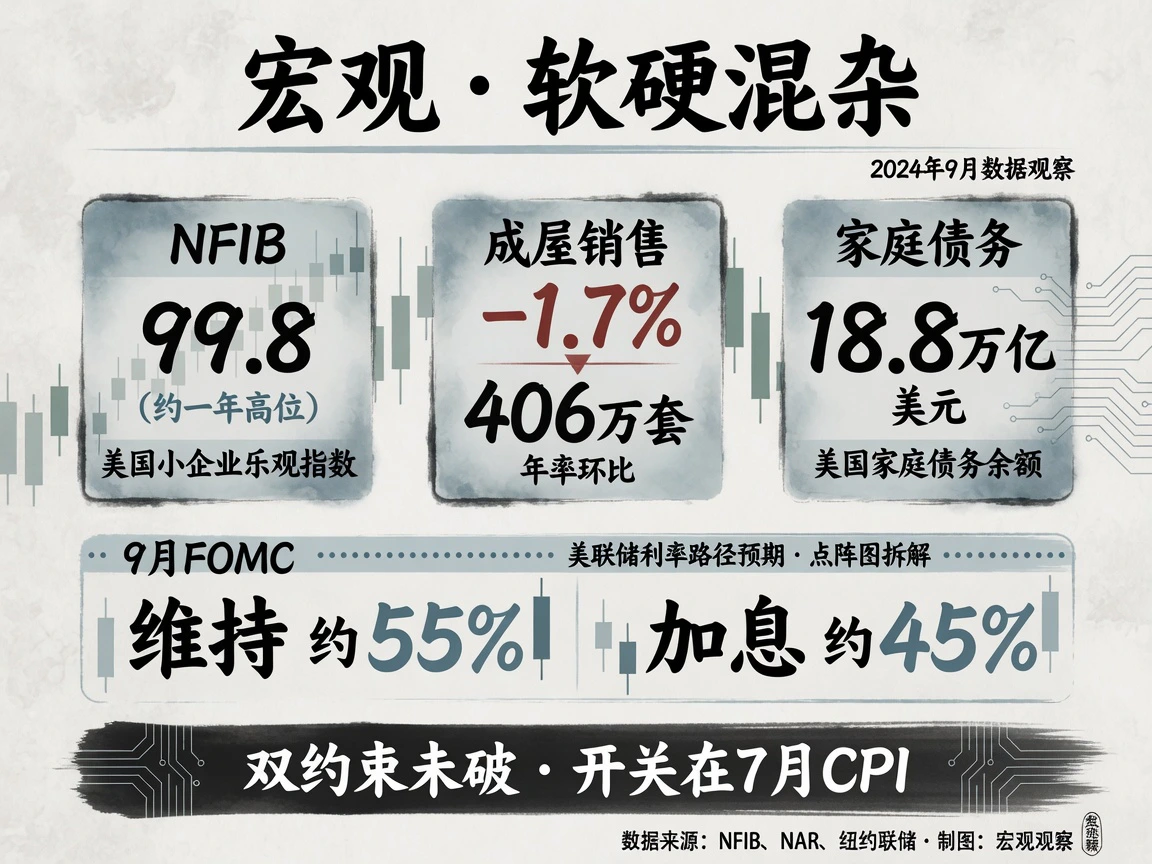
Tuesday had medium-tier releases, with assets still digesting the payroll surprise and positioning for July CPI.
Three releases showed complex divergence:
First, July NFIB small-business optimism rose to 99.8 from 97.4 in June, versus about 97.5 expected, a nearly one-year high. Eight of ten components improved. Net hiring plans over three months jumped nine percentage points to 20%, the highest since October 2022, while shares reporting or planning price increases fell. Stronger hiring intentions with less pricing impulse contradict the claim that negative payrolls mean broad small-business collapse. Surveys cannot overturn BLS hard data alone, but weaken extreme expectations of spiraling labor deterioration.
Second, July existing-home sales fell 1.7% month on month to a seasonally adjusted 4.06 million annual rate, broadly as expected. The South and Midwest dragged; the median price stayed near $434,100, up 2% year on year. High mortgage rates kept volumes soft but prices did not stall. This slow, rate-sensitive sector provides less marginal September-policy guidance than forthcoming inflation.
Third, New York Fed's second-quarter Household Debt and Credit report put total debt near $18.8 trillion, nominally down 0.1% quarter on quarter, mainly from mortgage-definition changes. Auto originations set a record, but some mortgage and auto delinquency/default indicators worsened. Stable totals conceal deterioration across income groups, illustrating tight finance reaching households and challenging claims they can withstand high rates indefinitely.
The backdrop included July payrolls unexpectedly falling 23,000, May–June revised down about 103,000 in total, unemployment rising to 4.1% and monthly wage growth cooling. July 29 FOMC held 3.50%–3.75% by 9–3, with three favoring increases. Core policymakers had no fresh statements in the window; Cleveland President Hammack's August 13 speech would be an important next signal.
July CPI consensus was roughly headline +0.1% monthly and 3.4% annually, core +0.2% and about 2.5%; June headline had been -0.4% monthly and 3.5% annually, core 2.6%. Release was August 12 at 08:30 Eastern, 20:30 Beijing. PPI, claims, retail sales and preliminary Michigan sentiment would follow that week.
Slower employment and rate-sensitive activity reduced urgency to hike, but recovering small-business confidence and smooth intermediate auctions blocked deep risk-off panic. High oil and Fed hawks kept renewed-inflation tail risk in view. These constraints left September expectations centered and slightly favoring observation; energy and core details within July CPI would decide direction.
Commodities: oil's advance slows while gold rises for a third day
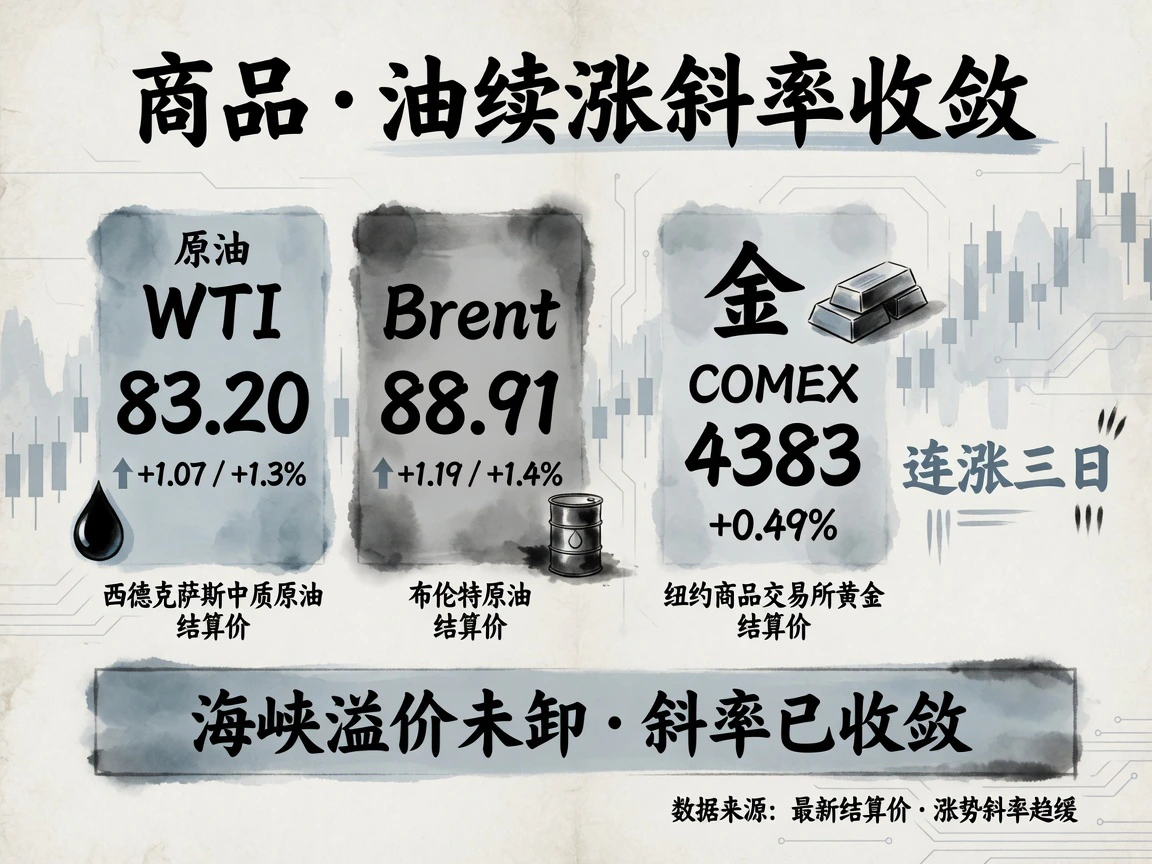
International crude, official exchange settlements compared with prior settlements:
| Asset | August 10 settlement | August 11 settlement | Daily change |
|---|---|---|---|
| Front-month WTI | 82.13 | 83.20 | +1.07 / +1.3% |
| Front-month Brent | 87.72 | 88.91 | +1.19 / +1.4% |
Brent–WTI was about $5.7, slightly wider. Oil extended Monday's nearly 5% rebound but slowed markedly. Reports of approaching transitional or passage arrangements prompted intraday long profit-taking, while Iranian insistence on no reopening before demands were met, together with forceful U.S. compensation demands, locked geopolitical premium back into settlements. Markets judged the prolonged Hormuz dispute premium unresolved.
Third-party tracking showed actual merchant traffic Monday still in single digits, far below pre-conflict normal. Official partial oil-export recovery can coexist with very low commercial vessel counts. Professional pricing puts greater weight on actual insurable, regularly scheduled flows. SPR remained near 299 million barrels, lows dating to 1983, limiting unlimited reserve releases to control prices.
API's after-hours data showed roughly a 9 million-barrel commercial build in the week ended August 7, among the largest since February, versus expectations of a small draw. Premiums still supported nearby settlements, but unexpected accumulation weakened claims of imminent global supply exhaustion, awaiting EIA confirmation.
Main COMEX gold settled at $4,383 an ounce, up $21 or 0.49%, its third rising session. Spot briefly reached $4,435, a nearly two-month high, before profit-taking near $4,380. Gold relied more on central-bank physical allocation and haven demand than oil's shipping terms. Oil-driven high-rate expectations nevertheless produced two-way trading and late profit-taking.
Early Asia, about 08:36–08:37 Beijing: continuous WTI and Brent near $83.77 and $89.42, slightly above overnight settlements; continuous COMEX gold near $4,442. Oil still depended strongly on actual passage, with inventory changes the next test.
Equities: second retreat from highs with structural divergence
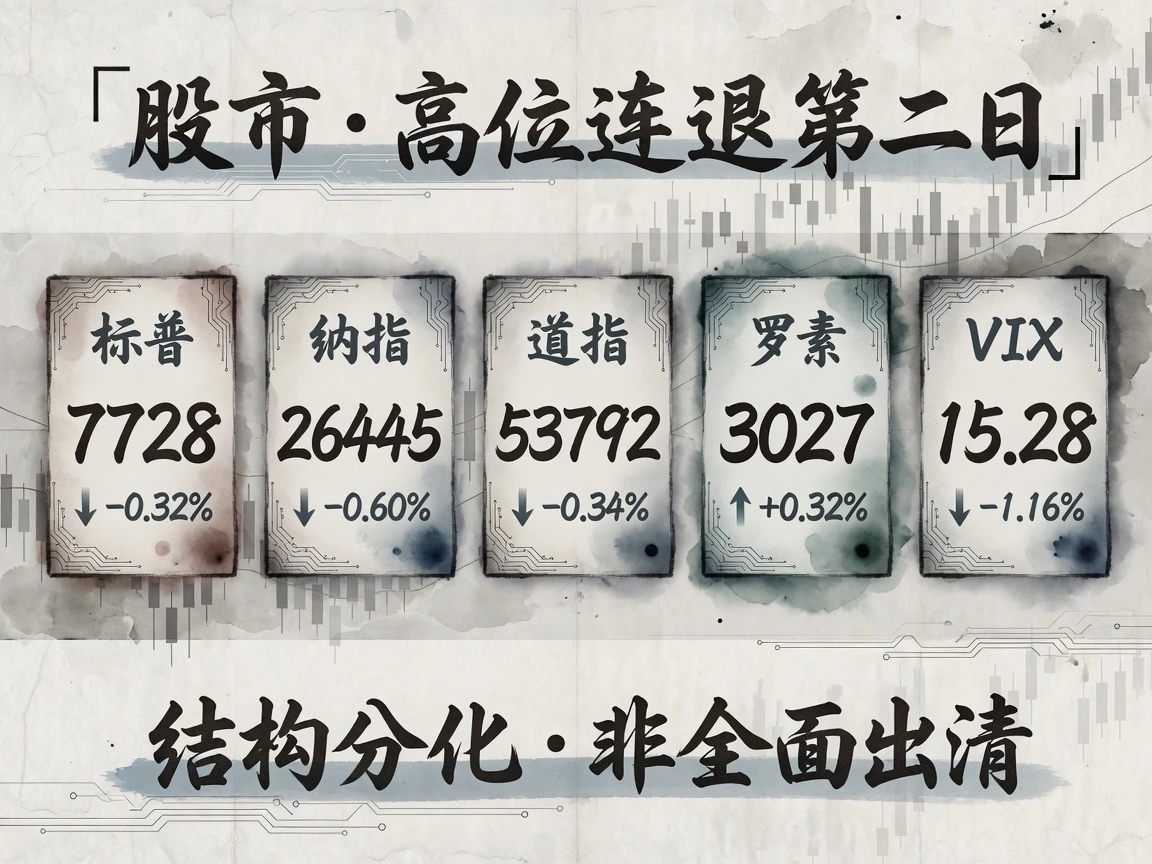
August 11 U.S. closes, Yahoo Finance daily close-to-close:
| Asset | Close | Daily change |
|---|---|---|
| S&P 500 | 7,728.20 | −0.32% |
| Nasdaq Composite | 26,445.45 | −0.60% |
| Dow Jones Industrial Average | 53,791.85 | −0.34% |
| Russell 2000 small-cap index | 3,027.12 | +0.32% |
| VIX volatility index | 15.28 | −1.16% |
Indices retreated modestly from records for a second day. Broad benchmarks and Nasdaq fell, small caps rose and VIX declined 1.16% to 15.28, showing sector divergence rather than systemic selling. Lower benchmark yields should support long-duration growth valuations, yet credit- and capital-spending-sensitive hyperscalers Alphabet, Amazon and Oracle led declines. Attention shifted to who would fund aggressive AI infrastructure and whether large-tech balance sheets could sustain it. Financing costs and earnings quality displaced pure discount-rate valuation. Nvidia was nearly flat and Meta and a few megacaps edged higher.
After hours, computing lessor CoreWeave and Super Micro rose about 14% and 7% on stronger-than-expected guidance and demand commentary. The same AI theme was priced differently at downstream capital-intensive buyers' balance sheets and upstream suppliers' order-delivery operations.
Asia diverged Tuesday, with Japan closed for a holiday. Hang Seng fell 1.10% to 25,652.82, underperforming KOSPI's 0.73% rise to 6,345.53. Asian trading digested the previous Wall Street session's oil surge and soft technology, not Tuesday's later U.S. close. Hong Kong was more sensitive to global sentiment and liquidity, while Korea gained relatively independent semiconductor and AI-hardware allocations.
Around 08:36–08:46 Beijing, S&P 500 futures ES were near 7,753.75 and Nasdaq 100 NQ 29,670.75, reflecting basis changes, after-hours AI earnings and CPI waiting. Early Nikkei was flat near 66,997; KOSPI traded above its previous close; Hong Kong was waiting before opening.
Geopolitics: unresolved opposing conditions keep premium in oil
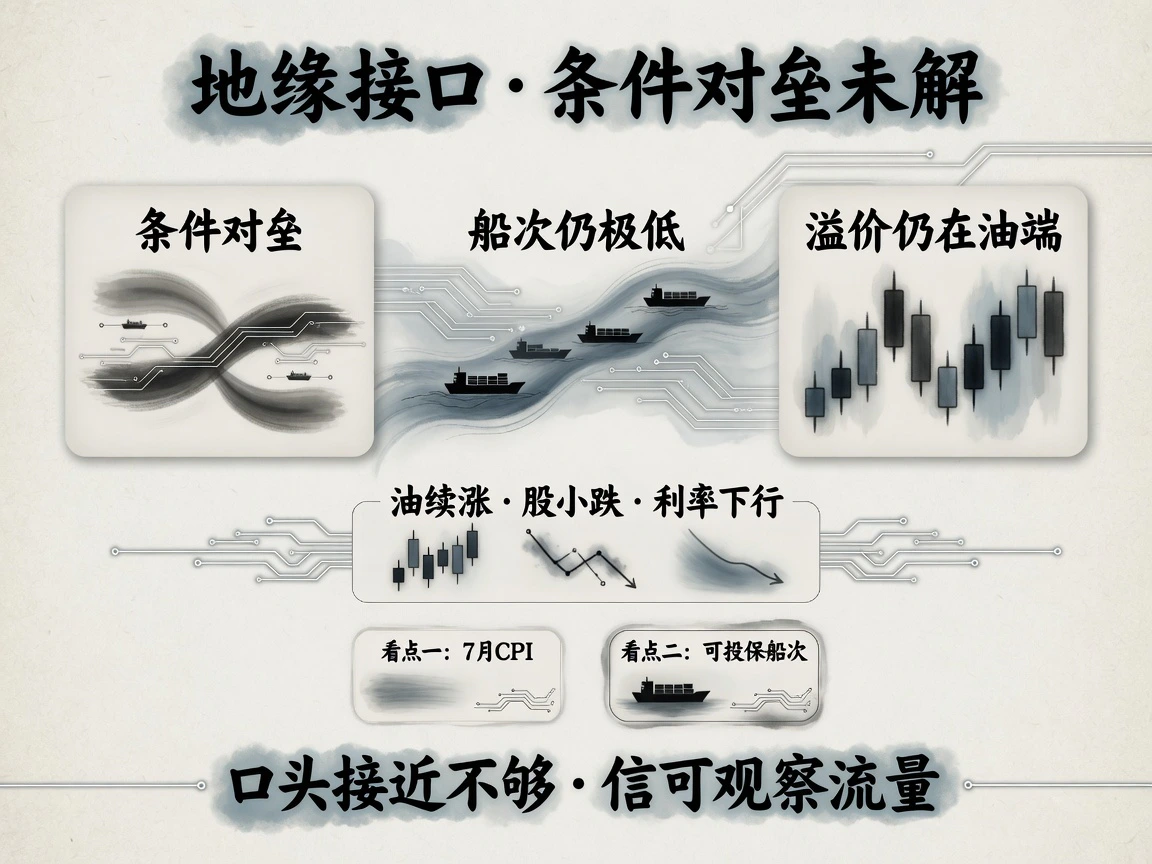
Over 48 hours, Monday priced fading Hormuz optimism and Tuesday confirmed hard U.S.–Iran demands and stronger blockade enforcement. Compensation, unfreezing foreign assets and ceasefires were tied to reopening, narrowing mediation. U.S. forces disabled another cargo ship ignoring warnings; diversions, disabling and boarding cases increased, showing the blockade remained in effect. Mediators' claims of critical or transitional progress did not change very low vessel traffic. Insurable, operational flows matter more than unilateral statements. Washington again extended Jones Act energy-transport exemptions; together with low SPR, this implicitly acknowledged persistent domestic price pressure.
Oil up, stocks slightly down and benchmark yields lower showed premiums concentrated in energy, without indiscriminate global liquidity shock or broad haven flight. Lower yields mainly reflected technical reversal and rebalancing before inflation. Verbal threats and conditions are not binding, commercially insurable reopening agreements; technical route talks are not full shipping normalization.
Two parallel tests lie ahead: July CPI on August 12 Eastern and next-day PPI must clarify policy amid weak employment and sticky energy costs; and insurable Hormuz merchant traffic must rise beyond single digits for several days with workable coverage terms. Without observable flows and binding agreements, geopolitics will continue supporting nearby oil and inflation expectations.