International oil advanced again Tuesday after Monday's roughly 5% jump, settling about 1.3% higher and taking two-session weekly gains above 6%. The main drivers were neither U.S. inventories nor small dollar and Treasury moves, but deadlocked Hormuz terms and extremely depressed commercial traffic being systematically priced into nearby premiums. EIA's August Short-Term Energy Outlook (STEO) that day raised third-quarter Brent spot expectations about $11 a barrel to around $85. Its official tight-balance assumptions supported the week's repricing.
Settlement rises about 1.3%; high-level volatility remains controlled
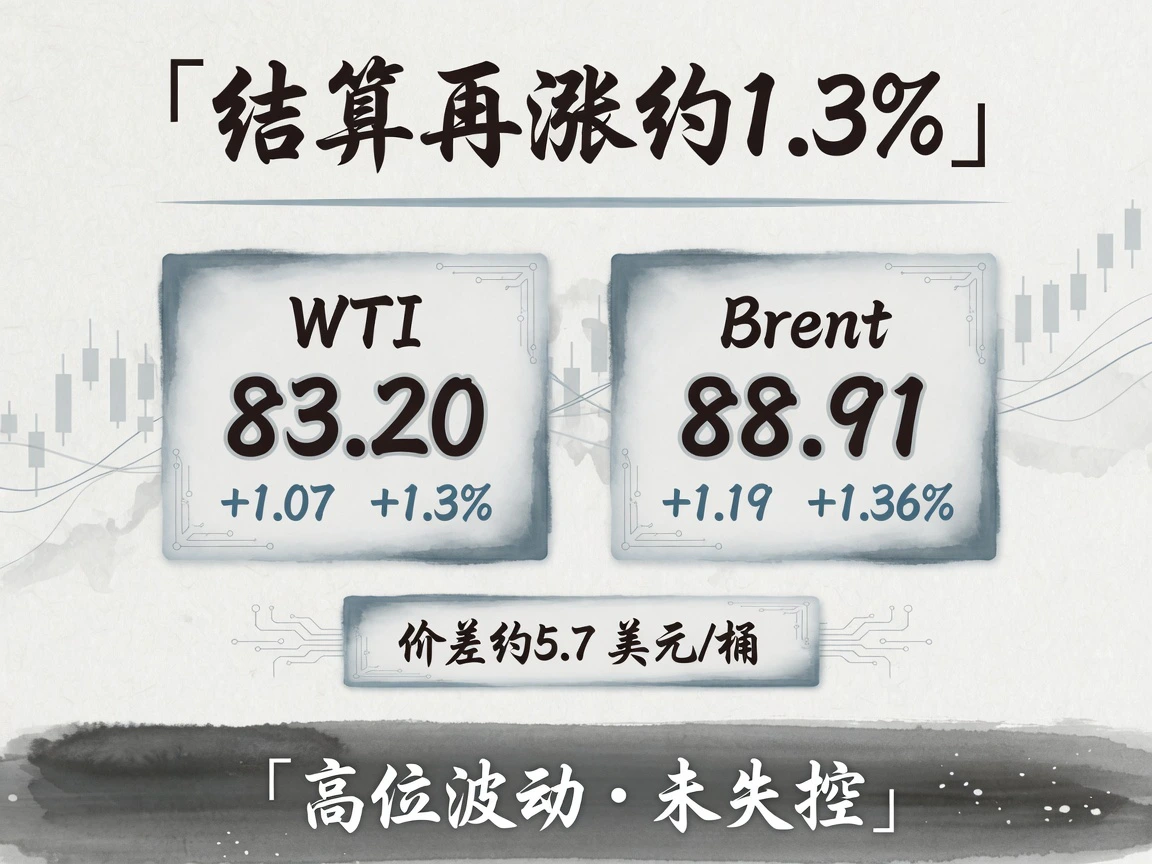
Official August 11 Tuesday settlements showed nearby NYMEX WTI at $83.20 a barrel, up $1.07 from $82.13, approximately 1.3%. Nearby ICE Brent settled at $88.91, up $1.19 from $87.72, approximately 1.36%. Benchmarks moved closely together, with the Brent-WTI settlement spread about $5.7 a barrel, slightly wider than Monday's $5.6.
Daily changes use those settlement comparisons. Electronic-trading snapshots at 08:36–08:37 on August 12 Beijing time showed benchmark WTI near $83.77 and Brent around $89.42. These overnight intraday quotes should not be mixed with official daily settlements.
Following Monday's roughly 5% impulse, another 1.3% gain looked more like persistent premium restoration after repeated disappointments over navigation recovery than a one-day liquidity squeeze. Brent tested $90 intraday before retreating, closing within a controlled high range. Trading still centered on the duration of deadlock rather than fully pricing permanent closure.
Although authoritative monthly forward-spread detail was unavailable, the fundamental outline was clear. Nearby pricing reflected physical obstruction and ceasefire terms; deferred pricing retained gradual flow recovery and inventory replenishment. EIA assumed restrictions throughout August, slow reopening from September, deep third-quarter draws and fourth-quarter price declines. The curve was trading two different time-horizon narratives at once.
EIA raises the third-quarter forecast; weekly inventories are next
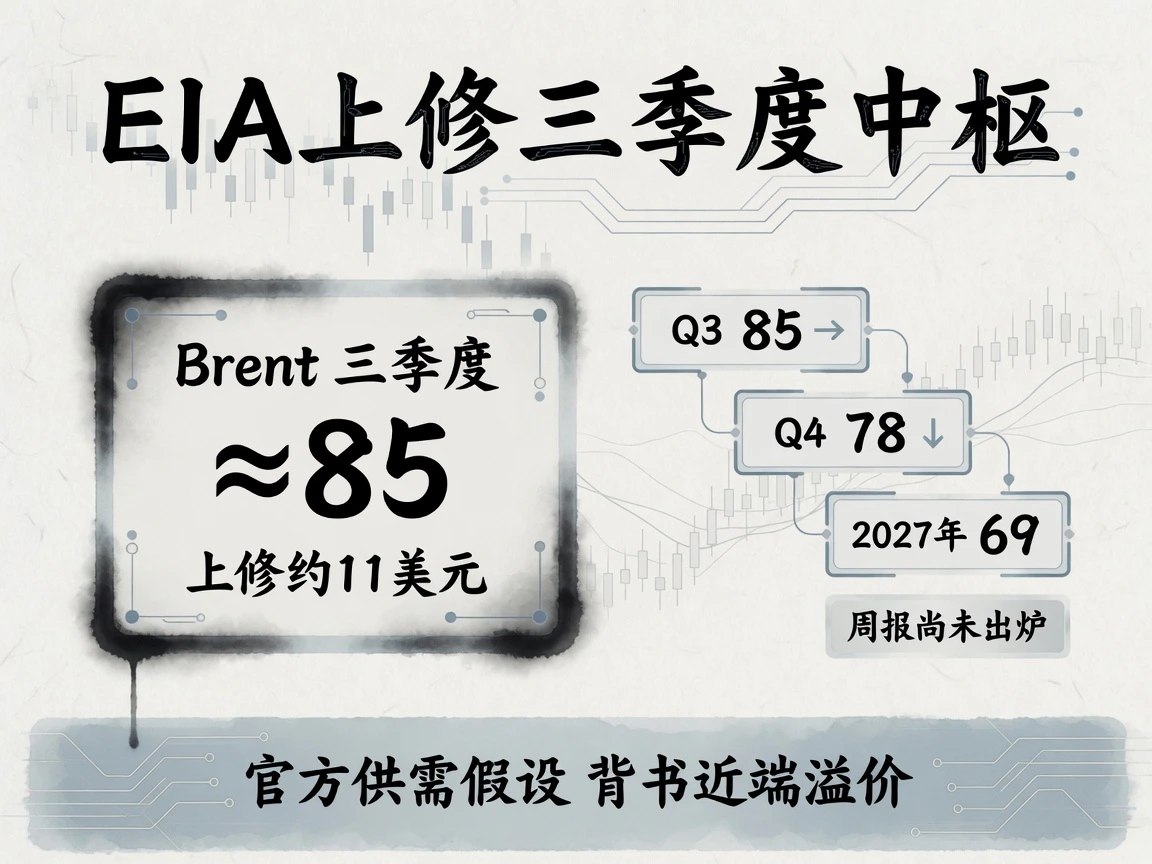
The key official addition was EIA's August 11 STEO, with forecasts cut off August 6. Persistently severe Hormuz disruption led it to raise assumed conflict-related Middle Eastern shut-ins, keeping constraints throughout August and only gradual flows from September. Most halted capacity would return near pre-conflict levels only in early 2027, with about 600,000 barrels a day still disrupted at end-2027.
EIA estimated second-quarter global crude and product inventory draws at 4.2 million barrels daily, narrowing to a still-large 3.8 million in the third quarter. Brent spot forecasts shifted to $85 a barrel in Q3, about $11 above July's outlook, easing to $78 in Q4 as logistics improve and $69 for full-year 2027. Annual averages were $87 in 2026 and $69 in 2027. U.S. commercial crude stocks were expected near the bottom of the 2021–2025 range through end-2026, ending around 396 million barrels, about 8.6% below the prior 433 million.
The report documented actual flow losses: second-quarter Hormuz crude and product exports averaged only 4.9 million barrels a day, versus roughly 21.6 million in prewar fourth-quarter 2025. Saudi East-West Pipeline bypasses lifted Bab el-Mandeb flows to about 8.1 million daily, insufficient to replace the principal route. July Middle Eastern crude shut-ins still averaged about 5.5 million barrels a day. Official analysis thus supported extremely tight prompt conditions alongside later easing.
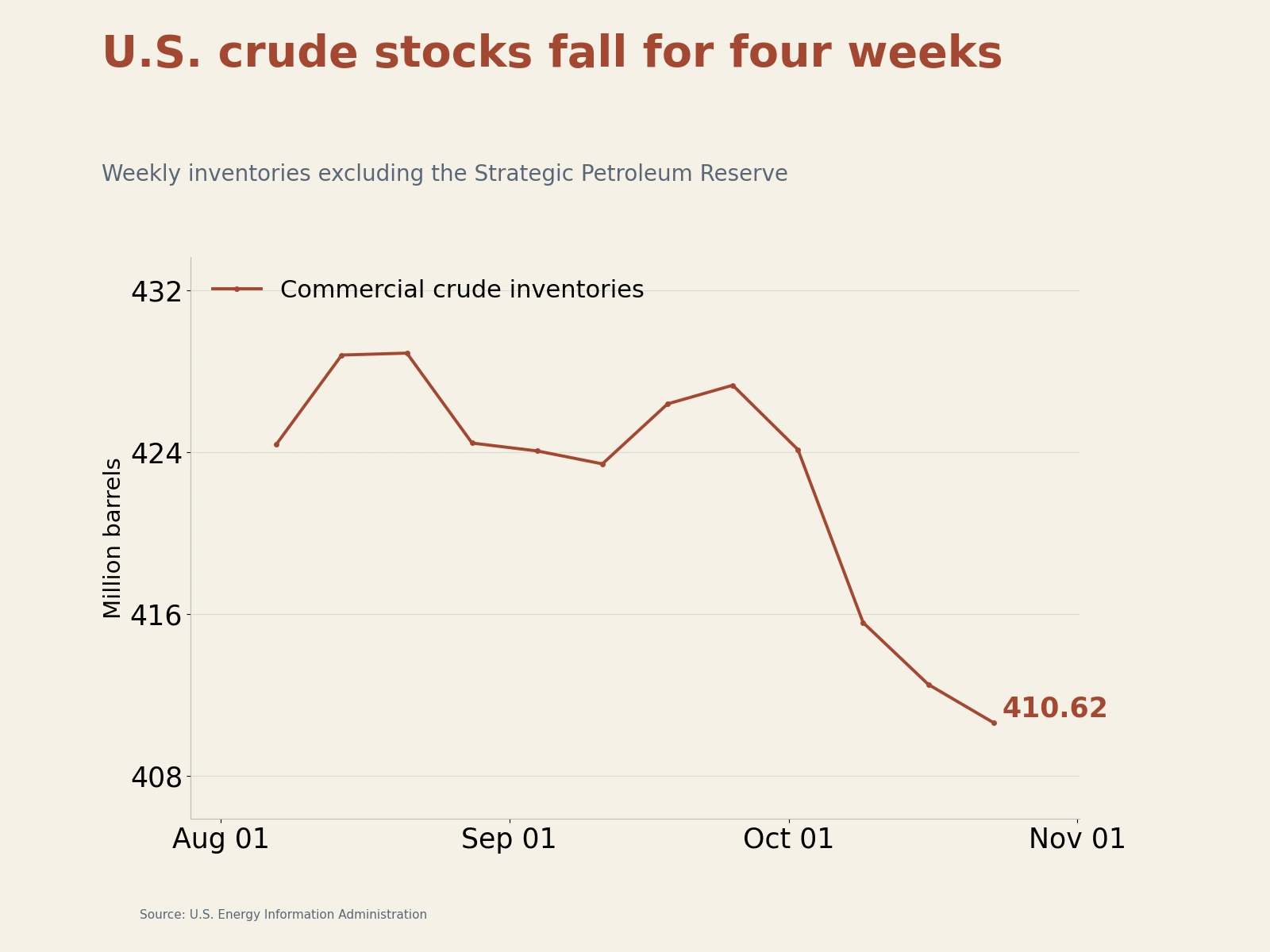
The latest public U.S. weekly baseline remained the July 31 week released August 5: commercial crude rose about 2.48 million–2.50 million barrels to around 407 million; gasoline fell about 1.6 million, and mainly diesel distillates about 3.5 million. Utilization stayed high at 96.5%. The next report was due August 12 at 10:30 Eastern, 22:30 Beijing. The two-day rally occurred on the existing pattern of crude accumulation and product tightness, underscoring geopolitics and transport as its pricing anchors.
After repeated inflation-moderating releases, the U.S. Strategic Petroleum Reserve had fallen below 300 million barrels, its lowest since early 1983; about 172 million had been used since March. The diminished buffer increased vulnerability to prompt disruptions, although its daily explanatory power remained secondary to navigation negotiations.
Supply response was slow. Baker Hughes's August 7 count showed oil rigs up three to 454, gas rigs down three to 124, and total active rigs unchanged at 588. Restrained upstream capex prevented a near-term shale capacity wave.
Seven OPEC+ members said August 2 they would add approximately 188,000 barrels a day from September, gradually unwinding extra voluntary cuts set in 2023. The next JMMC meeting was due September 6. Until passage improves, translating paper quotas into actual loadings remains uncertain; the group had not settled whether bottlenecks would delay fourth-quarter increases further.
Macro conditions offer mild support but yield pricing control to geopolitics
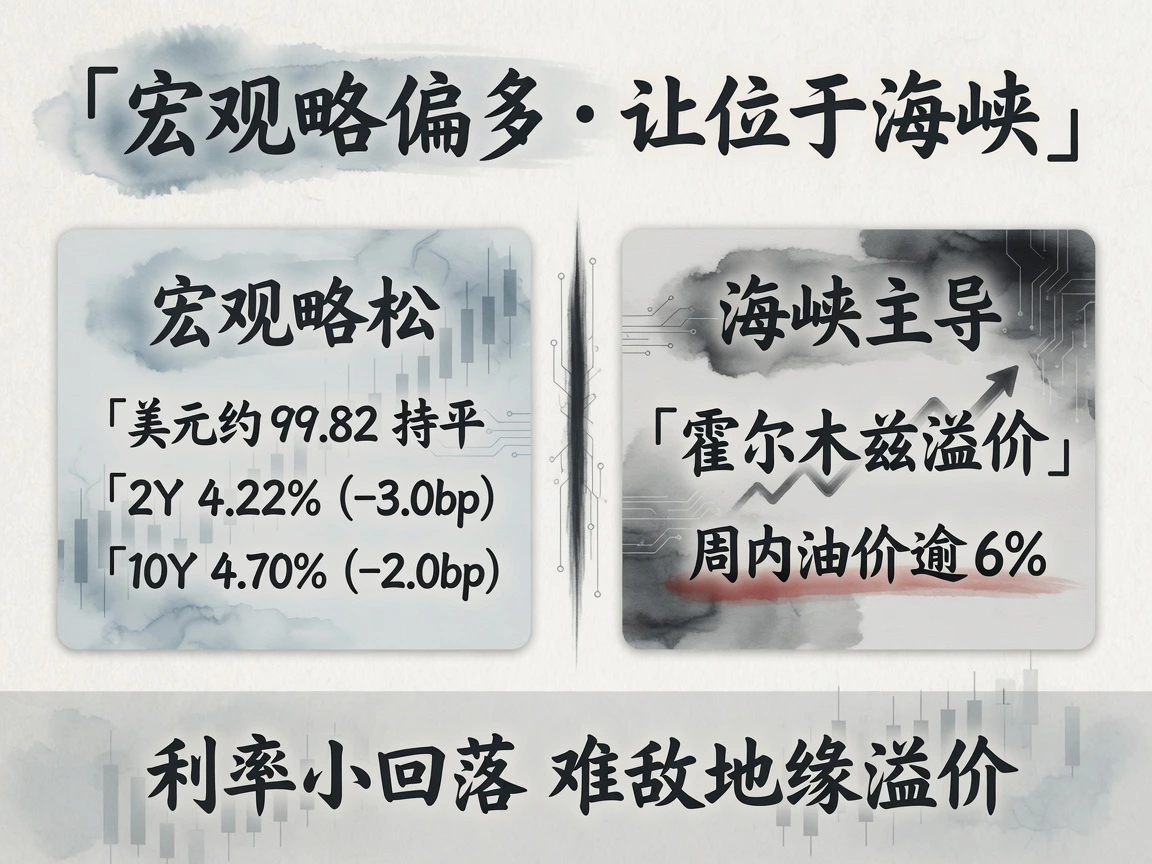
The external financial environment was mildly supportive. The dollar index was broadly flat at 99.82, versus 99.81. Treasury yields eased: 2-year 4.22%, -3.0 bp; 10-year 4.70%, -2.0 bp. Stable currency and lower nominal rates help risk valuations, but these small changes were minor against the supply gap created by transport disruption.
The S&P 500 fell about 0.3%, VIX remained moderate at 15.3, and spot gold traded around $4,442 an ounce. Volatility expansion remained concentrated in energy and shipping assets such as containers and tankers, without broad disorderly contagion into cross-asset credit.
Negotiating demands remain far apart; commercial passage stays depressed
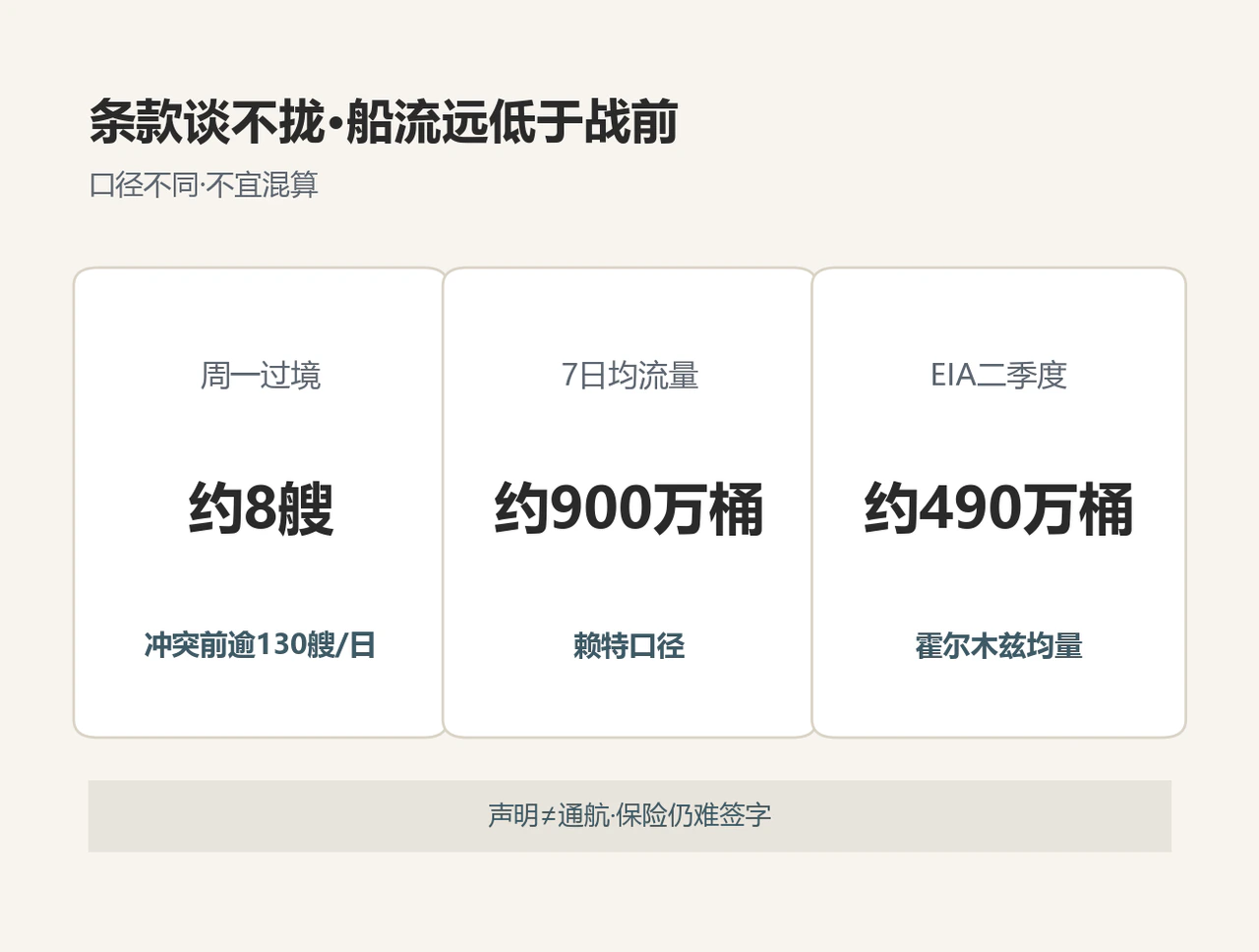
The curve and tanker freight told a firmer story than diplomatic language. Media quoted Iranian security council secretary Rezaei demanding actual unfreezing of overseas assets and other conditions before any Hormuz reopening. Washington added demands for economic compensation this week, while Bessent's earlier optimism about an imminent deal was contradicted by events. Pakistani Defense Minister Asif told Bloomberg mediation again leaned toward a peace framework, but this was far removed from insurable commercial fleets' willingness to sail. Statements cannot replace passage or protection-and-indemnity backing.
Kpler tracking showed only about 8 tankers crossing Monday, versus a usual pre-conflict daily flow above 130 vessels. Energy Secretary Wright said U.S.-escorted oil exports averaged about 9 million barrels daily over seven days, or 15 million including overland diversion. That remained well below prewar Hormuz-only flows above 20 million. Restricted military escorts differ fundamentally in efficiency and cost from ordinary insured free passage. EIA's second-quarter 4.9 million and Wright's seven-day 9 million use different periods, coverage and military involvement, but both point to slow, fragile recovery.
Trump extended a Jones Act waiver restricted to certain energy corridors, mainly reducing domestic East Coast product-transfer friction. It offers only a secondary external buffer for international crude benchmarks.
Prompt premiums rise; deferred prices retain surplus expectations
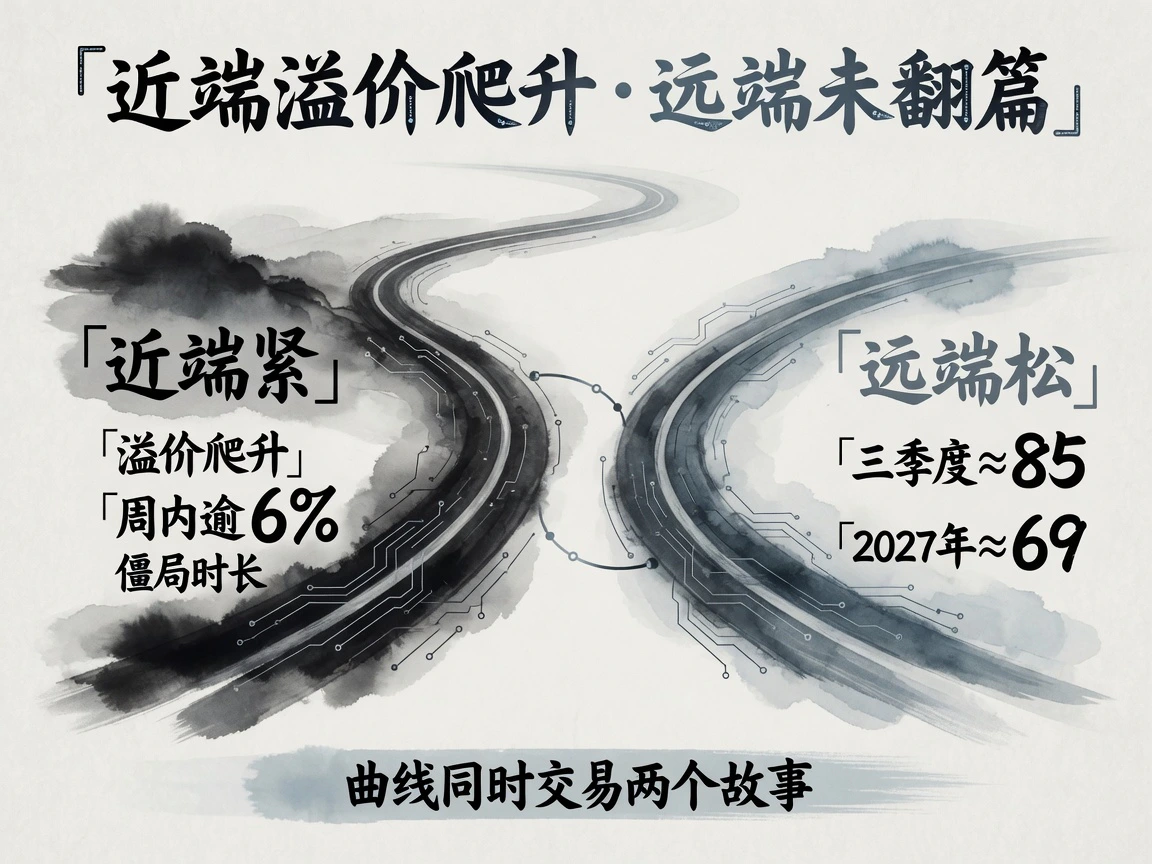
Near term, traders increasingly removed the probability of a quick conditional reopening. Asset-unfreezing demands, compensation, transit fees and sanctions compliance constrained independent owners and P&I clubs legally, while depleted strategic reserves weakened the final physical buffer. Farther out, EIA's base case combined third-quarter global draws and $85 Brent with a $69 2027 average after balance restoration. Prompt tightness and later paper easing further entrenched backwardation.
Tuesday's additional 1.3% after Monday's jump reflected a rising geopolitical premium, not confirmation of permanent closure. Retreat after testing $90 showed repeated assessment of delay costs. Key checks are: actual daily traffic escaping single digits and normally insurable tankers returning; written legal terms on frozen assets, escorts and tolls; whether VLCC Middle East freight such as TD3C peaks before crude premiums narrow; the August 12 Eastern-evening EIA weekly report testing further crude builds, product cracks and stock depletion; and September 6 OPEC+ guidance for fourth-quarter output, testing assumed gradual September recovery.