Successively softer July inflation reports relieved tense rate expectations and substantially reduced the urgency of September tightening. Core annual inflation still exceeded the 2% policy anchor, however, and energy base effects, sticky shelter and upstream tariff penetration had not fully cleared. Confirming a policy turn still required longer observation of transmission.
Economic data
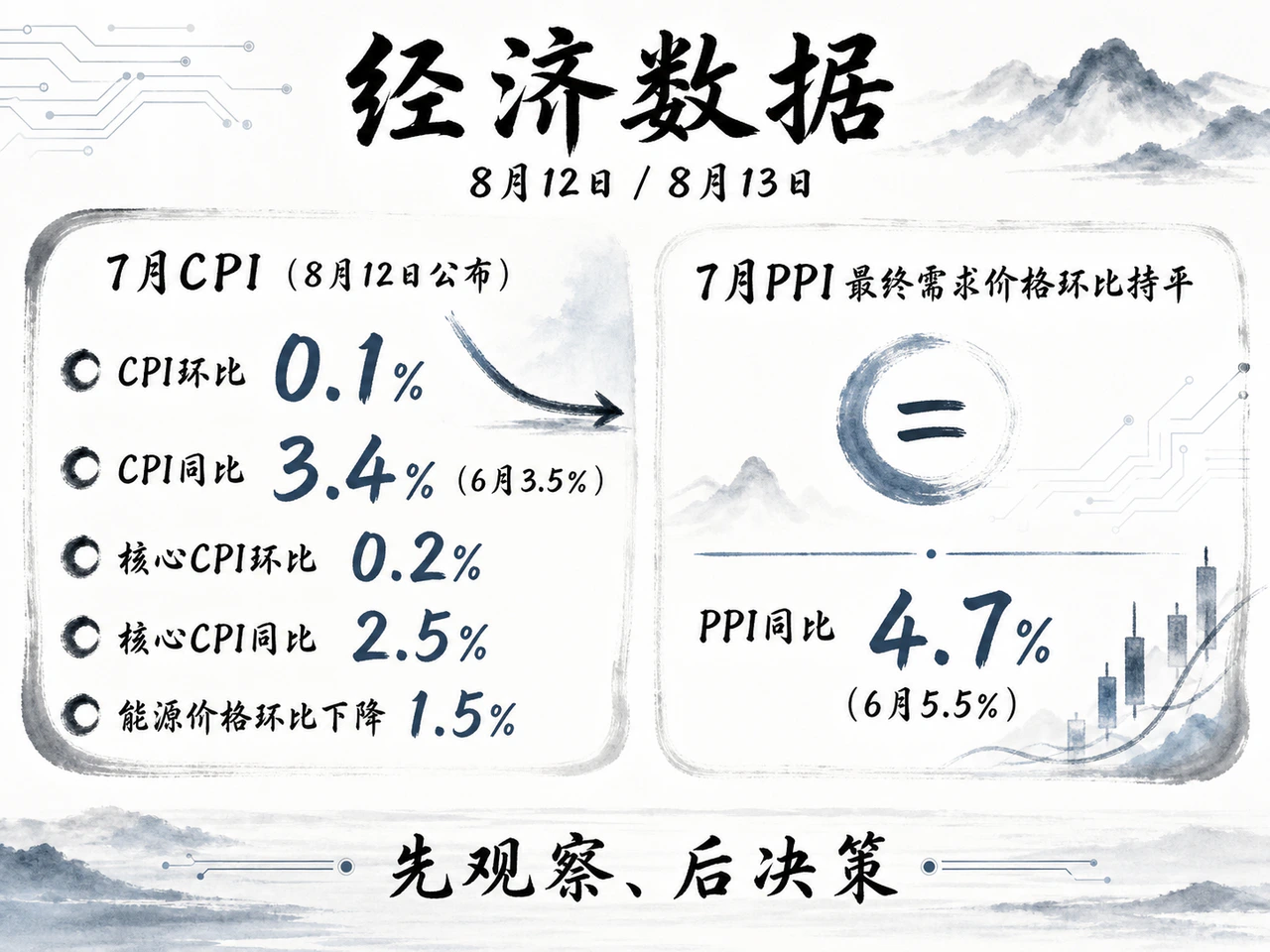
July CPI released August 12 rose a seasonally adjusted 0.1% monthly and 3.4% annually, down from June's 3.5%. Core CPI rose 0.2% monthly and 2.5% annually. Shelter remained the main monthly support while energy fell 1.5%, a key restraint. The central implication was that core inflation showed no second-wave rebound, giving September's FOMC room to hold. Yet 2.5% remained above the policy objective and the absolute energy-price level limited relief for consumption. Cooling consumer pressure did not justify an early easing commitment.
July PPI released August 13 extended weakness upstream. Final demand was flat at 0.0% monthly after June's 0.3% fall, a second month without upward momentum; annual growth slowed sharply from 5.5% to 4.7%. As a leading gauge of production and service-cost pass-through, the subdued reading eased immediate fears of a rapid upstream shock spilling into consumers.
Supply-side risks nevertheless remained. Energy substantially depressed July PPI, and price declines can involve lags that cannot mechanically be extrapolated. When and how much earlier raw-material, wage and potential tariff costs enter core services remains fundamental to inflation persistence.
Joint CPI/PPI cooling improved the conditions for waiting without resolving the underlying dilemma. Current demand-side pressure was contained, but supply costs and policy uncertainty could return in autumn. Pass-through could make present readings a temporary calm; sustained disinflation requires energy and shelter easing together. One month's relief is more suited to cooling tightening sentiment than to establishing a sufficient and necessary reversal of the rate cycle. Core services, labor resilience and expectations still need joint verification.
Policy meetings
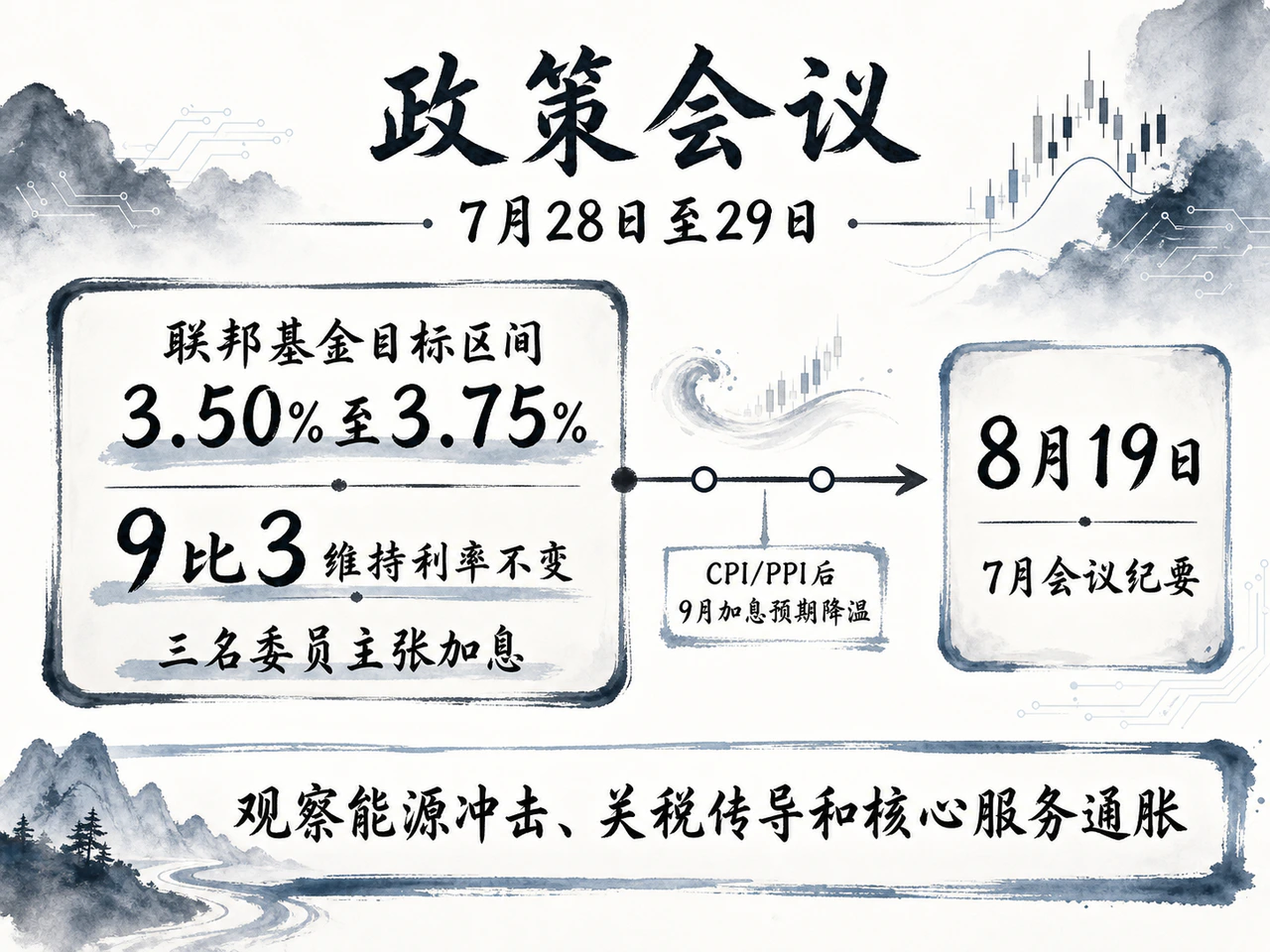
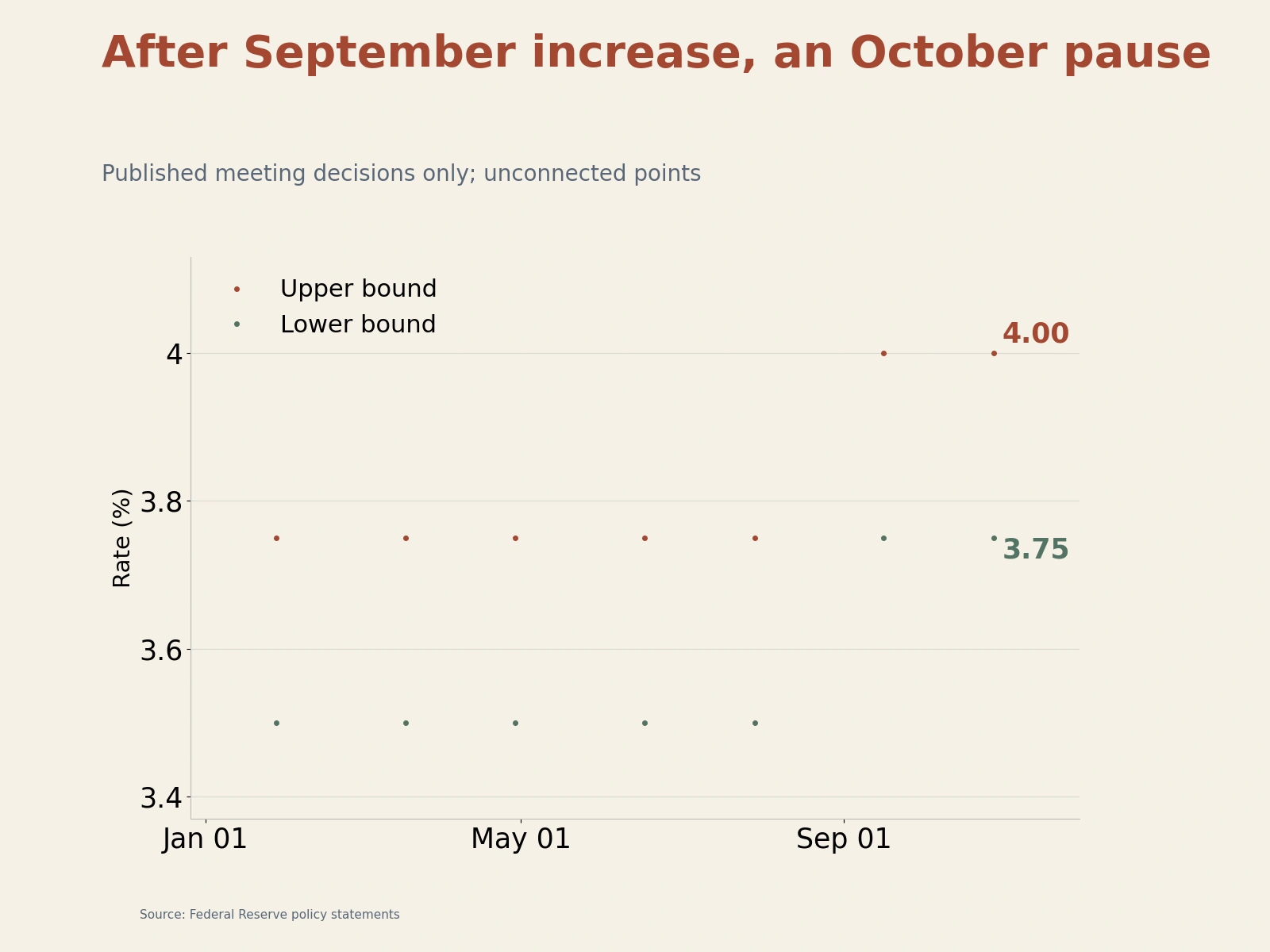
The July 28–29 FOMC held the funds target at 3.50%–3.75% by an unusual 9–3 vote, with three dissents favoring a 25-basis-point hike. That split remains the starting point; no new decision, statement or interim minutes appeared in this monitoring window.
After the two inflation reports, futures pricing of a September hike receded and traders moved toward a hold. This is market correction to high-frequency data, not an official consensus for relaxation or an earlier opening for cuts.
The next official checkpoint is July minutes on August 19. The focus is how the majority balances energy volatility, tariffs and sticky core services, and how the middle group beyond the three dissenters defines triggers for action. August payrolls and the next inflation report will determine how far this relief extends.
Official remarks

By the cutoff, the Board calendar confirmed no new formal official speeches or policy texts. July's decision and the latest inflation data still dominated. Weak readings strengthen the case to hold but do not eliminate vigilance about renewed price pressure. Without a new authoritative signal, communication is expected to remain cautious and decisions tied to supply-chain pricing and employment, rather than changed hastily on one or two soft reports.