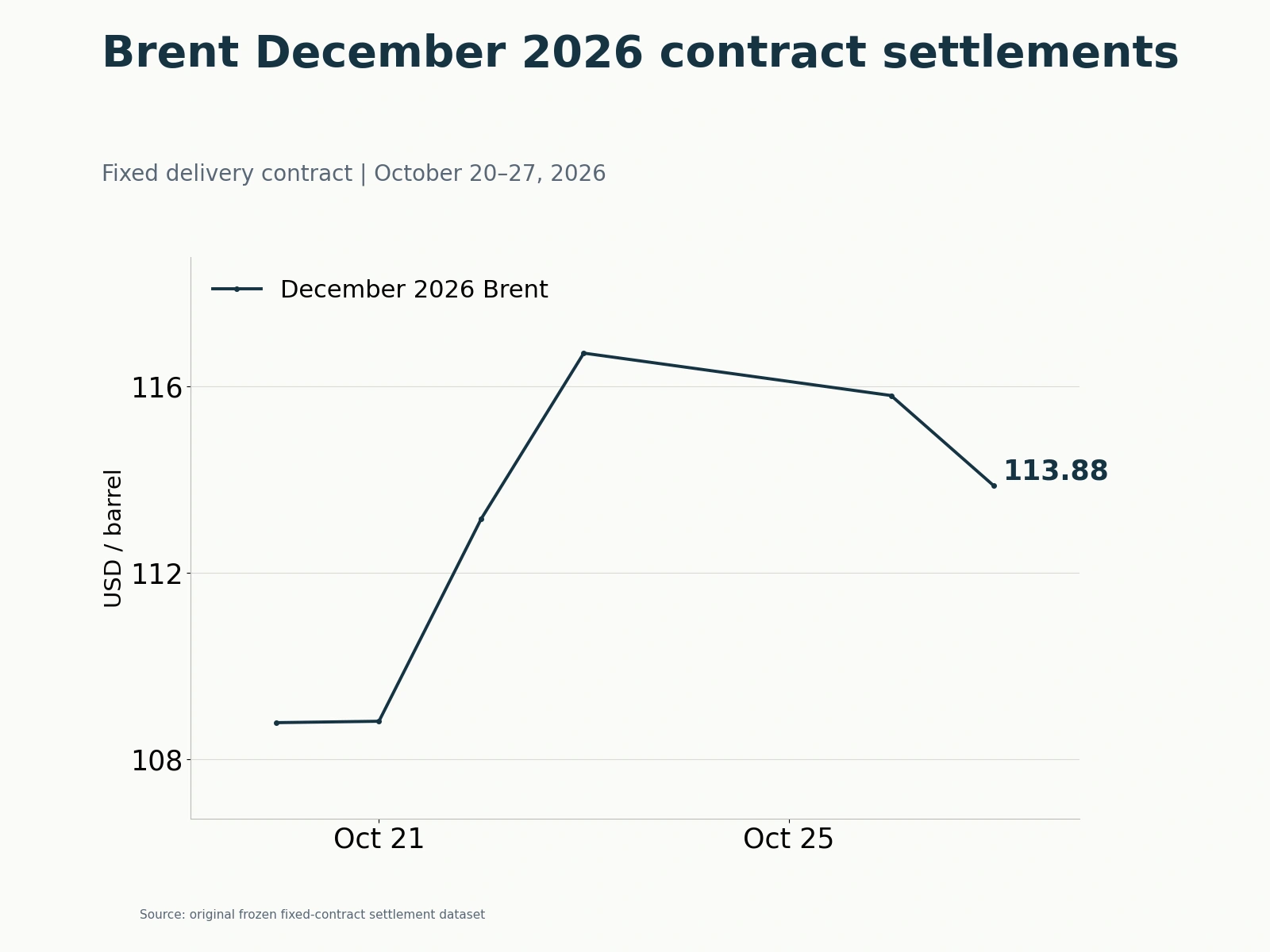
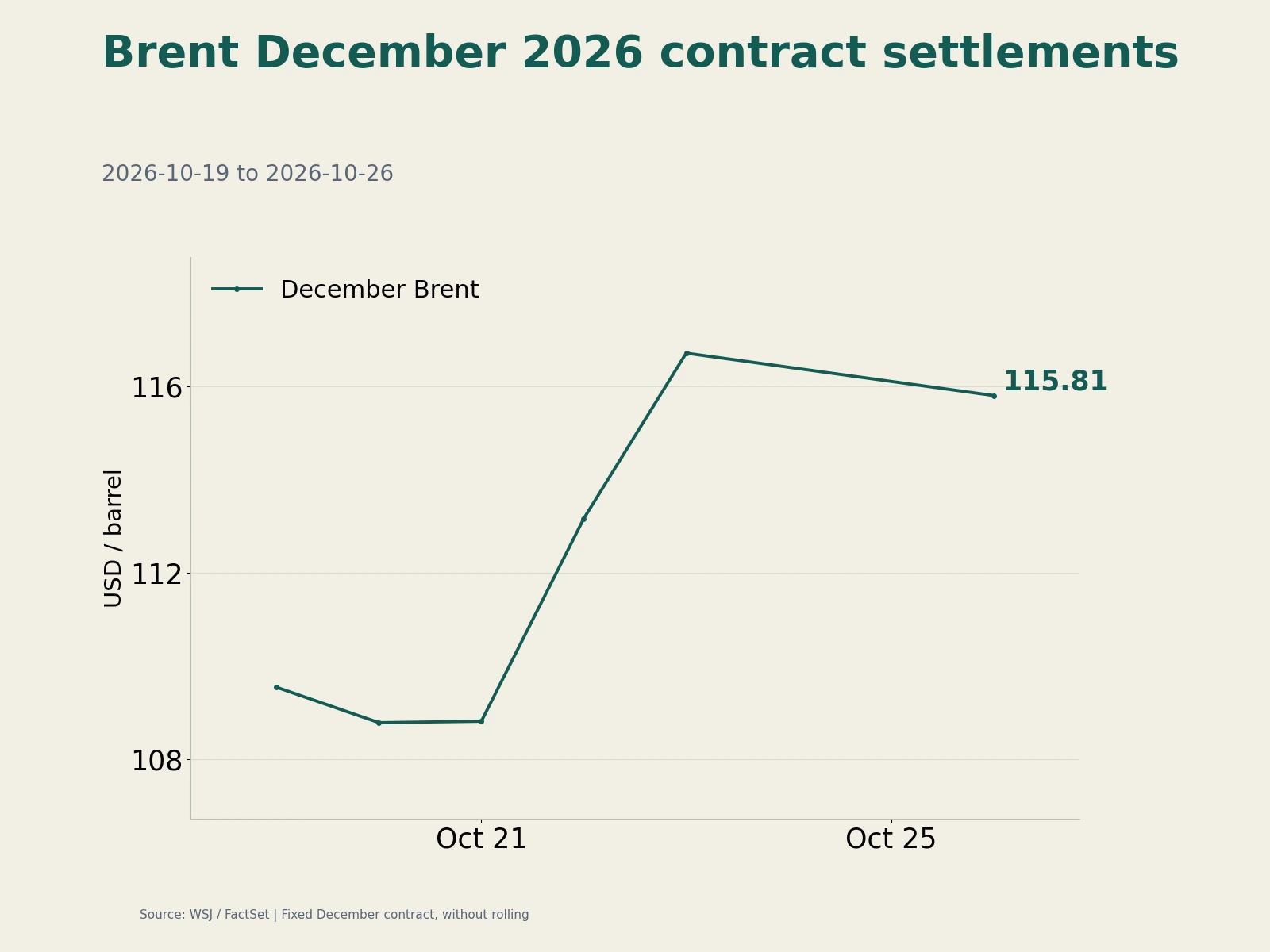
Official August 14 settlements showed September 2026 WTI at $82.40 a barrel, up $1.15 or 1.42%, and October 2026 Brent at $88.52, unchanged from the frozen prior $88.52 reading. Both use this report's locked official settlement basis, excluding intraday quotes, nontrading weekend snapshots and mixed delivery months.
Strong WTI and flat Brent did not produce an indiscriminate geopolitical rally. Investors still paid for maritime uncertainty, but the jump in US commercial stocks, accelerating SPR depletion, obstructed Hormuz flows and lagging global refining recovery were reshaping where premiums accrued. The central constraint was no longer whether crude existed underground, but whether it could cross waterways on schedule, enter refineries and become deliverable products.
Diverging Settlements: Different Crudes Price Different Risks
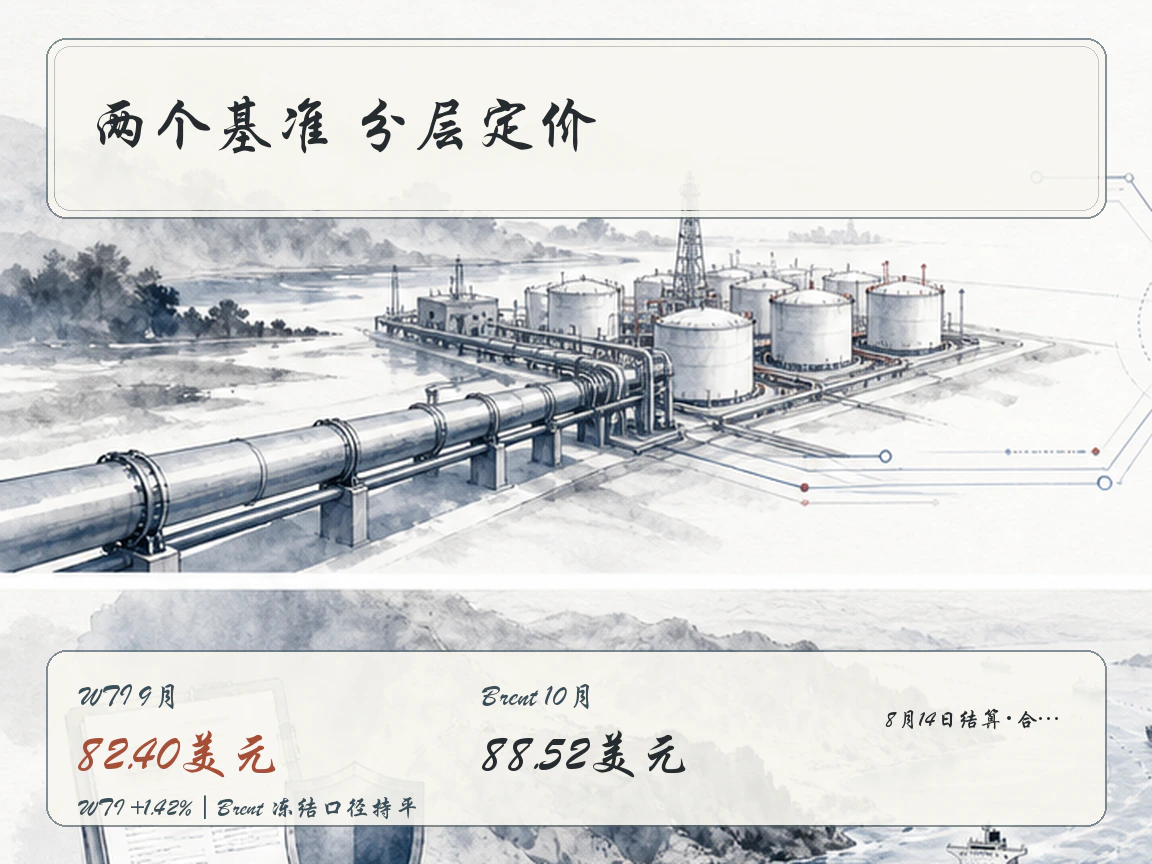
WTI is closer to US inland pipelines, Cushing delivery and domestic refinery runs. Brent, the global seaborne benchmark, more directly reflects ocean cargoes, shipping schedules and replacement costs in Europe and Asia. The same geopolitical news necessarily receives different pricing across inventory locations, expiry months, shipping windows and regional substitution capacity.
The static August 14 Brent–WTI spread was $6.12 a barrel, insufficient by itself to infer a daily change. Some external reviews described Brent's $88.52 as a roughly 1.7% increase, directly conflicting with the identical prior frozen official value. Different quote times, confusion between continuous intraday contracts and settlements, or different prior prices and months can cause such discrepancies. This article retains only the frozen official exchange-settlement basis.
WTI's 1.42% rise showed clear domestic risk buying; flat Brent showed the maritime benchmark did not expand its geopolitical premium in parallel. A systemic physical-shortage crisis should be corroborated by sustained Brent outperformance, steep prompt backwardation, broadly surging tanker freight and wider product cracks together. Without such cross-confirmation, one domestic WTI rise cannot establish widespread global physical scarcity.
US Inventories: More Commercial Buffer, Less Strategic Cushion
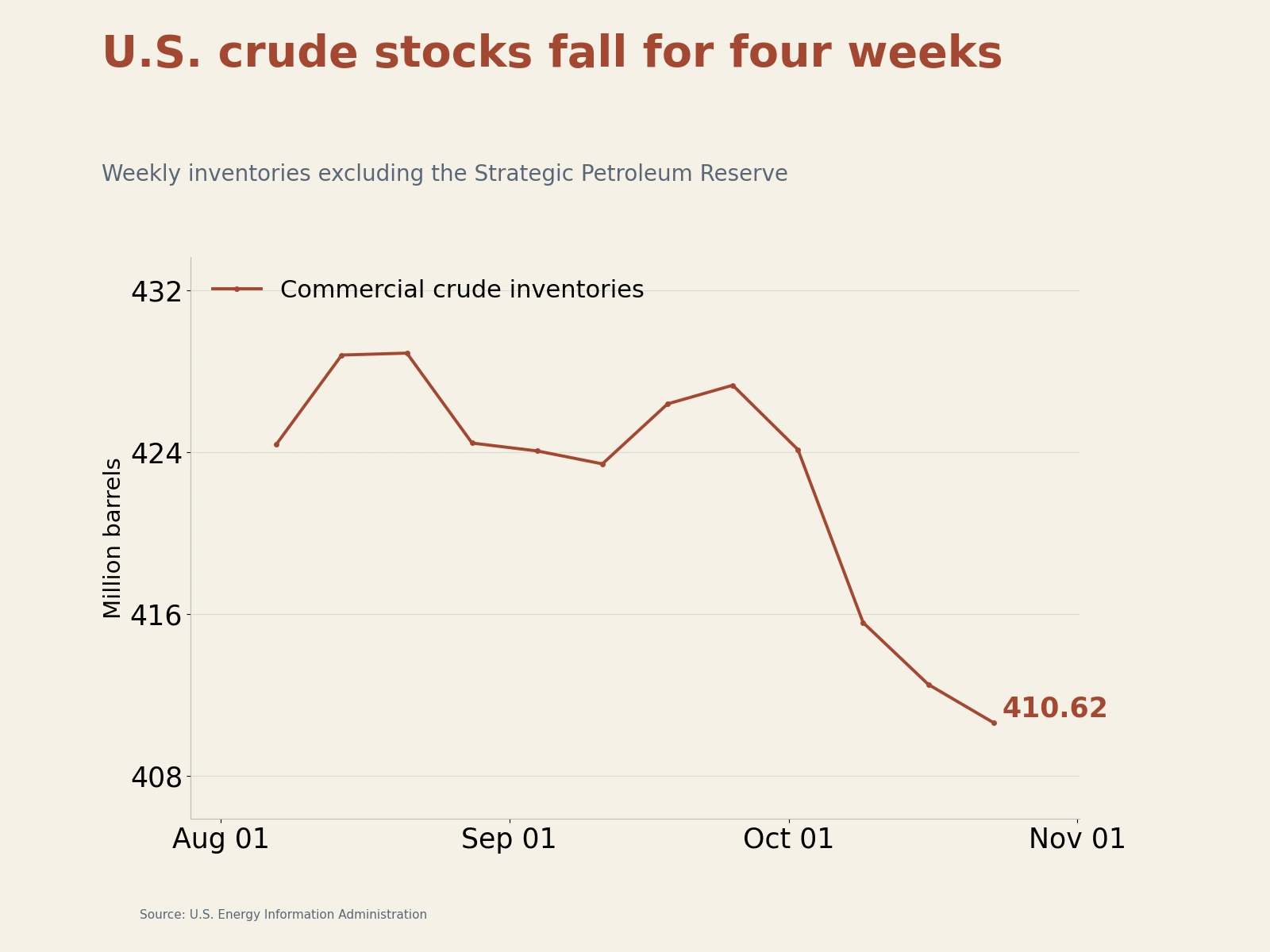
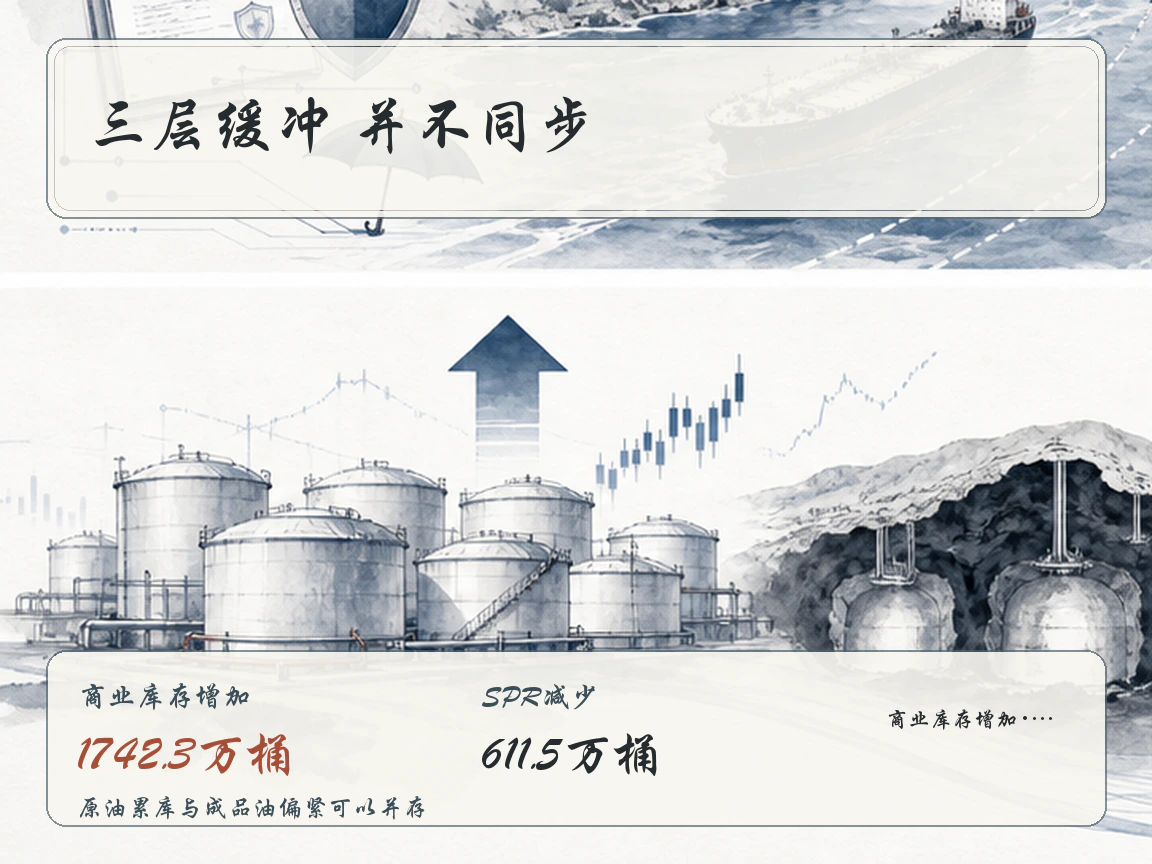
EIA weekly data for August 7 showed commercial crude jumping from 406.987 million to 424.410 million barrels, an unexpectedly large build of 17.423 million barrels. The SPR fell from 304.809 million to 298.694 million barrels, down 6.115 million.
Looking only at commercial stocks could misleadingly suggest broad easing. Their simultaneous rise and strategic releases show that part of the immediate buffer comes from transferring public reserves into commercial holdings. This reduces refiners' need for panic spot buying in the short term while tightening the national cushion against extreme disruption. After the SPR broke below the symbolic threshold of 300 million barrels, further releases would more directly and irreversibly use up protection against another severe geopolitical interruption.
Commercial builds mainly reduce speculative prompt WTI scarcity premiums, while continued SPR depletion quietly raises medium-term tail premiums. The next EIA report requires joint monitoring of Cushing, imports and exports, refinery utilization, gasoline and distillates. Only consistent easing across components can establish that the build of 17.423 million barrels reflects genuine loosening rather than temporary vessel delays, pipeline transfers or storage relocation.
Strait Risk: Effective On-Time Arrivals Determine Prices

Maritime security risks intensified during the tracking window. Public reports citing ADNOC and UKMTO said two commercial tankers were attacked by drones while crossing Hormuz, suffering minor damage without casualties. Another ADNOC-linked vessel was attacked Friday evening, the company's third such incident in a week. The UAE quickly blamed Iran, which did not immediately respond formally. Analysis must distinguish the physical incidents from claims of responsibility.
The relevant quantity is not simply cargo aboard damaged vessels, but whether repeated incidents change shipowner, carrier and insurer behavior. Multiplying war premiums, longer escort and inspection waits, and expensive diversions slow fleet turnover, reduce effective voyages and compress on-time physical arrivals in consuming markets. Even intact upstream output leaves refiners facing tighter landed supply if maritime efficiency deteriorates.
The IEA's July report provides context. June Gulf oil exports including land-pipeline bypasses rebounded 6.5 million barrels a day to 16.1 million, still far below roughly 24 million prewar. Global floating stocks jumped 117 million barrels that month while onshore stocks fell around 96 million. This divergence showed more departures largely released previously blocked cargoes rather than normalizing the whole export system.
If later attacks fail to sustain pressure on voyages, waiting and insurance surcharges, prepaid geopolitical premiums will unwind quickly. If owners delay or refuse voyages and arrivals keep falling, Brent can rise again even if OPEC+ only announces symbolic nominal output increases. Research must move from what incident occurred to how many physical barrels can reach their destination on time.
OPEC+: 188,000 Barrels Cannot Cover the Transport Gap
OPEC's official announcement said seven countries participating in additional voluntary adjustments would change September production by about 188,000 barrels a day, require compensation for earlier overproduction and meet September 6 to reassess supply and demand. This is measurable policy, but its practical weight should not be exaggerated.
Against Hormuz-related daily losses measured in millions of barrels, 188,000 is a small response. Nominal quotas are not exportable physical supply. Members must meet compensation cuts and face production-facility, pipeline and security constraints. If new crude remains trapped inside the obstructed Gulf, it offers little actual relief to refineries needing feedstock.
The change mainly signals stability to forward expectations rather than closes the spot gap. Its effect depends on quota compliance, loadings and port arrivals, not communiqué rhetoric. Fully delivered increases plus better strait flows would create a real ceiling on prices; worsening maritime security would probably leave the quota change on paper.
Refining Mismatch: Crude Recovers Faster Than Products
The IEA's July report identified another break in refining. June global crude runs rebounded 1.5 million barrels a day monthly but were still 6 million below a year earlier. Gulf refined-product and LPG exports remained below half prewar levels even as crude exports recovered to nearly three-quarters of February's level. The binding constraint was shifting irreversibly from extracting crude to refining and shipping usable final fuels.
This explains commercial crude accumulating while gasoline and diesel remain tight. Constrained refineries and delayed product shipments leave crude at origin ports while cracks and procurement premiums rise in consuming markets. Even flat Brent feedstock prices cannot remove fuel-inflation pressure on businesses and households under these conditions.
Demand also had two sides. The IEA expected 2026 global oil demand to fall 1 million barrels a day year on year, yet daily demand to recover more than 8 million from May's yearly low to October, then move toward annual 2027 growth of 2 million. The annual decline reflects prolonged high prices damaging activity; the strong second-half rebound reflects seasonal Western travel and release of geopolitically suppressed demand. If demand recovers faster than refineries restart, product mismatches will intensify first. If inflation and costs continue destroying downstream production, crude inventory buffers will last longer.
On August 14, the dollar index fell 0.33%, marginally supporting dollar-priced oil. The 10-year Treasury yield nevertheless rose 5 basis points and major equities eased, showing no uniform procyclical environment. Physical trade and downstream balances must ultimately anchor long-term oil pricing.
Five Evidence Gates for Future Premiums
The baseline is partial Hormuz obstruction without complete loss of control, with US commercial crude cushioning prompt supply and WTI and Brent diverging within volatile ranges.
An upside breakout requires physical and market confirmation. Strait transits or on-time arrivals at major ports must decline clearly alongside persistently rising war insurance and tanker freight. EIA must also show renewed crude draws, higher domestic refinery use or tight gasoline and diesel. If these coincide with Brent outperforming WTI, sharply wider backwardation and broadly wider product cracks, geopolitical risk can be established as reaching physical supply.
A downside scenario combines stable transit recovery, sharply lower war surcharges, continued US commercial builds without regional shortages even after SPR releases slow, and weaker global consumption and refinery runs. Together, these would rapidly remove geopolitical premiums, with September's OPEC+ quota additions reinforcing resistance above prices.
Future judgments should be checked through five objective evidence gates:
- Gate one: real-time notifications from authoritative maritime-security bodies and official statements from the energy companies involved;
- Gate two: actual Hormuz tanker counts, anchorage waits and war-insurance premium curves;
- Gate three: the combined weekly EIA structure of commercial crude, SPR, Cushing and product inventories;
- Gate four: actual September OPEC+ output changes and compliance with compensatory cuts;
- Gate five: simultaneous strengthening in Brent–WTI, backwardation and downstream product cracks.
Until these five gates corroborate one another, any categorical claim of inevitable gains or losses detached from physical-flow evidence is merely a sentiment bet without fundamental grounding.