July retail sales unexpectedly fell in data released August 14, while preliminary August Michigan sentiment declined again, materially easing fears of resumed September hikes. Goolsbee told Bloomberg that reassuring summer prices still required clear cooling over several consecutive months before confidence that inflation was returning steadily to 2%.
The July 28–29 FOMC had held its target at 3.50%–3.75% by 9–3, with Hammack, Kashkari and Logan seeking an immediate 25-basis-point increase. That decision preceded the latest data. By the cutoff, the Board had issued no new policy document or voting-official statement, and no further weekend comments had appeared.
Retail Sales Fall for the First Time in Nine Months
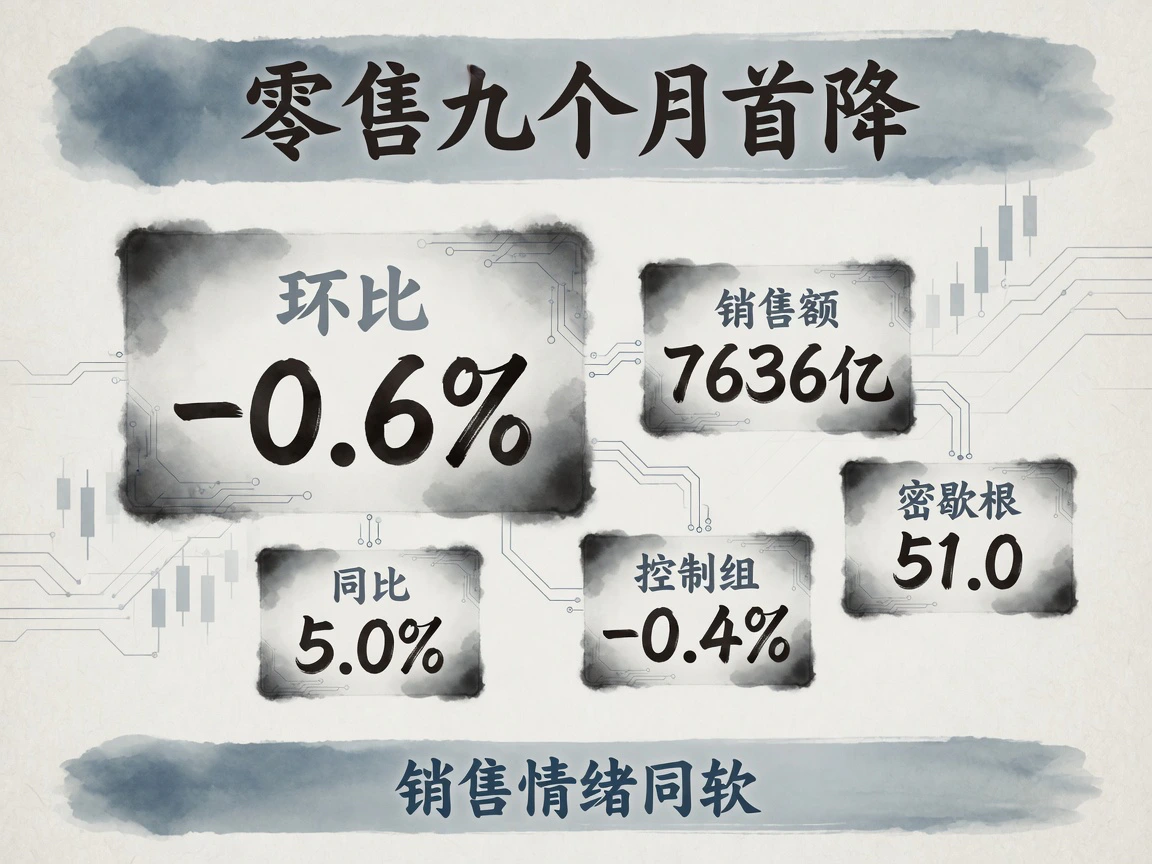
Census data showed seasonally adjusted July retail and food-service sales of $763.6 billion, down 0.6% month on month with sampling error of ±0.4 percentage point, though still up 5.0% annually. June growth stayed at 0.2%. Reuters' forecast was +0.1%. This was the first monthly decline in nine months and the largest in 14 months.
Nonstore retail, mainly e-commerce, fell 2.2%, vehicles and parts 1.8%, and gas-station sales 0.9%. Reuters noted lower oil reduced gasoline sales values. Amazon moved Prime Day from July to June, prompting rivals' discounts and front-loading demand into June; early-year large tax-refund support was also fading. Clothing rose 1.9% and food services 0.5%, showing some discretionary and experience recovery. Yet the more informative control group, excluding vehicles, gasoline, building materials and food services and used in GDP consumption estimates, fell 0.4% against an expected +0.3%. That contraction showed weakness extending beyond oil prices and promotion timing.
Reuters cited BMO economists saying the slowdown pointed to materially cooler third-quarter real PCE and strengthened the case for a September hold. Goldman Sachs quickly cut its annualized third-quarter real GDP forecast by 0.5 percentage point to 2.2%.
Preliminary August Michigan sentiment was 51.0, below July's 55.2 and expectations around 54.5, ending two months of recovery from lows. Survey director Joanne Hsu said households expected high-price burdens to persist: only 8% expected income to outpace inflation over the next year, down from 18% in December 2024. One-year inflation expectations edged from 4.2% to 4.3%; five-year expectations stayed at 3.3% for a third month, above 2024's 2.8%–3.2% range. Spending and confidence weakened without relief in longer-term expectations. Immediate hike urgency eased, but the risk of expectations becoming fixed at high levels remained.
Goolsbee's Confirmation Threshold Is Hard to Meet Before September

Goolsbee told Bloomberg Television that summer prices were encouraging and supply shocks such as tariffs and crude over the past year were being absorbed. Three to four consecutive months as satisfactory as June would greatly strengthen his confidence in a return to 2%. But inflation had missed target for five years; once high expectations were entrenched, disinflation would become extremely painful and costly. He opposed haste in changing policy direction or path and still described growth and employment as solid.
Goolsbee was not a 2026 FOMC voter and did not say whether September should bring a hike or hold. His threshold was difficult to reconcile with September 15–16: at most one further round of August CPI and PPI would arrive beforehand, insufficient for three to four consecutive months. Warsh and other voting governors had no further public remarks scheduled by the cutoff.
A September Hold Becomes the Rates-Market Baseline
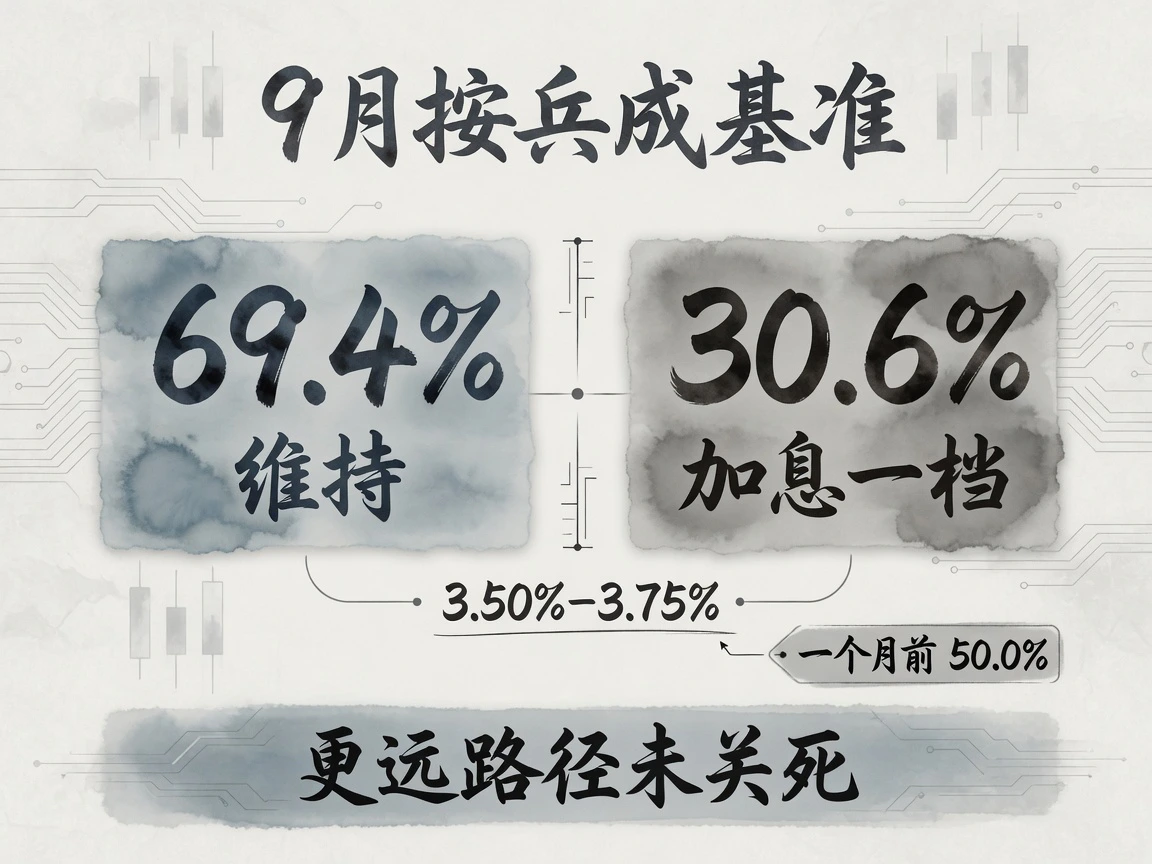
After retail and sentiment, FedWatch assigned about 69.4% to holding 3.50%–3.75% on September 15–16, and 30.6% to a 25-basis-point hike, down from Thursday's 33.9% and 50.0% a month earlier. The snapshot was around 20:37 Beijing time August 14. Subsequent Bloomberg readings shifted slightly to 67.4% hold and 32.6% hike without changing the retreat in tightening bets. With US markets then entering the weekend, no later repricing shifted the path into a new range before the cutoff.
Goolsbee favored a longer observation window, while derivatives made a September hold the central baseline. The fourth-quarter and year-end hike window nevertheless remained open. July minutes due August 19 would reveal differences over supply-shock transmission and entrenched expectations. Jackson Hole on August 27–29 would be the chair's most important official communication window before September.


