On August 18, 2026, apparently conflicting US assets formed one clear macro picture: growth's volume component was weakening markedly while prices and inflation remained firm. Thirty-year Treasuries touched 5.337%, a 19-year high since 2007, then reversed to 5.285%. Yields fell across maturities, more at the ultralong end, yet the 10-year breakeven widened 2 basis points to 2.30%. Investors bought duration on plunging starts and falling import prices weakening real demand, rather than repricing Fed cuts: September 25-basis-point hike odds remained near one-third.
Stocks discounted the damage from the intraday long-yield peak, ignoring the few basis points recovered by the close. Philadelphia semiconductors fell nearly 5% and S&P 500 declined a third day. Oil closed at three-week highs but gained only cents, with single-digit Hormuz traffic and Middle Eastern reloading/bypass delivery restraining panic premiums. Gold lost about 1.2%; energy inflation forcing further Fed tightening remained the core trade.
Fixed income: duration buyers return after a 19-year high
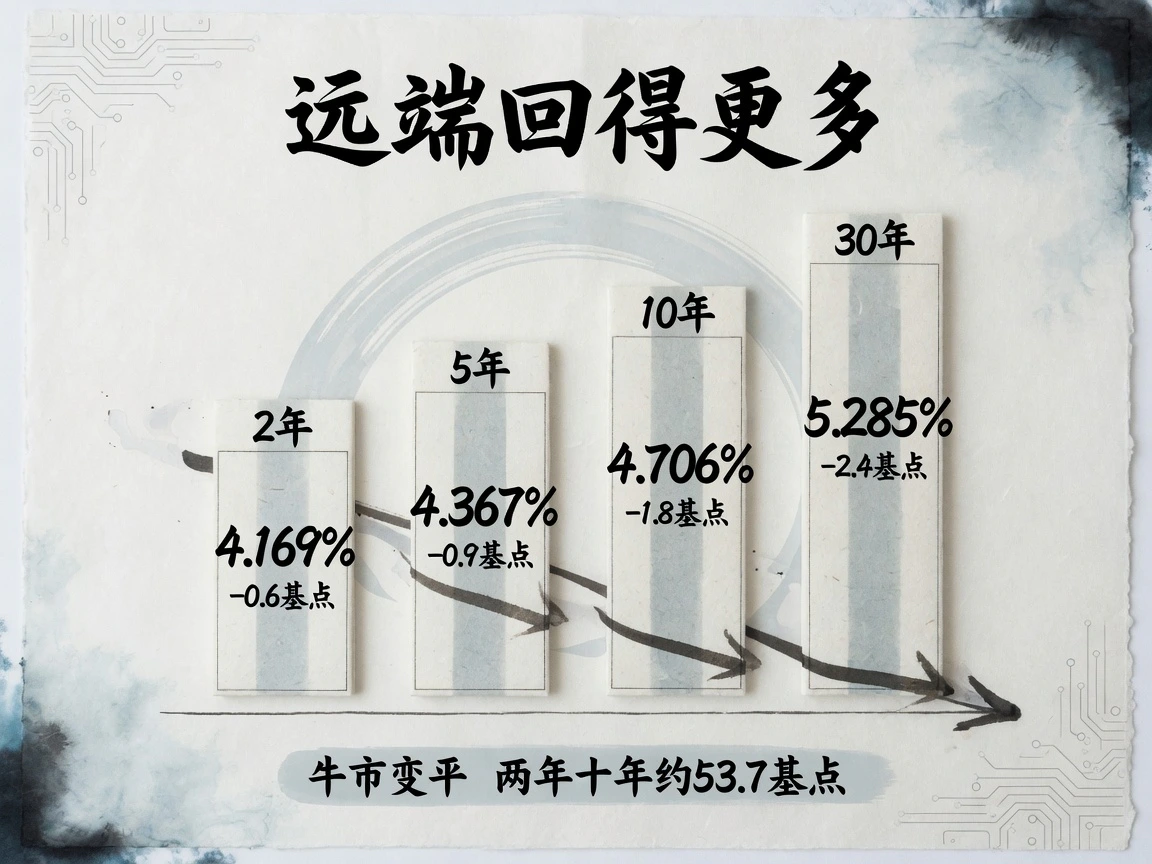
Tuesday's cash market saw dramatic long-end competition. Yields initially reached 19-year highs before weak macro signals attracted substantial duration buying, erasing all gains. New York close versus prior close: 2-year 4.169%, -0.6 basis points; 5-year 4.367%, -0.9; 10-year 4.706%, -1.8; 30-year 5.285%, -2.4. Increasing declines toward longer maturities formed a typical bull flattening, narrowing 2s10s to about 53.7 basis points.
Intraday moves were more dramatic: 10-year yields reached about 4.746%, highest since January 2025; 30-year 5.337%, explicitly identified by Reuters as a 19-year high since 2007. Large deficit expectations, dense issuance and sticky inflation had lifted long yields for weeks. Three Tuesday releases—plunging July starts, negative import prices and mediocre industrial output—released pressure. With the short end anchored by Fed policy, oversold ultralong bonds eased first as long-term investors restored duration.
Inflation compensation did not fall with nominal yields; 10-year breakevens widened 2 basis points to 2.30% and 5-year likewise to 2.27%. Subtracting 2.30% from 4.706% gives an implied real yield near 2.41%, down about 3 basis points. Almost all nominal decline came from real yields while inflation compensation expanded. Investors bought duration on weak housing/import prices while retaining higher medium-term inflation premiums over elevated oil: both assessments coexisted.
Front-end derivatives offered no easing endorsement. August 18 evening Eastern pricing still put September 16 +25 bp odds at 33%–35%, hold the baseline but hikes undiminished; at least one hike by December was about 68%. The target remained 3.50%–3.75%, held 9–3 in July, with no cuts priced. Three very-short-bill auction rates eased slightly, but last week's 10-/30-year issuance yields 4.683%/5.216% remained distinctly below Tuesday secondary closes. Substantial ultralong term premium persisted, merely thinner than Monday.
Macro: housing exposes weakening volumes while prices and output complete the picture
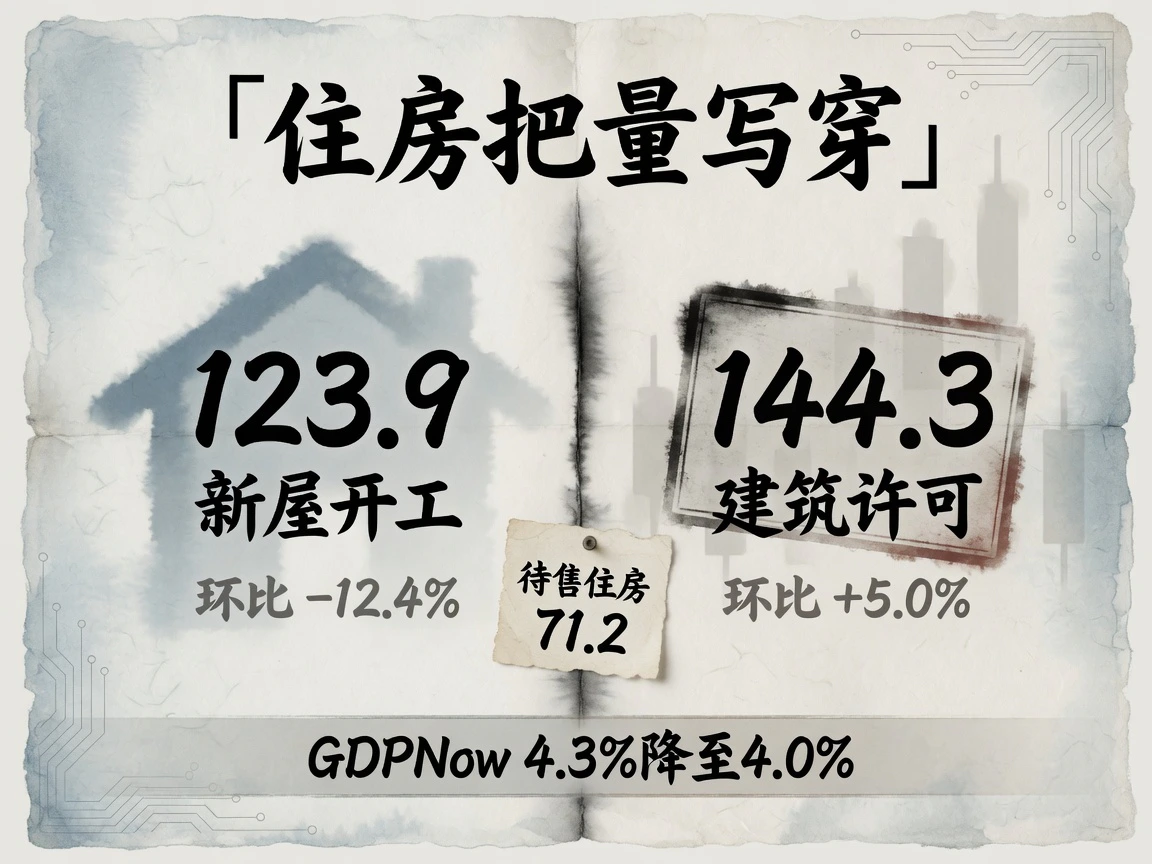
July annualized starts plunged to 1.239 million, -12.4% from downward-revised June and-13.5% annually, well below about 1.35 million expected. Single-family starts were 808,000, lowest since November 2022, nearly four years. Permits rebounded 5.0% to 1.443 million, highest since February: approvals rose but actual ground-breaking remained suppressed. NAR pending-home sales fell 2.3% to 71.2, all four regions declining to the weakest since January. Near 6.7% 30-year fixed mortgages collided with summer's normal signing season. Contracts were about 30% below 2019 despite payrolls about 5% higher: expensive mortgages and homes, rather than unemployment-led income collapse, blocked housing.
July import prices fell 0.4%, largest monthly decline since May 2025; June was revised from+0.3% to-0.3%. Fuel fell 7.2%, but nonfuel rose 0.4% and remained+5.9% annually. Earlier oil relief lowered nominal prices while nonenergy capital/core goods stayed sticky. Fed industrial and manufacturing output both rose 0.2%, utilization 76.3%, a one-year high. New York Fed services, however, returned near zero against the previous day's strong manufacturing survey, with rising inputs and worse outlooks. Tight upstream costs, flat downstream demand and frozen housing remain entrenched.
Atlanta GDPNow cut Q3 real growth from 4.3% to 4.0% August 18, mainly weaker private domestic investment under high rates. Cleveland's same-day nowcast put August CPI+0.35% monthly, +3.36% annually. Continued August oil recovery could fully reverse July import-price relief next release. July FOMC minutes due after deadline, August 19 afternoon Eastern, will reveal the 9–3 division and recalibrate hike odds.
Commodities: modest oil gains while rates pressure gold
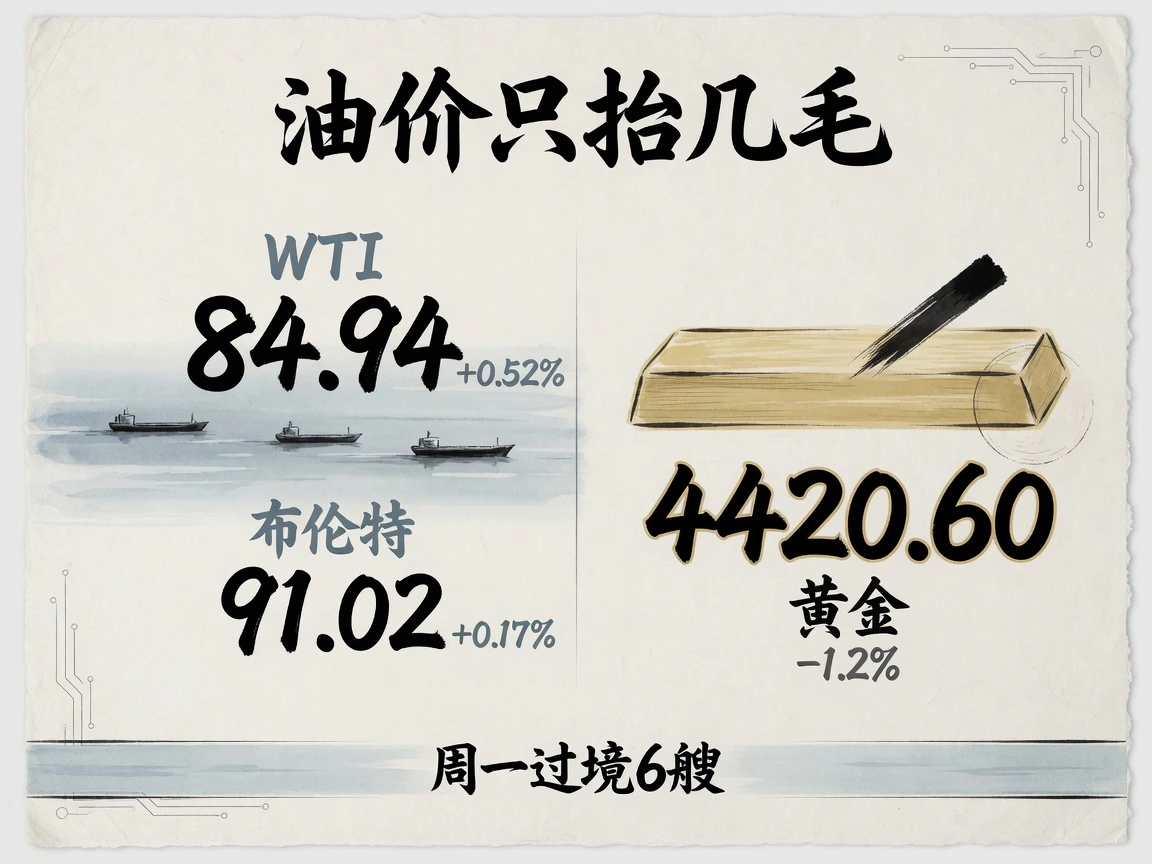
September WTI settled $84.94, +0.52%; October Brent $91.02, +0.17%, both highest closes since July 24, with Brent+4.54% over three sessions. Supply premiums were strongly supported: only 6 visible commercial vessels crossed Hormuz Monday versus ten-day average 11, with no VLCCs or LNG carriers; an outbound vessel was hit by an unidentified projectile, causing crew casualties. Iran tied reopening to four conditions including full blockade relief and ending oil sanctions, while Washington said no talks were underway or scheduled.
Gains stayed at mere cents because bypass and transfer delivery had rapidly become systematic. Aramco arranged three VLCCs of approximately 2 million barrels each to load inside Hormuz then transfer offshore Fujairah; major Chinese state shipowners waited safely outside. September–October backwardation near $0.8 and falling later months reflect willingness to pay for current physical barrels without pricing permanent closure. Products were tighter; September gasoline added 0.97%.
December COMEX gold settled $4,420.60, -1.2%. Its main settlement coincided with long yields' intraday peak while oil lit inflation fears, pressuring non-yielding assets. Later Treasury recovery did not restore gold overnight. Silver, platinum and palladium fell 2.5%–3.1%; copper turned positive afternoon. Investment-oriented precious metals absorbed rate repricing, while industrial metals debated tariff-frontloaded exports/inventories and Chinese demand. Dollar-index futures settled near 99.55, broadly flat to slightly firm.
Equities: pricing the intraday spike erases chips' Monday rebound
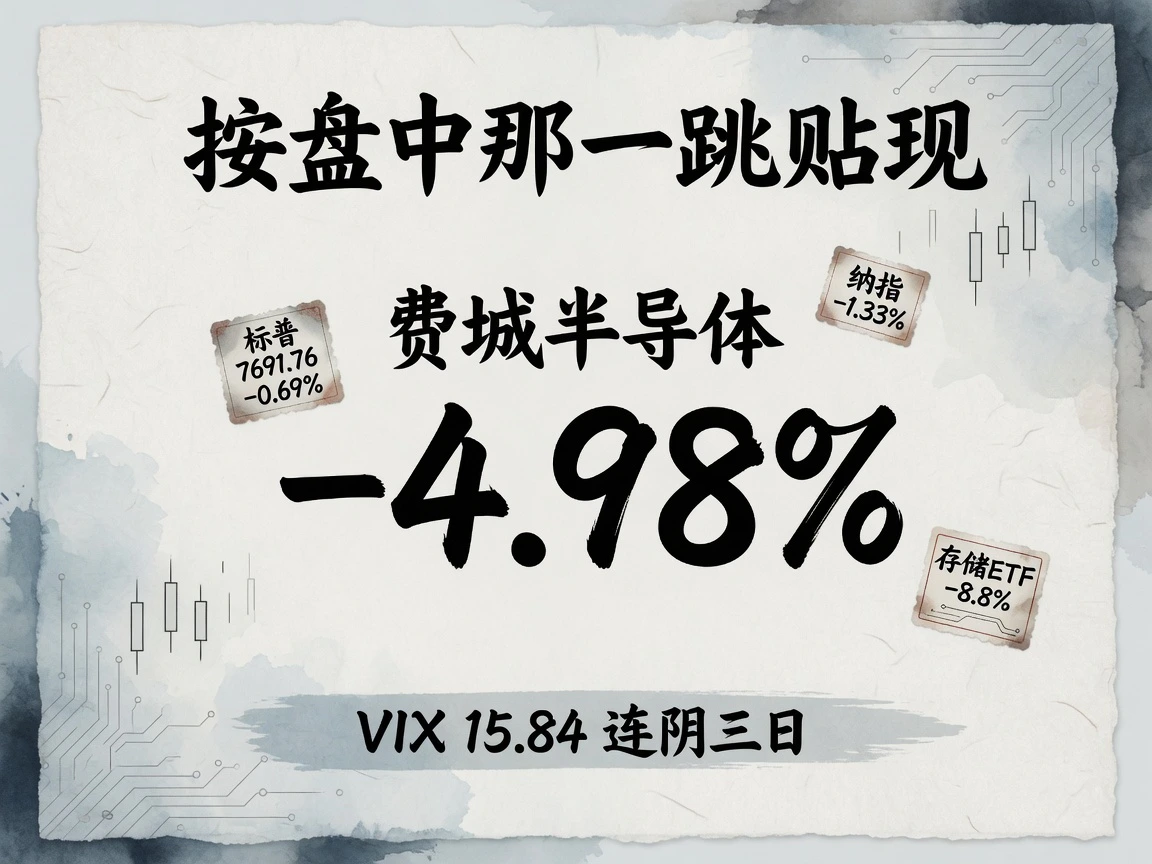
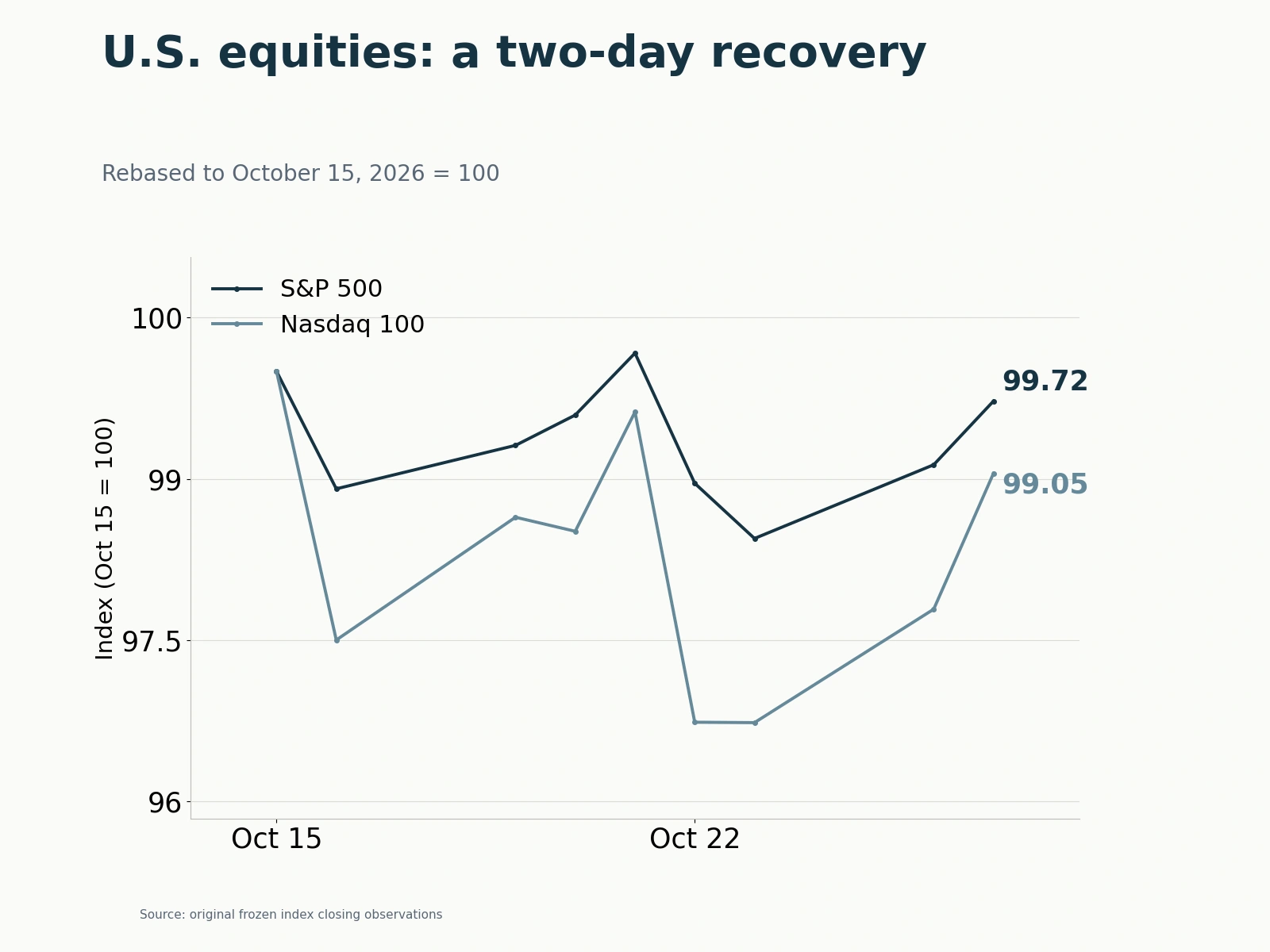
S&P 500 closed 7,691.76, -0.69%, its third loss and about 1.4% below August 13's record. Nasdaq fell 1.33%; both suffered their largest daily losses since July 29. Dow fell 0.22%, Russell 2000 fell 1.30%; VIX 15.84, highest close since August 4 but still low/moderate, with volume below 20-day average. Technology fell 1.9%, Philadelphia chips 4.98%, storage ETF 8.8%; energy, health and staples led defensively. Micron-7.0%, SanDisk about-9%, Intel/Arm each over-6%, Nvidia-2.3%, Meta-4.4%, with only Microsoft and Apple turning positive late. Investors recalculated chips' long-duration discount rates using the 30-year's adverse 19-year-high intraday level, despite later bond recovery.
Home Depot passed without extra credit. Fiscal Q2 adjusted EPS $4.92 beat consensus; revenue $47.86 billion, +5.7%; comparable sales+1.7%, best in nearly four years, yet shares closed below flat. Management called housing frozen and big renovations postponed. Lowe's, Target and Walmart later this week will test consumption; Nvidia's core technology test comes August 26.
Asia and New York differed in timing and information. The Nikkei 225 in Tokyo Tuesday fell 2.54% on chip-equipment heavyweights while Japan's 10-year hit about 2.95%, a 30-year high, combining local fiscal premiums with global chip repricing. KOSPI lost 1.55% in its first full postholiday session, surrendering earlier memory premiums; Hang Seng was nearly flat. Before Wednesday's deadline Asia's chip chain faced broad selling again: Nikkei over-3%, KOSPI over-6%, Hong Kong not yet open.
Geopolitics: forceful words, little implementation, limited premiums

Washington said it would talk when Tehran was ready, with no current or scheduled talks and full blockade enforcement. Iran's speaker tied reopening to four conditions including full blockade and oil-sanctions relief. Both fought over interpretation without workable transit rules. Physical separation was firmer: single-digit visible passages and the UAE's actual suspension of Iranian trade/finance were key developments.
Markets gave geopolitics narrow pricing room: oil at three-week highs,10-year breakeven only+2 basis points and VIX below 16. Bond and equity investors viewed defensive risk reduction and limited supply premiums offset by bypass/transfers, without overpricing systemic reflation. Promised major US Iran sanctions lacked a formal text that day; Treasury's actual actions centered elsewhere. Detailed 24-hour battlefield developments appear in today's companion article.