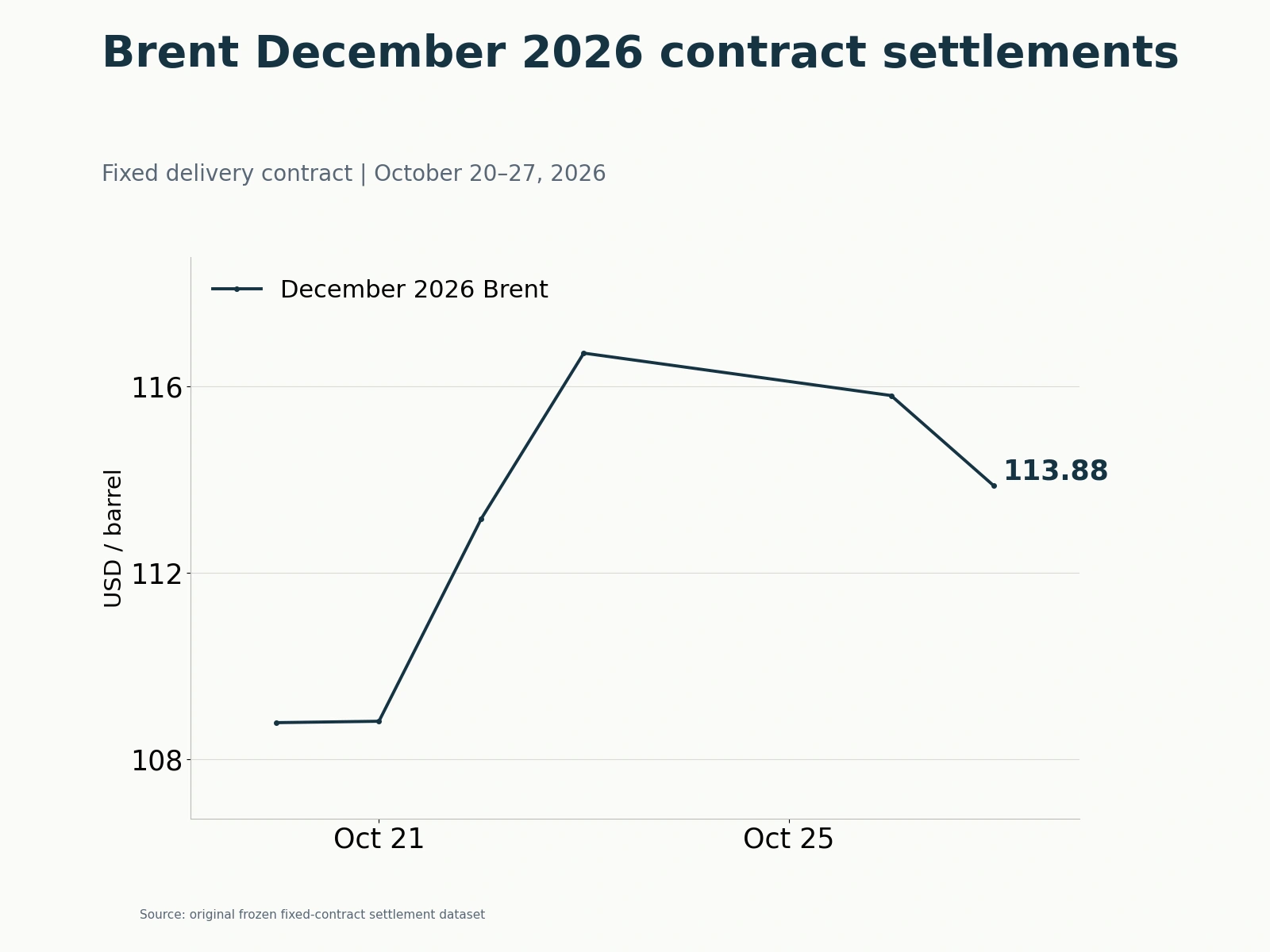
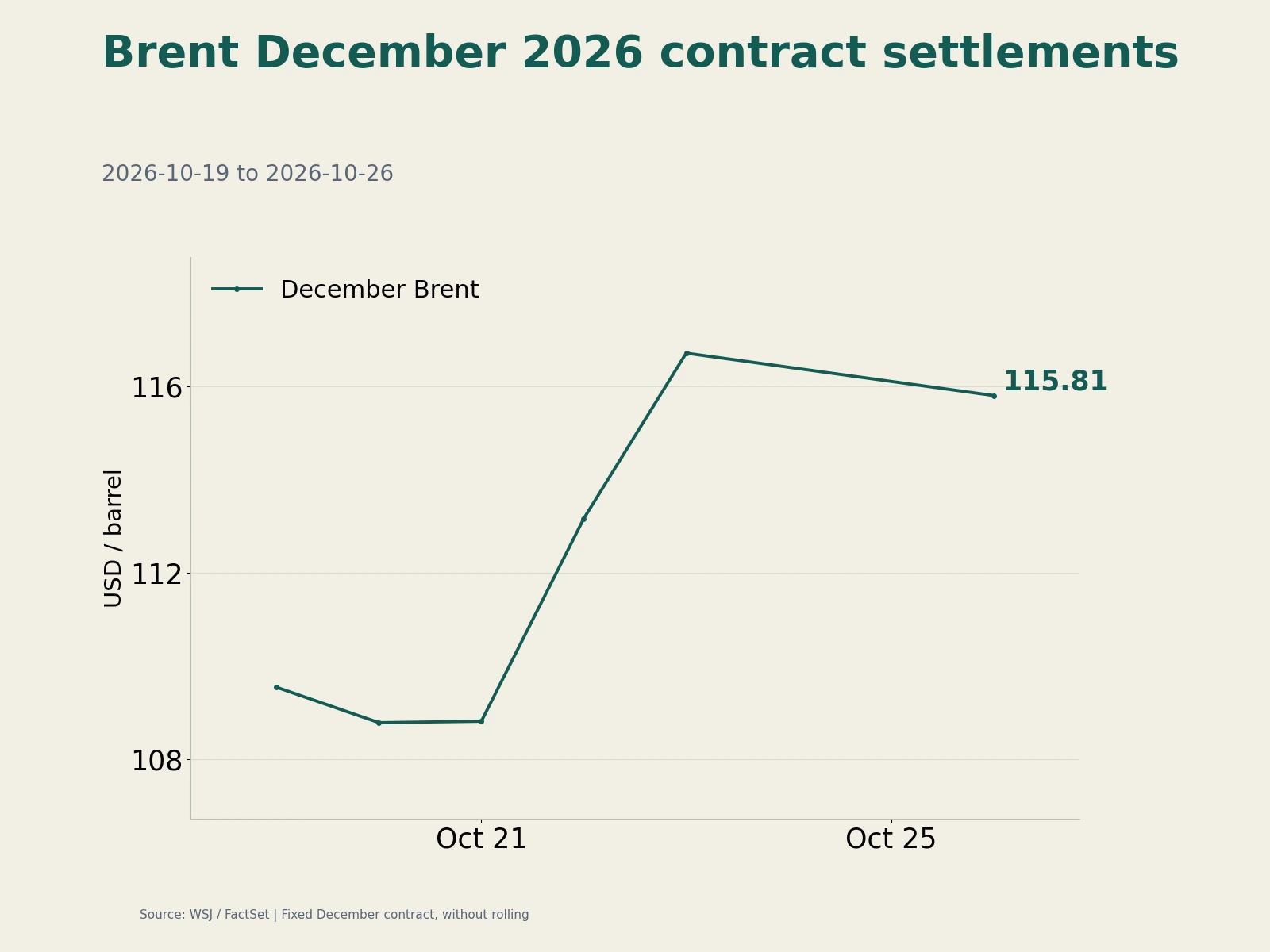
On Tuesday, August 18, the U.S.–Iran peace window closed as the temporary ceasefire memorandum expired, and Iranian leaders shifted to an “all-out offensive” posture. Oil added a risk premium for prolonged Hormuz disruption. Official exchange settlements put September WTI at $84.94 a barrel, up $0.44 or 0.52%, and October Brent at $91.02, up $0.15 or 0.17%. Both reached their highest official settlements since July 24. Gains were small, but the pursuit of prompt premiums after talks failed was clear.
Nearby contracts lead as the curve keeps paying for Hormuz risk
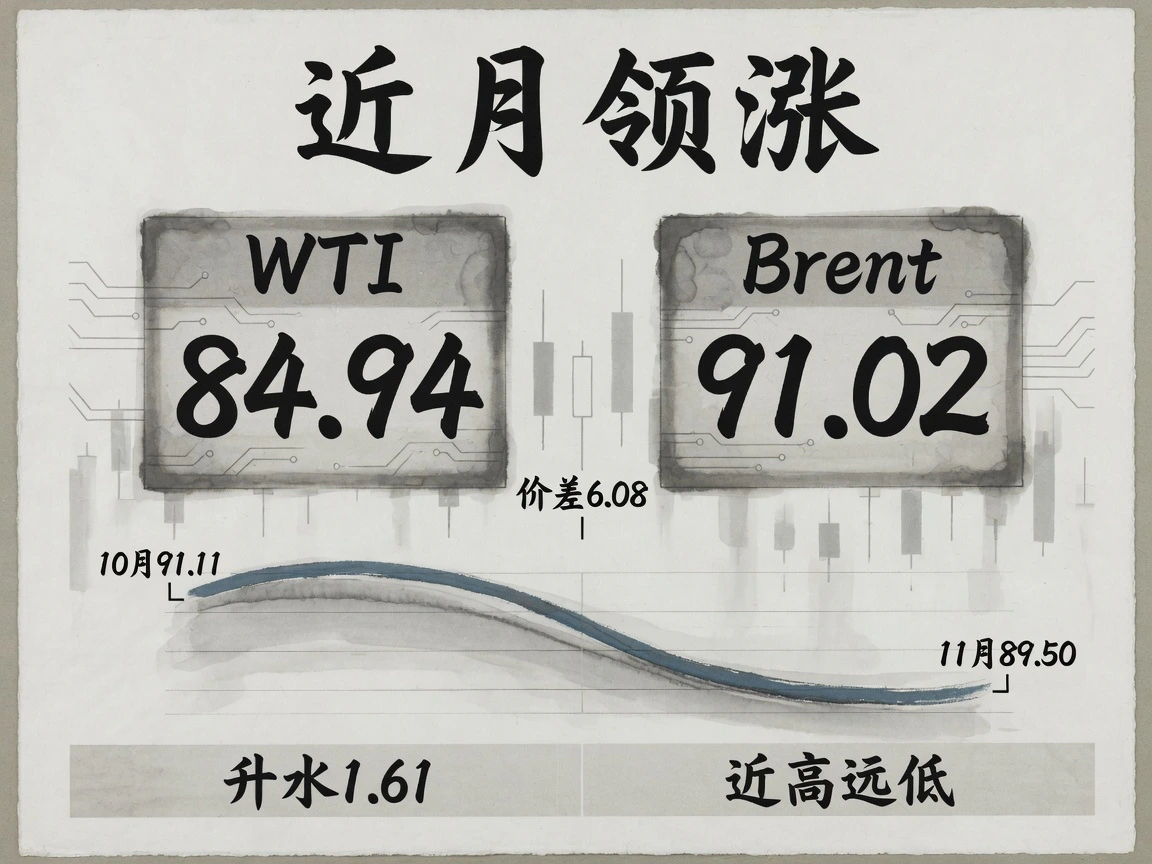
Prices had already risen the previous day on memorandum expiry and Iran's protracted-war rhetoric. Tuesday added repricing as the diplomatic vacuum became certain. Brent–WTI narrowed slightly to about $6.08 a barrel. As a global seaborne benchmark, Brent is more directly exposed to Gulf risks than inland-delivered WTI; the wide gap continued reflecting hard maritime constraints.
The curve remained steeply backwardated. Intraday October Brent was near $91.11 and November near $89.50, a prompt spread of about $1.61. October versus January 2027 reached approximately $5.57. Nearby contracts paid for immediate scarcity and possible complete closure, while deferred prices assumed eventual logistical and geopolitical normalization. This aligned with the IEA's medium-term baseline of a global supply rebound of approximately 8.3 million barrels a day in 2027.
Electronic prices at the cutoff were liquidity references, excluded from official daily settlements. Around 08:20 Beijing time August 19, continuous WTI was $84.54 and Brent $91.44. Asian early ranges were roughly $84.5–$85.2 for WTI and around $91.3 for Brent. Brent was slightly firmer than its overnight settlement while WTI took modest profits; overall divergence was limited.
Small inventory draws as reserve buffers thin
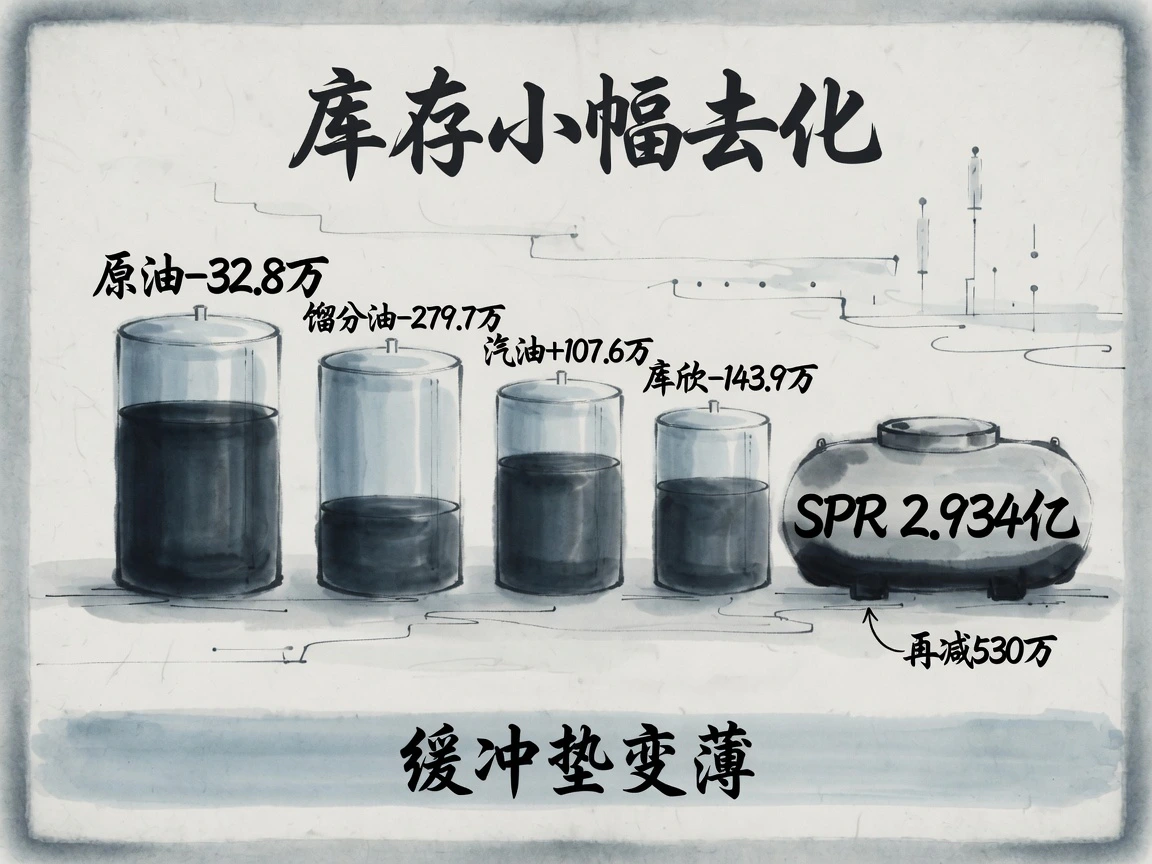
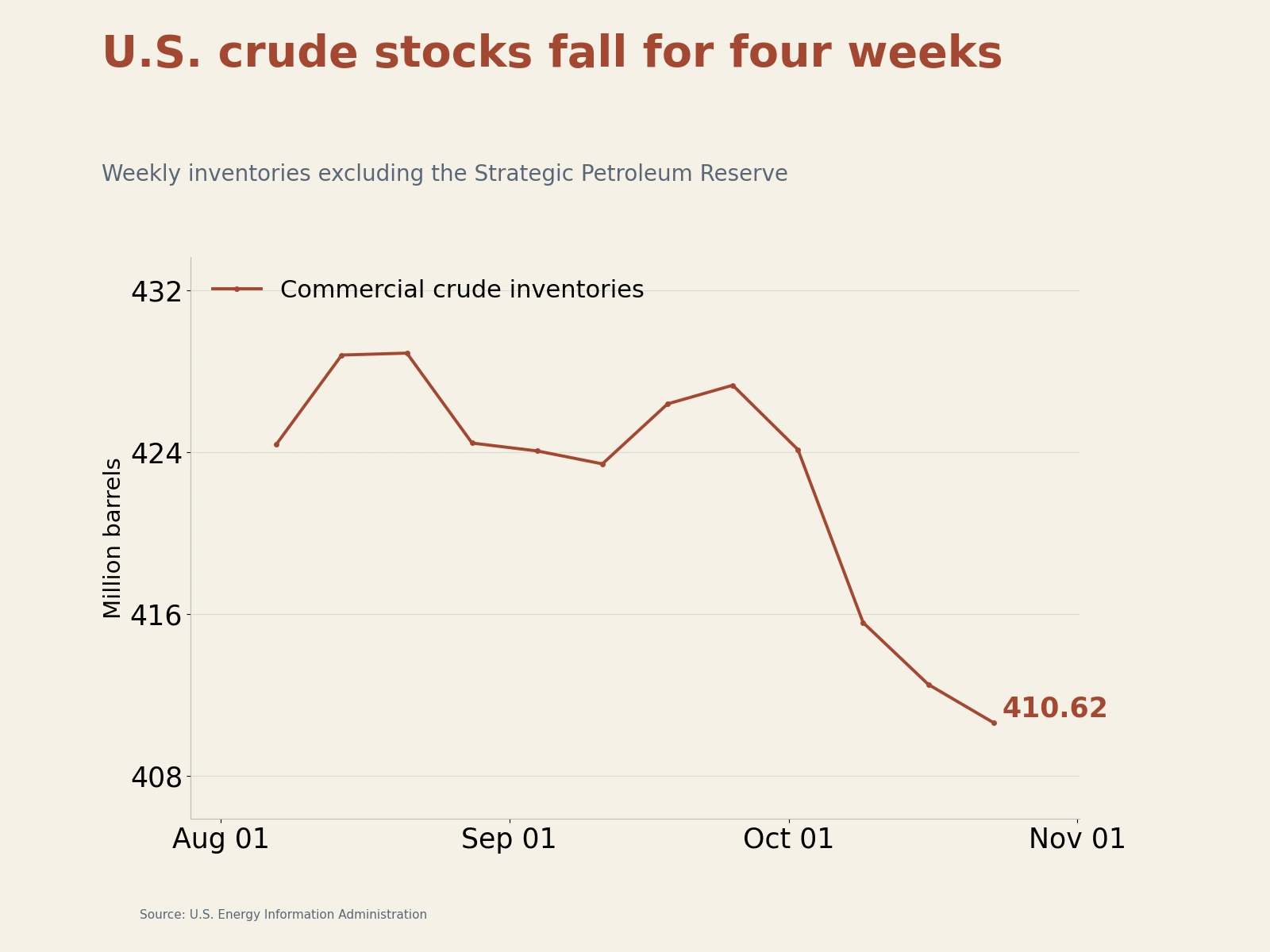
The latest API report for the week ending August 14 showed commercial crude down 328,000 barrels, a marked cooling from the prior build of 9.07 million barrels. Cushing fell 1.439 million and gasoline rose 1.076 million. Distillates were the central pressure point, falling another 2.797 million from already low stocks versus five-year norms. SPR fell 5.3 million to 293.4 million, approaching the stated policy operating floor of 250 million to 300 million barrels. U.S. production held high near 13.805 million barrels a day.
The more authoritative EIA weekly report was due the morning of August 19 Eastern time, that evening in Beijing. Whether it confirmed the modest crude draw and severe distillate shortfall would be a key intraday test.
The IEA's August 12 report remained the benchmark: a third-quarter deficit around 1.8 million barrels a day, July observable draws of 69 million barrels and cumulative crude and product inventory consumption of about 410 million since escalation, taking global stocks below 7.9 billion. OPEC+ approved a further September quota increase of 188,000 barrels a day on August 2 to complete that voluntary-cut unwind; the next JMMC was September 6. Traders nevertheless saw paper quotas as numerical exercises while actual Gulf loadings remained physically constrained by Hormuz.
Hormuz stalemate: rhetoric escalates while ship flows remain low

Confrontation was hardening. Speaker and chief negotiator Ghalibaf said Hormuz would stay closed indefinitely until Washington fully honored June's terms. A senior official told Reuters stalled final-ceasefire talks had moved Iran's military to an all-out offensive stance, threatening timely, precise strikes to break the blockade. This was still verbal deterrence without larger attacks, but diplomacy was deadlocked. The U.S. president said there was neither contact nor planned talks and called the strait open and operating normally, sharply at odds with satellite vessel tracking.
EIA historical baselines put normal oil and condensate transit near 20 million barrels daily, about one-fifth of global consumption and more than one-quarter of seaborne crude trade. No equivalent alternative exists: Saudi and UAE bypass pipelines together offer only about 2.6 million barrels a day of maximum diversion, leaving over 17 million dependent on the bottleneck. Kpler counted six commercial cargo ships Monday, three Saturday and two Sunday, excluding AIS-dark vessels. Windward estimated July actual crude flow at only about 5 million barrels a day, one-quarter of normal.
Security risks continued materializing. On August 18 the Liberian bulk carrier Minoan Dignity was struck by an unidentified projectile off the Gulf of Oman, killing one crew member and forcing abandonment, with emergency Omani coast-guard evacuation. Prices did not surge uncontrollably because gray physical offsets remained. Reuters described AIS-dark shadow transfers and Aramco's partial export recovery through offshore ship-to-ship operations, preventing complete supply collapse. Baltic Exchange week-32 broker assessments put Middle East–China VLCC freight at WS 475.56, approximately $481,000 daily TCE. This was an assessment in very thin physical trading, not a continuous fixture record, but quantified enormous transit risk costs.
What the market is pricing
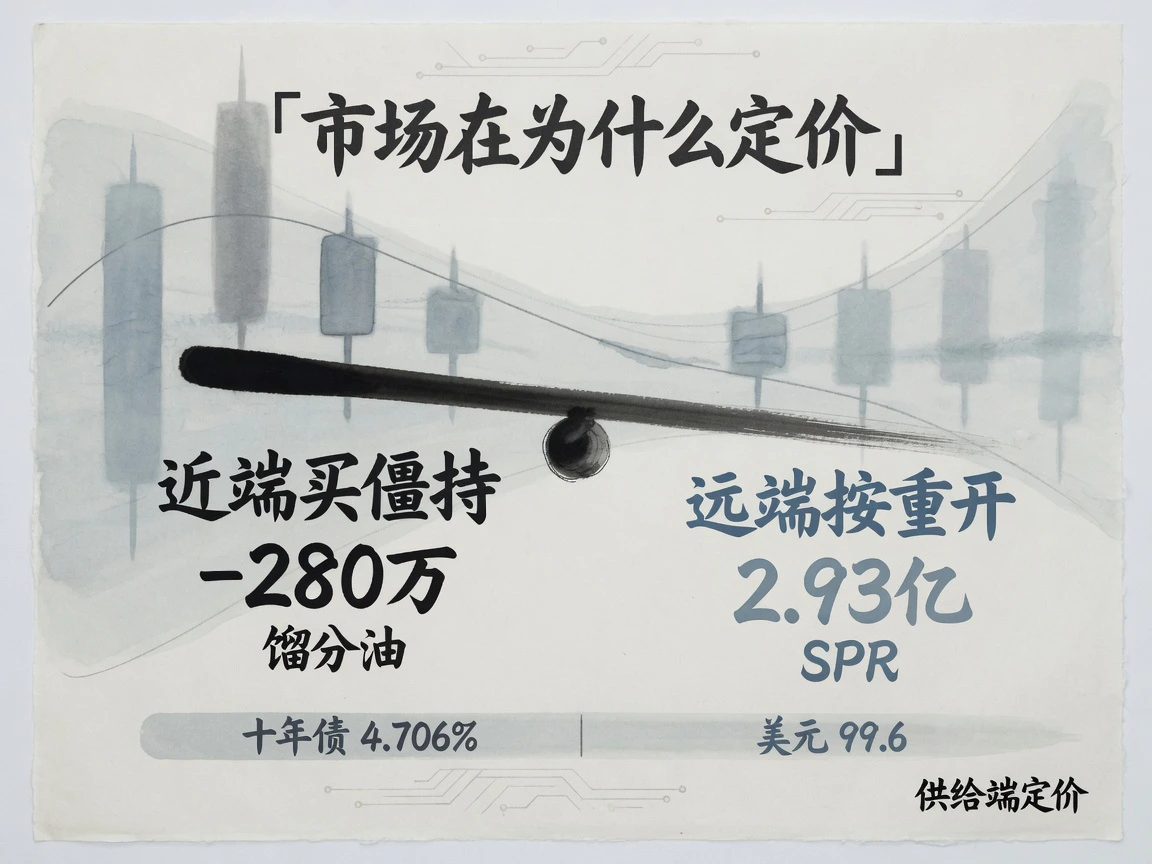
Nearby futures were buying a costly stalemate: talks closed, normal passage distant and explicit Iranian military threats, offset by shadow fleets, limited pipelines and offshore transfers that prevented absolute supply paralysis. These opposing physical forces produced only gradual price increases.
The most explosive vulnerability had shifted to products and prompt delivery. API's weekly distillate draw of roughly 2.8 million barrels and record Atlantic cracks signaled refinery-output bottlenecks. Deferred contracts discounted eventual passage and balance normalization. Tuesday's macro environment added little disturbance: Treasury yields eased to 4.169% for the 2-year and 4.706% for the 10-year, the major stock indexes edged lower with the S&P 500 down 0.69%, and the dollar index was flat near 99.6. Almost all oil gains were driven by physical supply-related geopolitical premiums.
The policy safety cushion was irreversibly thinning. With SPR near 293 million barrels, further blockade or escalation would leave far less release capacity than at the year's start. This systemic depletion of buffers was a fundamental reason discounts on deferred futures could not be fully erased and bulls resisted exiting excessively.