During the August 20 U.S. session, oil received two geopolitical catalysts. The Trump administration promised history's harshest economic sanctions on Iran and secondary measures against third countries providing an economic lifeline. The UAE suspended all Iranian trade and financial ties after detecting missile activity. Together, the premiums lifted both benchmarks to their highest settlements since July 24 and a fifth consecutive daily gain. Market indicators nevertheless showed the tightest supply-chain problem in refined products, particularly diesel, rather than crude itself.
Market action: fifth consecutive gains and near-month highs, with deep backwardation
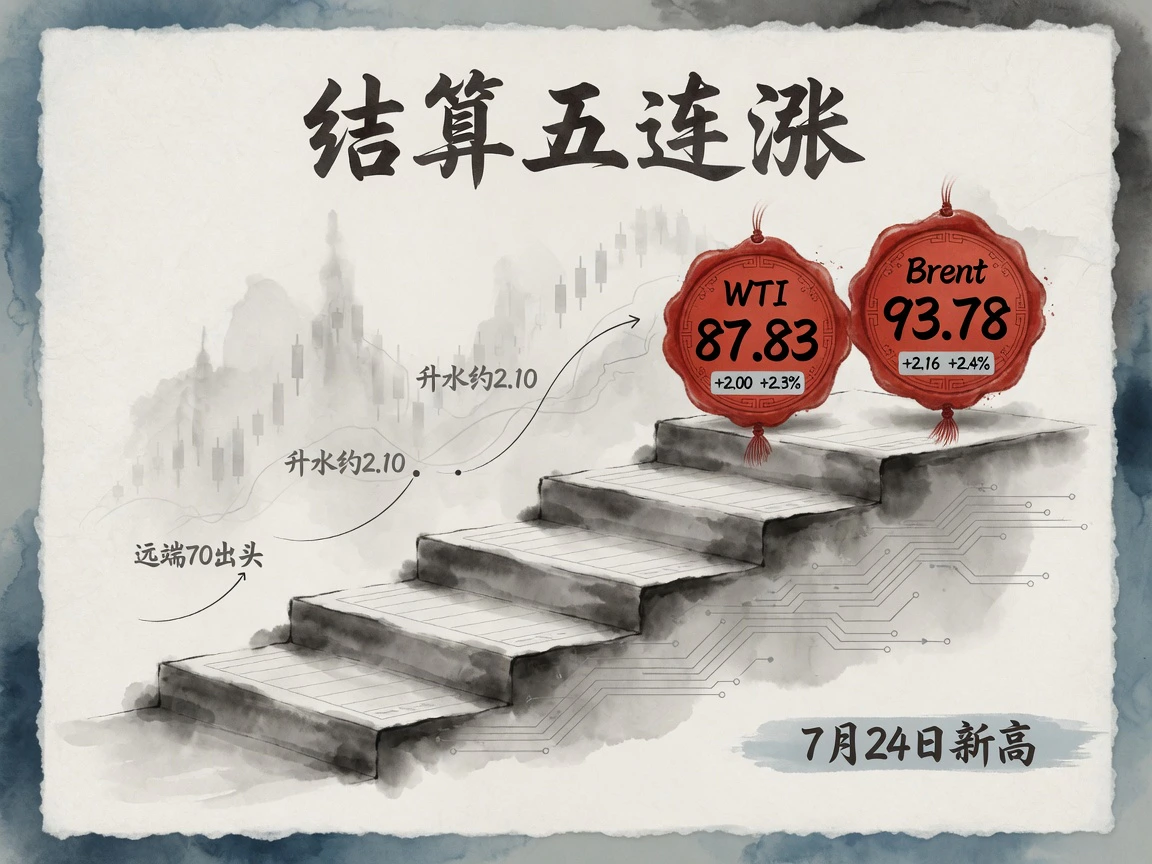
Official August 20 settlements were September WTI at $87.83 a barrel, up $2.00, or 2.3%, and October Brent at $93.78, up $2.16, or 2.4%. Both reached their highest since July 24, rising for a fifth session, according to Reuters' August 20 data.
The roll requires care over measurement. September WTI expired that day and the active contract shifted to October afterward. At 08:24 Beijing time on August 21, electronic continuous CL was $86.12 and continuous BZ Brent $93.15. The difference from September settlement mainly reflected the discounted roll, with modest early Asian weakness only secondary.
Brent showed deep backwardation. October/November stayed near a high $2.10 a barrel, December slipped toward $89.4, and deferred prices declined gently toward the low $70s around 2029. The steep front curve showed buyers paying heavily to secure immediate barrels. Deferred pricing reflected an expectation that geopolitical interruption would eventually ease and balances normalize over time.
Fundamental divergence: successive crude builds contrast with scarce diesel and record cracks
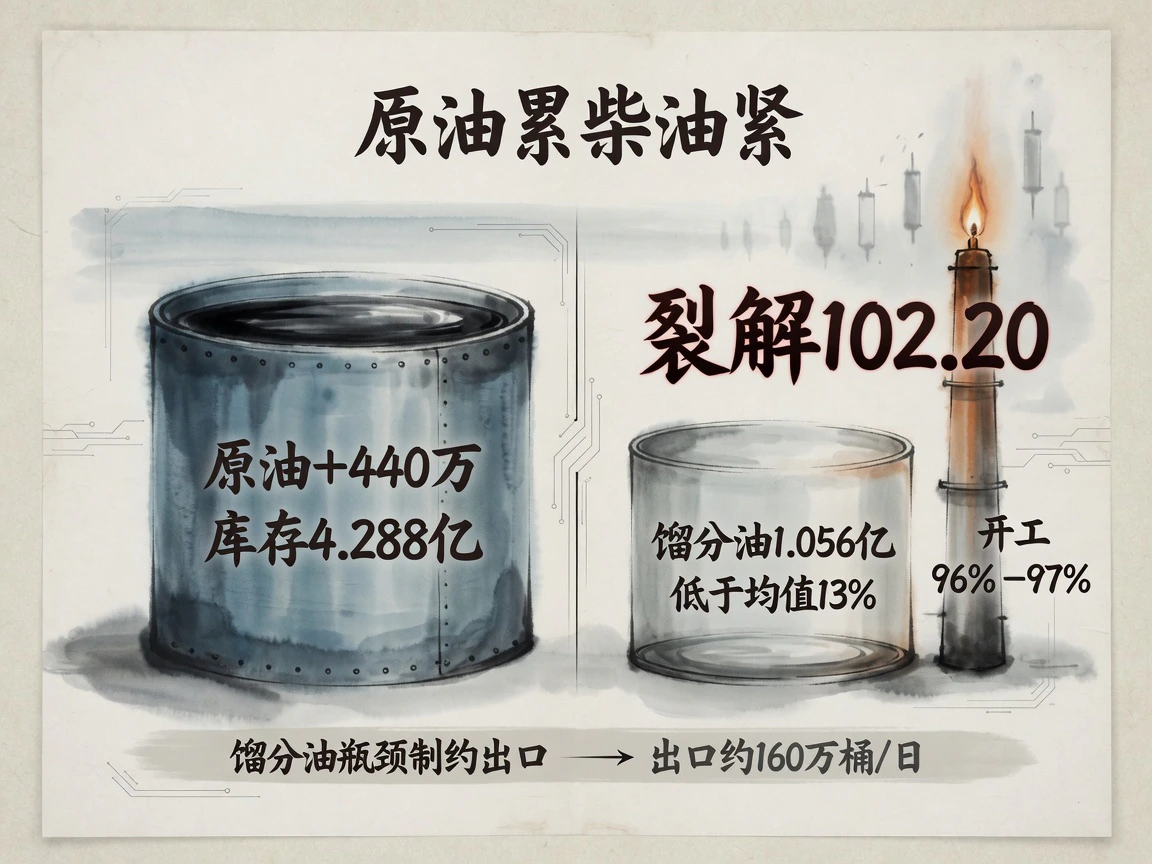
The EIA's August 19 report for the week through August 14 showed sharp divergence. Commercial crude rose 4.4 million barrels to 428.8 million, near the five-year seasonal average and a third consecutive build. On aggregate physical crude alone, supply was not scarce.
The pressure was concentrated in products. Distillates fell to 105.6 million barrels, the lowest for the season since 1996 and about 13% below the five-year average. Even refinery utilization at extreme 96%–97% loads could not close the gap. U.S. diesel cracks reached a record $102.20 a barrel on August 17 and remained in triple digits. The structural shortage reflected combined Middle Eastern and Russian diesel/gasoil exports nearly halving from pre-conflict levels to about 1.6 million barrels daily. Refinery output and middle-distillate disruption, rather than an absolute crude deficit, were the real bottlenecks.
Supply constraints: OPEC+ increases are largely nominal when export channels are blocked

No new producer decision had appeared. The August 2 eight-country OPEC+ ministerial meeting set restoration of 188,000 barrels a day of quota from September, nominally completing the reversal of 2023 voluntary cuts. No further change was expected this year; the next JMMC meeting was scheduled September 6. Severe Hormuz disruption greatly reduced paper quotas' relevance to immediate delivery. Whatever capacity upstream releases, only crude safely shipped out becomes real supply.
Macro conditions: a steady dollar and oil-up/stocks-down pattern confirm a supply driver
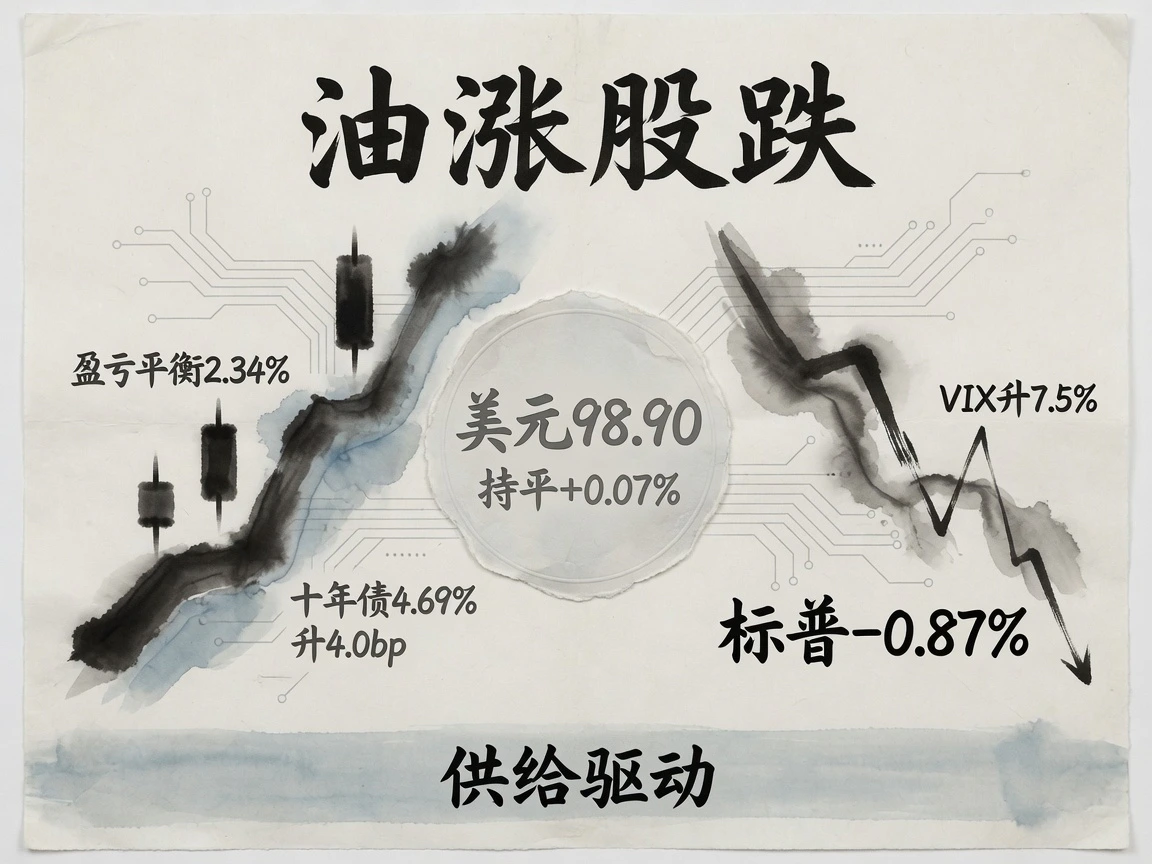
The external asset backdrop was broadly neutral and exogenous to oil. The dollar index closed at 98.90, up 0.07%, providing little currency constraint. The ten-year Treasury yield rose four basis points to 4.69%, and ten-year breakeven inflation widened four to 2.34%, showing oil and product inflation feeding back into longer-run persistence pricing. All three major U.S. indexes fell, with the S&P 500 down 0.87% and VIX up 7.5%. Higher oil alongside weaker risk assets clearly located the driver in geopolitical supply shocks, rather than broad risk appetite.
Geopolitics: secondary-sanctions expectations rise as extreme insurance costs and withdrawn capacity depress traffic
On August 19–20, Washington threatened its most severe economic action on Iran and secondary sanctions on all third parties providing a lifeline, especially smuggling networks, settlement channels and concealed ship registrations. Treasury had already sanctioned more than one hundred Iran-linked tankers, petrochemical carriers and related entities in late July, directly targeting export cash flow. The UAE cut all economic and financial ties after nearby missile incidents.
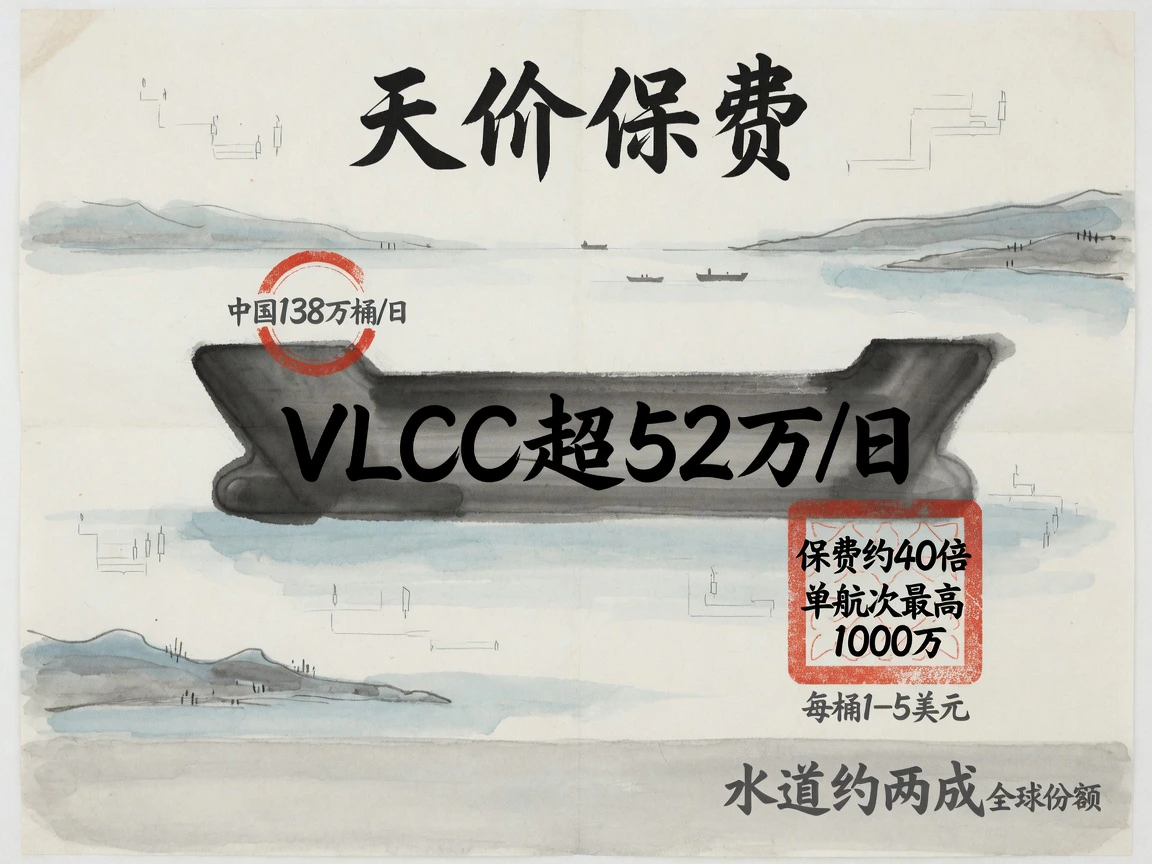
China is Iran's main crude buyer, receiving about 1.38 million barrels daily in 2025. If secondary sanctions extend to Chinese entities, impacts on trade routes and geopolitics would multiply sharply. Details had not yet arrived, but derivatives and physical trade were already discounting potential default risk.
Shipping spillover costs were more immediate. TD3C Middle East–China VLCC time-charter equivalents exceeded $520,000 daily. Hormuz war-risk surcharges were roughly forty times normal, with peak single-voyage additions near $10 million, citing Lloyd's List's August 19 briefing and straits.live's August 18 freight tracking. Direct shipping and insurance added $1–$5 per barrel. The harder constraint was most major owners withdrawing because of premiums and security, leaving actual daily traffic a fraction of prewar norms. Reopening a chokepoint handling nearly one-fifth of global seaborne crude directly determines the pace at which backwardation can converge.
Pricing: tight nearby and loose deferred supply, without extreme speculative crowding
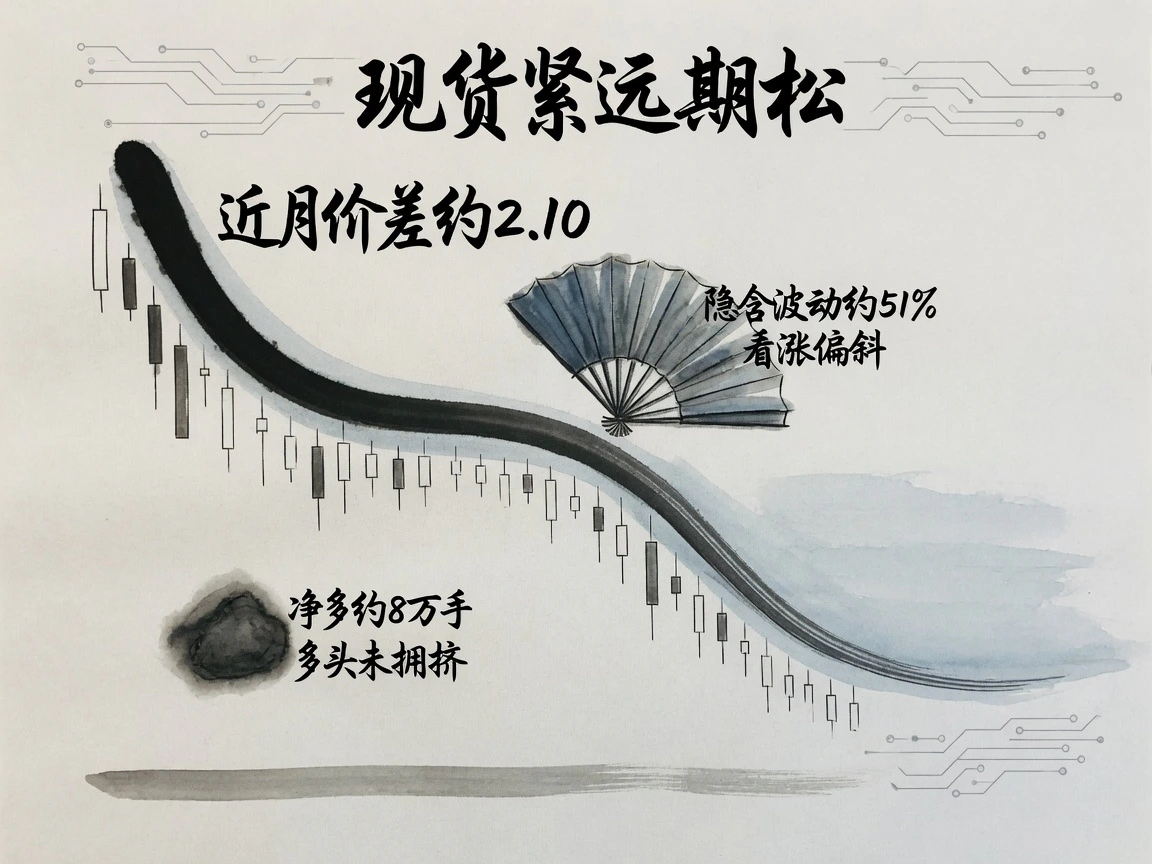
Deep backwardation, record diesel cracks and nearby spreads above $2.10 formed a clear near-tight/far-loose pattern. Options corroborated it: WTI thirty-day implied volatility, CME CVOL, was near 51%. Rare call skew meant out-of-the-money calls priced above equally distant puts, breaking oil's usual defensive put bias and showing concentrated hedging against upside tail risk from sudden supply loss.
Speculative positions retained room to move. The CFTC report through August 11 showed managed-money WTI net longs near 80,000 contracts, down from the prior week, with shorts growing faster than longs. Institutions were not blindly chasing one direction; successive gains depended more on physical shortages and geopolitical catalysts. Without extreme long crowding, liquidation cascades on de-escalation were relatively manageable. It also suggested that before sanctions became clear, pullbacks would quickly meet support from immediate physical scarcity.