Understanding the Federal Reserve, Part 12/20
A one-month surge in a few price components can push up headline CPI even if most goods and services are not accelerating. To see through this aggregate distortion, the Cleveland Fed developed two widely followed underlying-inflation measures: median CPI, locating the middle of cumulative expenditure weights, and trimmed-mean CPI, systematically removing extreme changes at both ends. Both address the same question: is upward pressure localized, or spreading broadly through goods and services?
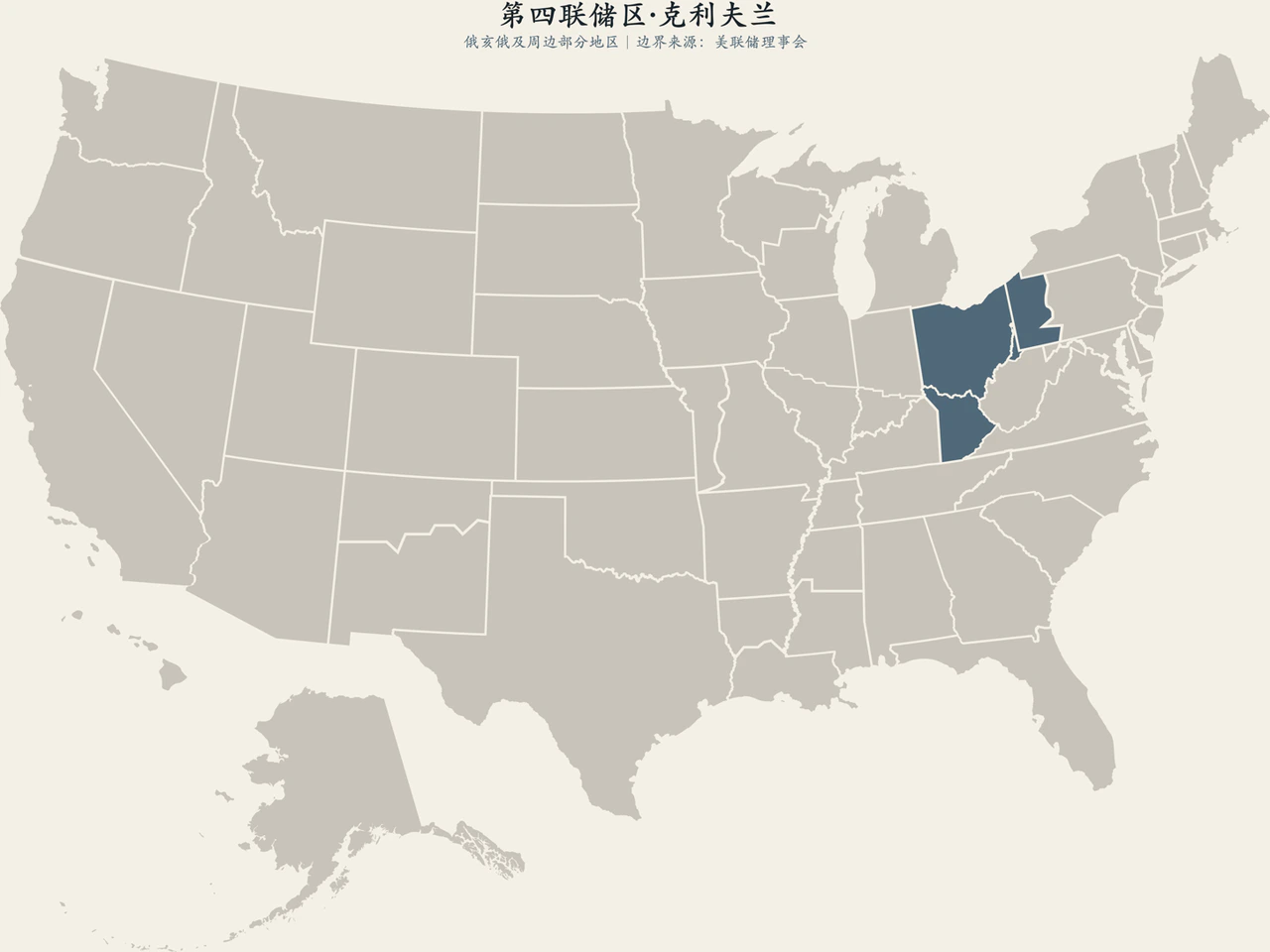
The Fourth Federal Reserve District covers all Ohio, 56 eastern Kentucky counties, 19 western Pennsylvania counties and six northern West Virginia counties, with branches in Cincinnati and Pittsburgh. Traditional heavy industry, energy extraction, modern healthcare and profound demographic change give it a natural microeconomic sensitivity to cycles and supply-side cost shocks.
1. Beyond the Rust Belt label: a district divided along multiple lines
Diverging industrial transitions: from a reinvented steel city to underlying contraction
Ohio and western Pennsylvania have long been tied to steel, auto parts, heavy machinery, rubber, petrochemicals and energy. Automation and global supply-chain restructuring eliminated many traditional production jobs while fostering advanced precision manufacturing, healthcare and professional services. Paths nevertheless diverged. Pittsburgh's successful transformation from steel city into a leading healthcare, university and technology-research hub does not mean other industrial towns can replicate it. Many still face prolonged deindustrialization, younger-worker outmigration and a shrinking fiscal base.
Eastern Kentucky and northern West Virginia add energy-extraction, rural and community-bank perspectives. Surging coal, oil and gas costs burden ordinary households but directly improve extraction regions' factor income and investment returns. Returning manufacturing orders lift employment but can quickly raise materials and blue-collar wage costs. The district provides a detailed cross-section of how external supply and demand shocks redistribute gains and losses along production chains.
Cincinnati and Pittsburgh branches help Cleveland look beyond aggregate statistics to distinct industrial nodes. Research confined to state averages would split regional industrial ecosystems back into administrative borders, erasing the business and funding links the district system was intended to preserve.
From production-floor problems to advanced inflation research
Why did an industrial-heartland bank become one of the Fed system's most authoritative inflation-research centers? Production sites are acutely sensitive to prices. Factory prices respond to energy, basic materials, transport bottlenecks, exchange rates and overseas overcapacity. Sometimes shocks stay in isolated components; sometimes they pass through complex supply chains into most final goods and services. Aggregate indices cannot always distinguish breadth from depth. Conventional core CPI excluding food and energy can also mislead when shocks originate elsewhere, such as auto shortages or logistics blockages.
Cleveland's Center for Inflation Research integrates cross-sectional price distributions, expectations surveys and nowcasts. Its academic and policy value is not a claim that one measure explains everything. It asks policymakers first to specify which statistical noise they want to filter.
2. Median, trimmed mean and nowcasting: a toolkit with limits
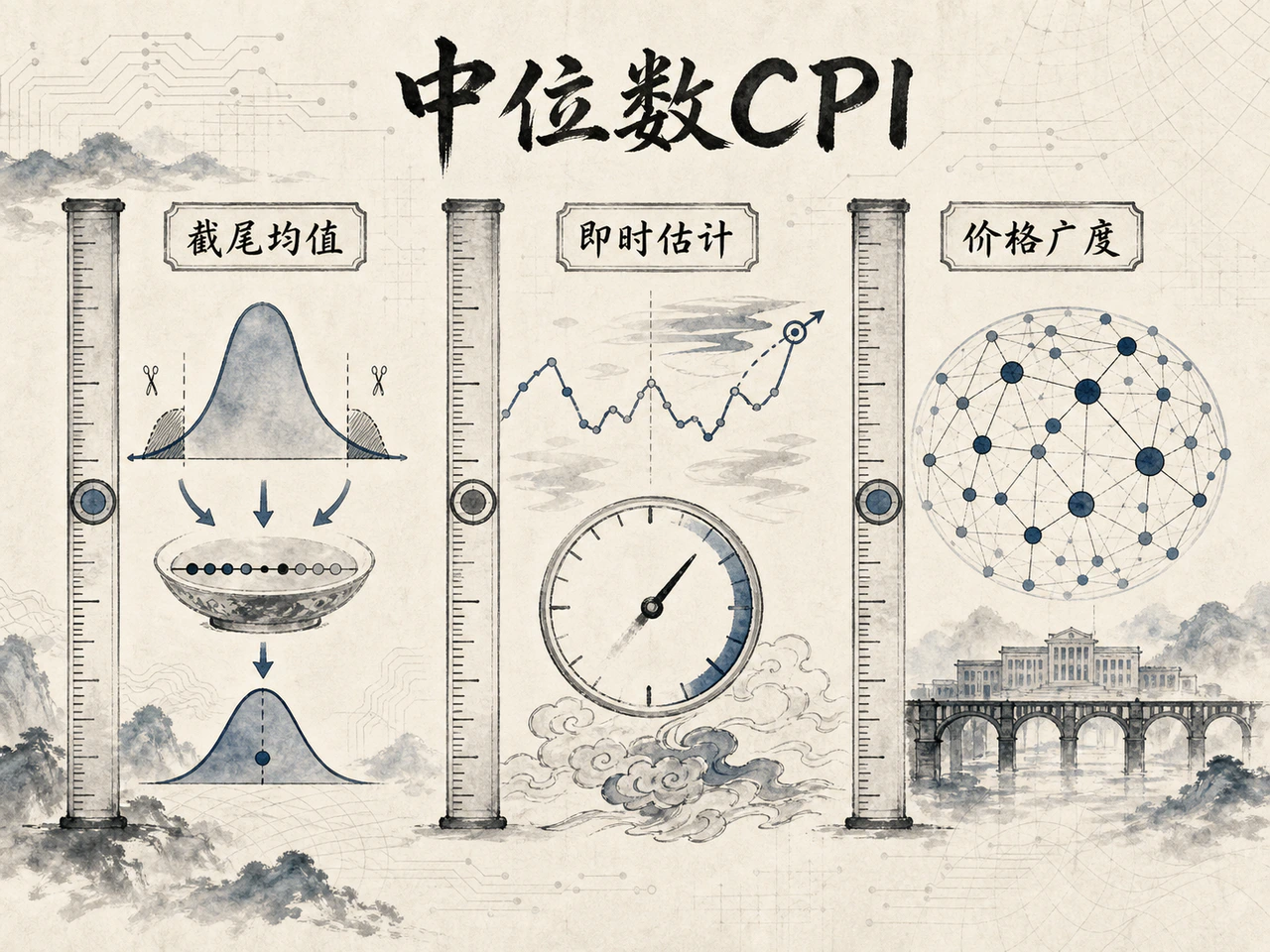
Median CPI: the 50th percentile of expenditure weights
Median CPI ranks all monthly component price changes from lowest to highest, cumulates their consumer-basket expenditure weights and identifies the change at 50% cumulative weight. It is not the simple arithmetic median of all category changes: large-weight components such as housing occupy substantial intervals. When isolated imbalances create extreme rises or falls in the tails, the middle reading can remain stable rather than be distorted by either extreme.
The 16% trimmed-mean CPI removes 8% of expenditure weight from each tail of the price-change distribution and calculates the weighted average for the middle 84%. It retains more cross-sectional information than a single median component while reducing outliers' influence. Both measures are usually smoother than headline CPI. But if supply shocks leave the distribution persistently skewed in one direction, trimming can systematically understate or overstate actual inflation persistence.
Neither is the FOMC's statutory policy target. Headline PCE inflation remains the ultimate policy anchor; statistical techniques cannot remove households' actual food, fuel and housing bills. Underlying measures help assess whether momentum is spreading and taking root, rather than smoothing away broad pressure.
Nowcasting: a probabilistic anchor, not foreknowledge
Cleveland's inflation nowcast absorbs released leading components, high-frequency market prices and related macro variables to estimate unreleased current-month CPI and PCE. It provides a continuously calibrated pre-release expectation, updating with new information. Forecast errors are normal in statistical models; evolving deviations are intrinsic to high-frequency measurement.
Tracking nowcasts requires preserving historical vintages and comparing them with final official releases. Looking only at the last, closest estimate before publication artificially exaggerates advance predictive ability. Nowcasting is appropriately a Bayesian prior for macro expectations, not evidence that the central bank already knows next month's prices.
3. The president's stance and stress tests for the measures
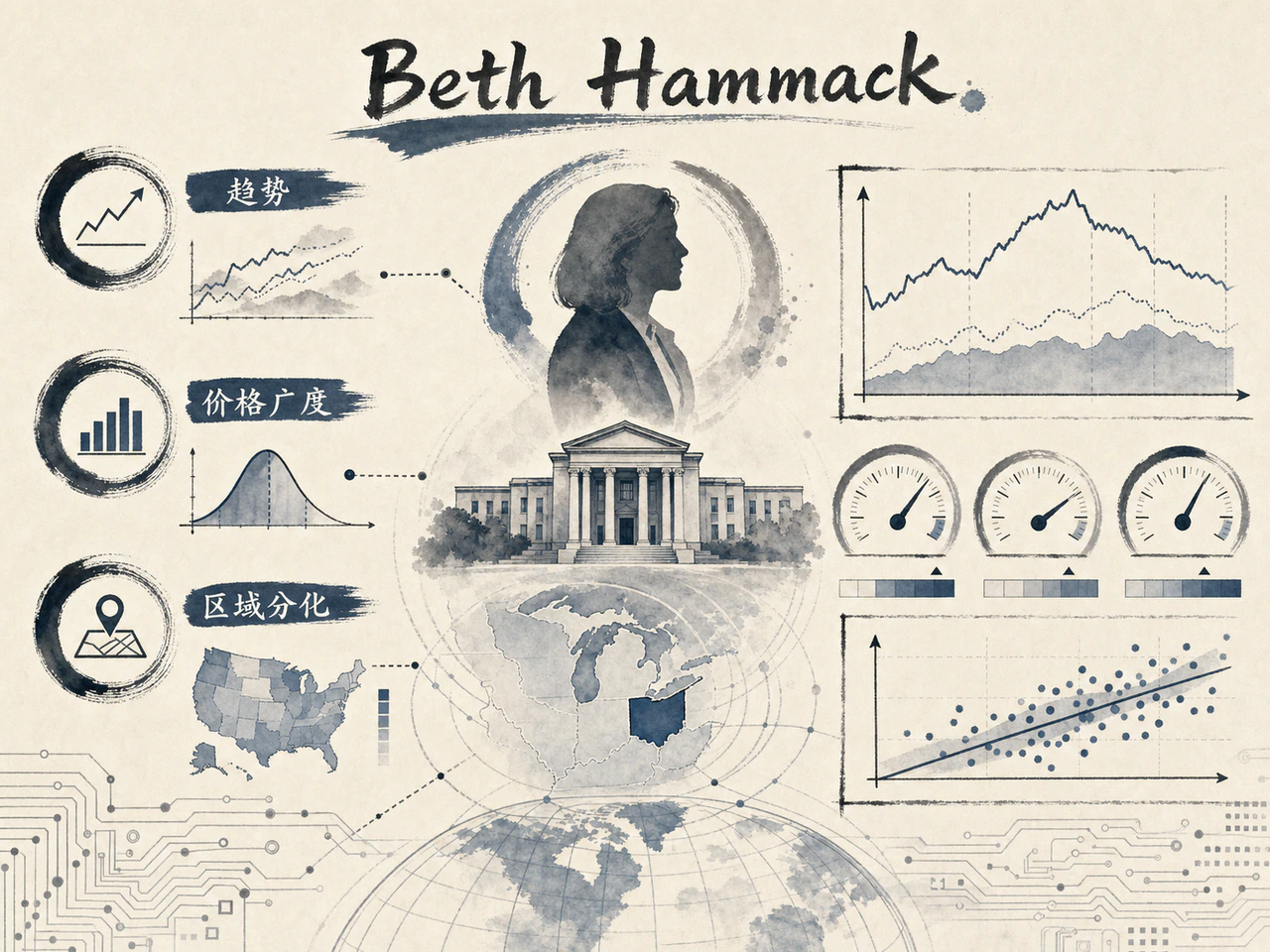
Beth Hammack and the 2026 FOMC vote
Beth M. Hammack became Cleveland Fed president in August 2024. As a rotating 2026 FOMC voter, she has consistently stressed anchoring inflation at 2% and explained her 2026 voting logic with particular attention to macro uncertainty and persistent-inflation risks.
Her framework can be understood through three questions: is restraint sufficient; is a return to target sustainable without further tightening; and how would nonlinear labor weakening reshape the dual-mandate risk balance? Hawk or dove labels cannot capture a decision function with precise conditions.
Three macro scenarios test underlying inflation's usefulness
Three typical scenarios help avoid blind faith in underlying measures.
First, crude surges on short geopolitical friction and quickly reverses. Median and trimmed measures filter the volatile outliers and produce stable readings closer to underlying economic trends.
Second, rents and nonhousing core services rise slowly and moderately but broadly. Such diffusion may not trigger tail trimming; median CPI can reveal persistent underlying inflation earlier than the headline.
Third, broad tariffs or systemic supply bottlenecks raise industrial and consumer prices widely. The whole distribution shifts right with a long tail. Trimming may strip genuine systemic signals as abnormal tails and systematically underestimate pressure.
Experienced fixed-income and macro investors compare median CPI, the 16% trimmed mean, nowcasts and expectations while monitoring the cross-sectional distribution's evolving shape. Agreement across measures makes the trend more reliable. Wider disagreement should prompt analysis of structural distribution changes, rather than selection of data supporting existing positions.
Cleveland establishes a rigorous principle for policy and academic debate: measurement is never neutral technical preparation before policy discussion. Means, medians, fixed exclusions and proportional trimming determine the underlying trend we see. Sound macro analysis must explain the measure's construction and limits clearly.