From August 21 through the August 24 cutoff, the Fed's official calendar produced no new data. All macroeconomic developments centered on communication: Minneapolis Fed President Neel Kashkari's major Sunday television interview explicitly argued further hikes would ultimately be needed. Traders' positioning and attention were focused on Chair Kevin Warsh's forthcoming debut keynote at Jackson Hole on Friday. These threads created a tense narrative: hawks sought to anchor expectations of renewed tightening while the market waited for the new leader to reveal his policy hand.
Kashkari Puts the Need to Do More on the Table

Kashkari appeared Sunday on CBS's Face the Nation. One of three July dissenters who wanted an immediate 25-basis-point increase, he reinforced rather than softened his hawkish stance during the recess.
Discussing inflation, he challenged a long-standing communication habit: for five years the Fed repeatedly promised a return to target within one or two years, only to disappoint. He attributed persistence to continuing external supply shocks, including escalating trade friction and the Iran conflict's transmission to energy. His lack of confidence in a smooth near-term return to target quickly became a warning headline across financial terminals after the interview.
For September 15–16, he retained the standard position of awaiting more data without committing in advance. His addition was forceful: more action would ultimately be needed, though he was unsure that point had been reached now. Even a September hold would therefore be a tactical pause in the pace of hikes, rather than the end of tightening.
Asked about Treasury debt exceeding $40 trillion and long yields locked at multiyear highs, Kashkari was notably cool. He described the secondary Treasury market as functioning normally and placed rollover risk with fiscal authorities. The implication was clear: heavy Treasury issuance was not part of the Fed's mandate, and monetary policy would not provide its backstop.
He also singled out the sudden escalation of US–Canada tariffs: a 50% US levy and rapid Canadian preparations for retaliation. Repeated countermeasures and widening trade friction would significantly prolong and delay disinflation, joining Iranian supply disruption as the two central burdens on expectations.
September Hike Pricing Hovers Near 40%
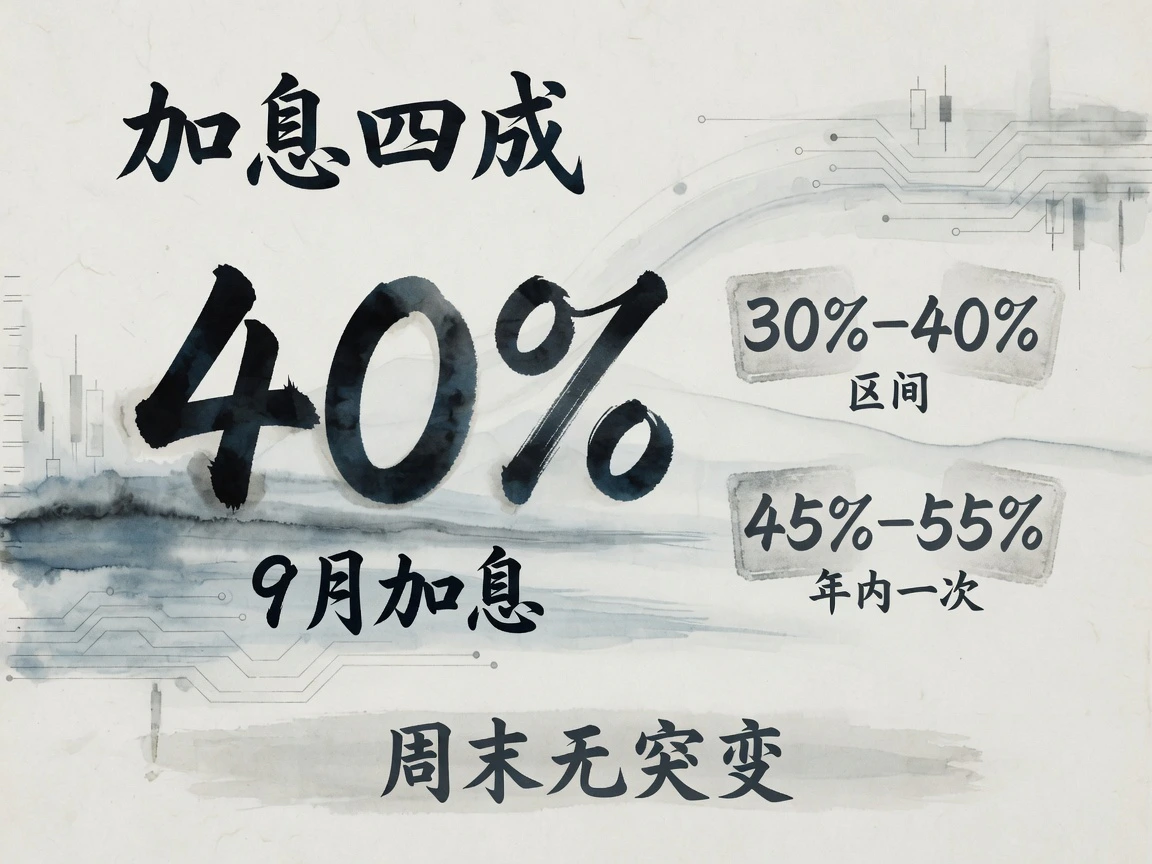
Derivatives' contest over September had reached its middle stage. Market estimates as of Sunday August 23 put a 25-basis-point hike near 40%, citing BBH's weekly outlook using CME FedWatch. Bank and terminal estimates generally ranged from 30%–40% because of sampling times and models, with consistent direction despite varying levels. The cumulative chance of at least one further hike this year had risen to a roughly even 45%–55%. The curve retained the repricing following hawkish July minutes, without an unusual weekend break.
Unlike relatively subdued futures, distrust of Fed communication was growing on Wall Street. Sunday's Financial Times said Warsh was trying to reassure institutional investors after aggressively simplifying guidance: he sharply reduced routine forward guidance and abolished the long-relied-on dot plot. The unusually sparse July guidance was criticized as creating an unnecessary information vacuum, helping lift long-end term premiums and volatility. This made his upcoming debut carry unusually heavy signaling weight.
This Week: PCE Opens, Warsh Closes
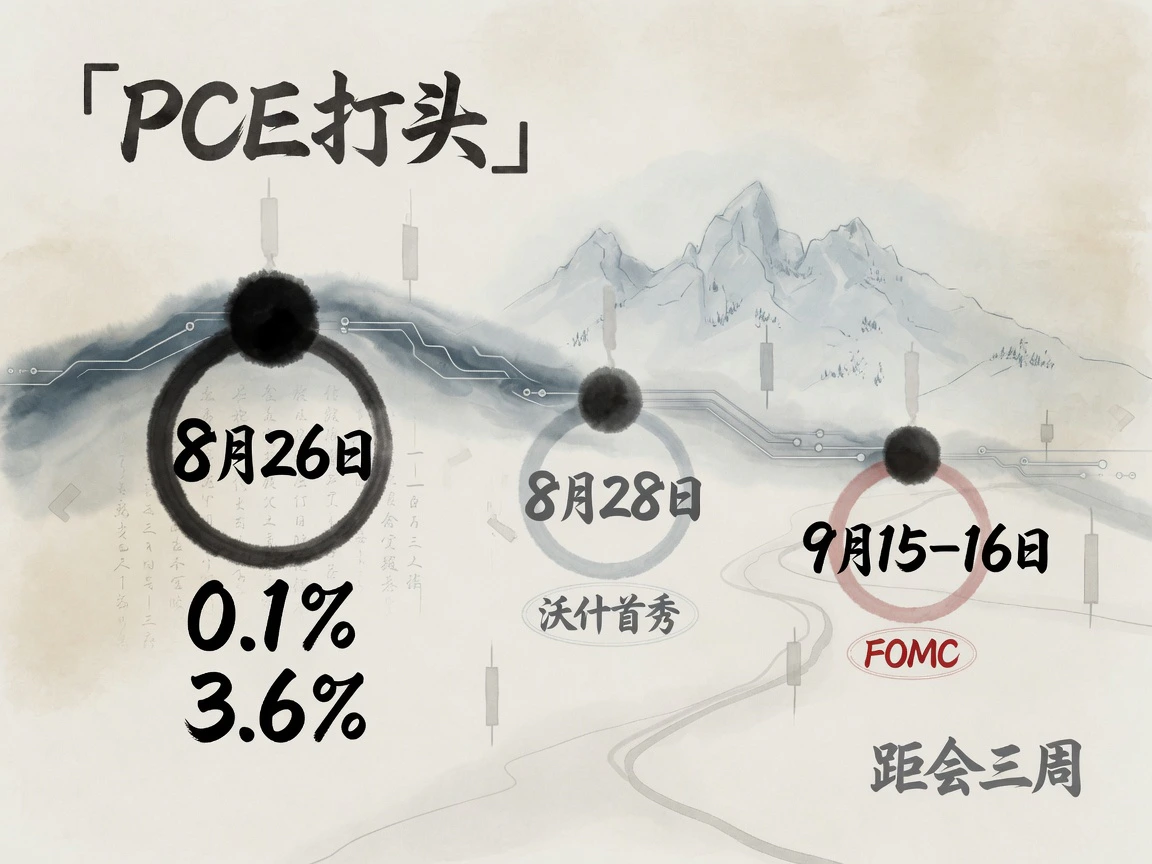
Three firm dates would shape third-quarter macro pricing during the final week of positioning:
Wednesday, August 26: July PCE. Consensus forecasts were around 0.1% month on month and 3.6% year on year for headline, and 0.2% and 3.3% for core. These remained preliminary forecasts awaiting release. As the weightiest official inflation report before September, it would determine whether new data met hawks' threshold for action.
August 27–29: Jackson Hole symposium. The theme was Financial Innovation: Implications for Payments and Policy. Warsh's keynote was scheduled for Friday August 28 at 10 a.m. Eastern, his global public debut after taking office, without live questions. Institutions generally expected a broad explanation of his framework and central-bank reforms, including his long-advocated idea of fewer policy meetings, rather than explicit near-term rate guidance. With only three weeks to the September FOMC, even subtle comments on inflation tolerance or the neutral-rate level would prompt immediate repricing.
September 15–16: FOMC. The final point at which all forecasts and competing expectations would be resolved.