At the August 21, 2026 close, global markets displayed an unusual, divergent combination. Two- and ten-year Treasury yields closed at 4.24% and 4.74%, each up five basis points in a clean parallel shift. S&P 500 nevertheless gained 0.43%, COMEX gold surged 2.4%, and the dollar index slipped only 0.10%. Rising hike expectations alone cannot explain it coherently: risk-free discount rates, monetary credibility and fundamental growth expectations visibly parted ways on Friday.
Friday morning's flash August PMI triggered the move. The week's broader thread was failed long-end stabilization: the yield relief bought by Wednesday's emergency expansion of Treasury repurchases lasted only two sessions before Friday selling erased it.
Fixed income: PMI unlocks a two-year yield pinned for four sessions
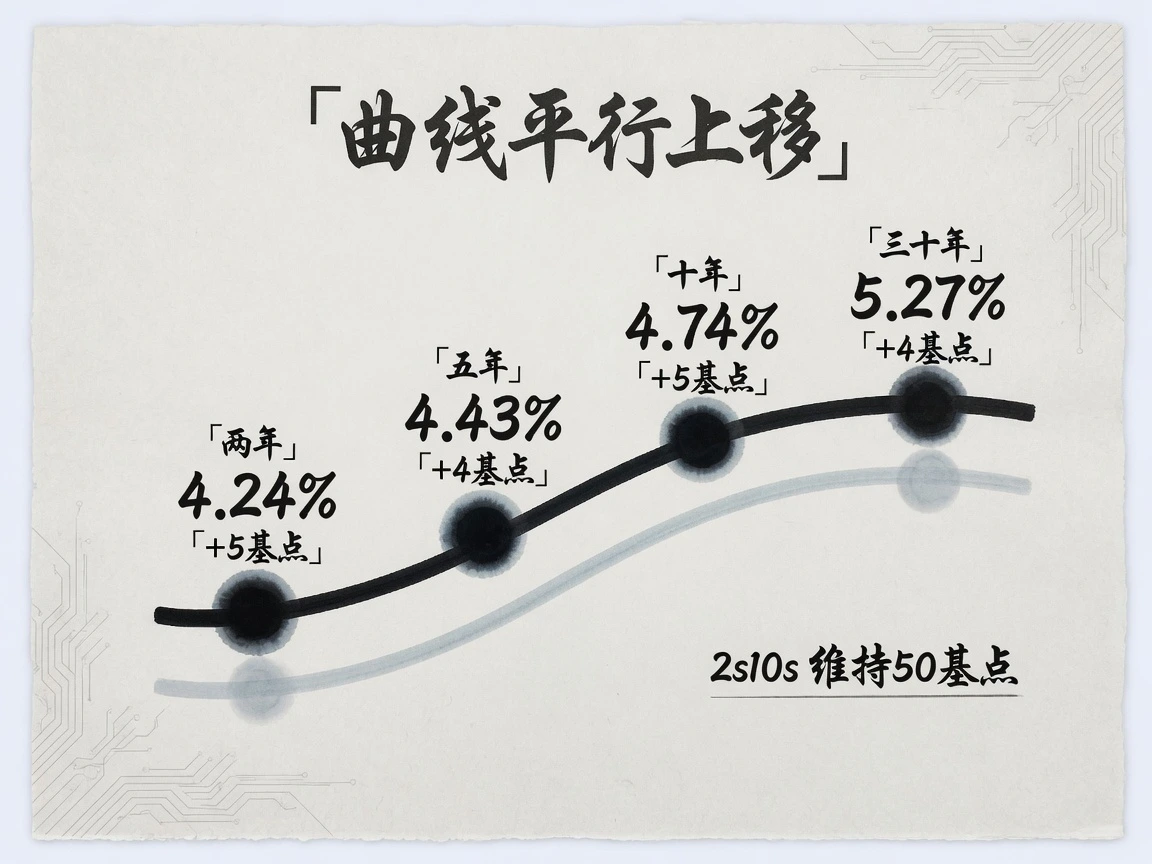
Friday's official Treasury par curve, close to close: two-year 4.19% → 4.24%, +5 basis points; five-year 4.43%, +4; ten-year 4.69% → 4.74%, +5; 30-year 5.27%, +4. The key 2s10s spread stayed at 50 basis points, a textbook parallel upward shift.
The broader timeline highlights the short-end move. Two-year yields stayed at exactly 4.19% for four sessions, August 17–20; Friday's five-basis-point jump delivered almost the entire weekly repricing. Long-end pressure came earlier: Monday–Wednesday the 30-year intraday yield approached 5.34%, a nearly 20-year high according to Reuters. On Wednesday Treasury announced that from September 9 the per-operation cap for liquidity-support buybacks in 10–20- and 20–30-year maturities would at least double from $2 billion to $4 billion. The 30-year fell nine basis points to 5.19%. Bessent told CNBC Thursday that single operations could exceed $4 billion, but investors did not fully accept the assurance and yields rebounded four basis points. By Friday, the respite was gone.
Friday's ten-year breakeven stayed exactly at 2.34%, implying almost all five basis points of nominal increase went into real yields. Subtracting compensation from the official nominal yield gives about 2.40%. Earlier in the week compensation rose from 2.27% to 2.34%, pricing fiscal supply and sticky inflation; Friday's stable compensation and higher real yield instead priced a growth impulse.
Rate derivatives repriced too. A fed-funds monitor updated early August 22 Eastern time raised September 25-basis-point hike odds from about 35% to 39%. Constraints remained severe: public debt had just exceeded $40 trillion and year-to-date net interest costs were about $1.2 trillion. Whether a few billion in buybacks could absorb relentless long supply remained unresolved. When the president said Friday he had not instructed the secretary to intervene and the White House returned authority to Treasury, secondary-market selling had already delivered its verdict.
Weekend electronic trading recovered a little: by late August 23 Eastern time, two-year yields were 4.223%, ten-year 4.716% and 30-year 5.255%, about 1.5–2.5 basis points below Friday. This was thin electronic-market trading, not official closing prices.
Macro: services heats to 56.8 and September increases are repriced
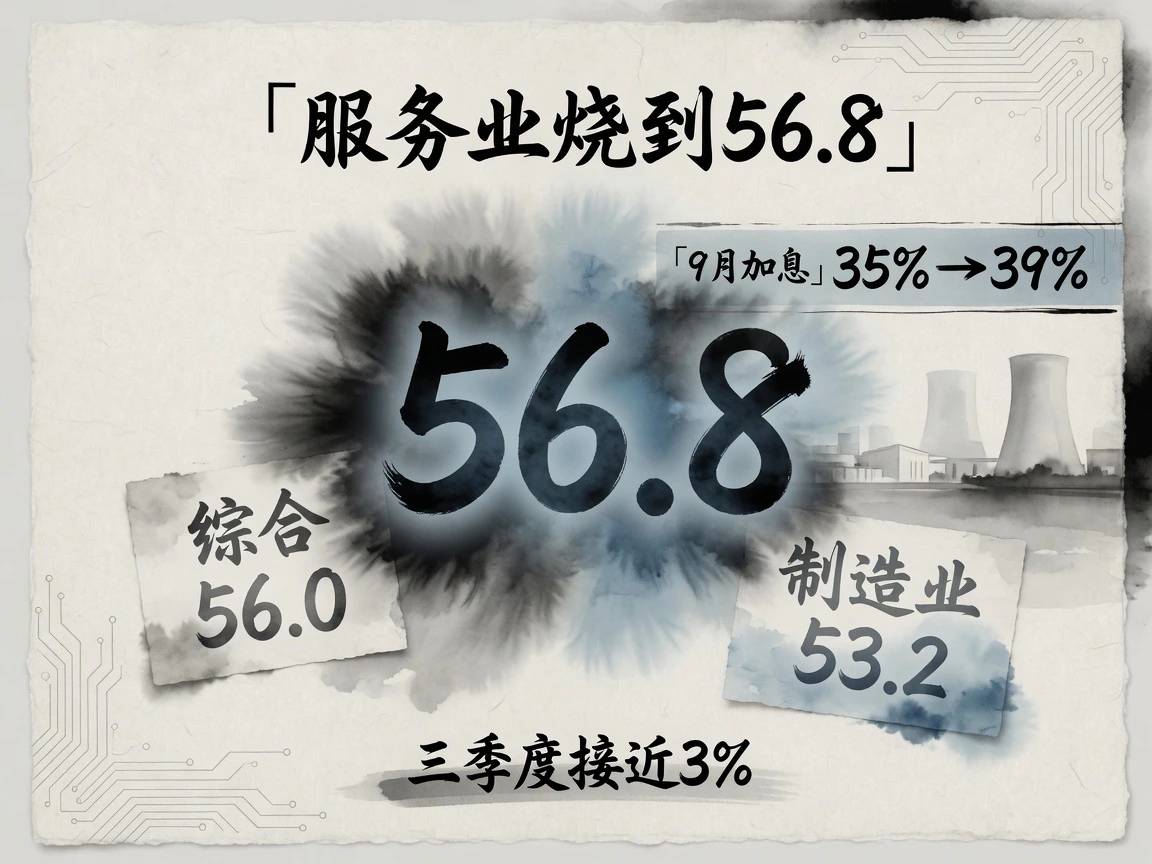
At 9:45 a.m. Eastern Friday, S&P Global's flash August composite PMI reached 56.0, the highest since April 2022. Services jumped to 56.8, a 20-month high, far above Reuters expectations around 54; manufacturing slipped to a five-month low of 53.2. Survey conversion implied third-quarter annualized growth near 3% versus second-quarter 1.5%. Services hiring rose at its fastest in 19 months.
The release brought the week's split macro picture into focus: hot surveys versus cooler hard data. Monday's Empire State manufacturing index reached 20.6, a more-than-four-year high. Tuesday's housing starts fell 12.4% to an annualized 1.239 million, cutting Atlanta GDPNow from 4.3% to 4.0%. Wednesday's July FOMC minutes showed a 9–3 vote holding 3.50%–3.75%, with all three dissenters favoring an immediate 25-basis-point increase and several participants saying further tightening was likely necessary without sustained disinflation. Thursday claims fell to 206,000 and Philadelphia manufacturing reached 47.4, both better than forecasts.
By Friday, four third-quarter growth estimates remained hard to reconcile: Atlanta 4.0%, New York 2.3%, St. Louis 1.9% and PMI near 3%. Their September-policy implication nevertheless converged: accelerating activity made the case for maintained restraint or another increase harder to disprove. Cleveland nowcasting placed August core PCE near 3.3% year on year, while official July PCE still awaited August 26.
Overseas conditions were mixed. Eurozone composite PMI was 52.1 and manufacturing 52.8, the highest since May 2022. UK July retail sales fell 0.5%, but stronger-than-expected services lifted flash PMI to a four-month high.
Commodities: oil rises and gold surges, pricing dollar credibility
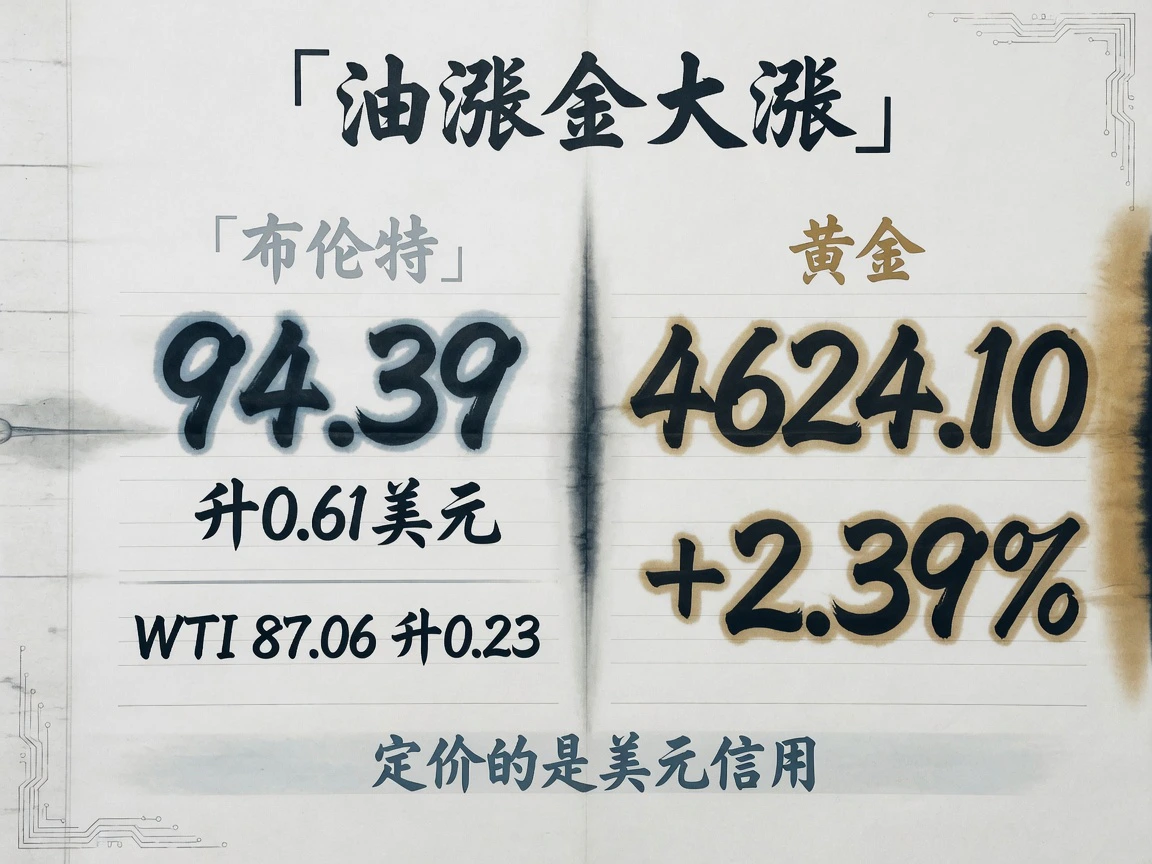
Oil recorded its sixth consecutive rising daily candle Friday, though the advance narrowed. October Brent settled $0.61 higher at $94.39 a barrel and October WTI $0.23 higher at $87.06. WTI's front month switched to October Thursday; some terminals' -0.88% reflected a rolling-definition distortion. Weekly gains were Brent 6.39% and WTI 5.66%.
The week's oil logic was consistent. Monday's temporary ceasefire window expired without renewal, rebuilding a closed-Strait premium. Wednesday the UAE suspended financial and trade ties with Iran; even an unexpected 4.4 million-barrel EIA crude build could not reverse it. Thursday Bessent delayed details of the toughest-ever sanctions until Monday, and Brent jumped 2.36%, its largest daily gain that week. Deep backwardation persisted: WTI October–December about $4 and Brent–WTI about $7.33, reflecting competition for physical seaborne supply. Latest official counts showed seven Strait transits through Thursday, with no VLCC or LNG carriers.
Inventories diverged: commercial crude built for three weeks, but Cushing fell 1.3 million barrels, distillates 1.53 million and stood 13% below the five-year seasonal average, while SPR released 5.27 million. Aggregate onshore supply looked ample, but deliverable crude and middle distillates were tight. Diesel cracks exceeded $100 a barrel for the first time, with product shortages leading crude higher.
Gold priced a different issue. Front-month COMEX settled at $4,624.10 an ounce Friday, +2.39%, and gained 5.56% for a third weekly rise. Its sharpest jump occurred Wednesday with the buyback expansion. Friday's five-basis-point ten-year nominal-yield rise, stable compensation and dollar decline of only 0.10% cannot explain a gold surge exceeding $100 through conventional real-rate and currency variables. Gold was absorbing a dollar-credibility discount after stabilization hopes disappointed. This illuminates rising yields, higher equities and surging gold: growth remained, but sovereign currency and Treasury credibility faced scrutiny.
Equities: stocks find other anchors as yields rise
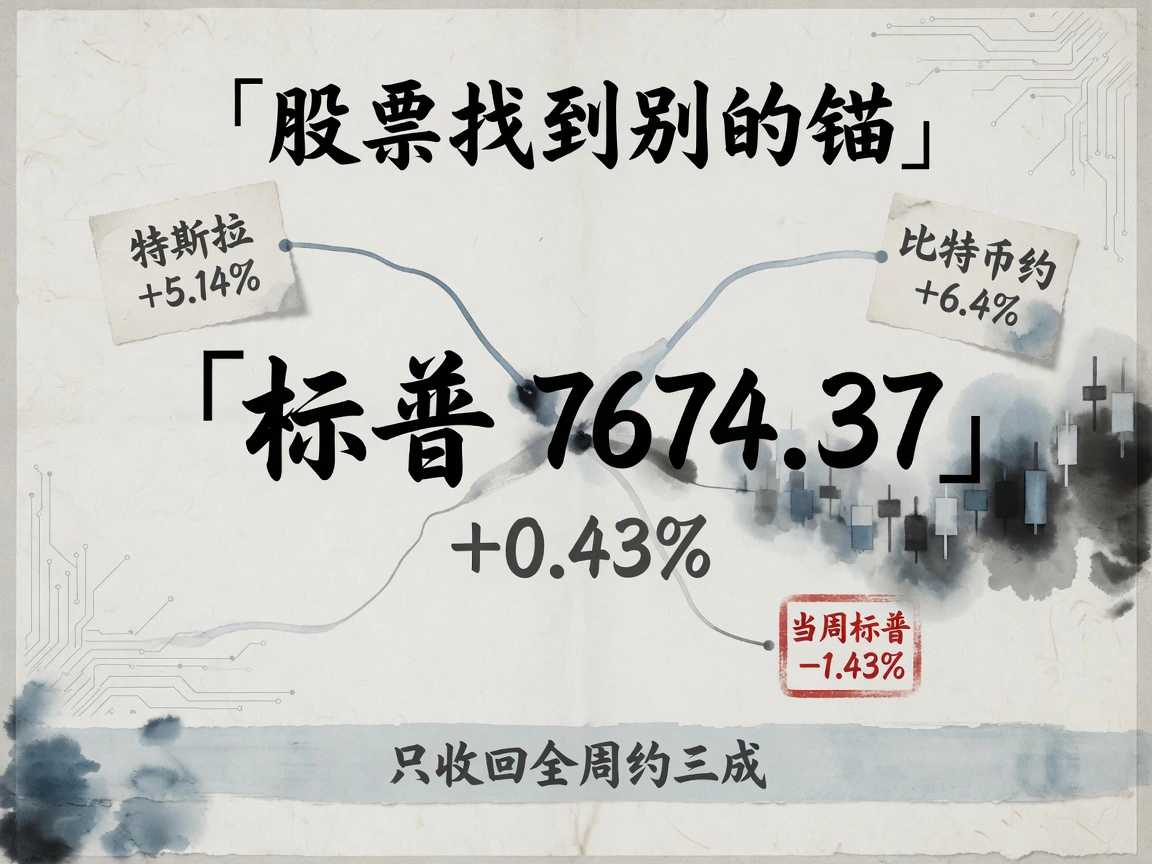
Friday answered whether equities could find support beyond rising risk-free yields, with a cautiously positive result. S&P 500 closed at 7,674.37, +0.43%; Nasdaq Composite +0.43%; Dow +0.98%; Russell 2000 +0.85%. VIX fell 5.5% to 15.13.
Three anchors steadied stocks: strong services PMI reduced recession fears; Tesla gained 5.14% after receiving a Nevada autonomous passenger-service license; and Bitcoin's roughly 6.4% rise lifted Robinhood 13.7% and Coinbase 8.2%, widening risk appetite.
Three cracks remained beneath the 0.43% rise. Technology leaders did not rally together: Nasdaq 100 gained only 0.33%, Nvidia fell another 0.98% and the Magnificent 7 lacked a renewed offensive. Utilities dropped 2.3%, showing rate-driven duration penalties still worked. Materials rose 2.2% on a softer dollar and commodity inflation, a different valuation dynamic from chips. Friday recovered only about 30% of the weekly loss.
The weekly theme remained higher long yields compressing duration valuations for AI capital-expenditure stocks. S&P 500 fell 1.43% and Nasdaq 2.05%, ending three weekly gains; Philadelphia semiconductors lost 5.45%. Nvidia fell 4.64%, Meta 6.77%, Tesla rose 6.02%, Merck 12.3%, and Moderna jumped from $63 to $145 on melanoma mRNA trial advances. Walmart lost over 10%, its worst week since 2022; Coinbase gained about 25.6%. Nikkei 225 lost 3.93% while Hang Seng gained 3.55%.
Weekend corporate news reshaped Monday's Asian implications. Alibaba launched a Hong Kong placement up to about HK$80.2 billion Sunday, issuing 710 million shares at HK$112.70 versus Friday's HK$123.00, an official 8.4% discount; some institutions' 3.6% used U.S. ADRs instead. Proceeds fund full-stack AI infrastructure, with interest reportedly oversubscribed quickly. Shein announced its Hong Kong IPO range Monday, valuing it up to about $27 billion. At publication, Tokyo edged down, Seoul fell about 0.67% and Samsung over 5%, as Friday's KRW 90 trillion–110 trillion shareholder-return approval prompted sell-the-news trading. U.S. futures fluctuated slightly.
Weekend developments: North American tariffs implemented, sanctions text still pending

From Friday's close to Monday morning, the expected final Iran sanctions text did not arrive. Instead, 50% tariffs on about $20 billion of Canadian exports, roughly 5% of its U.S.-bound total, took effect early Saturday. Ottawa announced dollar-for-dollar retaliation from September 8, naming steel, dairy, appliances and agricultural machinery. The White House also announced out-of-quota tariff exemption for up to 300,000 tonnes of ground meat within 90 days. Tighter industrial tariffs alongside food exemptions illustrate implementation uncertainty that directly supports long Treasury term premiums.
Iran sanctions remained a contingent policy trade. Bessent's Sunday opinion column heralded an economic D-Day, but no entity list, secondary tariff rate or exact timing was disclosed before publication; the press conference moved to 14:00 Eastern Monday. China had publicly opposed and refused to cooperate with unilateral sanctions. When electronic oil reopened Sunday evening, some longs reduced heavily sentiment-driven positions: oil fell about $1, WTI to $86.00 and Brent to $93.33. Investors did not blindly add longs before binding text appeared.
Three variables dominate the next week: Wednesday's July core PCE—if near Cleveland's 3.3% nowcast, September hike odds could rise; $183 billion of two-, five- and seven-year auctions Tuesday–Thursday, testing demand before expanded buybacks; and Chair Warsh's first Jackson Hole policy address. Kansas City's schedule places the conference August 27–29 and his keynote Friday at 10 a.m. Eastern, with markets seeking clarity on sticky-inflation responses. Nvidia's Wednesday after-hours earnings will also test how long stocks can rise despite higher yields under tightening conditions.