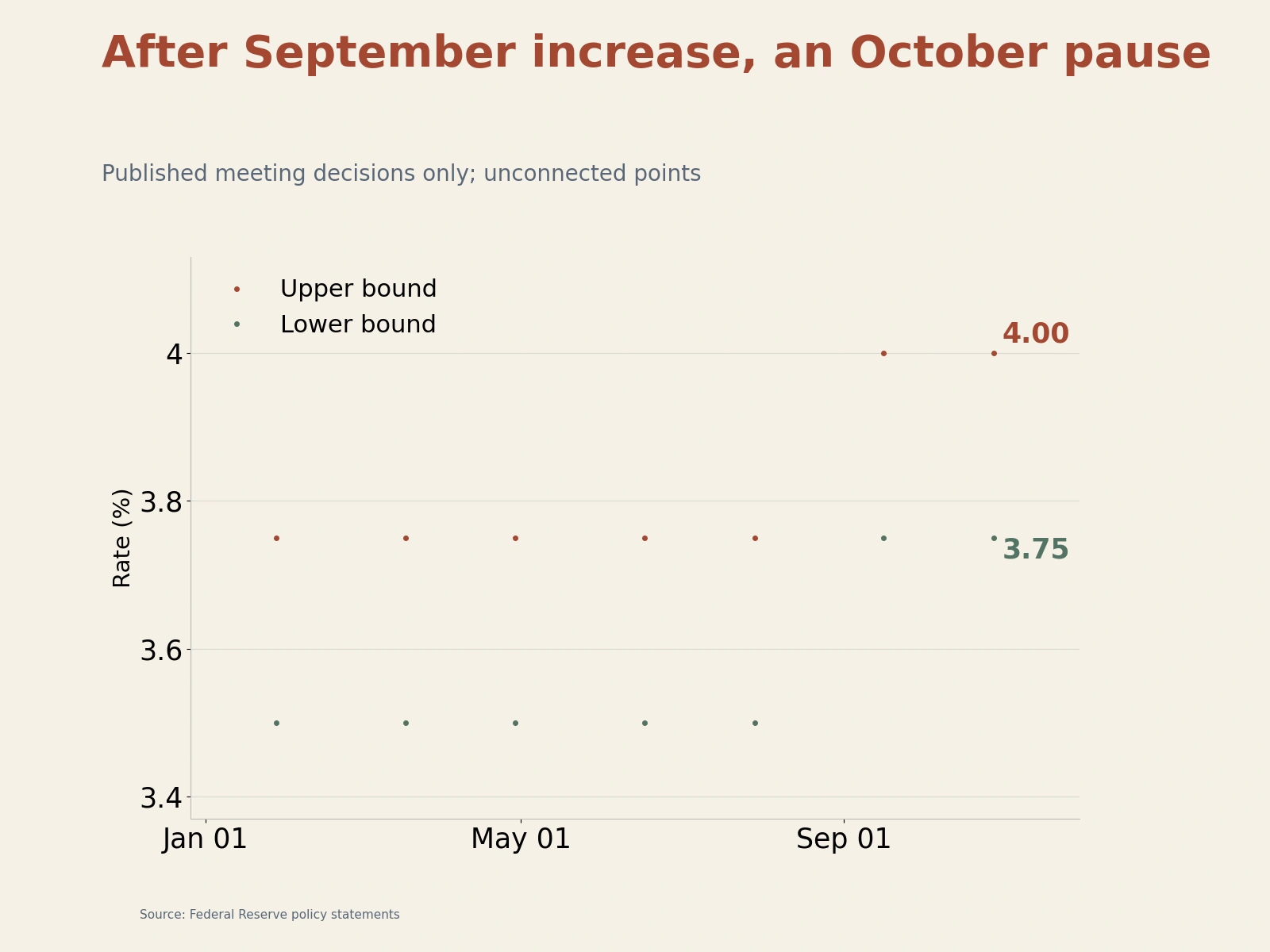
Monday, August 24 was the last full US trading day before the Jackson Hole global central-bank symposium began. The Fed said nothing all day: no public policymaker speeches, policy statements or minutes. At a critical juncture, silence itself can carry signals. Long-term Treasury yields remained near multiyear highs, and fed funds futures showed no retreat in hike expectations. As questions accumulated, all pricing focus and pressure shifted to new Chair Kevin Warsh's expected Friday-morning public debut.
Economic data: the sole new reading favors holding steady

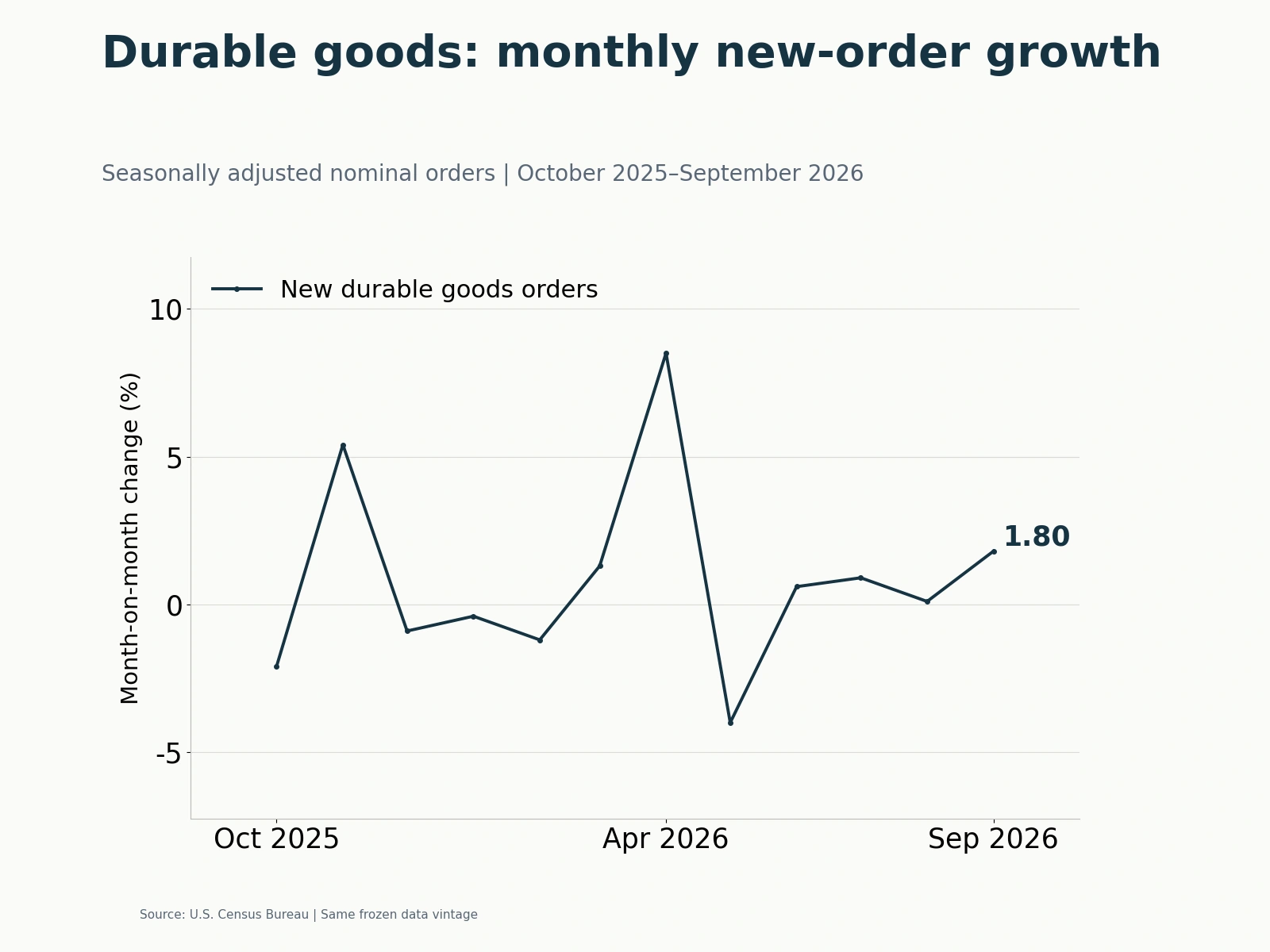
In a sparse macroeconomic window, Monday morning's only policy-relevant reading was the Chicago Fed's July National Activity Index (CFNAI): −0.08, down from June's 0.06 and indicating activity slightly below its long-run historical trend.
The index combines 85 monthly indicators in four broad categories. A modestly negative single month cannot overturn the overall outlook. Yet three of four categories contributed less in July than June, chiefly personal consumption and housing, whose net contribution weakened to −0.09. Employment improved modestly. The more trend-relevant three-month moving average, CFNAI-MA3, edged down to −0.04, still well away from historical thresholds signaling substantive recession.
Its value lies in the marginal direction. With labor cooling at the margin and inflation not fully resolved, weaker second-tier activity data objectively lend more support to holding steady at September's meeting.
Official communication: a silent Fed and media attention on Friday

Monday's official Fed calendar listed no public events by officials. The Board posted routine statistics such as commercial paper and a theoretical academic working paper, none expressing a current policy stance.
Overseas commentary was still digesting Minneapolis Fed President Kashkari's Sunday television interview. Without new official guidance, incremental discussion shifted toward major financial media. Reuters' Monday analysis argued that bond-market anxiety raised the stakes for Warsh's Jackson Hole debut: with long yields at multiyear highs, market participants were eager to hear the chair, in office only since May, explain his inflation resolve, long-run neutral-rate anchor and policy framework.
Policy expectations: roughly 40% hike pricing shows no retreat
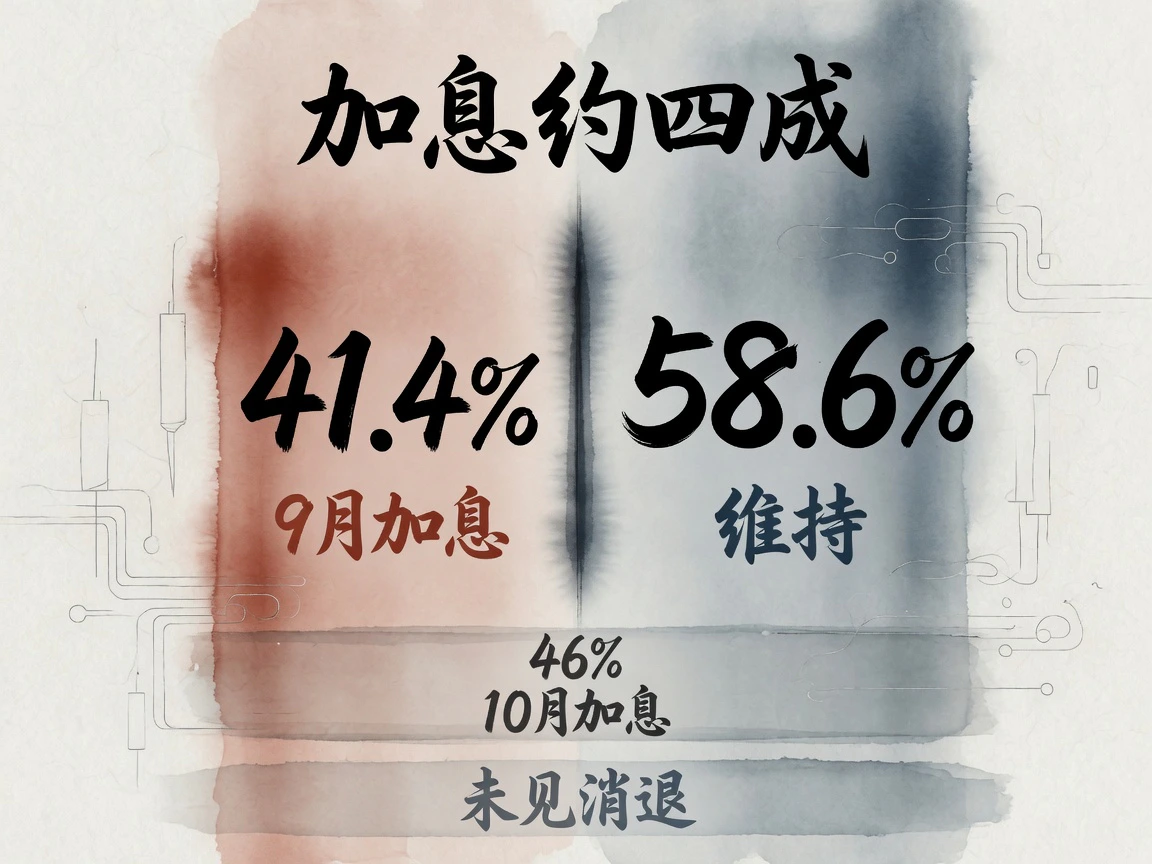
CME FedWatch pricing at the August 24 close put a 25-basis-point hike at the September 15–16 FOMC at about 41.4%, a hold at 58.6% and cuts at zero. Through October, cumulative probabilities were about 46% for 25 basis points of hikes, 11% for 50 basis points and only 43% for maintaining the current range.
Compared with Sunday's roughly 40% tightening probability, front-end expectations had not eased. Even a negative CFNAI failed to diminish hike bets, showing investors would not pivot on one second-tier release and were leaving decisive repricing to the week's main events. Some general financial reporting portrayed a September hold as settled, but that diverged from money committed in derivatives. Monitoring still required clearly time-stamped futures probabilities.
This week's tests: PCE followed by Jackson Hole
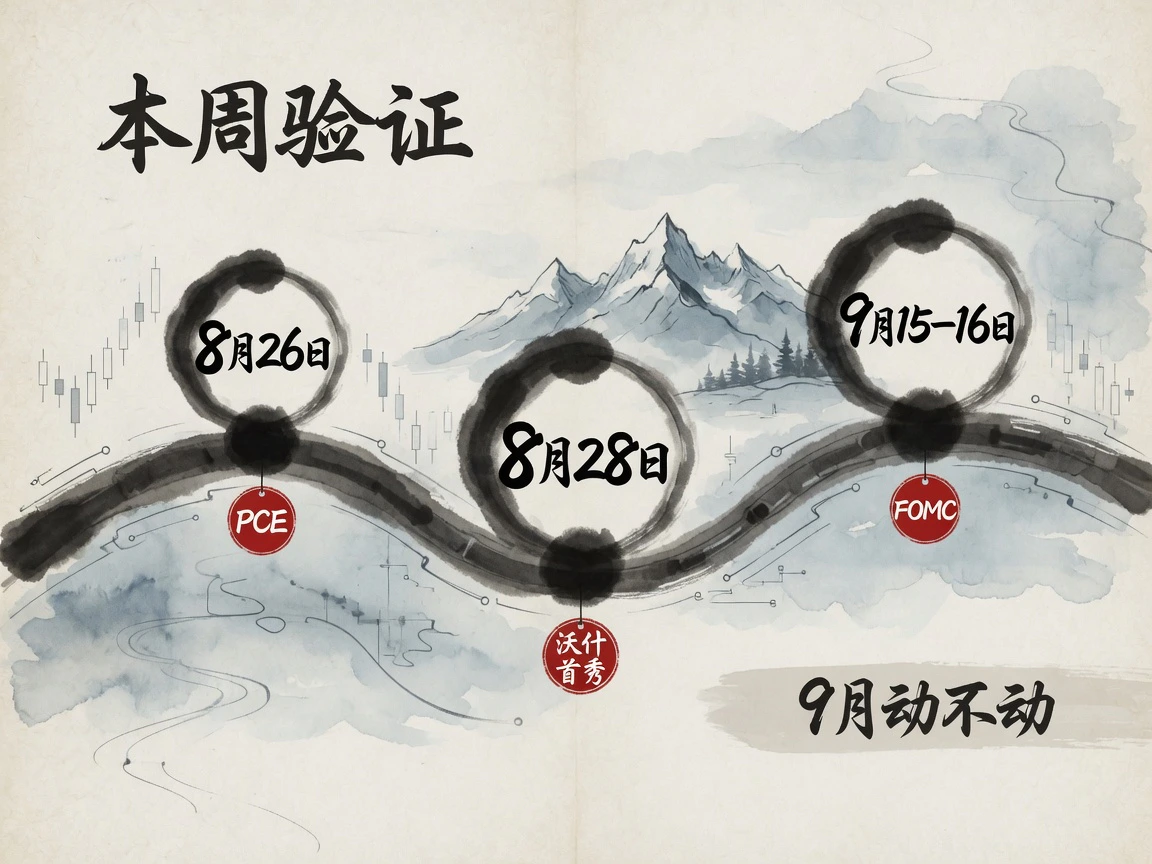
Two intertwined tests would arrive in the middle and latter part of the week.
First was July PCE on Wednesday morning, August 26 US Eastern time, the most important core-inflation evidence before September's decision. The Kansas City Fed's August 27–29 Jackson Hole symposium would follow, themed Financial Innovation: Implications for Payments and Policy. Most important was Warsh's opening keynote at 10 a.m. US Eastern on Friday, August 28, his first major theoretical and policy address since taking control of the Fed.
After the symposium, the September 15–16 FOMC would bring updated quarterly SEP projections and the dot plot. Before then, officials would likely move quickly into the formal premeeting blackout. Each key release, word and pause this week would converge on one question: facing complex two-way risks, would the Fed move in September or hold?