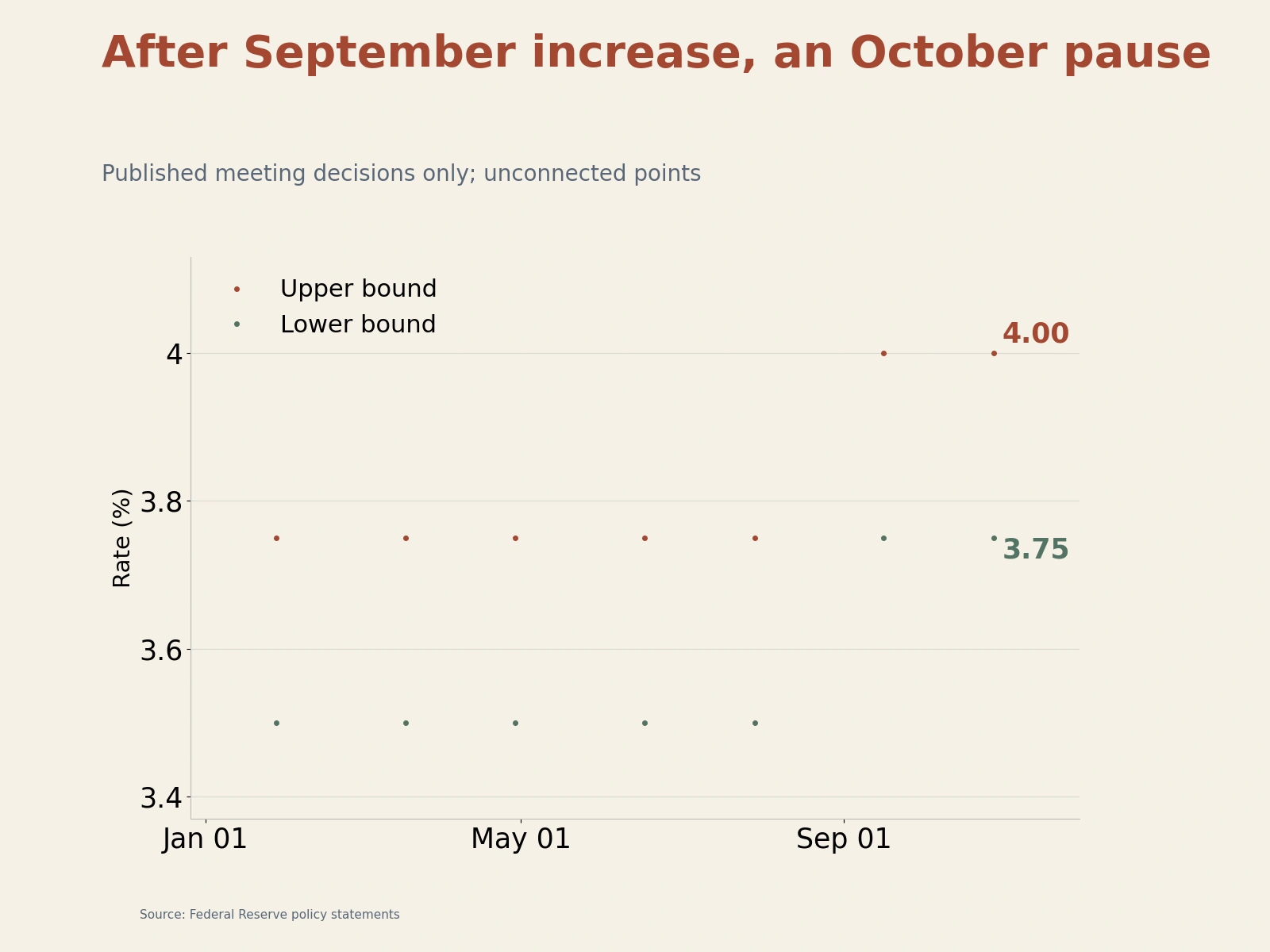
The federal funds target range has been fixed at 3.50%–3.75% since last December. After last month's minutes revealed a hawkish undertone, officials speaking this week avoided prematurely fixing the path. Boston Fed President Collins said policy must tighten if inflation does not decline; Richmond Fed President Barkin likewise refused to prejudge the decision. Consumers' inflation expectations, meanwhile, had already jumped to 5.8%.
Consumer confidence hits a low as inflation expectations accelerate
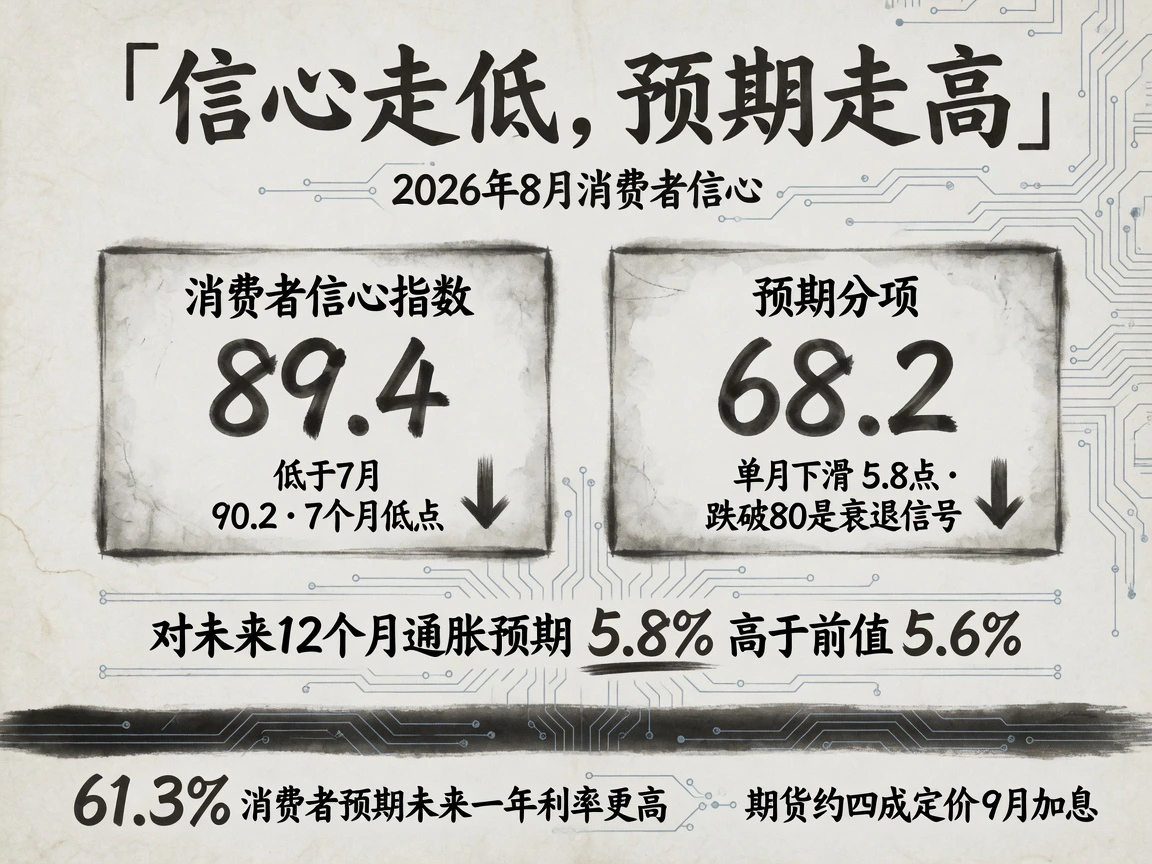
The Conference Board's August 25 consumer confidence index was 89.4, down from July's revised 90.2 and a seven-month low. The expectations component drove the decline, falling 5.8 points to 68.2. Historically, readings below 80 have often been treated as a warning of possible recession within the next year.
More directly constraining policy than weaker sentiment was the rebound in inflation expectations. Median expected price growth over the next 12 months rose to 5.8% from 5.6%; 61.3% of respondents still expected higher rates over the next year. Elevated real-economy inflation expectations aligned with rate derivatives assigning roughly a 40% chance of a September hike.
Collins sets an explicit condition: without evidence of cooling, tightening must resume
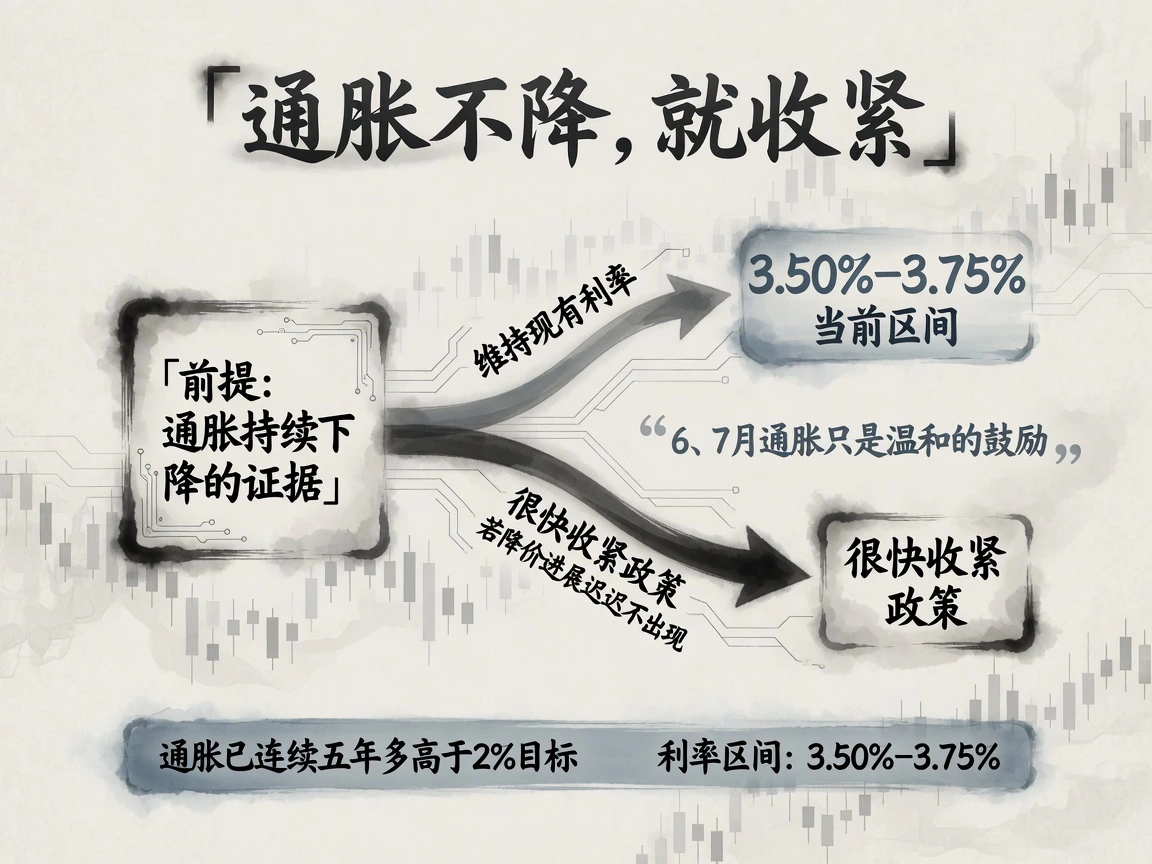
In a detailed economic outlook that day, Susan Collins explained her support for holding rates the previous month and called the current range mildly restrictive. But she made holding conditional on continuing evidence of actual disinflation. Without sustained evidence of price progress, she thought tightening would soon be necessary.
June and July's moderate inflation offered only mild encouragement, in her view, and volatile monthly data were insufficient. The Fed's baseline relied on favorable assumptions: manageable tariff increases, partial Hormuz reopening and productivity gains containing costs. Upside risks were equally real: prolonged strait closure, escalating trade friction and AI investment raising core-goods prices. Her central concern was that headline inflation had remained above 2% for more than five years.
Barkin identifies four puzzles and warns investors about debt
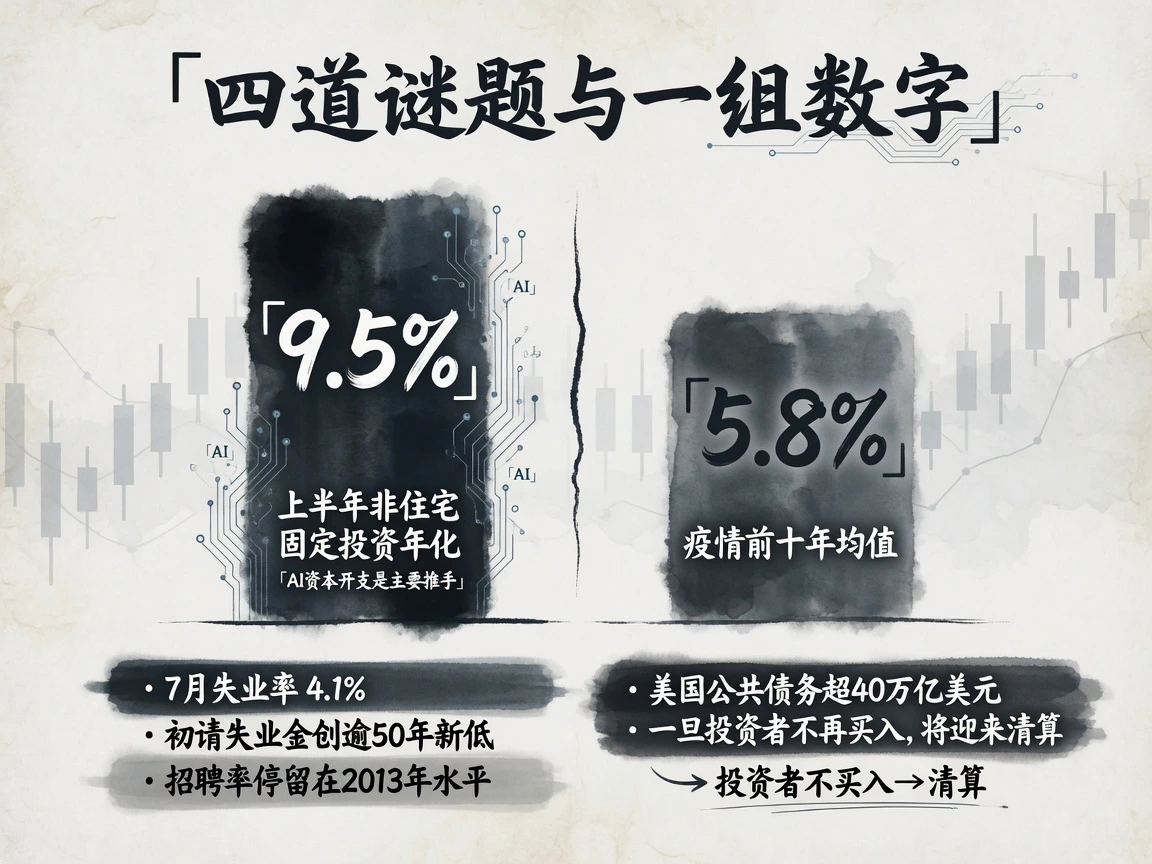
Thomas Barkin continued discussing the mysterious US economy in two public speeches, setting out four policy puzzles: strong economic resilience, expanding business investment despite headwinds, a labor-market stalemate of slower hiring but extremely low layoffs, and persistent inflation.
He highlighted contrasting details. First-half nonresidential fixed investment grew at a 9.5% annualized pace, far above the 5.8% average in the decade before the pandemic, driven chiefly by AI capital spending. July unemployment held at 4.1% and initial claims were near lows of more than half a century, yet the overall hiring rate had fallen back to 2013 levels.
Barkin firmly avoided a policy prediction. Whether another hike was needed or inflation was already easing naturally remained an open question. He also warned financial markets that total federal debt had exceeded $40 trillion; if global investors ceased financing it without question, Treasuries would eventually face a severe reckoning.
Pricing barely moves; tonight's PCE and the symposium debut take center stage
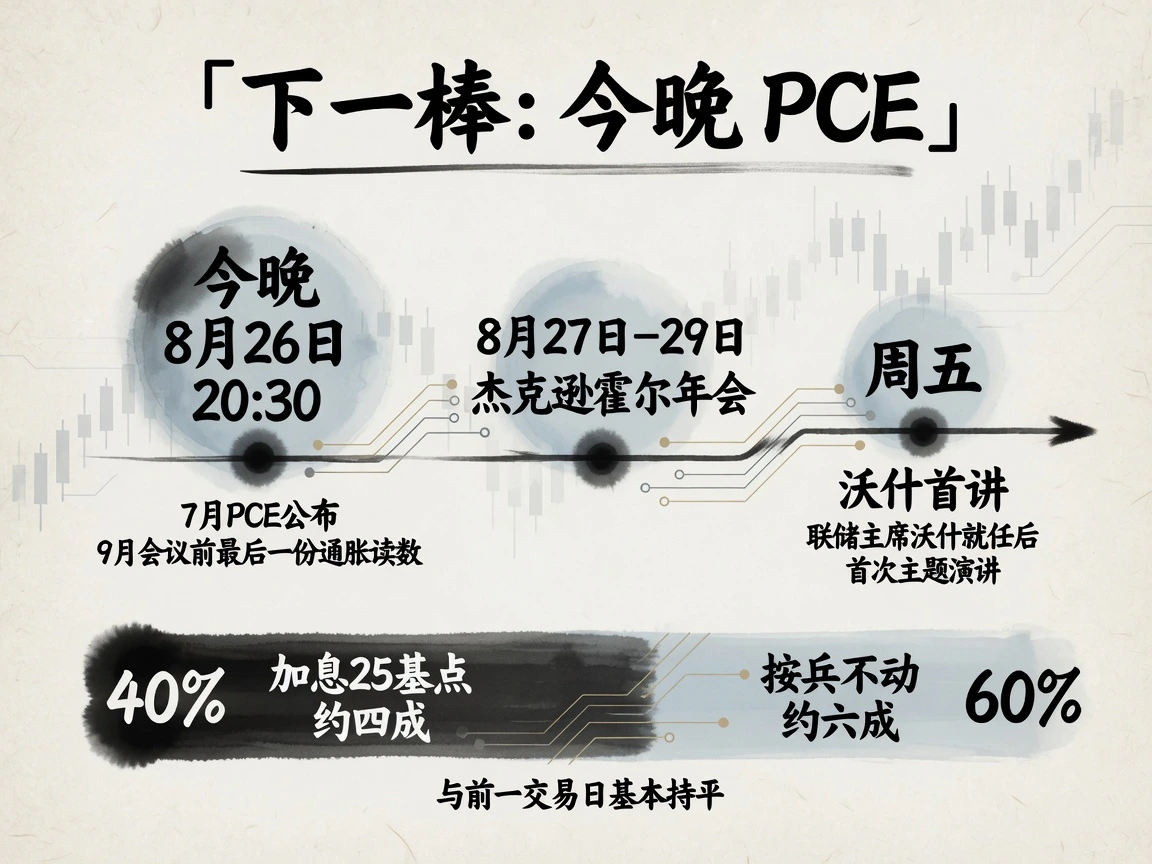
Rate futures reacted quietly to both presidents' conditional comments. At the August 25 close, pricing still put a 25-basis-point hike at the September 15–16 meeting at around 40% and a hold near 60%, broadly unchanged from the preceding session.
The next potential catalyst was tonight. July PCE was due at 20:30 Beijing time on August 26, the most important inflation evidence before September's closed-door policy discussions. The Jackson Hole symposium would follow August 27–29, with new Chair Kevin Warsh giving his first keynote since taking office on Friday. If PCE confirmed rebounding inflation expectations or the symposium signaled a clearer tightening bias, the roughly 40% hike probability could soon be repriced.