The monthly inflation report that had repeatedly moved September hike pricing over the preceding two weeks finally arrived August 26 US Eastern time. BEA reported July core PCE inflation unchanged at 3.3% year on year for a second month, with monthly growth edging up from June's 0.1% to 0.2%. The moderate report gave neither hawks decisive support for further tightening nor full confirmation of smooth disinflation. Core disagreements before September's meeting persisted, leaving the Jackson Hole central-bank symposium at the foot of the Grand Tetons as the focus for pricing.
The Kansas City Fed's official schedule put the symposium on August 27–29, with the theme Financial Innovation: Implications for Payments and Policy. New Fed Chair Kevin Warsh was scheduled to give the keynote at 10 a.m. US Eastern time on Friday, August 28, his first appearance at the symposium since taking office.
Economic data: inflation holds at high levels while final consumption shows fatigue
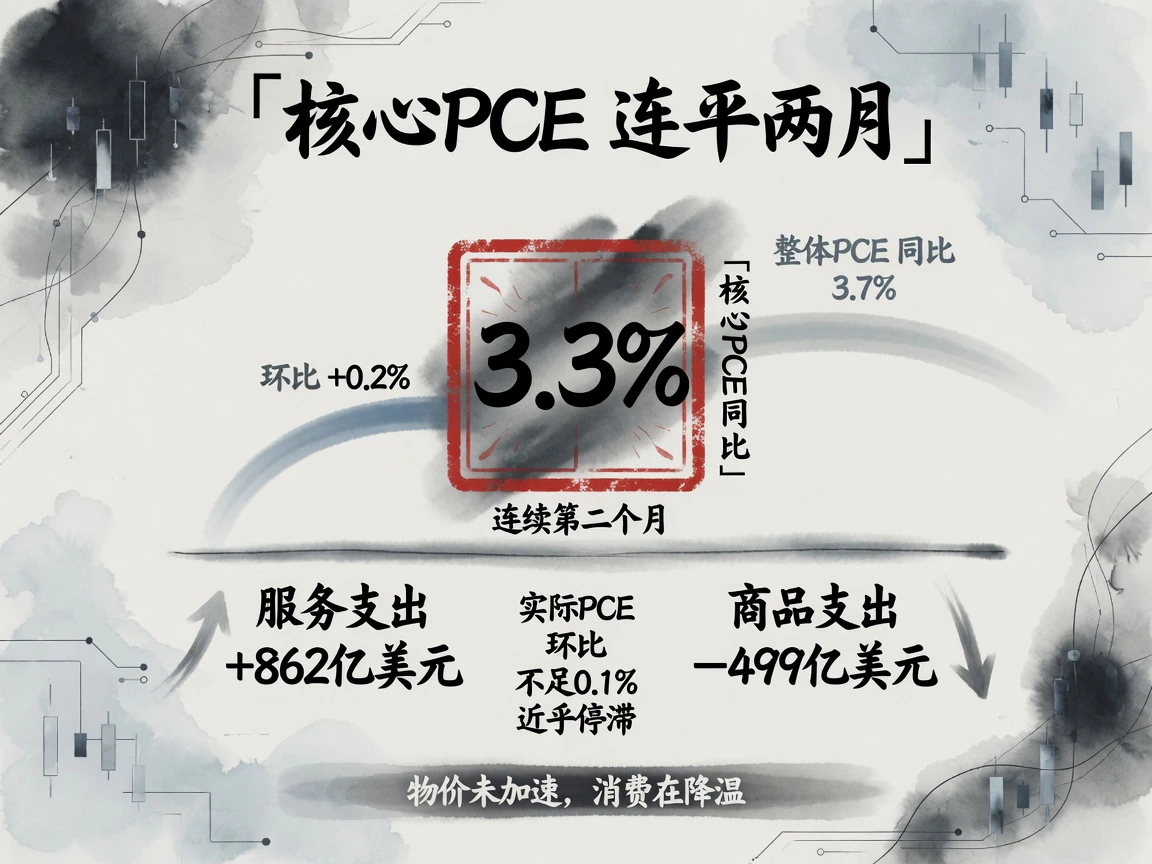
July's personal income and outlays report clearly combined price growth that was not accelerating further with gradually cooling final demand.
Core PCE rose 0.2% month on month, versus 0.1% previously, and 3.3% year on year, unchanged from June. Headline PCE rebounded 0.2% monthly from −0.1%, with annual inflation steady at 3.7%. Monthly inflation did not rebound more than expected, but successive annual readings at 3.3% showed persistence in the final stretch of disinflation. The report still offered little firm evidence for officials' repeatedly stated need for confidence in a sustained return to 2%.
The more revealing change was consumption. Services spending rose $86.2 billion, but goods spending fell $49.9 billion, limiting nominal personal consumption growth to 0.2% month on month. After inflation, real PCE rose less than 0.1%, leaving demand momentum almost stalled. Prolonged high rates were increasingly translating into restraint on discretionary household demand.
Household balance-sheet foundations were not collapsing. July personal income rose 0.4%, disposable personal income 0.5%, and the saving rate remained 3.0%. Slower spending appeared to reflect precaution and high borrowing costs more than a sudden collapse in income.
The key policy constraint was timing. The next PCE report, covering August, would not arrive until September 30, well after the September 15–16 FOMC meeting. This was therefore the latest PCE information available to policymakers before the decision. Without materially lower inflation but with cracks in spending, the trade-off became more complex.
Policy expectations: why hike bets retreat despite sticky inflation
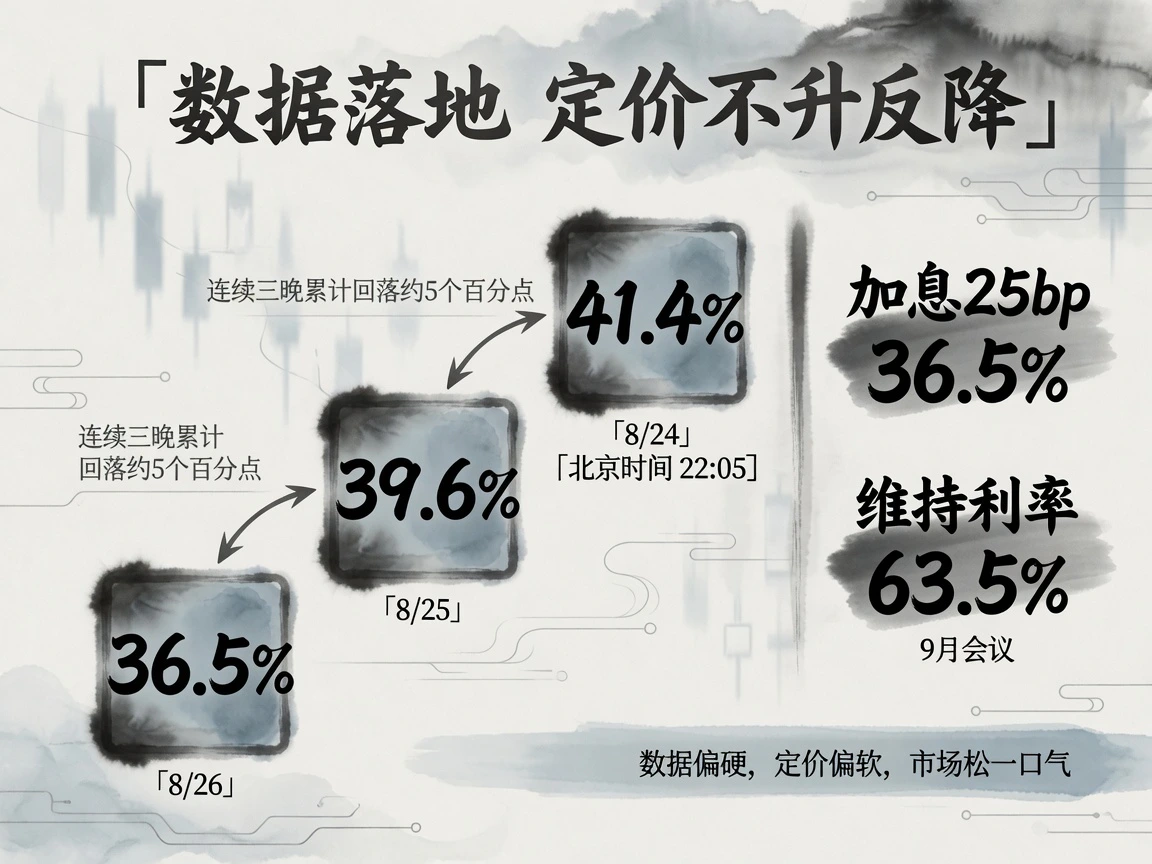
Interestingly, rate derivatives eased despite a report showing no annual inflation improvement.
CME FedWatch pricing at 22:05 Beijing time on August 26 put the probability of no September change at 63.5% and a 25-basis-point hike at 36.5%. Through October's meeting, cumulative probabilities were 47.3% for no hike, 43.4% for 25 basis points and only 9.3% for 50 basis points.
September hike odds had been 41.4% on the evening of August 24, fell to 39.6% on the 25th and then to 36.5% on release night, a decline of about 5 percentage points over three sessions. Firm data but softer pricing reflected a small shift in the market's central contest. Weak real consumption encouraged bets that tightening was near its limit and excessive hikes could intensify slowdown risk. The release relieved some accumulated tension.
Wall Street interpretations differed. Doves argued that June and July monthly core readings annualized to 2%–3%, consistent with healthy convergence. Hawks stressed that 3.3% annual inflation remained far from target and stopping before labor deterioration was risky. With no new PCE before September's decision, employment data and senior Fed guidance would almost entirely determine the next two weeks' balance of expectations.
Officials remain silent; attention centers on Warsh's debut
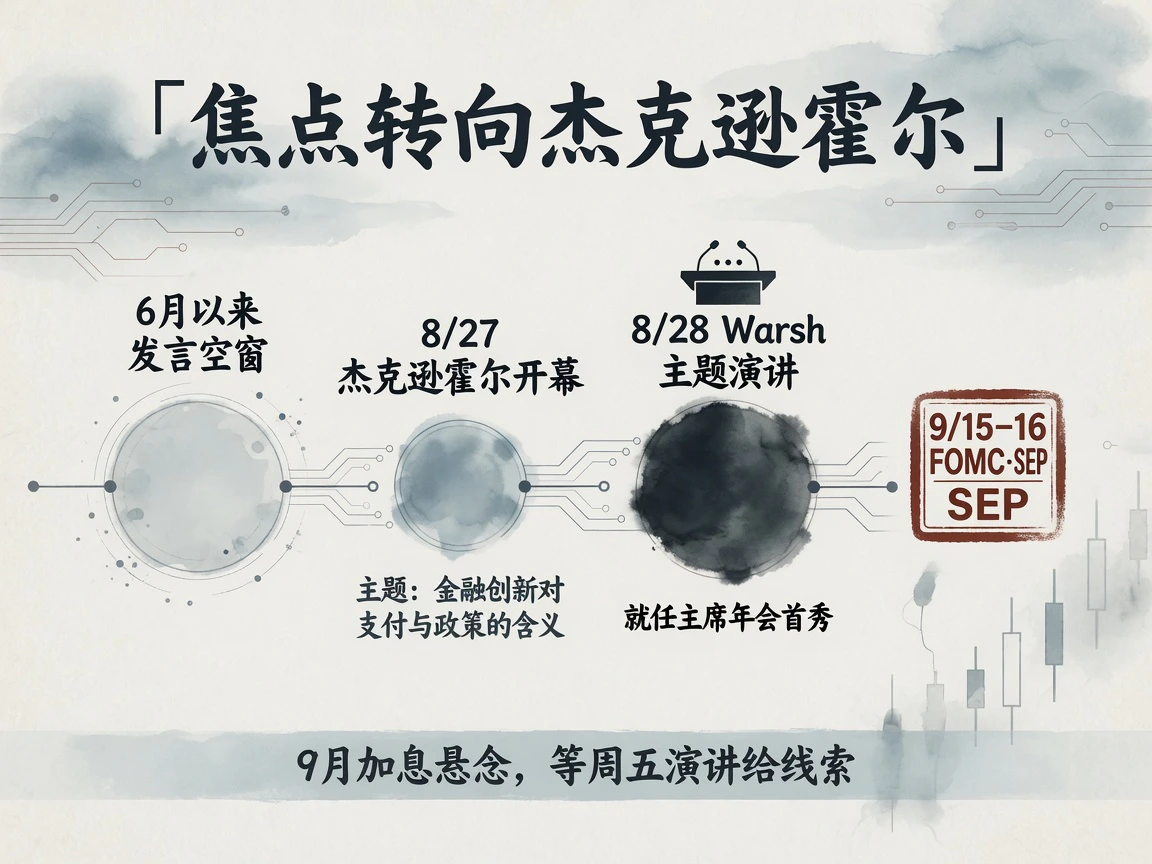
Official Fed communication remained unusually quiet around the release. August 26 brought only routine statistics such as commercial paper and H.15, continuing the public-commentary vacuum since early summer.
That lack of advance guidance magnified Jackson Hole's importance. The symposium opened early August 28 Beijing time, and Warsh's Friday-morning speech would be his first major public appearance since taking the chair. Before the September FOMC's new Summary of Economic Projections (SEP) and dot plot, it was the most important clue to the new Fed's reaction function.
Asset pricing still favored no September change, but the fragile balance awaited a catalyst. Would the Fed regard slower consumption as sufficient to stop hiking or prioritize persistent inflation? Warsh's Friday signal would provide an initial reference for autumn global fixed income and the dollar.