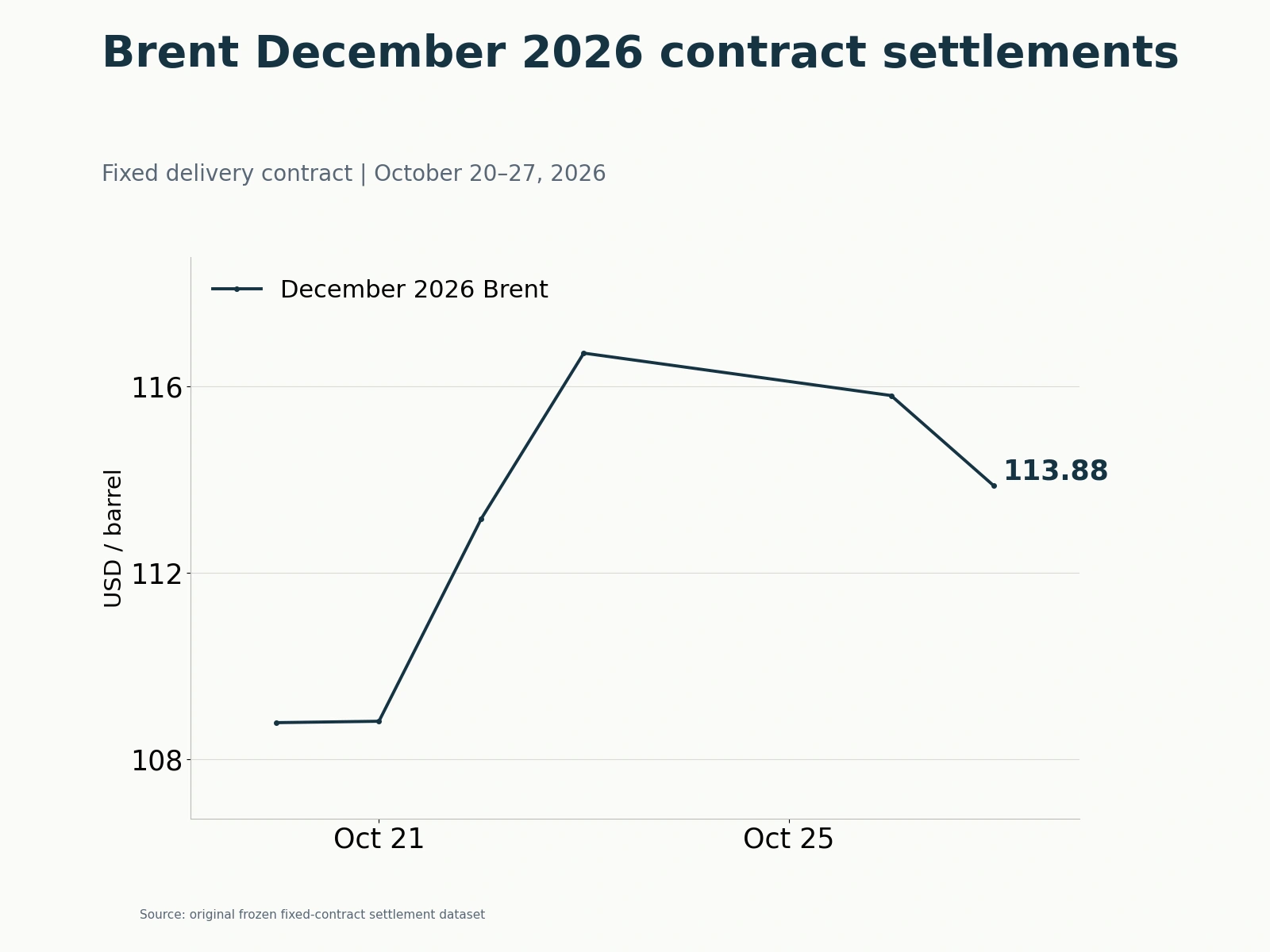
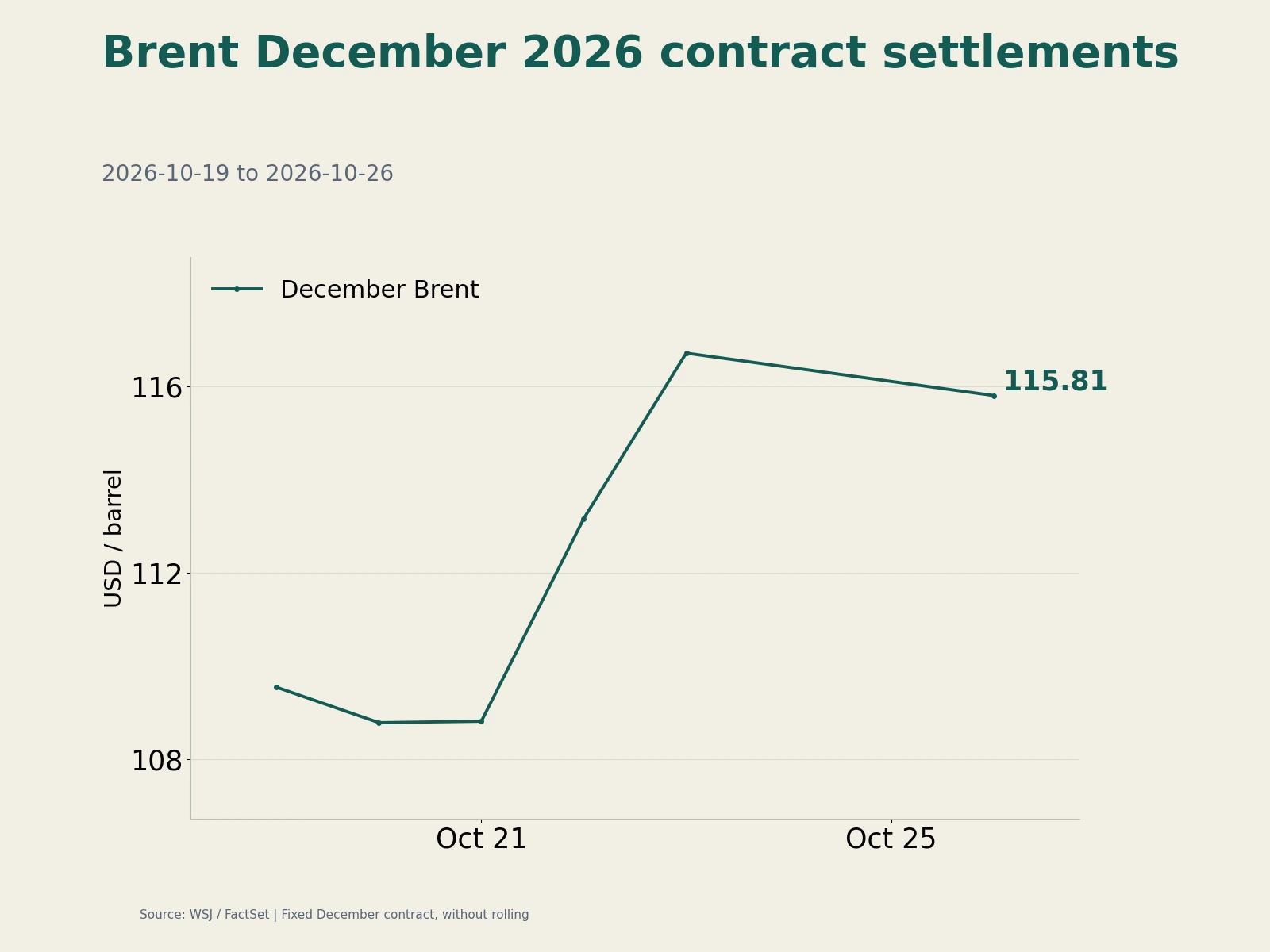
Oil's losing streak ended August 27. October WTI settled at $83.53, up $1.30, approximately 1.58%, from $82.23, ending four declines. October Brent settled at $89.70, up $1.86, about 2.12%, from $87.84, ending three declines. Against recent highs of $87.83 for WTI on August 20 and $94.39 for Brent on August 21, cumulative drawdowns remained around 6.4% and 6.9%. Prices formed a deep intraday V: early diplomatic optimism drove lows, then harsh supply realities pulled them back in the afternoon.
1. An intraday reversal without easing in the curve
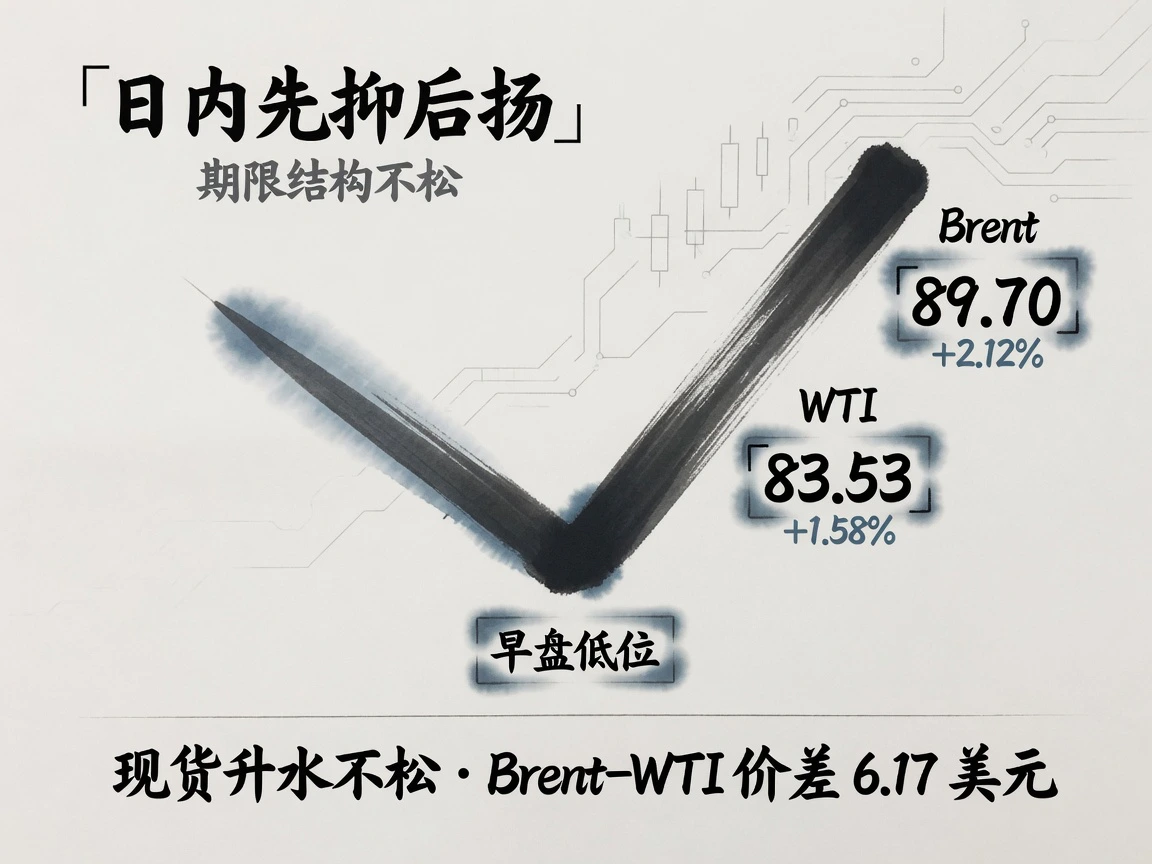
Progress in Iran–Oman talks on a temporary Hormuz corridor prompted early reopening trades, pushing Brent to about $86.2 and WTI $80.7. The afternoon reversed as Washington turned hawkish, denying direct talks and refusing a return to June's memorandum. Qatar's prime minister made no breakthrough in Tehran, Russian refineries were attacked again and U.S. inventories were tight. Prices rebounded from their lows, with WTI settlement near the top of its approximately $80.65–$84.27 range.
The curve did not yield to diplomatic hopes. Steep backwardation persisted: October–December Brent was about $3.5 and WTI about $4, pricing near-term scarcity and later normalization. Brent–WTI widened from $5.61 to $6.17, reflecting Brent's more direct Gulf seaborne-supply exposure and stronger rebound.
The external environment was mild. Treasury closing yields rose about 1 basis point each to 4.20% for the 2-year and 4.67% for the 10-year; the dollar index was broadly flat near 99.1. The S&P 500 gained 0.72% and VIX fell to 14.51, aligning improved risk appetite with oil's rebound. Rates and currencies were secondary; geopolitics and inventory expectations drove Thursday.
2. A smaller-than-expected crude build and further product draws

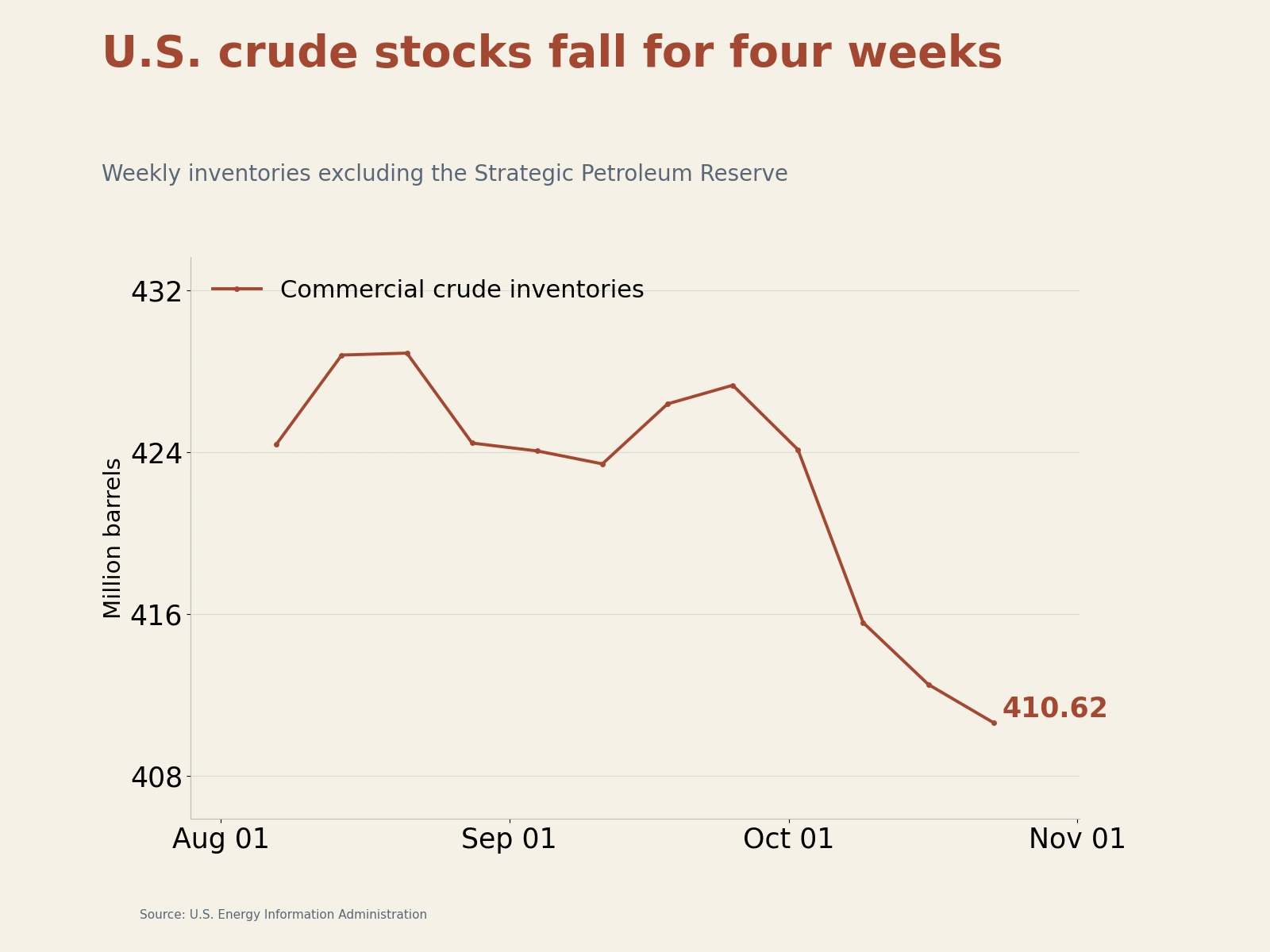
The EIA report for the week ending August 21 showed commercial crude up 95,000 barrels to 428.9 million, a fourth consecutive build and about 1% above the five-year average, but far below the expected 500,000. The tight reading supported prices. Cushing rose 1.2 million to 22.4 million; SPR fell 3.7 million to 289.7 million as releases continued offsetting seaborne shortages. Gasoline fell 2.5 million and distillates 2.2 million. Refinery utilization reached 97.4%, near full capacity. The next report was due September 2.
3. Paper increases versus physical shutdowns
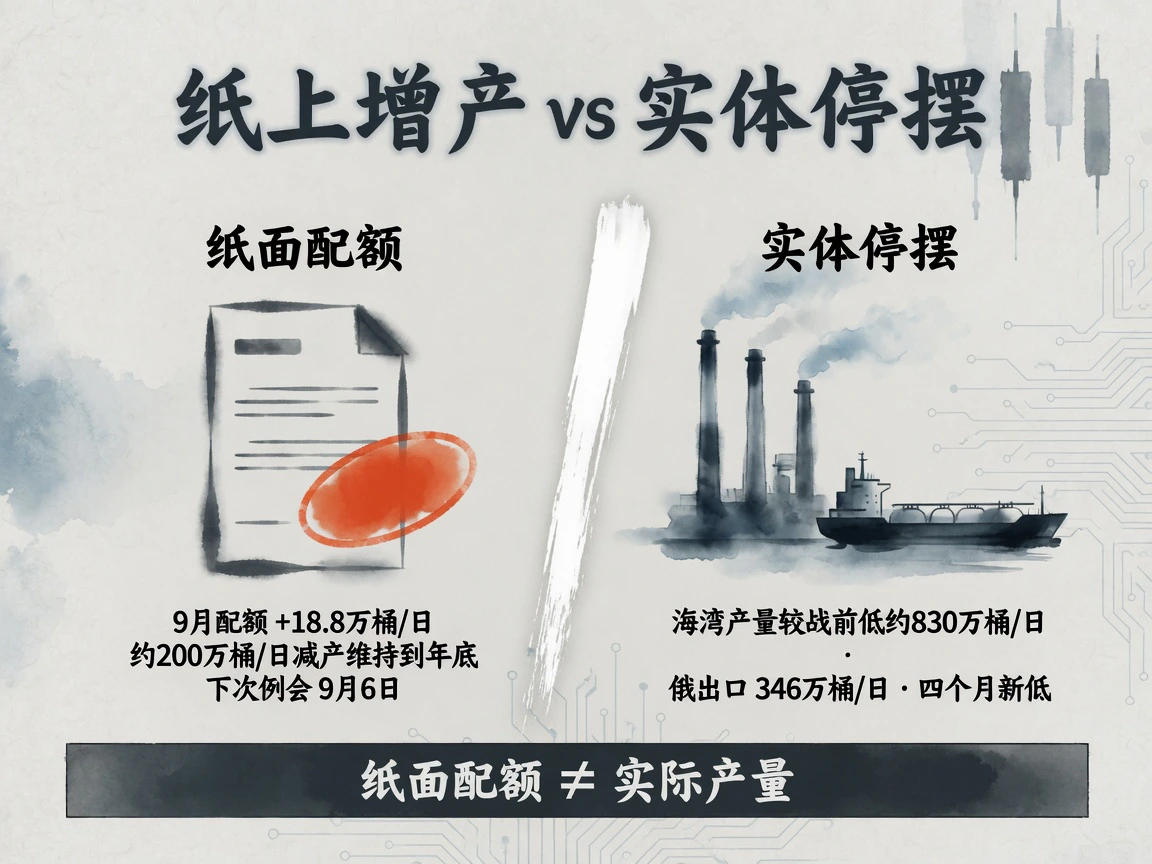
OPEC+ remained unchanged in the stated window. September's 188,000-barrel-a-day quota increase was agreed August 2; markets broadly expected the September 6 meeting to halt October increases. Existing voluntary cuts of about 2 million barrels a day continued to year-end, while 2027 baselines and quotas awaited review. Actual output was detached from quotas: Gulf production remained about 8.3 million barrels a day below prewar levels, making paper increases largely abstract.
Real shutdowns spread around the Black Sea. Ukrainian attacks on Lukoil's NORSI refinery on August 25–26 caused its fifth drone-related shutdown in five months; Afipsky and Novoshakhtinsk were also hit recently. Russia's four-week average crude exports through August 23 fell to about 3.46 million barrels a day, a four-month low; July product exports were only about 1.2 million. Repeated refinery attacks tightened global products and supported crack margins.
4. China's peak-demand debate and lower full-year forecasts
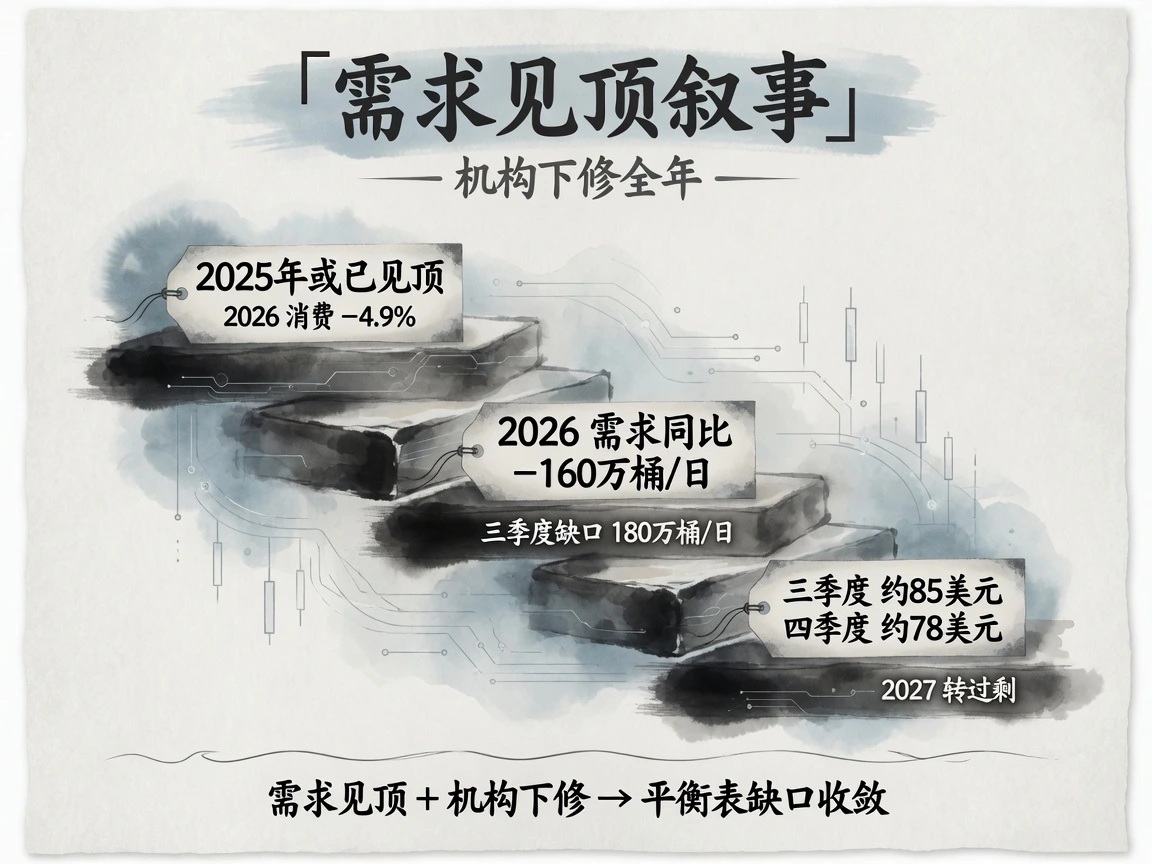
The main demand constraint was China's peak-consumption debate. Sinopec's chairman said August 24 that oil demand likely peaked in 2025; PetroChina expected 2026 domestic crude consumption down about 4.9%. Major buyers responded to high prices by reducing imports, drawing stocks and lowering refinery utilization, acting as swing buyers and an implicit price ceiling.
International balances also pointed to narrower shortages. The IEA's August report lowered 2026 demand growth to a year-on-year decline of 1.6 million barrels a day while estimating a third-quarter deficit of about 1.8 million, larger than previously. EIA's August STEO projected Brent averaging about $85 in the third quarter and $78 in the fourth, with global surplus in 2027.
5. Diplomatic optimism fades; the physical shortage does not

Diplomacy drove Thursday's swings. Iran and Oman discussed a temporary framework in Tehran August 26, including an approximately 11.3-kilometer corridor, joint mine clearance and possible toll sharing. Iranian accounts conflicted: the IRGC claimed agreement on control and revenue, while senior sources said it was far from formed. Qatar's prime minister visited August 27, but Washington denied direct contact, rejected June memorandum terms and maintained what it called the toughest-ever sanctions.
Physical logistics lagged rumors. Kpler's direct-transit crude measure was only about 2.2 million barrels a day; trader estimates including some restored Gulf loadings were 6 million to 8 million, far below preconflict 15 million to 17 million. On August 24–25, tankers Metro Venetian and AL SALAM II were hit by unidentified projectiles on Hormuz's southern side, without casualties or leakage and with no claim of responsibility. The Joint Maritime Information Center kept its highest threat rating, severe.
Freight and insurance better revealed risk. In the week of August 24, Persian Gulf–China TD3C VLCC rates were approximately $58.5–$62.4 per day, with Worldscale at 570–606; individual Gulf fixtures reached a record approximately $800,000 daily. War-risk premiums by vessel type were 1.5%–8% of hull value, versus about 0.25% before conflict.
6. What prices reflect: a high-risk near-term window
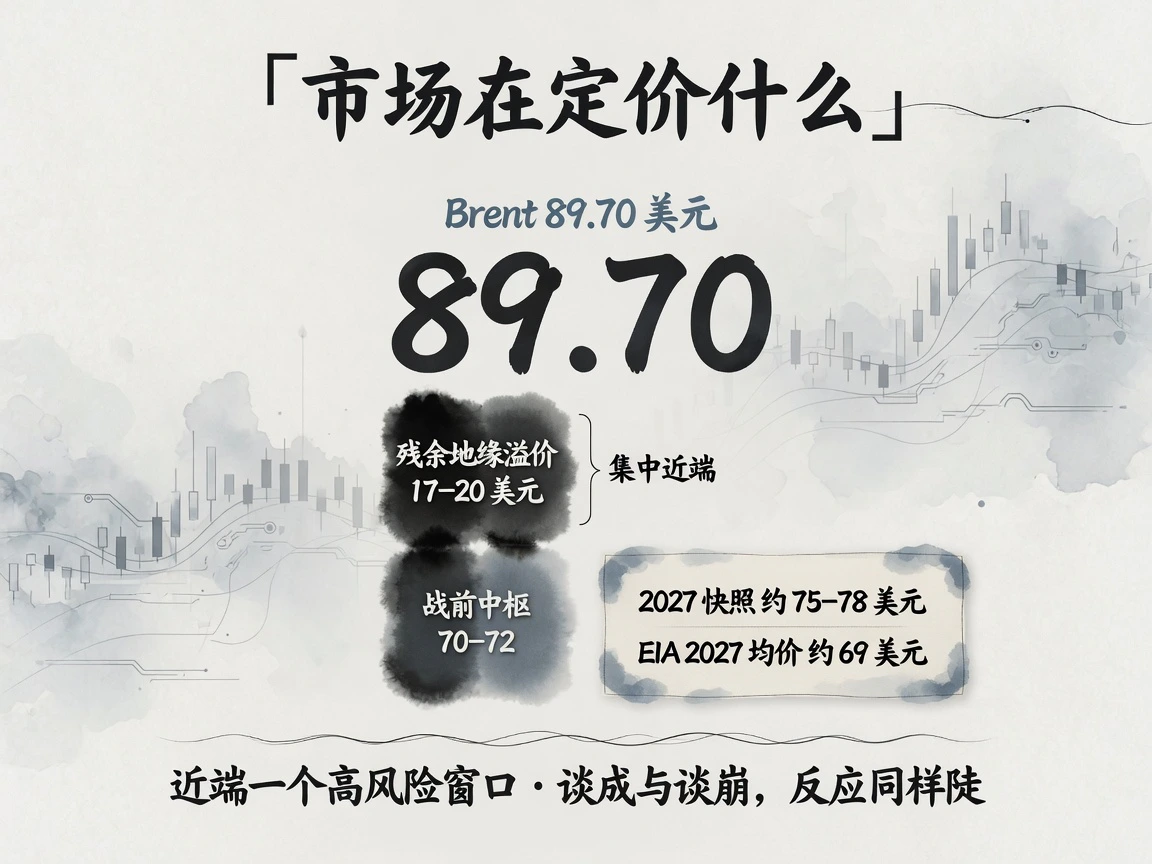
Thursday's settlement followed two competing views: reopening hopes drove early lows, then actual disruption—hawkish U.S. policy, Russian attacks and bullish EIA figures—drove a strong recovery. Brent at $89.70 versus the report's prewar $70–$72 reference implied about $17–$20 of residual near-term geopolitical premium. Deferred contracts and institutional balances instead suggested narrowing shortages and surplus in 2027: a 2027 Brent forward snapshot around $75–$78 and an EIA annual forecast near $69.
The steep inversion concentrated risk premiums in nearby contracts, creating a fragile window highly sensitive to both breakthroughs and failed talks. While Hormuz throughput remained low and Black Sea refinery interruptions persisted, speculative diplomatic hopes were unlikely to break the support from actual supply shortages.
Electronic snapshots at the cutoff, 08:21/08:16 Beijing time on August 28, put WTI at $83.44 and Brent at $88.44, about $0.1 and $1.3 below their settlements. These were live snapshots, excluded from official daily-change statistics.