On August 28, 2026, Eastern time, Fed Chair Kevin Warsh delivered the most consequential policy speech of his first hundred days in office at Jackson Hole.
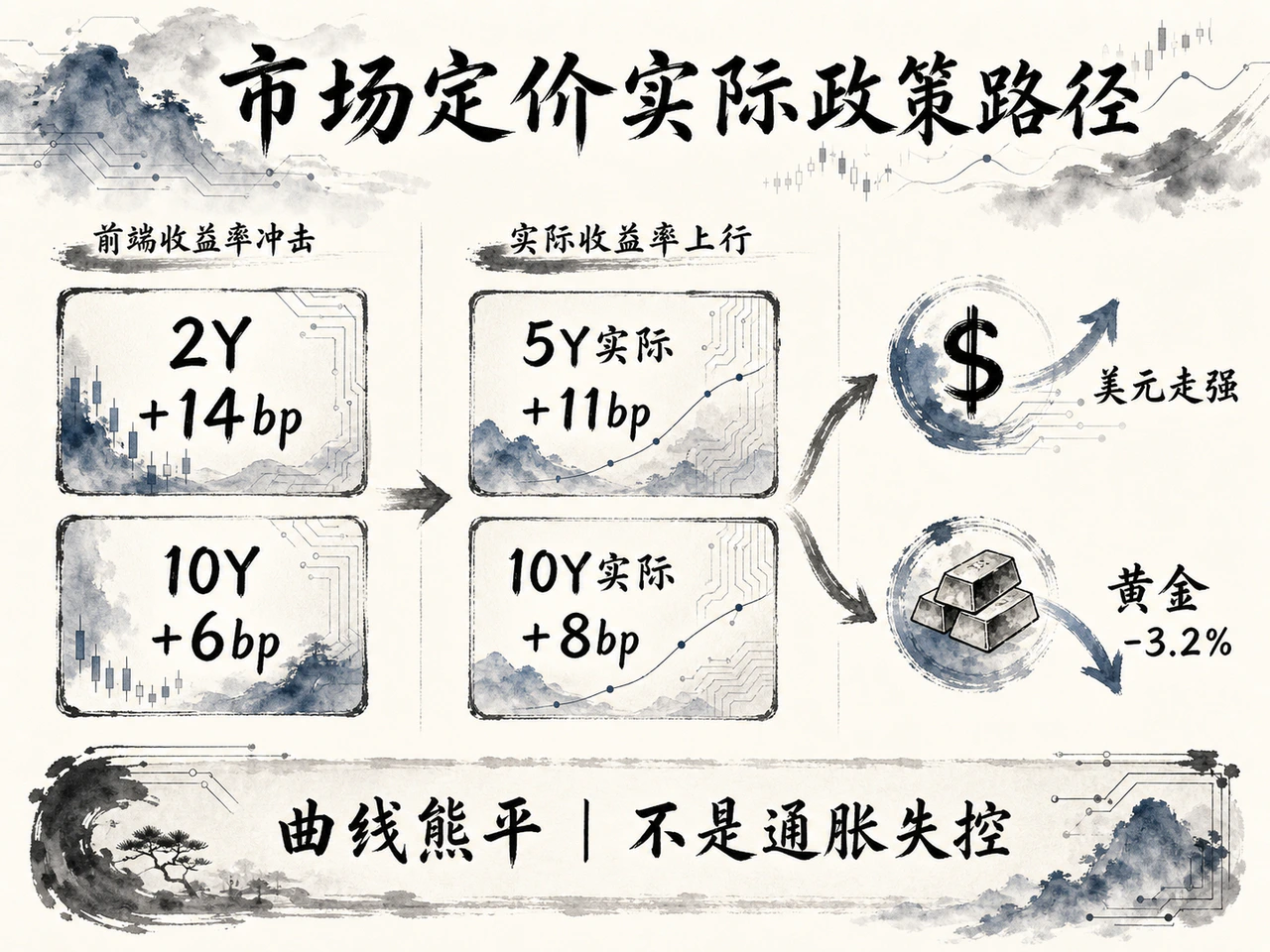
Warsh neither promised a September rate increase nor outlined a specific rate path, and offered no quantitative formula markets could apply mechanically. Yet after the speech, rate futures' implied September hike probability jumped from about 35% to 55.7%. The policy-sensitive two-year Treasury yield rose 14 basis points in one day, far more than the ten-year's six-basis-point increase. The dollar strengthened and spot gold plunged about 3.2%.
A statement without an explicit action commitment produced an immediate hawkish shock because Warsh was reshaping the underlying logic for deriving policy, rather than the answer at one meeting:
He did not declare that the next meeting would inevitably bring a hike. He made clear, however, that when high inflation, resilient employment and easy financial conditions coexist, standing pat is no longer the self-evident default.
The speech left the calendar open while setting a hawkish framework.
1. The key change: from what would trigger a hike to what could prevent one
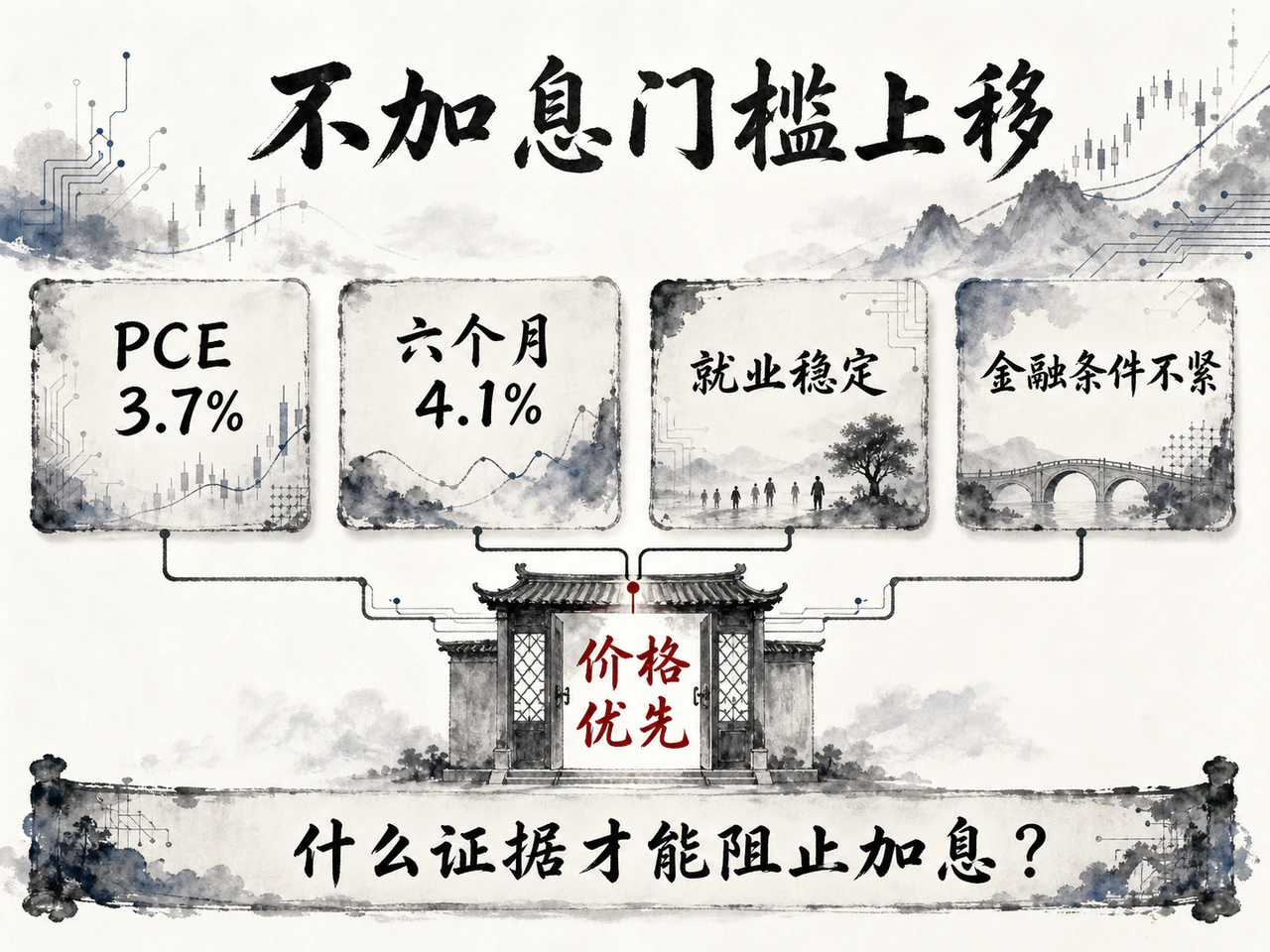
Warsh's assessment of the macro backdrop consisted of four interlocking baseline judgments:
First, the 2% PCE inflation target is an uncompromising constraint. This closed off vague expectations of raising the target or tolerating inflation around 3% indefinitely. Warsh rejected treating 2% as a flexible reference drifting with conditions, reestablishing it as a binding objective to be met unconditionally.
Second, the labor market remains at full employment. Unemployment was 4.1% and payroll gains had cooled, but initial claims remained low. Warsh argued that with growth in labor supply nearly stalled, monthly job gains would naturally be smaller. Low hiring and low quits reflected a low-speed balance of weaker supply and demand, rather than an economic stall. Slower employment expansion alone could not serve as a shield for tolerating high inflation.
Third, effective real-economy demand and overall financial conditions are not constrained. Business capex, profits and private domestic final demand were resilient. Corporate-bond and leveraged-loan spreads were near historic lows, primary issuance was active and bank lending standards had not materially tightened. The crucial, cautious conclusion was that a high nominal policy rate did not itself prove financial conditions were effectively restraining the economy.
Fourth, inflation persistence appears in its breadth as well as its level. Warsh's data put annual PCE inflation at 3.7% and the six-month rate at 4.1%. Among 199 PCE components, 54% had risen more than 3% over 12 months, and 49% over six months—well above the roughly 32% norm in the two decades before the pandemic. With such widespread persistence, a few milder summer reports were nowhere near sufficient to establish a material improvement in underlying inflation.
Together, these four strands revealed Warsh's implicit reaction function:
When inflation is high and broad, employment is full, private final demand is resilient and financial conditions have not materially tightened, price stability is the undisputed first priority. Policy cannot turn casually toward easing and must tighten further if necessary.
This fundamentally reversed the macro narrative:
Markets once asked how overheated growth and inflation would have to become before the Fed resumed hikes. Warsh instead asked them to demonstrate how weak the data must be for the Fed to justify unchanged rates. The burden of proof had been reversed.
2. No mechanical threshold, but a higher hurdle nonetheless
Warsh openly opposed mechanical reaction functions. Faced with structural change, supply-chain reorganization, geopolitics and technological shifts, a central bank could not outsource macro management to a rigid Taylor-rule formula.
Rejecting dogma did not mean abandoning discipline.
His central yardstick was that the Fed must be confident underlying inflation is returning to target clearly and sufficiently quickly; otherwise it still has work to do.
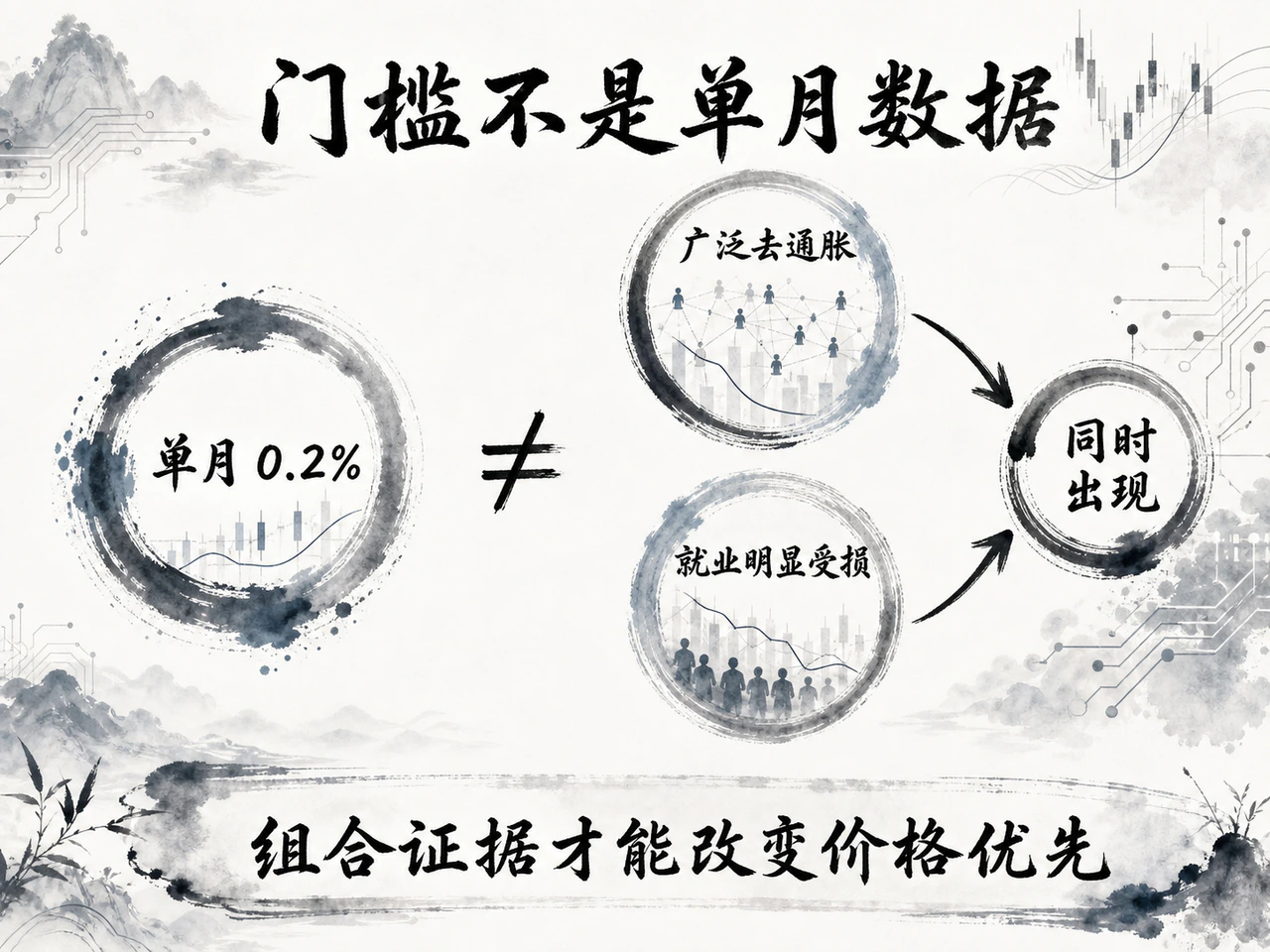
Even a future 0.2% monthly core CPI or core PCE reading would therefore fall well short of dispelling tightening intentions. Policymakers would cross-check a more demanding array of evidence:
- Whether the share of high-inflation PCE components shows a sustained trend decline across periods;
- Whether goods, housing and nonhousing services cool broadly and together;
- Whether the labor market genuinely deteriorates from slower hiring into sustained layoffs and rising unemployment;
- Whether private consumption and business capex clearly stall;
- Whether credit spreads, bank lending standards and asset prices actually show binding restraint from tight policy.
Only simultaneous data confirmation of broad disinflation and clear labor-market damage would overturn the prices-first framework. This combined test was much stricter than markets' prior assumption that a return to 0.2% monthly core inflation would provide safe passage.
3. A quieter Fed could mean greater meeting volatility

The speech's deepest institutional reflection was not its inflation statistics, but Warsh's criticism of central banks' recent attachment to forward guidance.
He described the guidance trap as a hall-of-mirrors effect:
Markets position around the Fed's dots, speeches and hints; the Fed then reads market prices to assess the economy, financial conditions and policy expectations. Over time, prices contain less independent economic information and increasingly reflect the central bank's own echoes. If policymakers mistake their own judgment for market validation, monetary policy and markets can reinforce a systemic error.
Warsh also plainly suggested that in 2021 the Fed had been too constrained by earlier guidance and near-promises. Fear that reversing course would damage credibility made it act too slowly as conditions changed, delaying the best opportunity to fight inflation.
His call for a quieter Fed therefore did not mean returning to opaque decision-making. More precisely, it meant:
Full transparency about objectives and ample transparency about principles, with no advance commitment to a specific path.
This change in policy communication would directly reshape market volatility:
First, major data releases would have much larger effects on front-end rates. Payrolls, CPI, ISM price components and claims would no longer merely fine-tune a preset hiking or cutting timetable; they could reopen the entire probability distribution for an FOMC meeting.
Second, the chair might speak less often, while the information density and market impact of each speech could rise exponentially.
Third, ordinary asset-price setbacks would be less likely to produce a policy backstop. Routine equity declines, spread widening or higher volatility would struggle to trigger verbal reassurance. Unconventional tools would remain available for genuine systemic crises, but normal price adjustments were not crises.
Warsh's refusal to specify September's direction therefore did not rule out a hike. It rejected the mechanism of removing macro uncertainty for markets in advance.
4. Markets understood: a real-rate shock, rather than a trade on uncontrolled inflation
The structure of asset-price changes after the speech was more revealing than any macro slogan.
Treasuries came under pressure across the curve that day: two-, five-, ten- and 30-year yields rose about 14, ten, six and three basis points, respectively. The two-/ten-year spread narrowed about eight basis points in a clear bear flattening.
More substantively, five- and ten-year real yields rose about 11 and eight basis points, while approximate breakeven inflation rates edged lower.
These moves showed traders sharply raising the near-term real policy-rate path, rather than betting on uncontrolled distant inflation.
Had investors read the speech as a warning of unanchored inflation, the usual pattern would have been long-end-led losses, bear steepening and higher inflation compensation, possibly with gold rising alongside nominal yields. What actually occurred was front-end-led selling, surging real yields, lower inflation compensation, a stronger dollar and roughly a 3.2% gold decline.
The consensus expressed through actual trades was:
Warsh sharply increased the probability of near-term Fed action while strengthening the credibility of its eventual control over inflation.
This also explained the sharp differentiation within U.S. equities. The S&P 500 fell only 0.25%, but the liquidity-hungry Russell 2000 plunged about 1.4%, and non-interest-bearing gold lost roughly 3.2%. Large platforms' abundant free cash flow and AI capex support offered some protection from higher discount rates. Refinancing-dependent small caps, distant-cash-flow assets and gold were highly sensitive to rising real rates.
The S&P's modest decline should not obscure the tightening pressure. The strain from this policy-framework reconstruction first appeared in vulnerable balance sheets.
5. AI is no near-term reason for dovish policy

Warsh devoted substantial discussion to AI, total-factor productivity and labor-market interactions, but drew a firm boundary: specialized research and task-force recommendations would not influence current short-term decisions.
This often-overlooked distinction broke the hope that technological revolution would naturally produce deflation and force a dovish turn.
AI's macro policy effects have two distinct stages:
In the short term, expansive investment in data centers, chips, power, cloud services and equipment is a powerful aggregate-demand impulse. It stimulates competition for capital, profits and wealth effects, enabling the real economy to withstand higher real rates. The near-term AI boom therefore adds to demand and inflation pressure rather than reducing it, while lifting estimates of the neutral rate.
Over the medium and long term, only when AI permeates industries and broadly raises total-factor productivity can it expand supply and lower unit costs, permitting faster growth without higher inflation.
When will that dividend actually arrive? Will gains spread quickly across society or remain concentrated with owners of scarce chips, energy and cloud assets? Warsh acknowledged that no conclusion was yet possible.
The policy boundary was consequently clear:
A central bank cannot spend a possible future productivity dividend to offset inflation and demand strength already observed today.
6. Will September bring a hike? Three data combinations matter more than one statement
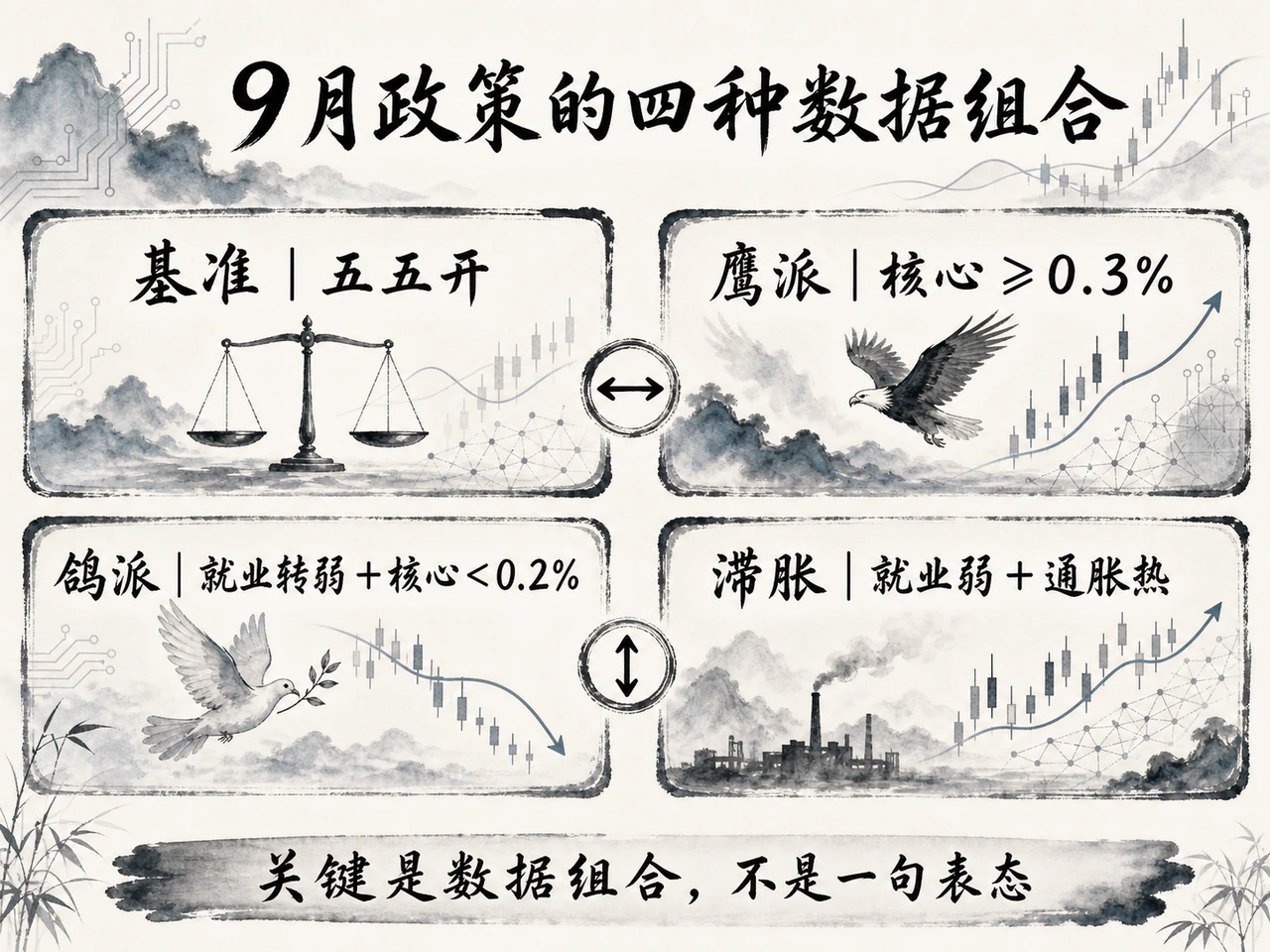
Warsh deliberately withheld specific September guidance at Jackson Hole. The ensuing implied hike probability of roughly 56% was highly rational: it absorbed the hawkish message, lifting odds from around 35% above the even-money threshold, while the absence of a firm meeting commitment restrained premature certainty.
The September FOMC outcome would be determined by the evolution of three macro data combinations, rather than one official's assertion:
Base case: September remains evenly contested, with much higher risk in October or December
If employment retains modest positive growth, unemployment stays around 4.1%, monthly core inflation is near 0.2% and inflation breadth narrows only slightly, September would still bring an exceptionally intense hawk–dove debate.
Even an unchanged-rate decision in September in that case could not automatically be read as easing. It would more likely postpone the same action to October or December.
Hawkish case: September hike probability quickly exceeds 70%
If monthly core inflation reaches or exceeds 0.3%, price increases broaden again across goods and services, payrolls, wages, hours or vacancies remain strong, and credit and asset prices keep easing financial conditions, Warsh's hawkish framework would be fully corroborated.
The most direct expression would remain another jump in two- and five-year real rates, further bear flattening, a firm dollar and sustained pressure on gold and financing-sensitive assets.
Dovish case: weak employment and broad disinflation must appear together
One or two mildly weak peripheral indicators would not truly stop September tightening or materially lower its probability. It would require a stringent combination: clearly weak payroll gains, sustained increases in unemployment and initial claims, broadly falling weekly hours, and core inflation genuinely below 0.2% with a rapidly shrinking share of high-inflation components.
Only then could front-end Treasury yields retreat substantially, making bull steepening more likely.
For the hardest stagflationary case—weak employment but still-hot inflation—the speech signaled that Warsh tolerated growth weakness more than the more moderate central bankers previously attentive to short-term labor conditions. In his view, allowing high inflation to persist would ultimately do deeper damage to jobs and real incomes too.
7. Avoid these five misreadings

Misreading one: no promise of a September hike means the stance is insufficiently hawkish. Wrong. Refusing to preannounce the path is a central pillar of the new communication regime. The hawkish change is the priority on prices, the assessment that financial conditions are not restrictive and the firm retention of the option to act.
Misreading two: AI improves productivity, so the Fed can tolerate current inflation. Wrong. Warsh explicitly separated long-term AI research from current decisions. Before productivity gains actually emerge, the near-term AI boom instead strengthens capex and inflation resilience through demand.
Misreading three: falling gold shows fear of uncontrolled inflation. The opposite. Gold losses, surging real rates, a stronger dollar and narrower inflation compensation are a classic combination indicating greater anti-inflation policy credibility.
Misreading four: a 20-percentage-point rise in September hike odds means an equivalent rise in cumulative tightening for the year. Not necessarily. Higher September pricing may simply bring forward one move previously expected in October or December. Assessing total tightening requires the full year-end target-range distribution, rather than mechanically adding probabilities for individual meetings.
Misreading five: a quieter Fed means a less transparent Fed. Not entirely. Warsh wants full openness on objectives and underlying principles, while rejecting near-binding promises to markets about the future rate path.
Conclusion: the relationship between markets and the Fed is what has been rewritten
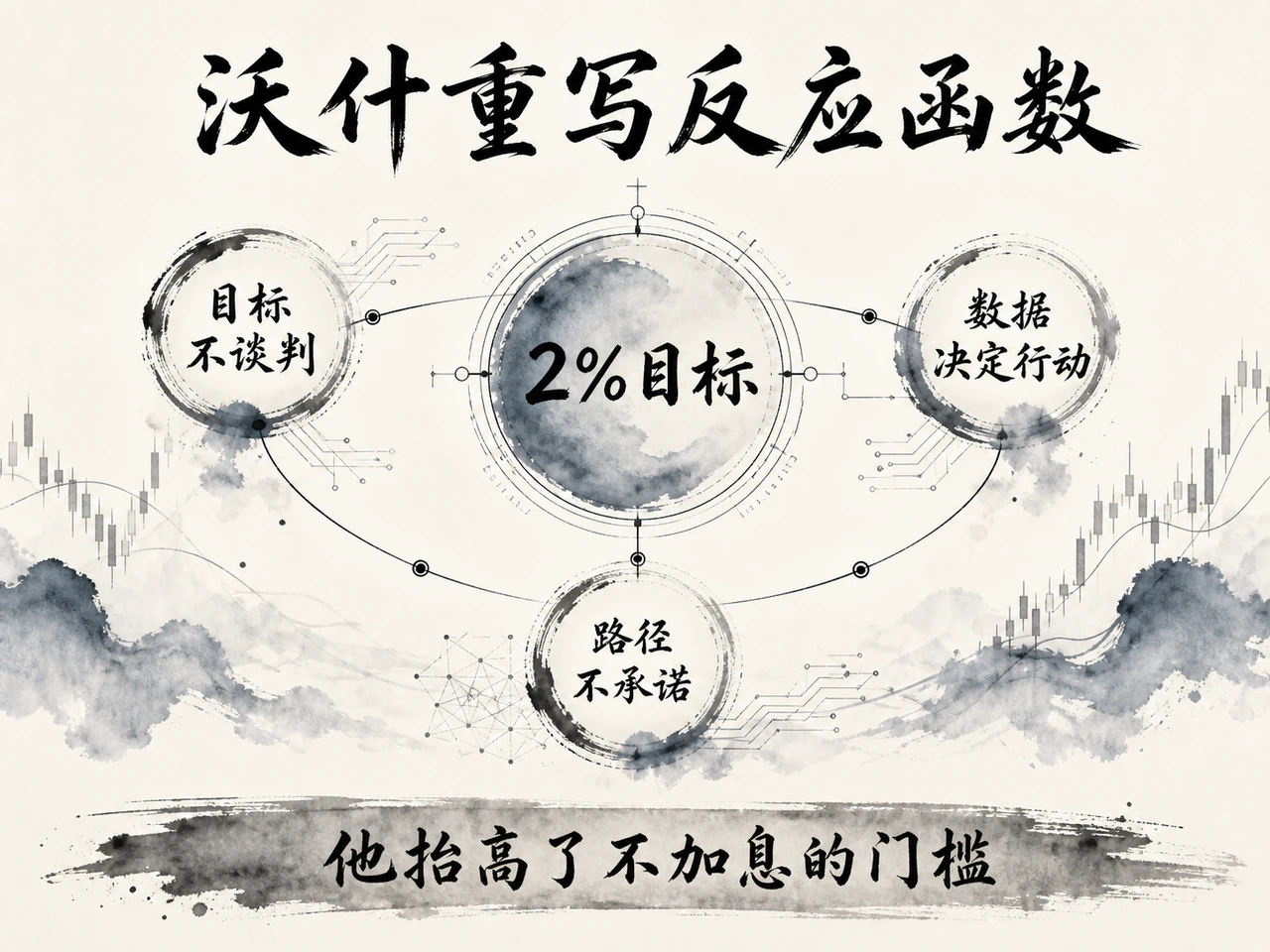
The historical significance of this Jackson Hole speech cannot be captured by a simple advance signal of a hike.
Warsh seeks a new central-bank regime: an uncompromising 2% target, far fewer path commitments in normal times, a reaction function based on inflation breadth, actual demand and financial conditions, and discretion to change pace quickly.
It first reshapes the probability distribution of front-end policy rates, and only then the anchors for long-term rates and inflation expectations.
The next macro window's key questions are whether inflation breadth truly narrows; whether employment moves from low hiring into actual layoffs; whether financial conditions keep quietly easing; whether other voters fully embrace the prices-first framework; and whether higher September odds merely bring one move forward or also imply more total tightening that year. These matter more than whether Warsh repeats hawkish language.
The speech can finally be captured in one sentence:
Warsh did not promise a hike; he raised the bar for not hiking.
Sources:
- Federal Reserve Board, In Our Time, August 28, 2026: https://www.federalreserve.gov/newsevents/speech/warsh20260828a.htm
- U.S. Treasury nominal yield curve: https://home.treasury.gov/resource-center/data-chart-center/interest-rates/TextView?type=daily_treasury_yield_curve& field_tdr_date_value=2026
- U.S. Treasury real yield curve: https://home.treasury.gov/resource-center/data-chart-center/interest-rates/TextView?type=daily_treasury_real_yield_curve& field_tdr_date_value=2026
- CNBC, CME meeting probabilities after Warsh's speech: https://www.cnbc.com/2026/08/28/kevin-warsh-jackson-hole-federal-reserve-inflation.html