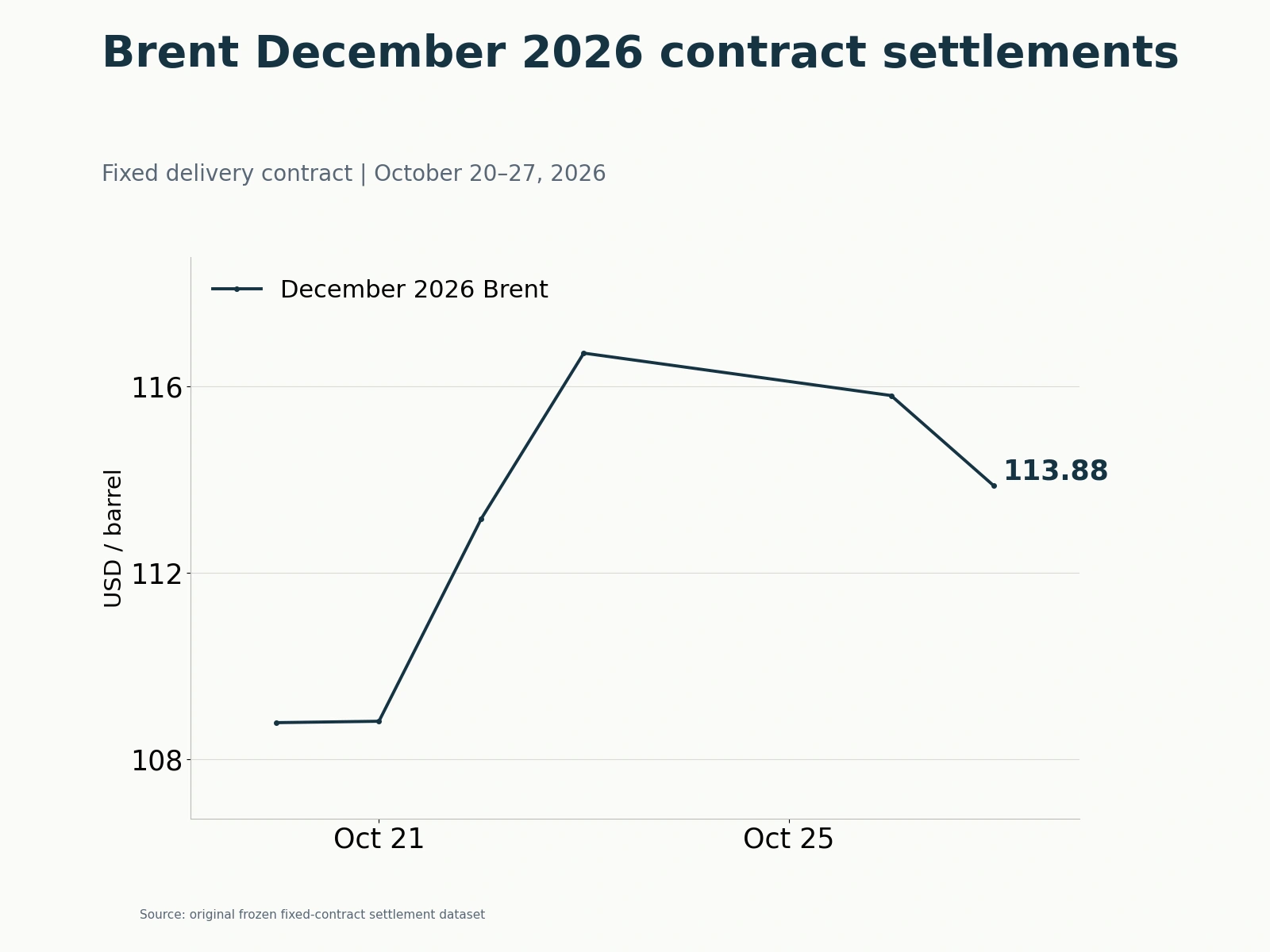
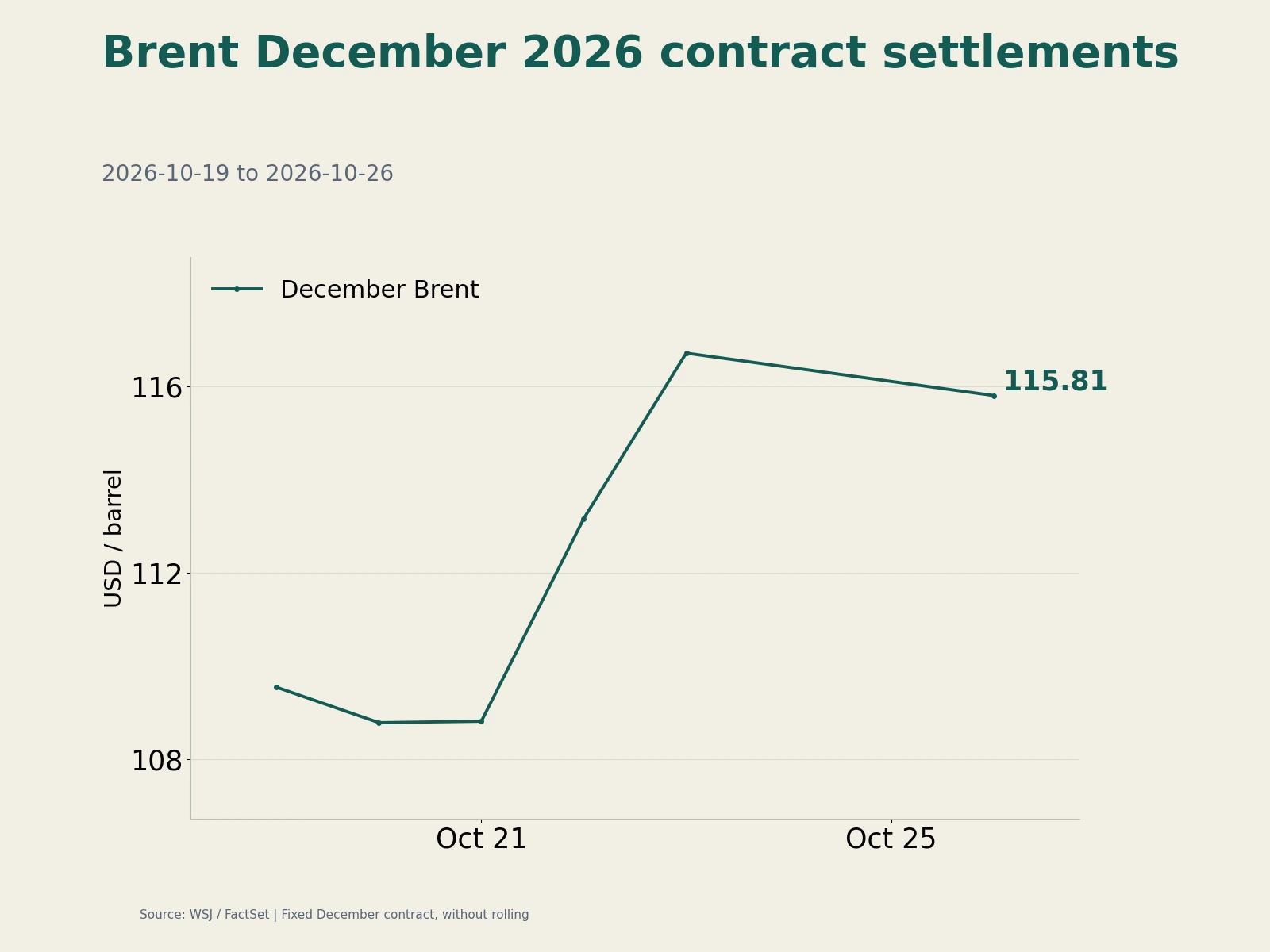
U.S.–Iran military confrontation escalated again on September 2. U.S. forces struck several targets in southern Iran, and Iran retaliated with ballistic missiles and drones against U.S. facilities across Gulf countries while vowing tighter Hormuz restrictions. Despite a significantly higher geopolitical premium, oil posted only modest gains: October WTI closed at $91.01 a barrel (+0.9%) and November Brent at $95.63 (+1.0%), far short of Monday's roughly 5% jump.
The trading focus had clearly shifted from whether direct conflict would erupt to how severe passage restrictions could become. Without evidence of a substantive supply cutoff, the two benchmarks were consolidating at elevated levels in a $90–$96 range.
Market performance: gains slow sharply as high prompt premiums dominate the curve
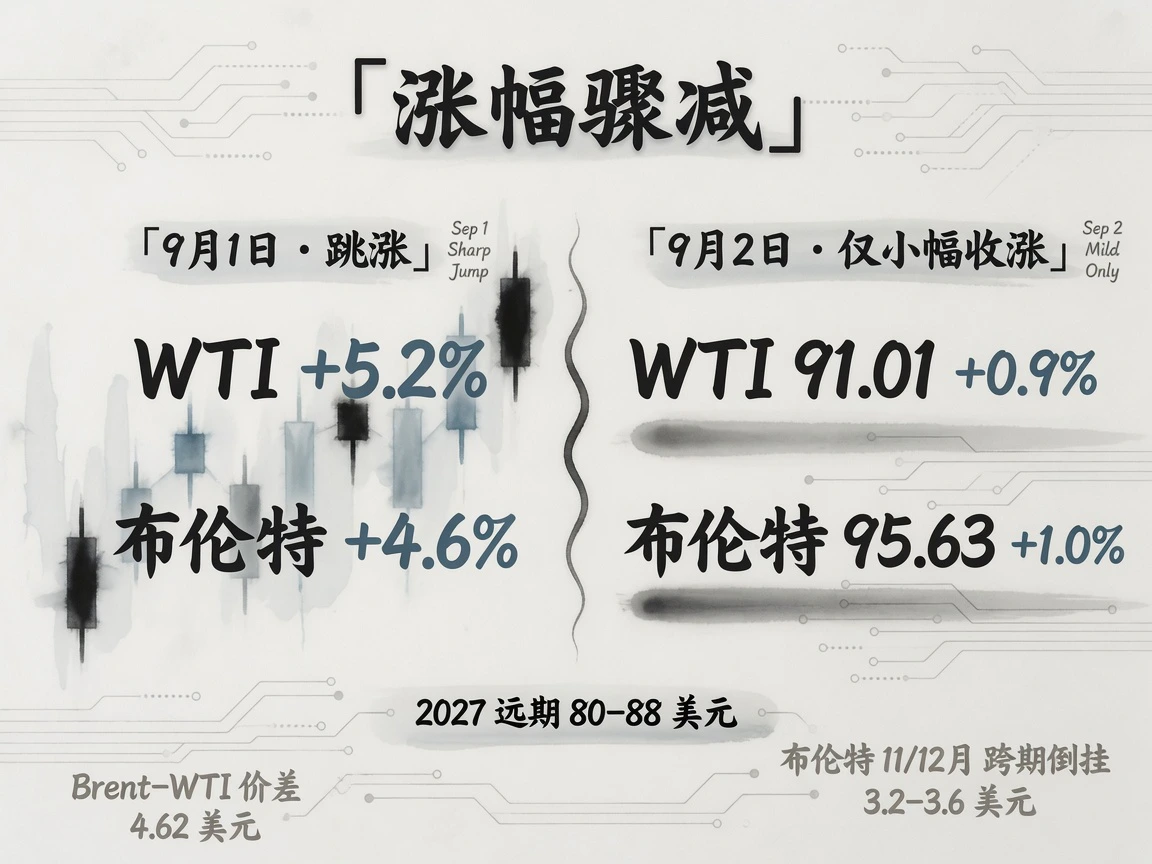
September 2 settlements showed October WTI up $0.79 from $90.22 to $91.01 a barrel, and November Brent up $0.98 from $94.65 to $95.63. Trading was choppy: Asian hours extended Monday's strength, then European and U.S. hours gave back about $1 before a modest recovery. Closes were the highest since July 23 for WTI and July 24 for Brent. The Brent–WTI spread was about $4.62, slightly wider than Monday, but the benchmarks still moved together without an additional distinct premium for seaborne exposure.
The curve remained deeply backwardated. Brent's November/December spread held at $3.2–$3.6, while January 2027 was around $88 and June near $80, with the distant curve sliding smoothly into the low-to-mid $70 s. Buyers remained willing to pay large premiums for prompt crude, while discounted forward contracts completely closed off commercial storage arbitrage.
At the 07:55 September 3 Beijing-time electronic-trading snapshot, WTI (CL) was $90.62 and Brent (BZ) $95.21, roughly $0.4 below that day's settlements, with no fresh catalyst for another push higher.
Fundamentals: U.S. refining and exports reach highs; structural tightness remains in products
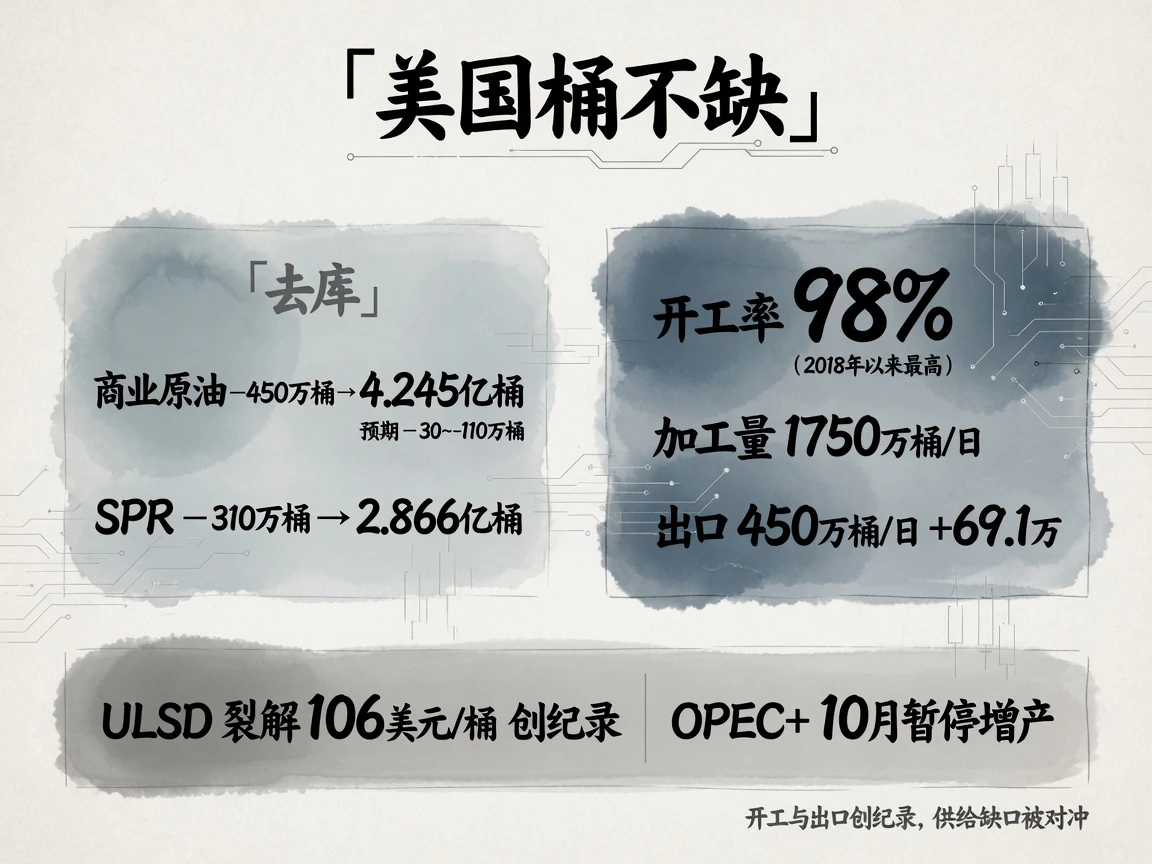
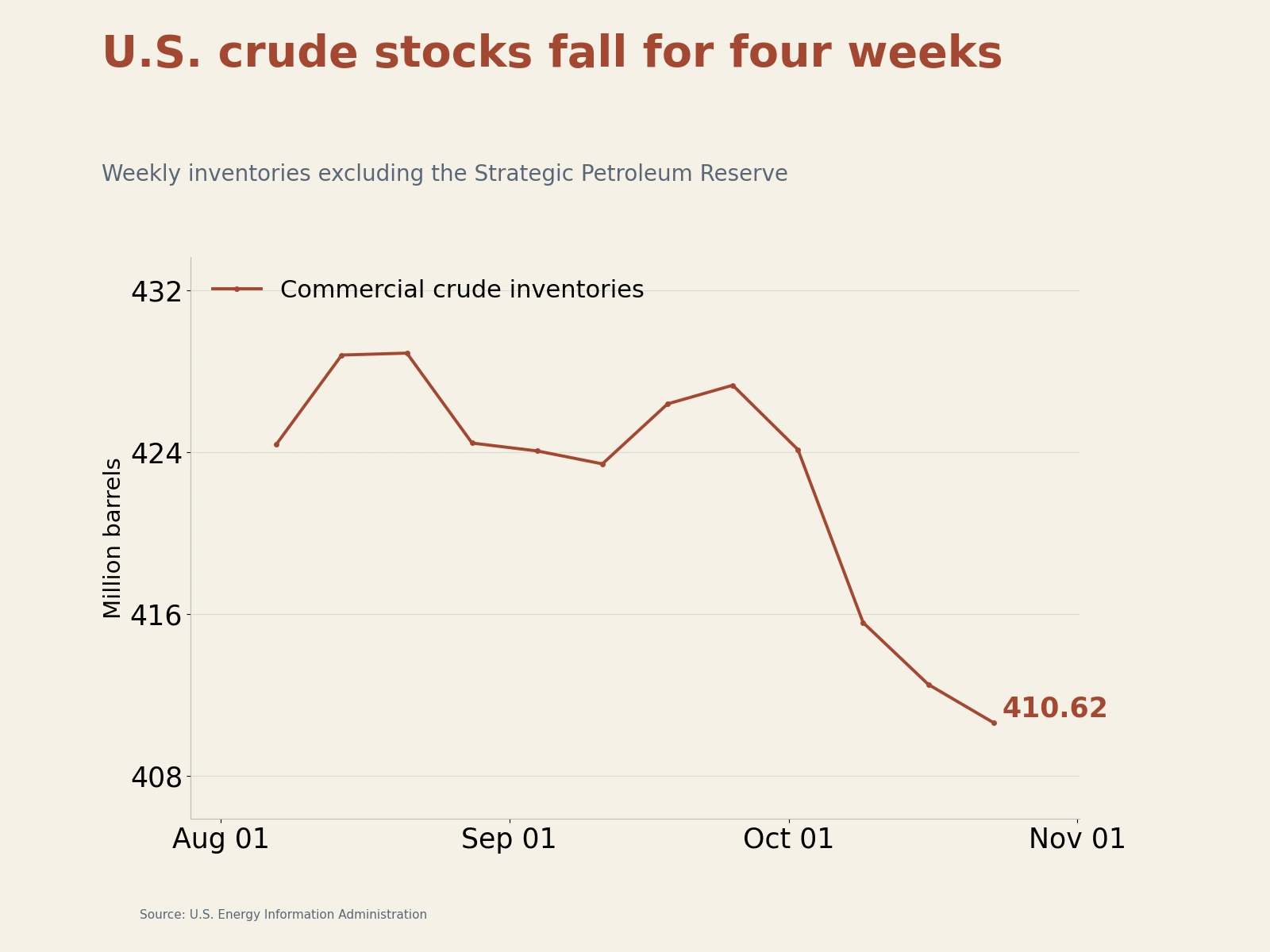
The latest official EIA report, for the week ended August 28, confirmed a larger-than-expected commercial crude draw: stocks fell 4.5 million barrels to 424.5 million, far above the expected draw of 300,000–1.1 million barrels, leaving stocks about 1% above their seasonal five-year average. Gasoline stocks fell and distillates rose. The SPR released another 3.1 million barrels to 286.6 million, while Cushing stocks edged up 80,000 to 22.5 million. The crude draw was also substantially larger than the earlier API estimate of 2.6 million barrels.
More important than the stock change was extraordinary resilience in U.S. processing and exports. Refinery utilization rose to 98%, its highest since 2018; crude throughput reached 17.5 million barrels a day, up about 103,000 on the week. Exports rose by 691,000 barrels a day to 4.5 million, while imports increased by 612,000 to 6.8 million. Record utilization and shipment volumes were offsetting potential overseas supply gaps, strongly supporting the judgment that crude overall was not in shortage.
Refined products remained the focal point of structural strain. After a record $106 a barrel on September 1, the ULSD–WTI crack remained above $100 on September 2. U.S. Gulf diesel physical and ICE gasoil crack spreads, the latter around $79, also set records. Russia's diesel export ban had been extended through September 30, keeping product-side constraints firmly in place.
OPEC+ policy remained steady. Ahead of the September 6 online meeting, consensus expected members to pause further increases in October. Although September theoretically restored 188,000 barrels a day of quota, Gulf conflict constrained actual exports, widening the gap between quotas and output.
Domestic U.S. supply responsiveness was relatively subdued. The EIA projected record 2026 output of 13.8 million barrels a day, but rigs fell by five to 447 in the week ended August 28. Additional supply depended more on per-well productivity than expanded capex.
Demand offered no strong impetus. Chinese customs data put July crude imports around 8.45 million barrels a day, up 22% month on month but down 24% year on year. August seaborne arrivals were expected to recover moderately to about 7 million barrels a day. Export quotas and low stocks helped processing rebound to about 12.9 million barrels a day, but the domestic recovery in final industrial and transport consumption remained slow.
Macro backdrop: dollar and Treasuries steady; cross-asset sentiment neutral to mildly positive
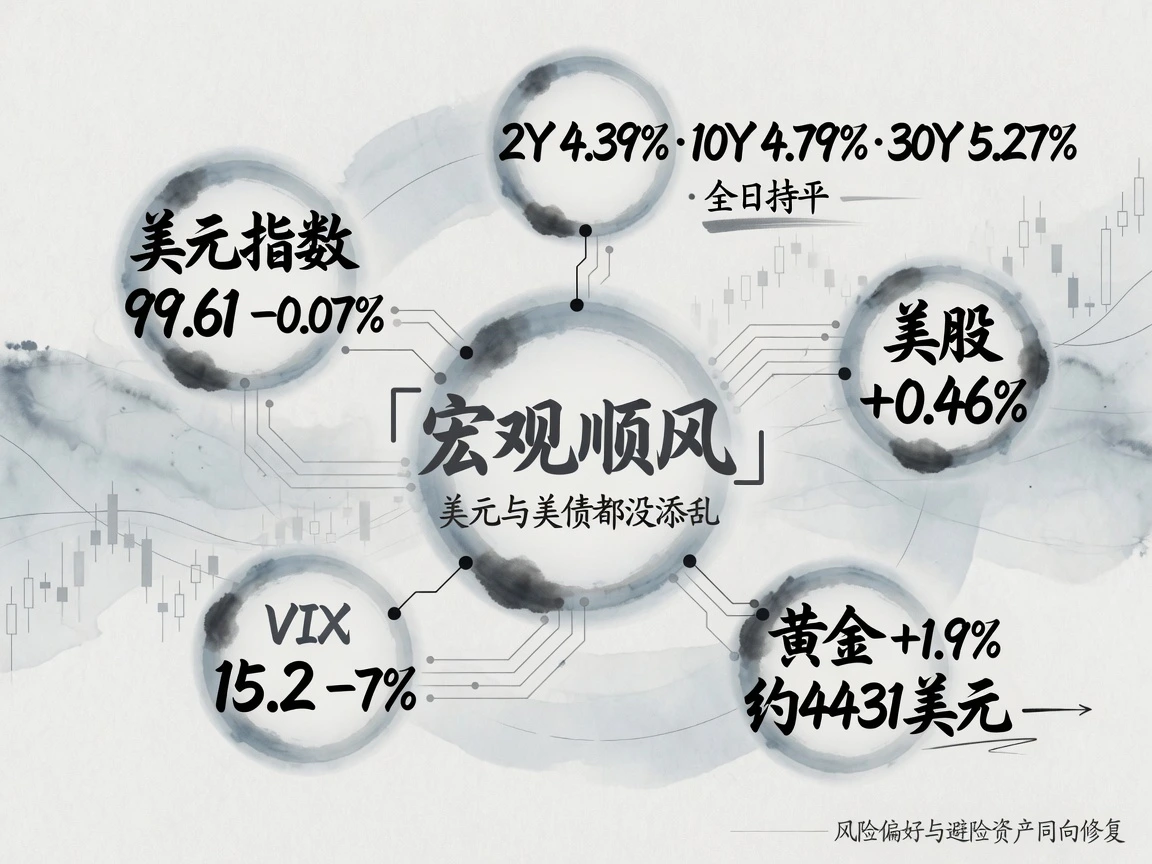
The external macro backdrop was neutral to mildly supportive for commodities. The dollar index settled at 99.61, down 0.07%. Treasury yields were nearly unchanged: two-year 4.39%, ten-year 4.79% and 30-year 5.27%, avoiding the valuation squeeze from the mid-August long-yield surge. The S&P 500 gained 0.46%, VIX fell another 7% to 15.2 and spot gold rose 1.9% to about $4,431. Simultaneous stabilization in risk appetite and safe-haven assets indicated that macro capital treated oil as a standalone geopolitical supply event rather than an external shock triggering inflationary tightening.
Shipping: fighting escalates again, but strait transshipment and alternative routes continue
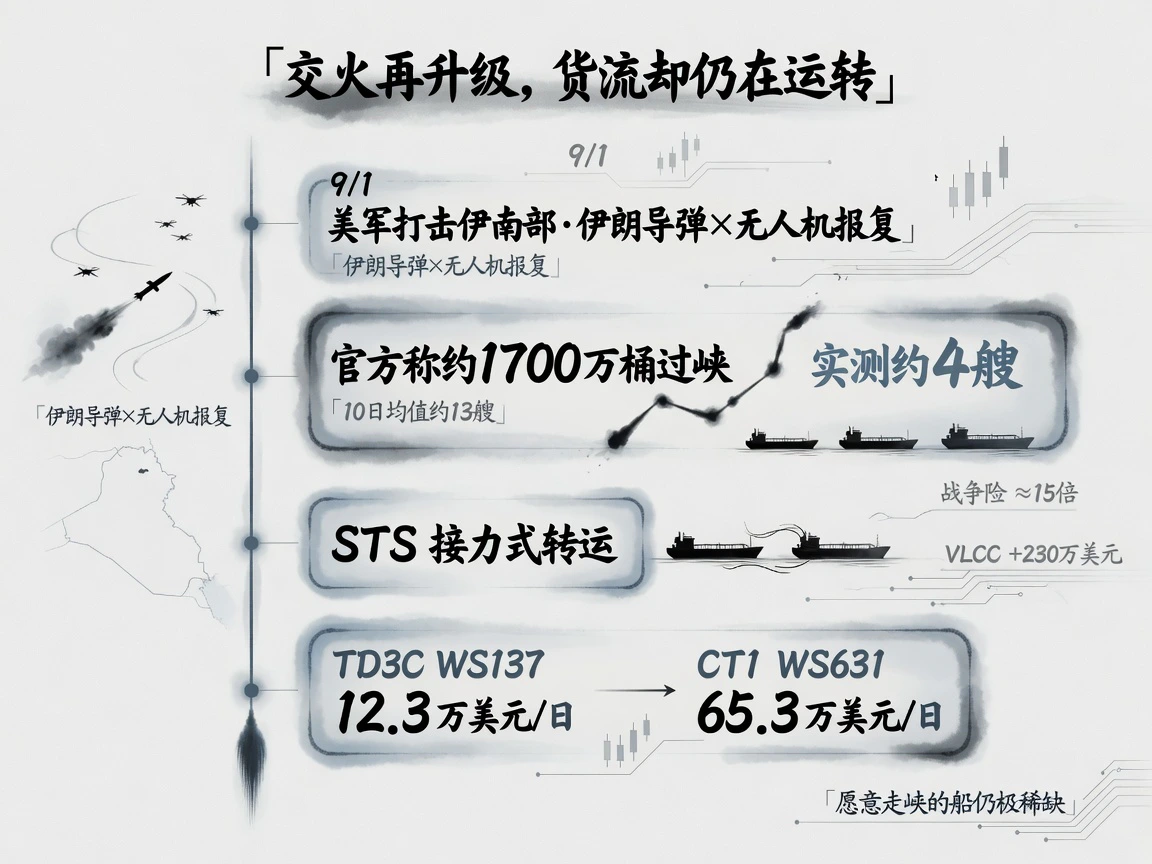
After September 1 U.S. strikes on southern Iranian nodes including Bandar Abbas, Qeshm, Sirik, Jask, Chabahar and Khuzestan, Iran's Revolutionary Guard launched retaliatory missiles and drones at U.S. bases in Jordan, Iraq, Kuwait and Bahrain. Washington said most attacks were intercepted with no casualties and signaled near-complete control of the strait. Tehran vowed stricter passage restrictions and an expanded list of sanctioned vessels.
Actual infrastructure and shipping conditions had not reached total interruption. Areas around Jask and Sirik were bombed, but third-party monitoring had not confirmed damage to core terminal structures, and Kharg Island export facilities showed no signs of destruction. Official statements differed from monitoring: Iran's energy minister claimed 17 million barrels crossed Monday, a conflict-era daily high that was not independently verified. Monitoring instead showed commercial vessel transits in single digits, around four, below the ten-day average of about 13. Previously damaged or mined tankers remained disabled, but no new attack notice appeared that day.
Rerouting and transshipment outside the Gulf were accelerating. Ship-to-ship (STS) relay transfers in the Gulf of Oman had become routine. By late August, three Qatari and UAE LNG cargoes had been transferred outside the strait for delivery to India and Japan, and the model was rapidly extending to crude. War-risk insurance remained about 15 times peacetime rates, adding roughly $2.3 million for one VLCC crossing.
Freight rates diverged structurally. The Baltic TD3C crude-tanker assessment on September 2 fell to WS 137, equivalent to about $123,000 a day, sharply below the August 28 peak near $650,000. China's CT1 crude-import freight index remained at an extreme WS 631, about $653,000 a day. The disconnect arose from assessment models and actual routing: paper indices included more theoretical listings, while completed fixtures were anchored by costly diversions. Both pointed to an extreme shortage of risk-tolerant tankers willing to enter the Persian Gulf to load.
Pricing: incremental news discounted individually; forwards reject a complete supply cutoff
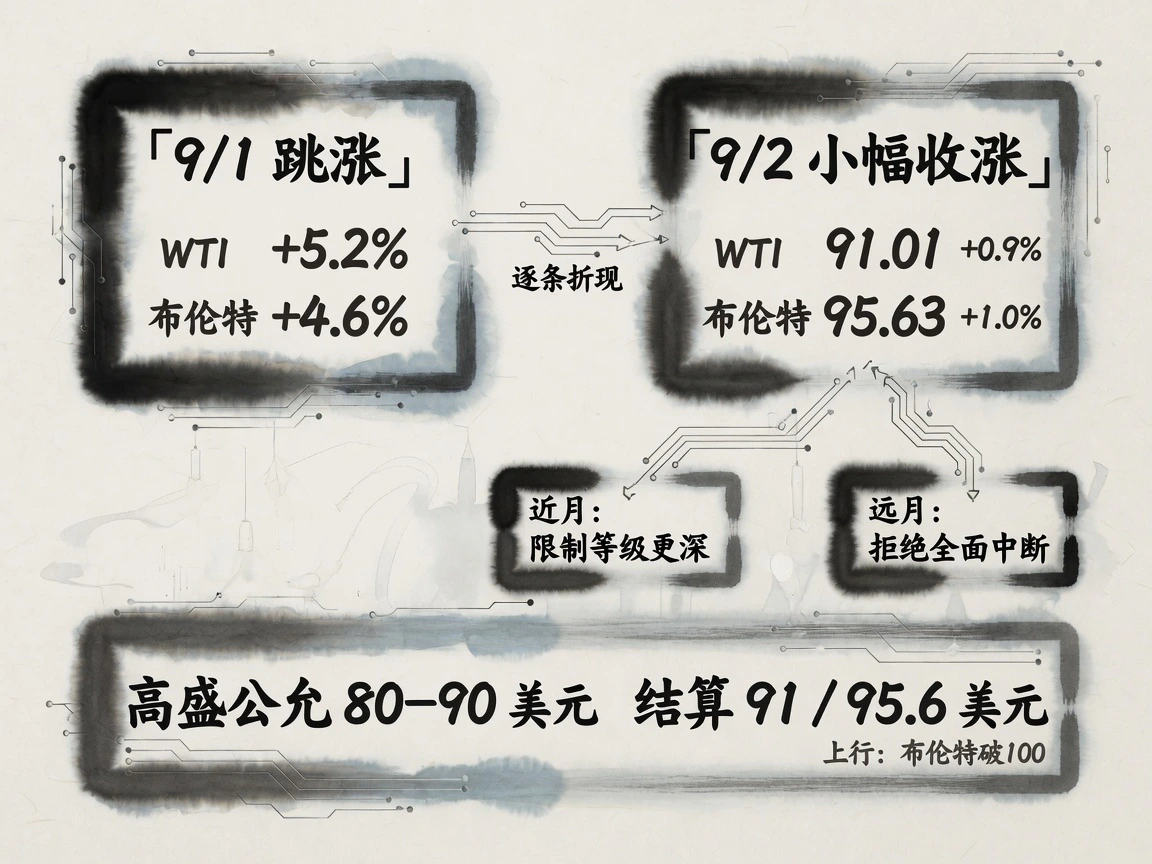
The two benchmarks' roughly 1% September 2 gains contrasted sharply with September 1's approximately 5% surge. Despite escalating confrontation in the news, oil's response shifted from a panic impulse to incremental discounting. Markets declined to price the most pessimistic distant scenario in advance.
Prompt contracts chiefly priced intensified short-term passage restrictions: operations near bypass nodes, tougher Iranian verbal blockade threats and slow repairs to damaged tankers. The forward curve and macro structure rejected pricing a substantive halt in flows: core export hubs were not materially destroyed, pipelines and offshore STS relays kept operating, and record U.S. refining and shipments moderated global shortage expectations. The strongest geopolitical transmission also remained in extreme diesel cracks, without spreading into an absolute aggregate crude deficit.
Major institutions' central estimates remained below traded prices. Goldman Sachs placed crude fair value around $80, within an $80–$90 range. JPMorgan estimated a premium of about $7–$8 a barrel for every month of substantive Hormuz interruption. Current settlements of WTI $91 and Brent $95.6 already partly priced the tail risk of tighter controls. A breakout above $100 would require irreversible facts such as destruction of key export terminals or an actual comprehensive navigation shutdown. If alternative logistics continued proving effective, the accumulated geopolitical premium would progressively face reversal.