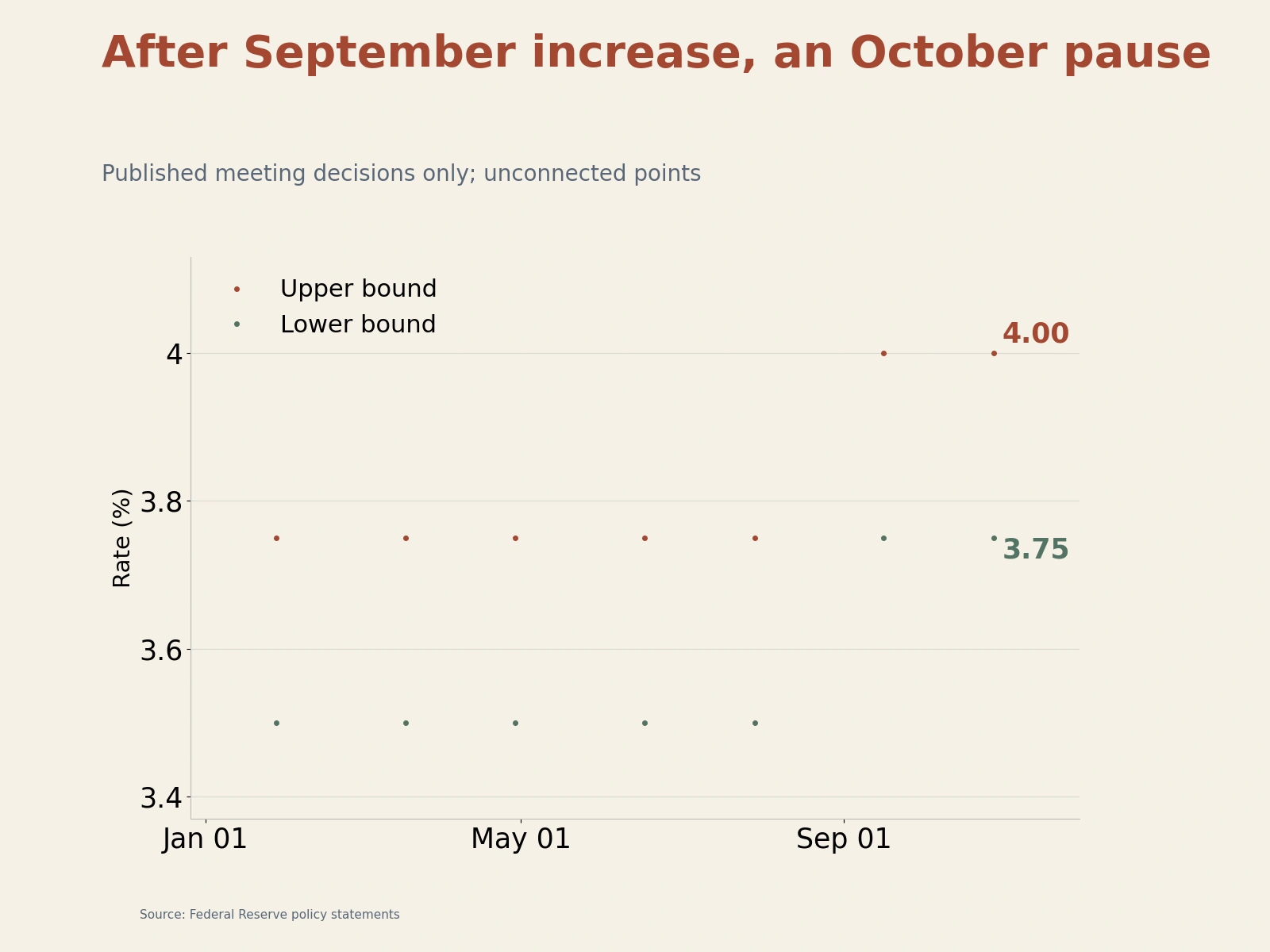
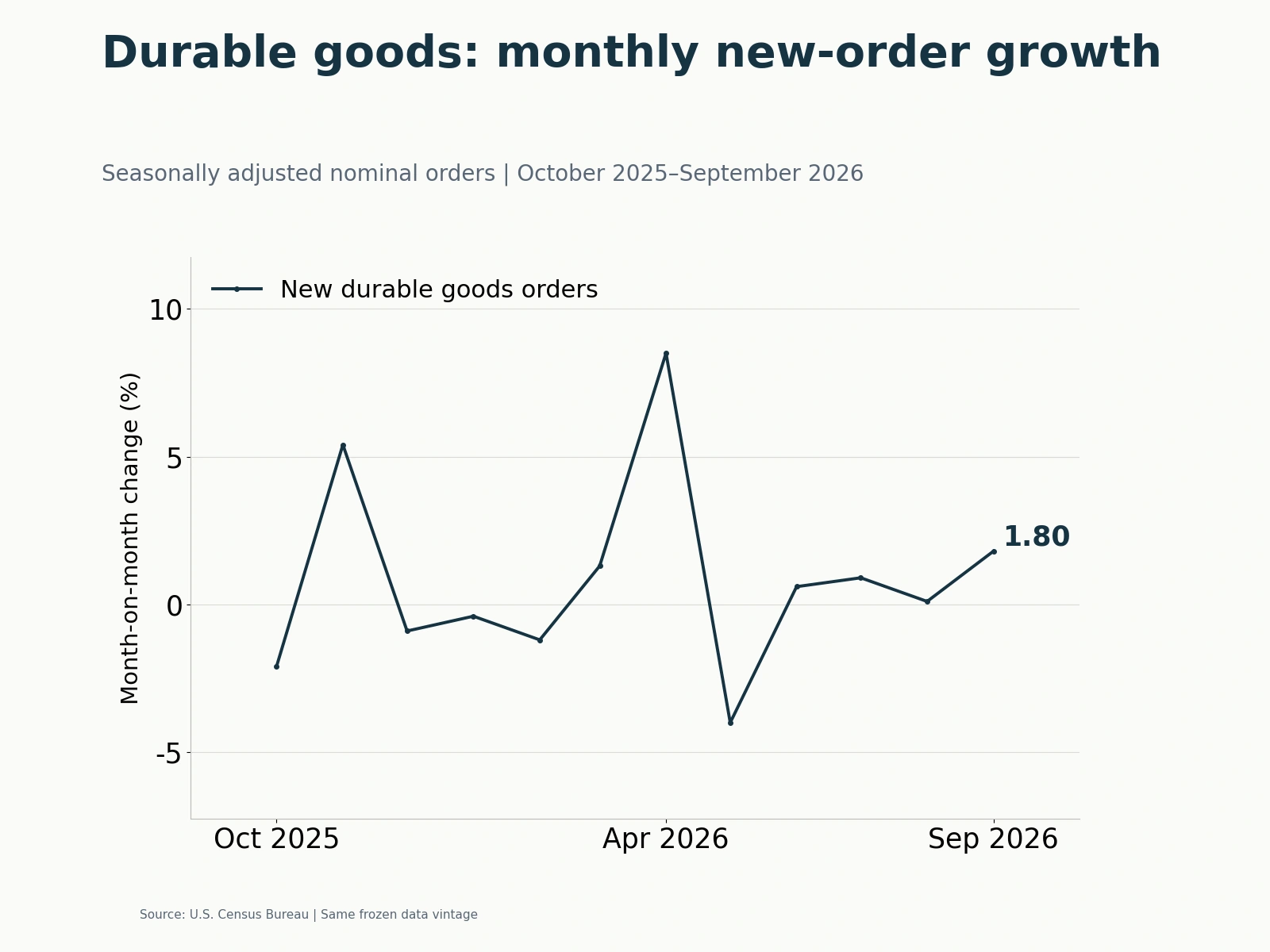
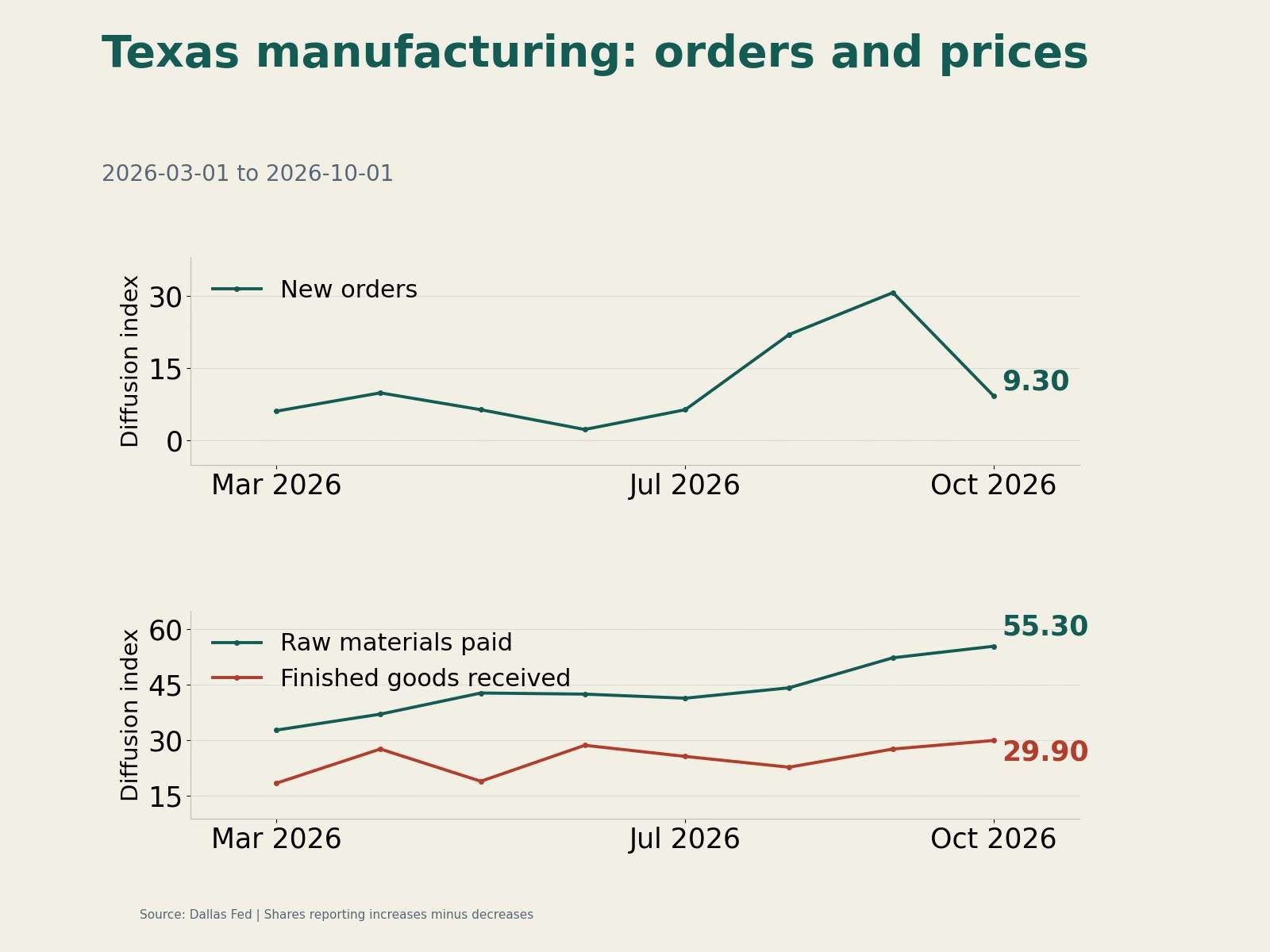
On September 3, US Eastern time, Fed Governor Waller clearly defined his September FOMC boundary: support unchanged rates if inflation keeps cooling, consider renewed hikes only with clearly overheated data. Fed funds have stayed at 3.50%–3.75% since last December. July's meeting held by 9:3, with three regional presidents publicly advocating a hike. After Waller spoke, September hike pricing quickly fell from over 60% toward 50%. The policy contest shifted squarely toward August CPI on September 11.
Economic data: resilient demand with renewed price pressure
Two newly released key reports supported the Fed's hold camp.
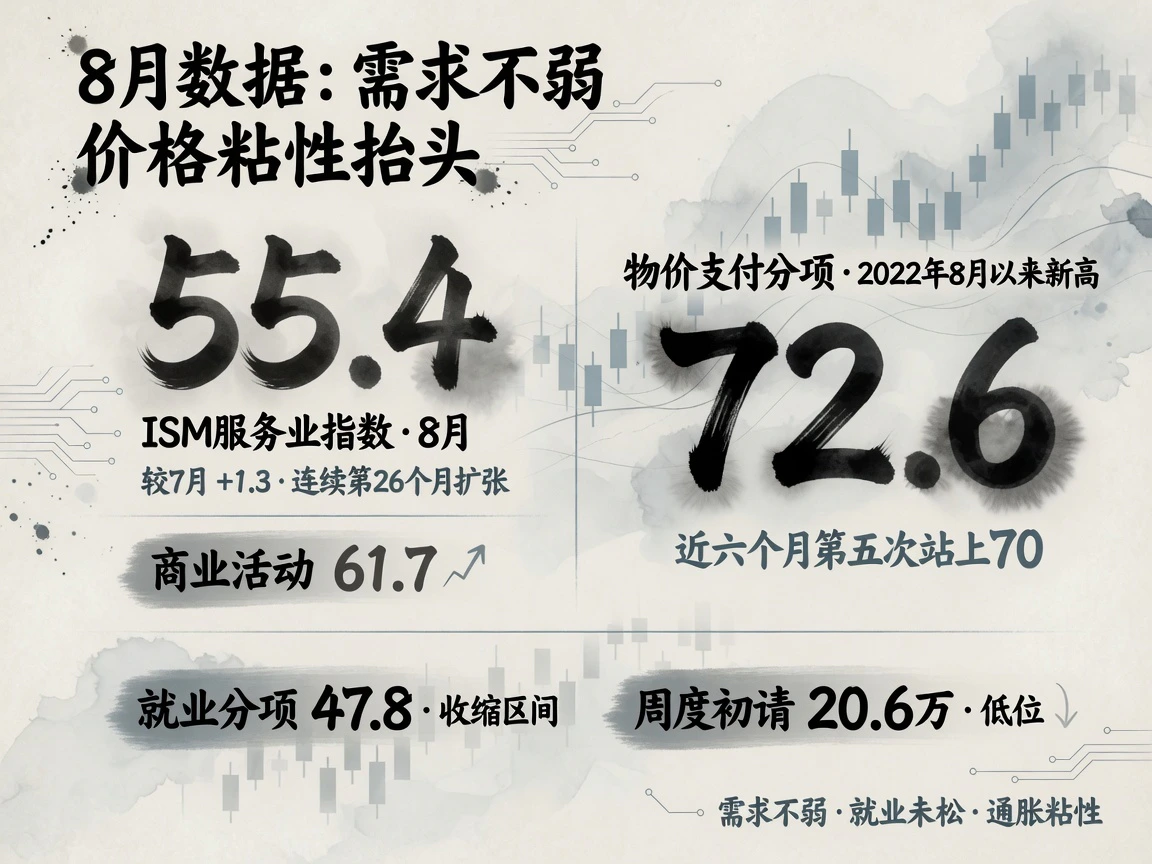
August ISM services PMI reached 55.4, up 1.3 points from July and expanding for a 26th consecutive month. Business activity rose to 61.7, highest since November 2022, and new orders to 60.9, highest since February 2023, confirming resilient final demand. Prices paid jumped to 72.6, highest since August 2022 and above 70 for the fifth time in six months, the report's starkest inflation signal. Employment was only 47.8, contracting for a second month.
Initial claims in the week ended August 29 were 206,000, with a low four-week average of 207,000, indicating no labor-market collapse risk.
Resilient demand, no employment deterioration and renewed inflation stickiness firmly closed the near-term door to cuts while giving the Fed a solid basis for a September hold.
Officials: Waller sets thresholds and backs giving disinflation a chance
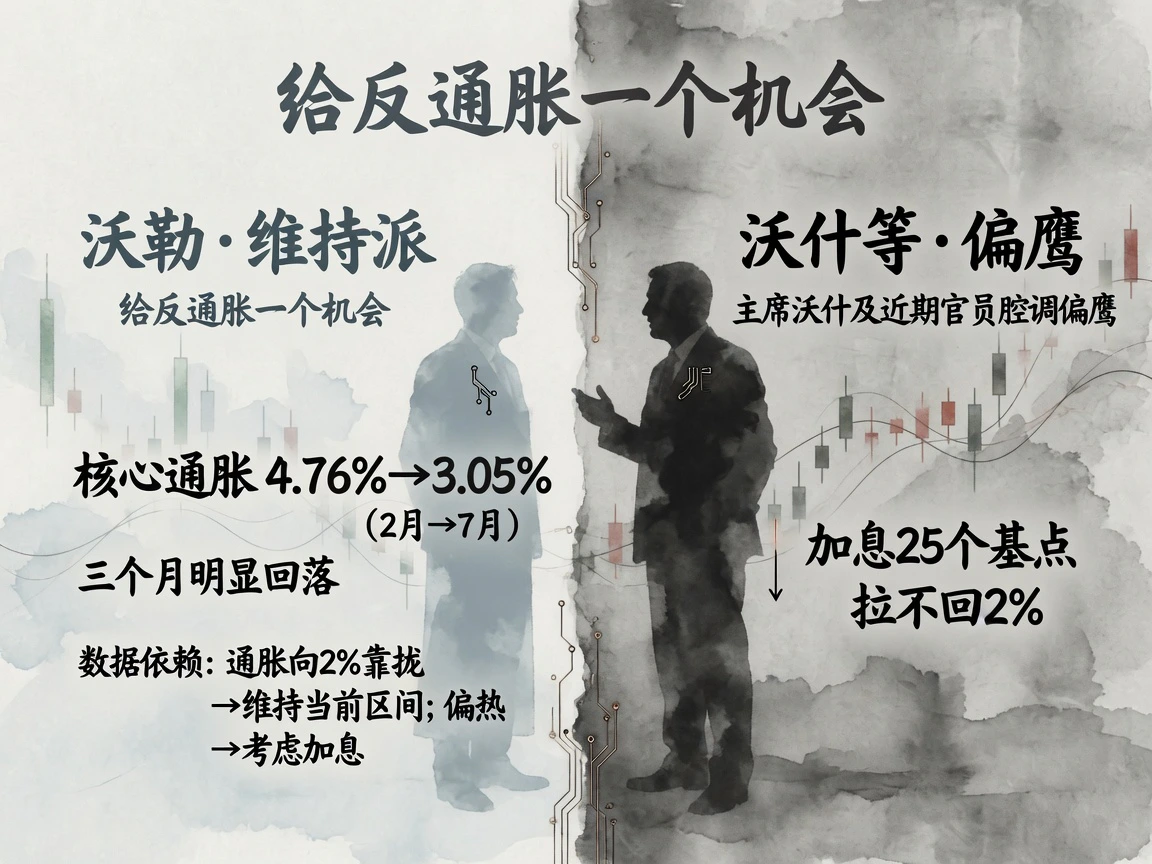
In a September 3 Reuters interview, Waller explained his September 15–16 baseline. Policy would be strictly data dependent: continued August progress toward 2% supports current rates; renewed overheating warrants considering a hike. He considered current rates moderately restrictive for aggregate demand and did not require an uncontrolled inflation rebound before acting.
Waller cited three-month annualized core inflation falling substantially from 4.76% in February to 3.05% in July, alongside annual July PCE of 3.7% and core PCE of 3.3%, calling this substantive improvement. He described his position as giving disinflation a chance, explicitly saying a hurried 25-basis-point hike would not immediately return inflation to 2%, and expected reasonable August readings.
With Chair Warsh and hawkish officials repeatedly signaling tightening, Waller's remarks just before the September 5 blackout were especially consequential, interpreted as a major intervention by the hold camp.
Expectations: hike pricing cools and balance returns

CME FedWatch showed September 25-basis-point hike odds falling from approximately 60% to around 50%, with cuts at zero. Reuters' institutional-survey probability likewise retreated toward half. Treasury yields fell and US stocks rebounded late as tightening premiums eased.
Within weeks the debate shifted sharply from cut-or-hold to hold-or-hike, now with competing forces again around 50%.
The schedule is dense and consequential: August payrolls September 4, CPI September 11, then September 15–16 FOMC. Waller has defined the data threshold for holding. Incoming inflation will determine which side ultimately prevails.