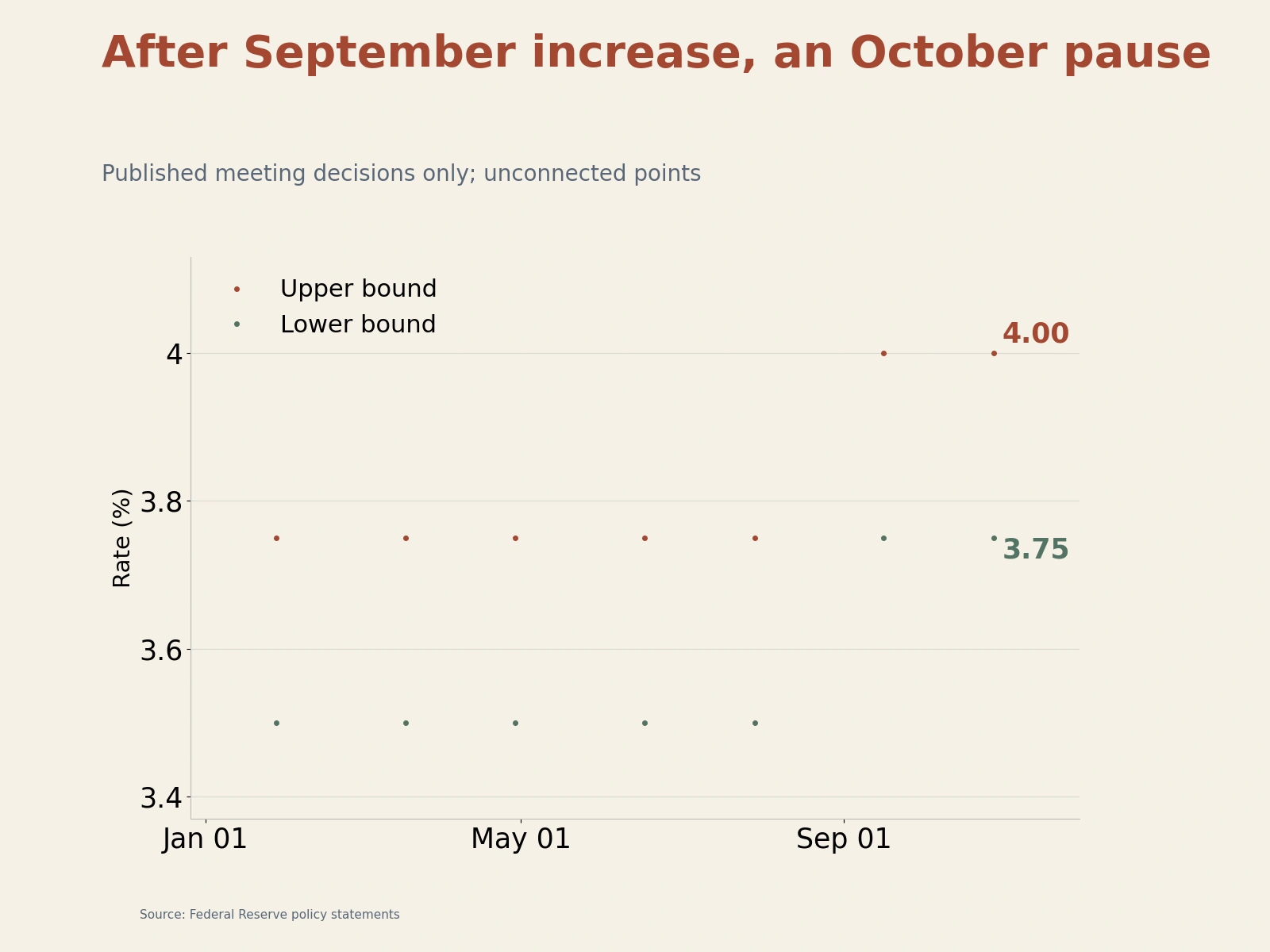
On September 5, Eastern time, the Federal Reserve entered its regular pre-meeting blackout, with the federal funds target range still at 3.50%–3.75%. August payrolls released September 4 substantially exceeded Wall Street expectations, directly dispelling fears of a labor-market stall. Rate cuts were entirely out of the discussion for the September 15–16 FOMC meeting. Policymakers faced two core choices: hold current rates or raise them 25 basis points.
August payrolls far exceed expectations; the labor market has not stalled
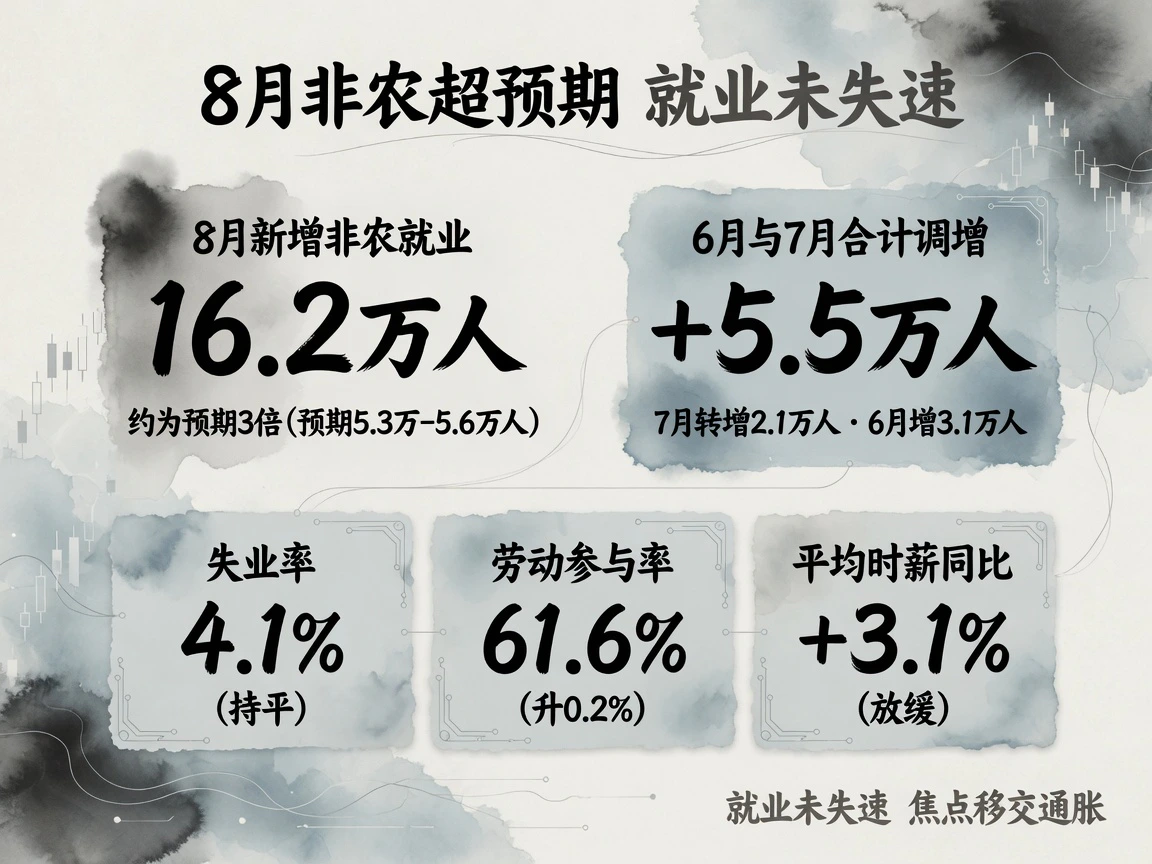
On the morning of September 4, Eastern time, the Bureau of Labor Statistics released August payrolls. Nonfarm employment rose 162,000, roughly three times the prior market forecast of 53,000–56,000. The preceding two months were revised substantially higher by a combined 55,000. July changed from a 23,000 decline to a 21,000 increase; June was revised to a gain of 31,000.
Other indicators were also solid. August unemployment held at 4.1%, while labor-force participation rose 0.2 percentage points to 61.6%. Average hourly earnings rose 0.3% monthly and slowed to 3.1% annually, without signs of an accelerating wage-price spiral. Gains came mainly from leisure and hospitality and local-government education, with localized layoffs in information. Employment was neither stalling nor overheating enough to compel aggressive tightening, naturally shifting the policy focus to inflation.
Officials enter the blackout after leaving room to move in either direction
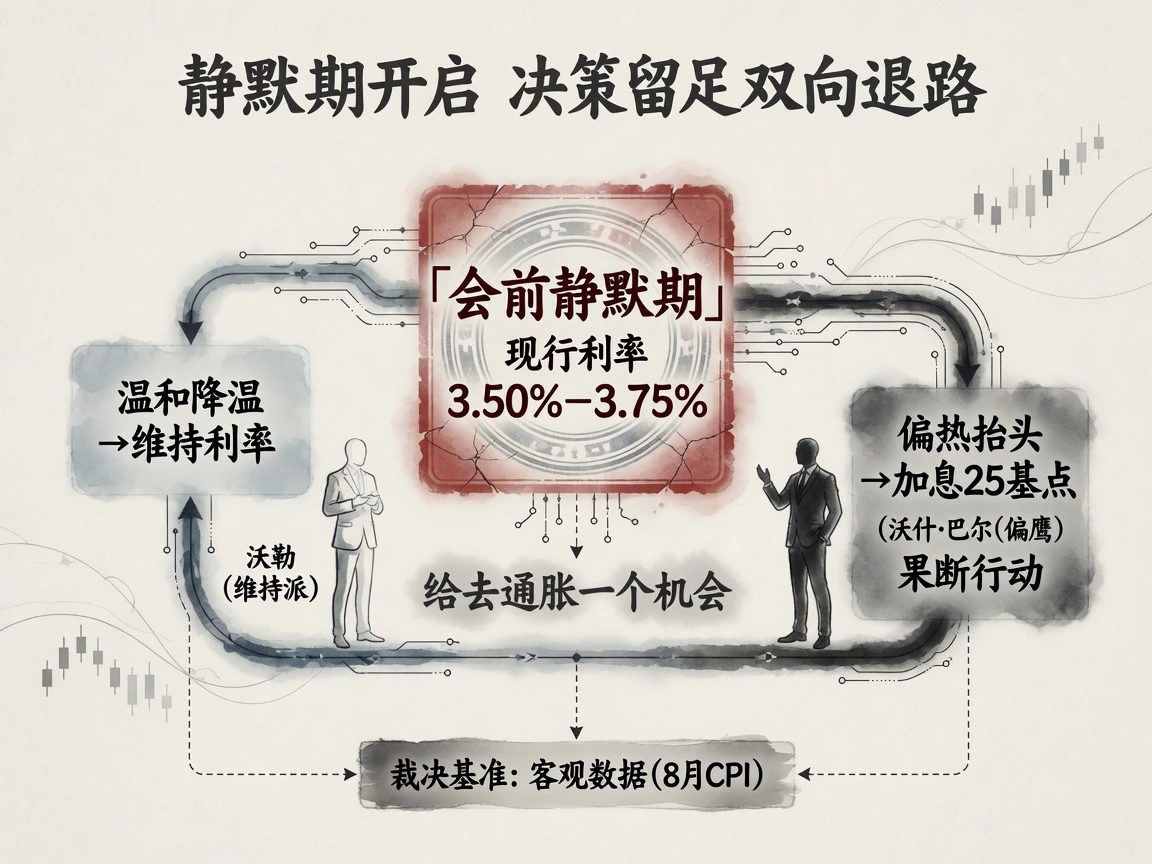
Officials formally entered the pre-meeting blackout on Saturday, September 5, Eastern time. No speeches were scheduled on September 4, the payroll release date, and the Fed's routine statistical publications supplied no additional guidance.
Comments before the blackout had already left policymakers ample flexibility. In a September 3 Reuters interview, Governor Christopher Waller set out a baseline of satisfactory employment and only mildly restrictive policy. If August inflation continued cooling moderately, he favored holding rates to give disinflation a chance; hotter data would lead him to consider a hike. Governor Michael Barr had earlier said he would support decisive action if inflation did not fall, and Chair Kevin Warsh's Jackson Hole tone was also hawkish. With the blackout underway, the final choice depended entirely on upcoming objective data.
Hike expectations return toward 60%; August CPI is the final test
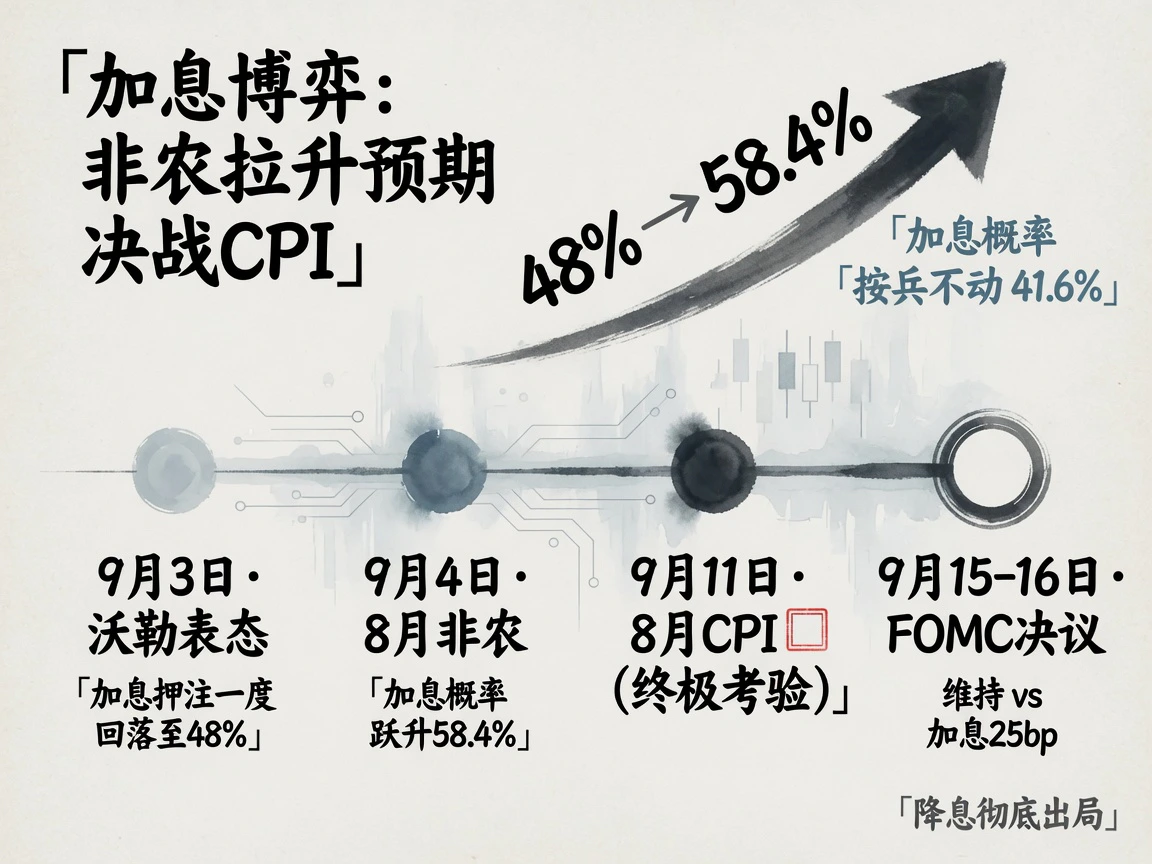
Strong jobs quickly changed rate-futures pricing. CME FedWatch showed the probability of a September 25-basis-point hike falling toward 48% after Waller's September 3 preference for waiting. After September 4 payrolls, the intraday probability rapidly rose to 60%–62%, before ending near 58.4%, against 41.6% for no change. A hike became the leading outcome again, but uncertainty remained.
With officials absent from public debate during the blackout, all attention shifted to August CPI due September 11, Eastern time. If inflation continued to decline smoothly, the case for holding and waiting for another reading would remain credible. If it stayed stubborn or rose again, a 25-basis-point hike at the September 15–16 meeting would become the most likely outcome.