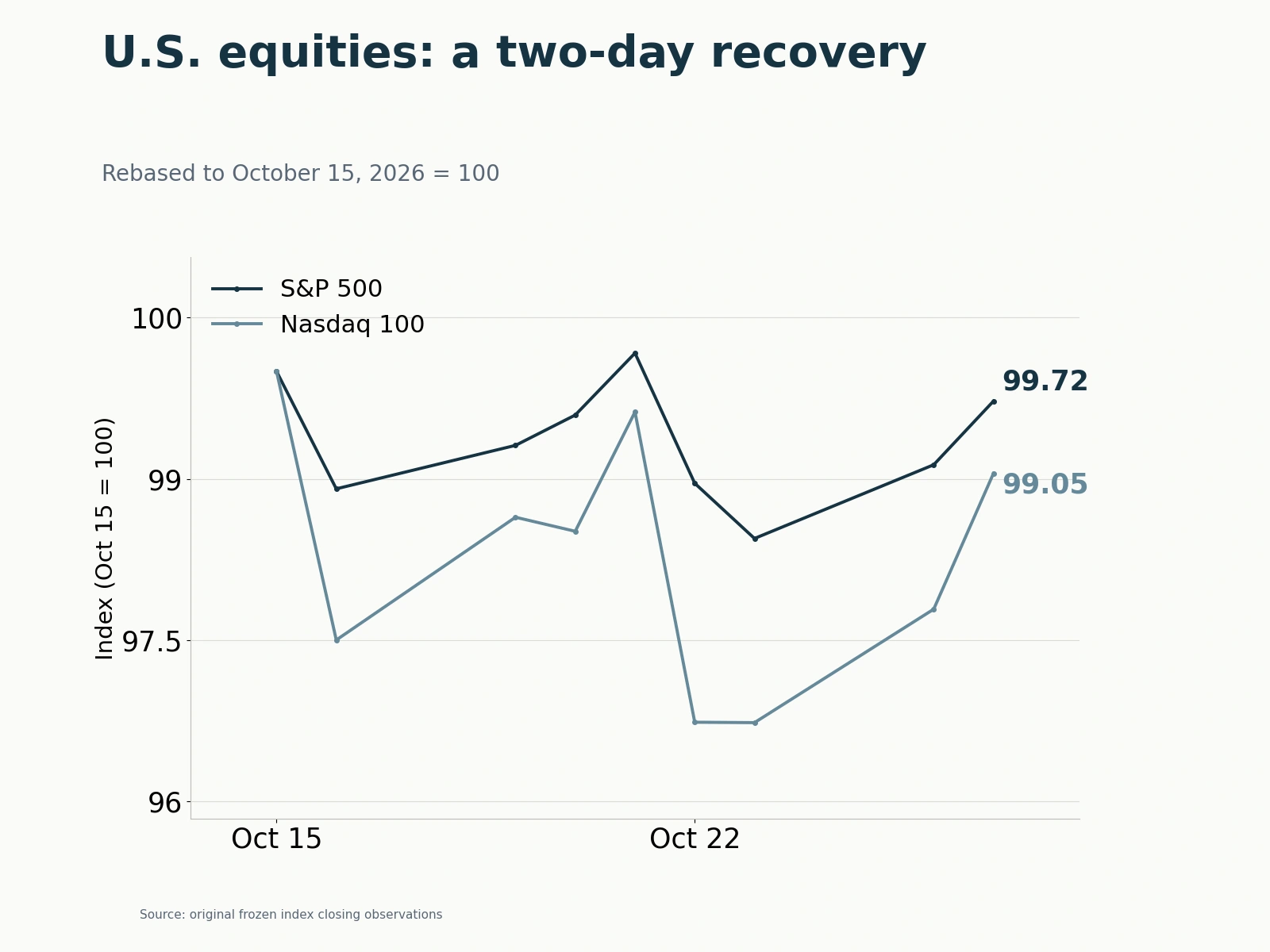
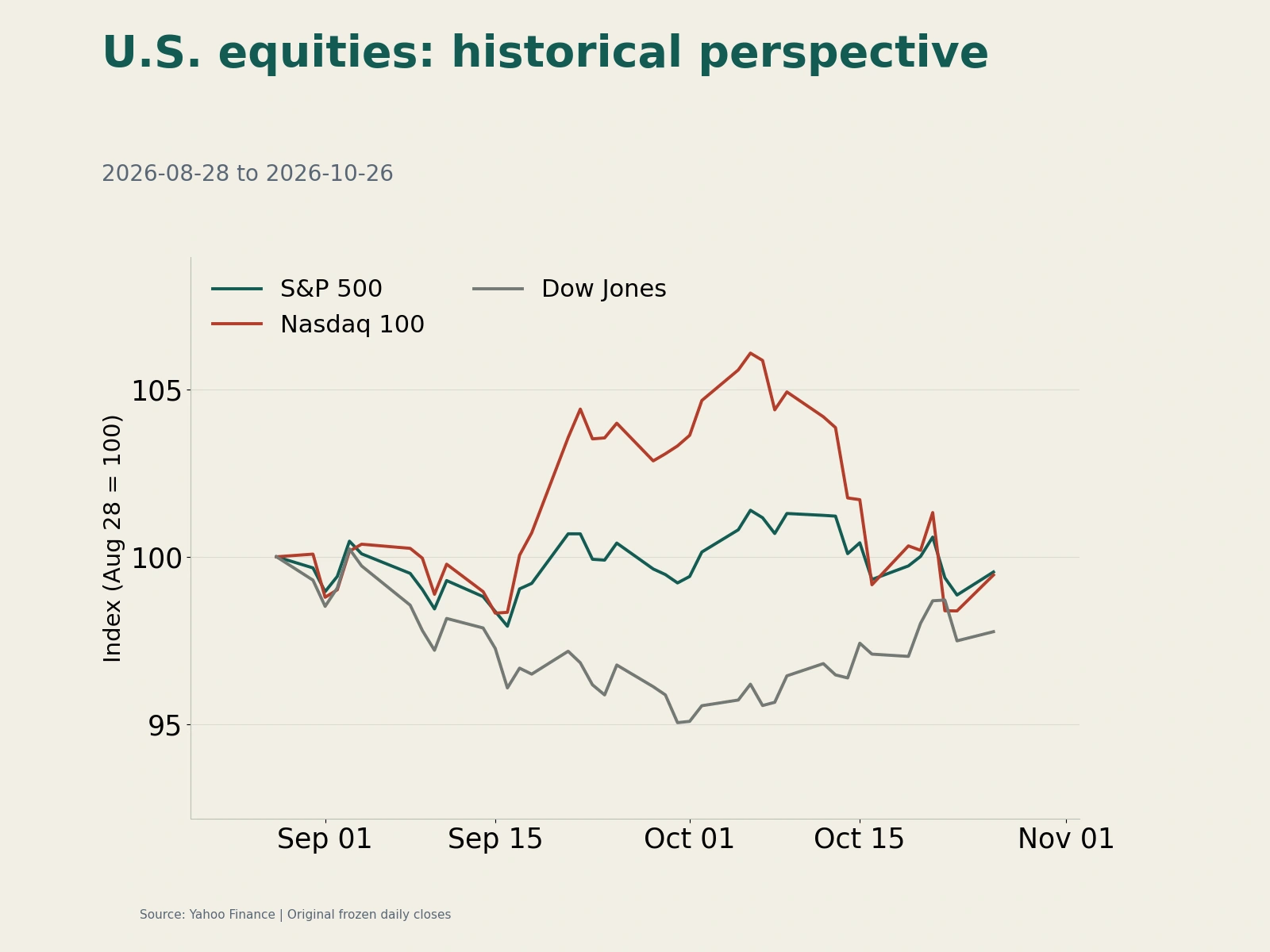
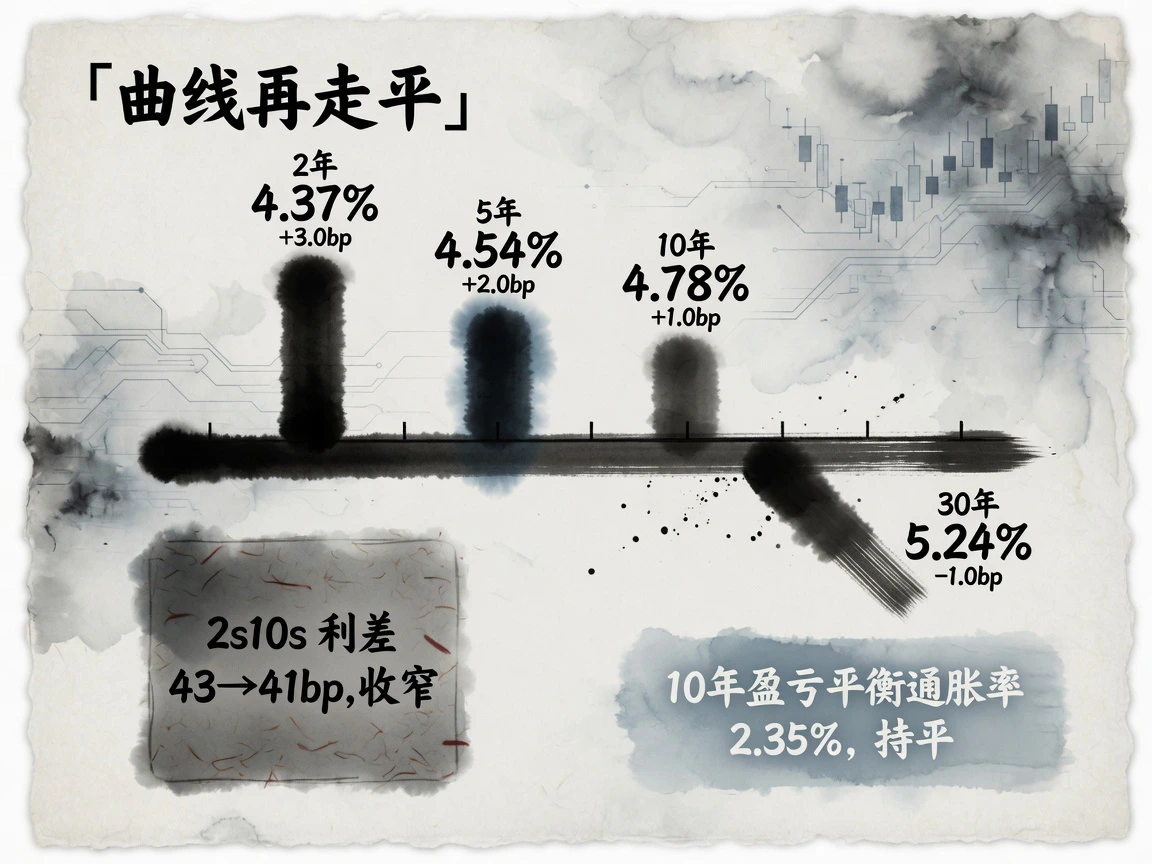
On September 4, 2026, August US payrolls rose 162,000, roughly triple expectations, increasing September hike pricing. The probability of 25 basis points rose from about half to approximately 58%–60%. The 2-year Treasury yield closed at 4.37%, up 3 basis points; the 10-year rose 1 and the 30-year fell 1.
Larger short-end increases and relative long-end stability show adjustment centered on near-term policy. Strong jobs and energy inflation had not fully become long-term inflation fears, although one day's curve change cannot exclude that risk.
Weekend US-Iran naval escalation and OPEC+'s decision to maintain October output targets both followed Friday's close. US stocks and cash Treasuries close September 7 for Labor Day and reopen September 8. Subsequent inflation releases will inform the September 15–16 Fed meeting.
Bonds: short yields rise more while the long end holds relatively firm
From August 31 to September 4, Treasuries repeatedly adjusted around September policy. On September 1, energy gains and earlier hawkish expectations lifted 2- and 10-year yields 5 and 4 basis points; the 10-year breakeven reached 2.35%. Weak ADP data September 2 failed to reverse pressure; the 10-year briefly reached 4.82%. On September 3 Governor Waller favored unchanged rates if inflation kept cooling, lowering hike odds to about half. Friday payrolls tilted expectations back toward a hike.
Consistent end-of-day closes for September 4 versus September 3:
| Maturity | September 4 close | September 3 close | Change |
|---|---|---|---|
| 2-year | 4.37% | 4.34% | +3.0 basis points |
| 5-year | 4.54% | 4.52% | +2.0 basis points |
| 10-year | 4.78% | 4.77% | +1.0 basis points |
| 30-year | 5.24% | 5.25% | -1.0 basis points |
Intraday payroll reactions were stronger: the 2-year briefly exceeded approximately 4.41% and the 10-year reached around 4.81% before retracing. The White House again called publicly for cuts, linking rates with trade. Those comments coincided with lower yields but do not establish direct causation.
By the close, 2s10s narrowed from 43 to 41 basis points, while the 10-year breakeven remained 2.35% despite higher nominal yields. This looks more like repricing imminent tightening than a general increase in long-term inflation compensation. Over the week, 2-, 5-, 10- and 30-year yields rose 3, 6, 5 and 2 basis points from August 28.
New supply awaits the long end: September 8, $58 billion new 3-years; September 9, $39 billion 10-year reopening; September 10, $22 billion 30-year reopening, totaling approximately $119 billion. August's 30-year auction tailed 6.6 basis points, clearing above the pre-auction market, with 2.39 bid-to-cover, indicating weak demand. This round tests absorption at current yields.
Macro: stronger-than-expected jobs leave inflation central to policy disagreement
August payrolls rose 162,000 versus 53,000–56,000 consensus. Unemployment held 4.1%; hourly pay rose 0.3% monthly and 3.1% annually; June–July gains were revised up 55,000. Private employment rose 127,000 and government 35,000, led by food services, local education, construction and manufacturing, while information lost 23,000.
The report eased fears of rapid labor deterioration, but other indicators were weak: ADP private jobs grew only 38,000, the least since January, and ISM services employment contracted for a second month. Survey differences and later payroll revisions mean one strong month cannot establish renewed overheating.
For pricing, employment was no longer a clear obstacle to tightening. September hike odds reached about 58%–60%, briefly near 65%, with little cut pricing. Necessity still depends on whether inflation continues its previous disinflation trend.
Waller had said three-month core inflation fell from February's 4.76% to 3.05%; continued August CPI cooling would favor holding. New York's Williams was open to a hike but considered evidence insufficient. The Fed entered blackout September 5, leaving data more influential than speeches.
Cleveland Fed September 4 forecasts put August headline CPI around +0.36% monthly and +3.38% annually, with core +0.20% monthly. Conversely, ISM services prices reached 72.6, the highest since August 2022, and manufacturing prices were elevated at 71.1. Respondents cited tariffs and Middle Eastern effects on energy, transport, metals and electronics costs.
Higher costs alongside falling core inflation define the disagreement. Hikes cannot expand energy supply directly but affect demand and expectations; continued moderate core gains strengthen the hold case. Early-September oil increases mainly concern future inflation, not evidence that August CPI already rose.
Japan offered another policy thread. USD/JPY closed Friday at 155.66, down 2.05% that day and about 2.3% weekly. Expectations grew for a Bank of Japan increase to 1.25% September 17–18. Both central banks meet in the same week; either rate outlook can affect yen carry trades.
Commodities: supply risks support oil while rates pressure gold
Oil and gold diverged last week. Renewed US-Iran naval conflict, obstructed Hormuz and a US commercial inventory draw of 4.5 million barrels supported WTI's roughly 9.7% weekly rise to $91.48 a barrel. Brent closed at $96.28, up about 7.8% versus the consistent prior-week daily close of $89.31.
Friday October WTI gained 0.20% and November Brent 0.80%. Brent's settlement was its highest since July 24, although profit-taking and Ukraine peace-talk news briefly capped gains.
Tightness also appeared in futures: WTI and Brent nearby premiums over second month were approximately $2.9 and $4.0. US retail diesel averaged roughly $5.85 per gallon, with freight and insurance increasing procurement costs. Renewed weekend conflict and OPEC+ decisions were absent from Friday settlements; effects depend on shipping and supply recovery.
Gold followed rates more closely. Tuesday's close was $4,348; easing tightening expectations lifted Thursday gold 2.87% to $4,491.70. Strong payrolls then drove a Friday loss of 1.38% to a $4,429.80 settlement, down 1.08% for the week. It briefly touched about $4,365 before narrowing losses late.
Hike expectations and a stronger dollar raised gold's opportunity cost, while official buying and fiscal worries provided medium-term support. Recent trading repeatedly spans $4,300–$4,500. Hot CPI and stronger hike pricing could send gold below $4,300; continued moderate disinflation could support recovery above $4,500. These depend on actual data and policy shifts.
Equities: indexes edge lower with divergent industries
Stocks fell early last week, recovered and declined again Friday. Oil and Treasury yields weighed initially; earnings and softer policy expectations then supported recovery. Dell reported roughly $47 billion revenue, up 58%, and $60.9 billion AI-server backlog, lifting shares 15.8% to a record and supporting infrastructure peers. Waller's Thursday remarks lifted all three major indexes over 1%; Nvidia's announcement that evening of an approximately $12.9 billion Hugging Face acquisition also drew attention.
After Friday payrolls, the S&P 500 fell 0.38% to 7,718.60, Dow 0.51% to 53,414.25 and Nasdaq 0.29% to 26,506.99; Russell 2000 gained 0.25% to 2,975.65. Weekly S&P gains were 0.1%, Nasdaq 0.4%, while Dow fell 0.3%; VIX closed 14.53.
Semiconductors and software diverged more: SanDisk, Micron, AMD and Intel rose, while Adobe closed $266.51 as management changes failed to lift sentiment. Several software stocks fell 17%–21% after earnings or guidance. Lululemon closed $100.61, an eight-year low; FICO $932.26 amid regulatory criticism of scoring costs and proposed alternatives; Tesla $354.08.
Higher rate expectations depress valuations dependent on distant earnings, but earnings, management and regulation also drove sector differences. Semiconductor gains and small-cap outperformance show no uniform flight from risk.
Asian stocks broadly rose Friday before US payrolls, following prior US gains. Nikkei 225 closed 65,020.94, still down 2.08% weekly; Japan's 10-year yield briefly hit 3% midweek, pressuring equities. Hang Seng closed 25,650.87, highest since August 21; Korea and Shanghai fell 1.50% and 0.56% weekly. Asia will digest payrolls and weekend news first Monday; the US holiday may amplify brief asset volatility.
This week's focus: reopening cash markets, Treasury auctions and inflation
By early September 7, Beijing time, weekend developments had yet to face a full US cash session. Continued energy gains after September 8 reopening could pressure inflation expectations; shipping recovery would ease supply premiums. Both scenarios require transit and delivery data.
September 9–10 10- and 30-year auctions test long demand. August PPI September 10 and CPI September 11 provide new price information for September 15–16 FOMC. Strong employment, falling core inflation and higher energy costs require joint assessment; no single measure substitutes for all three.