Most economists still expected the Fed to hold rates the following week, but more anticipated renewed tightening. The Reuters poll released September 9 showed 65 of 93 economists surveyed September 4–9 expected no change in September, about 70%, down from 90% in August. Approaching the meeting, successive inflation releases would be central to whether the Fed could continue waiting.
A hold remains the majority view as full-year policy forecasts diverge
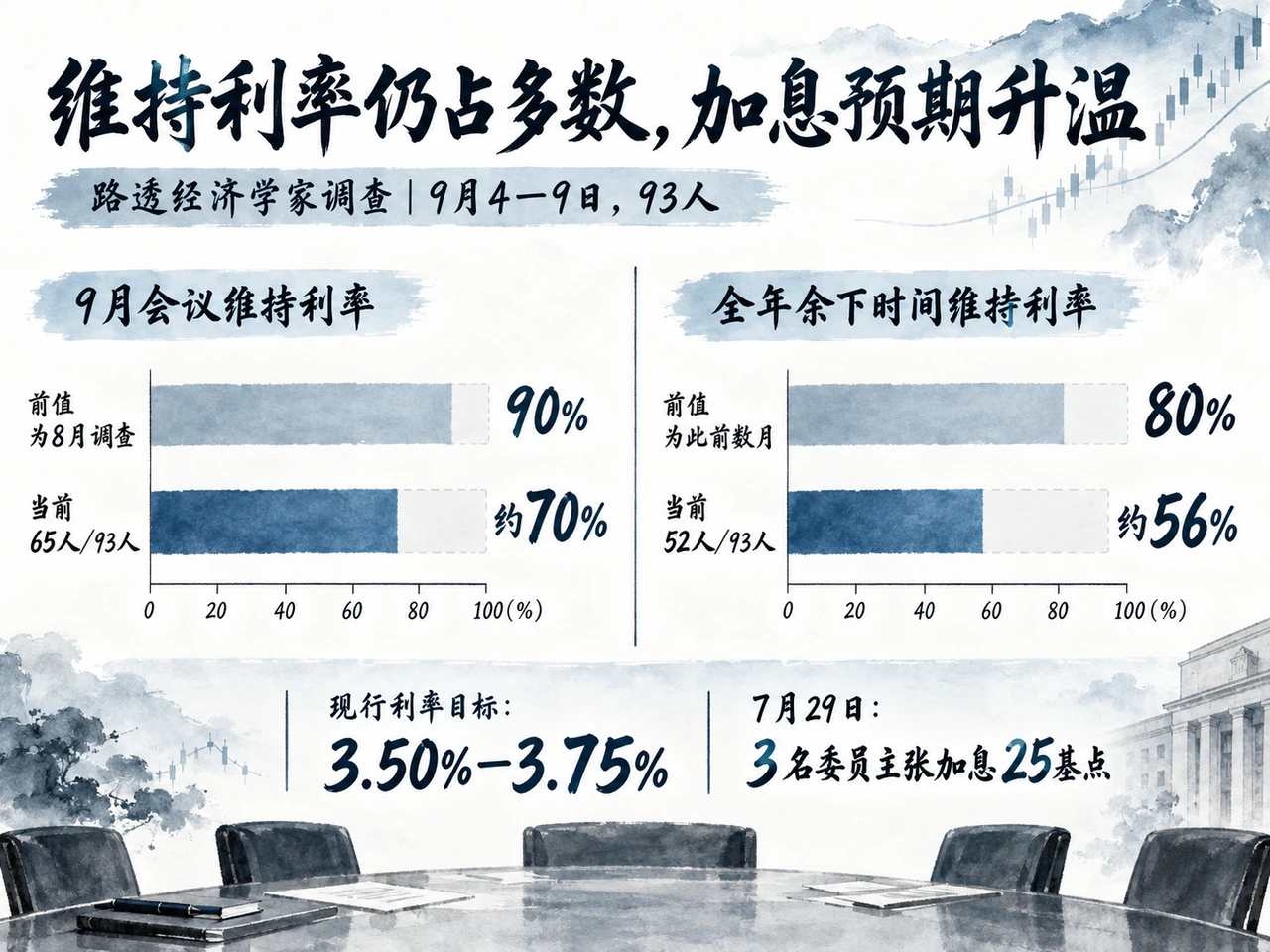
Differences over the rest of the year were greater. 52 respondents, approximately 56%, expected unchanged rates for the remaining year, down from 80% in previous months. The others expected at least one hike.
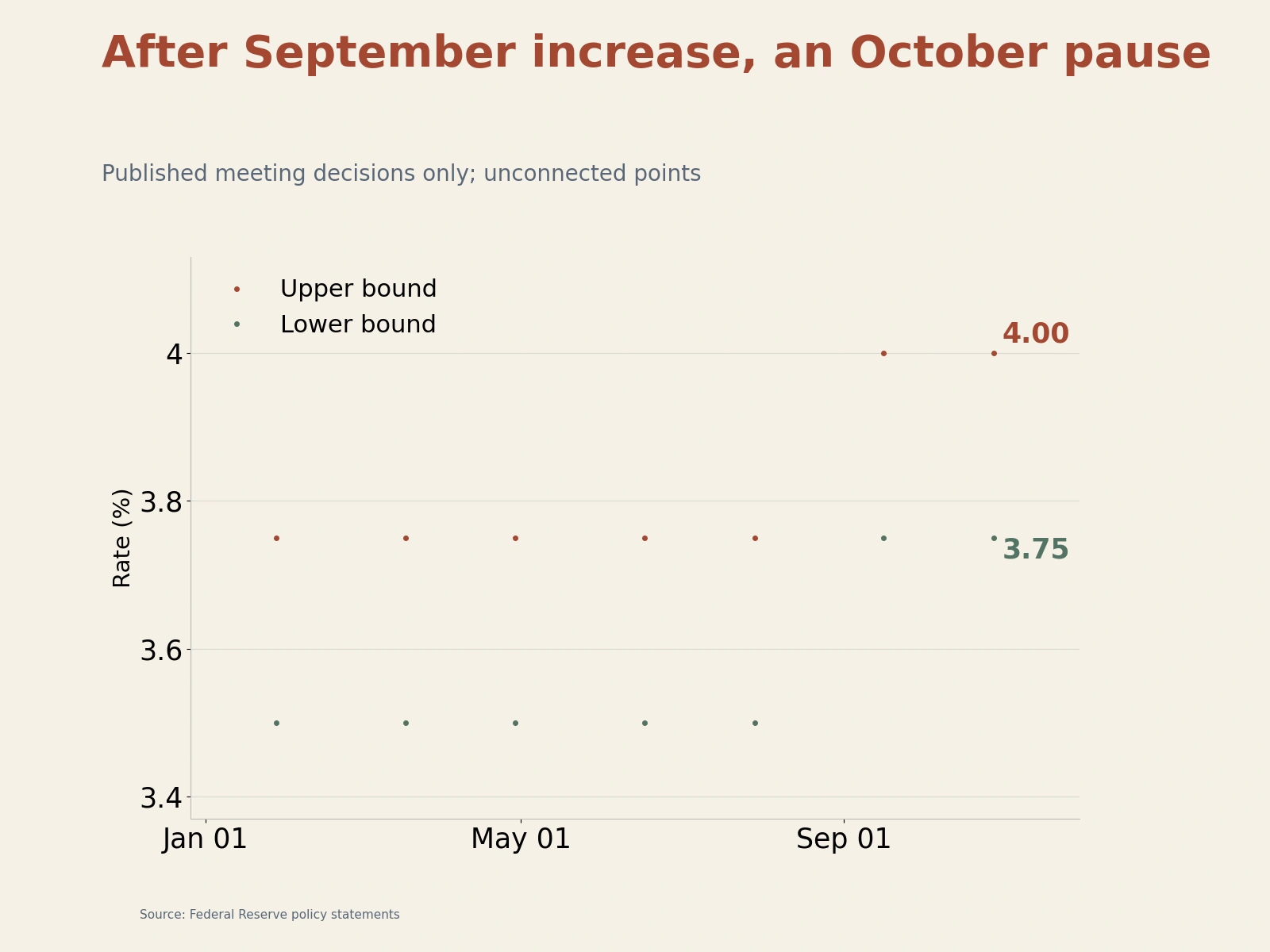
The current federal funds target was 3.50%–3.75%. The Fed held it on July 29, though three voting members favored a 25-basis-point increase. Its statement described solid expansion and inflation above the 2% target. The poll's shift showed more institutions incorporating renewed tightening into their outlooks.
Majority support for holding suggested above-target inflation alone had not persuaded most respondents to favor a hike. Persistent high inflation and intensifying pressure have different implications: the former may require rates to remain high longer; the latter increases pressure to tighten again. The next step depended both on breadth of price increases and on demand's ability to bear higher rates.
Premeeting inflation releases will test hike expectations
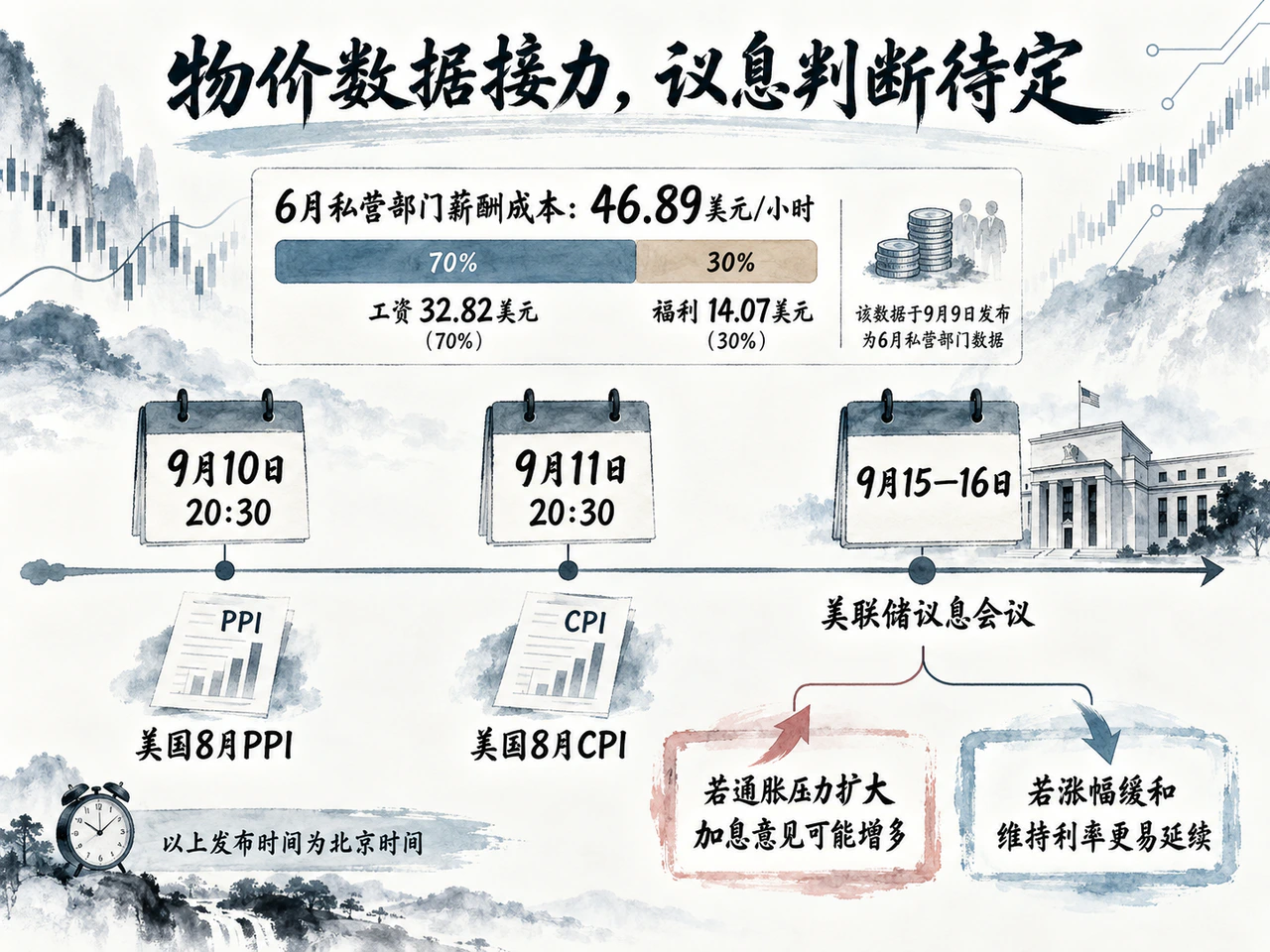
June employer-compensation figures released by the BLS on September 9 put private-sector total hourly cost at $46.89: wages and salaries $32.82, or 70%, and benefits $14.07, or 30%. Benefits close to one-third showed nonwage spending was an important part of labor cost.
August inflation would be crucial before the meeting: PPI was due at 8:30 a.m. Eastern time September 10 and CPI at the same time September 11. They measure producer and consumer price changes respectively; whether producer increases reached consumers required consumer-side evidence.
The Fed would meet September 15–16. Broader inflation pressure could strengthen hike support; easing increases could preserve the case for a hold and further observation. Forecasts had shifted toward increases, but actual action still depended on premeeting data and the decision.