The rebound in August US producer prices encouraged further bets that the Fed would raise rates the following week. In data released September 10, energy and transport costs rose most prominently, but monthly inflation excluding food, energy and trade services slowed. Inflation had not accelerated across the board. Forthcoming August CPI, particularly core prices, would provide a crucial input before the meeting.
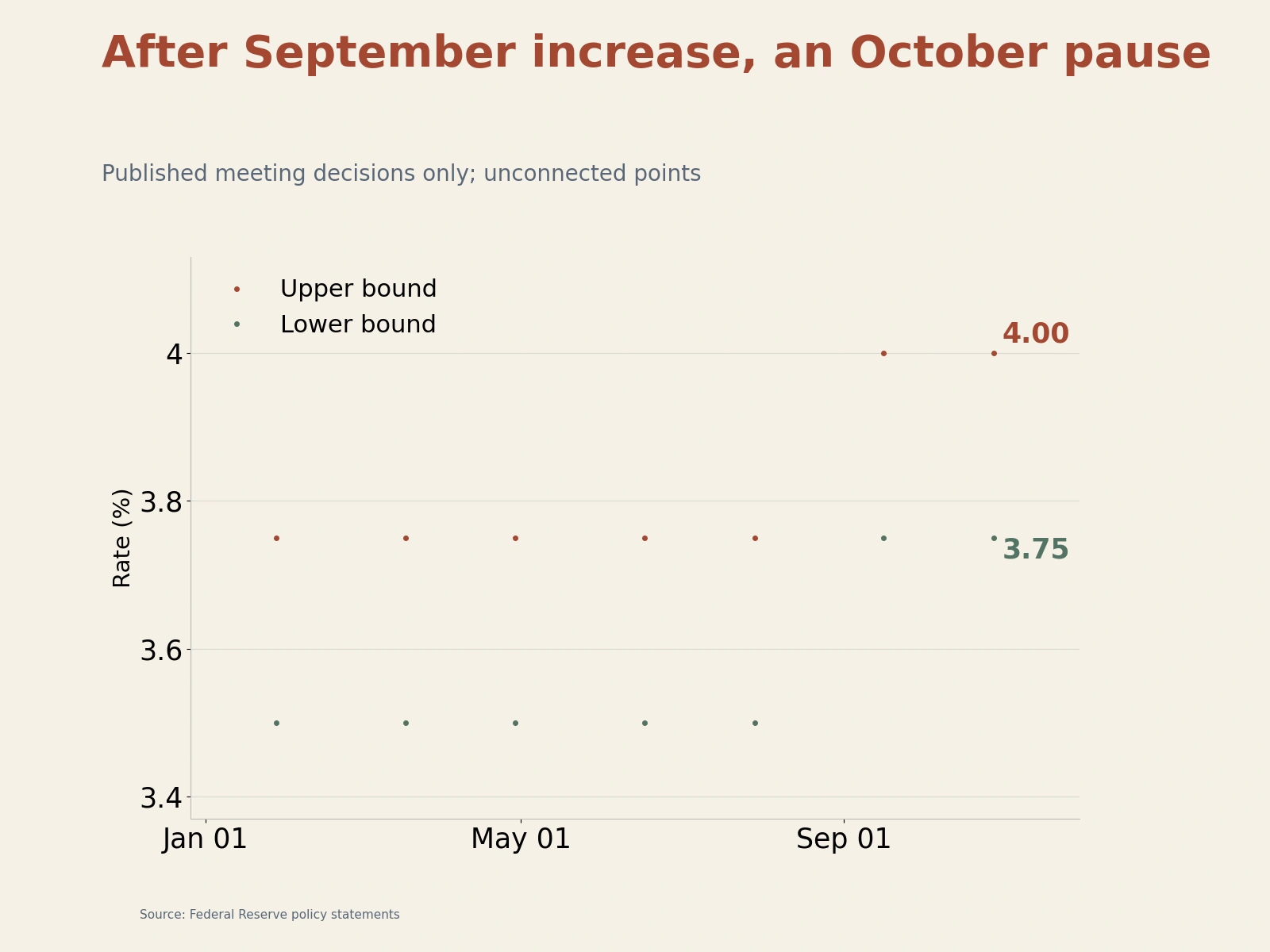
The federal funds target range remained 3.50%–3.75%. In a Reuters report updated around midday US Eastern time on September 10, federal funds futures after the data implied a probability close to 70% of a 25 basis-point hike at the September 15–16 meeting, up from around 65%. Expectations of further tightening had strengthened, but the outcome remained uncertain.
Energy and transport costs rise while underlying prices diverge
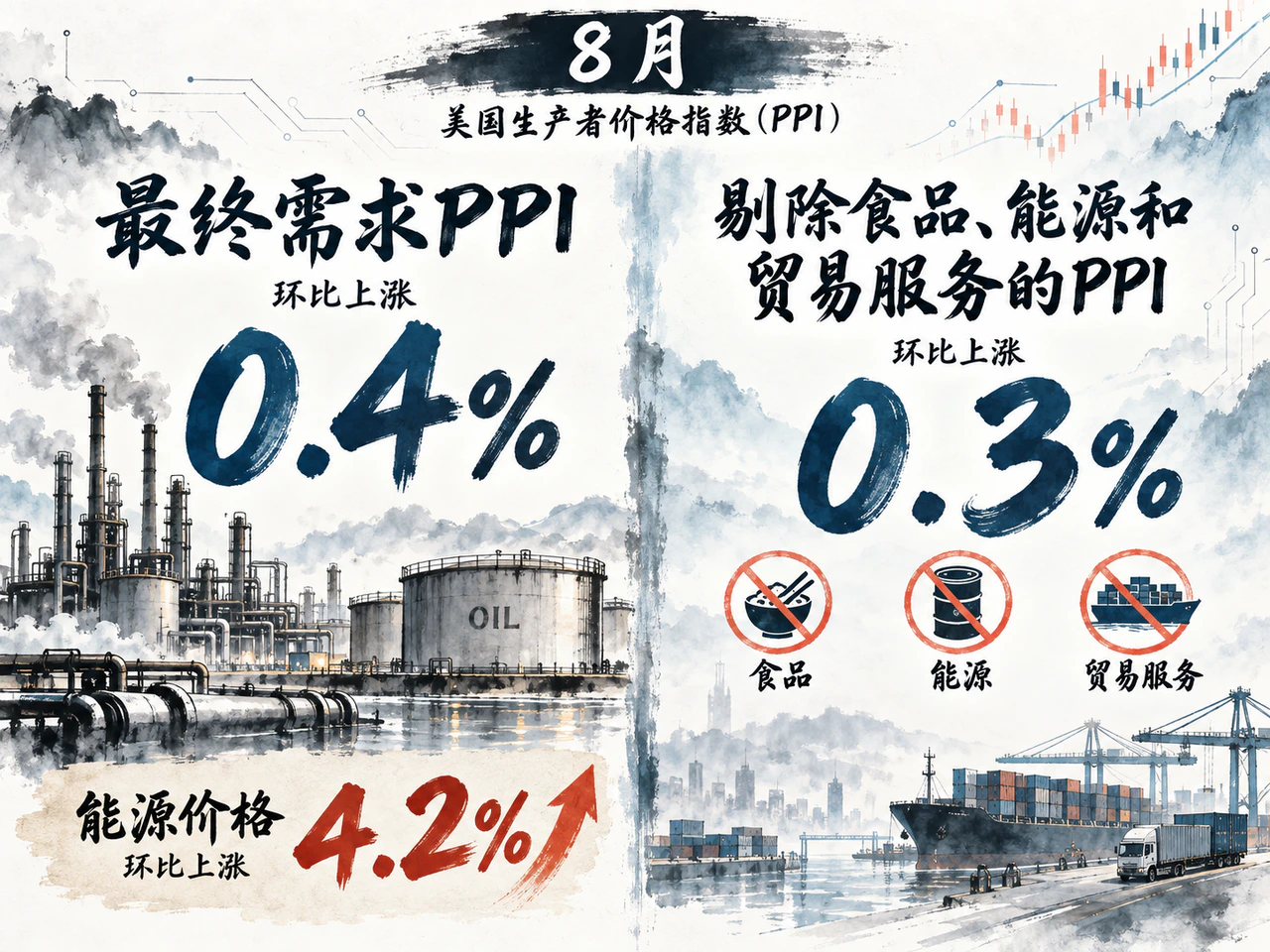
Bureau of Labor Statistics data showed seasonally adjusted final-demand PPI rising 0.4% month on month in August, above July's revised 0.1%. The unadjusted annual increase accelerated from 4.8% to 5.4%. Final-demand goods rose 1.1%, with more than three-quarters of that increase attributable to energy. Energy prices rose 4.2% and diesel jumped 24.1%, providing the main impetus for renewed price pressure.
Cost pressure also appeared in transport: final-demand transportation and warehousing services rose 2.3% month on month and truck freight 2.0%, while passenger air transport and hospital care also became more expensive. The Fed needed to assess whether persistent transmission of energy costs into transport, production and services would delay disinflation.
Services prices did not accelerate broadly. Overall final-demand services rose only 0.1%, while trade services fell 0.2%. PPI excluding food, energy and trade services increased 0.3% month on month, below July's 0.4%, with annual inflation unchanged at 4.7%. Rising headline prices alongside mixed underlying trends did not yet establish broad inflation acceleration, and PPI increases could not be converted directly into consumer inflation.
Core CPI will influence next week's policy choice
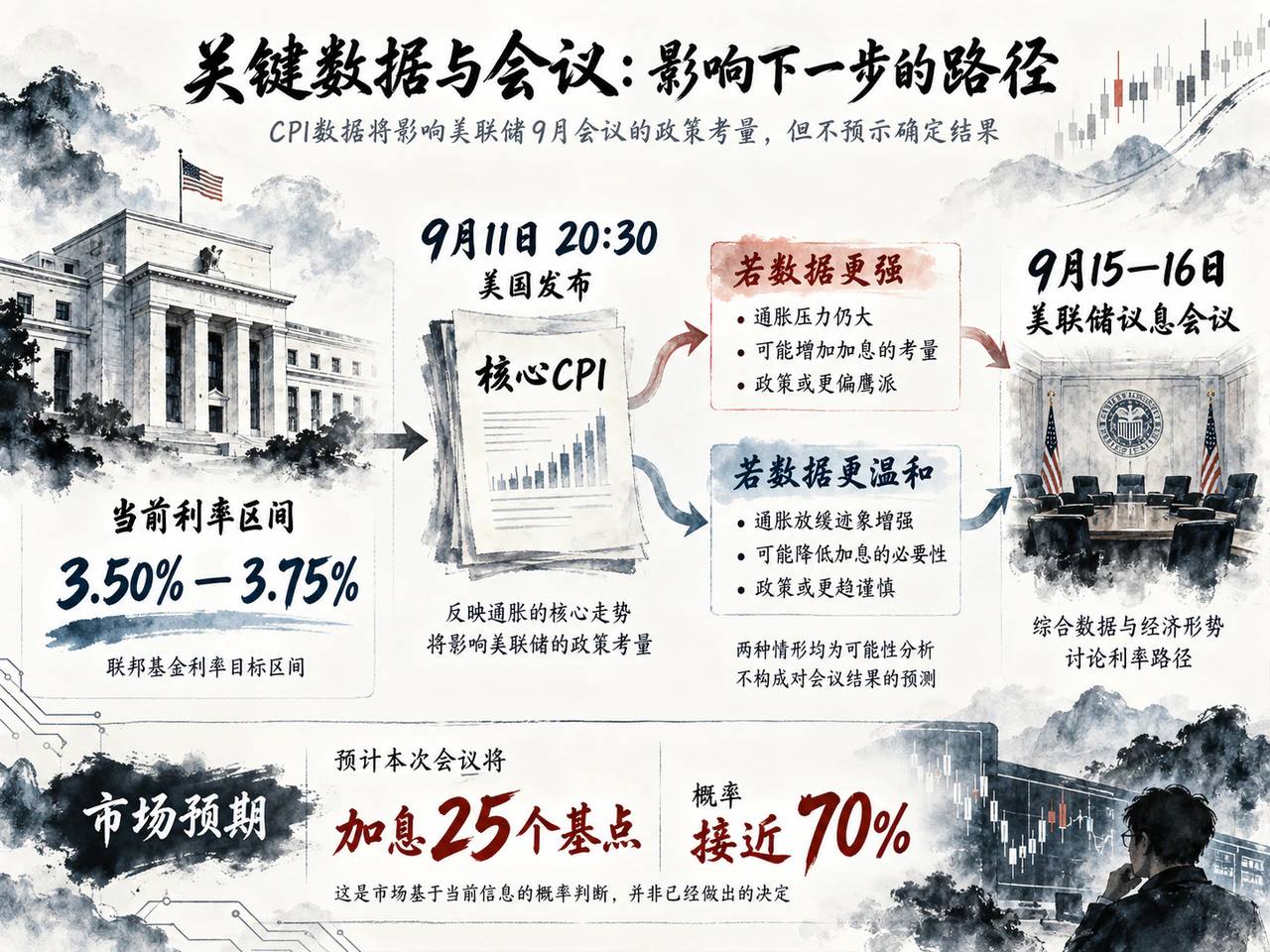
Reuters also reported that the latest weekly unemployment claims continued to indicate a stable labor market. Renewed price pressure and resilient employment supported consideration of further tightening. Rate hikes, however, work primarily by restraining demand and have limited direct influence on energy-supply shocks. The key policy question was whether this cost increase would become broader and more persistent inflation.
Capital Economics argued that the Fed could still raise rates later in the year even if it did not act in September. A move the following week depended partly on core CPI. The data also needed to be assessed for their implications for PCE prices. The Fed's 2% inflation target refers to year-on-year PCE inflation; relevant PPI and CPI components are important inputs for estimating it.
The official calendar scheduled August CPI for September 11 at 20:30 Beijing time. Strong core prices would offer more support for a hike the following week; a moderate increase would provide a reason to keep observing cost transmission. The September 15–16 decision would depend on the Fed's combined assessment of the energy shock, underlying inflation and employment resilience.