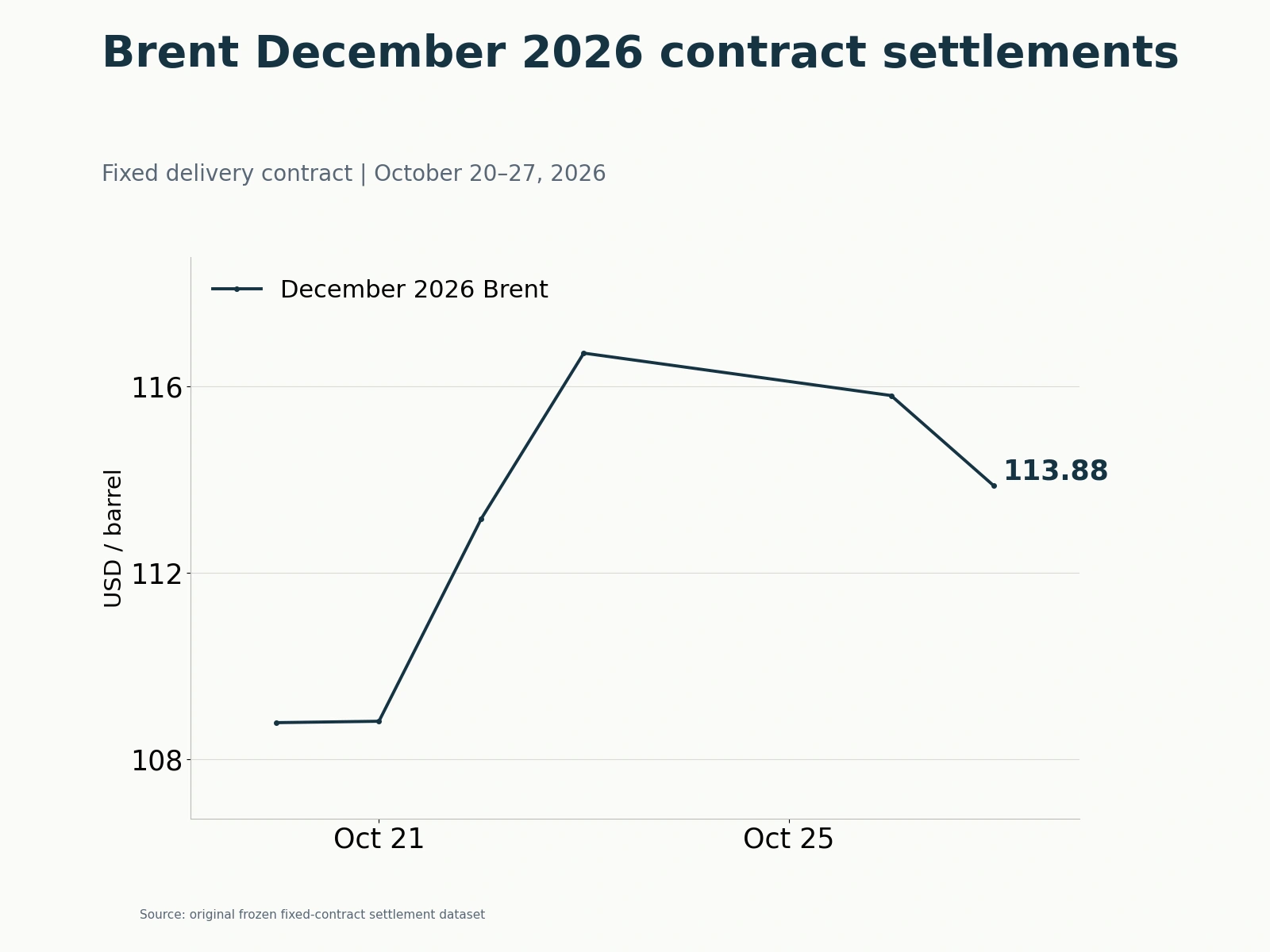
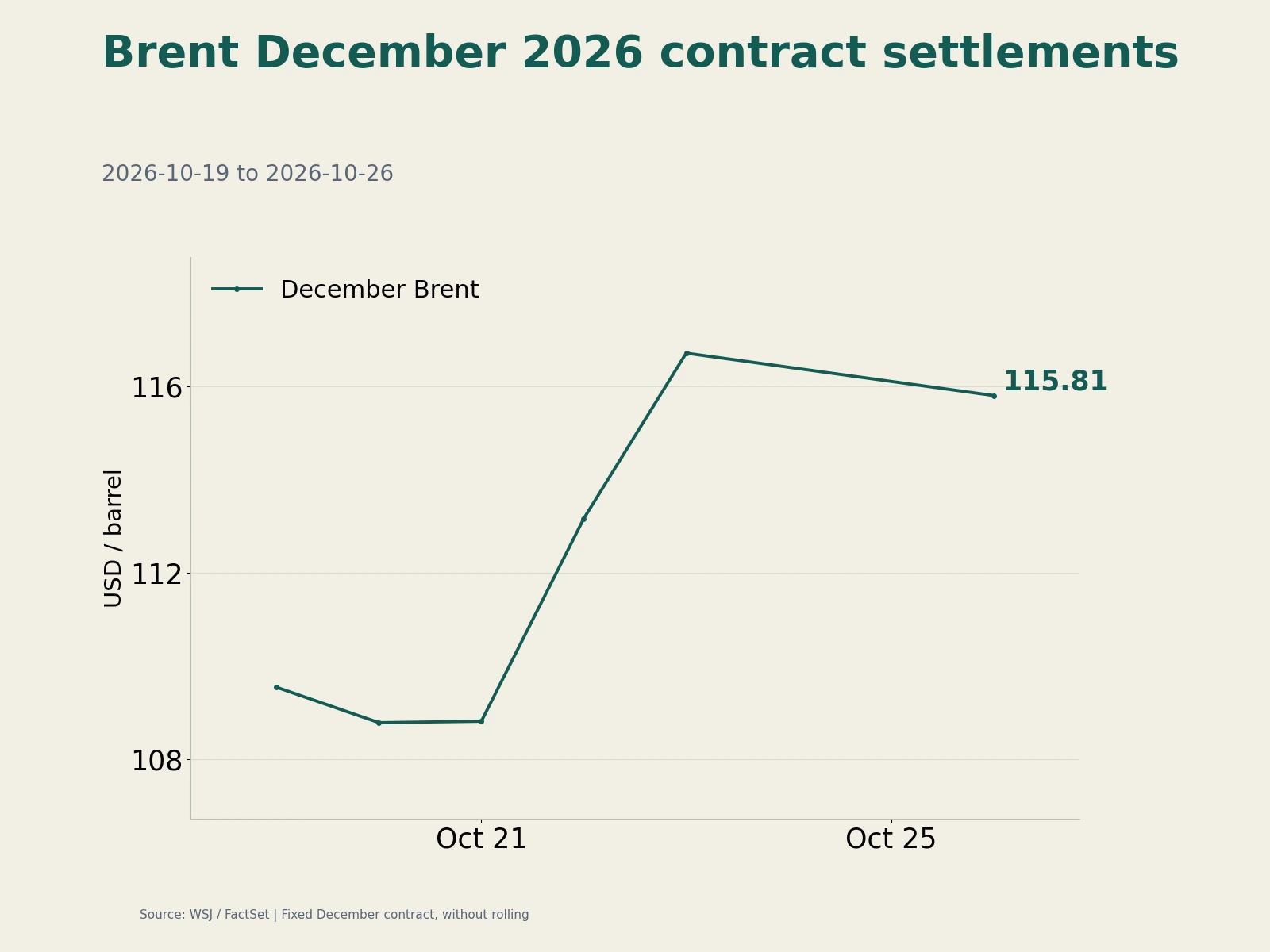
Oil surged again on September 10 despite a stronger dollar and higher interest rates. Yahoo continuous-contract daily closes put Brent at $108.90 a barrel, up 7.60% from the previous day, and WTI at $103.84, up 8.11%. Restricted Gulf transport and buyers competing for alternative barrels were raising near-term supply costs. Yet forecasts for consumption growth continued to be cut. How long $100 oil can last still depends on the severity of supply damage and high prices' suppression of demand.
Strait traffic contracts as alternative exports provide a buffer
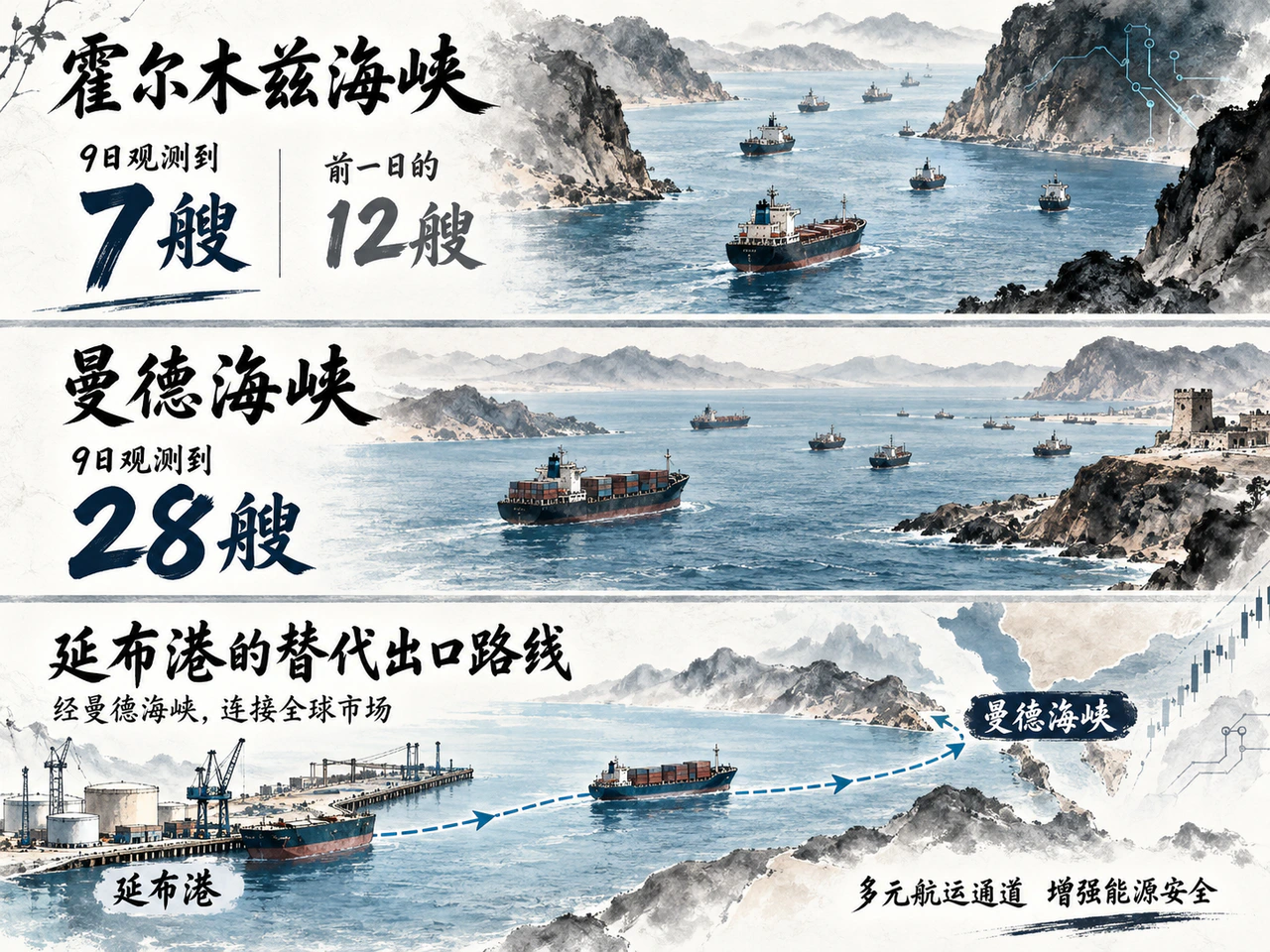
Vessel data corroborated transport pressure in Hormuz. Reuters on September 10 cited preliminary tracking showing only seven ships transiting on September 9, below twelve the previous day and a fourteen-ship average over the preceding ten days. Four sailed out and three in; one outbound large tanker carried nearly 2 million barrels of crude. Some vessels may switch off transponders, so coverage is not necessarily complete. Lower visible flow nevertheless indicates greater uncertainty over transport and delivery.
The Red Sea alternative retained some transport capacity. Data disclosed that day showed 28 commodity-carrying ships through Bab el-Mandeb on September 9, close to the preceding ten-day average of 27. Yanbu crude and condensate loadings in September to date also recovered from August. Vortexa estimated an increase from 3.2 million to 3.7 million barrels a day; Kpler from 1.5 million to 2.9 million. Their levels differ materially, but both indicate recovering alternative exports.
Assessing supply losses therefore requires looking at both Hormuz transport and alternative exports. Contraction in the former raises immediate delivery risk, while more Yanbu loadings provide a buffer. Reuters reported that the Houthis took control of Mocha port on September 10, increasing Red Sea risks, but that did not yet establish interruption of the entire route. Actual restrictions on Red Sea passage would also damage export capacity bypassing Hormuz.
Alternative barrels become more expensive; increased procurement need not raise consumption

Transport pressure was spreading to other origins' spot markets. Reuters on September 10 cited trader estimates that Chinese independent refiners had recently bought more than 20 million barrels from West Africa, Canada and South America to supplement tightening Iranian and Russian supplies. Nearly ten independents sent traders to an industry conference in Singapore to find barrels, showing greater demand for alternative procurement.
Prices of alternative barrels rose as well. Market participants cited in the report put November-delivery Congolese Djeno at a premium of about $22 a barrel to ICE Brent, partly because of high freight. A separate Canadian heavy-crude deal for October–November delivery carried a $3.70 premium to ICE Brent. Although both used the same benchmark, grade, voyage and delivery terms differed, so the premiums should not be directly compared. The trades showed that non-Gulf supplies were also squeezed by substitution demand and transport costs.
Futures curves likewise reflected concern over near-term supplies. Rigzone on September 10 relayed Standard Chartered research from the previous day showing wider backwardation at the front of the Brent curve than a week earlier, while prices for delivery in five years changed little. Written before that day's surge, the research indicated that prior price pressure was concentrated in immediate delivery, without an equivalent degree of tightness priced years ahead.
More procurement does not mean a broad recovery in end consumption. Reuters quoted a Kpler analyst projecting Chinese seaborne crude imports could recover from July's 7 million barrels a day to 8.5 million–9 million, still below the roughly 10 million prewar level. Restocking, replacing supply origins and using annual import quotas can all boost near-term purchases without creating sustained consumption growth.
Refining is strong, but weaker demand remains a constraint
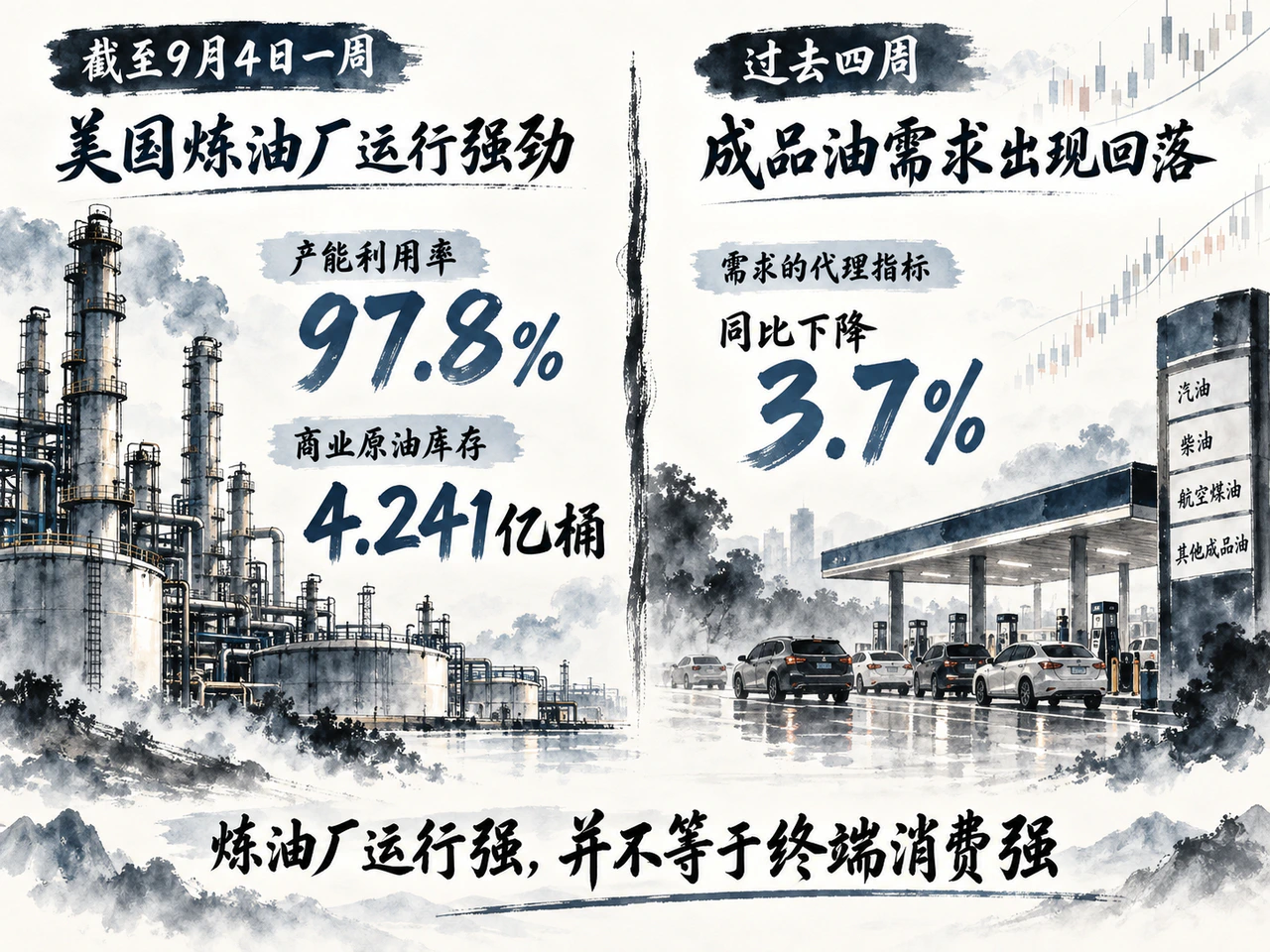
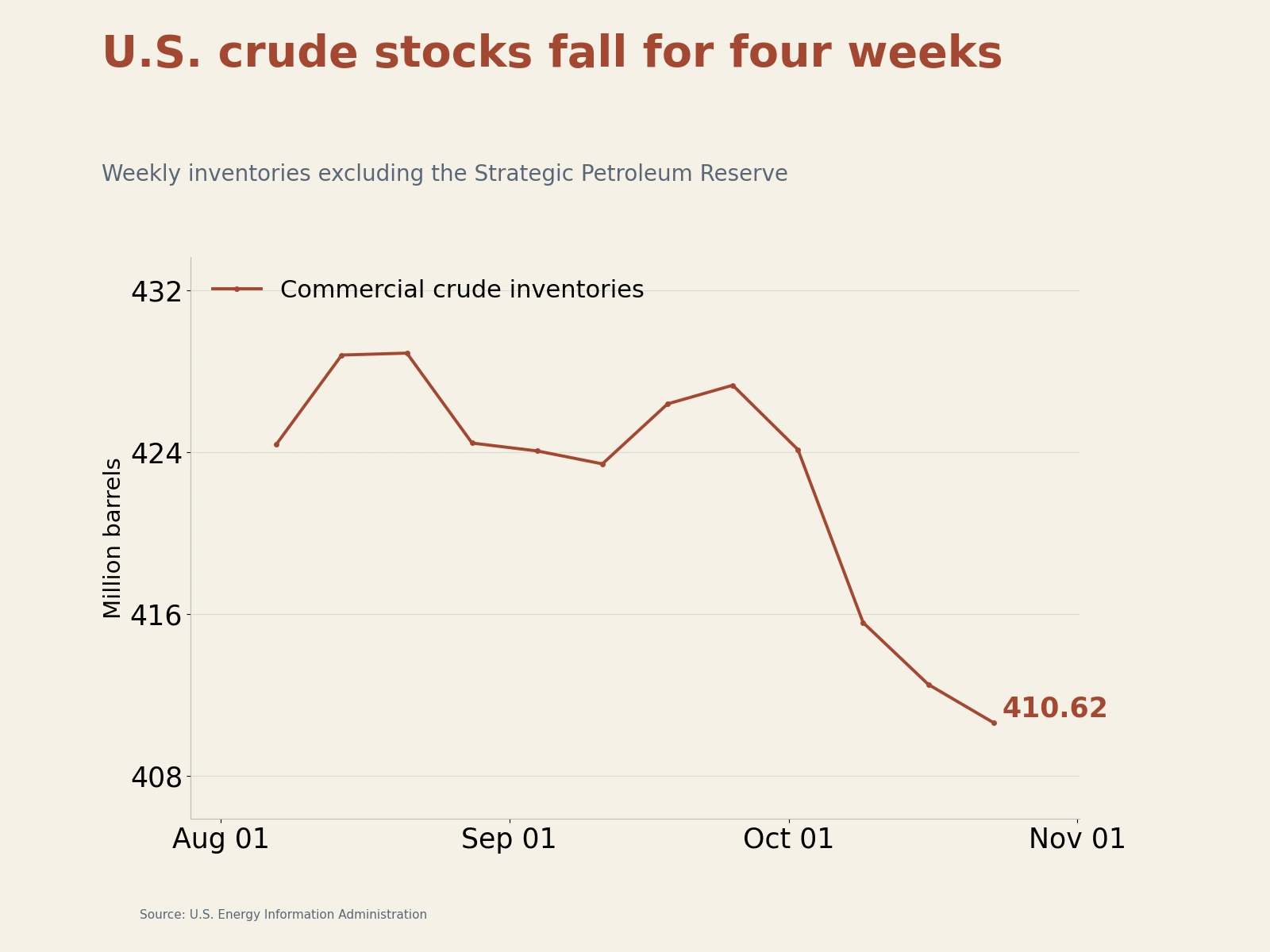
U.S. weekly figures combined strong refining with weak demand. The EIA's September 10 report showed commercial crude stocks in the week through September 4 down about 400,000 barrels to 424.1 million, in line with the five-year seasonal average. Refinery throughput rose to 17.6 million barrels a day and utilization to 97.8%. Gasoline stocks increased 1.3 million barrels, distillates 2.1 million, and total commercial petroleum stocks 6.3 million.
Product stocks were still not abundant: gasoline and distillates were 5% and 13% below five-year seasonal averages. But products supplied over the preceding four weeks, commonly used as a demand proxy, fell 3.7% year on year, with declines in gasoline, distillates and jet fuel. A small crude draw alongside product restocking and weak demand was insufficient to establish broad tightening in balances.
Demand expectations were also falling. OPEC cut its 2026 global oil-demand growth forecast that day to 380,000 barrels daily, its fifth consecutive reduction. Reuters noted the IEA's weaker assessment, forecasting an annual decline. The dollar index rose 0.32% on the vendor's daily-close basis, further pressuring non-dollar buyers. Oil's sharp rise nonetheless showed supply and delivery risk temporarily dominating, while demand constraints remained.
Whether actual Hormuz transit recovers and Yanbu loading and Bab el-Mandeb passage hold up will determine relief in delivery pressure. Changes in spot and nearby premiums will test whether competition for alternative barrels cools. U.S. product stocks and demand indicators are also needed to distinguish price relief caused by supply recovery from relief caused by further consumption contraction. The durability of $100 oil ultimately requires confirmation from both actual deliveries and consumption.