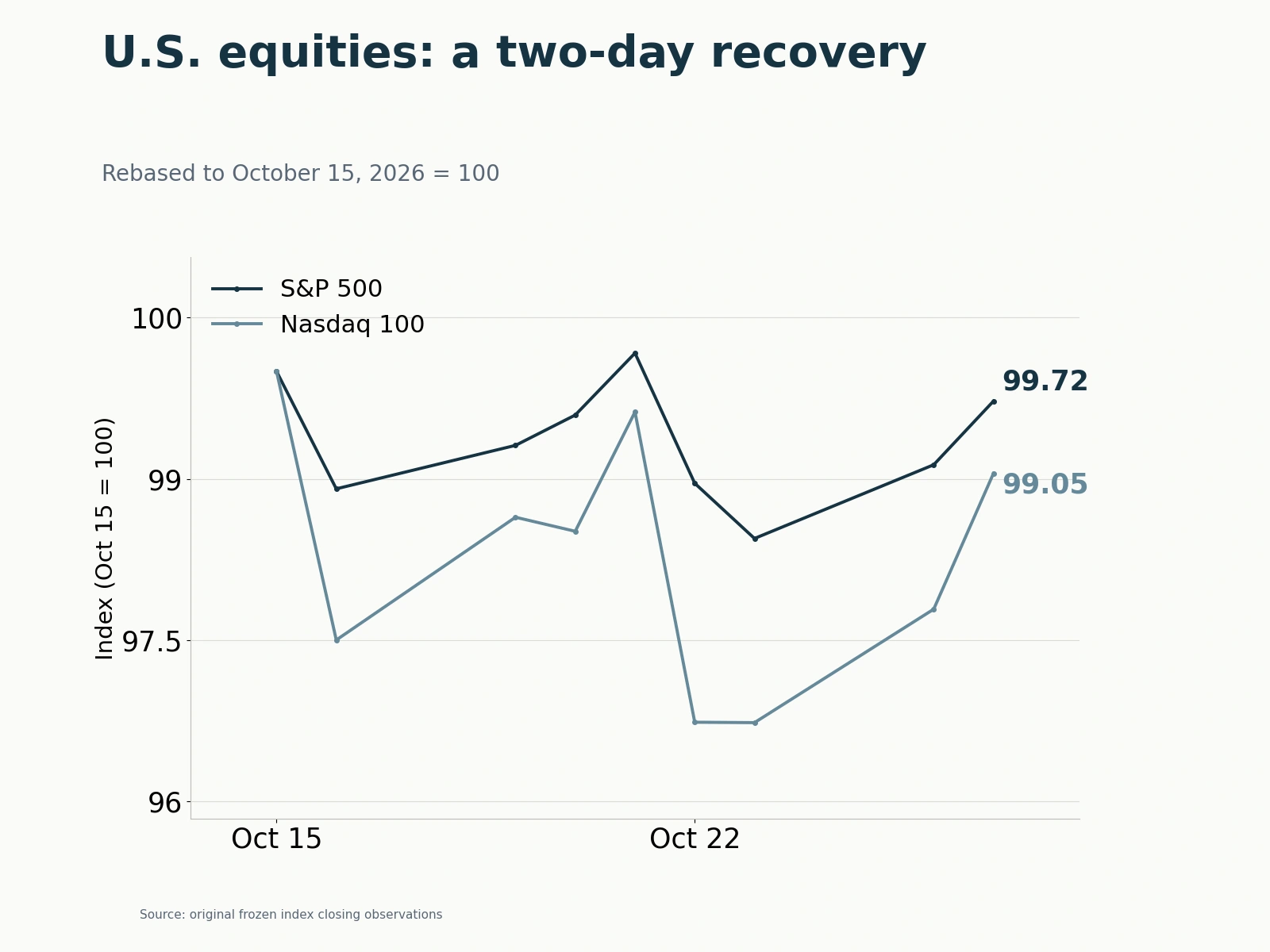
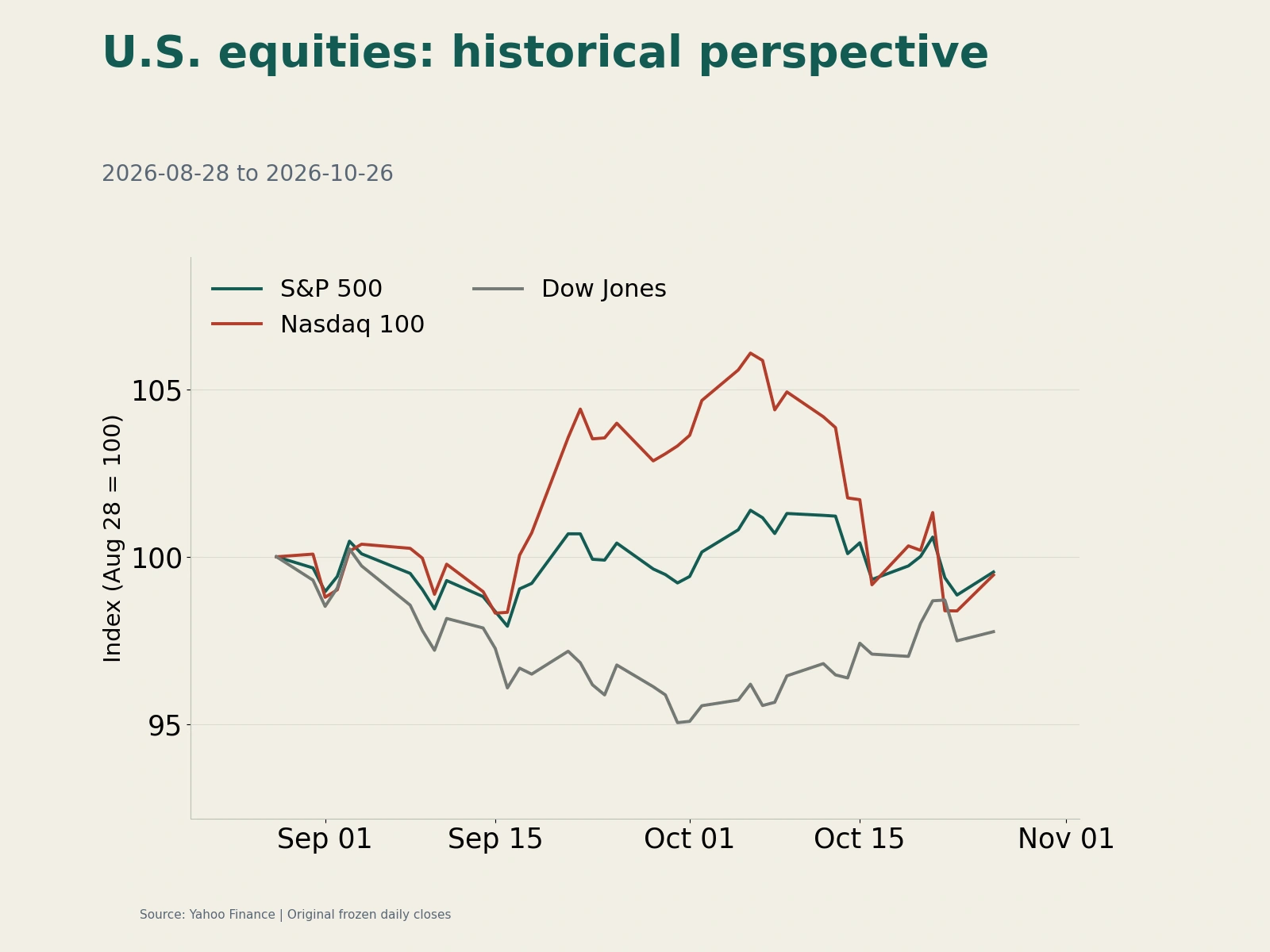
On September 11, 2026, lower oil prices and stronger technology earnings helped U.S. stocks rebound, while gold recovered after its recent correction. U.S. core monthly inflation nevertheless exceeded expectations, and the two-year Treasury yield rose seven basis points, keeping financing conditions tight. The day's improvement mainly reflected temporary energy relief and realized growth at some companies, providing insufficient evidence that rate constraints were fading.
At Friday's U.S. close, the S&P 500 rose 0.86% to 7,656.98, the Nasdaq 100 gained 0.91% to 29,368.44 and the Dow Jones Industrial Average rose 0.98% to 52,573.29. The Russell 2000 gained only 0.45% to 2,903.94, showing clear small-cap underperformance. VIX fell from 17.84 to 15.84, indicating some easing of near-term risk aversion, but differences in corporate growth prospects and financing ability still shaped performance.
Firm core inflation keeps short rates rising
The Bureau of Labor Statistics said Friday that seasonally adjusted August CPI rose 0.4% month on month, versus July's 0.1%, and 3.4% year on year, unchanged from July. Both headline measures matched Reuters poll expectations. Core monthly inflation exceeded forecasts: excluding food and energy, CPI rose 0.3%, above the expected and previous 0.2%. Core annual inflation fell from 2.5% to 2.4%, as expected.
Gasoline prices rose 3.9% month on month, contributing more than one-third of the headline monthly increase; energy prices overall rose 2.1%. Some services accelerated too: shelter rose 0.3% versus 0.1%, while airfares and communications rose 2.7% and 2.3%. Medical-care prices fell 0.2% and vehicle insurance 0.8%, however, and core annual inflation continued easing. Pressure remained uneven, making one month's data insufficient to establish broad acceleration.
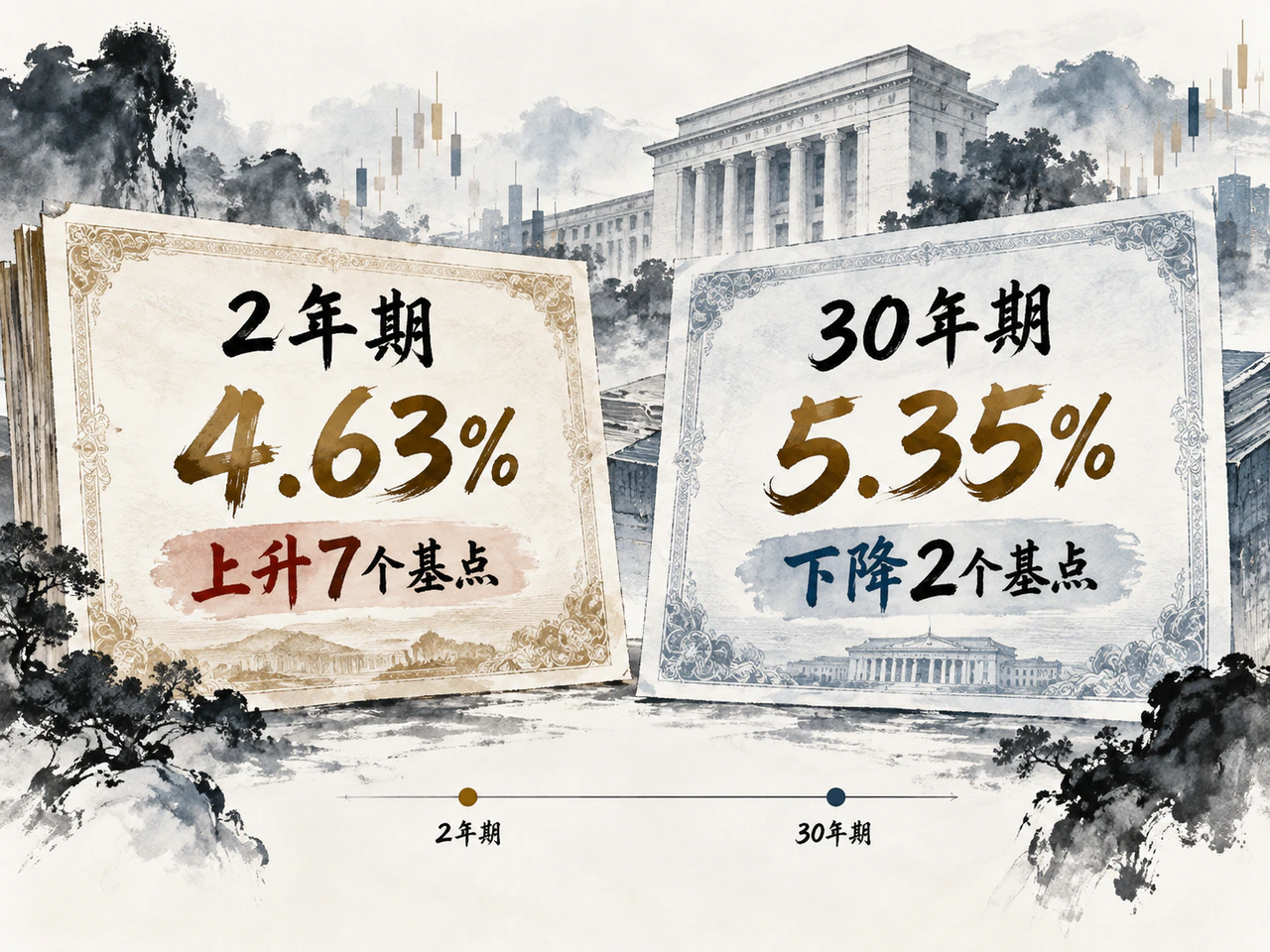
Bonds reflected the same divergence. In-line headline inflation and falling oil eased long-end pressure, while the strong core monthly increase reinforced short-end tightening expectations. The Treasury's daily par-yield curve showed the following September 11 changes versus comparable September 10 closes:
| Maturity | September 11 yield | Versus previous session |
|---|---|---|
| 2-year | 4.63% | Up 7 basis points |
| 5-year | 4.78% | Up 3 basis points |
| 10-year | 4.96% | Up 1 basis point |
| 30-year | 5.35% | Down 2 basis points |
The ten-year/two-year spread narrowed from 39 to 33 basis points and the 30-year/five-year spread from 62 to 57. The curve remained upward-sloping, but faster short-end increases flattened it. At 14:52 Eastern time Friday, FXStreet reported about a 91% market-implied chance of a 25-basis-point hike at the next Fed meeting. This corroborated rising short rates, although the final decision still awaited the meeting.
Consumer surveys further highlighted the policy dilemma. Preliminary September University of Michigan sentiment fell from 51.7 to 47.8, below the Reuters consensus of 51.0. Expectations fell from 51.5 to 45.8 and current conditions from 51.9 to 50.9, concentrating concern in the future. One-year inflation expectations rose from 4.0% to 4.6% and longer-term expectations from 3.3% to 3.4%. Survey director Joanne Hsu linked households' concerns over future finances to renewed fuel-price increases and trade tensions.
Pressure on purchasing power could weaken demand, while rising inflation expectations limited monetary policy's room to cushion it. Whether weaker sentiment had translated into slower spending would be central to August retail sales, scheduled for September 16 at 08:30 Eastern time, during the September 15–16 Fed meeting. Assessing demand also required distinguishing nominal sales inflated by energy prices from changes in actual purchase volumes.
Navigation talks lower oil prices, but the supply deficit remains a constraint
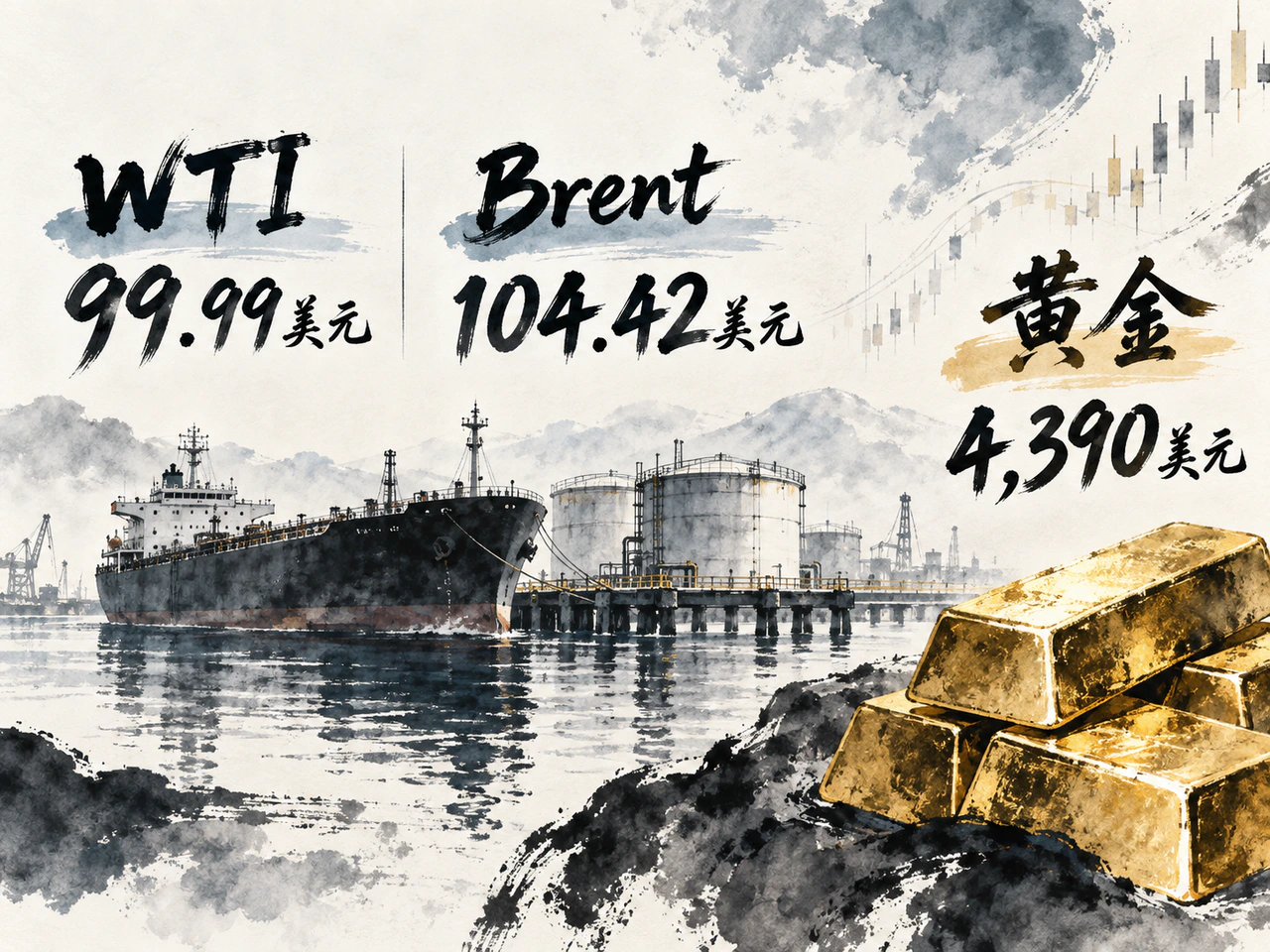
On the same vendor's continuous-futures daily closes, WTI fell $2.49, or 2.43%, Friday to $99.99 a barrel; Brent fell $3.21, or 2.98%, to $104.42. This basis differs from exchange settlements for specific delivery-month contracts.
Reuters reported that news of Middle Eastern foreign ministers seeking a temporary Hormuz navigation arrangement with Iran reversed oil's early gains. Talks had not yet restored actual passage. UBS energy analyst Giovanni Staunovo said negotiations depressed prices that day, but near-term risks remained skewed upward and volatility could be substantial.
Physical supply and inventories remained tight. World Oil cited the IEA's September report released Friday: August global oil supply fell by 1.6 million barrels a day to 100.1 million, observed global stocks fell 95 million barrels that month and cumulative draws since February reached 507 million. The IEA projected 2026 supply to fall by 5.7 million barrels a day year on year and demand by 2.5 million. Demand destruction would restrain prices, but the projected supply loss was larger; a one-day retreat could not reverse the tight balance.
High energy costs continued feeding into transport, business operations and households. Reuters cited GasBuddy saying national average U.S. diesel prices exceeded $6 a gallon for the first time Thursday. Commerzbank raised its year-end Brent forecast from $75 to $85, reflecting a higher assessment of supply risk while still expecting prices below current levels at year-end.
Gold recovered despite rate pressure. Continuous gold futures GC=F closed Friday at $4,390 a troy ounce, up $25.50 or 0.58%; the dollar index was around 99.10, moving less than 0.01%. Trader Tai Wong told Reuters that hikes were largely priced in and buying after the recent pullback offered near-term support. If energy prices pushed rate expectations higher again, gold's carrying cost would remain under pressure. The simultaneous stock and gold gains therefore did not establish a shift toward easing expectations.
Cloud business lifts technology stocks, but growth delivery still needs cash-flow support
Technology led gains: XLK rose 1.32%, financial ETF XLF 0.67% and energy ETF XLE 0.32%. Advancers also dominated intraday. Reuters' 11:52 Eastern snapshot showed advance/decline ratios of 2.07 to one on the NYSE and 1.8 to one on Nasdaq. Nevertheless, 128 Nasdaq stocks made 52-week lows against 38 new highs, leaving some shares under pressure beneath the broader rebound.
Andre Bakhos of Ingenium Analytics told Reuters that earlier defensive positioning and short-term oversold conditions might have helped produce the rebound. Kim Forrest of Bokeh Capital Partners likewise thought the previous day's decline may have been excessive. Cooler oil created an opportunity to recover, while earnings determined which assets investors preferred.
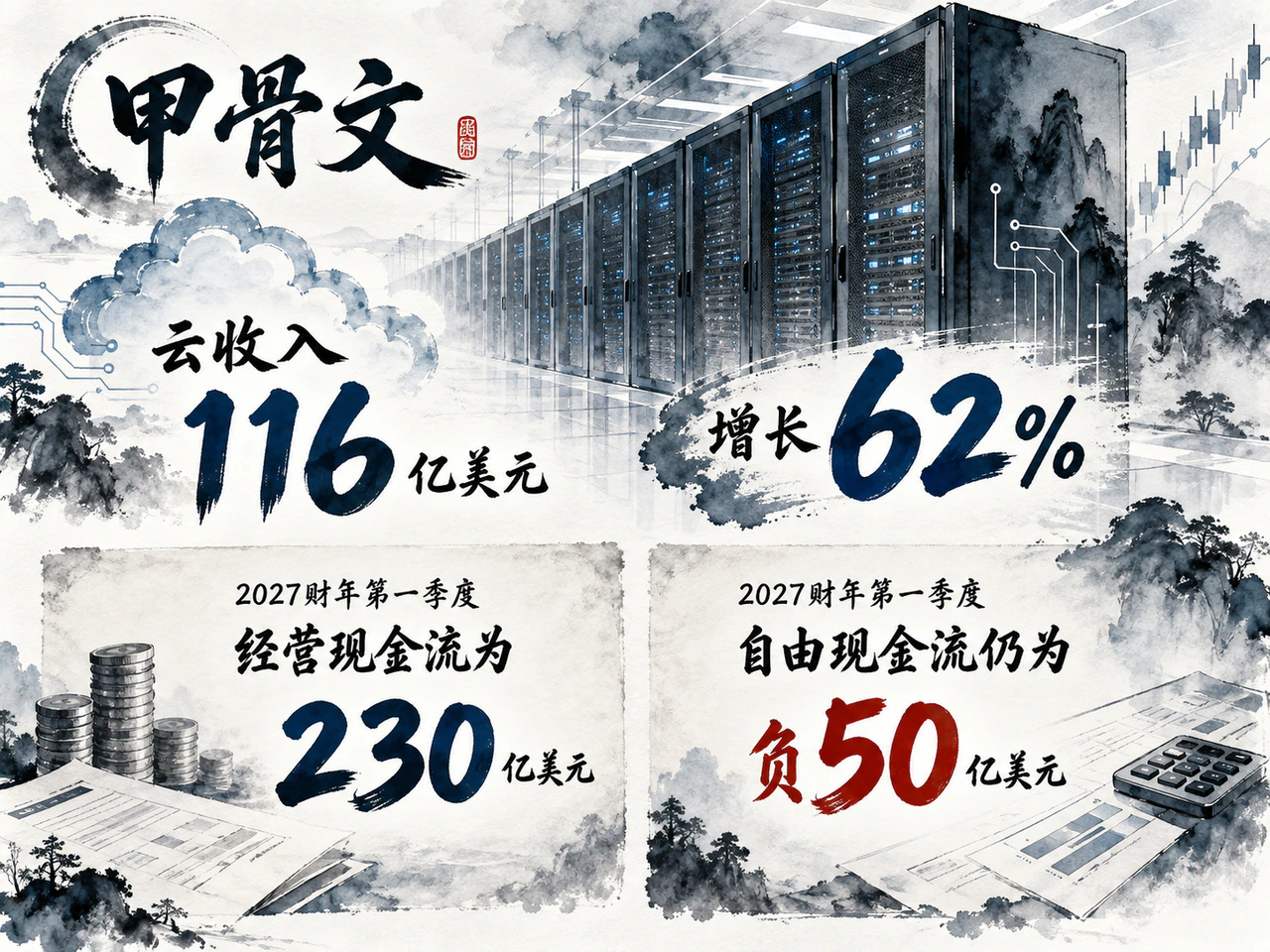
Oracle's fiscal 2027 first-quarter results, released after the September 10 U.S. close, showed continued rapid cloud and computing demand. Revenue rose 30% year on year to $19.3 billion; cloud revenue increased 62% to $11.6 billion, including 121% growth in cloud infrastructure. Oracle added 850 megawatts of data-center capacity and raised full-year revenue guidance to at least $90 billion. Reuters reported at 11:52 Eastern Friday that Dell was up more than 11%, Hewlett Packard Enterprise nearly 10% and HP around 7%, lifting the server supply chain.
Growth required enormous funding. Oracle's quarterly operating cash flow was $23 billion, yet free cash flow remained negative $5 billion, and it had completed a $20 billion at-the-market share issue. Remaining performance obligations of $664 billion supported future business, but revenues and cash recovery still depended on facility delivery and customer usage. Assessing AI supply-chain earnings quality required examining both orders and the capital cost of fulfilling them.
Adobe, also in software, received a weaker market reaction. In commentary at 09:15 Central time Friday, Cboe executive JJ Kinahan noted an early 2.1% decline. Revenue and profit beat expectations, but the top of revenue guidance only matched forecasts, showing that one quarter's beat no longer satisfied expectations for subsequent growth.
Consumer-company feedback was more cautious. Kroger said Friday that identical sales excluding fuel rose only 0.2% in the second quarter ended August 15, and lowered full-year growth guidance from 1%–2% to 0.2%–0.8%. The guidance included about 140 basis points of drag from drug-pricing policy. It retained adjusted EPS guidance of $5.10–$5.30. Slower sales could not all be attributed to lower consumption volumes, but the divergence in final demand was clear against rapid cloud growth.
Payment timing drives the smaller deficit; funding-cost pressure persists
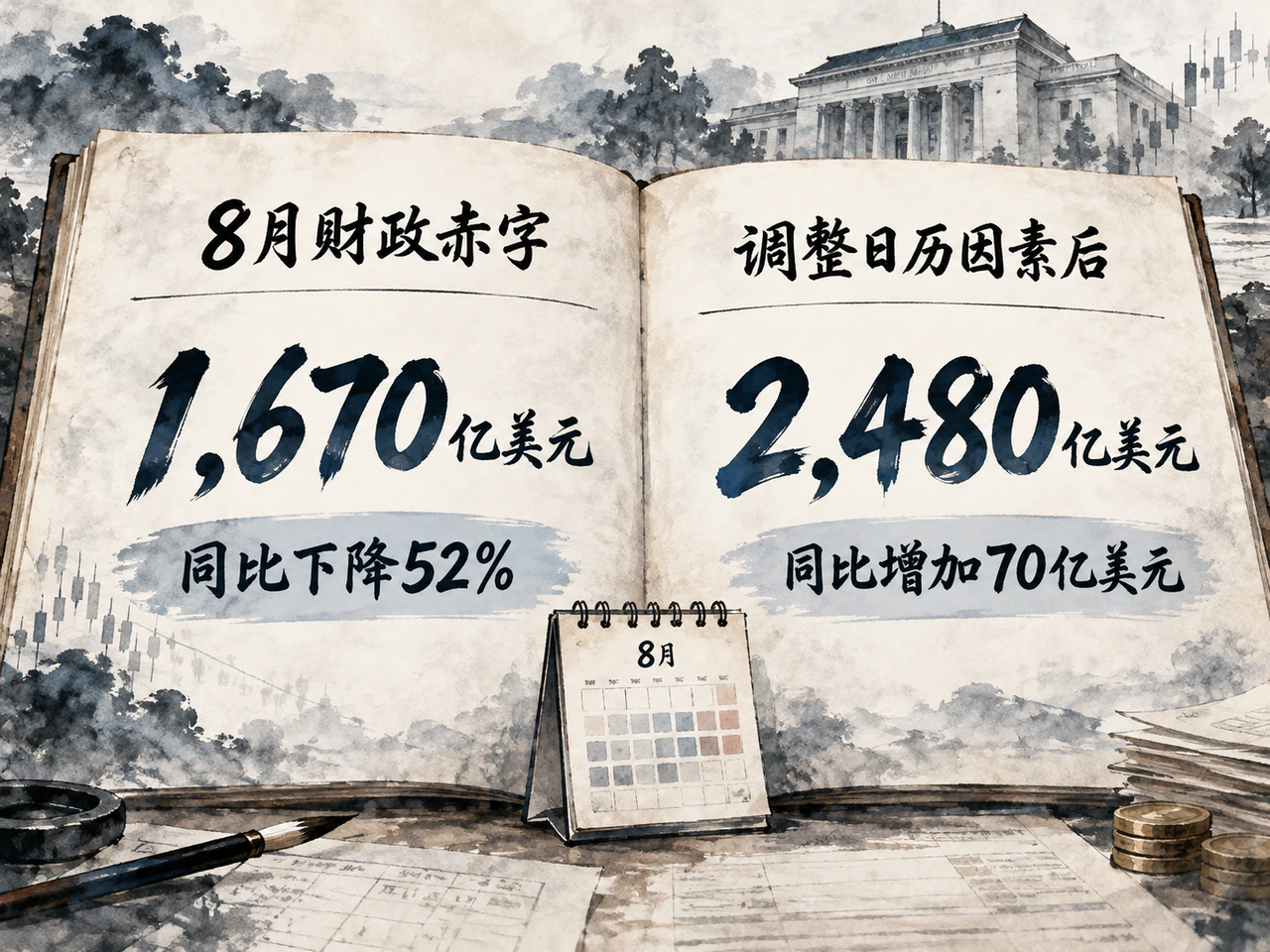
The sharp annual decline in the U.S. August deficit mainly reflected the payment calendar. Reuters cited Treasury data putting the month's deficit at $167 billion, down 52%, because some Medicare and other payments scheduled for August had moved into July. Calendar-adjusted, the deficit was $248 billion, up $7 billion year on year. The first 11 months of fiscal 2026 produced a cumulative deficit near $1.97 trillion, broadly unchanged.
Monthly spending fell 24% to $527 billion, while revenue rose 5% to $360 billion. Interest expense declined $14 billion, which Treasury officials attributed mainly to changes in inflation accruals; fiscal-year-to-date interest expense was still up $143 billion, or 13%. Tariff refunds fell from $33.38 billion in July to $10.54 billion in August, also affecting revenue comparisons. Shifts in payment, refund and accrual timing made the one-month deficit decline a poor indicator of sustained lower funding needs.
Reuters reported that Treasury expanded long-bond buybacks that week, but concerns over deficits and concentrated government and corporate issuance persisted. State Street's Michael Metcalfe said uncertainty over rates, inflation and growth led investors to require higher long-term bond returns. Buybacks could improve liquidity in particular securities without directly lowering net fiscal financing needs, leaving long rates constrained by this backdrop.
Credit spreads had not worsened markedly. ICE BofA indices on FRED through September 9 showed the investment-grade dollar corporate option-adjusted spread at 81 basis points, unchanged, while high-yield spreads widened four basis points to 271. Even with stable spreads, higher Treasury benchmarks still raised all-in new borrowing and refinancing costs.
A Hong Kong financing launched Friday showed that some firms could still raise funds with debt carrying conversion rights. Reuters' term-sheet report said Z. AI launched about $2 billion in placed shares and a 20.14 billion yuan, roughly $3 billion, zero-coupon convertible due September 2027. The bond was denominated in renminbi and settled in dollars, with an initial conversion price of HK $892.50, a 25% premium to the placement price. Proceeds were intended for R&D, computing and related infrastructure. The deal was at launch stage. Its zero coupon incorporated the conversion option's value and did not show lower costs for ordinary dollar debt.
Europe also faced tension between growth and fiscal consolidation. French Finance Minister Lescure cut the 2026 growth forecast Friday from 0.7% to 0.5%. Reuters reported that the energy shock and agricultural effects of heat and drought weakened growth, pressuring the target of a deficit at 5.0% of GDP that year. Lower growth complicated budget adjustment, while French bonds' risk compensation relative to Germany would remain sensitive to the fiscal outlook.
Trade talks seek tariff relief as sectoral barriers advance

Trade policy sent both easing and tightening signals. Reuters cited six people Friday saying Washington and Mexico sought an interim bilateral deal before the November 3 U.S. midterms, exchanging some U.S. tariff relief for concessions on automotive content and foreign investment. Mexico's Economy Ministry said there was no specific deadline and USMCA remained in force.
Automakers were especially focused on tariff changes. Under the national-security tariffs described in the report, Mexican and Canadian vehicles faced a 25% rate. Some companies expected Mexico might obtain a nominal 15% rate, reduced according to U.S. parts content to an effective rate near 7%. These remained industry assessments of a possible deal. If relief came with stricter origin requirements, actual benefits to manufacturers and suppliers would depend on supply-chain structure.
Solar barriers continued advancing. The Commerce Department issued final antidumping and countervailing determinations Friday on cells and modules from India, Indonesia and Laos. Reuters reported antidumping margins of 123.04%, 94.36% and 65.43%, respectively. The International Trade Commission planned a final injury decision on October 14; an affirmative finding was expected to lead to duty orders in November. Barriers benefited domestic manufacturers but could raise imported-module developers' costs, compress project returns and affect construction timing.
Russian sanctions could also affect energy trade. The House Rules Committee scheduled a related bill for consideration the following Monday, proposing authority for tariffs of up to 100% on countries deemed major Russian-energy buyers. The authority was not in force and included presidential waiver discretion. White House officials meanwhile confirmed Russian participation in the following week's G 20 energy meeting in Houston. Pressure and engagement continued together, leaving the policy outlook for procurement and cross-border trade unclear.
AI regulation discussions concerned product launches and investment returns. Reuters reported Senate negotiators discussing safety obligations for advanced-model developers and government powers to block unsafe releases, with judicial challenges and federal–state boundaries still under discussion. Final requirements could alter testing costs and launch schedules, but earnings effects could not yet be quantified.
Asian markets close lower ahead of the U.S. session; technology recovery still requires orders

Asian markets closed Friday before that day's U.S. opening. Baystreet's local-close reports put the Nikkei 225 down about 1.9% to 64,011.34, the Hang Seng down roughly 0.6% to 24,805.63 and South Korea's composite down around 1.8% to 6,909.91. These reflected pressure during earlier Asian hours. By the morning of September 12 Beijing time, all three markets were closed for the weekend.
Oracle's added delivered capacity and cloud-demand growth offered demand clues for Japanese semiconductor equipment, Korean memory and server supply chains. Hong Kong technology assets might also benefit from the U.S. technology rebound. Whether sentiment became better earnings still depended on actual orders, customer mix, capacity plans and financing costs. Technology investment could improve some companies' outlooks without offsetting rate and demand pressures across every industry.
The People's Bank of China conducted 4 billion yuan of seven-day reverse repos Friday at 1.40%, fully meeting primary dealers' demand. Xinhua's report that day continued the previous day's financial-planning measures on improving base-money provision, reserve requirements and precision in open-market operations. Liquidity provision and better transmission support financial-system stability; support for growth still needs to appear in actual corporate financing and household spending.