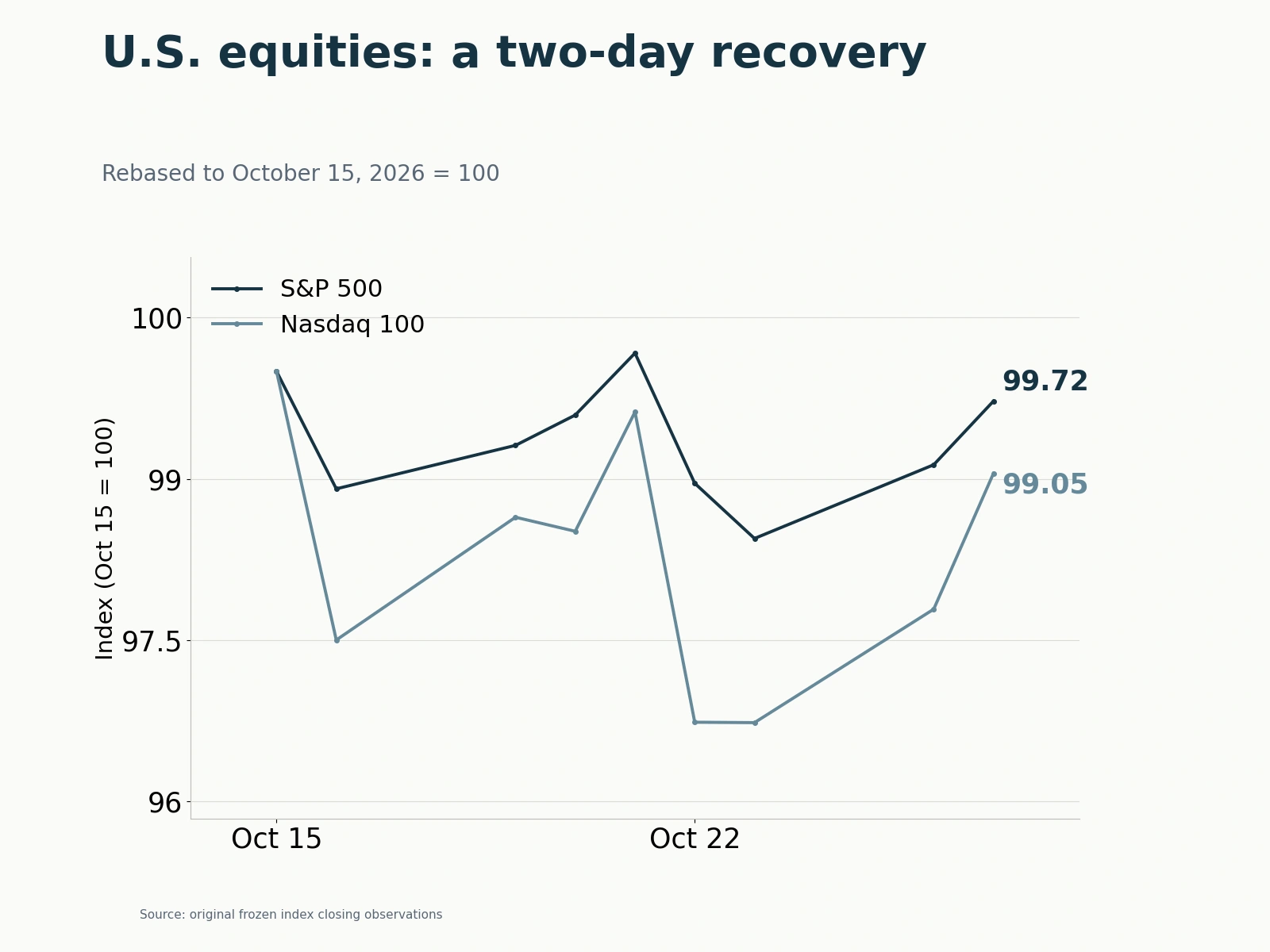
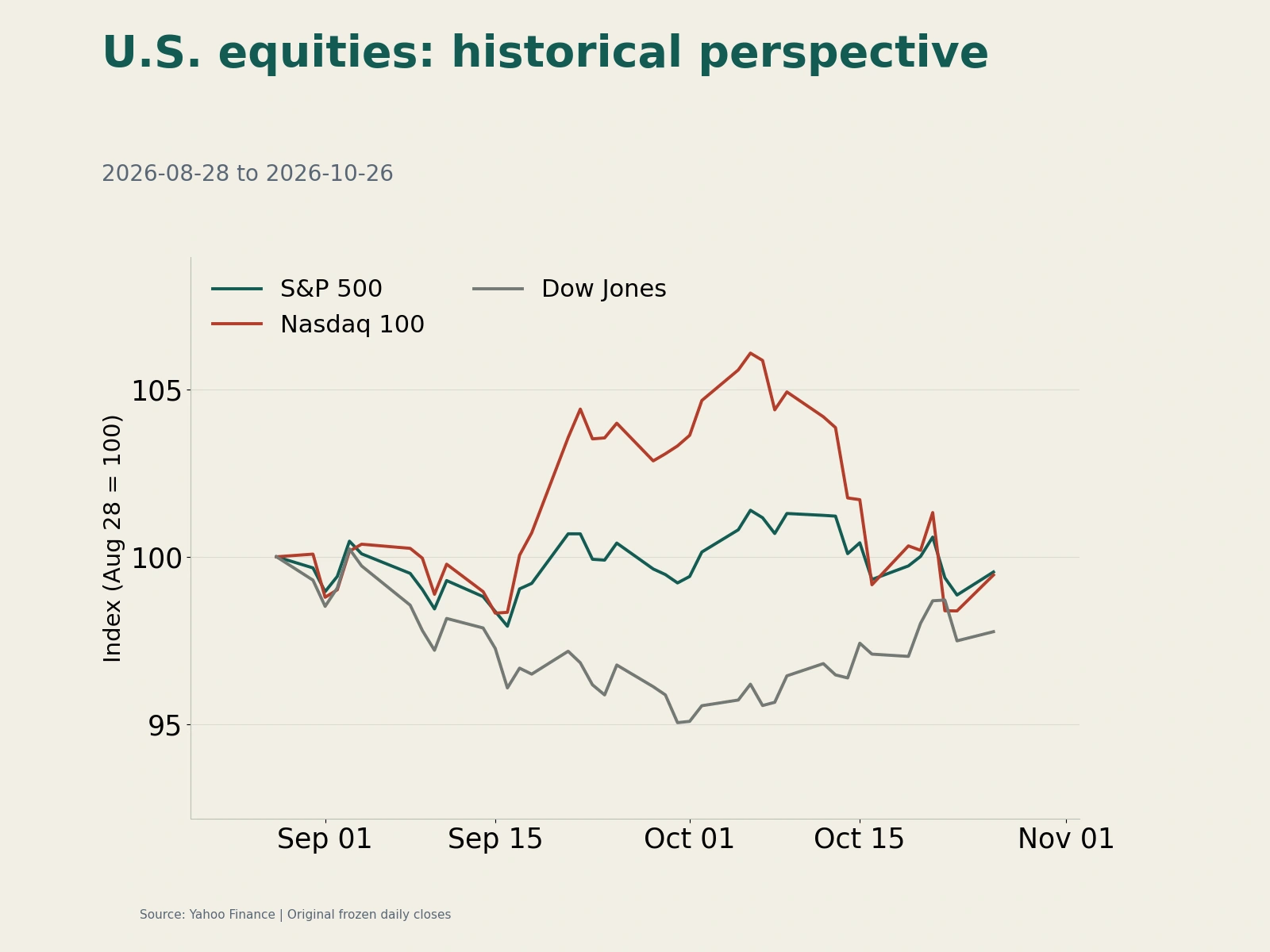
On September 11, 2026, major U.S. equity indexes rebounded and oil fell, while in-line U.S. inflation eased fears of another upside price surprise. Yet two-year Treasury yields continued to rise markedly, real rates increased and consumer sentiment weakened. Stocks recovered while pressure on corporate financing and household spending continued to accumulate.
In-line inflation, a lower oil risk premium and growing AI-infrastructure orders jointly supported Friday's market. These changes were not enough to reverse expectations of near-term policy tightening. Restored energy supply and the conversion of corporate orders into cash returns will continue to determine the recovery's durability. Pipeline shutdown and trade-talk news disclosed over the weekend added variables for the next session.
Inflation meets expectations, but purchasing-power pressure intensifies
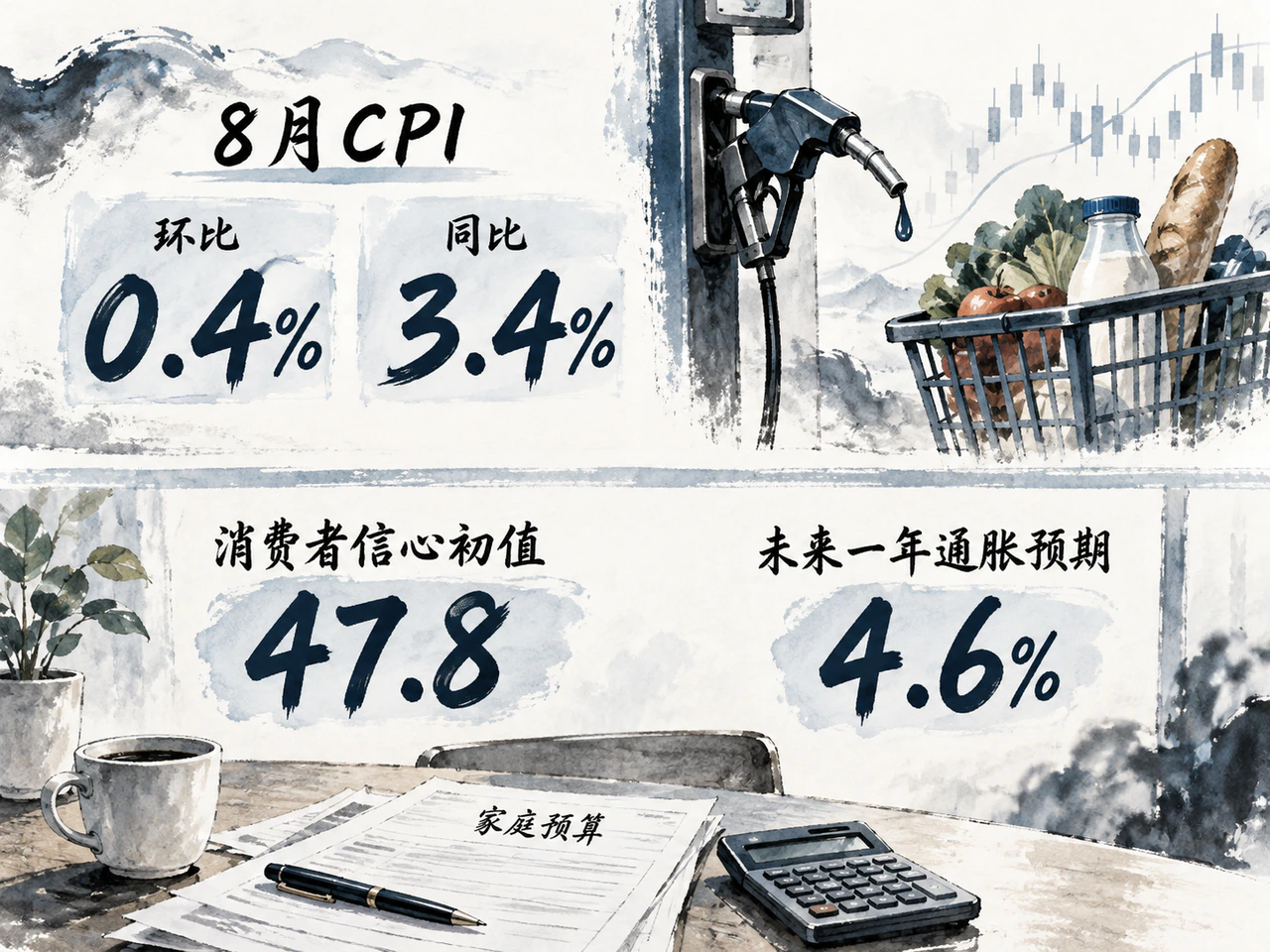
The Bureau of Labor Statistics reported on Friday that August CPI rose 0.4% month on month, faster than July's 0.1%, and 3.4% year on year, unchanged from the previous month. Both matched Reuters survey expectations. Core CPI's monthly increase accelerated from 0.2% to 0.3%, while its annual rate fell from 2.5% to 2.4%. Monthly price pressure strengthened even as annual core inflation improved.
Gasoline rose 3.9% monthly, contributing more than one-third of the overall CPI increase. Shelter rose 0.3%, lodging away from home 2.4% and airfares 2.7%, indicating price pressure in some services. Food increased only 0.1%, while medical care and motor-vehicle insurance fell 0.2% and 0.8%, respectively. Whether the energy shock spreads into more persistent services inflation remains central to policy assessment.
Households' experience of prices was harsher. Michigan's preliminary September consumer sentiment fell to 47.8, below August's 51.7 and expectations of 51.0. One-year inflation expectations rose from 4.0% to 4.6%, and five-year expectations from 3.3% to 3.4%. Survey director Joanne Hsu linked household-budget pressure to fuel prices and trade tensions. Weaker confidence does not yet establish contracting consumption, but shows the growing squeeze from high prices and rates on purchasing power.
Debt costs also constrained fiscal cushioning. Reuters cited Treasury figures showing an August federal deficit near $167 billion, down 52% year on year. Removing the calendar effect of some spending brought forward into July, the deficit was $248 billion, up $7 billion. The first eleven fiscal months' cumulative deficit was about $1.97 trillion, broadly unchanged annually but already above fiscal 2025's full-year $1.775 trillion. Interest payments over the same period rose $143 billion, or 13%. A narrower single-month headline deficit did not change the rising interest burden.
Europe also faced mutually constraining consumption and fiscal pressures. A September Cofidis survey reported by Reuters on Friday found 58% of French respondents cutting nonessential spending and more than half expecting purchasing power to deteriorate over the next year. Previously released second-quarter real household disposable income fell 0.5% quarter on quarter, providing context for caution. Consumption accounts for about half of French GDP; weak spending also affects VAT receipts, complicating the 2027 budget.
The Treasury curve flattens as financing costs continue to rise
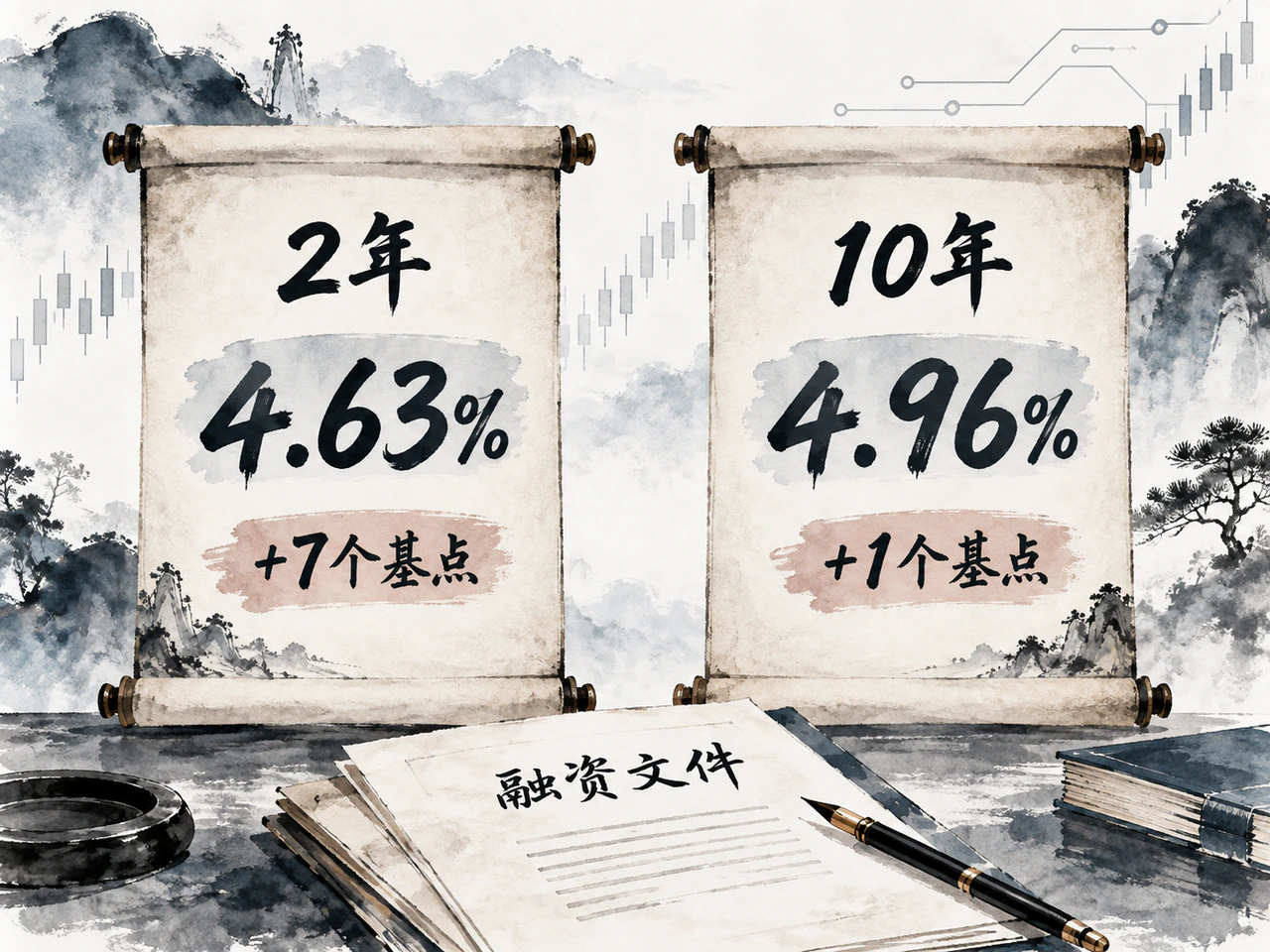
Short-dated Treasuries remained under pressure on Friday, with the long end relatively stable. On the Treasury's consistent daily yield-curve basis, the two-year closed at 4.63%, up seven basis points from September 10; the ten-year at 4.96%, up one.
| Maturity | September 11 closing yield | Change from September 10 |
|---|---|---|
| 2-year | 4.63% | +7 basis points |
| 5-year | 4.78% | +3 basis points |
| 10-year | 4.96% | +1 basis point |
| 30-year | 5.35% | -2 basis points |
The ten-year/two-year spread narrowed from 39 to 33 basis points. Short-end moves reflected caution over near-term tightening, while in-line CPI and lower oil eased long-end pressure. In a weekly report before CPI, Standard Chartered leaned toward a 25-basis-point hike the following week, while arguing that this need not mark the start of consecutive increases. The September 15–16 meeting would test that judgment.
Nominal long yields changed little, but real funding costs rose. Treasury data showed the five-year real yield up nine basis points to 2.38% and the ten-year up five to 2.60%. Differences between nominal and real yields narrowed to 2.40% and 2.36%, respectively. Lower inflation compensation offset part of the real-rate increase, making nominal yields appear stable. These differences also contain liquidity and risk compensation and cannot be treated entirely as expected inflation.
Expanded Treasury buybacks of long debt also supported long-end liquidity. Standard Chartered argued that issuing more bills to fund long-bond repurchases would flatten the curve, but such liquidity management could not by itself change the long-term debt supply-demand balance.
Corporate issuance remained active despite high borrowing costs. PitchBook reported on Friday that high-grade companies raised $57 billion in thirty deals on the Tuesday and Wednesday after Labor Day, including $6.5 billion from GSK and $6 billion from UBS. The cited Morningstar investment-grade index spread was 78 basis points, only one basis point wider year on year, but September 9 yield to worst was 5.59%, up 82 basis points annually. Credit compensation was broadly stable, while higher benchmark rates still materially raised corporate funding costs.
Differences among individual bonds were greater. PitchBook said Oracle's 5.95% coupon bond due 2055 yielded about 7.875% on September 10, priced below 79% of par, with a spread around 245 basis points versus 125 at issuance. AI spending scale and cash-recovery periods had become important factors in issuer-credit assessment.
In sovereign debt, the British-backed London Coalition on Sustainable Sovereign Debt was promoting private-loan restructuring guidance and clauses allowing debt-service suspension for up to one year during crises. These remained at the contract-clause adoption stage and did not mean particular bonds had already deferred payments. They could nevertheless affect future crisis payments and creditor coordination.
AI orders lift stocks; cash returns determine divergence

The S&P 500 closed Friday at 7,656.98, up 0.86%; the Dow at 52,573.29, up 0.98%; and the Nasdaq 100 at 29,368.44, up 0.91%. The Russell 2000 gained 0.45% to 2,903.94, roughly half the S&P's increase. VIX fell two points to 15.84.
The rebound covered most industries. Reuters reported nine of eleven S&P sectors rising, with advancing constituents outnumbering decliners 2.1 to one. Technology, financial and energy ETFs rose 1.32%, 0.67% and 0.32%, respectively. Yet Nasdaq still had 182 new lows against only 45 new highs, and U.S. volume of about 14 billion shares was below the prior twenty-session average of 14.9 billion. Selling eased without all categories strengthening together.
AI-infrastructure orders supplied company-level support. After Thursday's close, Oracle disclosed fiscal 2027 first-quarter revenue up 30% to about $19.3 billion and cloud-infrastructure revenue up 121%. It commissioned 850 megawatts of data-center capacity and had delivered more than 300,000 GPUs since the previous quarter ended. New AI-cloud contracts exceeded $30 billion and remaining performance obligations reached $664 billion, showing strong construction demand.
A gap remained between order growth and cash returns. Oracle's quarterly free cash flow was negative $5 billion, and it completed a $20 billion common-stock offering. It raised full-year adjusted EPS guidance from $8.05 to $8.10, but after rising nearly 6% after hours on Thursday, the shares fell about 1.8% in Friday's regular session. Contract commitments become cash available to shareholders only after delivery and collection.
Hardware suppliers performed more strongly. Dell and Hewlett Packard Enterprise each rose about 12% on Friday, while HP gained about 8.4%. RBC Capital Markets initiated Dell at Outperform, favoring multiyear AI-infrastructure spending and citing its roughly $95 billion server backlog and approximately $16.4 billion in second-quarter AI-server sales. Dell had also said component-price increases drove product price rises, so revenue growth cannot all be equated with higher delivery volumes.
Cloud platforms bear construction, financing and depreciation costs, while hardware suppliers receive equipment orders first, creating different timings for realized returns. Broader equity disagreement likewise centers on whether earnings can offset rising funding costs. Citi Wealth's JP Coviello argued that earnings growth remained sufficient to offset higher real yields; BNY Wealth's Alicia Levine worried that stocks would face greater pressure if the next hike signaled sustained tightening.
Regulatory arrangements will also affect AI investment costs and payback periods. Reuters reported on Friday that U.S. Senate negotiators were discussing a duty of care for advanced-model developers to prevent major risks, government authority to restrict unsafe-model releases, judicial review and the boundaries of some state laws. More testing obligations could raise costs, while less variation across state rules could reduce compliance burdens. The effect depends on provisions still under negotiation.
Oil gives back gains, but supply tightness persists
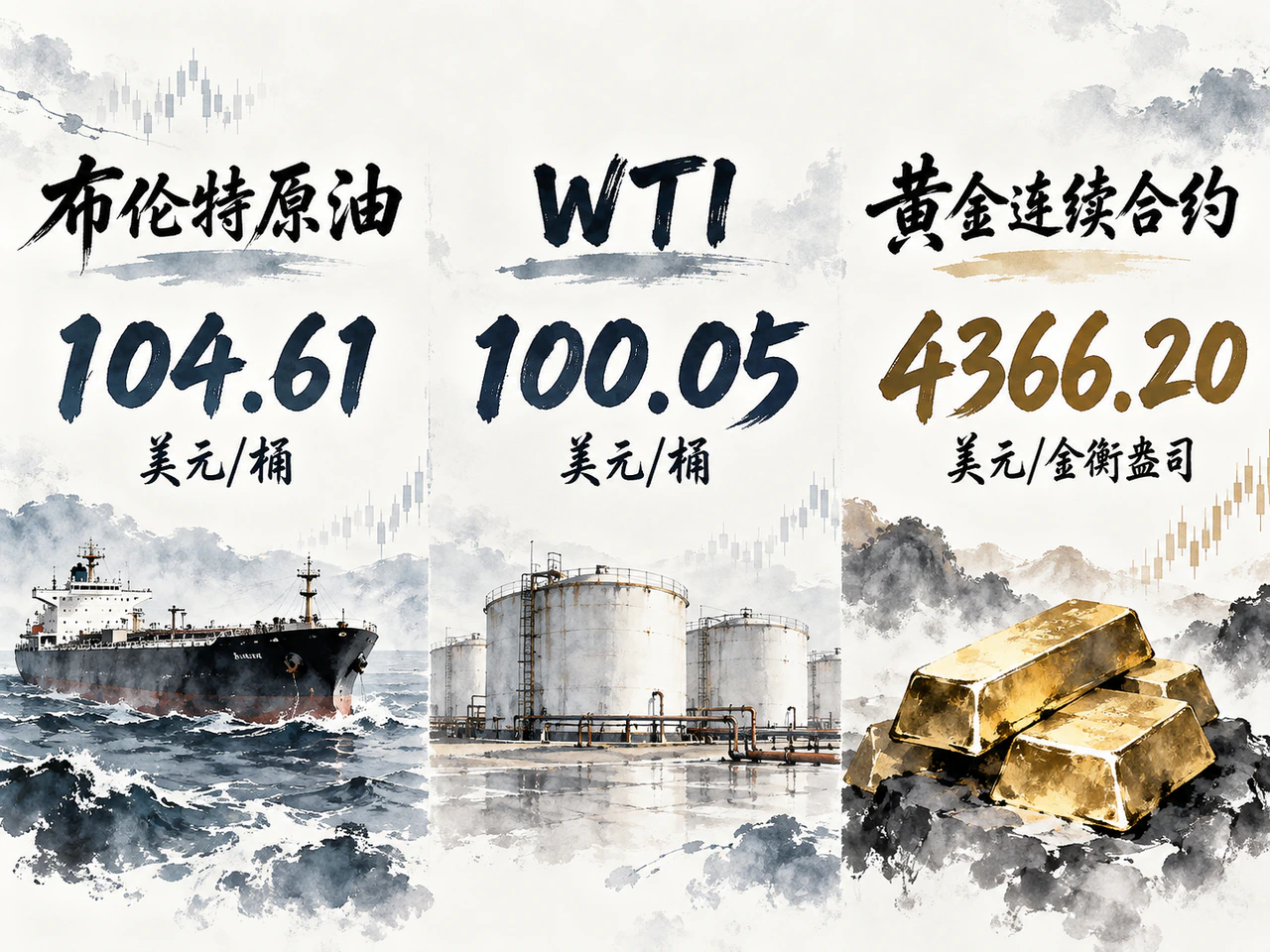
On a continuous-contract daily-close basis, Friday's Brent price was $104.61 a barrel, down 2.81%, and WTI $100.05, down 2.37%. Reuters linked the intraday reversal from gains to losses to news of talks on temporary shipping arrangements. Both had risen more than 6% the day before, and Friday's reporting still put weekly gains above about 8%. The day's retreat mainly absorbed gains accumulated rapidly beforehand.
Physical evidence of tight supply remained. The IEA's Friday monthly report estimated August global oil production down 1.6 million barrels a day from July to 100.1 million. Observable global inventories fell 95 million barrels, bringing the cumulative draw since February to 507 million. It also forecast a decline of 2.5 million barrels a day in 2026 global demand, 940,000 barrels greater than the previous month's estimate. High energy costs and feedstock shortages were restraining consumption; expensive oil did not imply booming demand.
Weekend reports said Saudi Arabia's East-West pipeline was shut preventively following a drone attack, reducing an alternative export route bypassing Hormuz. Iranian-proposed regional shipping talks remained at the meeting-arrangement stage, leaving commercial transport recovery unresolved. Shutdown duration and inventory redistribution would determine the actual export effect. Friday's close had not reflected the full impact of the weekend news.
Continuous gold closed Friday at $4,366.20 a troy ounce, up 0.04%, essentially unchanged. The dollar index was 99.12, up 0.03%. Reuters attributed an intraday spot-gold recovery to dip buying after recent declines, adding that volatility weakened Indian physical demand while Chinese investment demand remained strong.
Safe-haven buying and rising real rates exert opposite effects on gold. An energy shock can increase demand for purchasing-power protection while strengthening tightening expectations and raising the opportunity cost of a non-interest-bearing asset. Whether greater geopolitical risk lifts gold depends on the changing balance between these forces.
Trade talks seek tariff relief as the sanctions agenda adds uncertainty
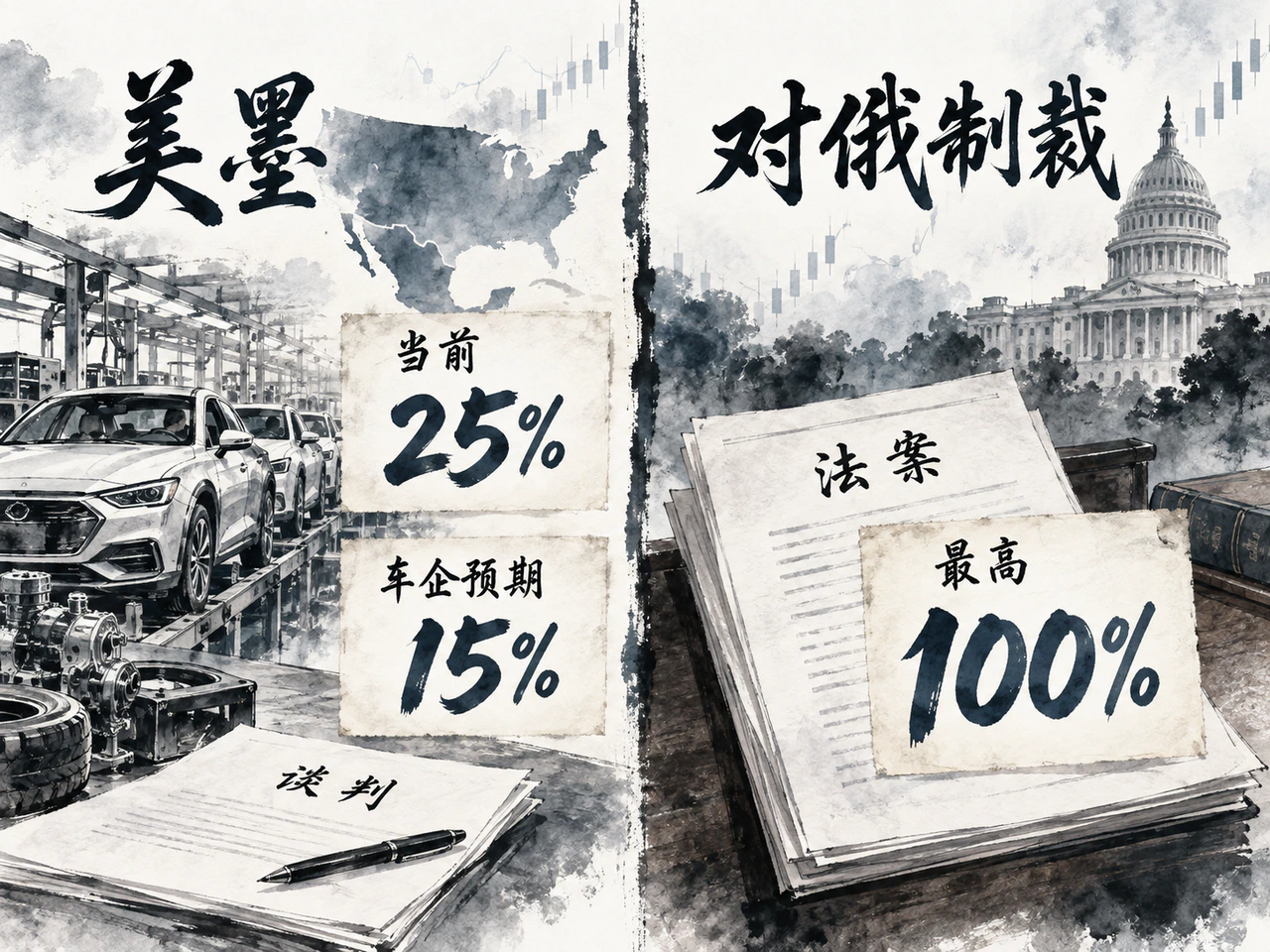
North American trade negotiations showed limited easing. Reuters cited six informed sources on Friday as saying the United States and Mexico sought an interim deal before the November 3 U.S. midterms, exchanging partial tariff relief for auto-content requirements, investment screening and other arrangements. Mexico's economy ministry said there was no specific deadline. More than 80% of Mexican exports go to the United States, making progress relevant to manufacturing investment and order expectations.
Autos were a focal point of disagreement. Mexican cars currently faced a 25% U.S. tariff under the relevant national-security measures. Some automakers expected talks could consider reducing the nominal rate to 15%, followed by U.S.-content deductions, but that remained an expectation of the outcome. Even if cuts materialize, stricter component-origin rules could increase procurement adjustments and compliance costs, offsetting part of the benefit.
U.S.-Canada talks were less certain. Canada's trade minister said on Friday that no Washington meeting was scheduled. Bloomberg reported on Saturday that Trump expressed optimism about resolving disputes and played down withdrawal from the North American trade agreement. Signals improved, but a formal restart still required concrete arrangements.
At the same time, the Russian sanctions agenda could increase trade costs. Reuters reported on Friday that the House Rules Committee planned to discuss a bill on Monday authorizing the president to impose tariffs up to 100% on major consumers of Russian energy, while retaining discretion to remove measures. The bill still required legislation; the maximum authorized rate was not an applied rate. Coverage and exemptions would determine the actual pressure on energy procurement and exports to the United States.
Saturday's BRICS summit opposed unilateral sanctions without UN Security Council authorization and proposed seafarer-safety cooperation, reflecting shared concerns over trade and shipping risk. These positions had not created new payment arrangements or trade preferences; effects on corporate cash flow awaited concrete policies.
Asian equities remain under pressure; policy focuses on liquidity and cash collection

Asian markets closed Friday before that day's U.S. session. The Hang Seng ended at 24,805.63, down 0.60%; the Nikkei 225 at 64,011.34, down 1.93%; and Korea's Kospi at 6,909.91, down 1.76%. Samsung Electronics and SK Hynix fell 3.53% and 2.21%, respectively. Any boost from the U.S. rebound to Asia still awaited post-weekend trading.
AI-server orders support Japanese and Korean semiconductor, memory and equipment demand, while energy and dollar-financing costs remain constraints. Hong Kong technology assets likewise face both earnings expectations and discount rates. Whether stronger industry orders can offset rate pressure remains to be seen.
Hong Kong's local funding conditions eased somewhat. DBS research on Friday said overnight Hong Kong dollar forward points fell and HIBOR began declining after the Silver Bond issue. Quarter-end funding demand and hawkish policy changes at external central banks could still raise short-term rates. Improved Hong Kong dollar liquidity can coexist with higher dollar benchmark rates; dollar-bond issuers' funding costs still depend on Treasury yields, their own credit spreads and market demand.
Mainland policy focused more directly on business receivables. A notice released September 12 scheduled a regular policy briefing for 15:00 Beijing time on September 14 on strengthening efforts to address small and medium enterprises' difficulty collecting payments. Shorter collection periods could reduce working-capital commitments and short-term financing needs and improve supply-chain payment capacity. Results depend on implementation.
Reuters on Friday analyzed an earlier announced capital injection of up to RMB70 billion for five state-owned insurers. It judged that the injections could ease solvency and asset-liability matching constraints, while new equity investment might not expand quickly or on a large scale. Additional capital, more orders and better liquidity all support markets. How quickly these changes become profits and cash returns will affect how far the current recovery can go.