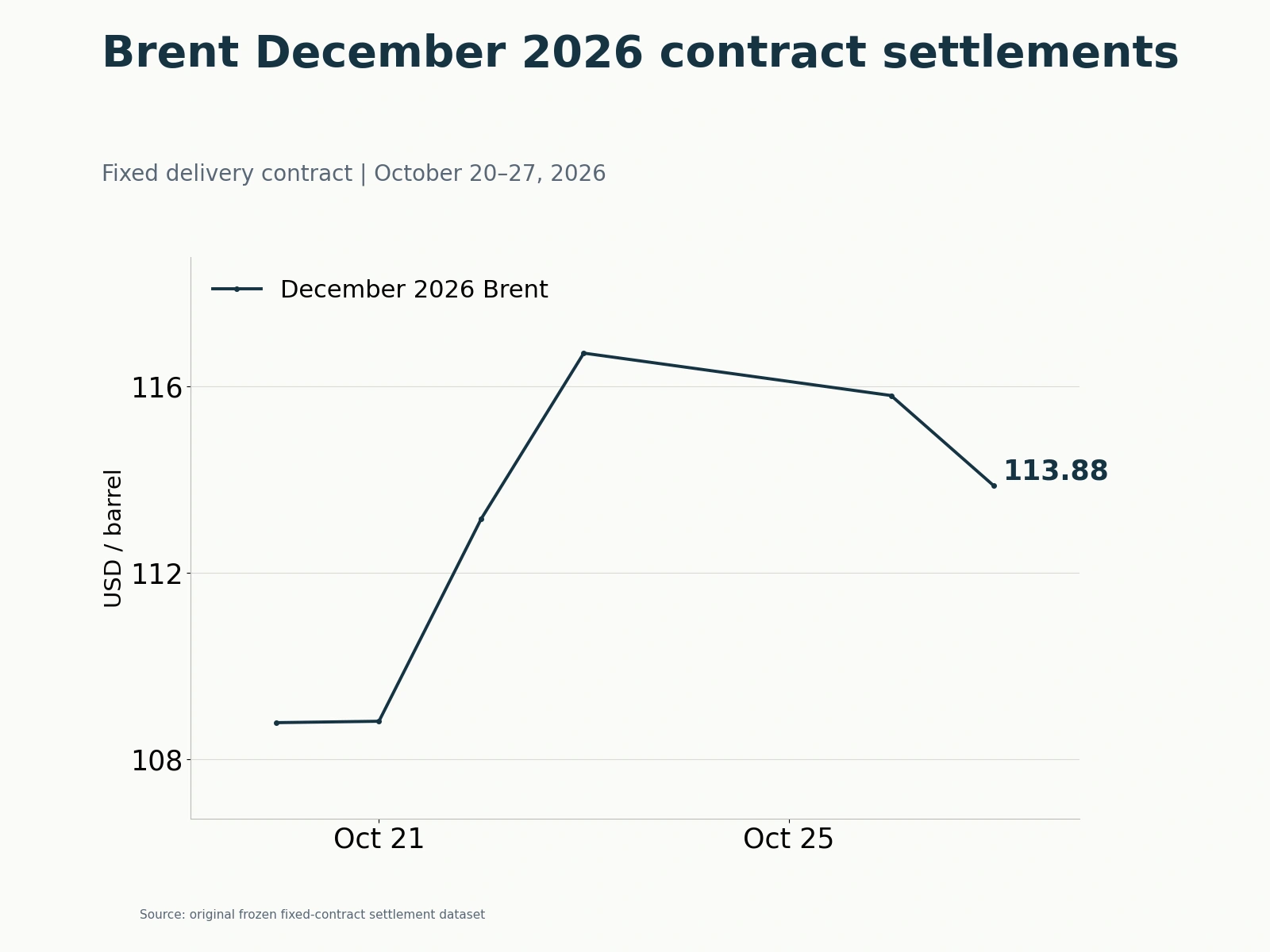
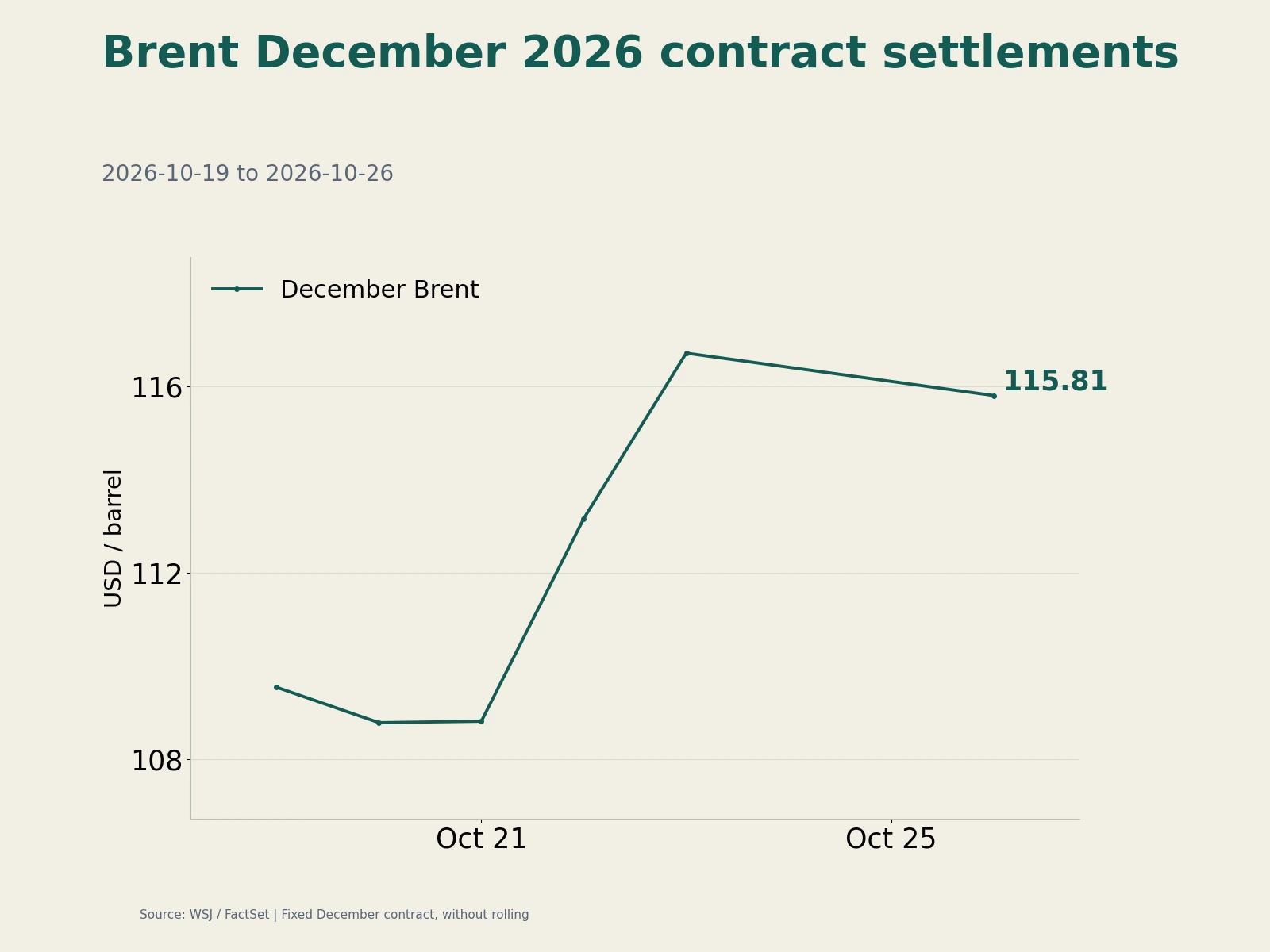
On Friday, September 11, oil retreated from intraday highs as diplomatic-contact headlines eased fears of Middle East disruption. Crude exports remained obstructed and diesel shortages were more acute. News can quickly reduce risk premiums, but restarting tanker traffic and replenishing refinery feedstocks takes time.
On the provider's front-month continuous-futures daily-close basis, Brent was $104.61 a barrel, down $3.02 or 2.81% from Thursday; WTI was $100.05, down $2.43 or 2.37%.
Shipping Talks Ease Concerns Without Removing Transport Constraints

Reuters reported Friday that both benchmarks initially reached their highest since mid-May, then turned lower on news that Middle Eastern foreign ministers sought talks with Iran on temporary Hormuz passage. Both had risen more than 6% Thursday, so Friday also corrected the prior day's anxiety. The dollar index rose only 0.03%, insufficient by itself to explain oil's nearly 3% decline.
Actual transport did not improve as clearly. Reuters cited preliminary vessel tracking showing 7 ships passing Hormuz Thursday, versus 11 Wednesday. Vessel counts do not directly translate into crude exports, but the change showed recovery remained unstable.
Saudi bypass routes also faced pressure. The EIA's September 9 monthly report cited Vortexa estimating August Yanbu exports roughly halved from July. Saudi Arabia increased northbound Suez transport, while Asian buyers faced longer voyages and higher costs. Resources and nominal capacity do not ensure timely delivery to refineries.
Weekend diplomacy created expectations for the next week. September 12 reporting said Iran and Gulf states planned Monday talks in Oman on strait arrangements. Iran stressed that contact with Oman did not mean immediate reopening, which remained conditional. An executable arrangement was the key to improved supply.
Inventories Keep Falling and Diesel Shortages Stand Out
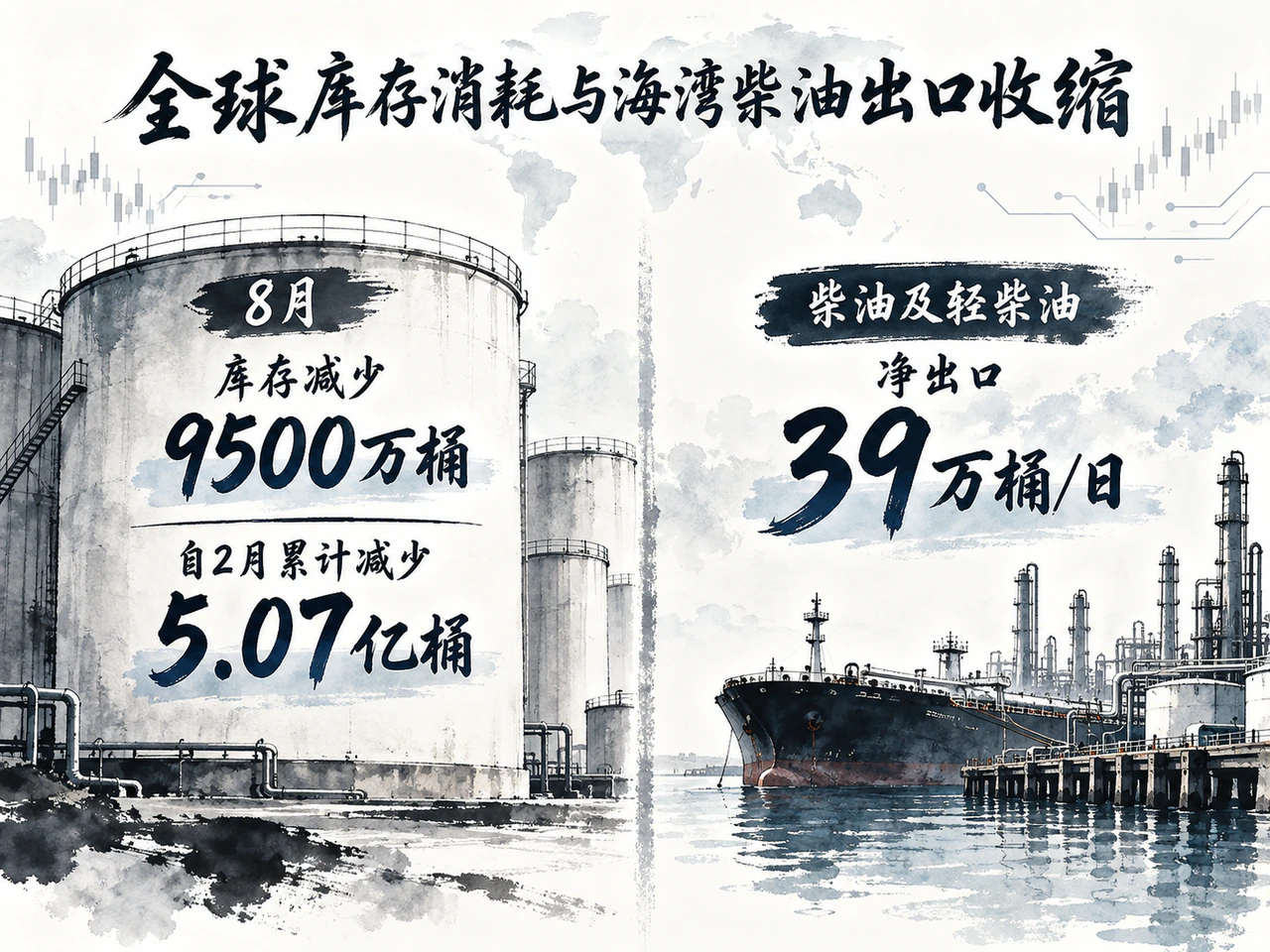
The IEA's September 11 report showed observable global oil inventories falling 95 million barrels in August and a cumulative 507 million since February, including an August decline of 65 million barrels in oil at sea. Continued drawdowns weakened disruption buffers and made short-term transport constraints more likely to affect prices.
Product pressure was especially severe. The IEA estimated Gulf August net exports of diesel and gasoil at only 390,000 barrels a day, slightly above one-quarter of prewar levels. Combined Gulf and Russian net exports were 1.6 million barrels a day below February. Russian refining disruption and Gulf transport constraints meant available crude did not necessarily permit timely diesel replenishment.
Lower crude therefore need not bring matching fuel-cost relief. The IEA said Atlantic Basin refining margins reached records in August, mainly from rising diesel cracks. Crude backwardation also deepened significantly, making earlier delivery more expensive than later supply. Both pointed to immediate cargo availability and whether cargoes could reach the regions needing them.
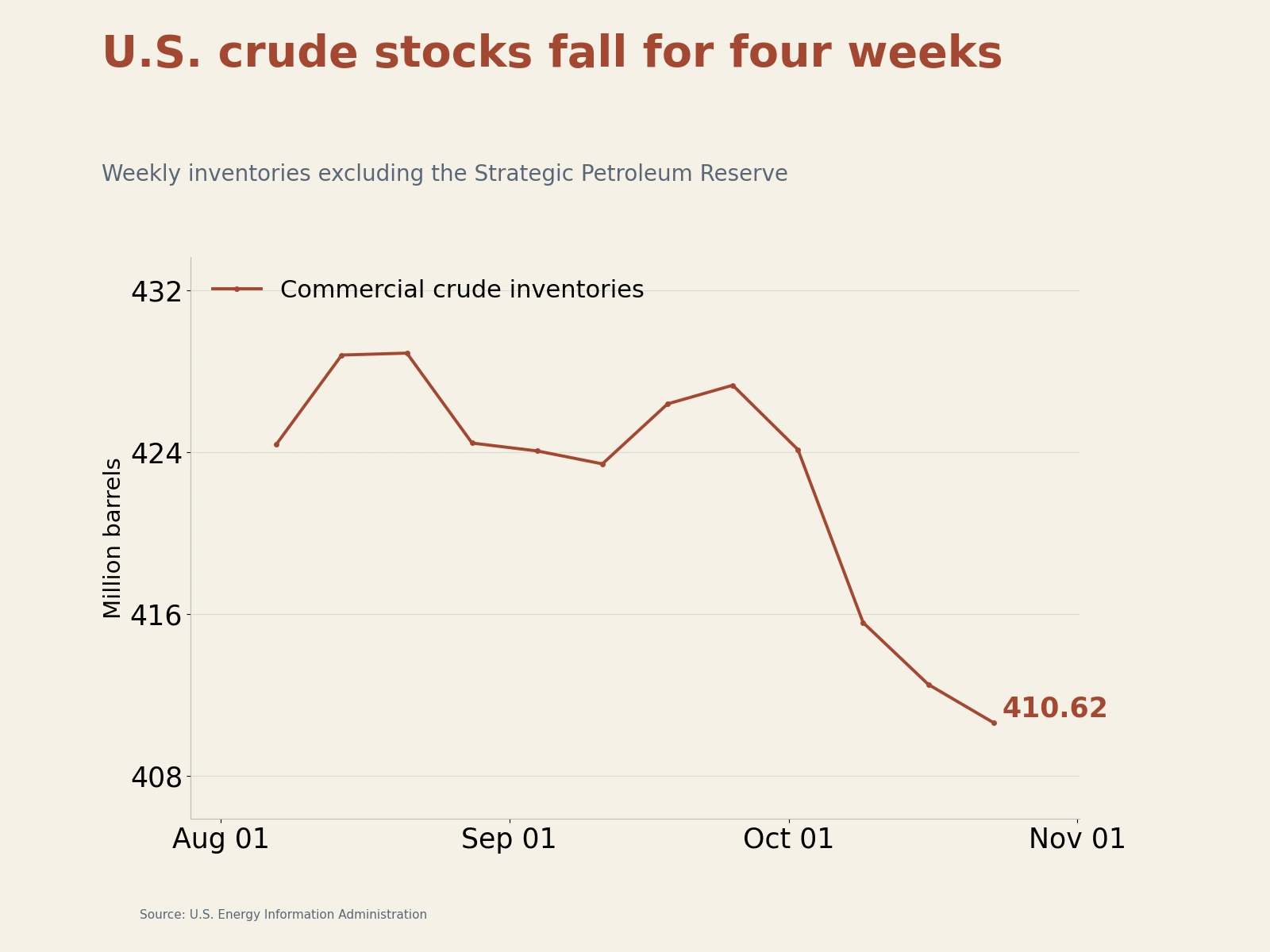
US inventories offered partial relief. Marine-fuel information provider ENGINE, citing EIA, said commercial crude fell about 400,000 barrels to 424 million in the week ended September 4, while gasoline rose 1.3 million and distillates 2.1 million. Refinery utilization was 97.8%, slightly below 98% previously. High runs support product replenishment, but one weekly build did not establish global balance.
High Prices Restrain Demand; Physical Flows Must Verify Supply Improvement
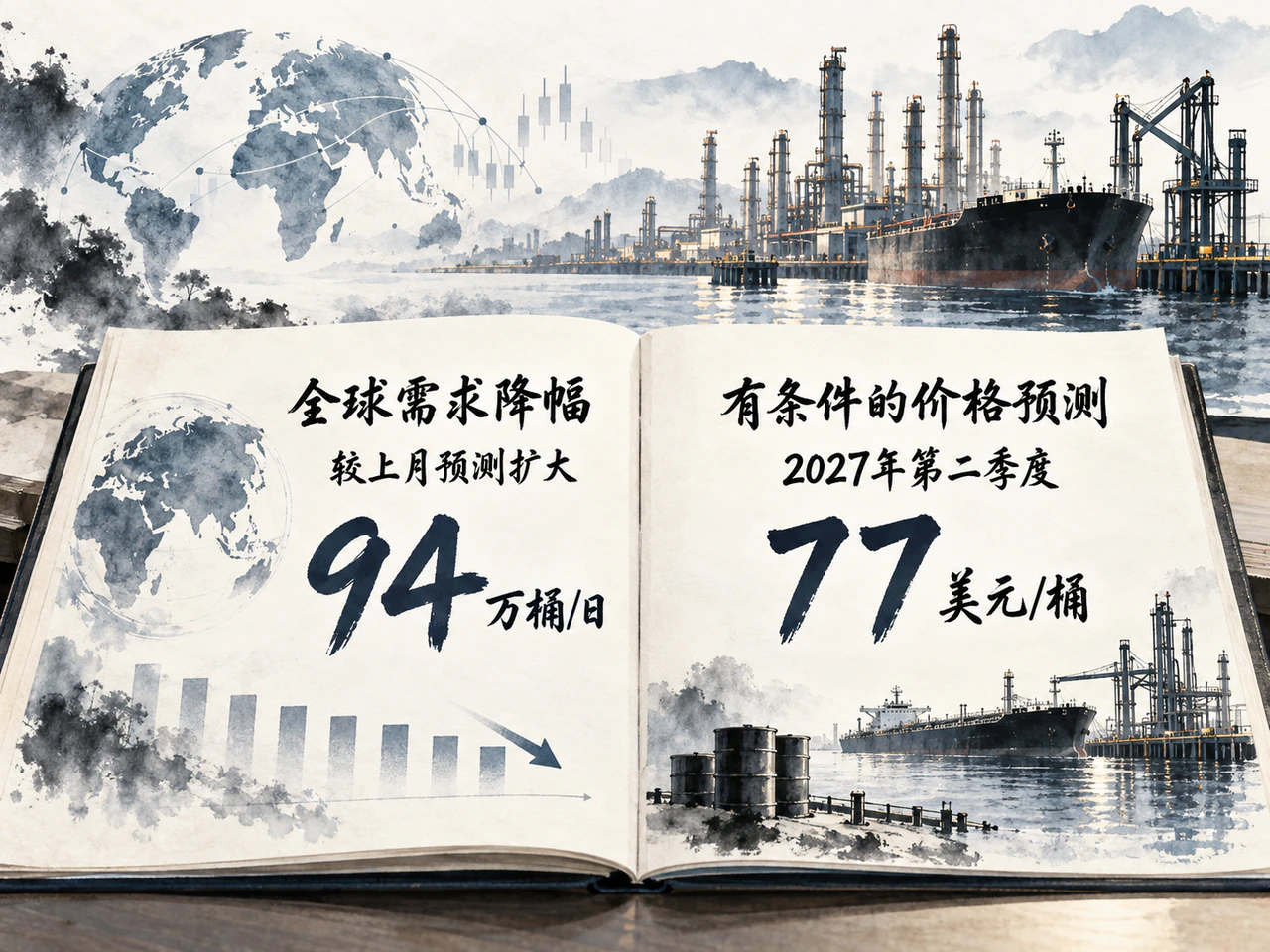
Tight supply was also weakening demand. The IEA again reduced its 2026 global demand forecast, expecting an annual decline 940,000 barrels a day larger than in the previous month's forecast. High-price demand destruction is an important constraint after a prolonged supply shock and limits oil upside.
The EIA's September outlook expected average spot Brent to fall to $77 a barrel in the second quarter of 2027 as Middle East transport gradually recovered. This depended on expanded alternative routes, transport adaptation and gradual restoration of shut-in output. It was a conditional forecast, not the current futures quote.
Several connected changes would reveal relief: whether Oman talks produced executable navigation arrangements; whether the Saudi pipeline and Yanbu loadings stayed stable; whether prompt backwardation and diesel cracks narrowed together; and whether US distillate stocks kept recovering.
The first two determine whether crude can leave the region; the latter two show improvement in immediate delivery and products. Diplomatic relief was already reflected in prices, but inventory depletion and diesel shortages still supplied support. Sustained declines required physical flows to catch up.