During September 7–13, successive producer- and consumer-price reports shifted US markets toward pricing a September hike. Beyond energy, some core goods and services rebounded, challenging the Fed's case for waiting. Annual core inflation still declined and medium-term household expectations did not rise broadly. Further tightening became more likely; consecutive hikes still depended on the durability and breadth of the price rebound.
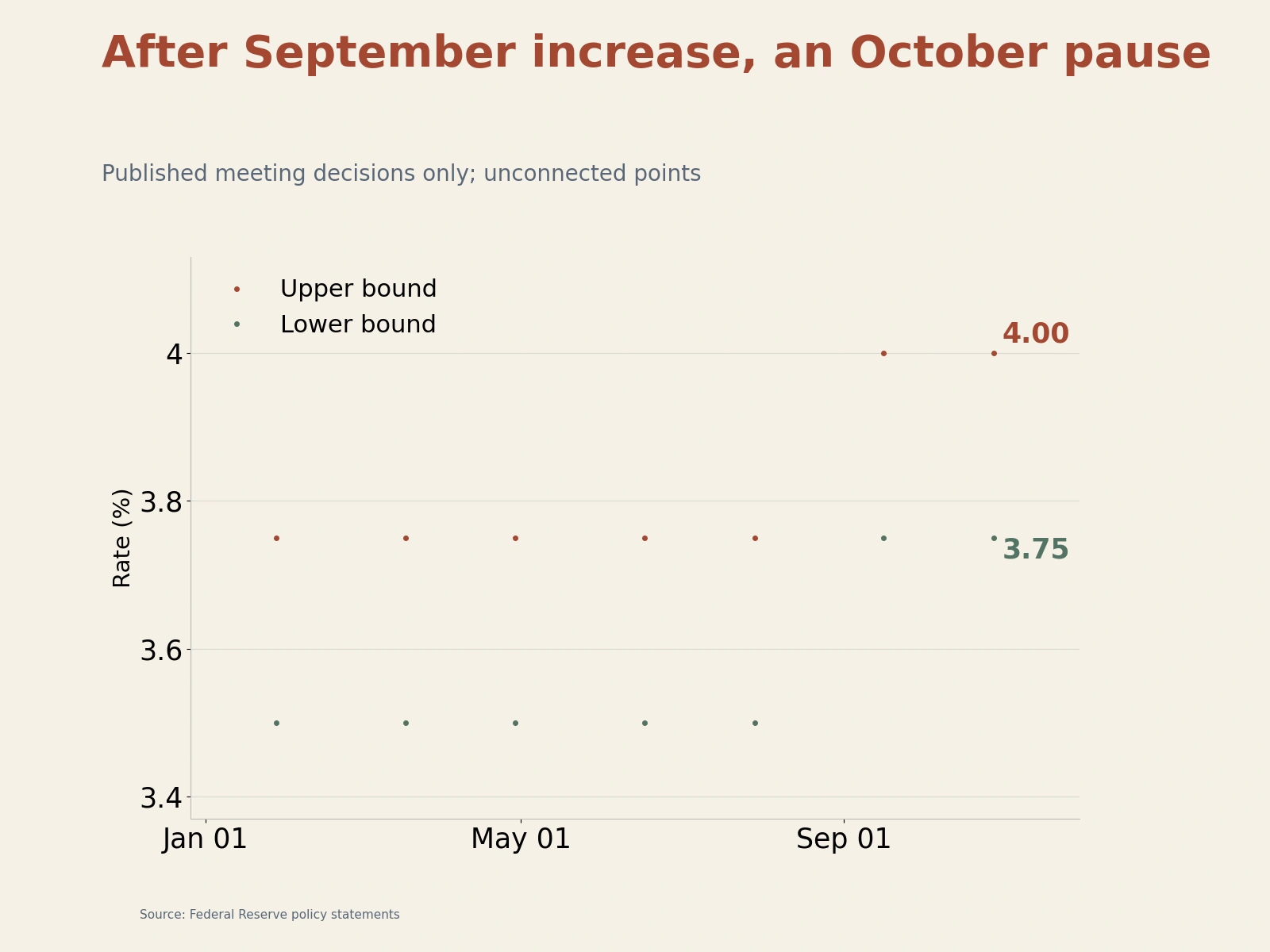
The current federal funds target is 3.50%–3.75%. On July 29, the Fed held rates by 9 votes to 3, with all three dissenters preferring a 25-basis-point increase. Ahead of September 15–16, the week's data would test whether that disagreement was narrowing and whether officials previously favoring patience now saw a need to tighten.
Stronger Data Increase Hike Bets

Most economists still expected no change early in the week. A Reuters survey published September 9, conducted September 4–9 among 93 economists, found 65 expecting a September hold and 52 expecting no change all year. The share expecting a September hold nevertheless fell from about 90% in August to 70%, while the full-year hold share fell from roughly 80% to 56%.
The disagreement concerned the conditions for waiting. TD Securities economists said the Fed could remain patient if data matched expectations, but an upside inflation surprise could trigger earlier hikes. Santander's chief US economist considered a September hike more likely unless inflation significantly undershot forecasts.
Two subsequent inflation reports tilted the balance further. Reuters reported August PPI up 5.4% year on year on September 10, with strong transportation and warehousing, hospital services and airfares; some components feed into PCE, the Fed's preferred measure. After September 11 CPI, Nationwide's Kathy Bostjancic switched to expecting a 25-basis-point September hike, worried about energy spreading into other goods, services and expectations.
Pricing changed accordingly. Reuters reported after CPI on September 11 that fed-funds futures implied roughly an 85% probability of a 25-basis-point September increase, versus about 70% before the release. The week's data strengthened hike expectations and attention to the September meeting.
Monthly Inflation Rebounds, With Persistence Still Debated
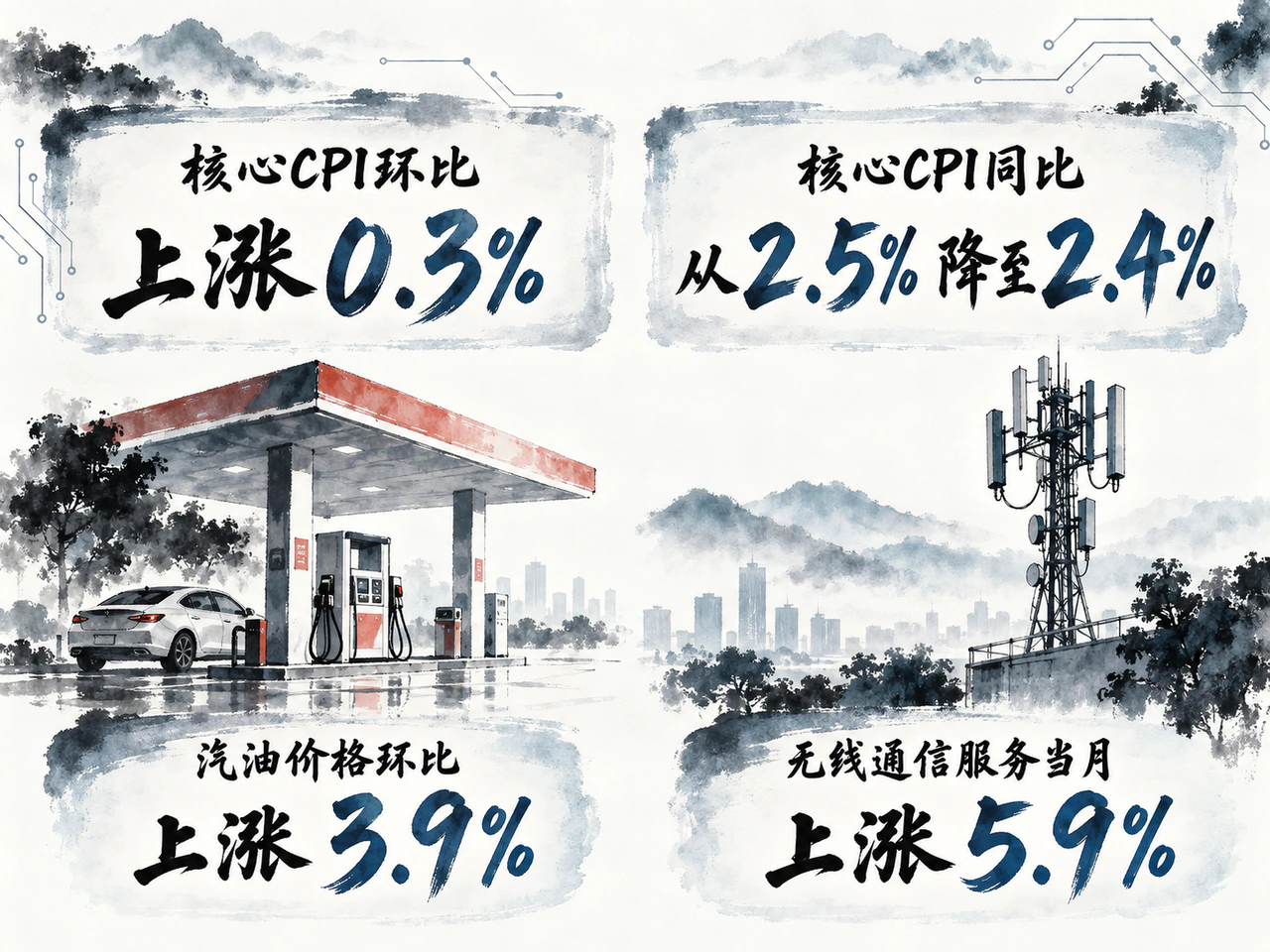
The BLS reported September 11 that August CPI rose a seasonally adjusted 0.4% month on month, above July's 0.1%, and 3.4% year on year, unchanged. Gasoline rose 3.9% monthly, contributing more than one-third of the headline increase; energy overall rose 2.1%. Energy's rebound was the most direct driver of higher household living costs.
Core components also showed pressure. Excluding food and energy, CPI rose 0.3% monthly, above July's 0.2% and the Reuters-cited forecast of 0.2%. Shelter accelerated from 0.1% to 0.3%; communication, airfares, education and used vehicles also rose. This made attributing the whole rebound to energy harder.
The monthly rebound did not yet reverse declining annual core inflation, which fell from 2.5% to 2.4% in August. Medical care and motor insurance fell month on month. Reuters noted wireless communication services jumped 5.9%, materially lifting core. Large increases in selected items have different policy implications from broad, persistent inflation. The rebound warranted attention, but its persistence needed more data.
The Fed's 2% target is PCE inflation; 2.4% core CPI cannot directly measure the distance to it. Relevant CPI and PPI components jointly determine PCE estimates, making the combination more informative than either headline alone. The challenge is identifying energy spillovers and whether rebounding core components can reverse the previous slowdown.
Expectations Stay Stable as Tightening Must Also Weigh Employment and Demand

The New York Fed's August survey, released September 8, showed no broad increase in expectations. One- and five-year medians held at 3.6% and 3.0%, and three-year expectations fell 0.1 percentage point to 3.2%. Gasoline expectations increased notably without a corresponding rise across headline horizons. The survey ran August 3–31 and did not capture September energy volatility.
Employment expectations diverged. The average perceived probability of rising US unemployment over the next year reached 44.4%, while respondents' own job-loss probability declined. More concern about the overall environment had not similarly affected personal job-loss expectations, and did not establish actual employment weakening.
September 15–16 therefore required more than deciding on a 25-basis-point hike: officials needed to assess whether current rates restrained activity sufficiently and what conditions would justify later moves. Continued energy pass-through would strengthen tightening arguments. If core increases stayed concentrated while existing rates constrained demand, consecutive hikes would require stronger evidence.
A hike moved this week from one disputed option to the main market-priced scenario. Future expectations would depend on whether the Fed agreed and how it explained inflation persistence, employment risk and conditions for subsequent action.