During September 7–13, supply and transport risks returned international oil above $100 a barrel; Friday's decline did not reverse the strong weekly rally. On Yahoo continuous-contract daily closes, Brent ended September 11 at $104.61 and WTI at $100.05, up 8.65% and 9.37% respectively from September 4. Slow Gulf export recovery, renewed threats to bypass routes and tighter diesel lifted near-term delivery prices, while continued demand downgrades restrained gains.
Transport risks spread as negotiation news fails to resolve supply constraints

Attacks on Saudi energy facilities and slower Hormuz traffic lifted prices early in the week. Reuters reported on September 8 that Saudi Arabia said some facilities had stopped operating after Houthi attacks. Risk extended from strait passage to onshore facilities, making delivery to buyers a key constraint beyond production itself.
More tanker attacks midweek increased uncertainty on Red Sea routes. On the same closing basis, Brent rose from $101.21 on September 9 to $107.63 the next day, while WTI rose from $96.05 to $102.48. Supplier Sprague's September 10 settlements corresponded to November Brent and October WTI, both gaining more than 6% that day.
September 11 reports that Middle Eastern countries sought temporary passage arrangements with Iran lowered prices, but actual transport remained far from restored. Preliminary vessel tracking cited by Reuters showed only 7 ships crossing Hormuz on Thursday, versus about 125 commodity-carrying ships daily before the war. Negotiations offered hope, but supply improvement still required returning vessel flows.
Weekend news added uncertainty for the next week. CNBC cited the Saudi government as saying the East-West pipeline had been shut as a precaution after Thursday's drone attack. Its designed capacity to Red Sea export terminals is about 7 million barrels per day; actual effects depend on prior throughput and shutdown duration, rather than all designed capacity being a new supply loss. Reports of Iranian-Gulf passage discussions likewise represented diplomacy without establishing normal traffic recovery.
Stocks keep drawing down; diesel is particularly tight
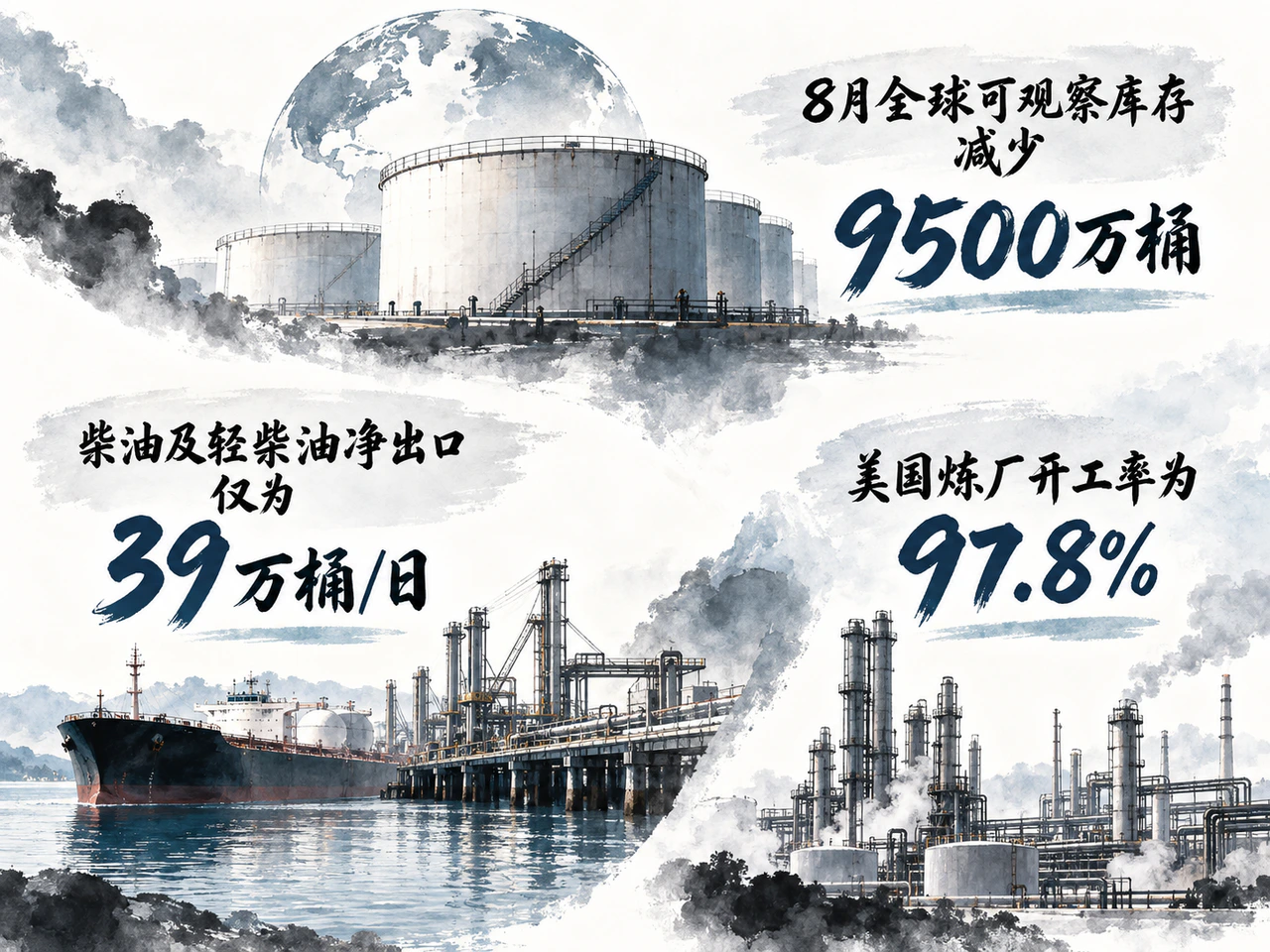
Data released this week showed continued depletion from the supply shock. The IEA's September 11 report said August global oil supply fell 1.6 million barrels per day monthly, with over 10 million barrels per day still shut in across the Gulf for security reasons. It estimated August observed stocks down 95 million barrels and cumulative draws since February of 507 million.
Spot prices and freight also showed prompt delivery pressure. The IEA said North Sea Dated Brent reached $113.48 a barrel on September 9, nearby-deferred crude premiums widened markedly and tanker freight rose. Together, stronger physical prices, backwardation and freight indicated greater scarcity of promptly deliverable crude.
Product bottlenecks were more pronounced. The IEA estimated August Gulf diesel and gasoil net exports at only 390,000 barrels per day, about one-quarter of prewar levels. Combined Gulf and Russian net exports fell 1.6 million barrels per day from February. Obstructed feedstock transport and damaged Russian refineries made shortages difficult to solve through higher crude production alone. Rising Atlantic Basin refining margins encouraged operating refineries to increase throughput.
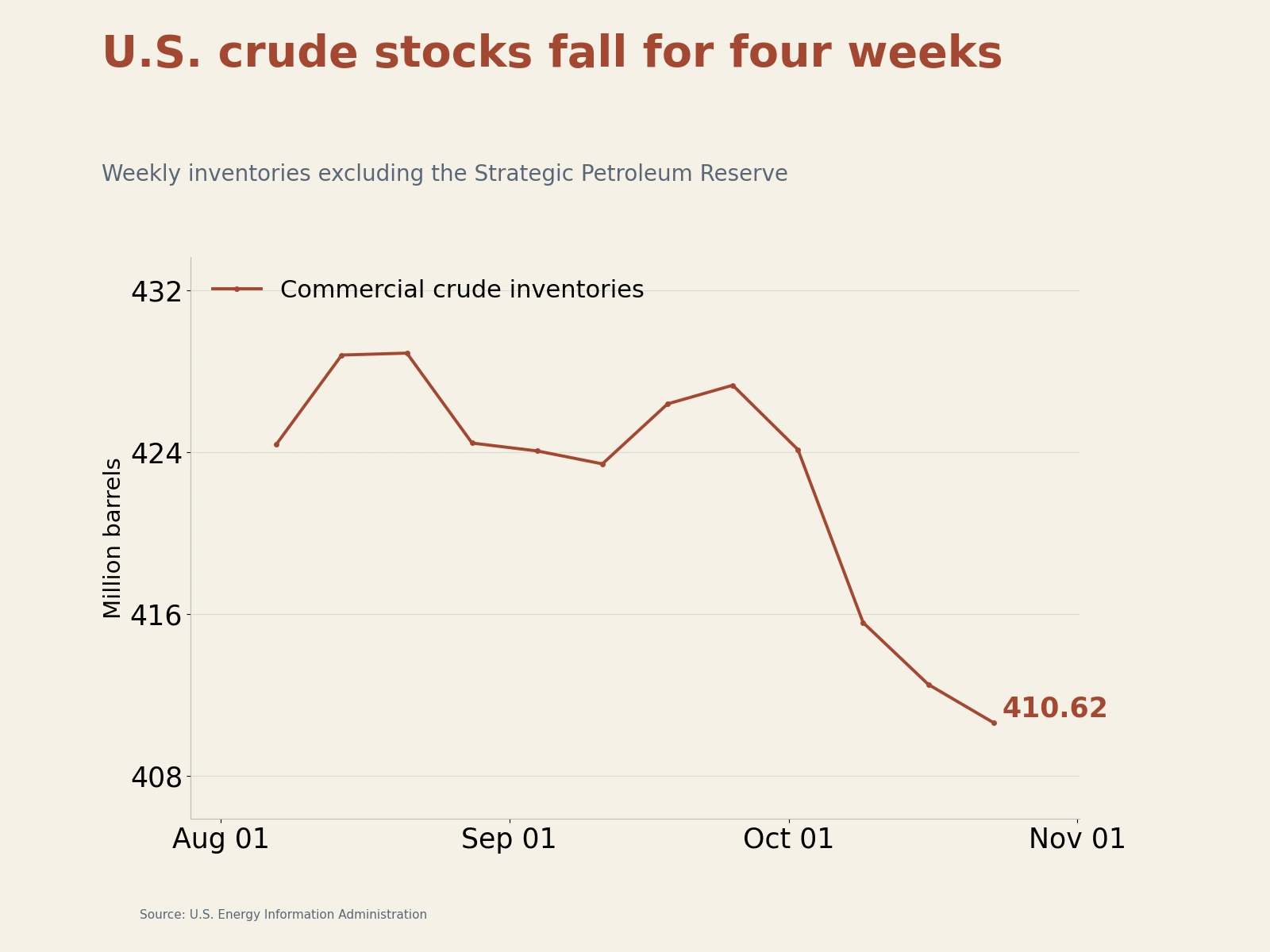
High US refinery utilization provided some relief. EIA data released September 10 showed 97.8% utilization in the week ending September 4 and crude runs of 17.6 million barrels per day. Commercial crude stocks fell 400,000 barrels, while gasoline and distillates rose 1.3 million and 2.1 million. Distillates nevertheless remained 13% below their five-year seasonal average. A weekly build eased some pressure without reversing global product tightness.
Demand forecasts fall further; actual delivery remains decisive

Tight supply lifted prices while weaker demand limited sustained gains. OPEC cut 2026 demand growth to 380,000 barrels per day on September 10, its fifth consecutive monthly downgrade. The IEA projected a full-year decline of 2.5 million barrels per day. They still differed substantially on growth versus contraction, but both were lowering forecasts. US four-week average products supplied through September 4, a demand proxy, also fell 3.7% year on year.
The dollar index was broadly unchanged over the week, while the US 10-year yield rose 18 basis points, adding financing pressure on demand. In those conditions, disruption still lifted prompt oil while demand cooling restrained the rally.
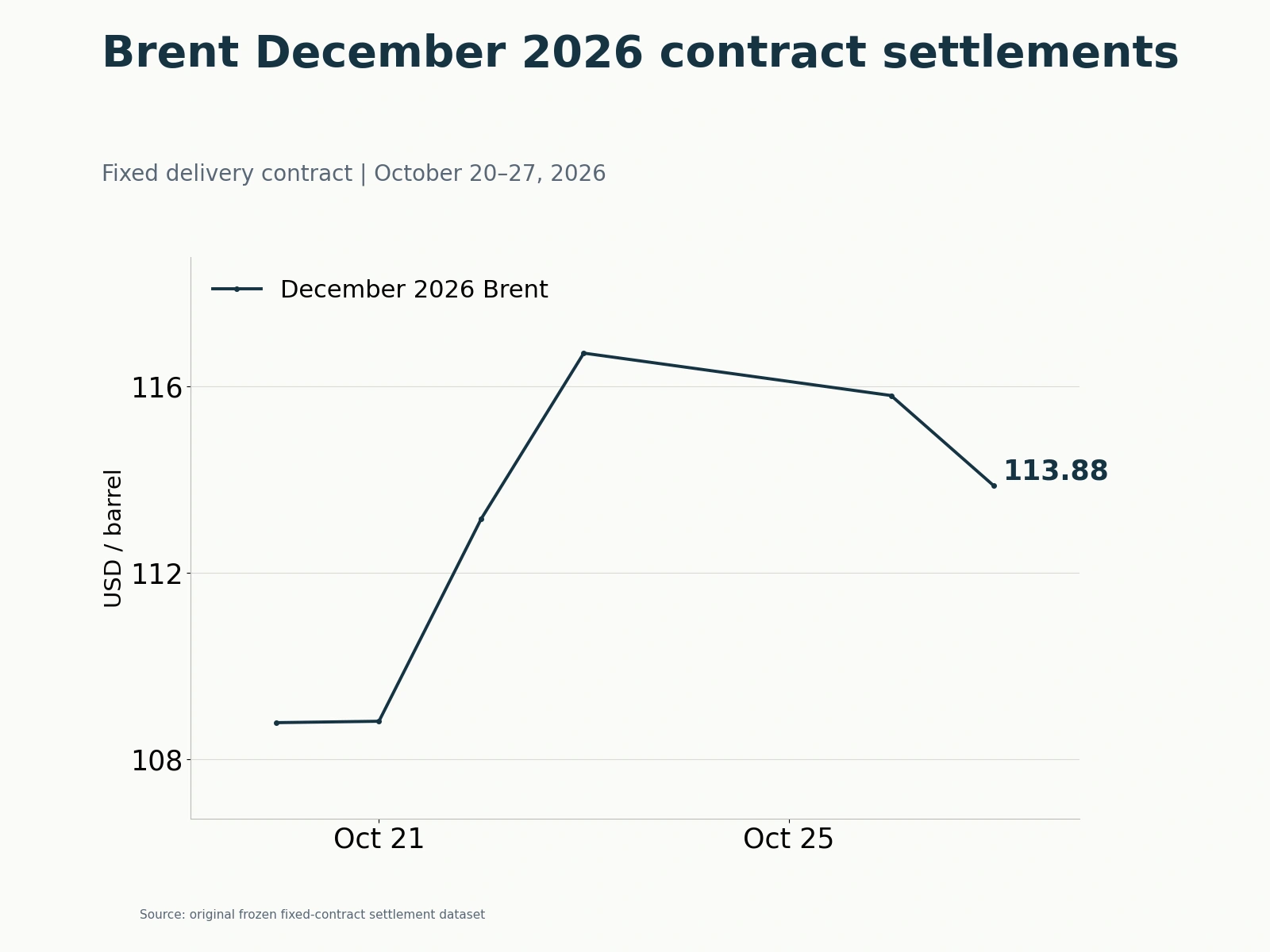
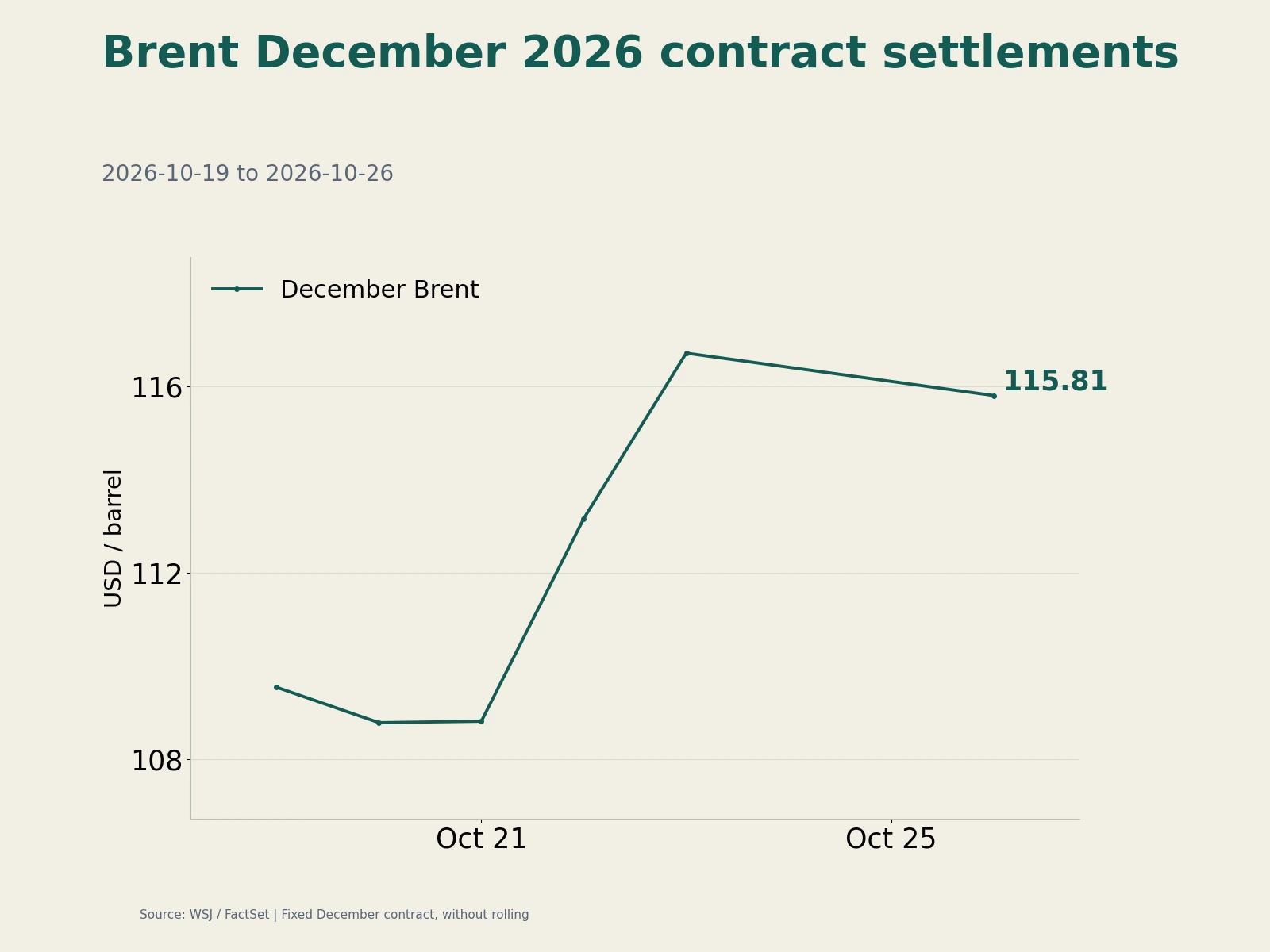
The gap between production policy and delivery also mattered. As background, OPEC+ had decided on September 6 to leave October production policy unchanged, but quotas could not remove transport obstacles. Goldman Sachs raised its December Brent forecast by $5 to $85 on September 8, still below this week's futures prices, indicating it was not extrapolating current tightness directly to year-end.
The following week's key tests were whether passage talks restored vessel flows and Saudi pipelines resumed. Simultaneously falling nearby premiums and tanker freight would provide stronger support for easing prompt tightness. Sustained US distillate rebuilding and changing Chinese import demand would test product-gap relief and demand support respectively. Diplomacy can quickly change price expectations, but the rally's durability ultimately depends on actual crude and product delivery.