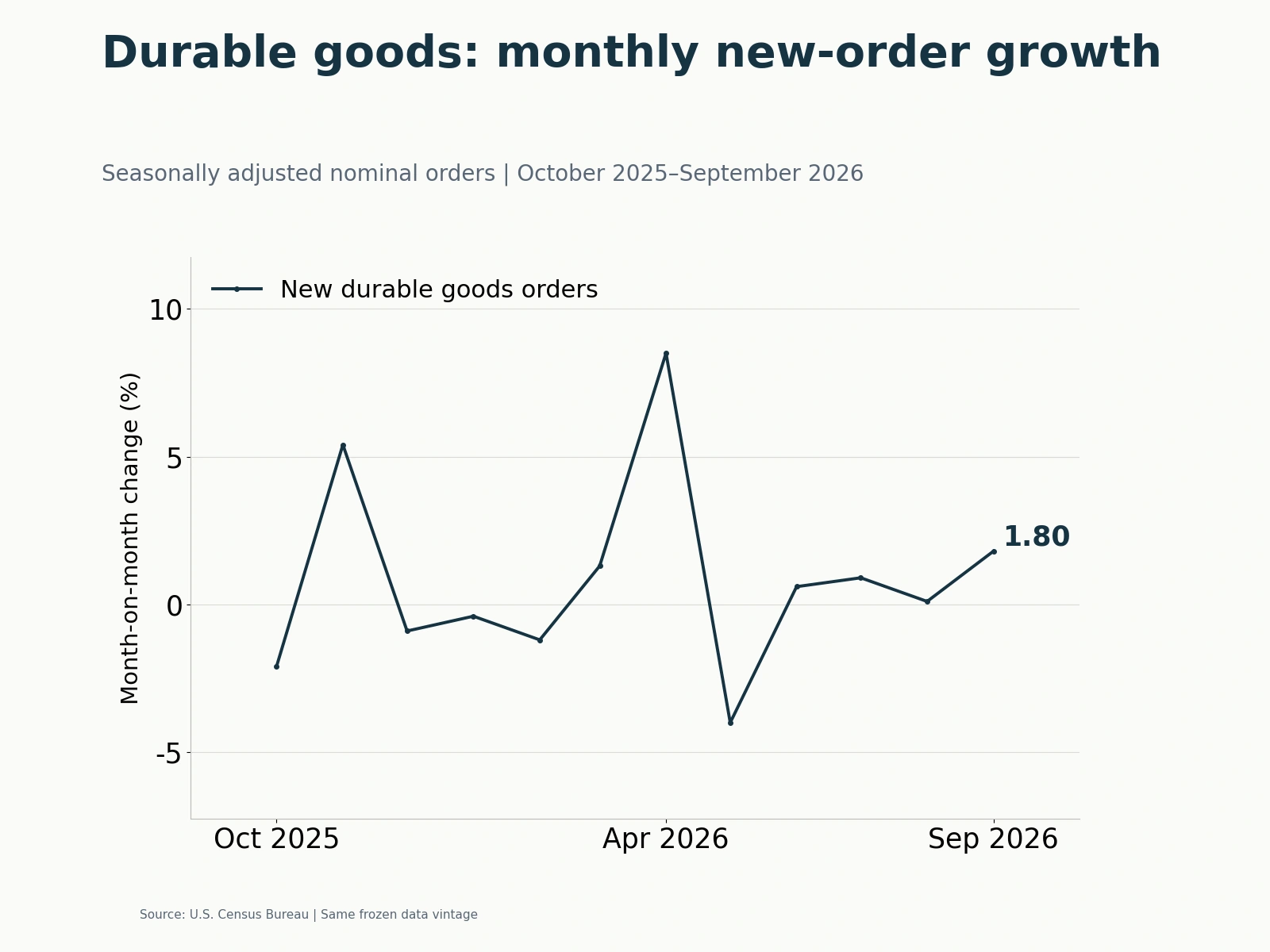
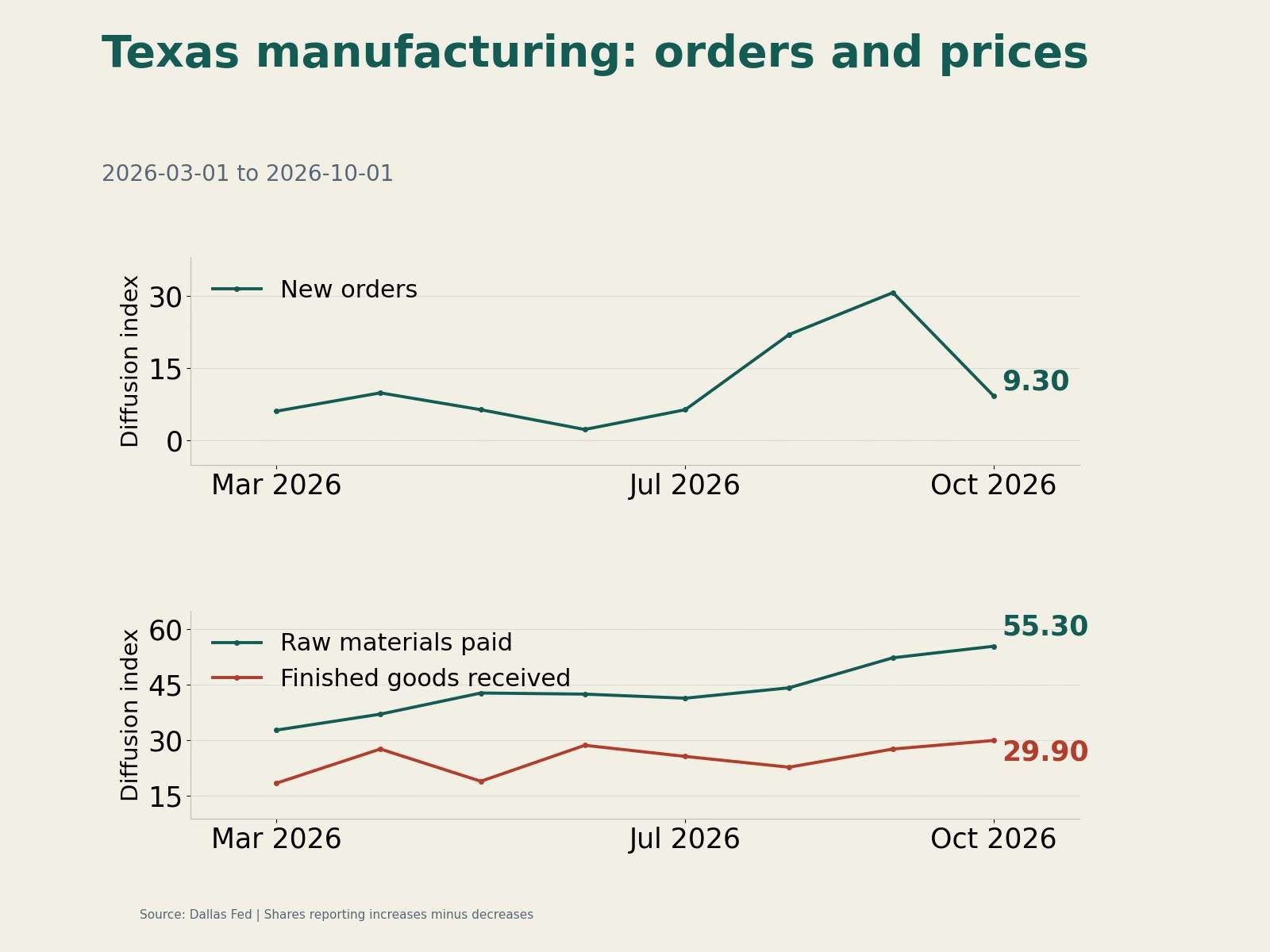
The Fed began its two-day policy meeting on September 15. That day's New York manufacturing survey revealed a divergence between growth and prices: business activity expanded more slowly while pressure from input costs and selling prices intensified. Slower demand had not relieved price pressures, making it difficult for the Fed to relax its inflation vigilance on growth weakness alone.
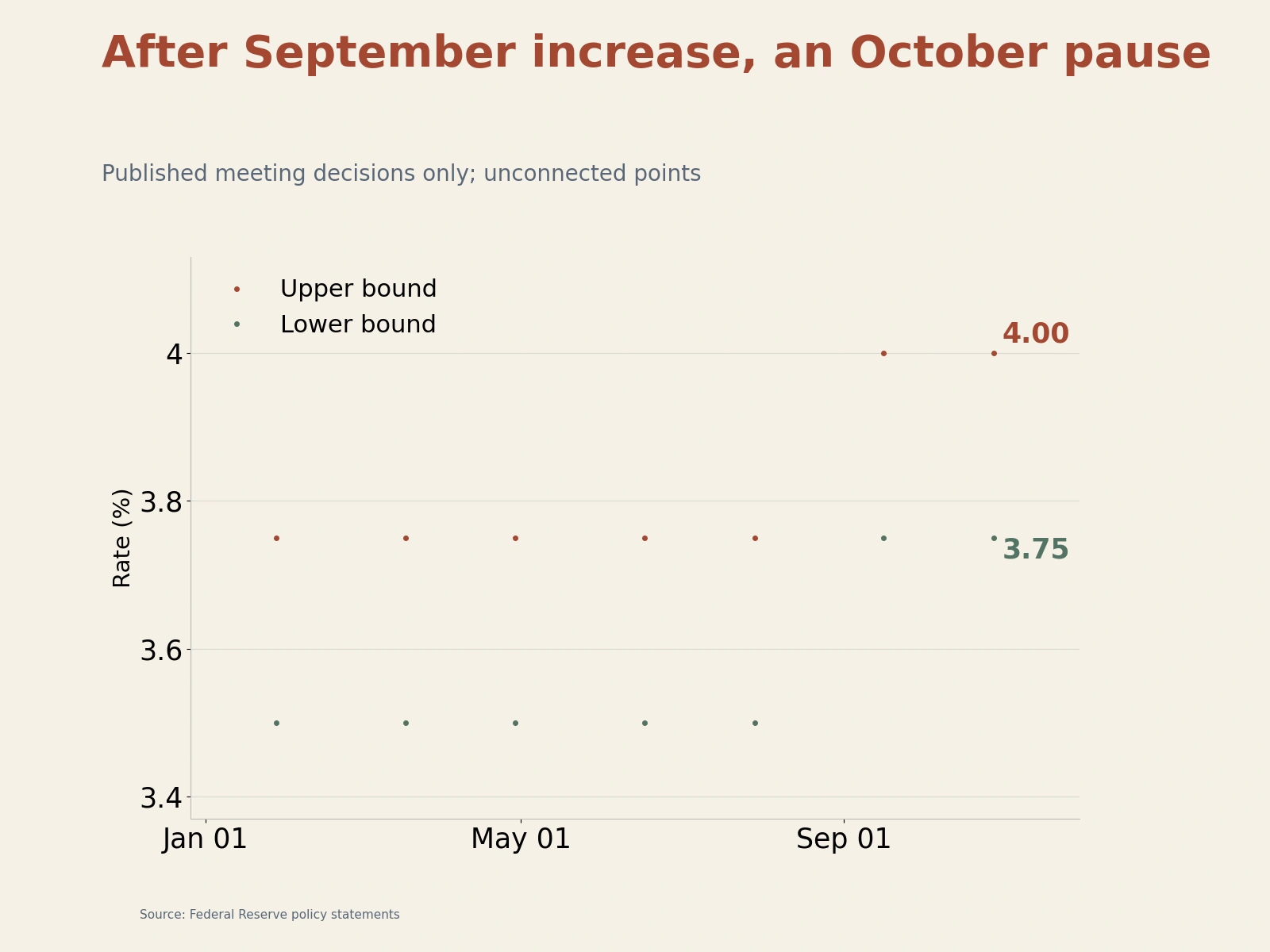
As of 08:07 on September 16 Beijing time, the federal funds target remained 3.50%–3.75%. The market's main questions were whether rates would rise at this meeting and how much additional tightening would follow.
Manufacturing expansion slows while costs and selling prices rise together
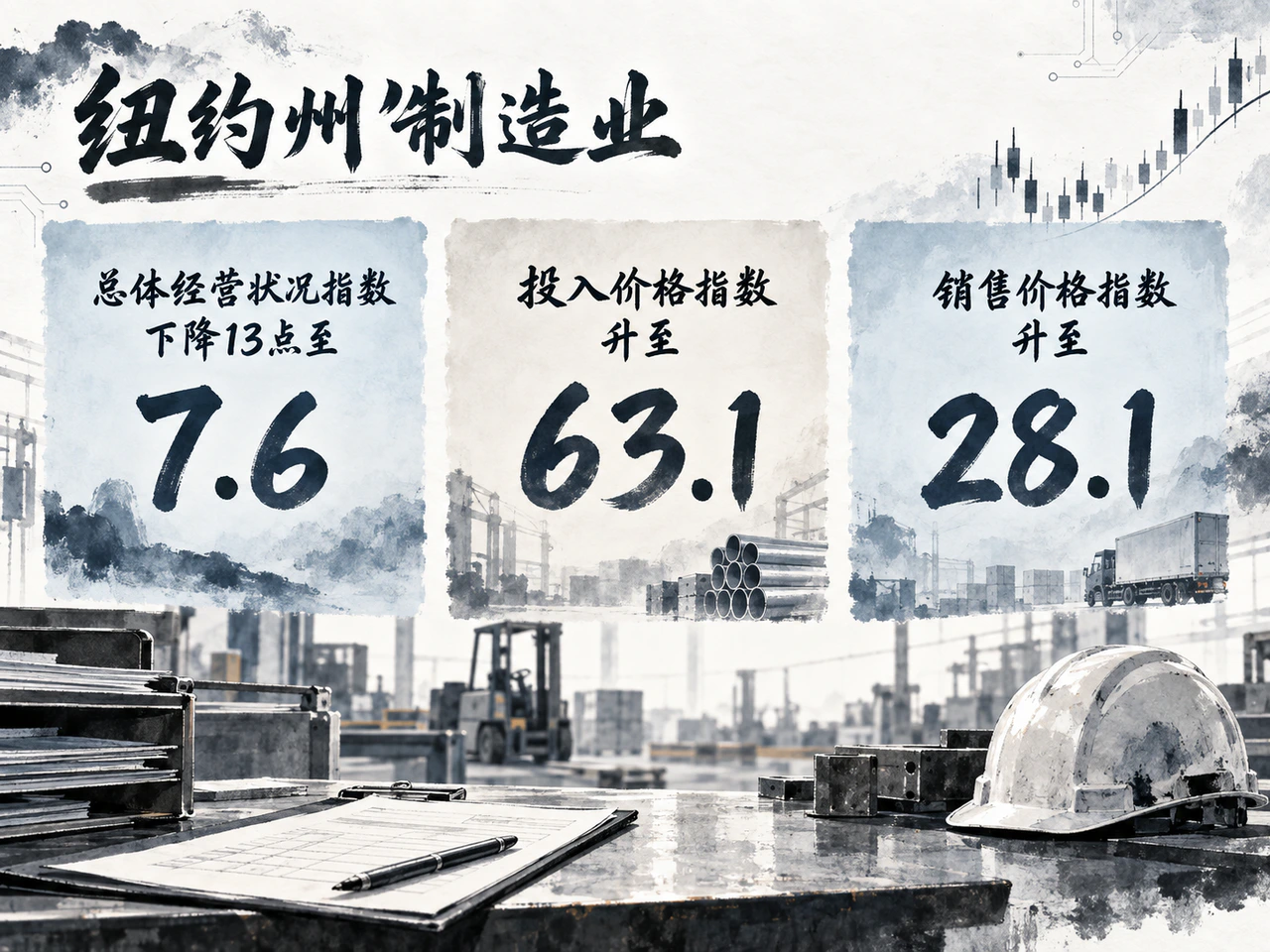
The New York Fed's September 15 survey showed the state's general business conditions index falling 13 points to 7.6, still indicating expansion. The input-price index rose to 63.1 and the selling-price index to 28.1, both about five points higher than the previous month. As business expansion slowed, both cost burdens and outward pricing pressure intensified.
New orders increased only slightly and shipments edged down, indicating softer demand. Supply availability nevertheless worsened and delivery times lengthened substantially; employment continued growing and average hours rose markedly. These developments complicated the policy trade-off: higher rates can restrain demand and the pass-through of costs to prices, but cannot directly resolve supply constraints. Waiting for supply to improve could let price pressure last longer.
This regional survey measures the direction and breadth of changes in business conditions. Its price indices are not inflation rates and cannot be converted directly into national consumer-price increases. Weaker orders and shipments also imply that further cooling of demand and less pricing power could reduce the need for additional hikes. The survey was sufficient to warn the Fed about inflation but could not independently justify consecutive rate increases.
A hike is strongly expected; the decision must clarify further tightening
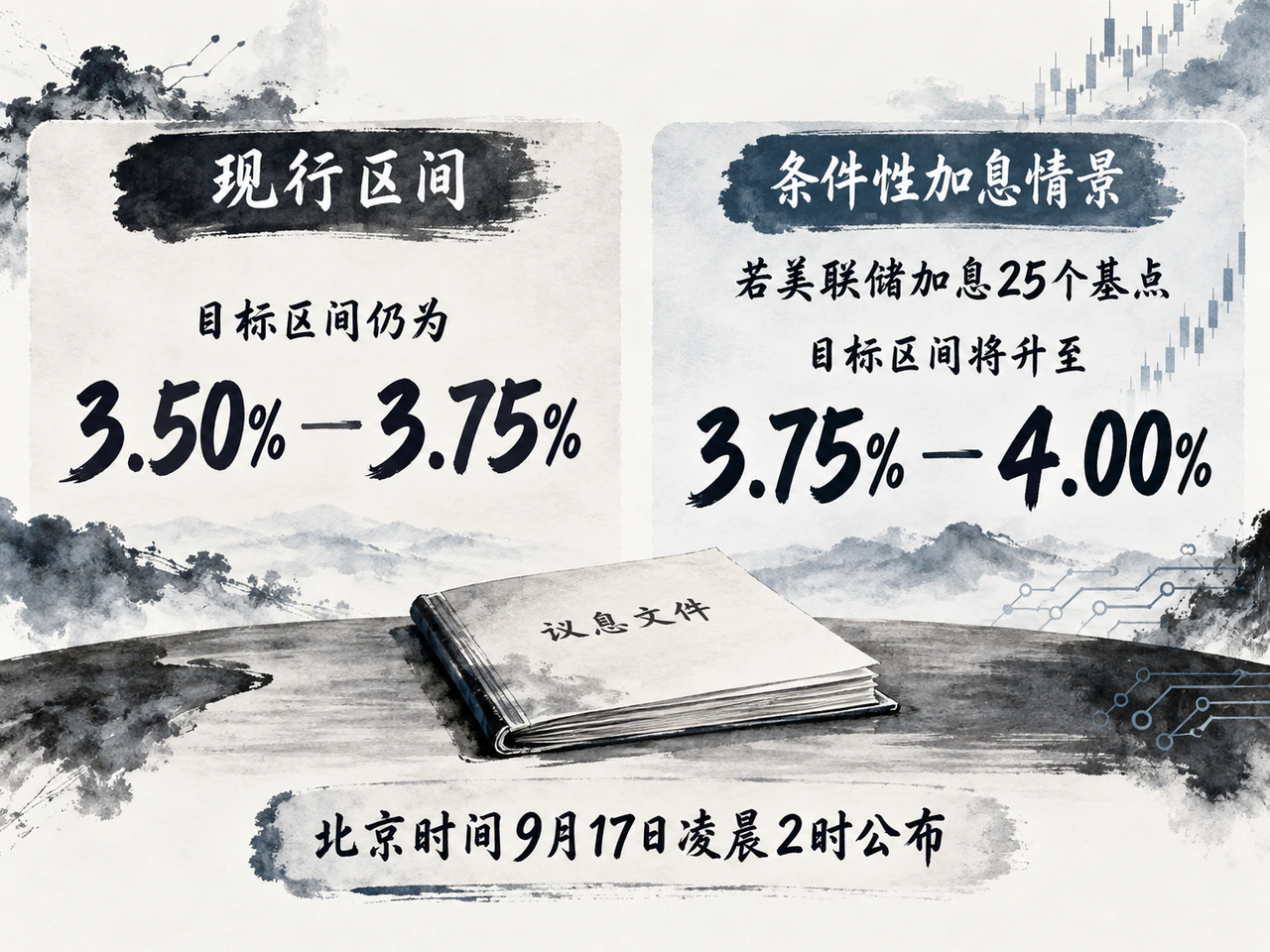
On September 15, Kiplinger cited that day's Deutsche Bank strategist report saying a 25-basis-point hike was strongly priced in and unchanged rates would be a clear dovish surprise. That institutional assessment showed markets had prepared for a hike, although the final decision still depended on the committee's vote.
A 25-basis-point hike would raise the target range to 3.75%–4.00%. Markets would then focus on whether the adjustment could address price pressures or marked the start of a longer tightening round. New economic projections and the rate dot plot would help show how members balanced growth, employment and inflation, and how much more tightening they considered necessary. One hike would not imply an increase at every subsequent meeting.
The official schedule put the rate decision at 02:00 on September 17 Beijing time, followed by the chair's press conference at 02:30. Beyond the decision, attention would focus on the committee's assessment of persistent inflation, whether rate projections pointed to further tightening and the chair's conditions for more hikes or a pause. New York manufacturing captured the practical difficulty: growth had slowed without a corresponding easing of price pressure.