On September 16, 2026, the Federal Reserve raised rates by 25 basis points, taking the federal funds target range to 3.75%–4.00%. Much stronger-than-expected August US retail sales and continued increases in nonfuel import prices further cooled hopes for a near-term shift toward easing. The Treasury curve flattened sharply, with the 2-year yield reaching 4.74%, while the dollar index rose 0.69% to 100.34. US stock indices diverged: higher operating costs and other pressures hurt financials and transport, while potential manufacturing-capacity cooperation supported semiconductors. Expanded Saudi transshipment supplies eased localized supply fears, sending crude futures down around 3%, while a stronger dollar and higher real rates weighed on gold. Strong goods retailing contrasted with a persistently pressured housing market, reflecting the increasingly asymmetric effects of high rates across the economy.
Above-consensus August retail sales lift growth expectations, while housing pressure reveals uneven domestic demand

Commerce Department data showed retail and food-service sales rising 1.2% month on month in August, well above the 0.8% Reuters consensus. July's change was revised up from -0.6% to -0.5%. The core control group, excluding autos, gasoline, building materials and food services, increased 1.4%, far above expectations of 0.4%. Nonstore sales rose 2.6%, and restaurant and bar revenue increased 1.2%, indicating a relatively broad rebound rather than one driven solely by higher fuel prices.
The retail control group is closely linked to goods-consumption estimates in US GDP. Reuters reported that Goldman Sachs raised its third-quarter annualized GDP growth forecast by 0.5 percentage point, from 2.5% to 3.0%, and JPMorgan from 2.75% to 3.5%. Retail sales are nominal, however, so higher prices themselves lift the total. Higher institutional growth forecasts do not imply a matching expansion in households' real purchasing power.
Bureau of Labor Statistics inflation data also confirmed price persistence. August import prices rose 0.7% month on month, above expectations of 0.4%, with annual inflation reaching 7.0%. Fuel import prices edged down 0.1%, but nonfuel prices increased 0.8%, including capital goods at 0.9% and non-auto consumer goods at 0.5%. These measures exclude tariffs, indicating continued accumulation of nonenergy imported-cost pressure. Absorbing it would erode downstream margins; passing it on would intensify goods inflation.
In clear contrast to goods consumption, high rates were deepening pressure on housing. September's National Association of Home Builders (NAHB) housing-market index fell from 35 to 32. The share of builders cutting prices rose from 35% to 38%, and those offering sales incentives from 63% to 66%. High mortgage rates, tight credit and elevated construction costs were forcing developers to sacrifice margins to sustain sales.
Lennar's results, released after the US close, further illustrated the industry's difficulties. In the fiscal third quarter ended August 31, new orders fell 9% year on year to 20,879 homes and deliveries declined 3% to 20,840. Net income was around $284 million, sharply below $591 million a year earlier. Weak demand led the company to reduce full-year delivery guidance from 82,000–83,000 homes to 80,000–81,000. Home-sales gross margin improved from the previous quarter but remained below a year earlier. Faster turnover could partly cushion costs, but could not fully offset affordability's substantive constraint on demand.
Institutions differed markedly over the durability of consumption resilience. Desjardins said the recovery in discretionary spending showed households had not broadly cut expenditure. BMO warned that falling real purchasing power and rising debt pressure among lower-income households could weigh on later consumption with a lag. Short-term goods-retail resilience could not simply be extrapolated to the overall economy.
Fed unanimously raises rates 25 basis points; rising short yields flatten the curve
At its September meeting, the Federal Open Market Committee voted 12–0 to raise the federal funds target range by 25 basis points to 3.75%–4.00%. The statement described solid economic expansion, resilient domestic spending and strong capital investment, but still-elevated inflation.
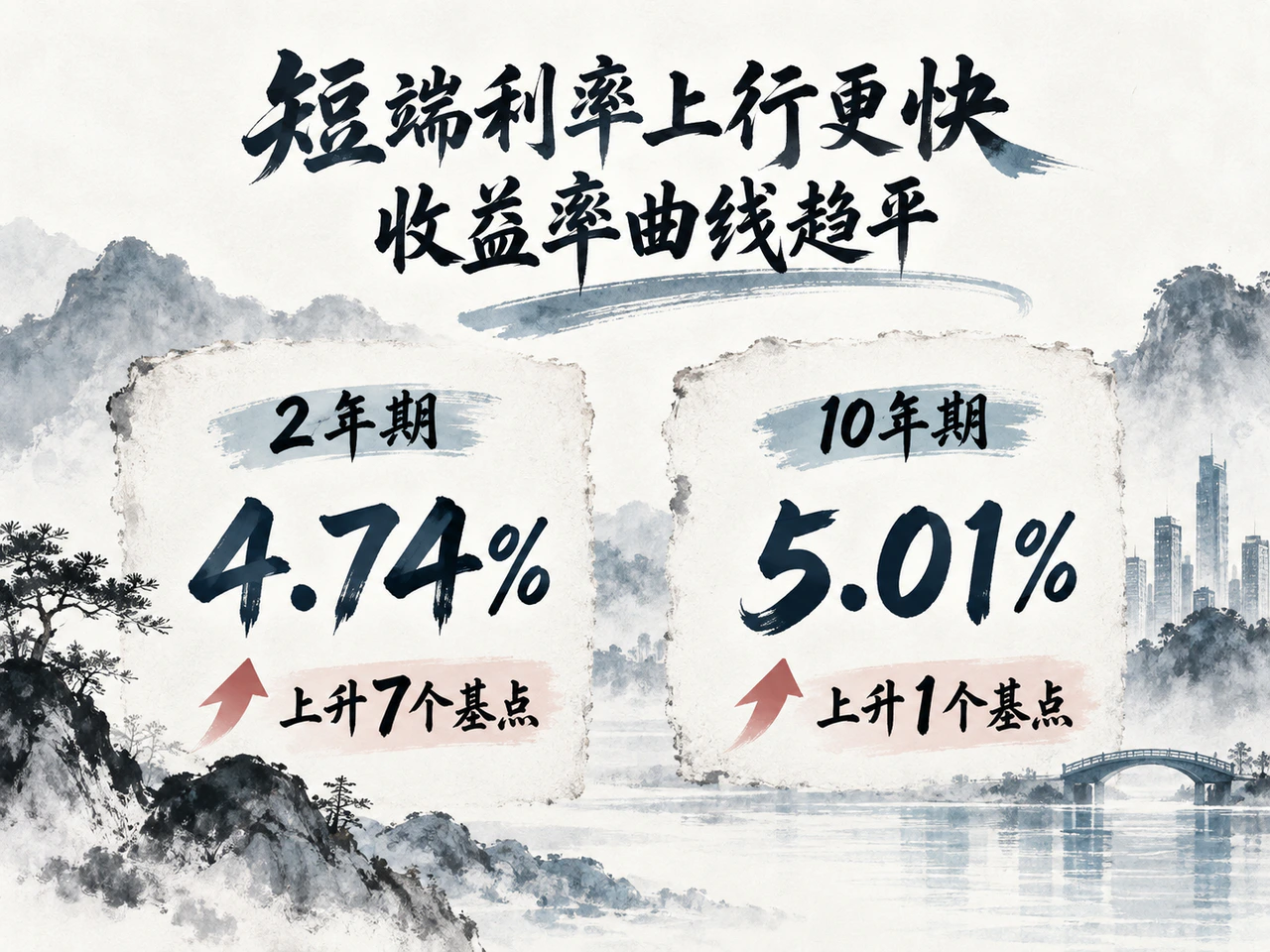
Comparable Treasury daily curves showed rate moves concentrated at the short end, with muted changes in long nominal yields:
| Maturity | Closing yield | Change from previous session |
|---|---|---|
| 2-year | 4.74% | Up 7 basis points |
| 5-year | 4.86% | Up 3 basis points |
| 10-year | 5.01% | Up 1 basis point |
| 30-year | 5.35% | Down 1 basis point |
Higher short yields narrowed the 10-year/2-year spread from 33 to 27 basis points, flattening the curve. With the 10-year up just 1 basis point and the 30-year down 1, long rates responded relatively little to the day's data and monetary decision.
Real rates rose significantly. Treasury 5-year real yields increased 9 basis points to 2.51% and 10-year real yields 6 basis points to 2.68%. The 10-year nominal-minus-real breakeven inflation rate, which includes liquidity and risk premiums, edged down from 2.38% to 2.33%. Rising real yields showed that beneath limited long nominal-rate movement, the economy's real financing hurdle was tightening materially.
Primary supply and credit markets demanded more compensation for duration. The previous day's $13 billion 20-year Treasury reopening cleared at 5.420%, 2 basis points above the when-issued level. Non-primary dealers, including investment funds, took approximately 83%, well below the recent average near 90%. On September 15, the ICE BofA US high-yield spread stood at 276 basis points, 5 wider on the day. Even without sharply wider credit spreads, higher risk-free benchmarks would directly raise nonfinancial companies' interest burden on new debt and refinancing.
US indices diverge as transport and financials decline while chips hold up
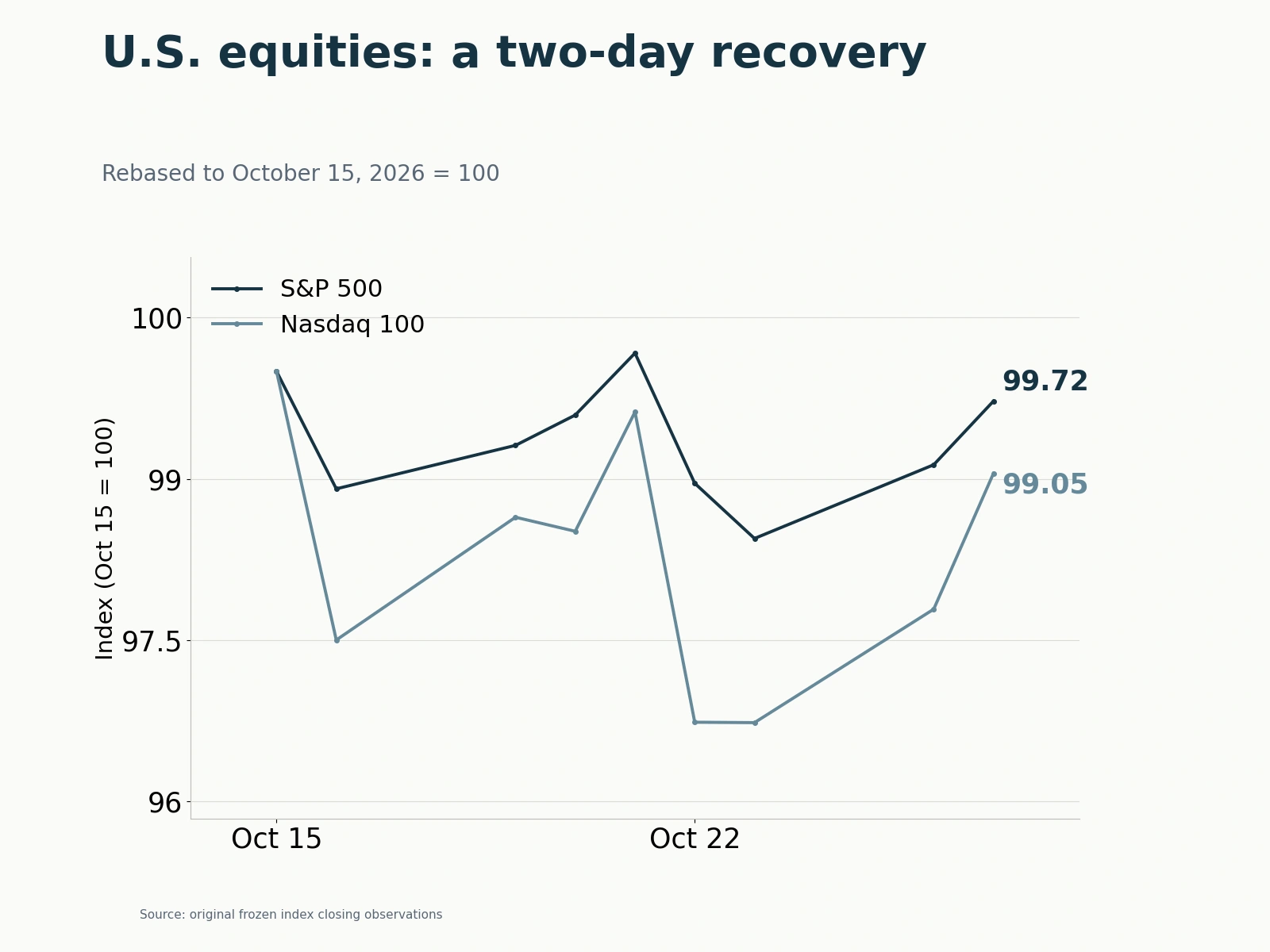
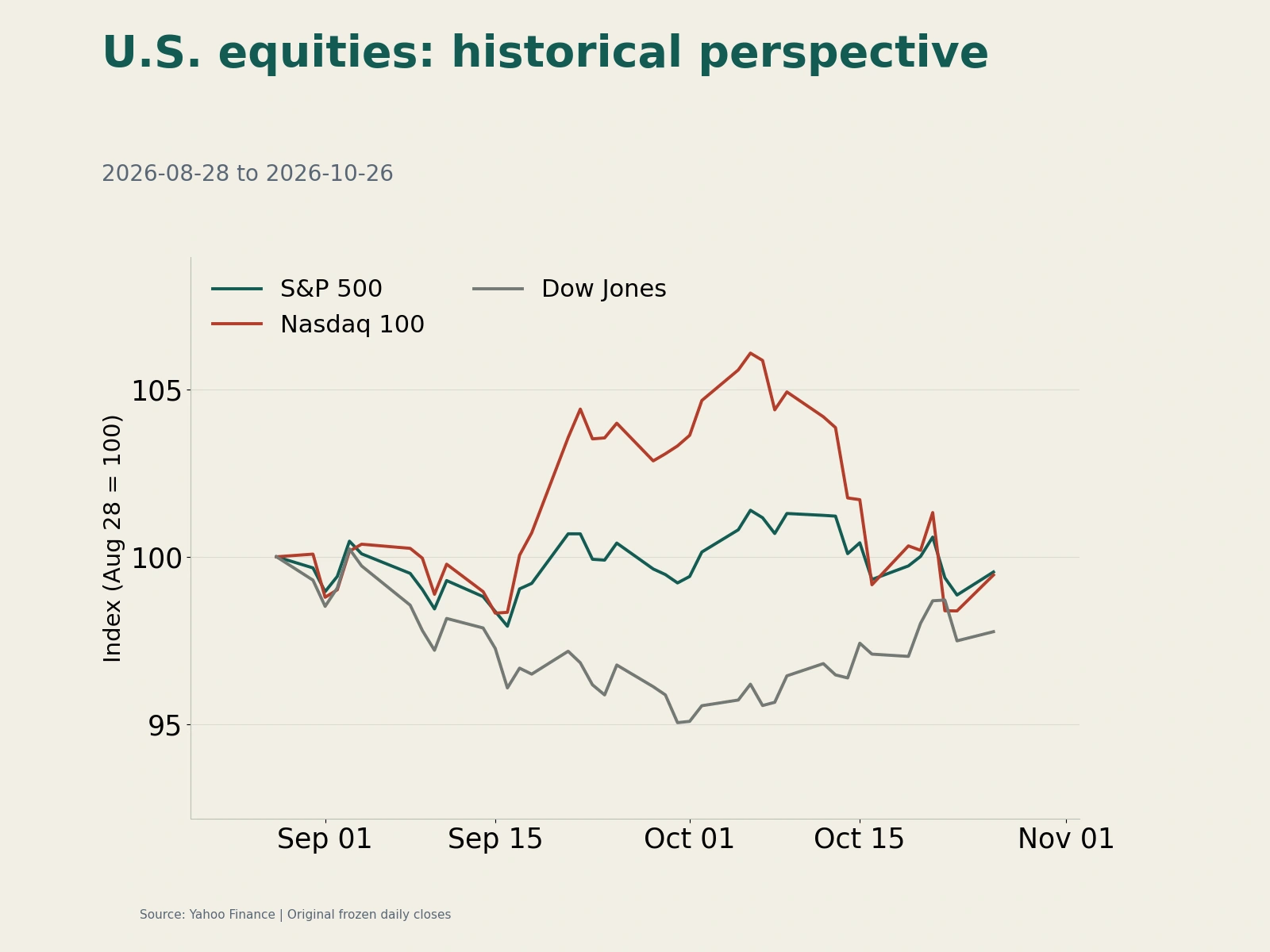
The S&P 500 fell 0.45% to 7,551.81, while the Dow Jones Industrial Average dropped 631.21 points, or 1.21%, to 51,461.90. Nasdaq 100 edged up 0.025% to 28,945.06. The small-cap Russell 2000 declined 0.40%, and VIX rose 0.51 point to 17.71. Equities initially retained small gains after the decision, then weakened amid press-conference remarks reiterating high inflation and diminishing expectations of cuts.
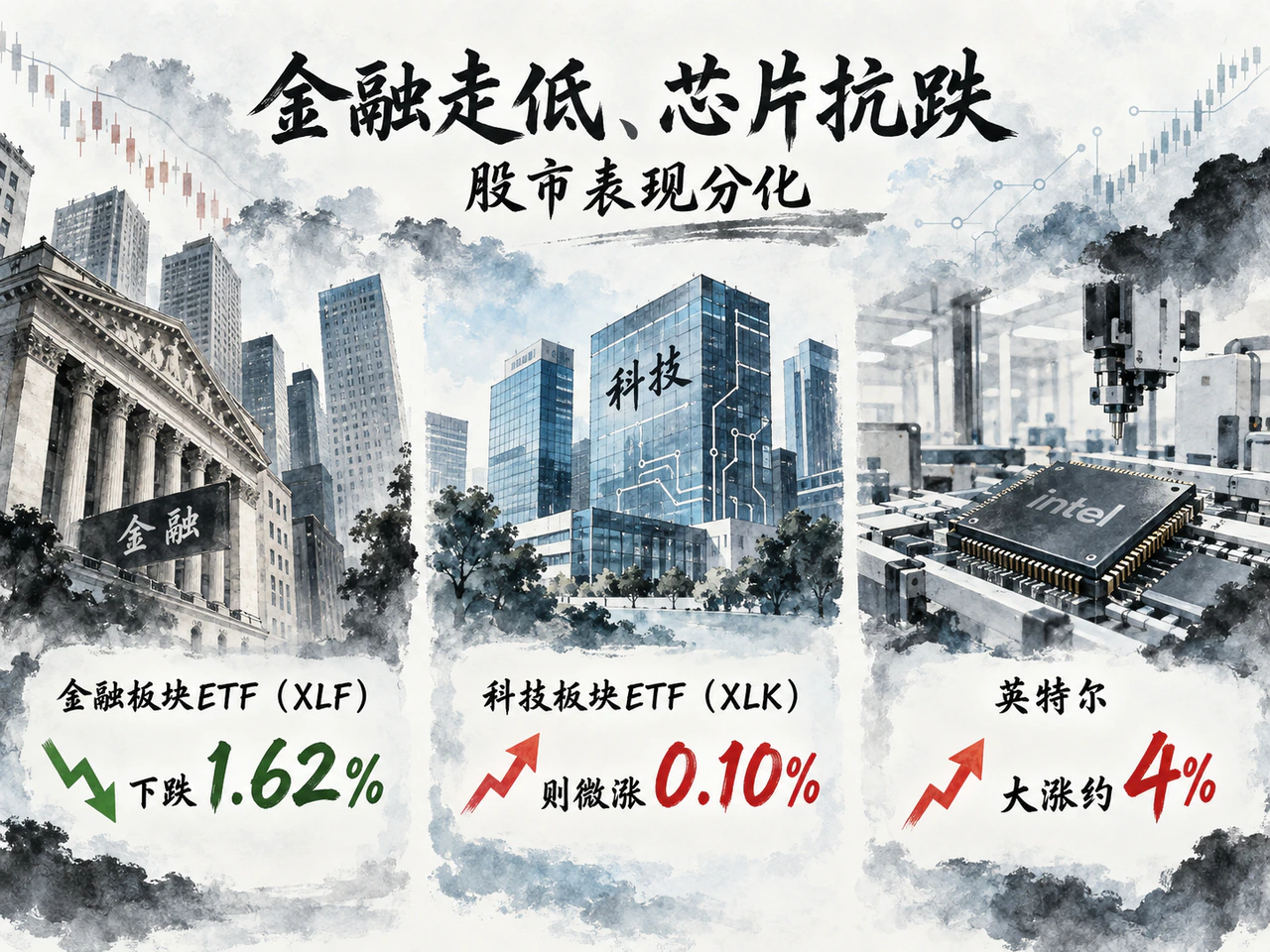
Sector performance differed sharply. Financial ETF XLF fell 1.62%, energy ETF XLE lost 2.88% as oil declined, and technology ETF XLK edged up 0.10%. Company earnings expectations and cost guidance were central drivers:
Goldman Sachs fell nearly 4%. CEO Solomon said third-quarter equity trading remained relatively strong, but fixed income, currencies and commodities (FICC) showed weakness. Transaction-related expenses and technology development were expected to increase quarterly noncompensation costs by around $500 million. Morningstar analysts noted that markets had already expected sequential declines in investment banking and FICC, and some detailed guidance was better than pessimistic expectations. The share-price adjustment reflected a reassessment of rising bank operating costs and the pace of capital-markets recovery.
Transport and logistics fell sharply, with J.B. Hunt plunging around 13%. At an industry conference the previous day, management warned third-quarter earnings would decline 5%–10% sequentially because of around $25 million in additional driver-related expenses and at least $10 million of adverse fuel costs. The warning reflected persistent pressure on physical logistics margins from labor and operating expenses.
Semiconductors received support from potential industry cooperation. Intel rose around 4%, Nvidia about 0.8% and semiconductor ETF SOXX about 0.6%. Reuters reported that SK Hynix was discussing US memory-chip manufacturing cooperation with Intel, including leasing part of its Ohio fab space or creating a joint venture. No final agreement had been reached. Expectations of capacity sharing encouraged buying in chip equipment and foundry-related stocks, but megacap technology ETF MAGS slipped 0.1%, showing the chip rebound had not broadened into a market-wide improvement in risk appetite.
Saudi transshipment eases localized supply risk; higher real rates weigh on gold
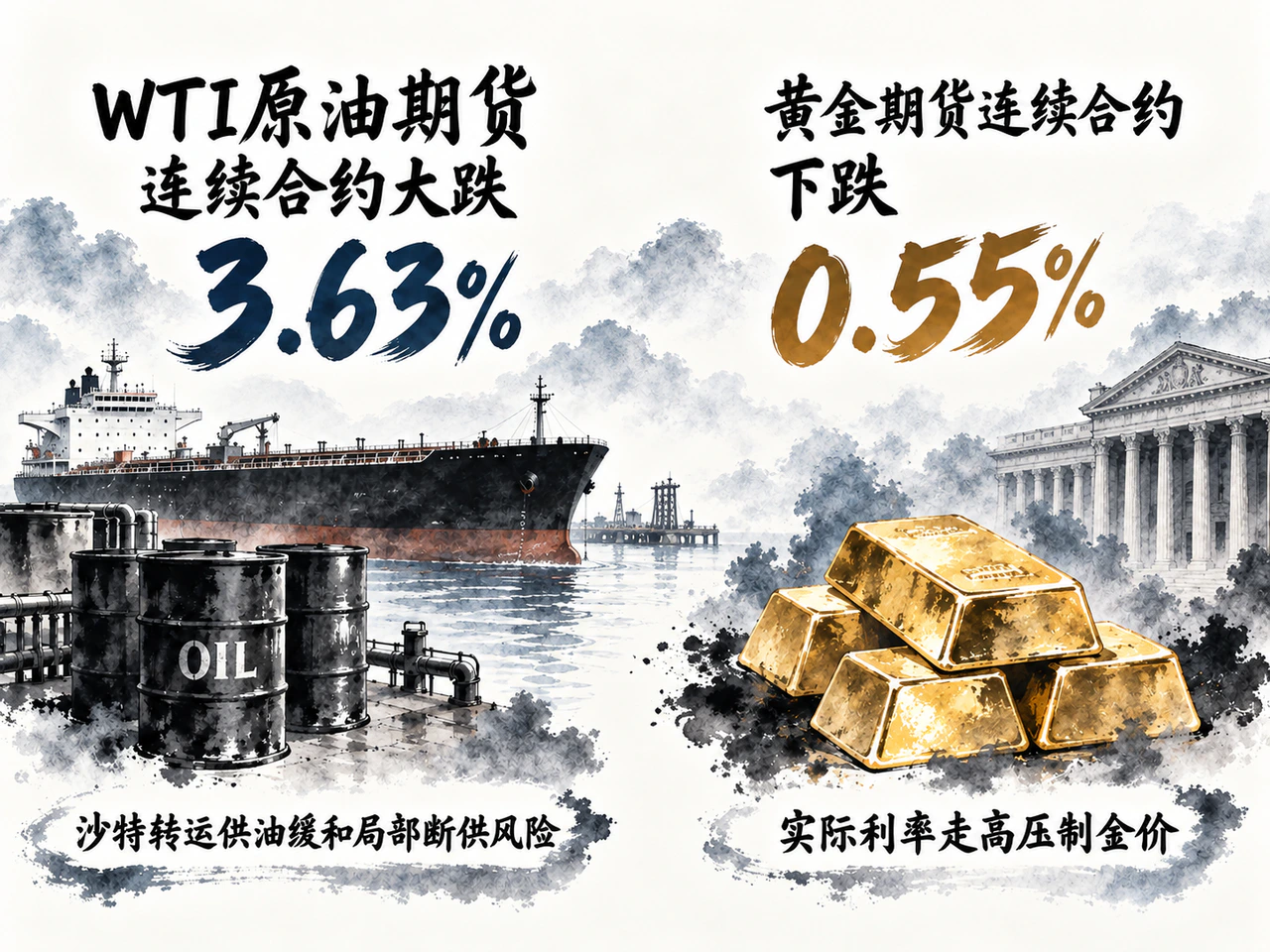
Crude and gold both retreated. Continuous WTI futures fell 3.63% to $101.99/barrel, while Brent declined 2.91% to $105.58.
Marginal supply improvement and inventory changes jointly drove crude's adjustment. Reuters, citing informed sources, said Saudi Arabia had increased STS transfers near Sohar, Oman, supplying Asian refineries and partly easing fears over localized Middle Eastern route disruptions. EIA data for the week ended September 11 showed US commercial crude stocks falling only around 640,000 barrels, far less than the expected 1.62 million, while gasoline and distillates both built.
Continuous gold futures fell 0.55% to $4,308.90/ounce, mainly under pressure from financial liquidity conditions. The dollar index rose 0.69% to 100.34 and real Treasury yields climbed broadly, raising the opportunity cost of non-interest-bearing assets. Spot gold was especially volatile: it initially gained over 1%, then plunged after the Fed decision and chair's remarks, reaching a 1.2% decline by 15:10 US Eastern time. Higher discount rates from hawkish guidance quickly outweighed earlier haven buying.
US House advances Russian-energy sanctions legislation as Europe and Canada seek closer economic ties

New legislation and diplomacy drew attention to global energy and supply-chain patterns. Reuters reported that the US House voted 262–159 to pass a Russia-sanctions and tariff-authorization bill and send it for presidential signature. It targeted Russia's energy and defense sectors and the sanctions-evading shadow fleet, while explicitly authorizing high tariffs on third countries purchasing Russian oil and gas. Despite this key legislative step, actual effects on trade and inflation would depend on post-signature implementation rules, country coverage, tariff rates and possible exemptions.
Transatlantic cooperation took a new direction. European Commission President von der Leyen publicly proposed opening a path for Canada to become the EU's first 'associate member,' with cooperation in advanced manufacturing, frontier technology, defense and critical-energy supply chains. Existing EU treaties contained no ready-made legal mechanism for such a status. Substantive market access and mutual recognition of standards would require detailed consideration by member states and alignment of rules, leaving implementation to be followed.
Offshore renminbi liquidity arrangements expand as Asian high-yield dollar debt faces refinancing tests

In Asian daytime trading on September 16, before the Fed decision, major indices generally rose. The Hang Seng gained 0.20% to 24,713.78, Nikkei 225 rose 0.69% to 63,923.00 and KOSPI gained 1.37% to 6,717.97. Yonhap reported that foreign investors nevertheless sold a net approximately KRW 1.68 trillion in Korean equities that day.
On September 16, HKMA announced liquidity measures including expanding the RMB Business Facility to RMB 500 billion and extending loan tenors to three years. It also planned a 7-day offshore-renminbi liquidity tender and included bonds held through Southbound Bond Connect as eligible repo collateral. These measures strengthen offshore renminbi resilience through longer-term liability matching, short-term liquidity and high-grade collateral, helping the market withstand external funding volatility.
Bloomberg Intelligence reported on September 15 that Asian high-yield dollar bonds had returned 4.3% year to date, outperforming comparable US assets at 1.8%. Relatively cheap local-currency financing, restrained new supply and restructuring progress among some stressed borrowers provided structural support. But by September 15 the index had fallen 0.4% for the month. With short Treasury benchmarks rising, higher offshore refinancing costs remained a substantive credit constraint for Asian issuers dependent on dollar liabilities and facing concentrated maturities.