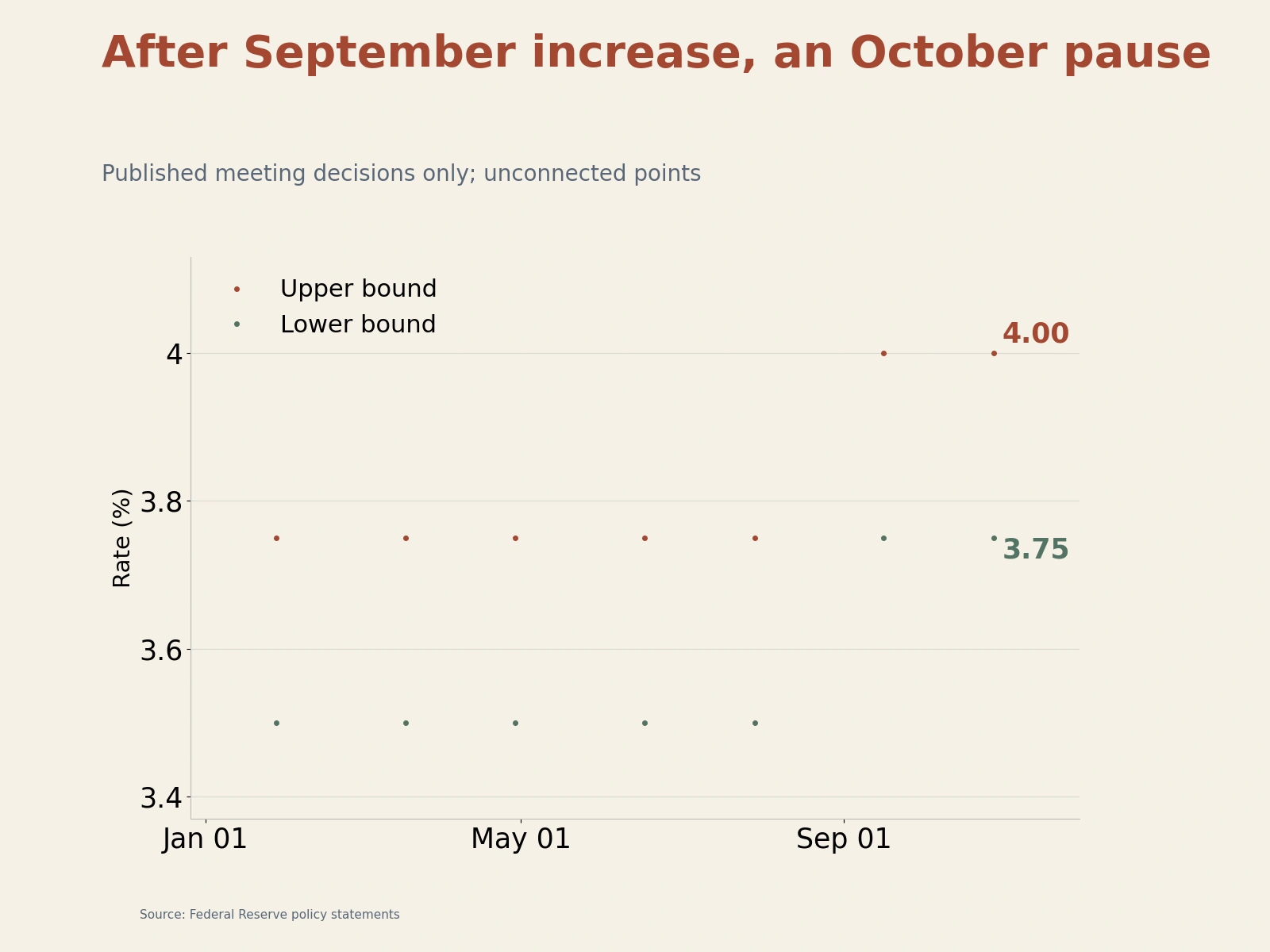
After the Fed raised its funds target by 25 basis points to 3.75%–4.00%, its statement reaffirmed elevated inflation and solid expansion. High-frequency and regional data released September 17 continued that combination. Initial claims fell to 196,000, indicating low layoff pressure, while Philadelphia's September manufacturing survey showed output expanding and both input-cost and selling-price increases becoming more widespread.
Employment had not deteriorated materially, but price pressure had not faded in parallel, further limiting a quick turn toward easing. One claims week and one regional survey cannot determine the next hike's date, but business-level resilience and spreading price increases clearly showed risks of uneven disinflation.
Initial Claims Fall to 196,000, Though Holiday Effects Limit One Week's Signal
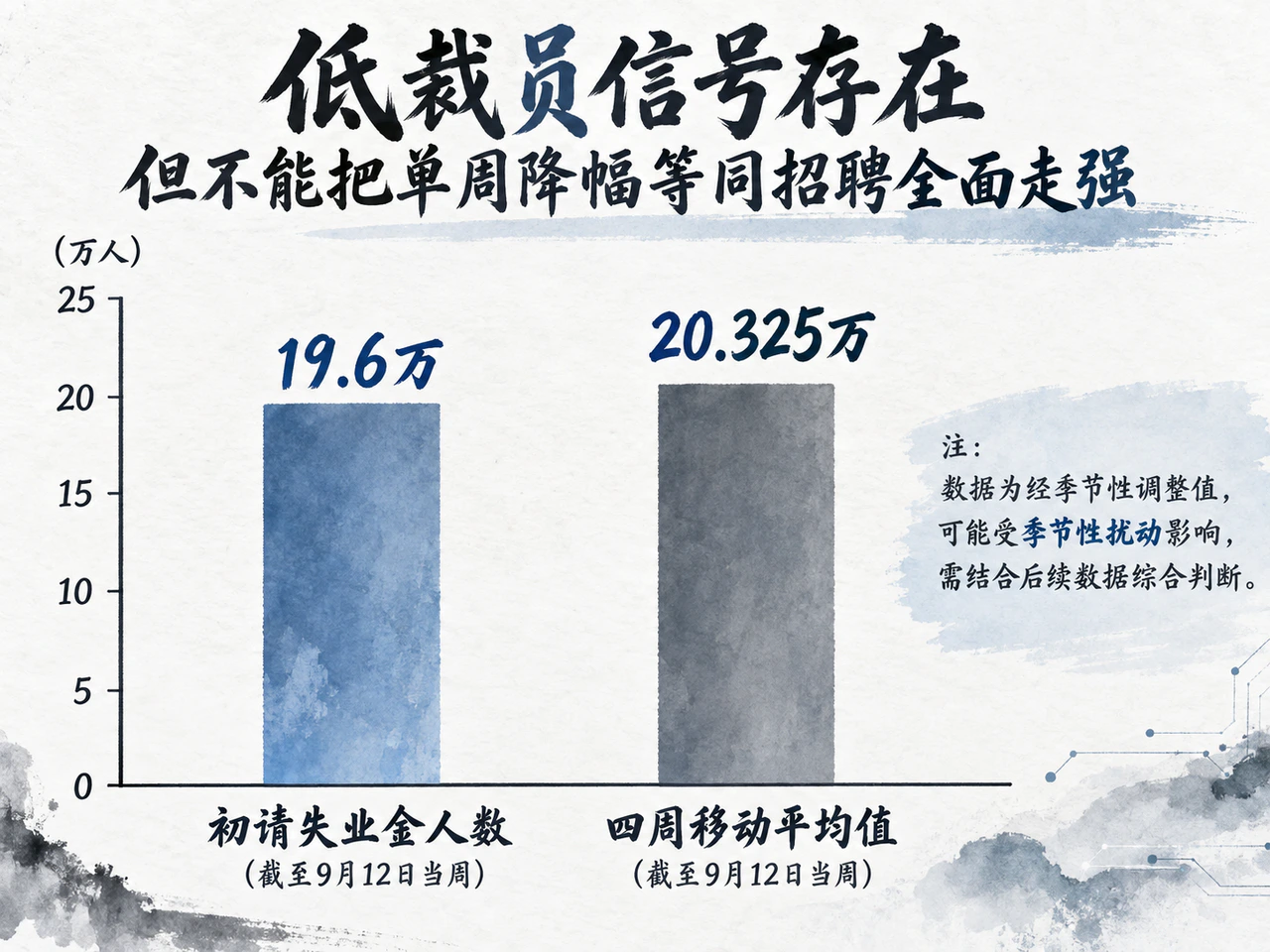
Labor Department data showed seasonally adjusted initial claims falling 10,000 to 196,000 in the week ended September 12. The four-week average fell 2,750 to 203,250. Continuing claims declined 39,000 to 1.730 million in the week ended September 5.
These indicators showed no clear nationwide increase in dismissals. Without evidence of abrupt labor deterioration, the Fed had little urgency to ease to prevent an employment collapse. The lower four-week average also showed the improvement was not entirely a one-week accident.
Extrapolation still requires care. Reuters noted that the larger-than-expected decline was affected by seasonal disruption around Labor Day, which adjustment models cannot fully remove. Low layoffs also do not imply high hiring. Although this coincided with September's payroll survey week, low claims cannot directly be converted into job gains; full hiring data were still needed to establish demand strength.
Philadelphia Manufacturing Still Expands More Slowly as Cost Pass-Through Broadens
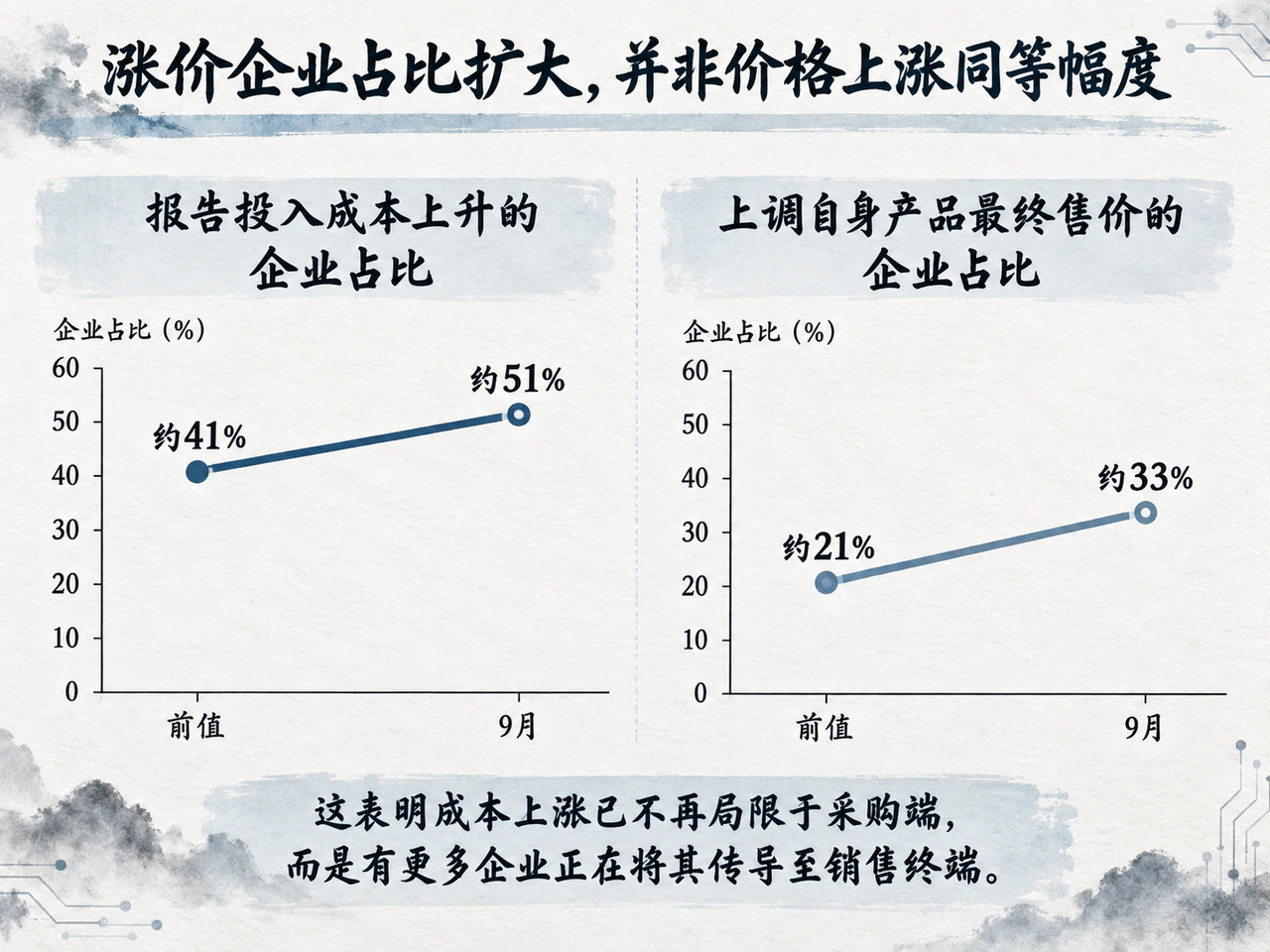
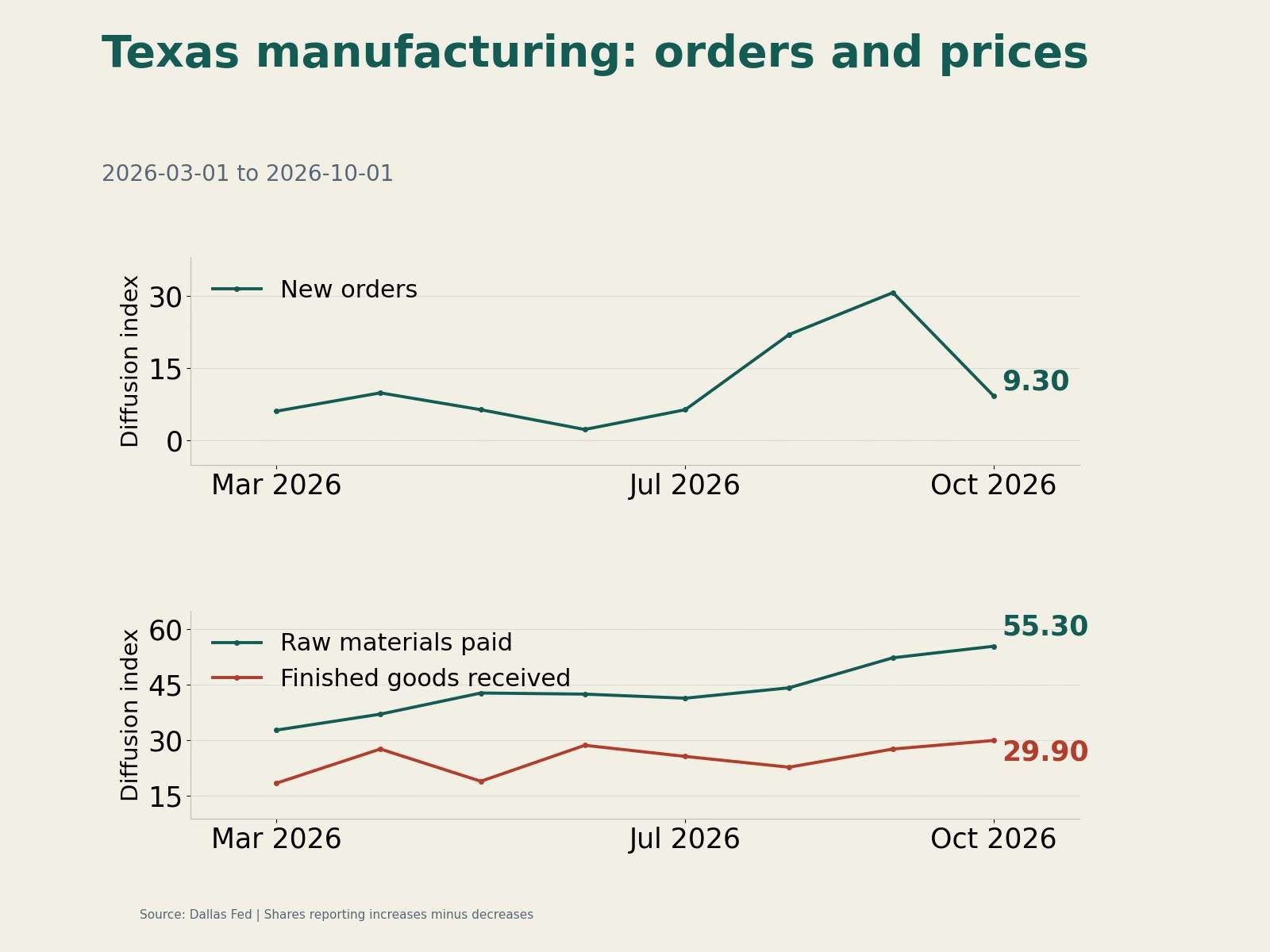
The Philadelphia Fed's September general manufacturing activity index fell from 47.4 to 37.8. New orders edged down to 29.2 and shipments stayed at 27.7. These core measures remained firmly positive, indicating continued regional industrial expansion. Employment fell from 27.9 to 11.8: firms adding workers still outnumbered those cutting them, but the breadth of staffing increases narrowed at the margin.
In September, price diffusion was more relevant for policy than slowing activity. The input-price index rose from 40.9 to 48.6 and the selling-price index jumped to 31.3. The share reporting higher input costs increased from about 41% to 51%, while those raising final selling prices rose from around 21% to 33%. Cost increases were spreading beyond procurement as more firms passed them to customers.
Philadelphia's price indices measure the difference between shares reporting increases and decreases, rather than absolute price growth, and do not fully represent nationwide inflation. The survey ran September 7–15 and therefore captured business conditions before the rate hike. Still, with downstream demand resilient, a much broader share of firms raising prices complicated the Fed's assessment of a sustained return to target.
National Data Must Test Tightening Expectations: Watch Core PCE and Payrolls
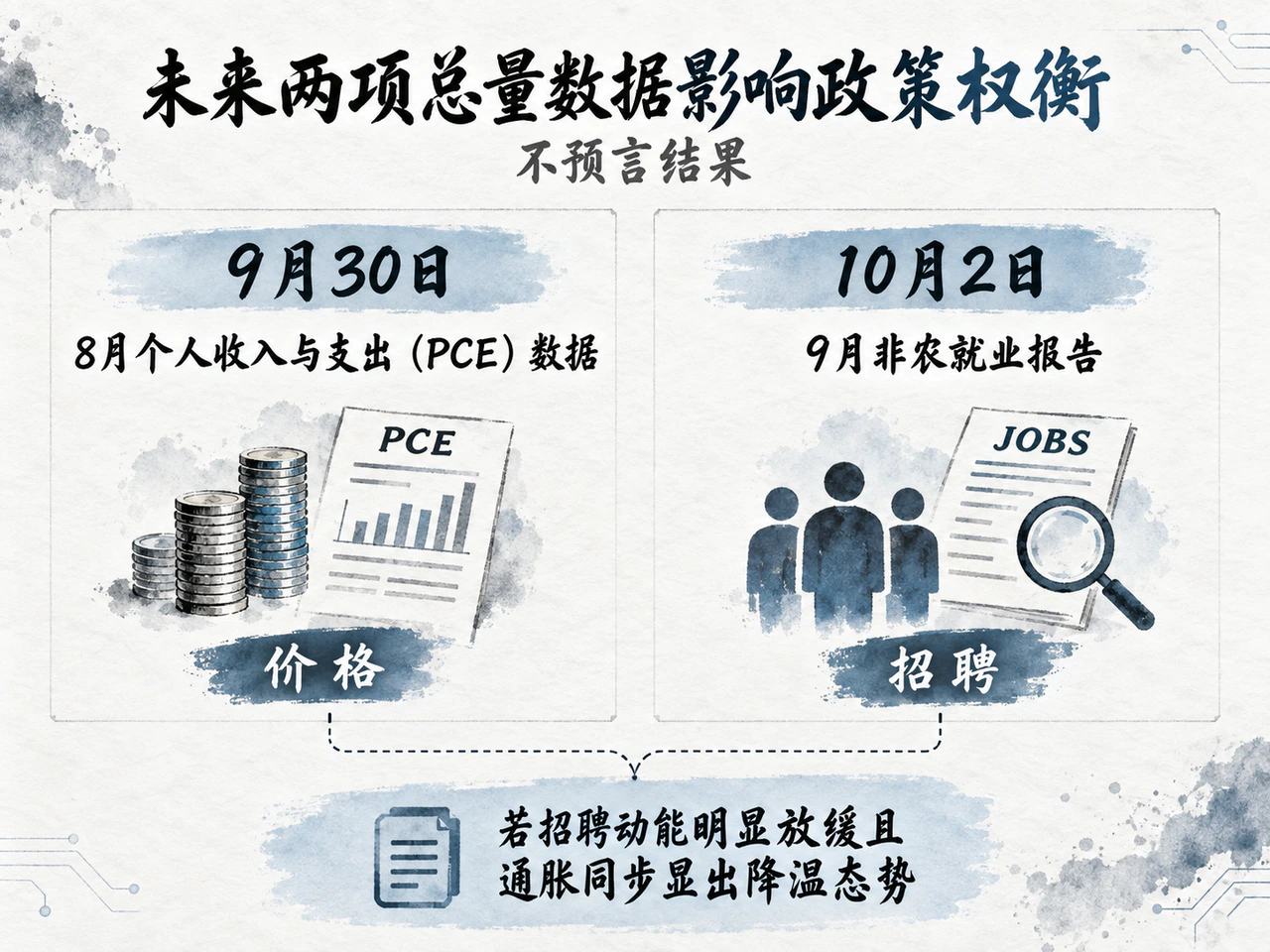
The low-layoff, broadening-price-increase pattern in claims and regional data still required cross-checking against national aggregates. Markets focused on two releases important for policy expectations:
August personal income and outlays, including PCE prices, was scheduled for September 30 to test nationwide consumer-price resilience. September payrolls, due October 2, would measure actual national job growth in a low-layoff environment.
Strong subsequent prices alongside solid job gains would retain a substantial basis for hawkish policy and further tightening. Only if hiring slowed markedly while inflation cooled would there be room to reconsider the pace.