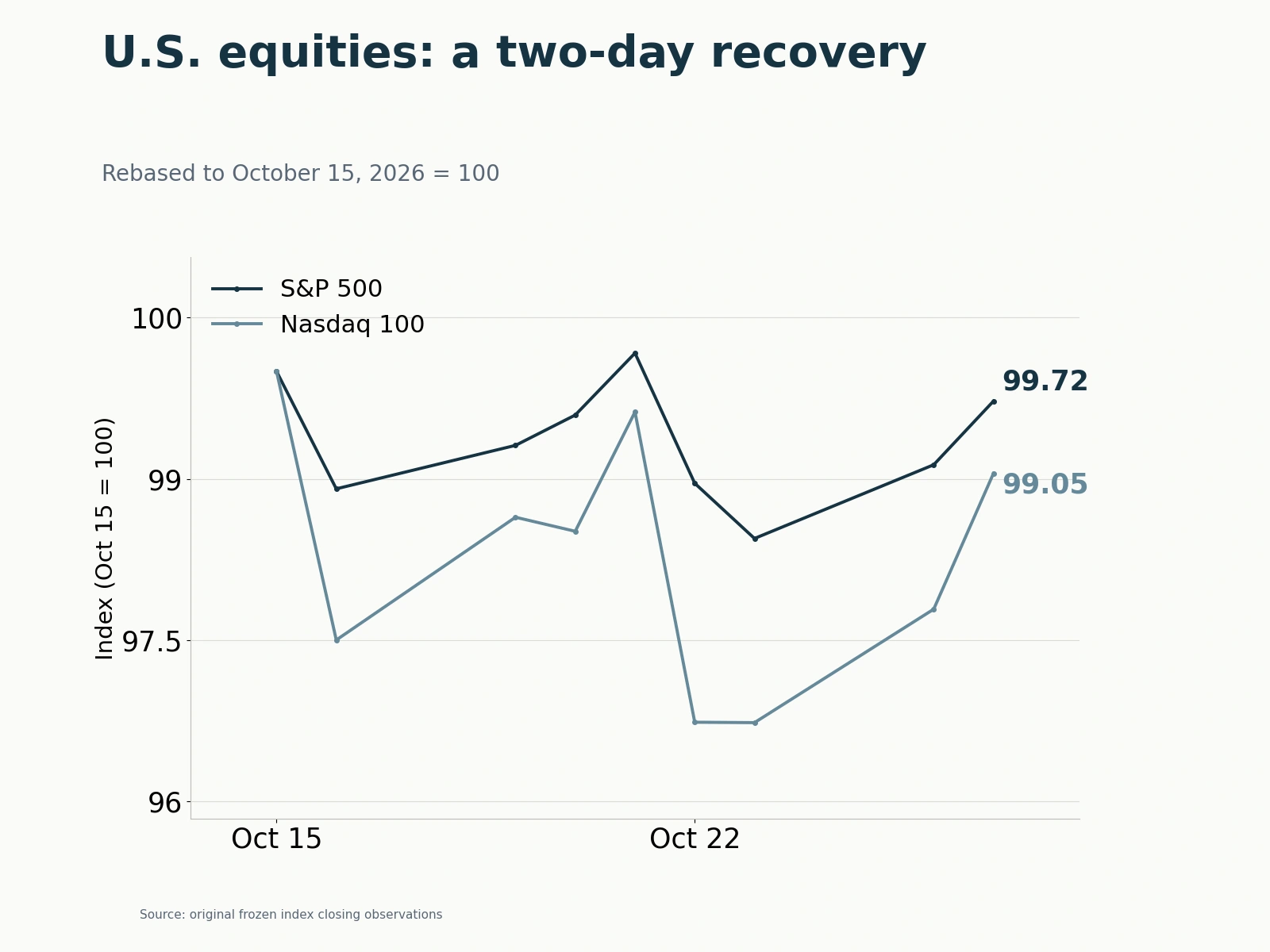
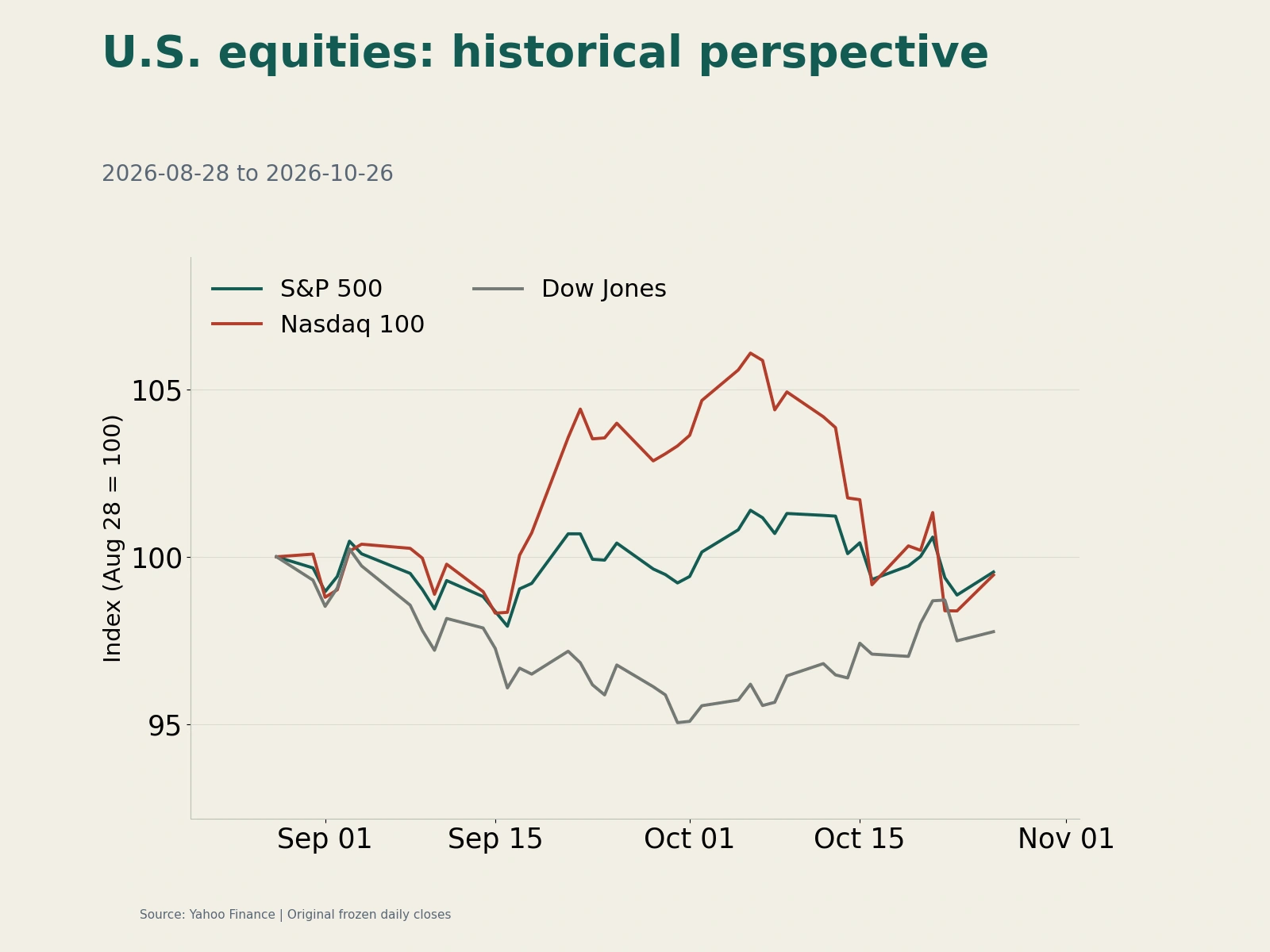
On September 18, 2026, the benchmark for global asset pricing faced another tightening shock. The Treasury's comparable daily data put the closing 10-year yield at 5.01%, above 5%. Short-term yields rose more under the weight of the Fed hike and further-tightening expectations, flattening the curve again. Nominal and real yields rose together, increasing the discounting burden on distant cash flows and corporate financing costs.
Real-economy data showed no overheating. August US industrial output was flat and manufacturing turned negative, so the bond selloff could not be attributed to unexpectedly strong fundamentals. Constrained by both the macro outlook and discount rates, US equities offered narrow resistance: rebounds in semiconductor equipment and memory helped the S&P 500 and Nasdaq 100 eke out gains, while the Dow and Russell 2000 fell and most stocks declined. Saudi pipeline-repair progress eased supply fears and pulled oil back from highs. Reuters cited analysts saying short covering lifted gold modestly, but high real rates remained a constraint.
Real yields jump; cooling industrial production fails to halt Treasury selling
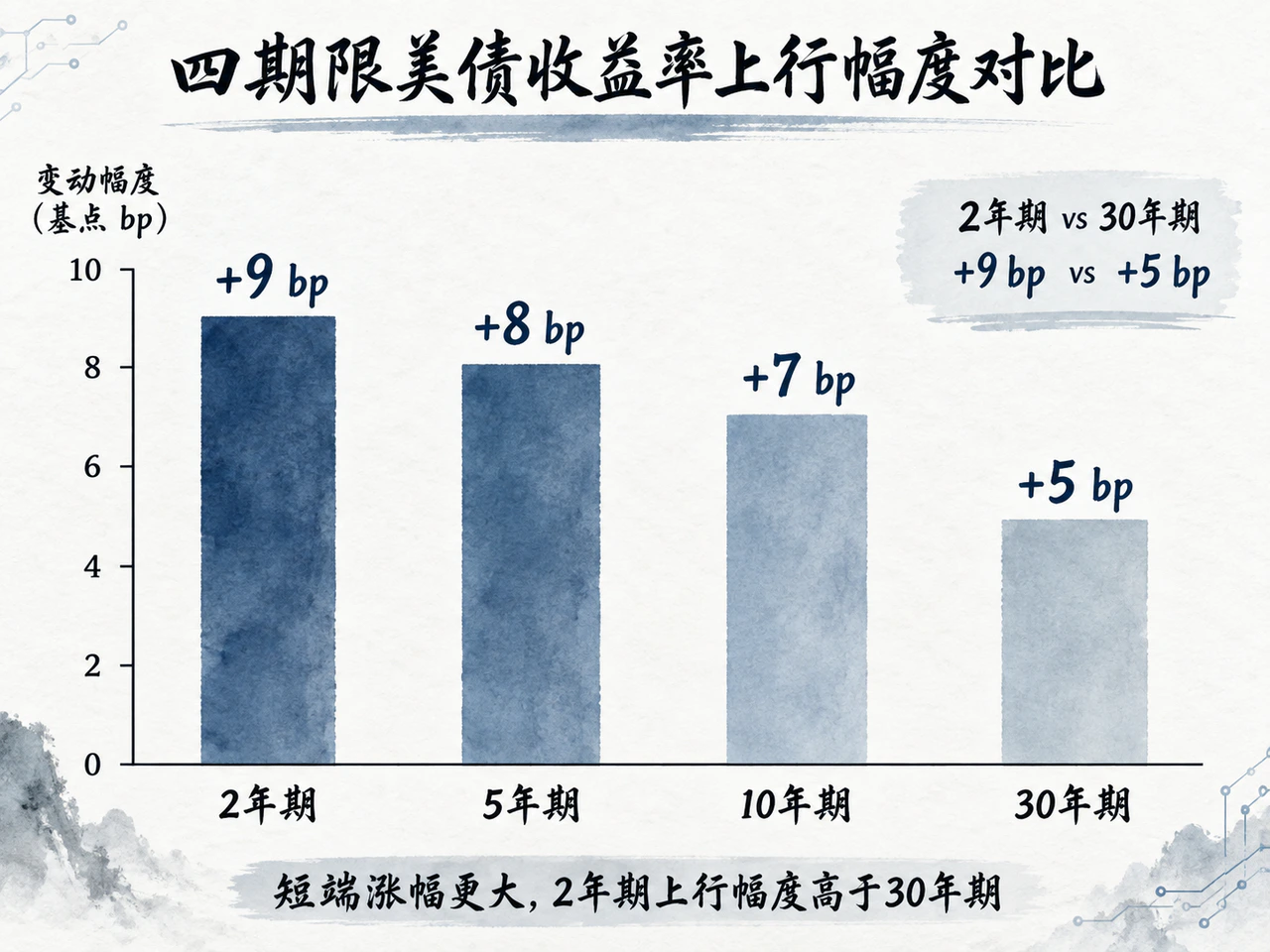
The Treasury's comparable September 18 curve showed yields rising across maturities, with particular pressure at the short end:
| Maturity | September 18 yield | Change from previous trading day |
|---|---|---|
| 2-year | 4.76% | +9 bp |
| 5-year | 4.86% | +8 bp |
| 10-year | 5.01% | +7 bp |
| 30-year | 5.34% | +5 bp |
The benchmark 10-year/two-year spread narrowed from 27 to 25 basis points, combining higher yields with slight flattening. The 10-year TIPS real yield jumped 7 basis points to 2.68%, while breakeven inflation compensation between nominal and real yields stayed at 2.33%. Equal 7-basis-point increases in nominal and TIPS real yields arithmetically pointed to higher real yields rather than unanchored inflation expectations. In pricing terms, however, real yields also reflect term premiums, liquidity and risk appetite. Their rise still materially constrained capital-expenditure hurdles and refinancing conditions.
Real indicators showed moderate cooling. The Fed reported flat August industrial production against expected growth of 0.3%. Manufacturing fell 0.3%, ending seven consecutive months of gains. Business equipment and construction supplies output declined 0.5% and 0.7%, with utilities output, up 1.8%, providing a partial buffer. The Conference Board's August Leading Economic Index (LEI) fell 0.1%, chiefly because of weaker consumer expectations and residential building permits. The coincident index rose 0.1%, suggesting slower expansion rather than comprehensive contraction.
Semiconductors support benchmarks as earnings divergence deepens equity-market fragmentation
High rates kept US indices choppy and divergent. The S&P 500 rose 0.17% to 7650.50 and Nasdaq 100 gained 0.67% to 29644.17. The Dow slipped 0.18% to 51682.64, while the Russell 2000 fell 0.50% to 2860.40. Option-implied volatility eased, with VIX down 0.63 points to 14.81, yet most stocks closed lower.
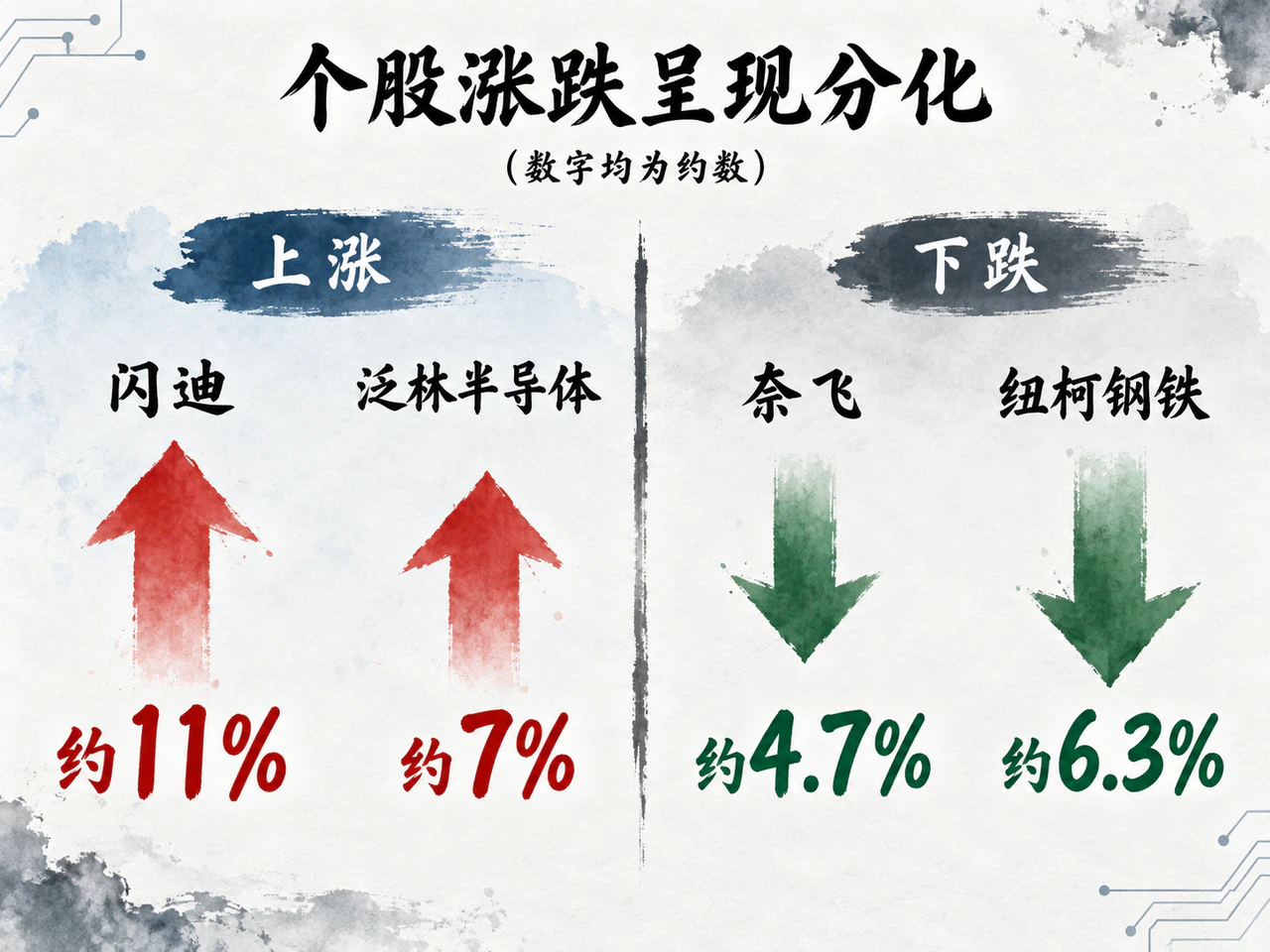
Sector performance was mixed: technology ETF XLK rose 0.82%, financial ETF XLF slipped 0.04%, and energy ETF XLE fell 0.26% with oil. Technology strength was concentrated in hardware. After a severe weekly selloff, semiconductor valuations recovered: SanDisk jumped about 11% and Lam Research about 7%, while software broadly weakened and Qualcomm also fell.
Company earnings and guidance catalyzed the divergence:
- Netflix: down about 4.7%. Wells Fargo cut its rating from neutral to underweight and slashed the target from $80 to $57, chiefly on concerns about slowing growth in viewing time.
- Nucor: down about 6.3%. Its third-quarter overall earnings guidance, released the previous evening, missed expectations. Higher product prices improved steel-mill profits sequentially, but did not prevent a weaker overall performance.
- Digital assets: Coinbase and Robinhood both surged more than 9%, mainly on Bitcoin's intraday rebound and related SEC rules issued the previous day.
Asia-Pacific markets, which closed earlier, generally recovered. The Nikkei 225 rose 1.4% to 65018.95, Korea's composite index gained 2.7%, and the Hang Seng rose 0.6% to 24750.78. The dollar strengthened 0.54% against the yen and 0.68% against the won. Currency depreciation benefited near-term translation of export revenues for Asian semiconductor companies, but medium- and long-term profits still depended on real global orders and the ability to absorb high financing costs.
Oil-supply panic eases; high real rates constrain gold's rebound
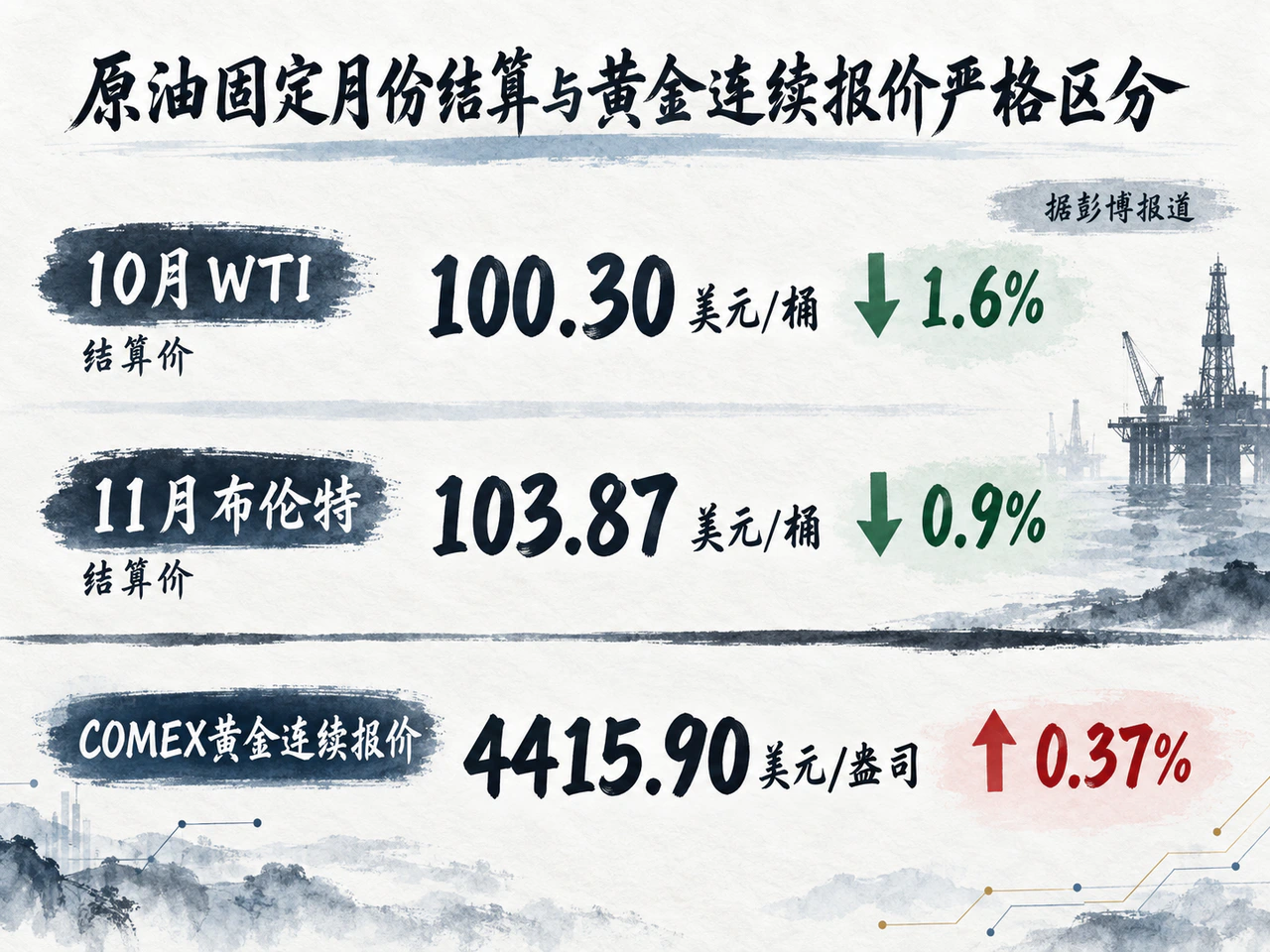
Commodity markets showed marginal relief from inflation constraints. Crude futures retreated as geopolitical supply-disruption fears eased. Saudi Aramco sought to restore part of the East–West pipeline within days and full capacity within six weeks. Repairs still required complete delivery and some European refiners' next-month allocations remained restricted, but fears of an extreme shortage diminished. Bloomberg reported October WTI down 1.6% to $100.30 a barrel and November Brent down 0.9% to $103.87.
COMEX continuous gold quotations rose 0.37% to $4415.90 an ounce. Reuters cited EverBank global markets president Chris Gaffney saying lower oil eased fears of a near-term inflation rebound, and gold's modest intraday gain might mainly reflect short covering rather than confirmed one-way long inflows. The dollar index was broadly unchanged near 100.215, and higher real Treasury yields kept the cost of holding non-interest-bearing assets elevated. Physical buyers in India and elsewhere also preferred to wait for lower prices. The rebound thus appeared largely technical, without an established one-way upward trend.
China's fiscal data combine recovery with structural divergence; foreign investment shifts toward high technology
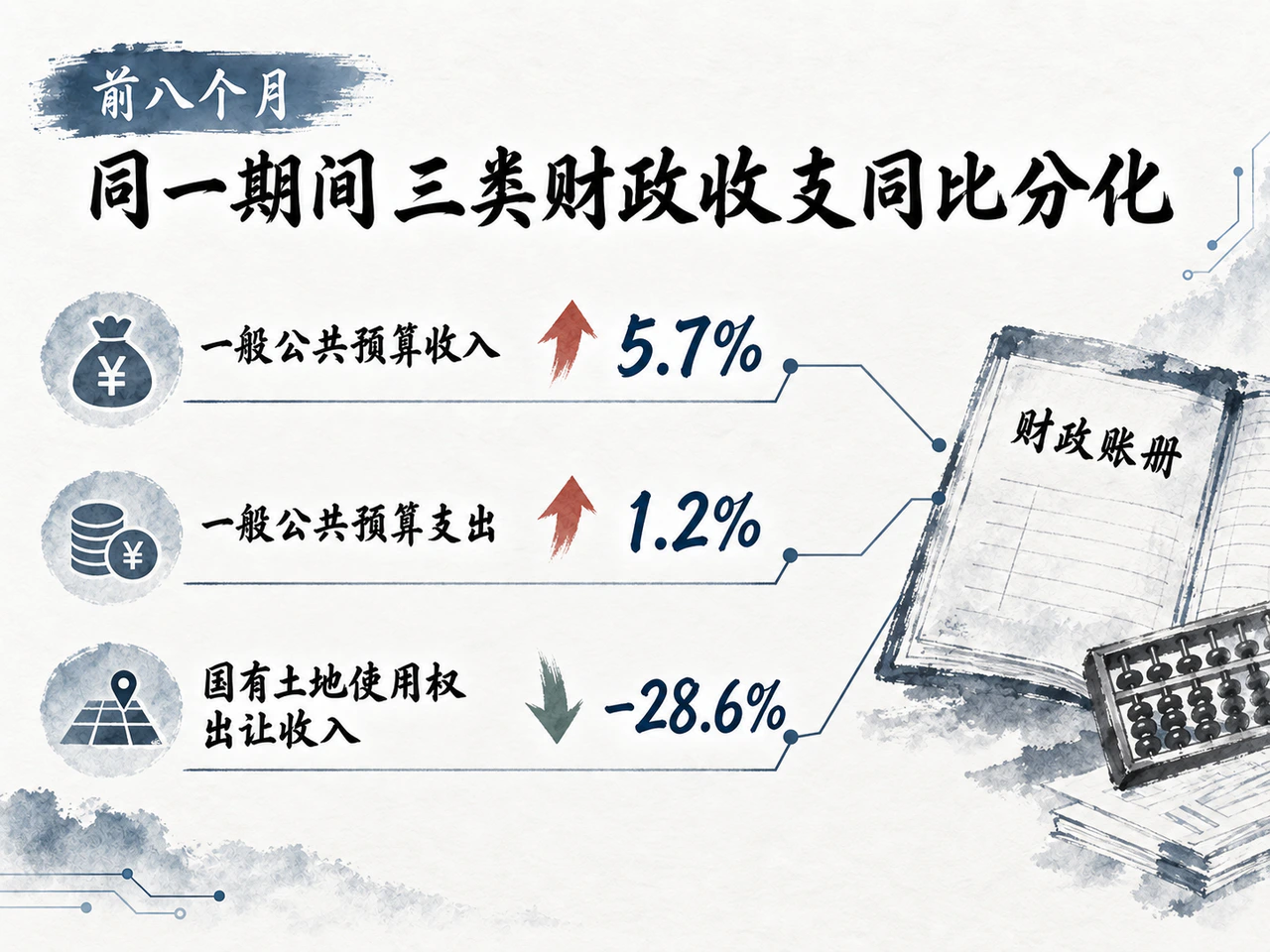
The Ministry of Finance's September 18 release showed general public-budget revenue of RMB15.6633 trillion in the first eight months, up 5.7% year on year, including a 6.6% increase in tax revenue. General public-budget expenditure was RMB18.1451 trillion, up 1.2%. Revenue recovery was evident, but transmission into spending remained restrained.
Revenue and spending diverged sharply between central and local government and across uses:
- Central versus local government: central general public-budget revenue grew 9.1%, local own-source revenue 3.1%, and local expenditure only 0.3%.
- Land-sale pressure: revenue from state-owned land-use-right transfers totaled RMB1.3753 trillion in the first eight months, down 28.6%. This dragged national government-managed fund budget revenue and expenditure down 19% and 17%, respectively. The deep decline in land revenue continued to limit local fiscal capacity to expand independently.
- Livelihood support dominates: social-security and employment spending rose 6.5% and health spending 9.2%, while transport, urban and rural communities, and agriculture/forestry/water expenditure fell 2.9%, 3% and 6%. Infrastructure investment still needed greater funding implementation momentum.
Commerce Ministry foreign-investment data released that day showed a similar structural shift. Actual utilized FDI in the first eight months was RMB479.95 billion, down 5.3%, while high-tech industries attracted RMB200.26 billion, up 35.1%. Their share of total utilized FDI rose to 41.7%, reinforcing high-value-added industries' appeal to long-term foreign capital.
Higher benchmark rates lift offshore funding costs; credit pricing focuses on issuer quality

The Treasury yield surge directly raised benchmark costs for dollar refinancing and new funding. ICE BofA US high-yield OAS was 270 basis points on Thursday, September 17, still near recent lows, but one high-yield spread measure could not establish uniformly subdued credit risk. In primary markets, Yicai cited people familiar with the matter saying Citigroup planned a $12 billion Thursday issue with peak orders around $40 billion, about 3.3 times covered, showing continued issuance access for leading high-quality institutions.
Offshore and Chinese corporate credit showed varied, cautious approaches to liquidity and capital management:
- Asset monetization and onshore funding: New World Development submitted application materials for a publicly offered commercial-property REIT to monetize Shanghai Hong Kong New World Tower; the project remained under review. Yuexiu Property subsidiary Guangzhou City Construction & Development planned up to RMB2.1 billion of corporate bonds to repay domestic debt maturing or subject to exercised repayment options. Onshore renminbi refinancing primarily serves onshore obligations and does not directly provide offshore dollar liquidity.
- Debt repayment and retirement: Hutchison Port Holdings Trust fully repaid principal and accrued interest on notes due September 17. Zhenjiang Transportation Industry Group also completed full cancellation of a note due in 2028 on the 18th.
With dollar risk-free rates moving higher, issuer credit quality, the maturity distribution of debt and diversified onshore/offshore liquidity access would determine balance-sheet safety margins.
After-hours trade policy creates new variables; tariff expectations may reshape supply-chain pricing

After the US equity close, two trade and geopolitical developments with spillover potential became key forward-looking variables:
- Russia-related energy sanctions law signed: AP and other foreign media reported that Trump signed a new law expanding restrictions on Russian energy, defense facilities and tanker networks evading sanctions. It required import tariffs of up to 100% within 30 days on targets including the five largest importers of Russian crude or natural gas. Rates, exemptions and implementation details remained in the post-authorization implementation window. Strict enforcement could conditionally affect global energy shipping, compliance costs and transshipment chains.
- US–China tariff talks: Reuters, citing informed sources, reported negotiations to reduce or remove China's additional tariffs on US LNG, alongside a reciprocal framework to cut tariffs on goods lists of approximately $30 billion on each side. Talks were not finalized. Substantive progress could remove obstacles to long-term offtake and project financing for US LNG infrastructure and reduce trade-friction costs in selected bilateral industries.
Overall, global markets faced the intersection of higher real yields constraining valuations, slowing production growth and frequent external policy shocks. Semiconductor rebounds and lower oil provided temporary offsets, but the tests from high rates and diverging profits remained.